

Parti is a breed term for piebald, it is often used in Poodles and other breeds. The informal definition says that a parti Poodle has white markings over more than 50% of its body.
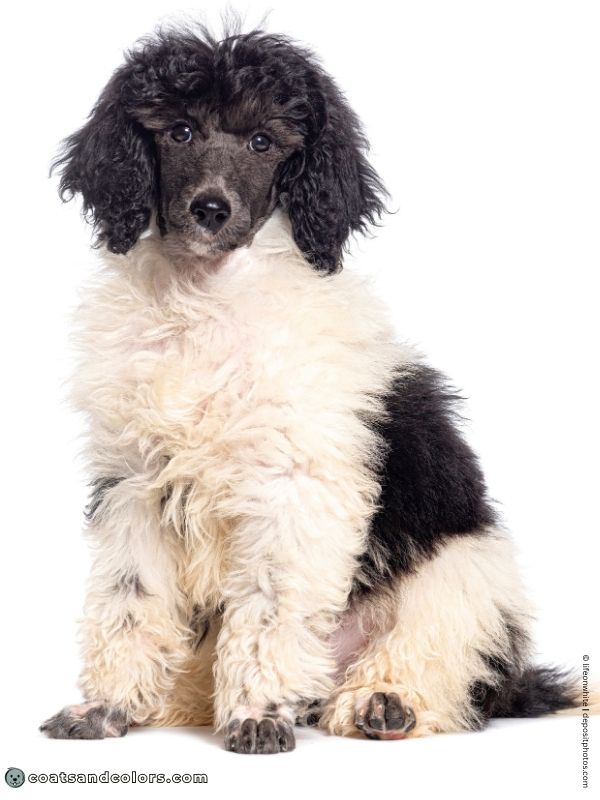
Parti Markings
Poodle breeders use different breed terms for different amounts of white:
Parti: White markings cover more than 50 % of the body.
Abstract: White markings cover less than 50 % of the body.
An abstract Poodle is predominantly patterned but has a small amount of white.
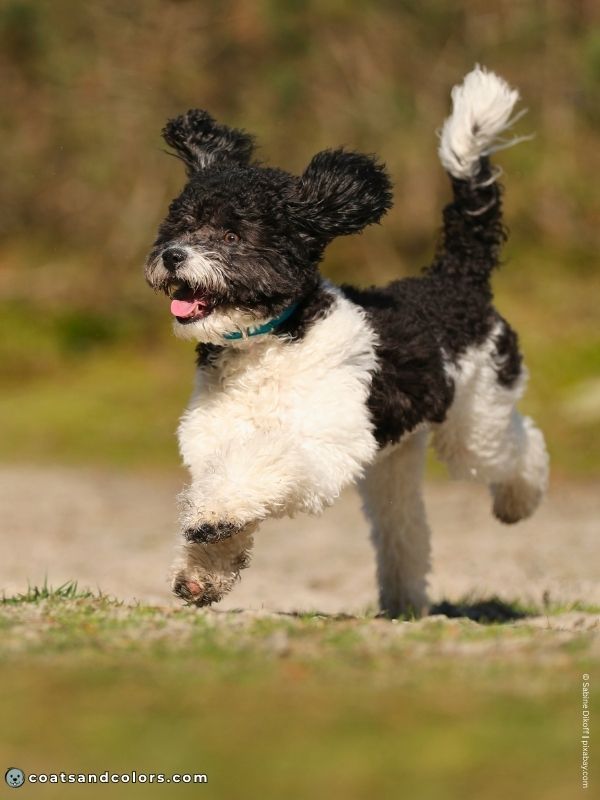
A parti Poodle is predominantly white but has irregular patches of any color. These patches can be black, brown, blue, apricot, or red, depending on the dog’s genetic makeup.

The FCI started to accept parti-colored dogs in 2024.
The AKC believes that parti-colored dogs shall be disqualified in the show ring.
Interestingly, the AKC defines parti as not an even solid color at the skin but of two or more colors. This sounds like their definition includes all kinds of multi-colored Poodles. Not only the solid & white ones, but also fully pigmented patterns with red and black pigment, such as tan point or brindle.
The breed term “parti” for dogs with white piebald markings is not exclusive to Poodles. It is also used in Miniature Schnauzers, Spaniels, and many other breeds.
Parti Poodles can have patches in any color or pattern that occurs in the Poodle gene pool. For example, they can be black parti, apricot parti, sable parti, etc.
Another way to describe their pattern would be just saying “black & white,” “apricot & white,” etc. Some people use both “black & white parti,” to indicate both the presence and the spread of white.
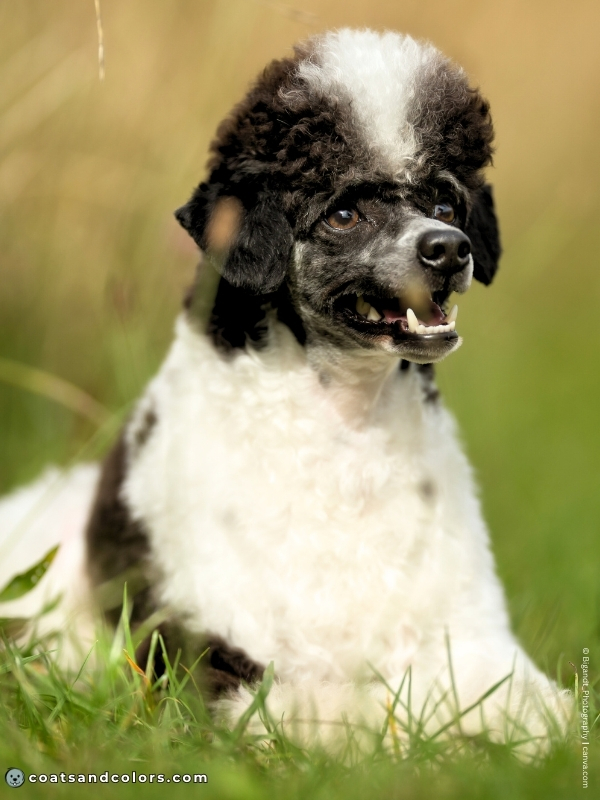
An alternative term for parti is “harlequin Poodle“. But I advise against using this as a breed term, since most people will associate “harlequin” with merle and not with the piebald spotting in partis.
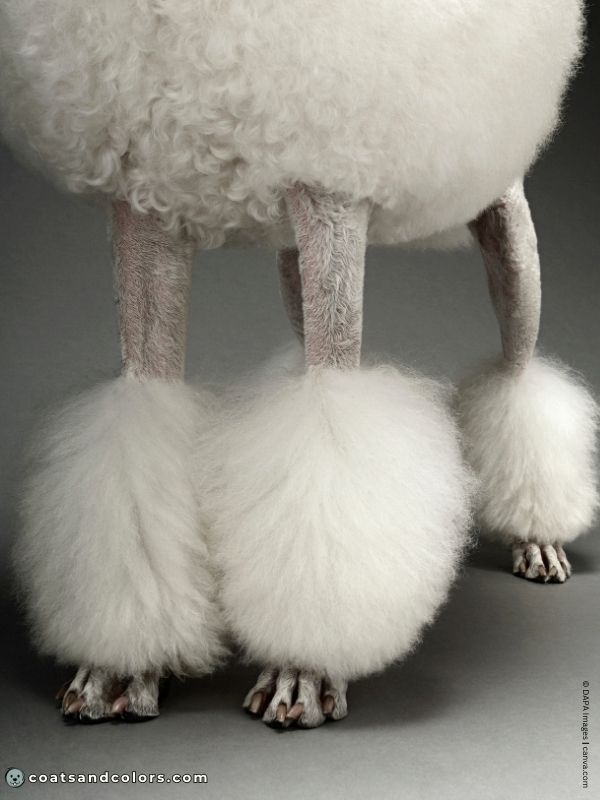
A normal white Poodle is recessive red (e/e) with very pale phaeomelanin. These dogs can also have white markings (think “white parti” or “white abstract“). But you can’t really tell, because it’s next to impossible to see white markings (missing pigment) on a cream or white coat (very pale pigment).
But your groomer can likely tell you, if your white Poodle has white markings. That is, because the skin underneath the pigmented coat is grayish, whereas the skin underneath white would be pink.
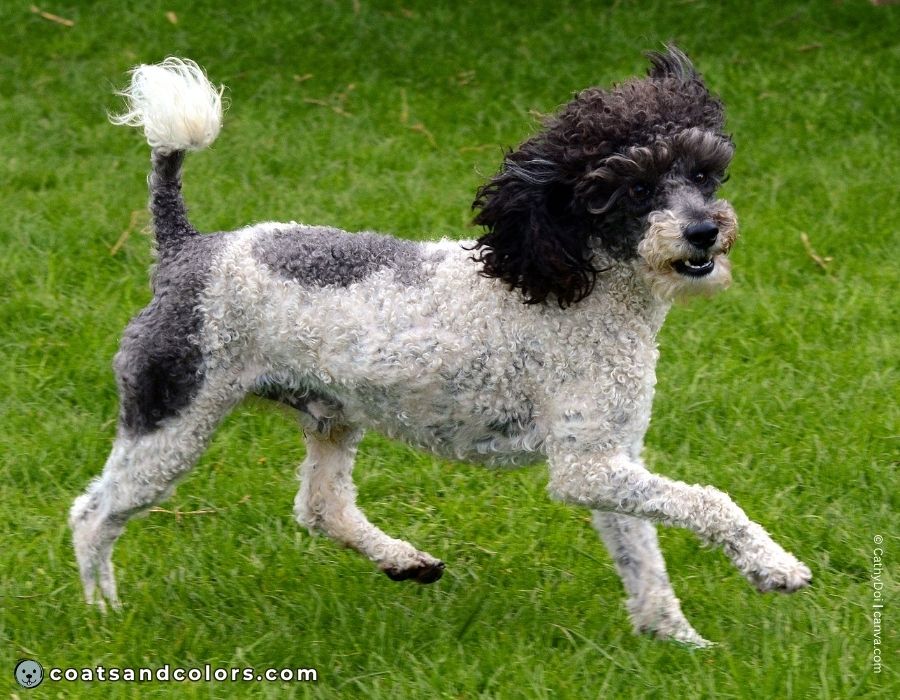
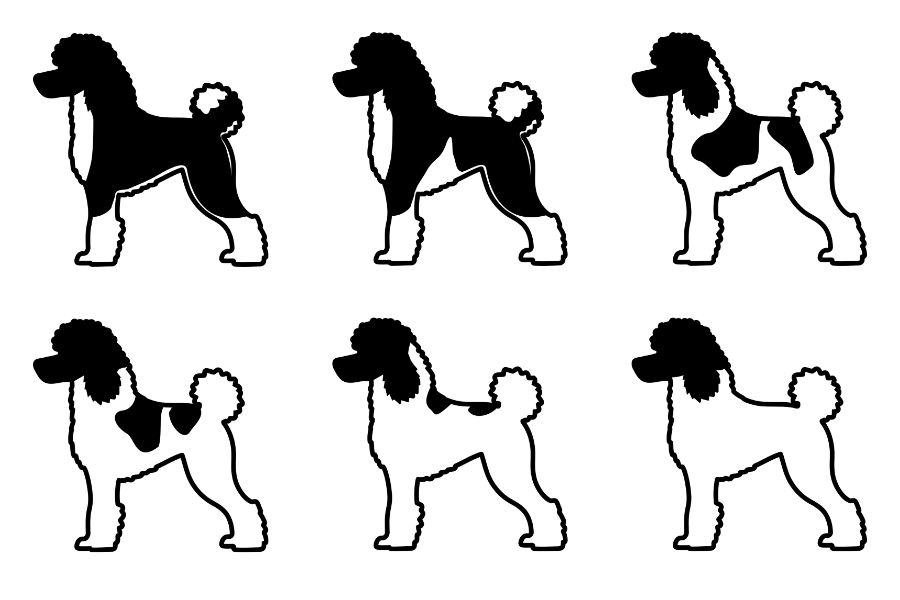
The amount and distribution of white markings varies a lot.
Parti Poodles can have moderate to extended white.
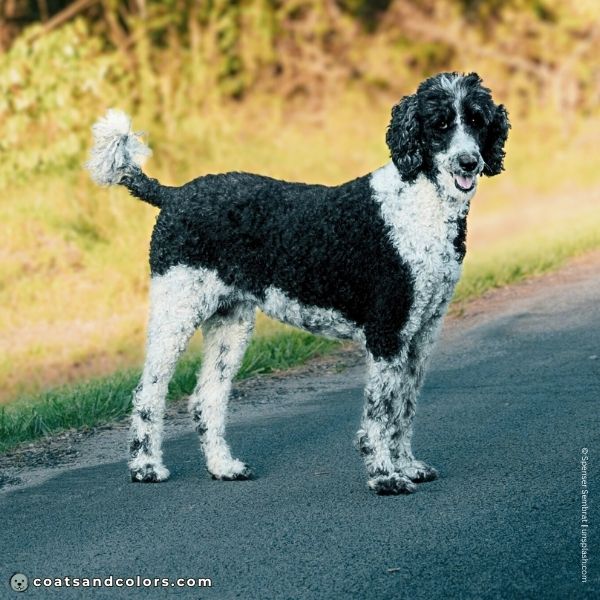
Some parti Poodles are still heavily marked with large patches of color. Some of them are “tuxedo parti” with white legs and a white chest, but a dark mantle pattern on their upper body.
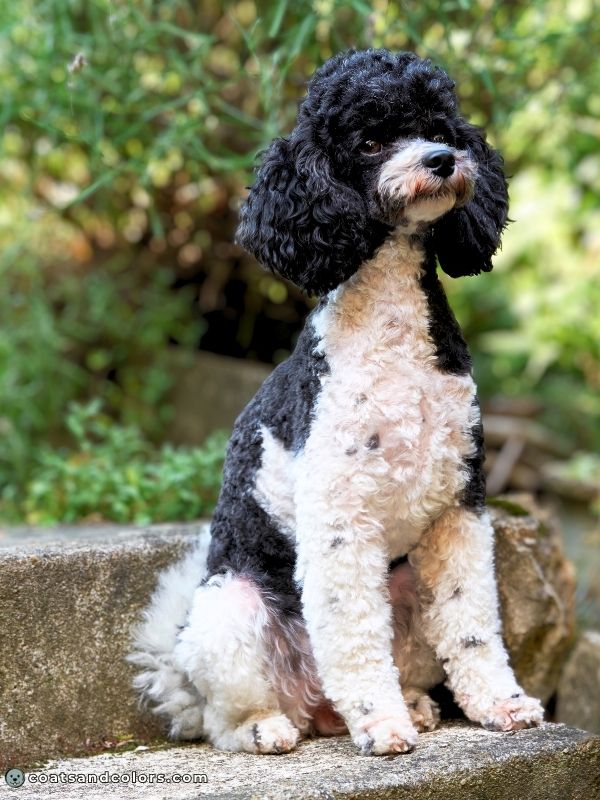
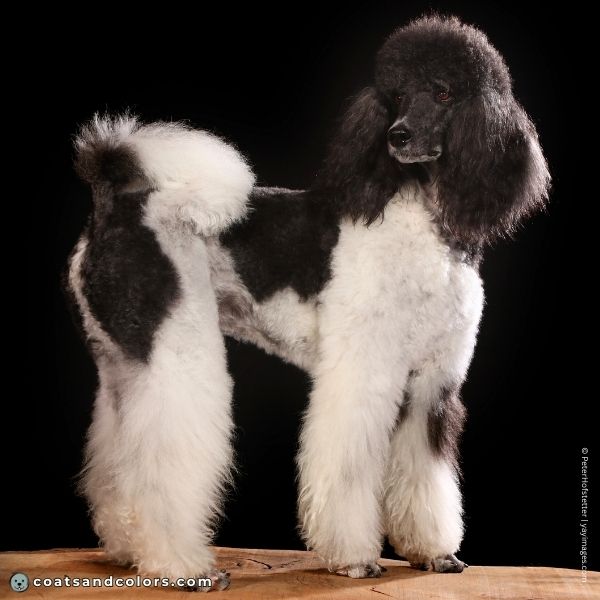
Many parti Poodle have slightly more white, breaking up their dark blanket. They have a traditional piebald pattern with a white background and irregular spots across their entire upper body.
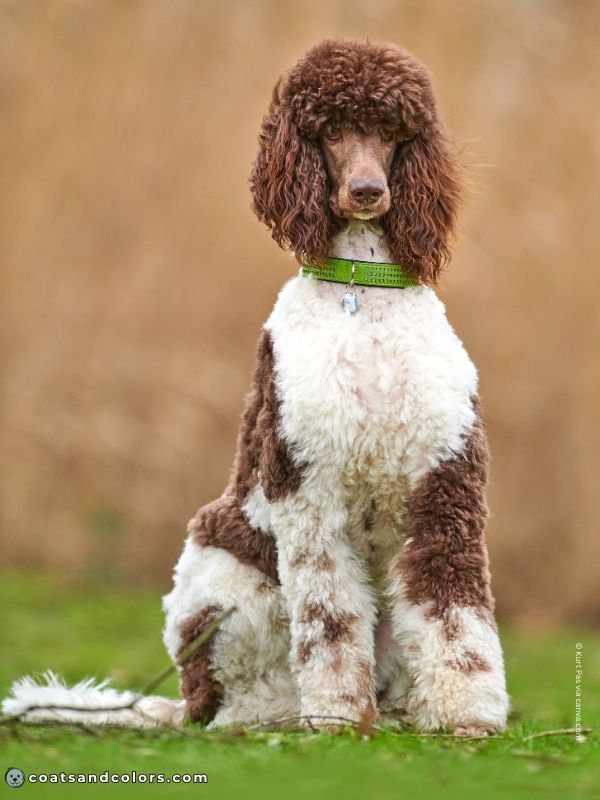
In even more heavy variations of piebald, more or all pigment may disappear from the coat. The color on the head and above the tail base is usually the most persistent.
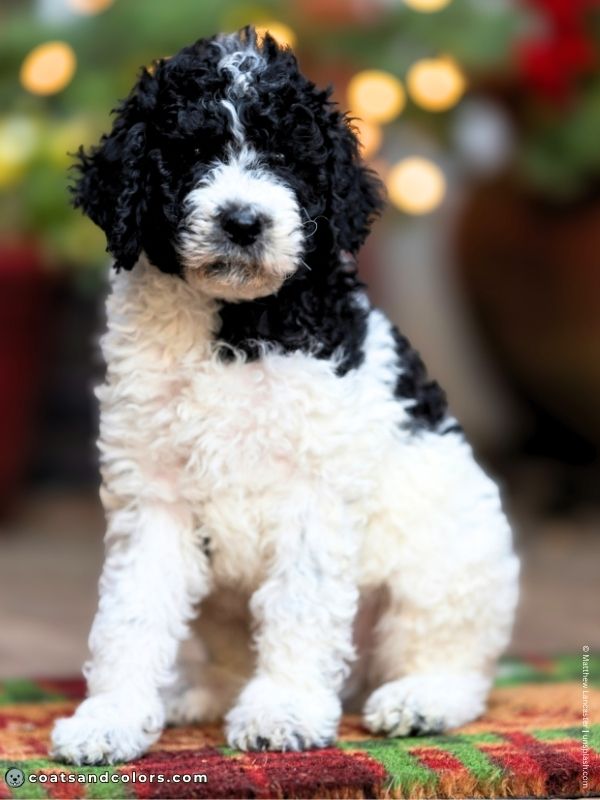
Only few parti Poodles have very extreme white with minimal solid patches. These dogs have a mainly white body color and only some small patches of color left on their head and rear.
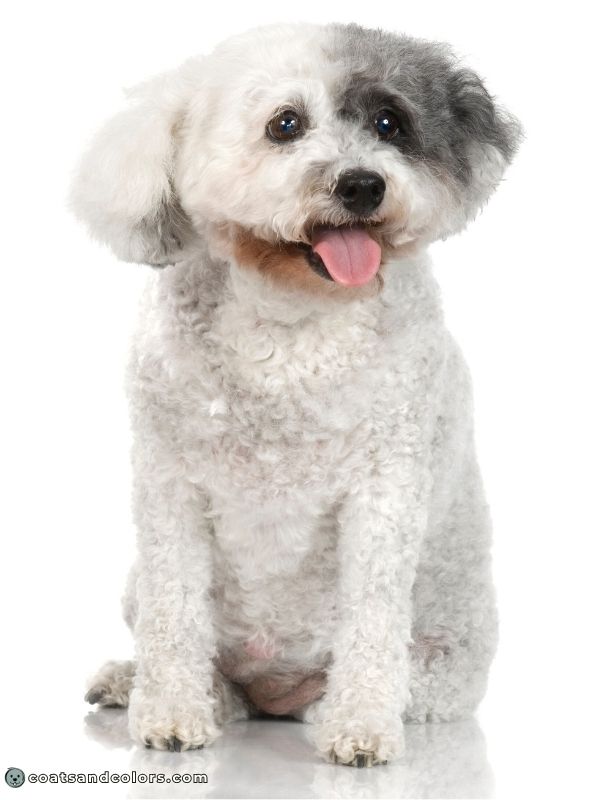
Some parti Poodles have ticking. Ticked puppies are born with solid white, but they may develop mottles inside their white markings just a few weeks after birth.
Parti Genetics
The sP variant at the S locus can prevent some of the embryonic pigment cells from migrating to their intended destination. This causes some portions of the coat to remain white.
The sP allele is also called the “parti gene” in Poodles.

Poodles with one copy of solid and one copy of parti (S/sP) can have no to medium white. Dogs with two copies of parti (sP/sP) can have medium to extended white.
The actual amount of white for each genotype likely depends on untestable modifiers. This can make it a little harder to predict exactly how much white you will get when breeding for parti markings.
The outcome of different S locus genotypes has to be interpreted depending on the breed.
In Poodles, S/sP typically causes abstract markings with minimal white. And sP/sP often causes parti markings with more than 50% of white on the body surface. The spread of white on a sP/sP parti Poodle can vary from very tame tuxedo to regular parti to more extreme white.
Some breeds select for lots of white in their sP/sP dogs (Dalmatian, Heeler). Some breeds selected for less white in their sP/sP dogs (Beagle, Springer Spaniel). And Poodles selected for a parti pattern with large color patches in their sP/sP dogs, so both tuxedo and extreme white are less common.
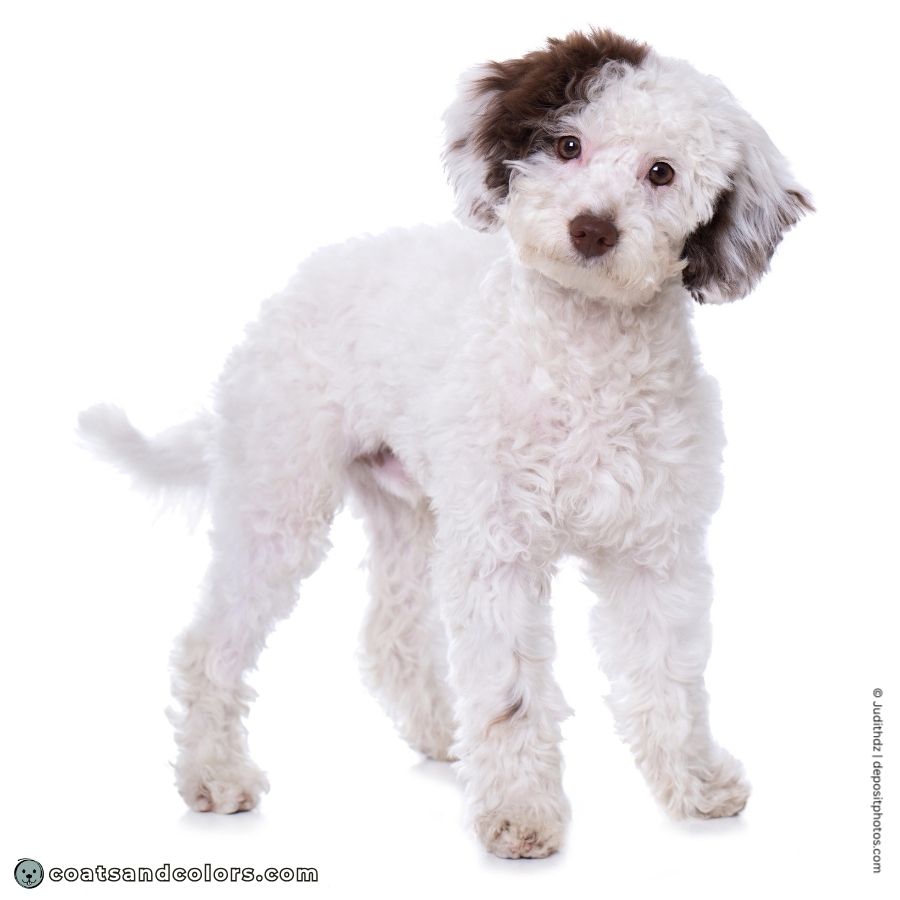
The Doodle community also uses “parti” as a term for dogs with a white body and color patches.
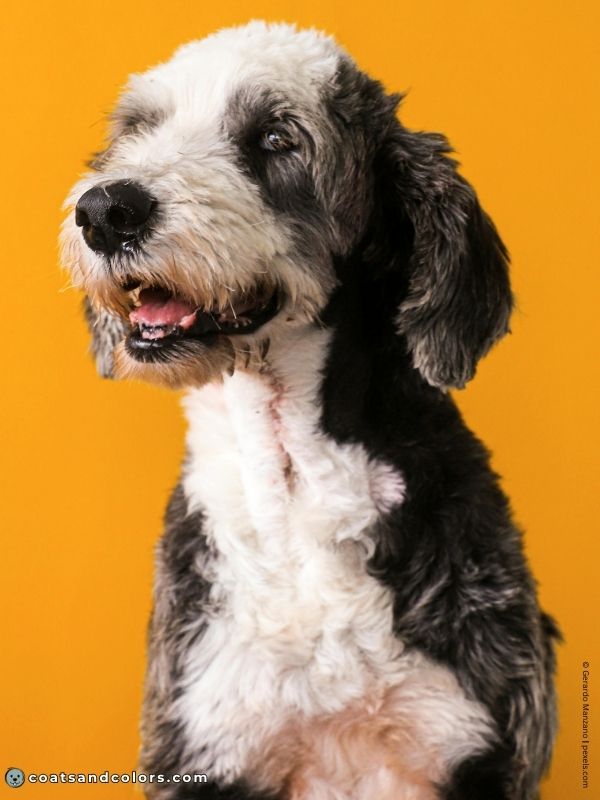
Keep in mind that very many Doodles use breeds with confirmed whitehead (Aussies, Old English Sheepdog, Bernese Mountain Dog, etc.) in their breeding programs. The white on many Doodles is distributed in a way that is more typical of whitehead than piebald. But dogs can also express a combination of both traits (they can have some piebald and some whitehead at the same time).
Whitehead shifts the distribution of white towards the front of the dog. For example, the front legs chest, muzzle, and forehead may be completely white, while the hind legs only have white paws at most.
Learn More
Links
[1] American Kennel Club (AKC): Poodle
[2] Fédération Cynologique Internationale (FCI): Poodle
Image Credits
© DDN/yayimages.com
© dpcrestock/yayimages.com
© Kurt Pas/canva.com
© Matthew Lancaster/unsplash.com
© Alberto Duran Photography/canva.com
© troninphoto/canva.com
© CathyDoi/canva.com
© Spenser Sembrat/unsplash.com
© Judithdz/depositphotos.com
© lifeonwhite/depositphotos.com
© Aannabell Gsoedl/depositphotos.com
© Gerardo Manzano/pexels.com
© Bigandt_Photography/canva.com
Hi! I’m Steffi. I am a biologist and a big time dog nerd. You are curious about coat color genetics? You’ve come to the right place! Read more.