
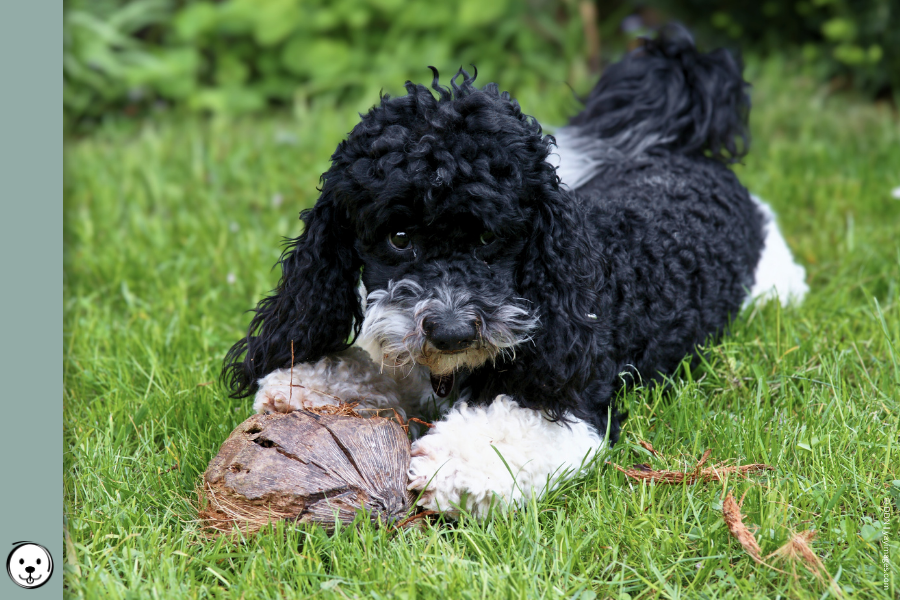
Tuxedo is a Poodle breed term for a mantle pattern. It describes a pattern with moderate white markings on the underbody and a solid blanket over the back of the dog.
White Tuxedo Markings
Some Poodle terms describe different amounts of white:
Parti: White markings cover more than 50 % of the body.
Abstract: White markings cover less than 50 % of the body.
Poodle folks call it abstract when a dog has a mainly patterned coat with small white markings. And they call it parti when a dog has a mainly white coat with patches of color.
All in all, dogs need a good amount of white to be tuxedo, which automatically indicates that they are parti-colored. Some people even call them “tuxedo parti“.
A tuxedo Poodle is a parti Poodle. But not all parti Poodles are tuxedo!
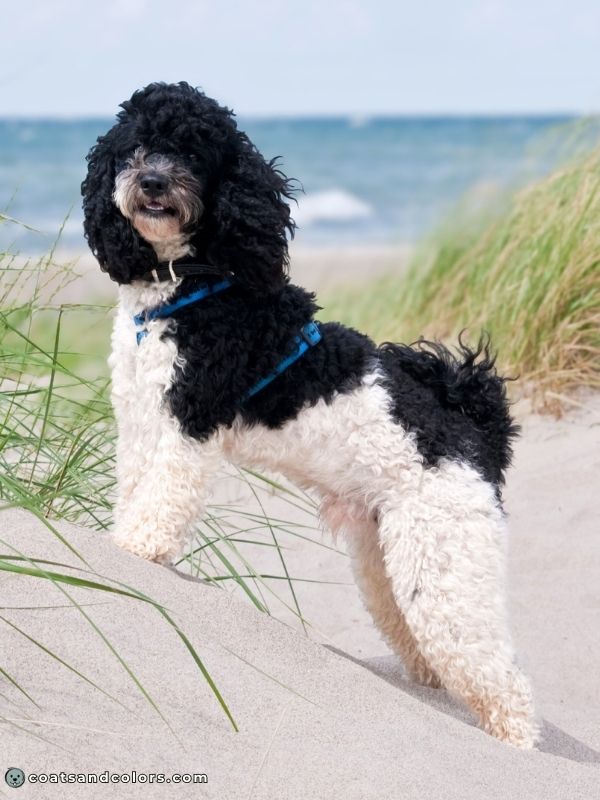
Tuxedos have what other breeds call a blanket or a mantle pattern with a white underbody and a solid patch of color over their back. The Irish-type markings are what makes a tuxedo.

Tuxedo Poodles have a large white patch from their throat all the way down to their chest and abdomen. The white on their legs may connect to the chest white. White also often covers the underside of the tail and the inside of the legs and can expand towards the outside.
Many tuxedo Poodles have a fully pigmented head.
But muzzle white and white blazes or white collars can also happen.
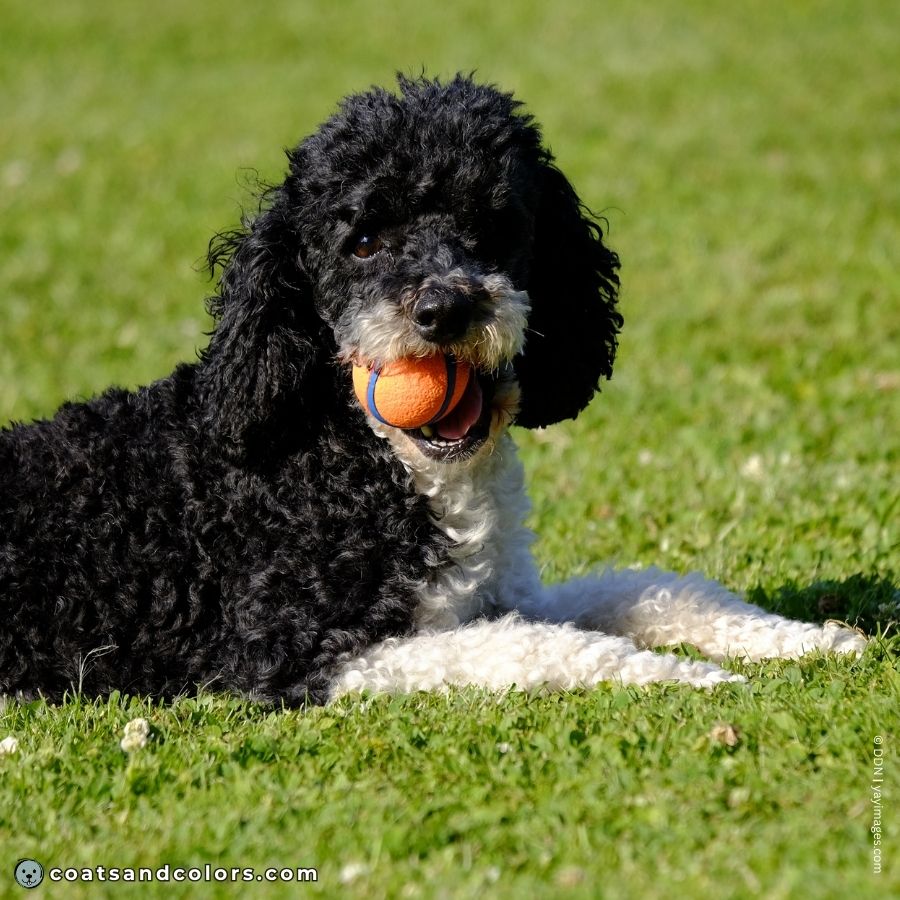
The term “tuxedo” can describe dogs of any color with white, but is often used for black dogs. This is because only black & white gives the illusion of the dog wearing a tuxedo when they’re sitting upright.
Most parti Poodles have too much white to be tuxedo.
That is, many partis show white that cuts through the black mantle on the dog’s back. Even more white will cause a proper piebald phenotype with a predominantly white coat and some large patches of color. But there is no set definition, at which point a parti dog is not called a tuxedo anymore.
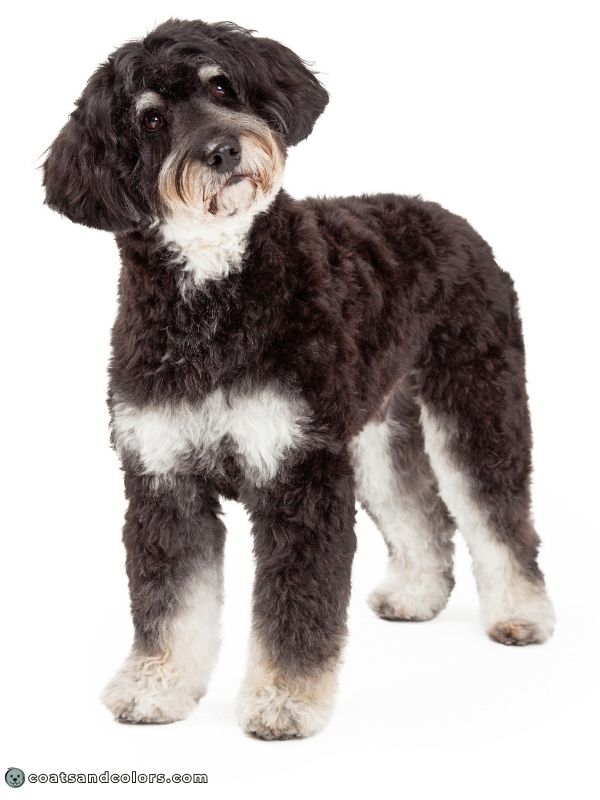
There are also some borderline cases where people don’t agree, whether a dog is considered “minimal parti” or “extreme abstract”. Abstracts with enough white can produce a tuxedo-like pattern. But it is very subjective when an “extreme abstract” turns into a “minimal tuxedo” and vice versa.
Abstracts usually have small white splashes on their paws or toes, chest, chin, or tip of the tail. But these markings are usually too few and too small for being tuxedo. They don’t have a mainly white underside that connects to the chest and legs. These abstracts are not called tuxedo.

Also, don’t make this beginner mistake when looking for tuxedo Poodles:
Some people confuse a dog with a tan point pattern (called “phantom” in Poodle terms) with very pale tan markings for a tuxedo. The markings on a black & cream phantom Poodle are neither truly white nor in the right place. Some tricolor dogs can have both, tan point and white markings.
Tuxedo Genetics
Poodles get their white markings from the S locus.
Most tuxedo Poodles are sP/sP, they are parti Poodles with a little less white than average. However, a small number of tuxedo Poodles might be S/sP, an abstract Poodle with more white than average.
The amount of white a dog can get from S/sP or sP/sP is regulated by untestable modifiers.
There is a continuum of possible S/sP phenotypes from solid to abstract to extreme abstract.
Most S/sP Poodles have very little white, they are called abstract. But some express no white while others are “extreme abstract” with enough white to mimic a tuxedo pattern.
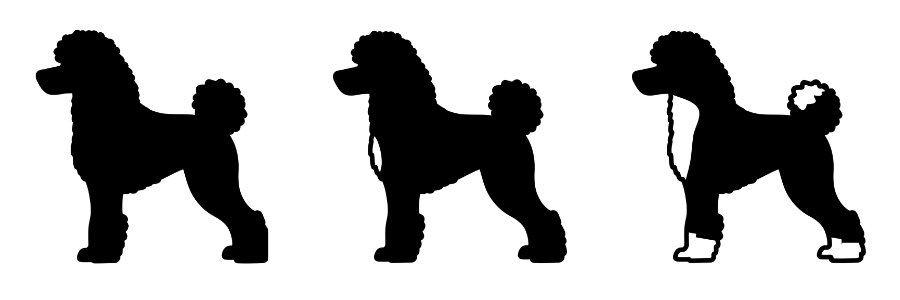
There is also a spectrum of possible sP/sP phenotypes from tuxedo to parti to extreme white.
Most sP/sP Poodles have enough white to be considered parti. Some may have more extreme white, and some only get a tuxedo pattern with less white than you see on the average parti dog.
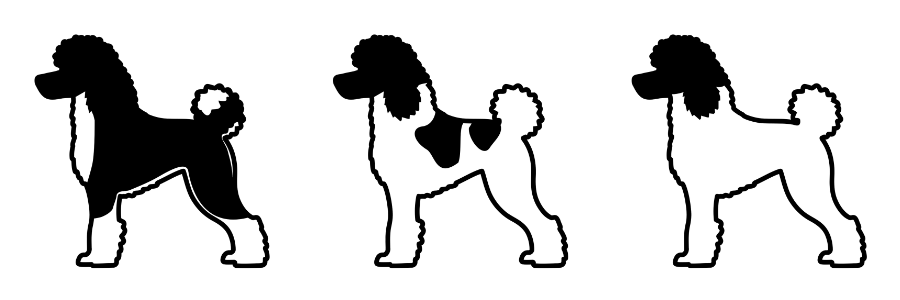
You can think of tuxedo as a minimal expression of parti. These dogs are almost always sP/sP, just with a little less white than the normal parti. Tuxedos often express a neat pseudo-Irish spotting pattern with somewhat symmetrical white markings. I also heard the term “Irish tuxedo“.
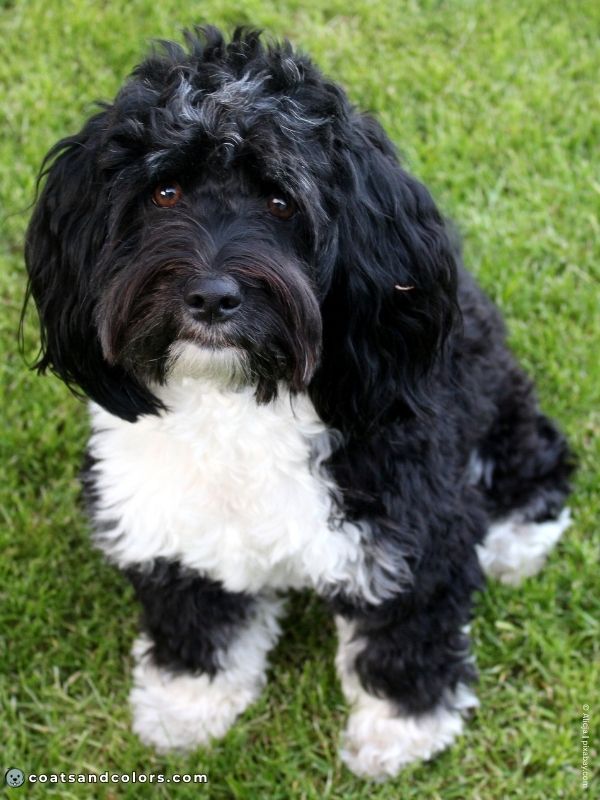
Very many parti Poodles fall somewhere between tuxedo and piebald.
Breeding with sP can be a little unpredictable. It often produces puppies with more white or less white than their parents. The distribution of white in dogs with the same genotype can vary a lot.
Both parti or tuxedo can happen in sP/sP dogs. The difference lies in the untestable stuff that upregulates or downregulates the amount of white. Parti parents with sP/sP and lots of white will likely produce more puppies with also too much white for tuxedo to happen.

To make things more complicated, the untestable whitehead trait can also cause white markings that could be classified as tuxedo. However, this trait should not exist in purebred Poodles.
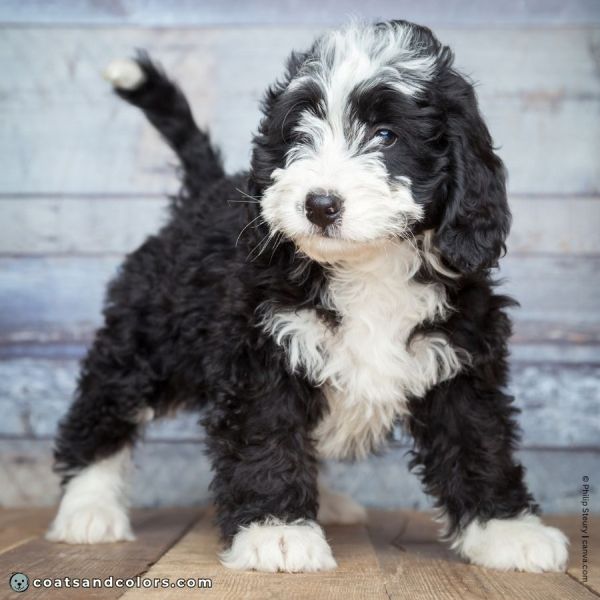
But whitehead is visible in very many Doodles. That is, because so many breeders use whitehead breeds such as Australian Shepherds or Bernese Mountain Dogs in their program.
The actual amount of white expressed in dogs with the whitehead trait depends on its own set of untestable modifiers. Some whitehead dogs have little white, some have moderate white, some have extreme white. And there is a sweet spot in the middle where a dog gets a pseudo-Irish tuxedo pattern.
This means, a Doodle might test as solid (S/S) for parti white, but still have tuxedo white from being whitehead. The distribution of white in dogs with moderate whitehead tends to be “front-heavy,” there is more white on the front legs and chest with less white visible towards the rear. Also, whitehead and sP can occur the same time, and both contribute to the white on a dog.
Learn More
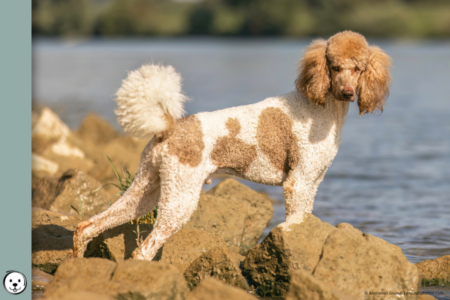
Image Credits
© dpcrestock/yayimages.com
© DDN/yayimages.com
© Vova Kras/pexels.com
© Giorgio Trovato/unsplash.com
© PeterHofstetter/yayimages.com
© DDN/yayimages.com
© Philip Steury/canva.com
© Alicja/pixabay.com
Hi! I’m Steffi. I am a biologist and a big time dog nerd. You are curious about coat color genetics? You’ve come to the right place! Read more.