

The Appenzeller Sennenhund is a Swiss farm and droving dog from the Appenzell region. Appenzellers are the only of the Sennenhund breeds that can be black or brown tricolor.
Learn more about Appenzell Cattle Dog colors.
Black Tan & White
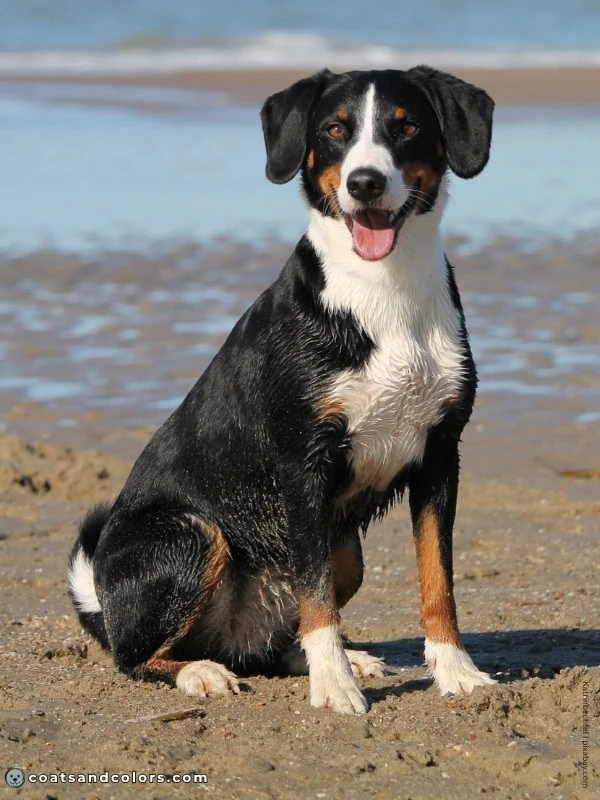
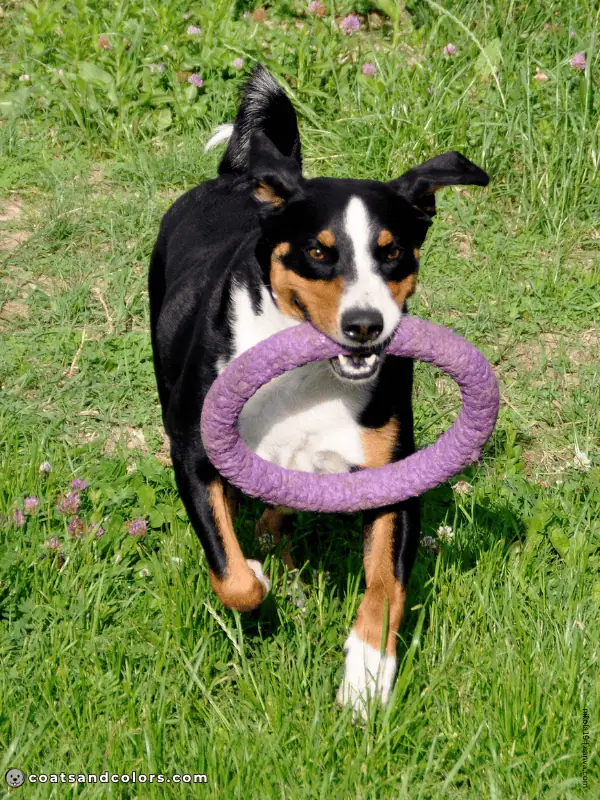
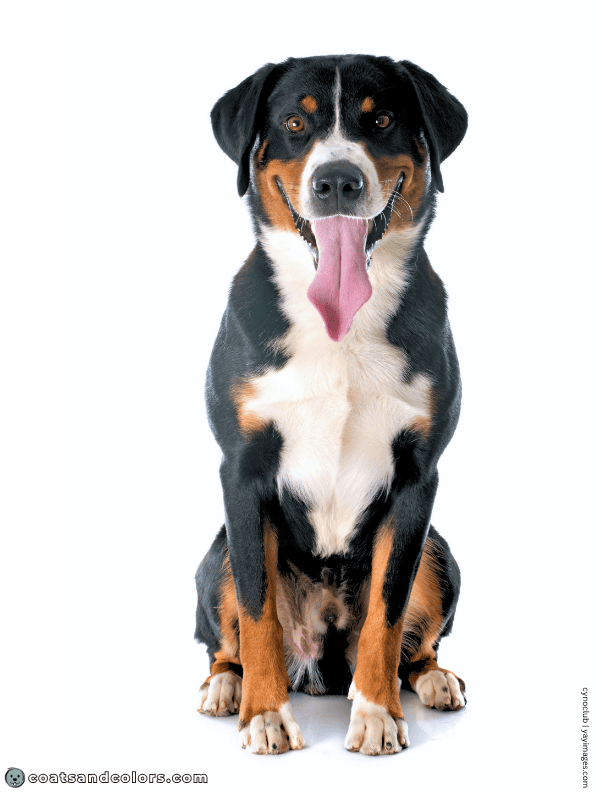
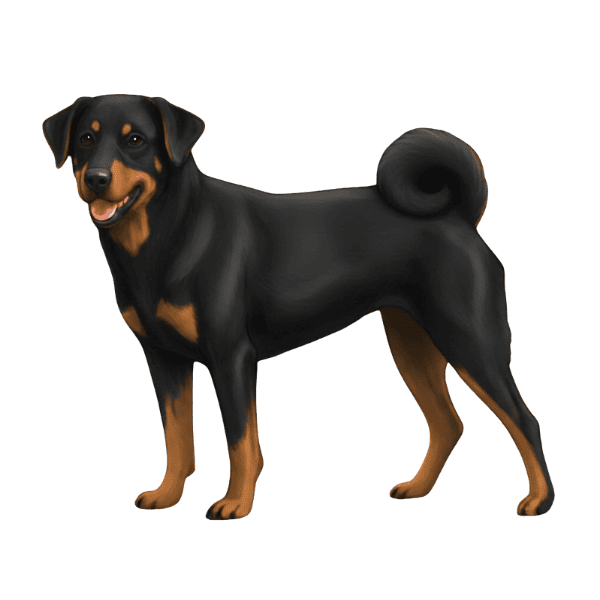
These dogs are black & tan with white markings.
BASE PATTERN
tan point
MERLE
–
OTHER
–
EUMELANIN
black
INTENSITY
red, tan
WHITE
white markings
Havana BrownTan & White
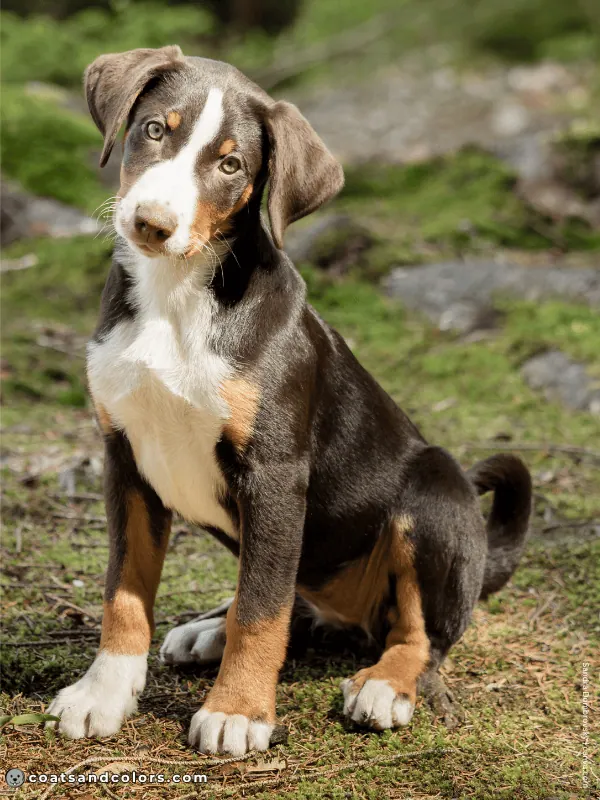
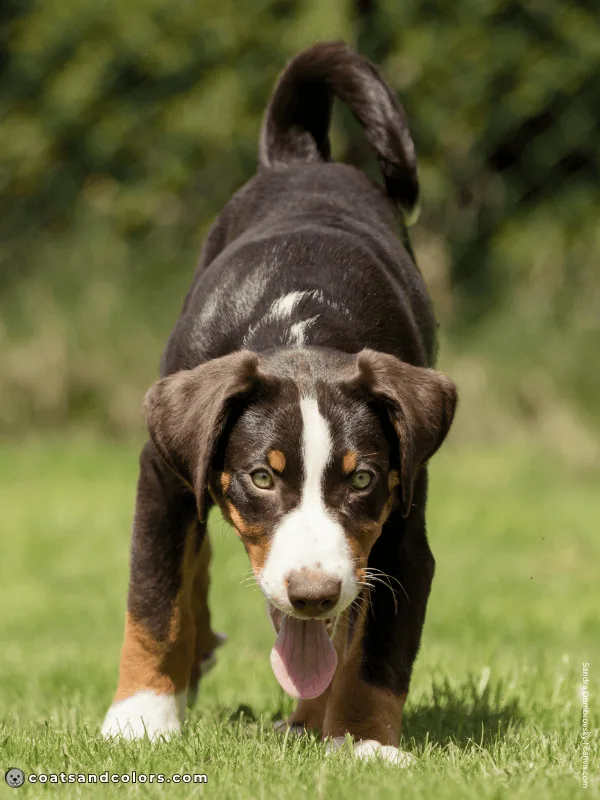
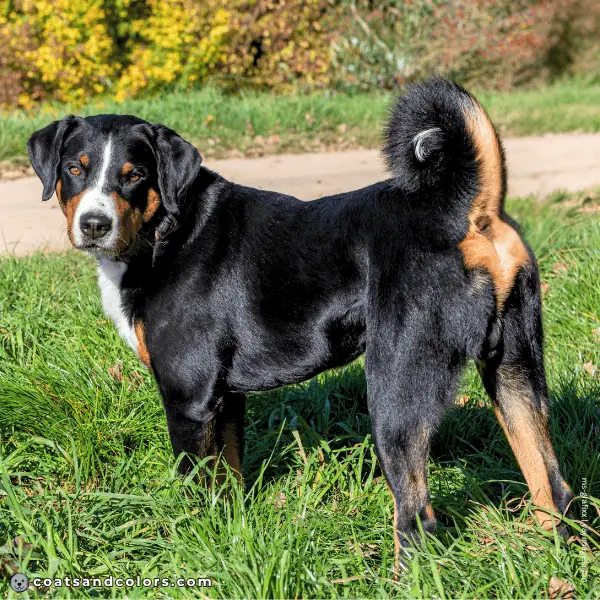
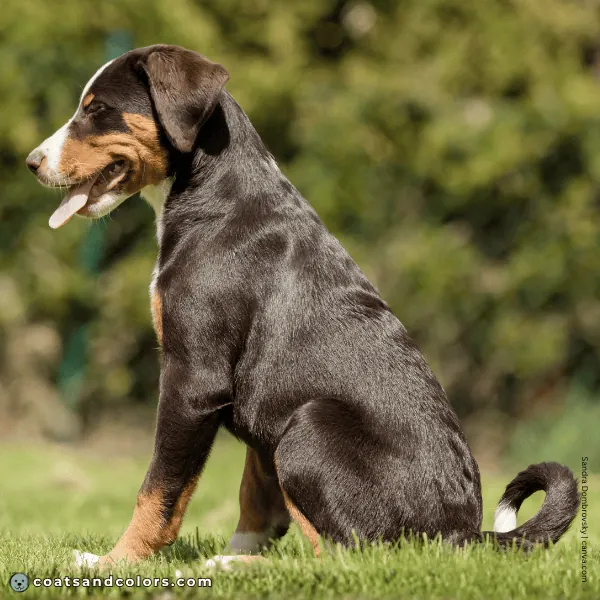
The Appenzeller is the only of the Sennenhunde breeds that also comes in chocolate tricolor (brown & tan with white markings). I have no clue why they call it “havana brown“.
BASE PATTERN
tan point
MERLE
–
OTHER
–
EUMELANIN
brown
INTENSITY
red, tan
WHITE
white markings
Faulty Colors
“Disqualifying Faults:
– Other than tricoloured coat.
– Other than black or havana-brown main colour.“
FCI Breed Standard[2]
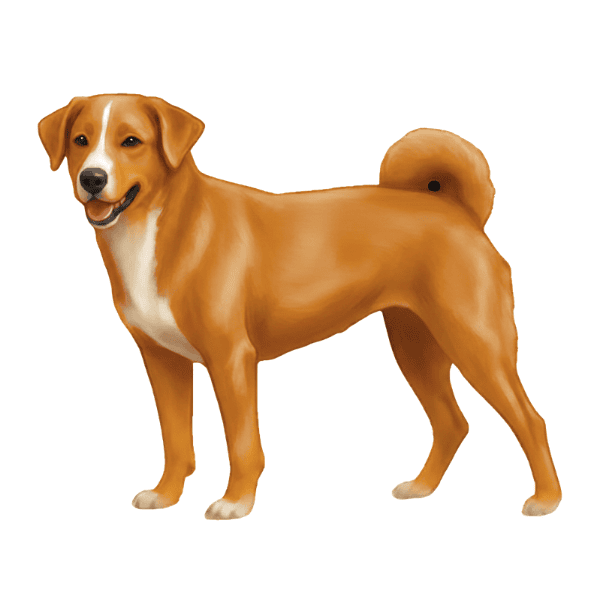
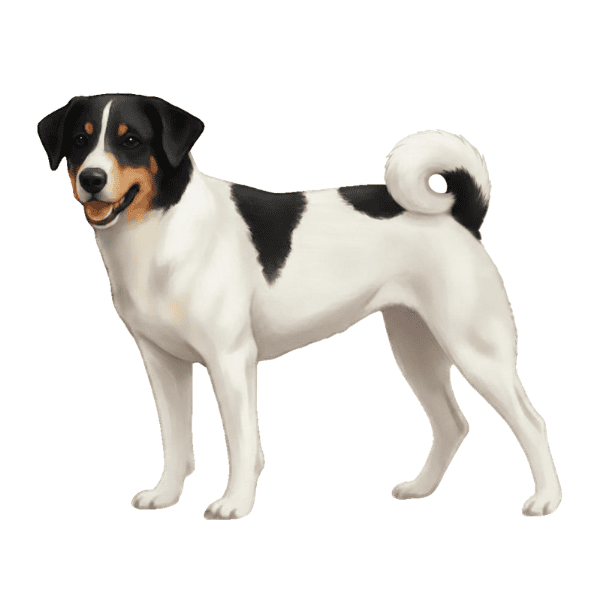
Naturally, the Swiss landrace behind today’s Appenzeller, came with a variety of different patterns. These dogs sometimes had a red and white coat (called “Frisch” or “Toggenburger“) or white piebald markings (“Schilt“). Some dogs even had brindle points or no white markings at all[5].
Base Patterns
The base pattern describes the placement of phaeomelanin and eumelanin in the coat. There is an epistatic hierarchy between these genes: A locus < K locus < E locus.
- The A locus controls the basic distribution of pigment types.
- Next, the K locus can add eumelanin to the A locus pattern.
- Finally, the E locus regulates the general ability to produce eumelanin.
A Locus
| at | tan point |
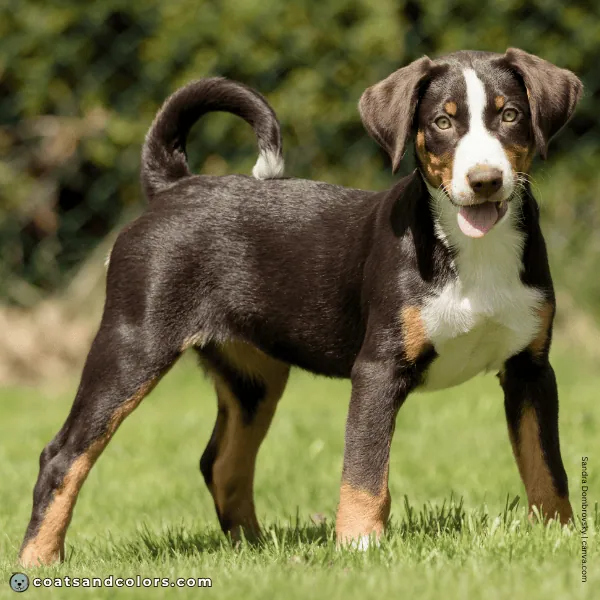
Appenzellers are fixed for tan points (at/at).
K Locus
| ky | wild-type |
Appenzellers are fixed for normal pattern expression (ky/ky).
E Locus
| E | wild-type |
Appenzellers are fixed for normal pattern expression (E/E).
Appenzeller Base Pattern
They only have one pattern in this breed:
| A LOCUS | K LOCUS | E LOCUS | PATTERN |
|---|---|---|---|
| at/at | ky/ky | E/E | tan point |
Base Colors
The base color is determined by the B locus and D locus.
B Locus
| B | black |
Appenzellers can have black or brown eumelanin.
D Locus
| D | normal |
The D locus controls color dilution. Appenzellers are fixed for normal pigment (D/D).
Red Intensity
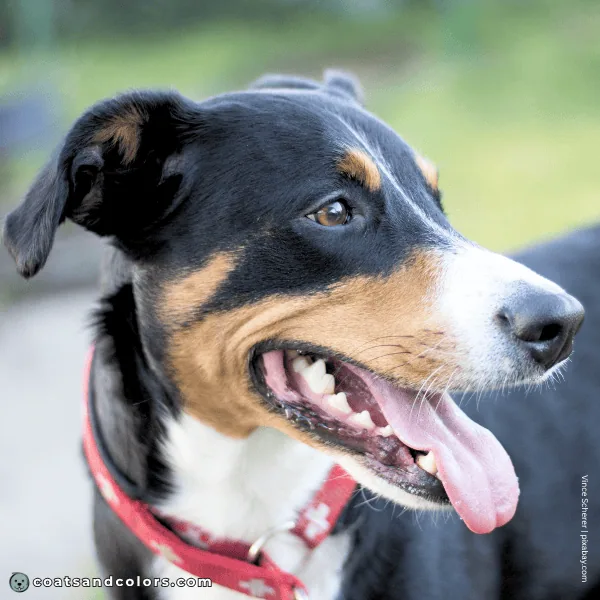
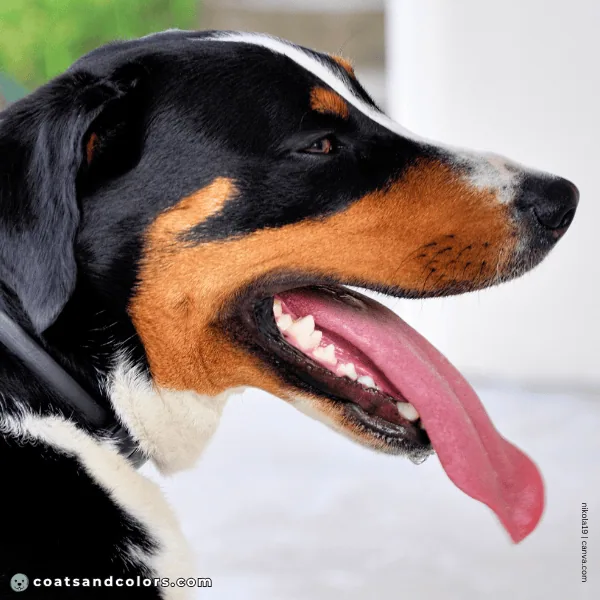
The tan markings in this tricolor breed are described as “reddish brown“. They tend to have an intense orange-red color. Still, some dogs might express a slightly lighter tan color.
White Markings
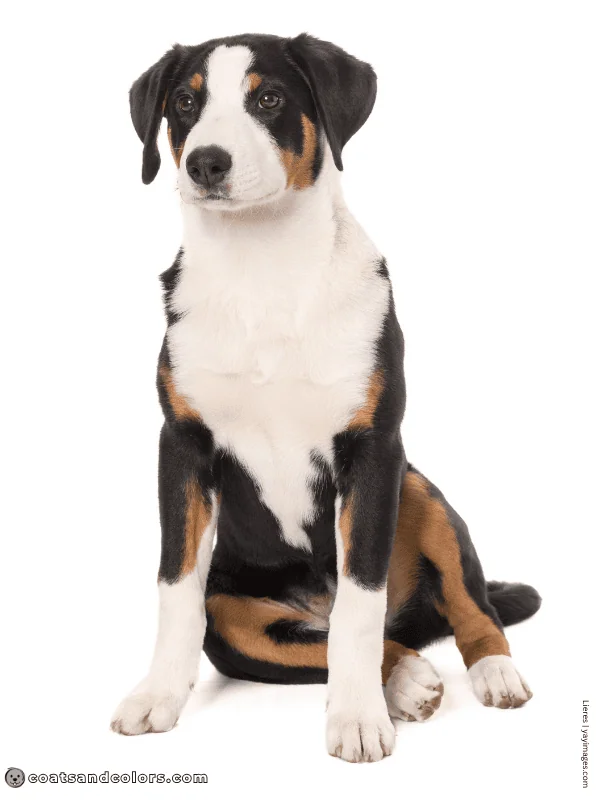
Appenzellers are always tricolor. Their nickname in Switzerland is “Bläss” in reference to their white blaze.
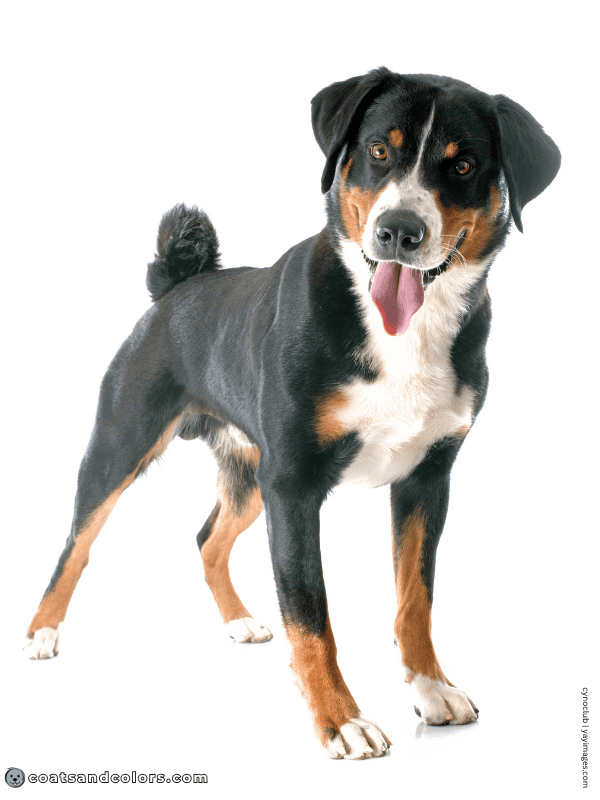
The distribution of white in the Appenzeller Sennenhund is typical for whitehead.
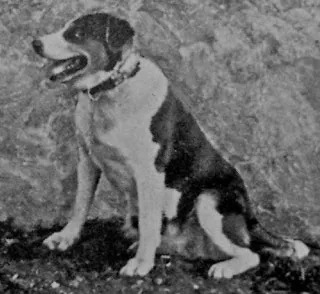
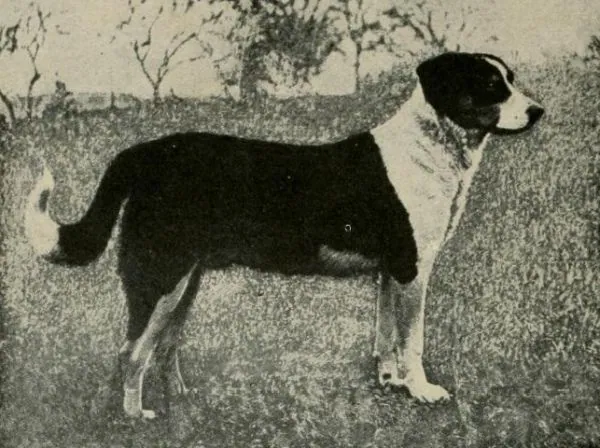
At some point in the past, there was also piebald in this breed. Dogs with a solid blanket were called “Mantelschilt” (likely heterozygous S/sP) and pied dogs were called “Schilt” (likely homozygous sP/sP).
The breed standard places great emphasis on the correct placement and amount of white. The white markings in Appenzellers should be as symmetrical as possible to mimic a “pseudo-Irish” pattern.
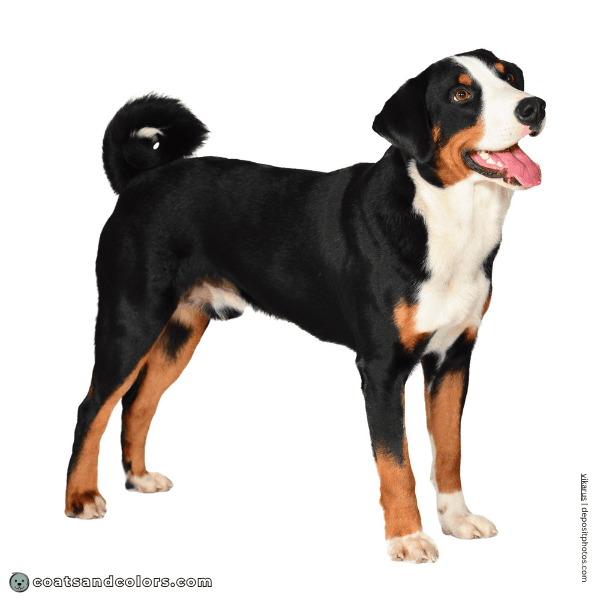
The Appenzeller standard describes the correct placement of white:
- A white blaze running without break from forehead down over the bridge of the nose.
- White can totally or partially cover the muzzle.
- The white on the chin reaches down to cover the throat and chest.
- A white spot on nape of the neck, a half-collar, or a thin white ring all around neck are tolerated.
- Appenzeller should have white on all four paws.
- Appenzellers are supposed to have a white tail tip.
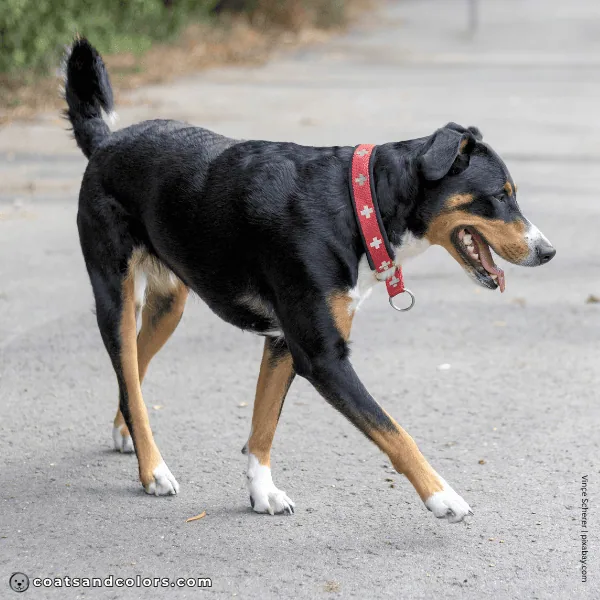
Appenzeller breeders aim for a good amount of white in their tricolor dogs. At the same time, they try to limit the placement of white just enough as not to cause face white or body white, a broad white collar, or white “boots with white reaching above the pasterns. Whitehead is not testable, and the “breed by phenotype” approach sometimes fails. Thus, some dogs have a bit too much white.
The standard also explains which white markings are considered as mismarks:
- Broken blaze.
- Divided white on chest.
- Broad white collar around the whole neck.
- Absence of white on feet. White reaching distinctly above pastern (“boots”).
- Absence of white on tip of tail.
Ticking
Appenzellers are not supposed to have ticking.
“Fault: Black ticks on white..”
FCI Breed Standard[2]
Appenzeller Sennenhund Eye Colors
The preferred eye color is brown.
Dogs with chocolate brown pigment tend to have lighter honey to amber eyes. Havana puppies can have especially pale yellow to green eyes. This is normal, and their eye color will darken over time.
Light eye colors are not desired in adult Appenzeller Cattle Dogs.
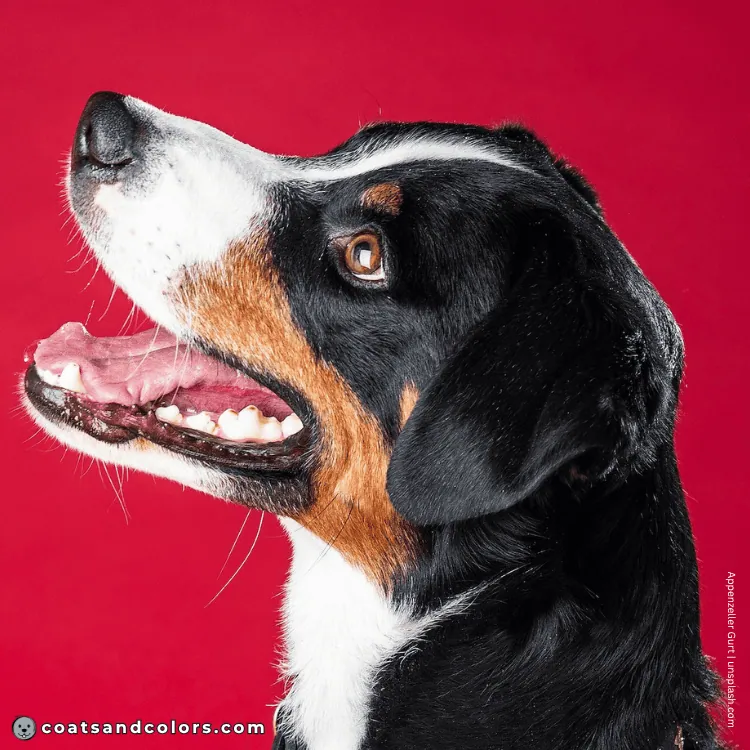
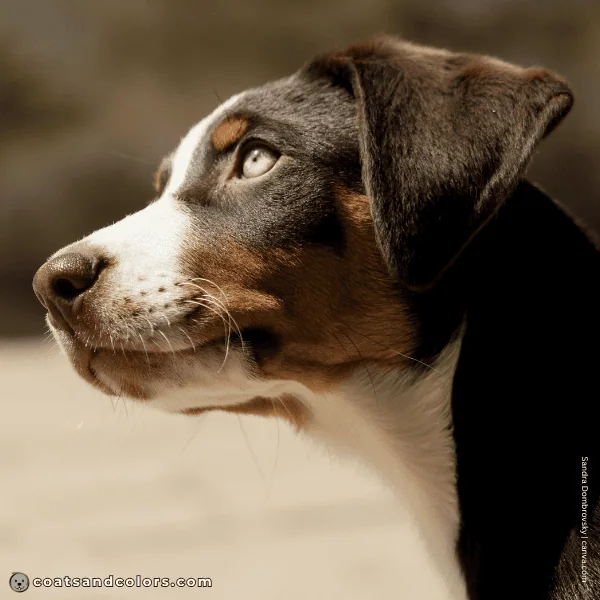
Dogs with too much face white (doesn’t have to be excessive, a broad blaze is enough) may have a faulty blue eye. I don’t have an Appenzeller example, but getting one or two blue eyes from meddling with whitehead phenotypes is a common problem in all the Swiss Sennenhunden.
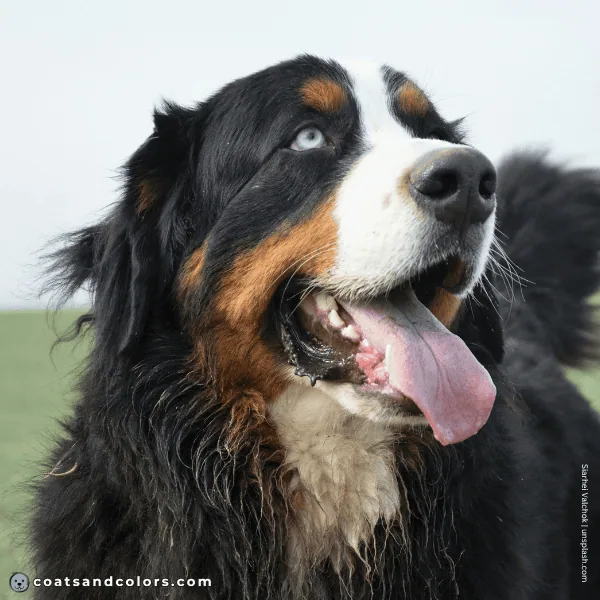
“In black dogs dark brown, brown; in havana brown dogs lighter brown, but as dark as possible.”
“Disqualifying Fault: Wall Eye. Fault: Eyes round, protruding or light.”
FCI Breed Standard[2]
Appenzeller Sennenhund Nose Colors
Dogs with black tricolor pattern have a black nose. The “havana” brown tris have a brown nose.
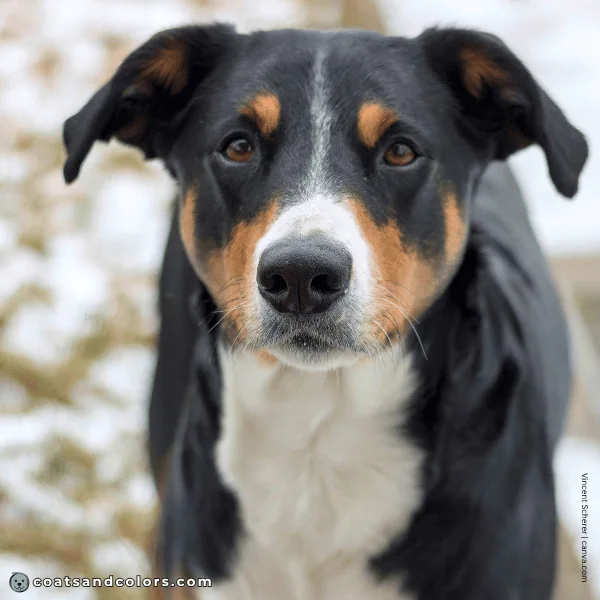
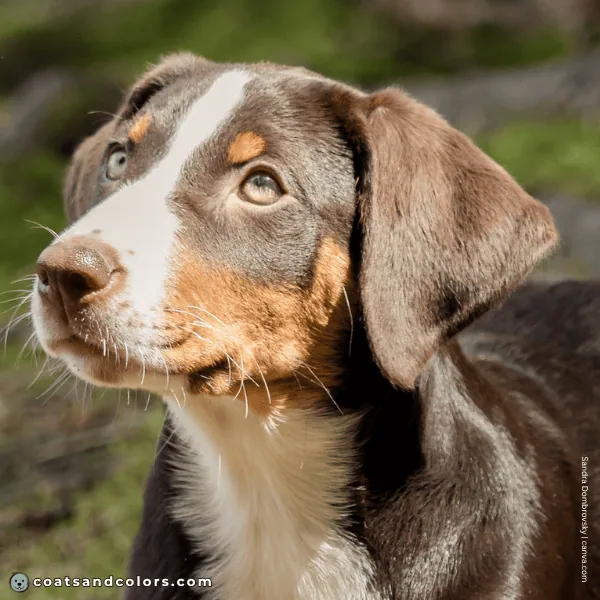
“In black dogs black, in havana-brown dogs brown (as dark as possible).”
FCI Breed Standard[2]
Appenzeller Sennenhund Coat Type
Appenzellers are short-haired with a good amount of undercoat. They have a dense double coat.
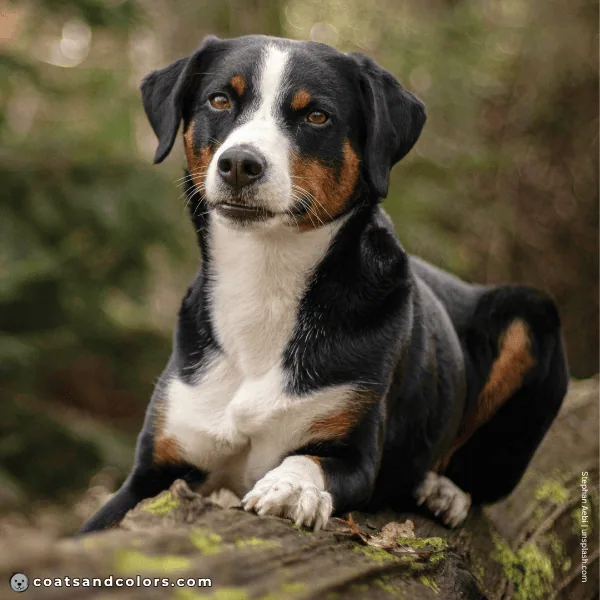
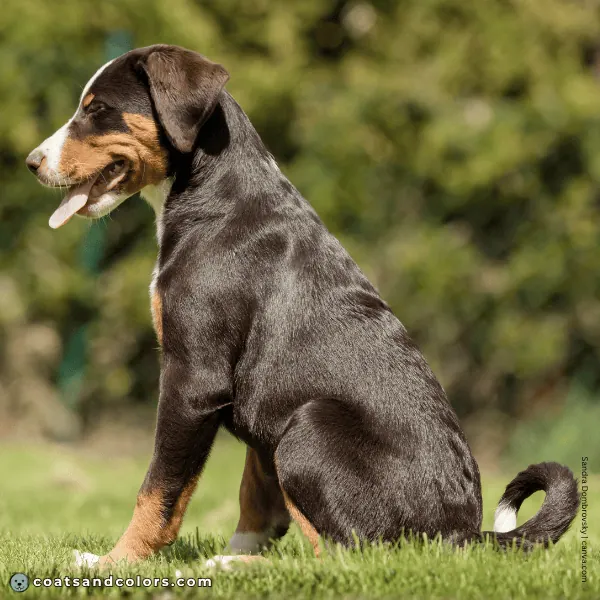
“Double coat (Stockhaar): Firm and fitting. Topcoat thick and shiny. Undercoat thick, black, brown or grey. It is undesirable for the undercoat to be visible through the topcoat. Slightly wavy coat only on withers and back just tolerated, but not desirable.”
FCI Breed Standard[2]
Appenzeller judges don’t want “the undercoat to show through“. I wonder if they actually mean red hair bases in the black coat (which is super normal for black and tan dogs if you don’t select against it).
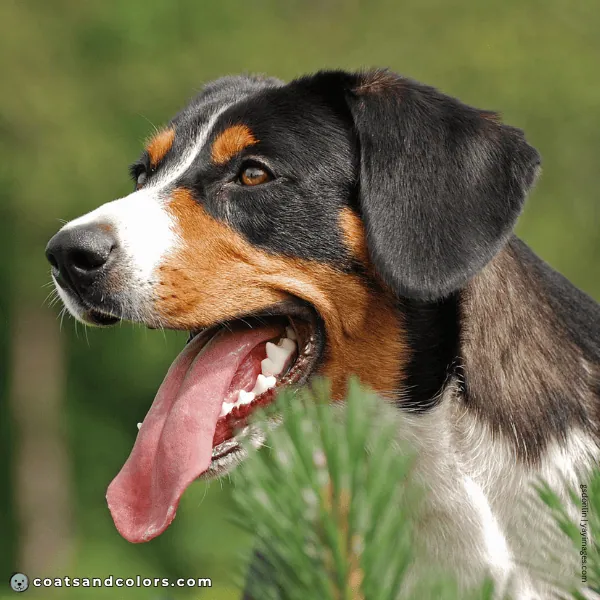
Some Appenzellers seem to carry a recessive variant for long hair. Breeding two carriers can produce long-haired puppies. I have no image, but I imagine it looks like a mini Bernese with a tightly curled tail?
Anyway, proper Appenzellers have a short coat.
Related Breeds
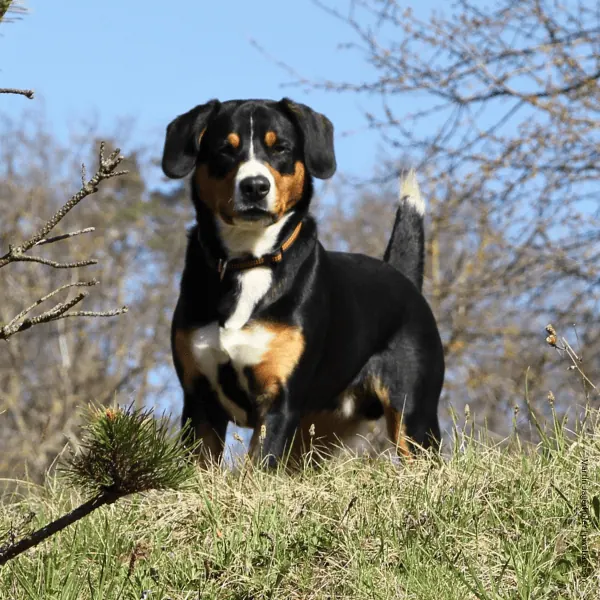
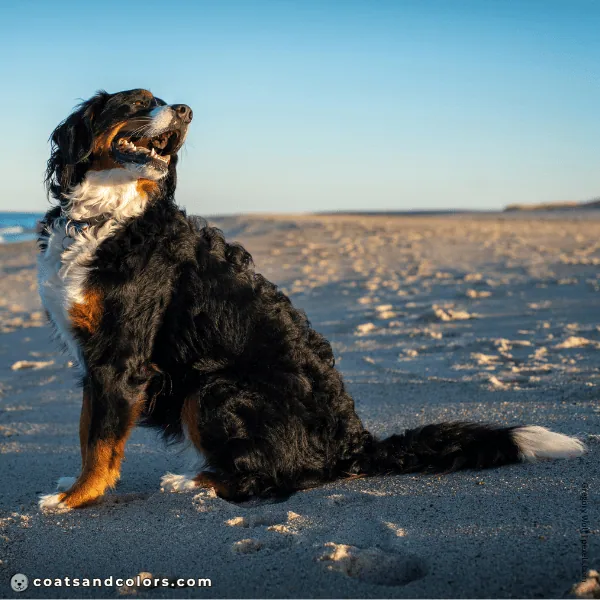
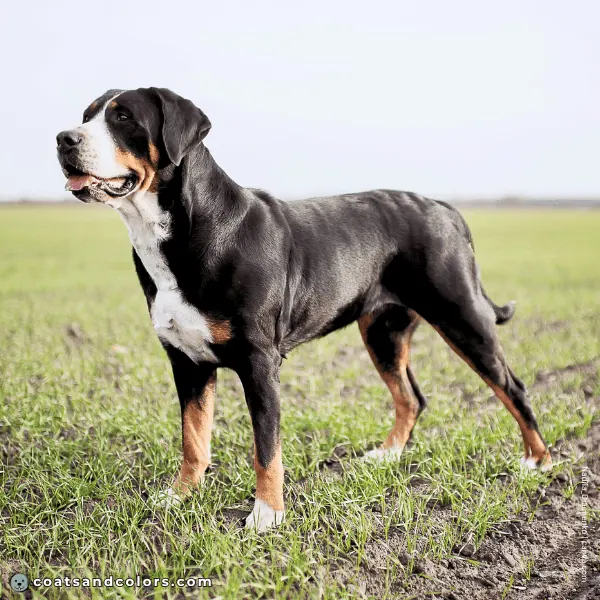
The Appenzeller is closely related to the other Swiss mountain dog breeds.
Learn More

Links
[1] AKC Breed Standard: Appenzeller Sennenhund
[2] FCI Breed Standard: Appenzeller Sennenhund
[3] CKC Breed Standard: Appenzeller Sennenhund
[4] Dreger et al. (2019). True Colors: Commercially-acquired morphological genotypes reveal hidden allele variation among dog breeds, informing both trait ancestry and breed potential. PLoS ONE 14(10): e0223995. https://doi.org/10.1371/journal.pone.0223995
[5] Theophil Studer. 1901. Die praehistorischen Hunde in ihrer Beziehung zu den gegenwärtig lebenden Rassen.
Image Credits
Appenzeller Gurt/unsplash.com
cynoclub/yayimages.com
Gregory Wolf/pexels.com
gsdonlin/yayimages.com
Katrinbechtel/pixabay.com
Lieres/yayimages.com
Martin Jagerhofer/pixabay.com
michaklootwijk/canva.com
ms-grafixx/yayimages.com
Nadiia_Diachenko/canva.com
nikola31/depositphotos.com
nikola19/canva.com
Sandra Dombrovsky/canva.com
Siarhei Valchok/unsplash.com
Stephan Aebi/unsplash.com
vikarus/depositphotos.com
Vince Scherer/pixabay.com
Vincent Scherer/canva.com
Hi! I’m Steffi. I am a biologist and a big time dog nerd. You are curious about coat color genetics? You’ve come to the right place! Read more.