

The Boston Terrier is a companion dog from the United States. Its short glossy coat can be black, brindle, or seal. Each color is combined with white markings.
Let’s have a look at all the Boston Terrier colors.
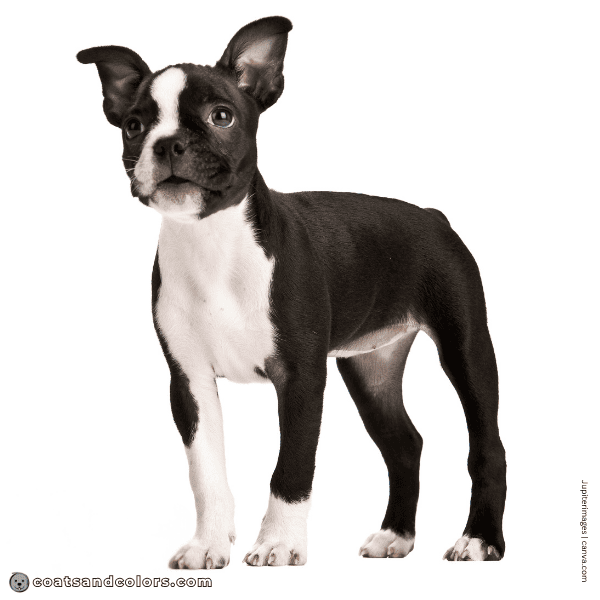
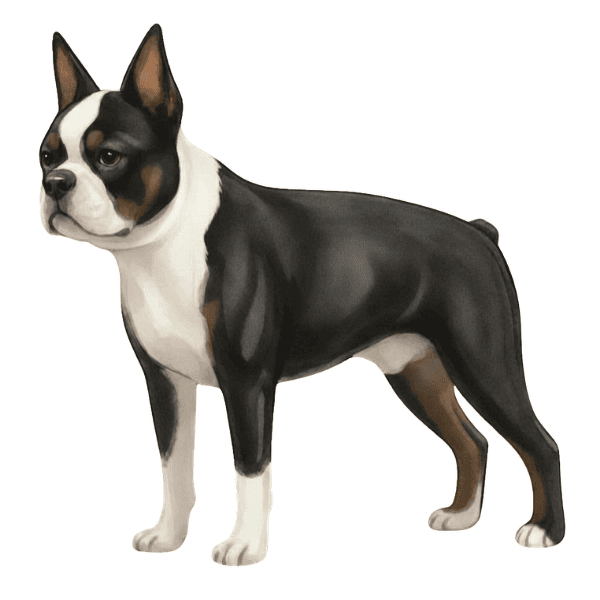
Black & White
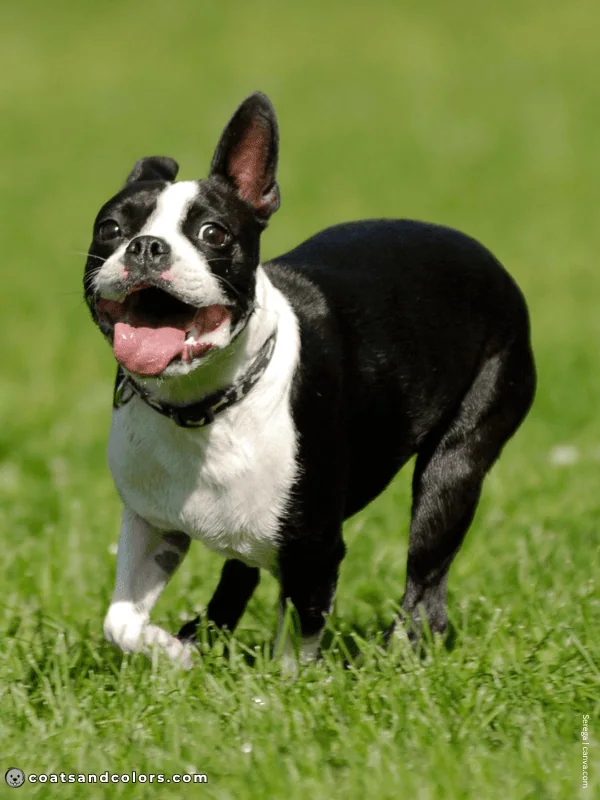
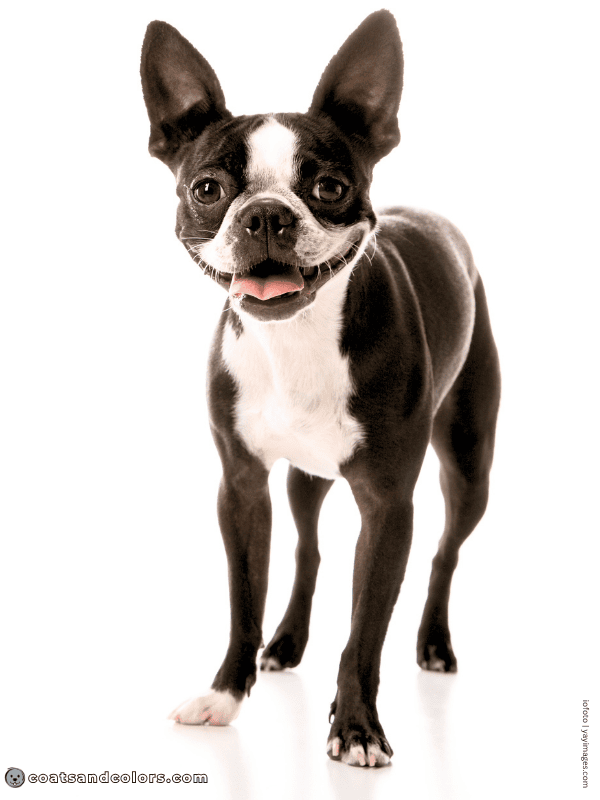
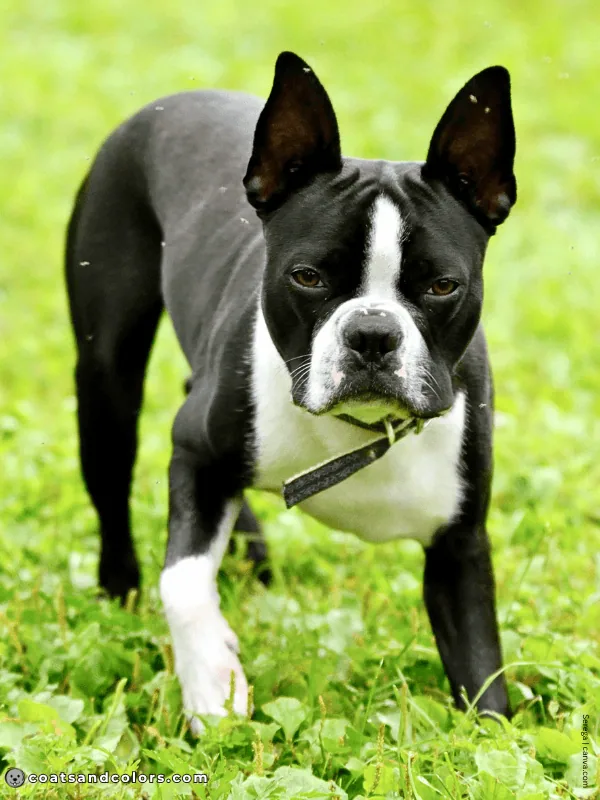
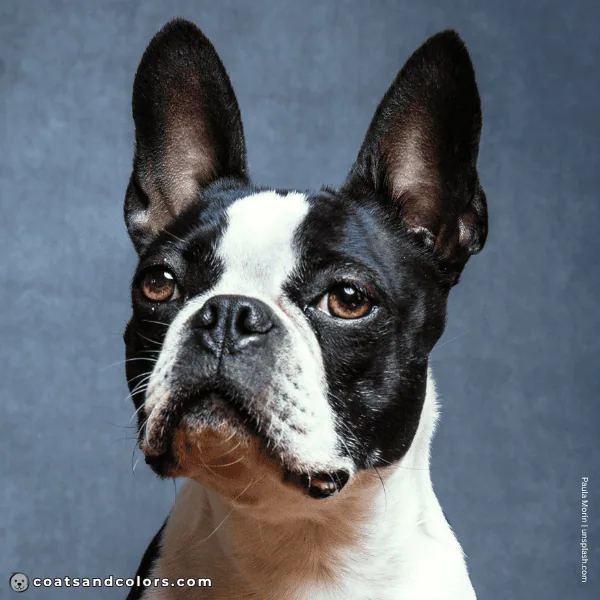
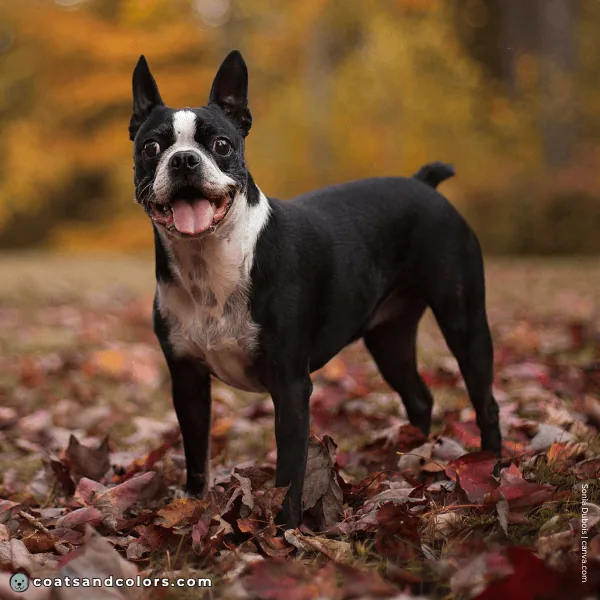
A black & white Boston Terrier is solid black with white markings.
BASE PATTERN
dominant black
MERLE
–
OTHER
–
EUMELANIN
black
INTENSITY
–
WHITE
whitehead
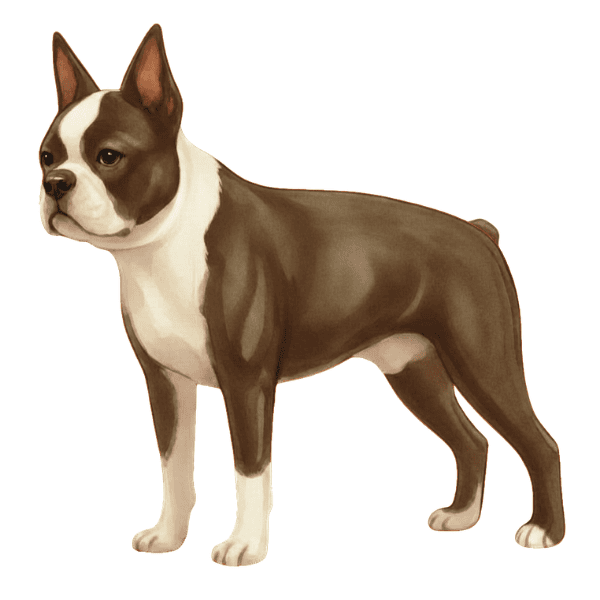
Seal & White
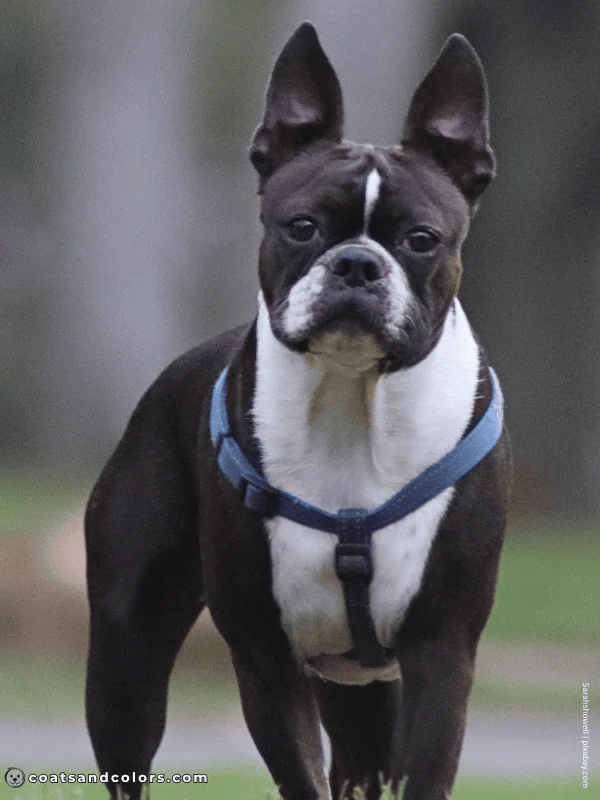
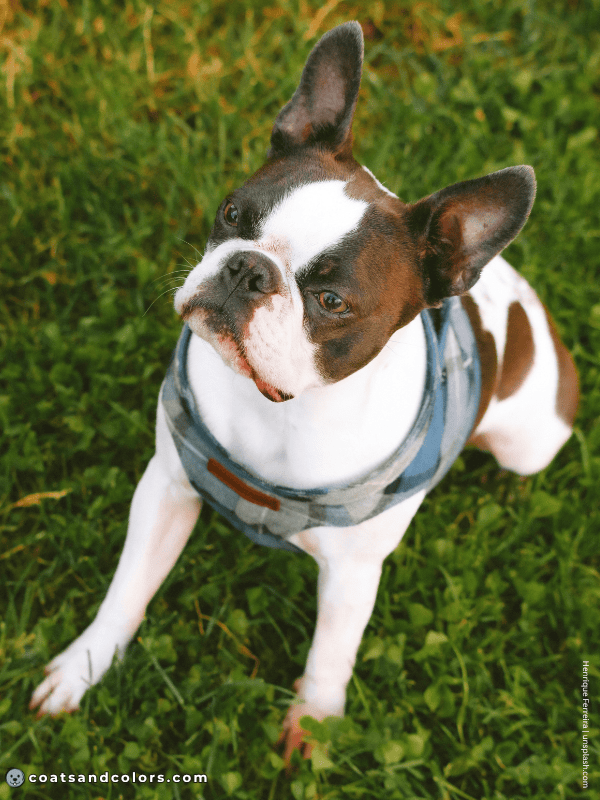
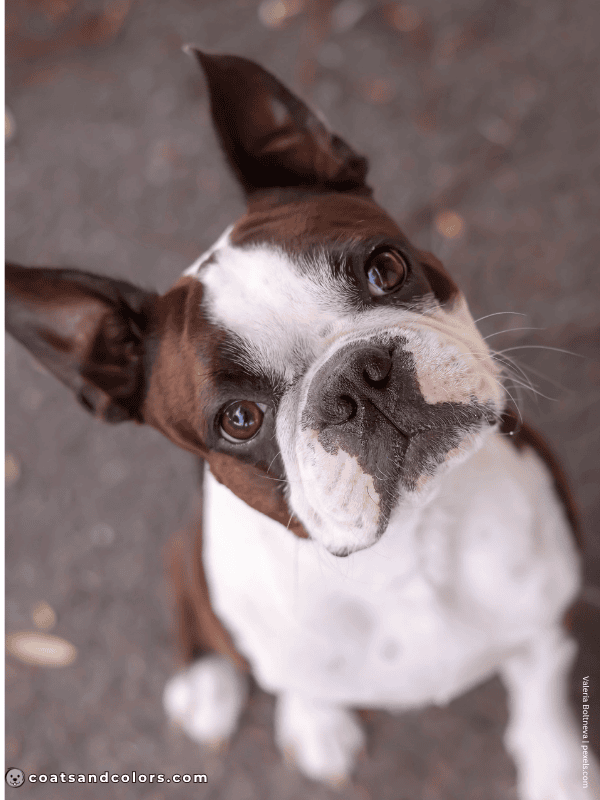
A seal Boston Terrier has incomplete dominant black.
See, Boston Terriers are fawn underneath their black coat. And seal causes some of this hidden fawn pattern to show through (we could also call this “ghost fawn”). Seal dogs often look solid black indoors, but have a rich red or mahogany cast when viewed in bright sunlight. But no matter how brownish they may look, a seal Boston always has a black nose.
Keep in mind, a darker seal brindle with very dense striping can look very similar to a seal dog. And brindle carriers (KB/kbr) can sometimes show faint ghost brindling in their seal coat.
BASE PATTERN
dominant black
MERLE
–
OTHER
seal
EUMELANIN
black
INTENSITY
–
WHITE
whitehead
Brindle & White
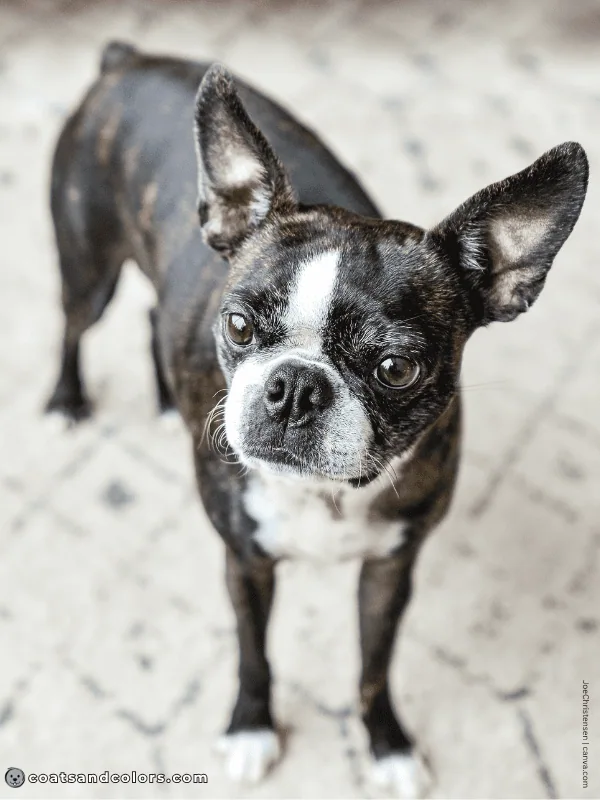
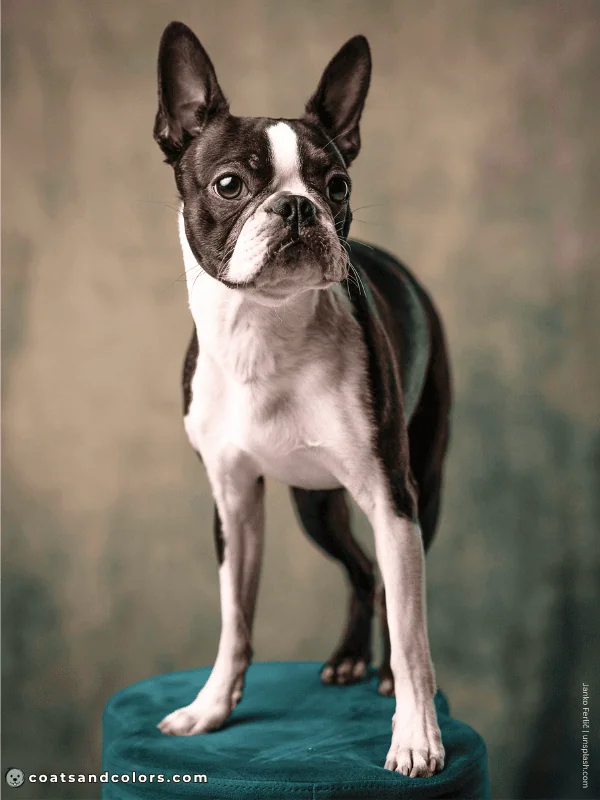
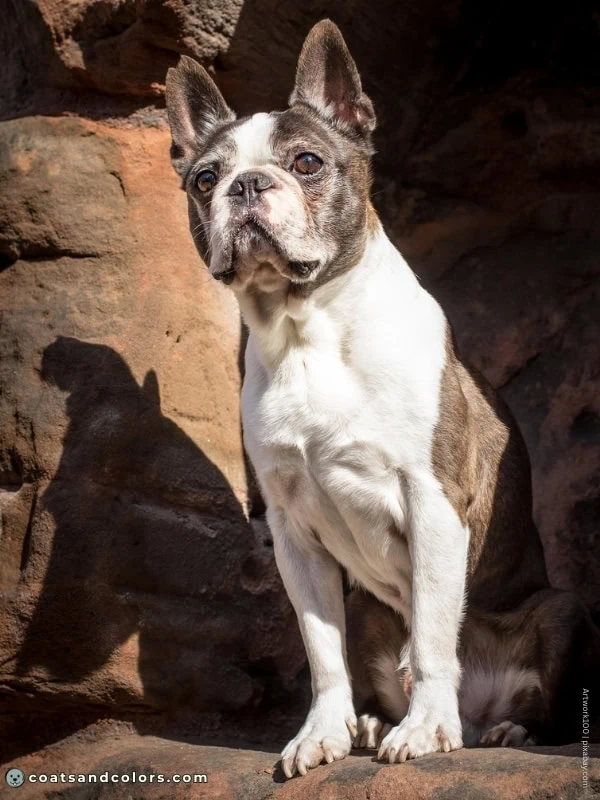
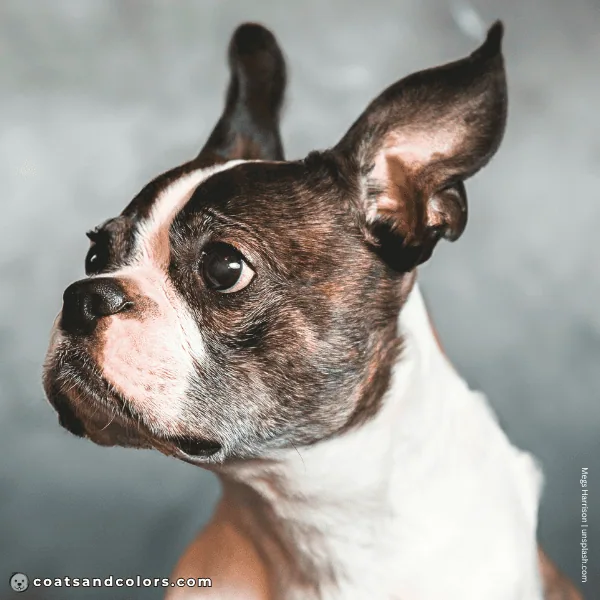
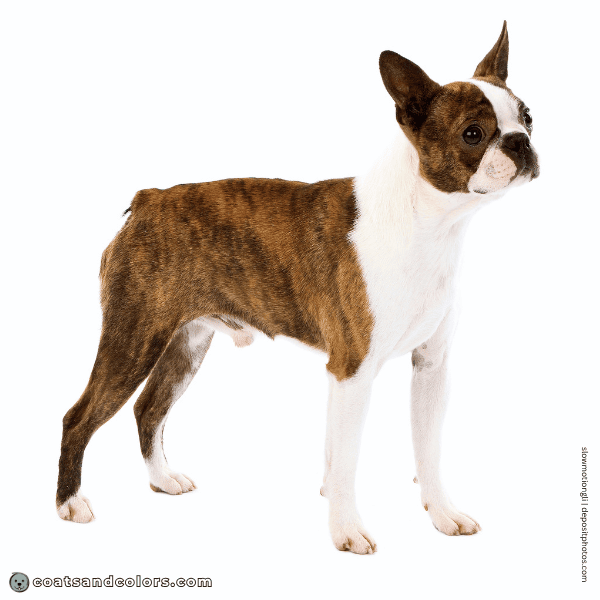
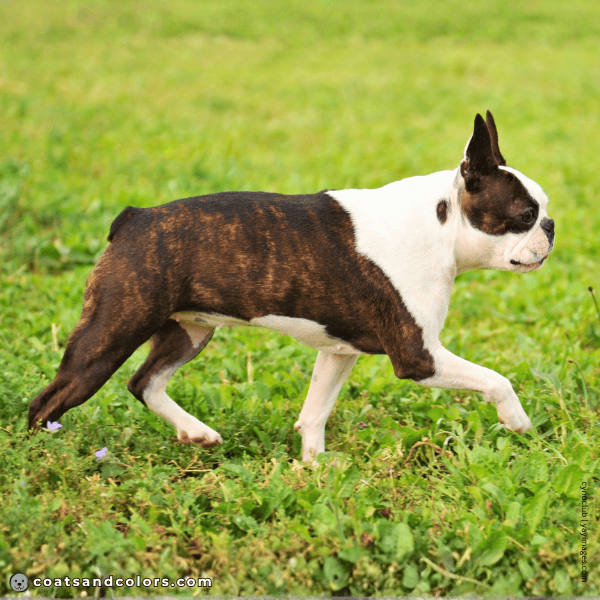
A brindle Boston Terrier has a fawn pattern with black striping and white markings. Dependig on the density of striping and the base color underneath the black stripes, some people use terms like fawn brindle, red brindle, or mahogany brindle to describe this pattern.
BASE PATTERN
sable brindle, black mask
MERLE
–
OTHER
–
EUMELANIN
black
INTENSITY
fawn
WHITE
whitehead
Black Brindle & White
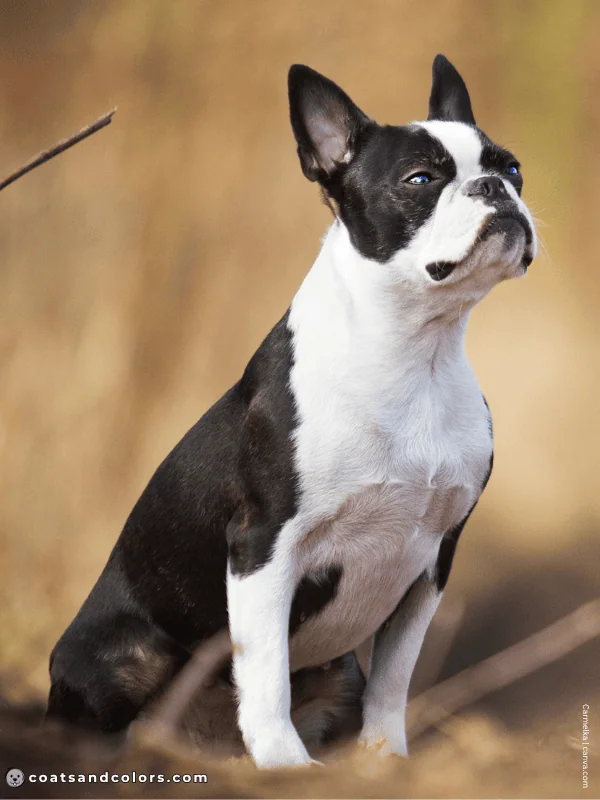
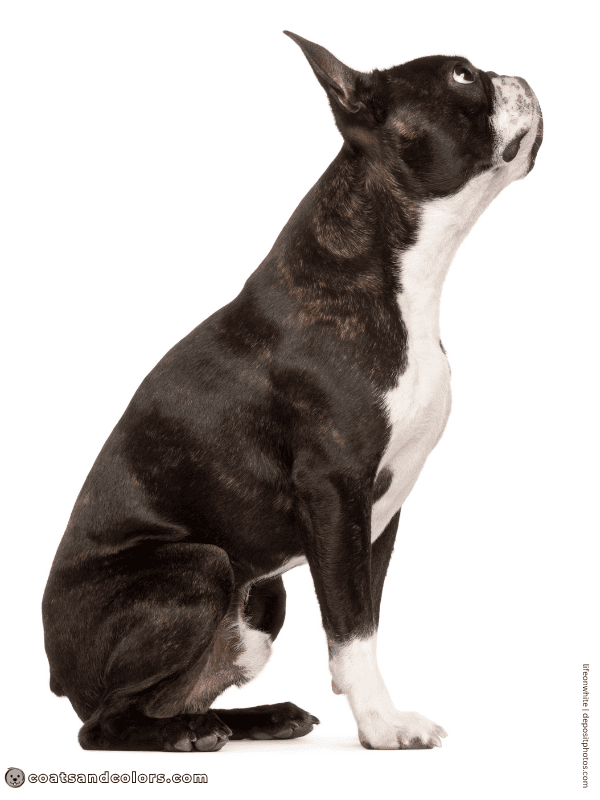
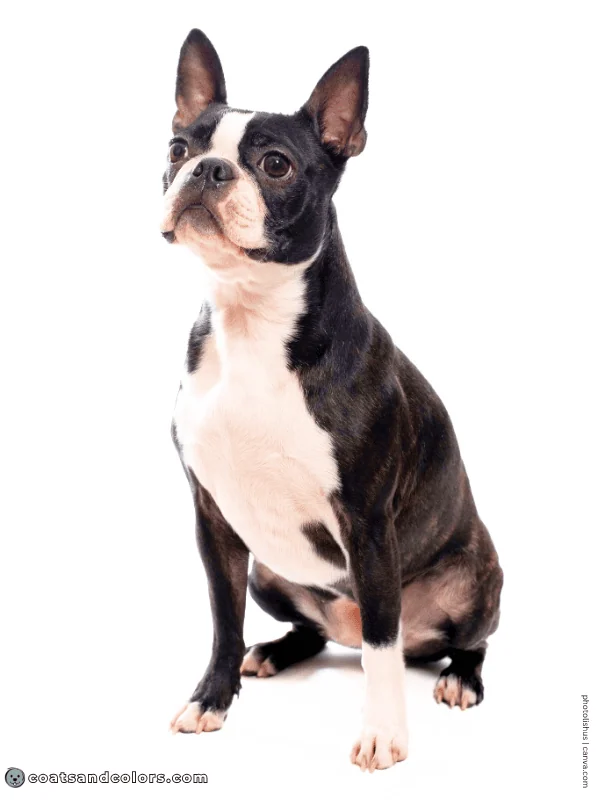
A black brindle Boston Terrier is a normal fawn brindle dog, just with very dense striping. They can look almost solid black with only some small areas of fawn still visible.
BASE PATTERN
sable brindle, black mask
MERLE
–
OTHER
–
EUMELANIN
black
INTENSITY
fawn
WHITE
whitehead
Seal Brindle & White
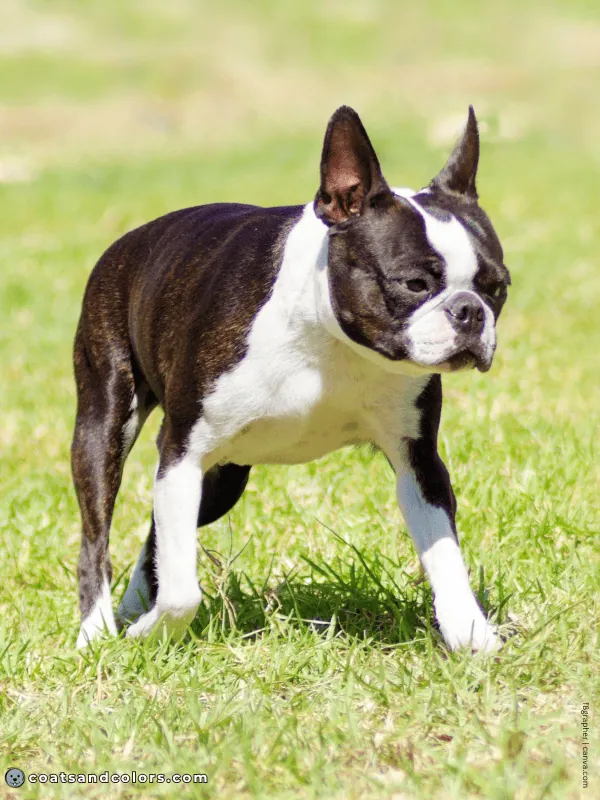
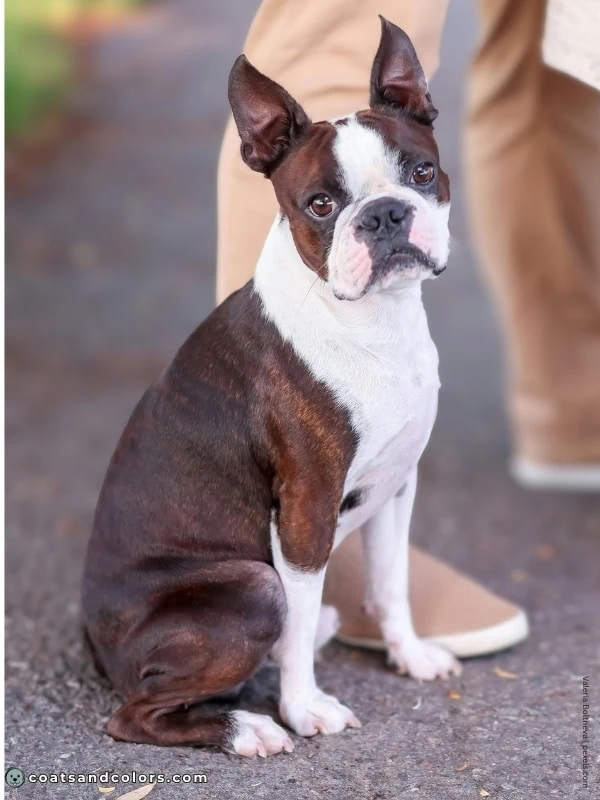
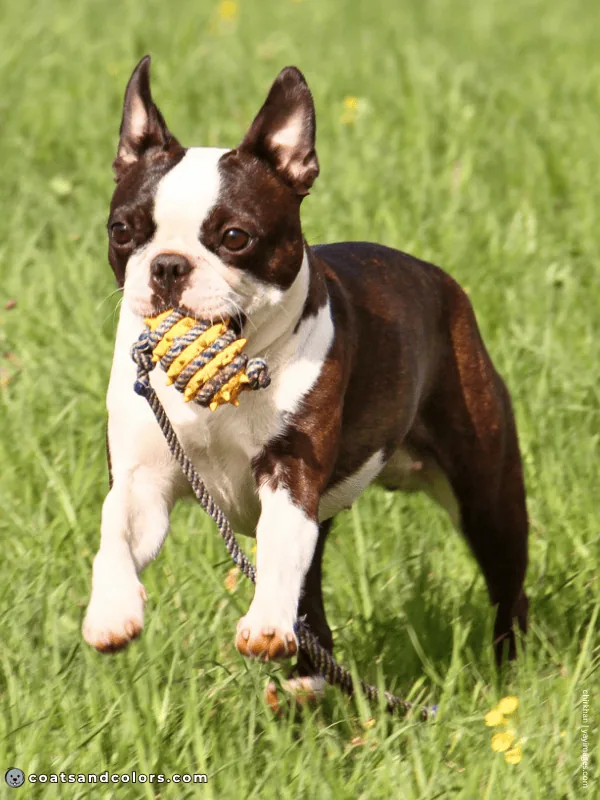
Whatever turns a solid black into seal dog can also affect the black pigment in brindle dogs. This way, the black brindling will look very reddish. This is called seal brindle.
BASE PATTERN
sable brindle, black mask
MERLE
–
OTHER
seal brindle
EUMELANIN
black
INTENSITY
fawn
WHITE
whitehead
Faulty Colors
“Disqualifications: Solid black, solid brindle, or solid seal without required white markings. Any color not described in the standard.”
AKC Breed Standard[1]
“Disqualifying Fault: Solid black, solid brindle, or solid seal without required whitemarkings. Grey or liver colours.”
FCI Breed Standard[2]
Base Patterns
The base pattern describes the placement of phaeomelanin and eumelanin in the coat. There is an epistatic hierarchy between these genes: A locus < K locus < E locus.
- The A locus controls the basic distribution of both pigment types.
- Next, the K locus can add black to the A locus pattern.
- Finally, the E locus regulates the general ability to produce black pigment.
A Locus
| Ay | clear sable |
| at | tan point |
Most Boston Terriers are homozygous for sable (Ay/Ay).
The tan point allele (at) is rare, but present in the breed.
K Locus
| KB | dominant black |
| kbr | brindle |
| ky | wild-type |
Bostons can be dominant black and express a solid black coat color (KB/-). Some have incomplete dominant black and will appear seal with lots of reddish undertones. Interestingly, some dogs with KB/kbr and the untestable seal modifier might show ghost brindling in their seal pattern.
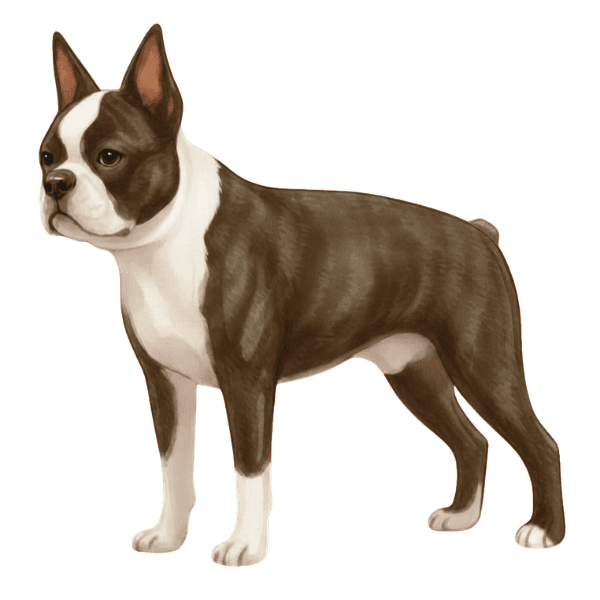
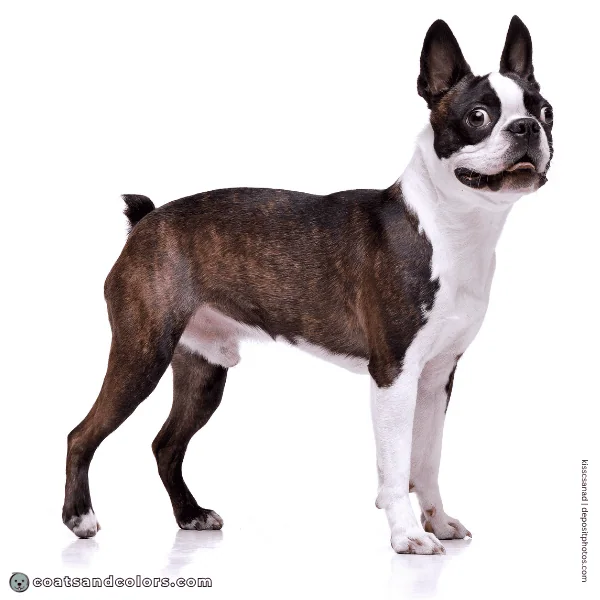
Most Boston Terriers are brindle (kbr/kbr) and can have very dense striping. Some of them are seal brindle with the fawn pattern showing through their black striping, causing reddish brindling.
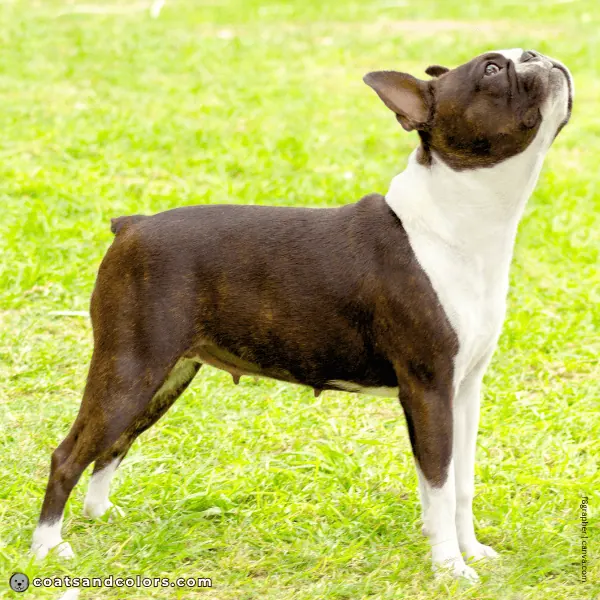
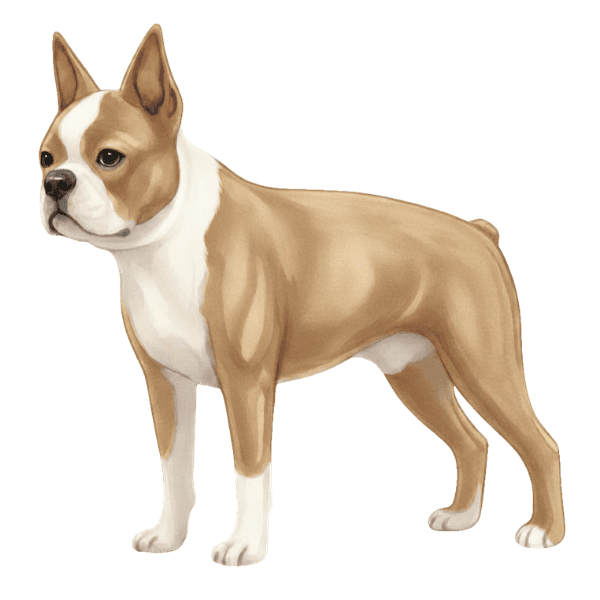
Some blacks or brindles carry the allele for normal pattern expression (ky). Breeding two carriers can produce a non-standard fawn or red pattern (Ay/- ky/ky) without any brindle.
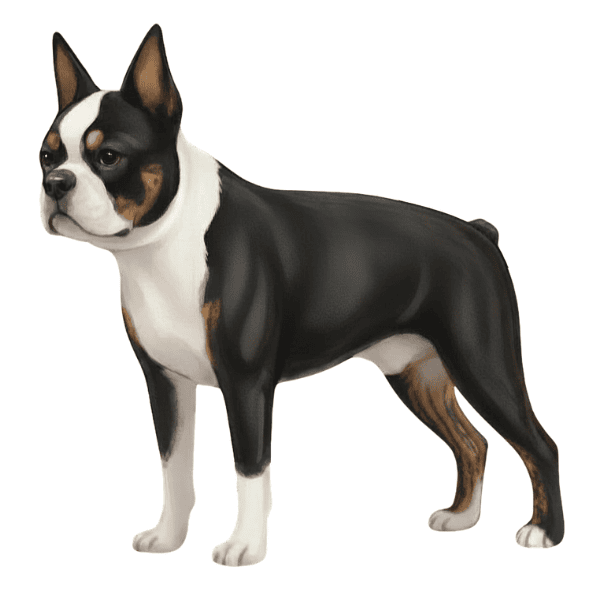
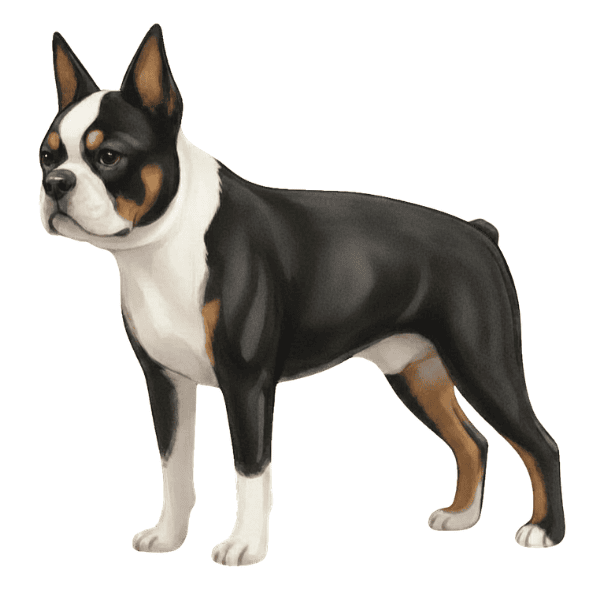
Dogs with at/at kbr/- will be brindle point tricolor, but very dark brindling can hide the points. Dogs with at/at ky/ky will be tricolor. A at/at KB/- dog can be solid black or have reddish ghost tan points.
All of these phenoytpes represent faulty colors, of course.
E Locus
| Em | black mask |
| E | wild-type |
| e | recessive red |
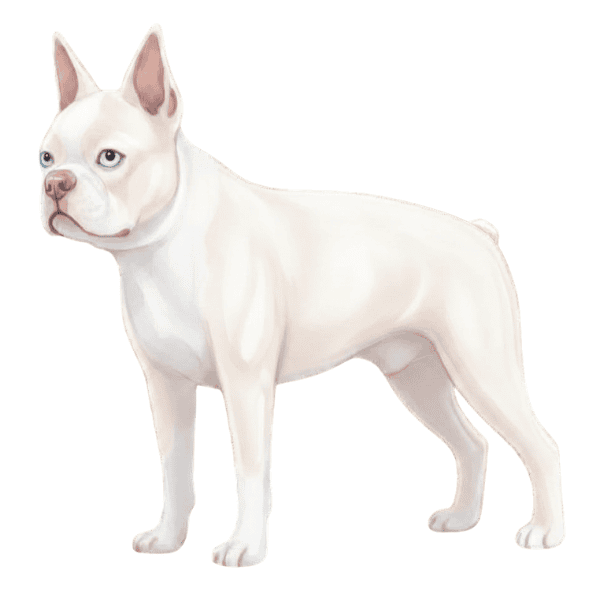
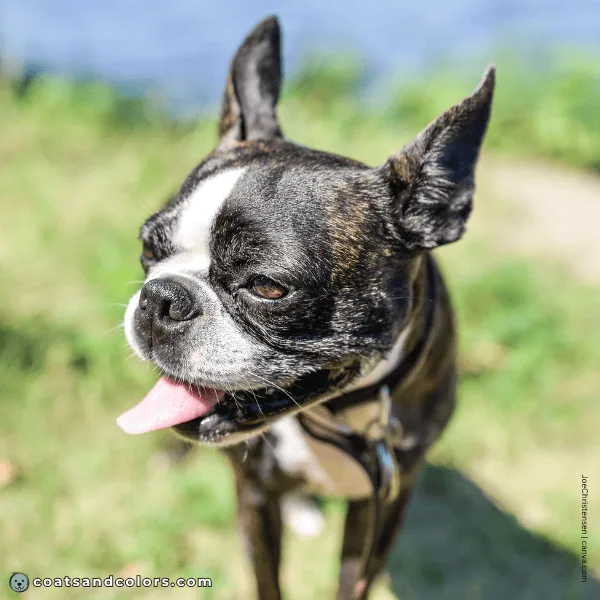
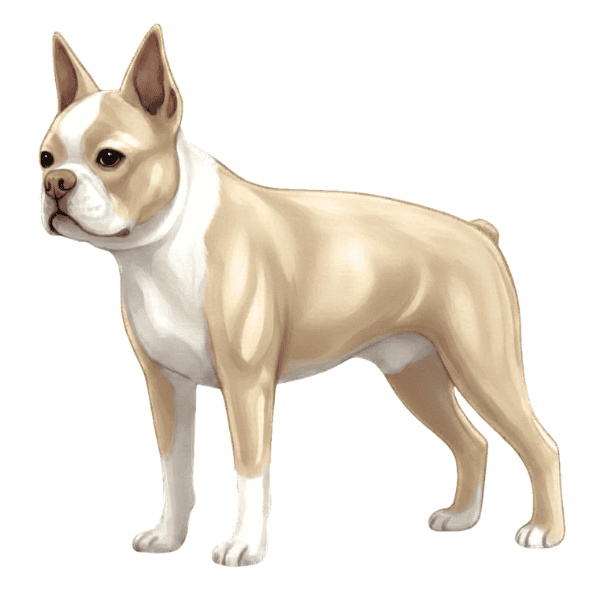
Most Boston Terriers have a black mask (Em). You just can’t see this very well unless the dog has a lighter brindle pattern. Some Bostons have normal pattern expression and are maskless (E). And an even smaller number carries recessive red (e), with e/e causing a solid cream coat and a flesh-colored nose.
Boston Terrier Base Patterns
| A LOCUS | K LOCUS | E LOCUS | PATTERN |
|---|---|---|---|
| Ay/Ay | kbr/kbr | Em/- | sable brindle, mask “brindle” –> “seal brindle” |
| Ay/Ay | kbr/kbr | E/E | sable brindle “brindle” –> “seal brindle” |
| KB/- | Em/-, E/E | dominant black “black” –> “seal” |
Here is a simple color chart for the standard colors:
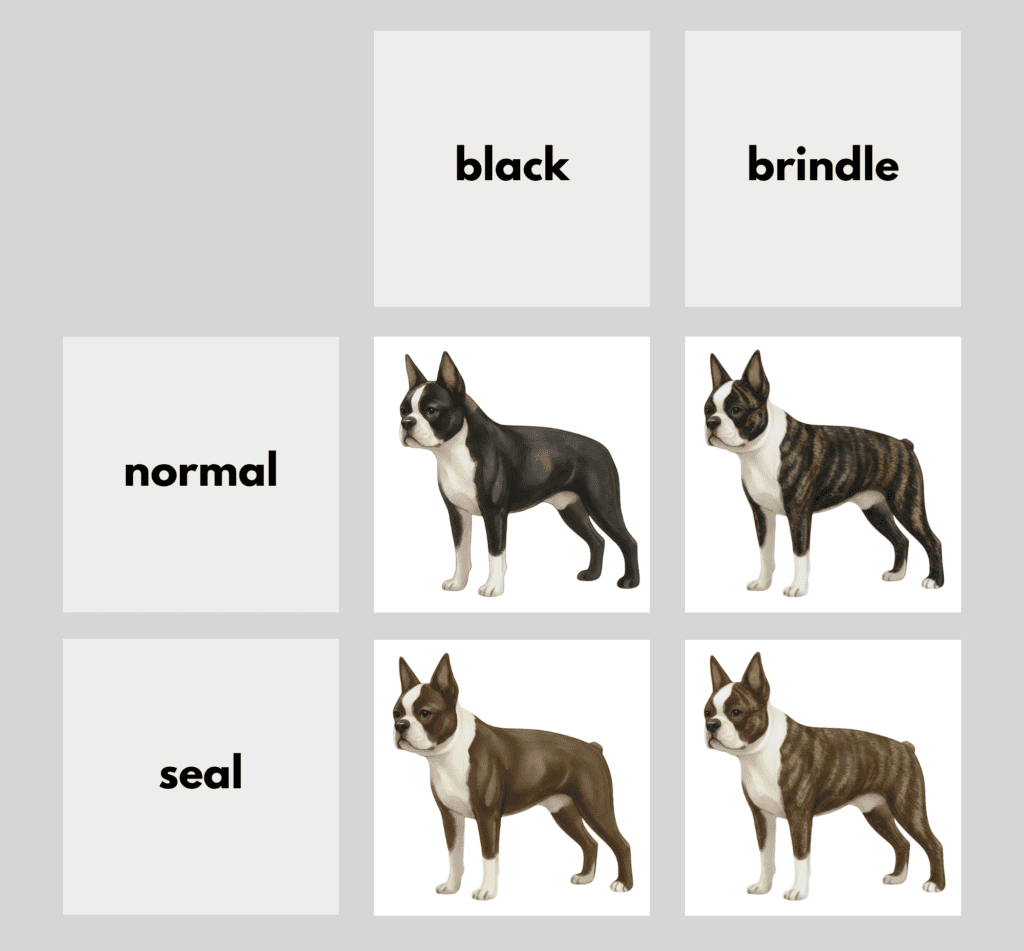
Base Colors
The base color is determined by the B locus and D locus.
B Locus
| B | black |
| b | brown |
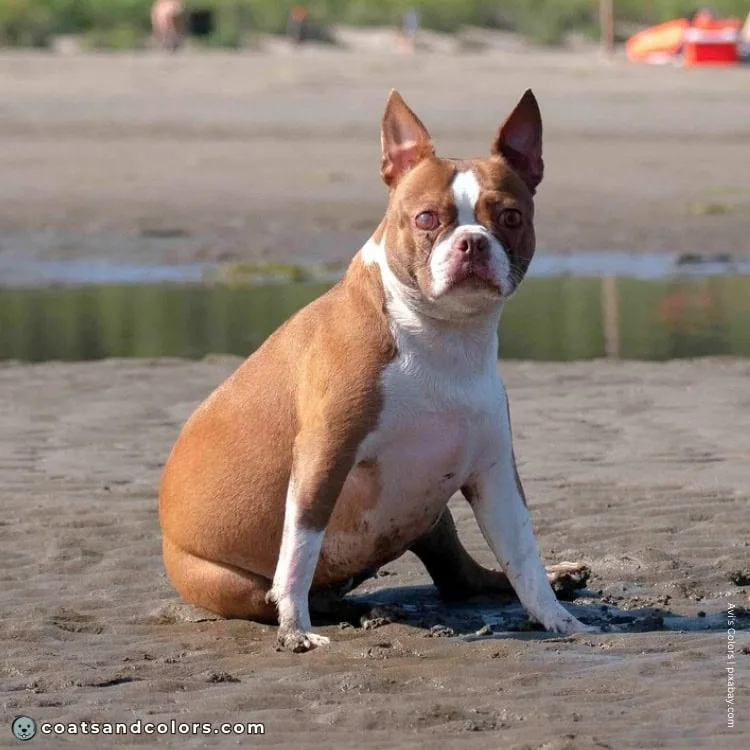
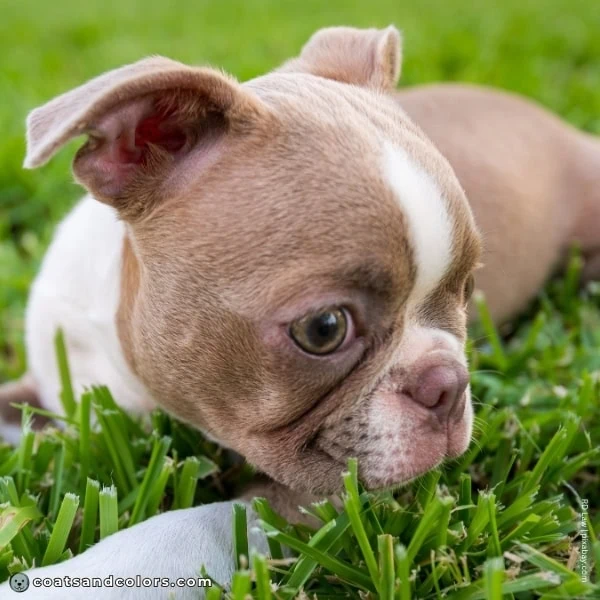
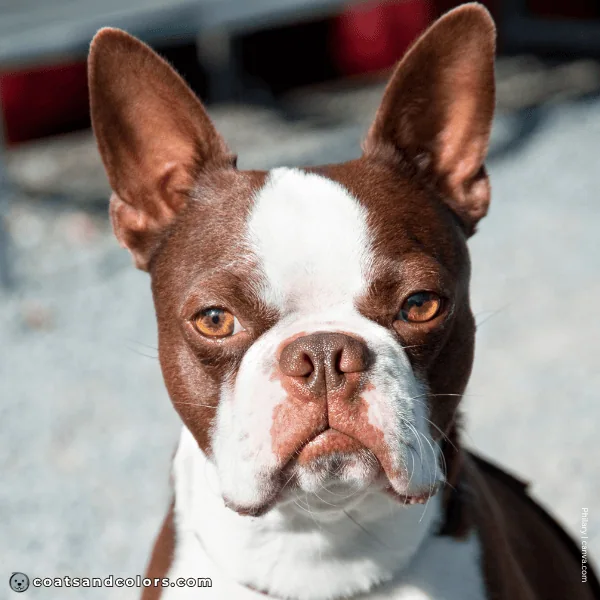
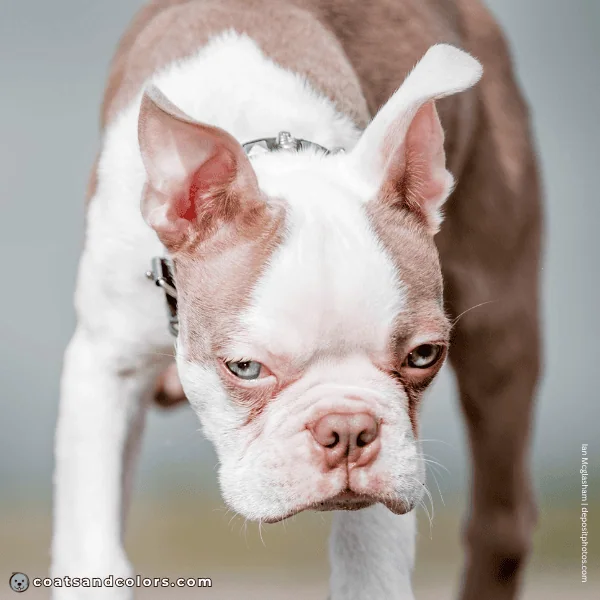
Boston Terriers should have black pigment (B/B). But quite a lot of them carry brown (B/b) or express brown (b/b), because chocolate is a popular color in pet breeding.
D Locus
| D | normal |
Boston Terriers should be fixed for normal pigment (D/D).
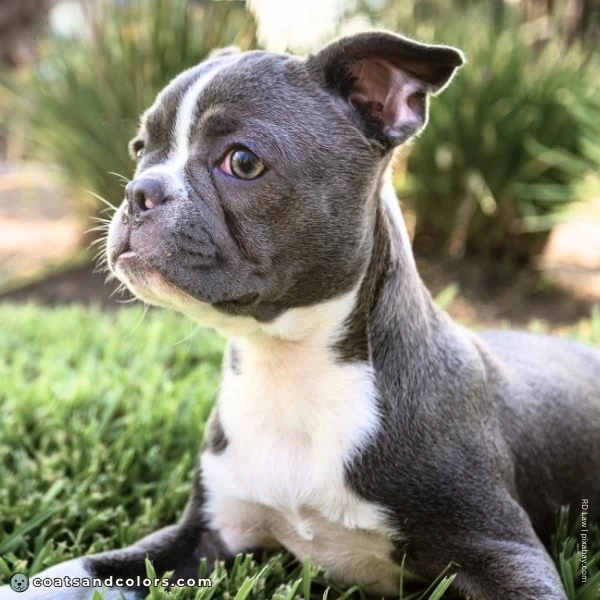
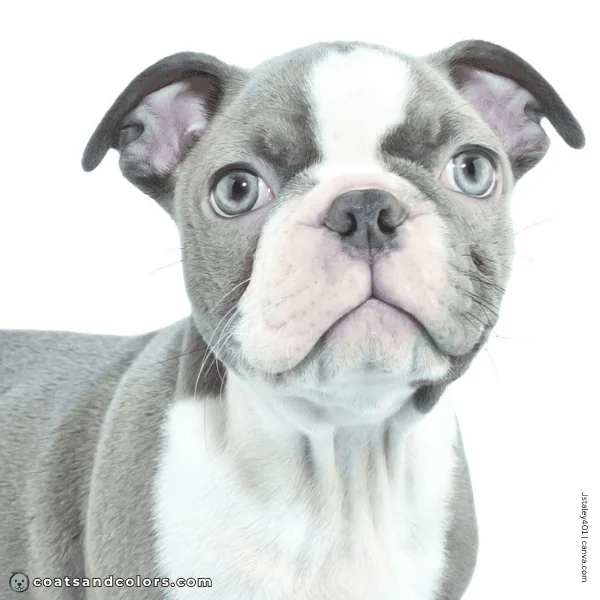
However… color breeders also produce diluted colors (d/d). A diluted black Boston Terrier has a blue pigment color and a gray nose. A diluted chocolate appears lilac and has a taupe nose.
Red Intensity
The only bit of red pigment visible in Bostin Terriers is the fawn pattern visible between the black brindling. The shades range from lighter fawn to darker mahogany colors.

White Markings
The white in Boston Terriers is caused by whitehead. Breeders select for a noticeable pattern with a tuxedo and a white blaze. But they try to avoid too much white on the face.
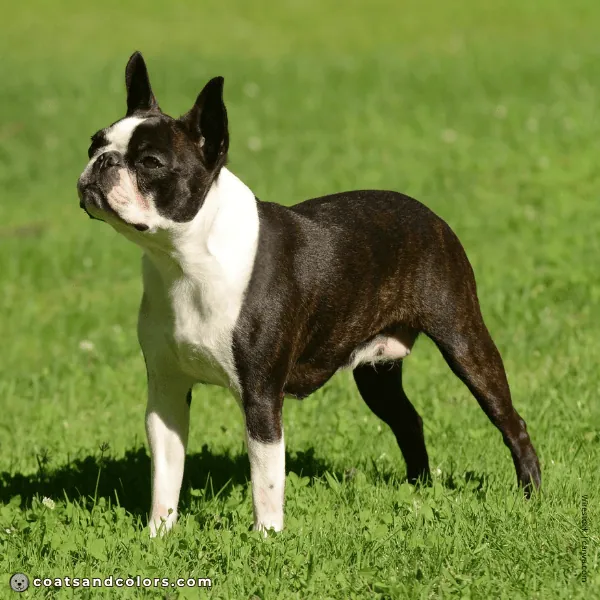
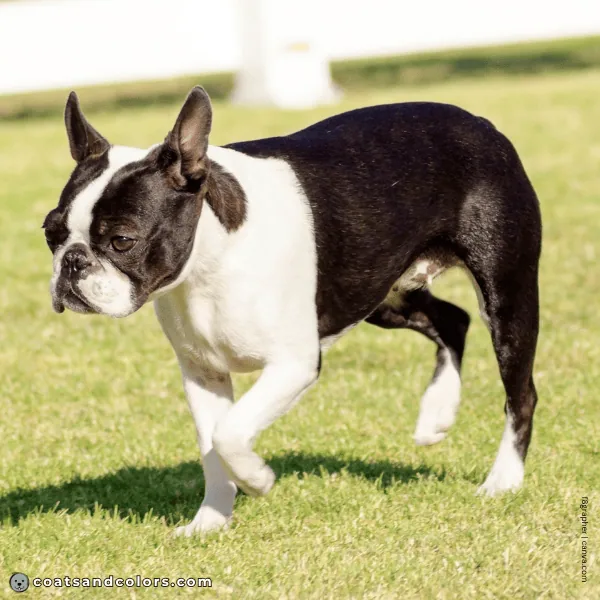
“Required Markings: White muzzle band, white blaze between the eyes, white forechest.”
“Desired Markings: White muzzle band, even white blaze between the eyes and over the head, white collar, white forechest, white on part or whole of forelegs and hind legs below the hocks.”
AKC Breed Standard[1]
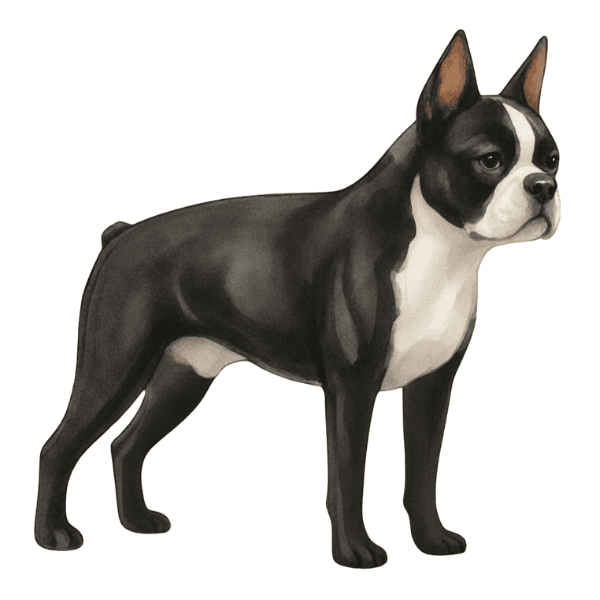
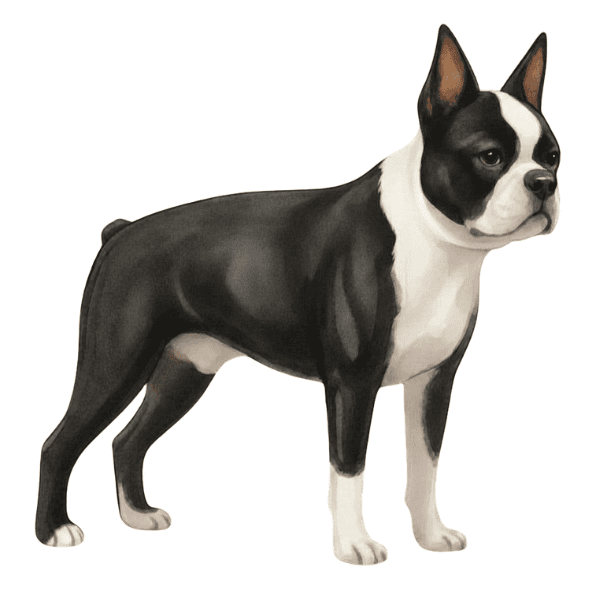
The placement of white markings can be a little unpredictable. Many dogs have asymmetrical markings, like a crooked blaze, more white on some legs than others, or an irregular patch on the chest.
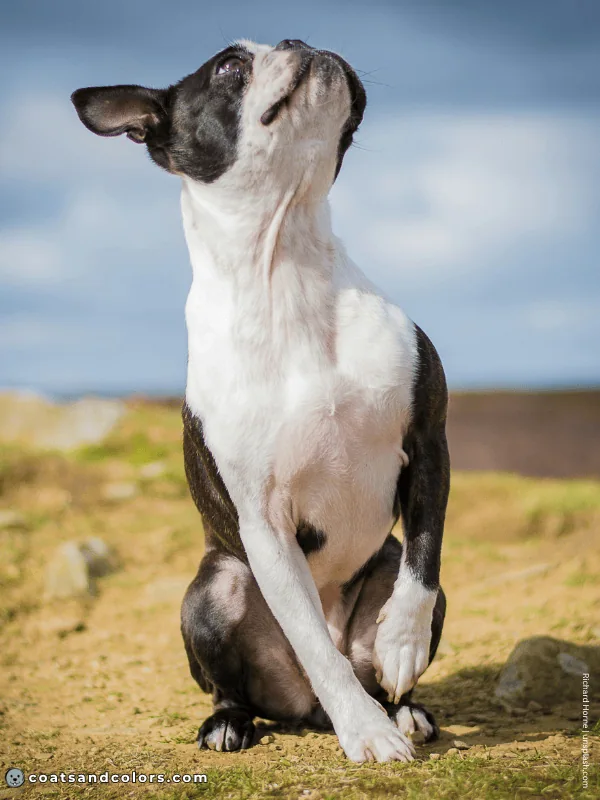
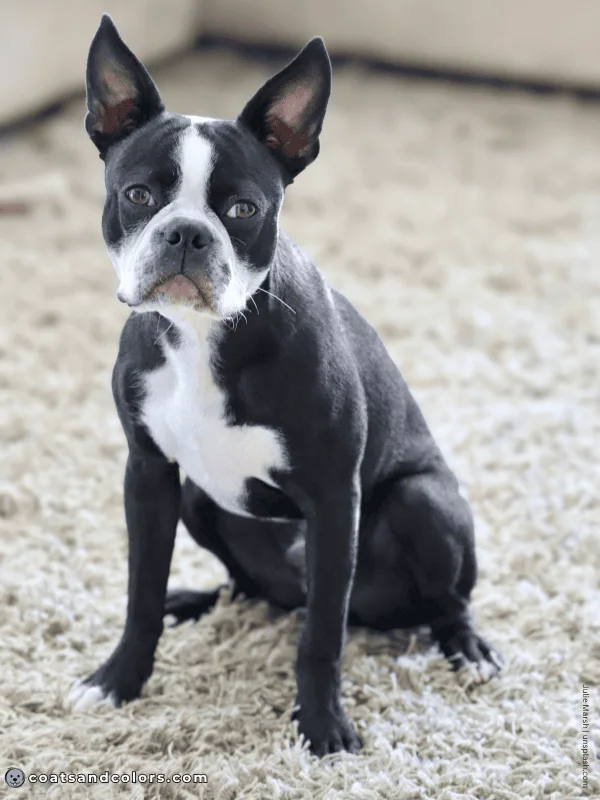
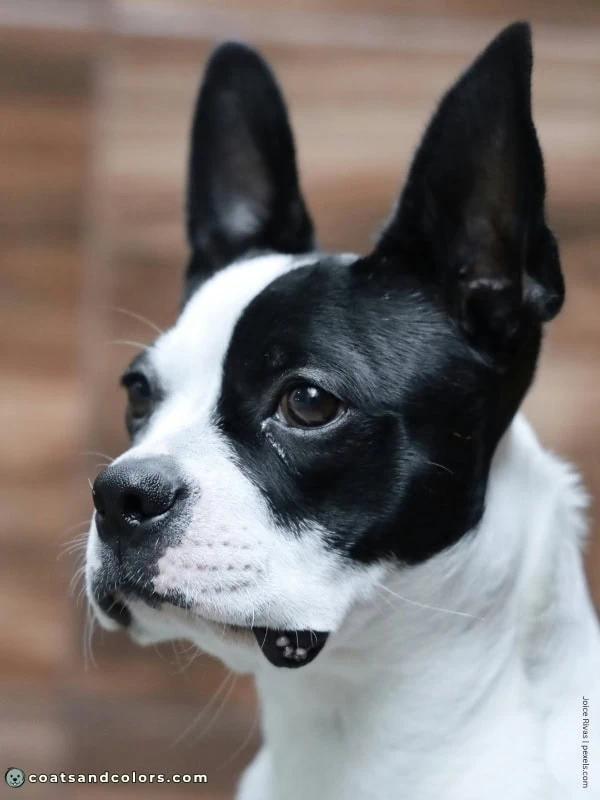
Many dogs with very wide blazes that extend to the forehead and maybe even further to connect to the white collar, have a small dot of residual pigment inside the blaze on the top of the skull. Boston Terrier people call this circle of dark hair in the middle of a white blaze a “Haggerty Spot“. But this is neither unique to Bostons nor is it related to certain lines. Any dog with a large blaze can have this.
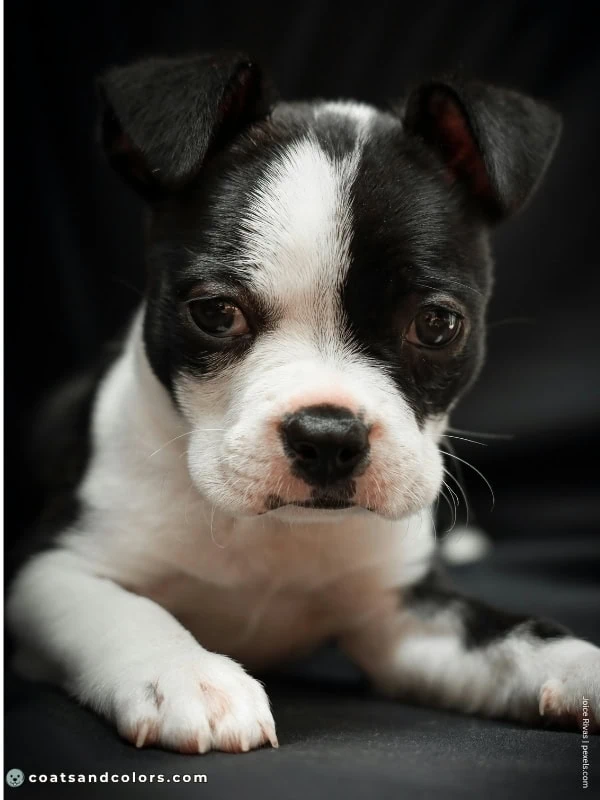
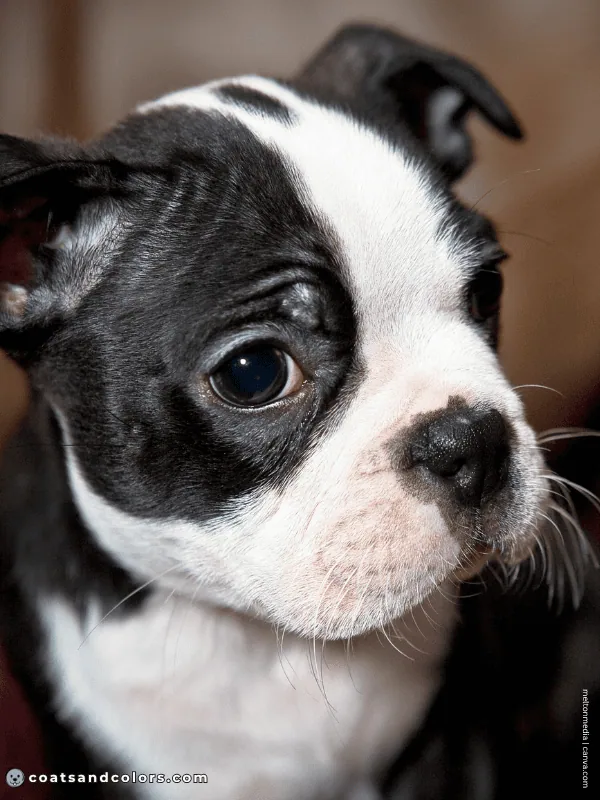
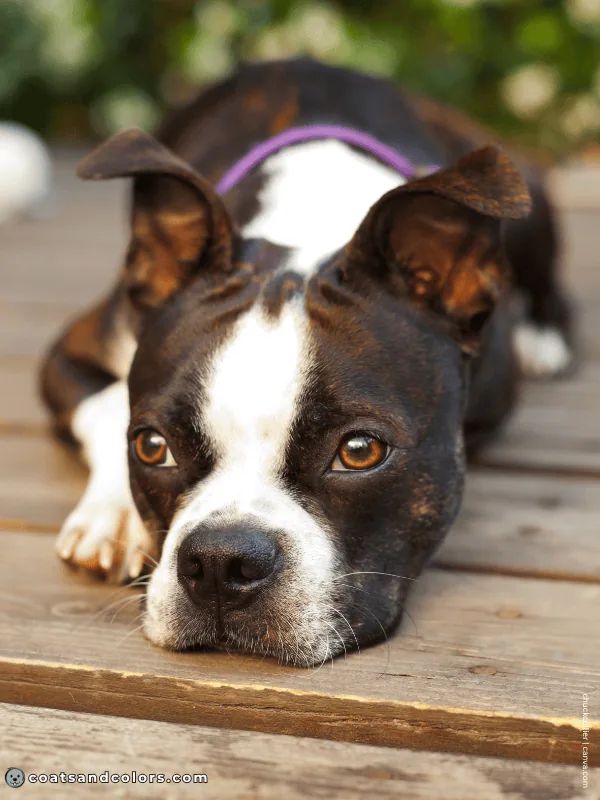
“One of the old founding lines of Bostons way back in the early 1900’s was owned by the Haggertys. Many of their Bostons were born with the dot on the top of their heads, and the marking became associated with the line. Hence, when you see it, it is ofter referred to as a Haggerty dot.”
Sometimes the white pattern “slips” beyond its intended reach and causes way too much white. Having a lot of white on the head is linked to an increased chance of blue eyes and hearing impairment.
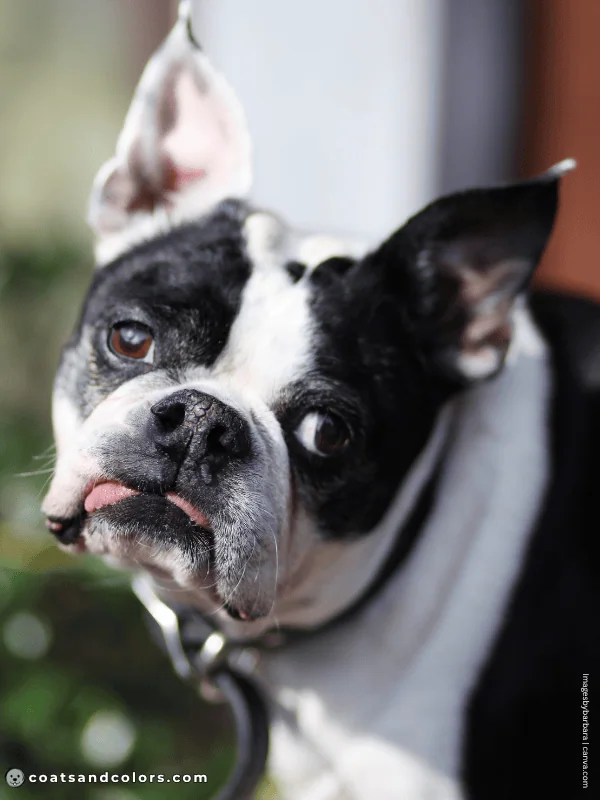
Boston Terrier Eye Colors
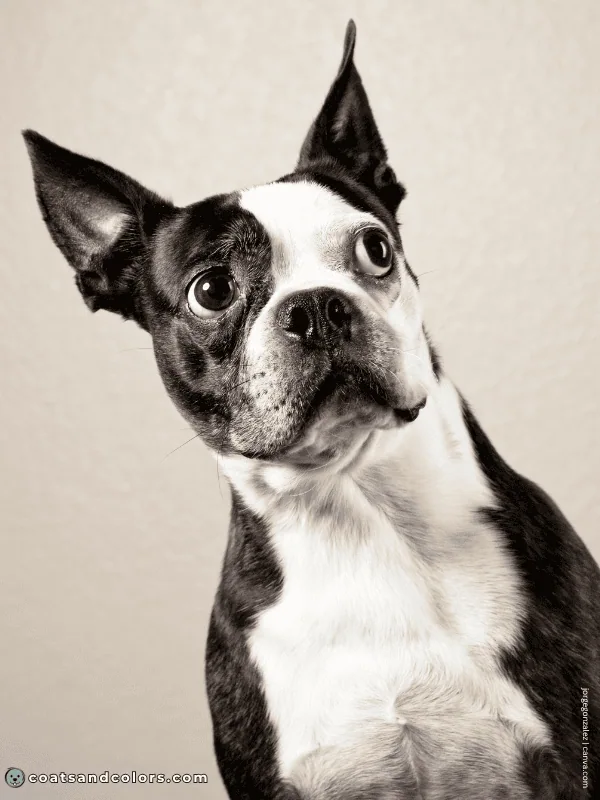
Boston Terriers typically have brown eyes.
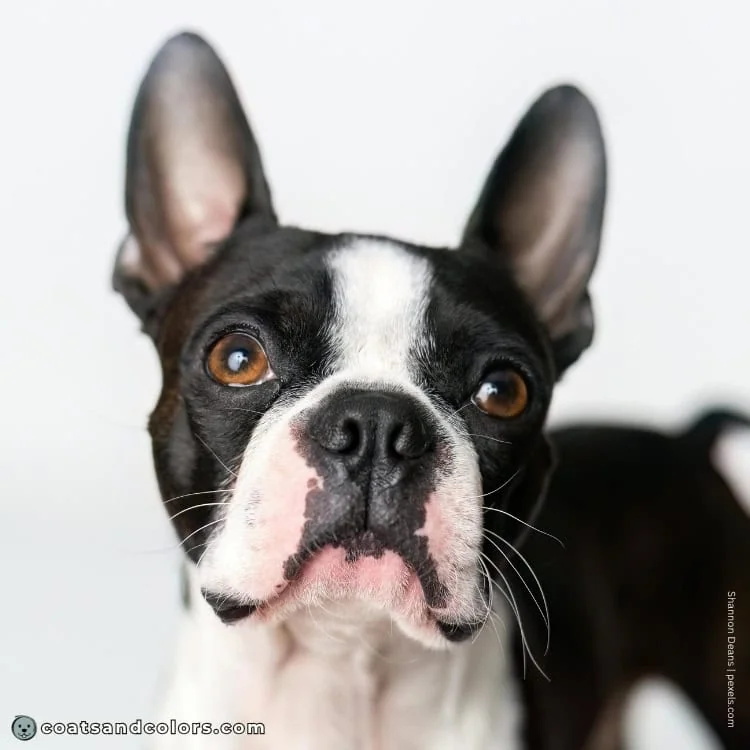
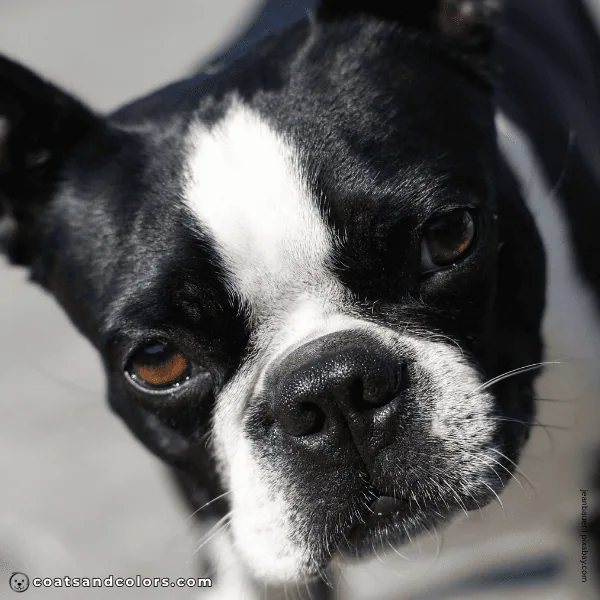

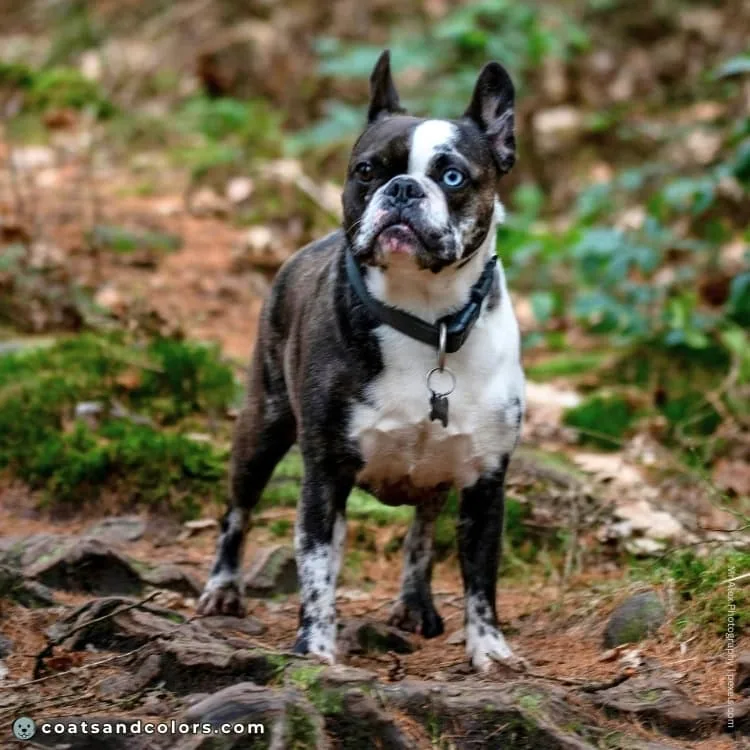
The whitehead pattern in Boston Terriers can sometimes cause blue eyes:
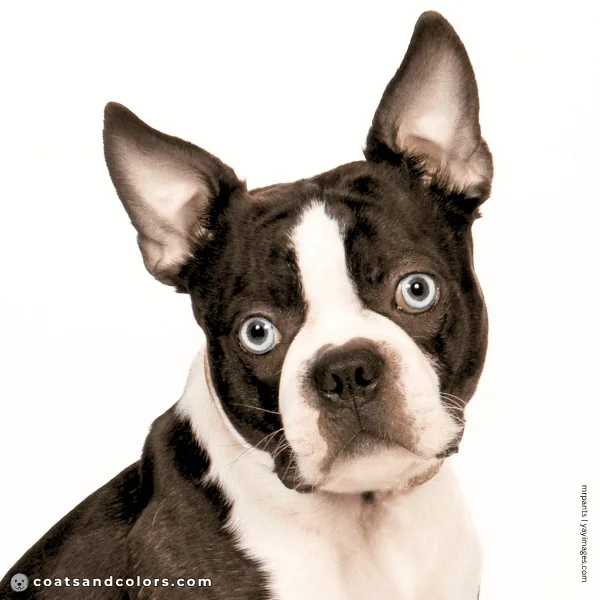
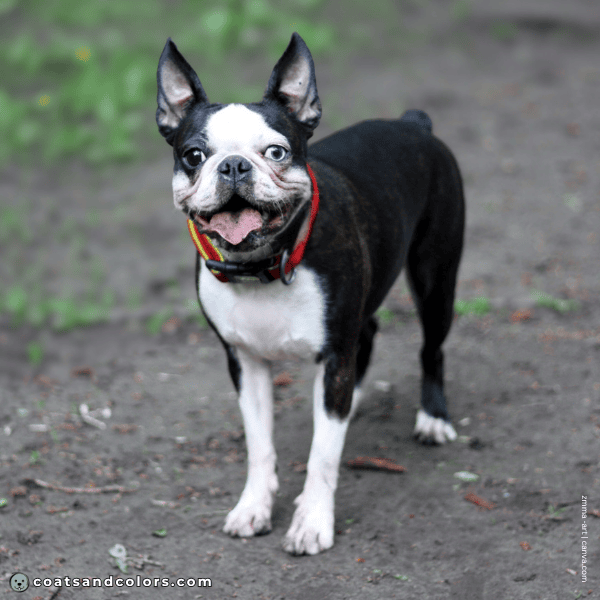
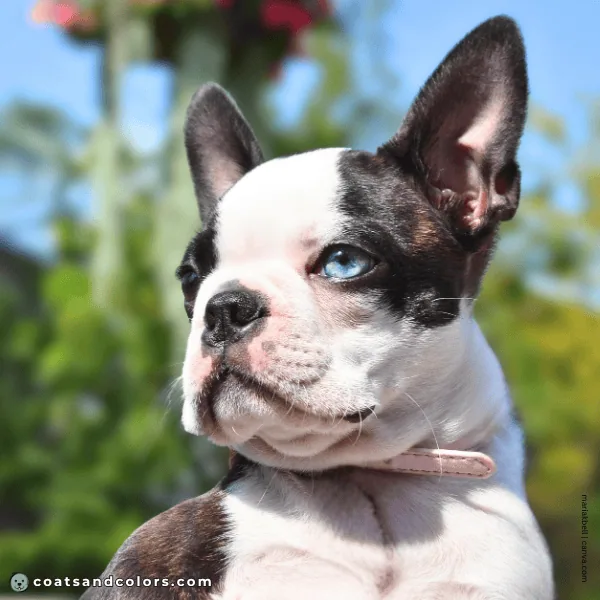
“The eyes are wide apart, large and round and dark in color.”
“Disqualifications: Eyes blue in color or any trace of blue.”
AKC Breed Standard[1]
Boston Terrier Nose Colors
Boston Terriers have a black nose.
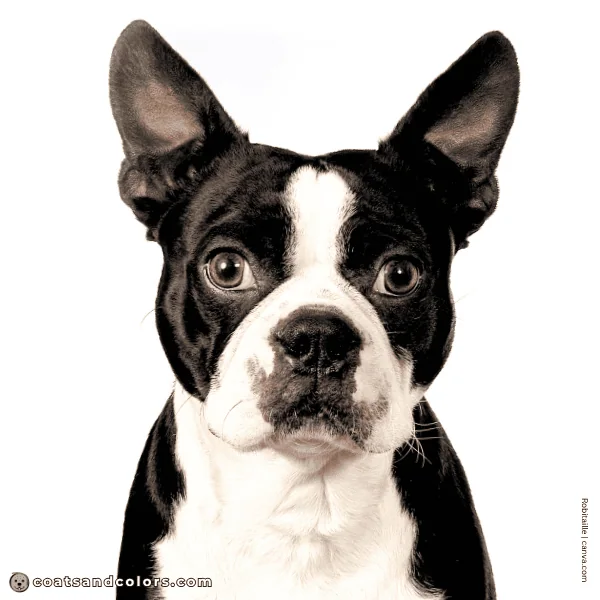
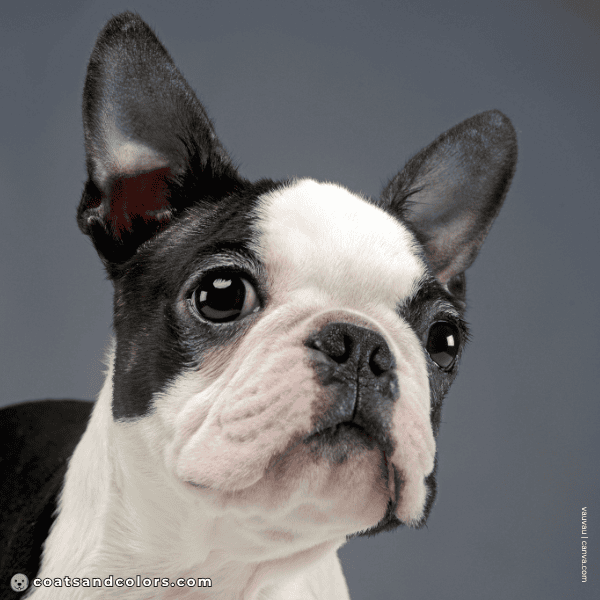
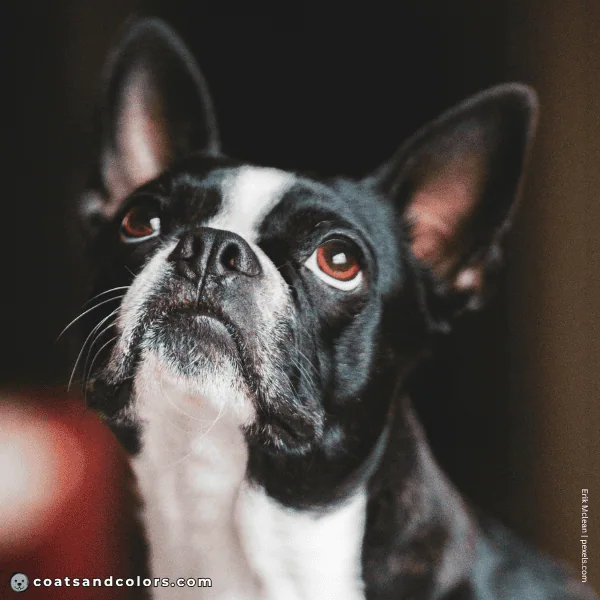
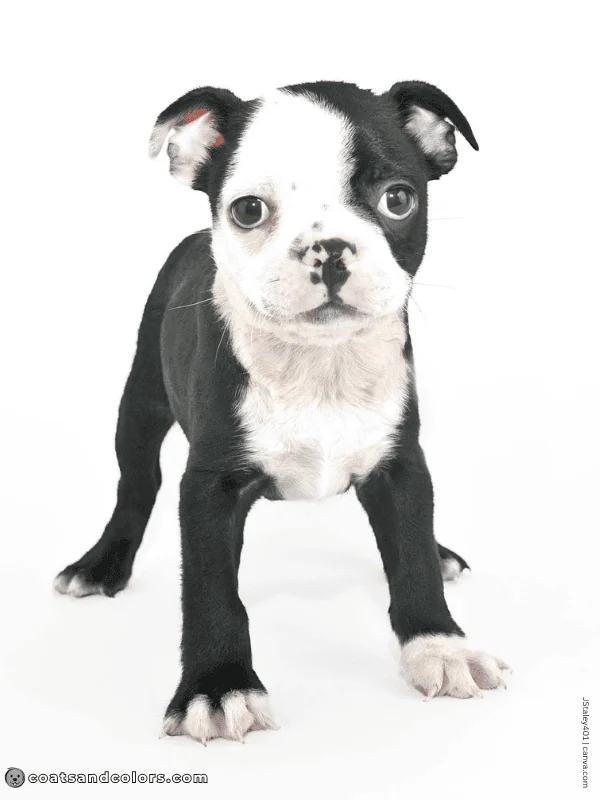
Puppies with big white markings on the muzzle often have incomplete nose pigmentation. Most of the pink spots will fill in over time. Only a few adult Bostons keep a spotty butterfly nose.
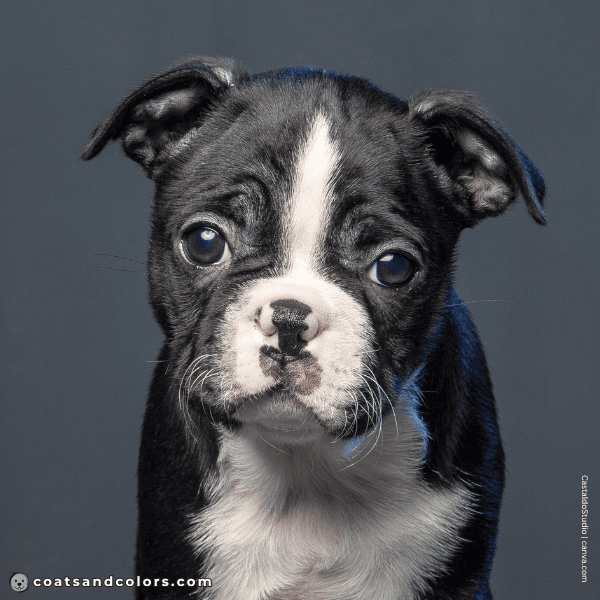
“The nose is black and wide, with a well defined line between the nostrils.”
“Disqualification: Dudley nose.”
AKC Breed Standard[1]
Boston Terrier Coat Type
Boston Terriers are short-haired without any significant undercoat.

“The coat is short, smooth, bright and fine in texture.”
AKC Breed Standard[1]
Other Breeds
Learn More


Links
[1] American Kennel Club (AKC): Boston Terrier
[2] Fédération Cynologique Internationale (FCI): Boston Terrier
[3] Royal Kennel Club (RKC): Boston Terrier
[4] Canadian Kennel Club (CKC): Boston Terrier
[5] Dreger et al. (2019). True Colors: Commercially-acquired morphological genotypes reveal hidden allele variation among dog breeds, informing both trait ancestry and breed potential. PLoS ONE 14(10): e0223995. https://doi.org/10.1371/journal.pone.0223995
Image Credits
Artwork100/pixabay.com
Avi’s Colors/pixabay.com
BaileysTable/canva.com
Carmelka/canva.com
CastaldoStudio/canva.com
chirkhan/yayimages.com
chuckcollier/canva.com
cynoclub/yayimages.com
Erik Mclean/pexels.com
f8grapher/canva.com
Henrique Ferreira/unsplash.com
Ian Mcglasham/depositphotos.com
Imagesbybarbara/canva.com
iofoto/yayimages.com
Janko Ferlič/unsplash.com
jeanbauer/pixabay.com
JoeChristensen/canva.com
Joice Rivas/pexels.com
jorgegonzalez/canva.com
JStaley401/canva.com
Julie Marsh/unsplash.com
Jupiterimages/canva.com
karolina-kruz/depositphotos.com
kisscsanad/depositphotos.com
lifeonwhite/depositphotos.com
mariakbell/canva.com
Megs Harrison/unsplash.com
meltonmedia/canva.com
Mr Alex Photography/pexels.com
mrpants/yayimages.com
Patrick Collins/unsplash.com
Paula Morin/unsplash.com
Philary/canva.com
photolishus/canva.com
RD Law/pixabay.com
Richard Horne/unsplash.com
Robitaille/canva.com
Sarahshowell/pixabay.com
Serega/canva.com
Shannon Deans/pexels.com
slowmotiongli/depositphotos.com
Sonia Dubois/canva.com
Valeria Boltneva/pexels.com
vauvau/canva.com
Wirestock/canva.com
Writchid Snipes/pexels.com
zmma-art/canva.com
Hi! I’m Steffi. I am a biologist and a big time dog nerd. You are curious about coat color genetics? You’ve come to the right place! Read more.