
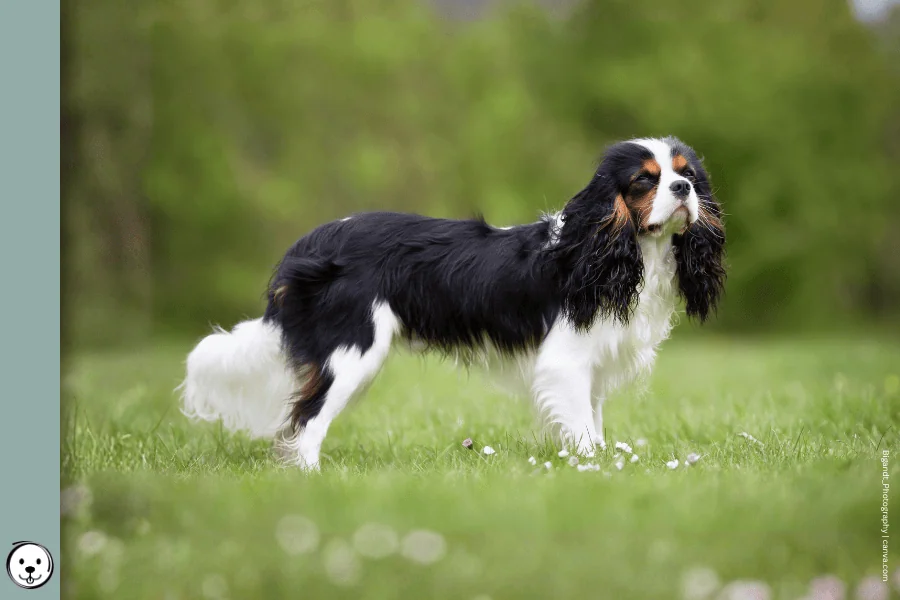
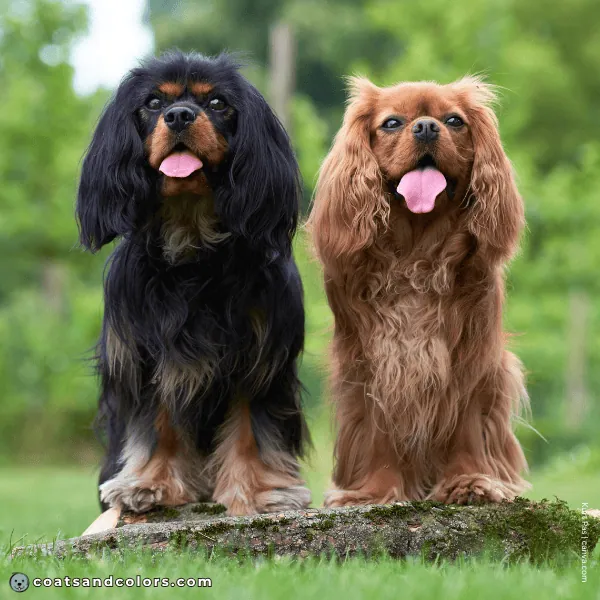
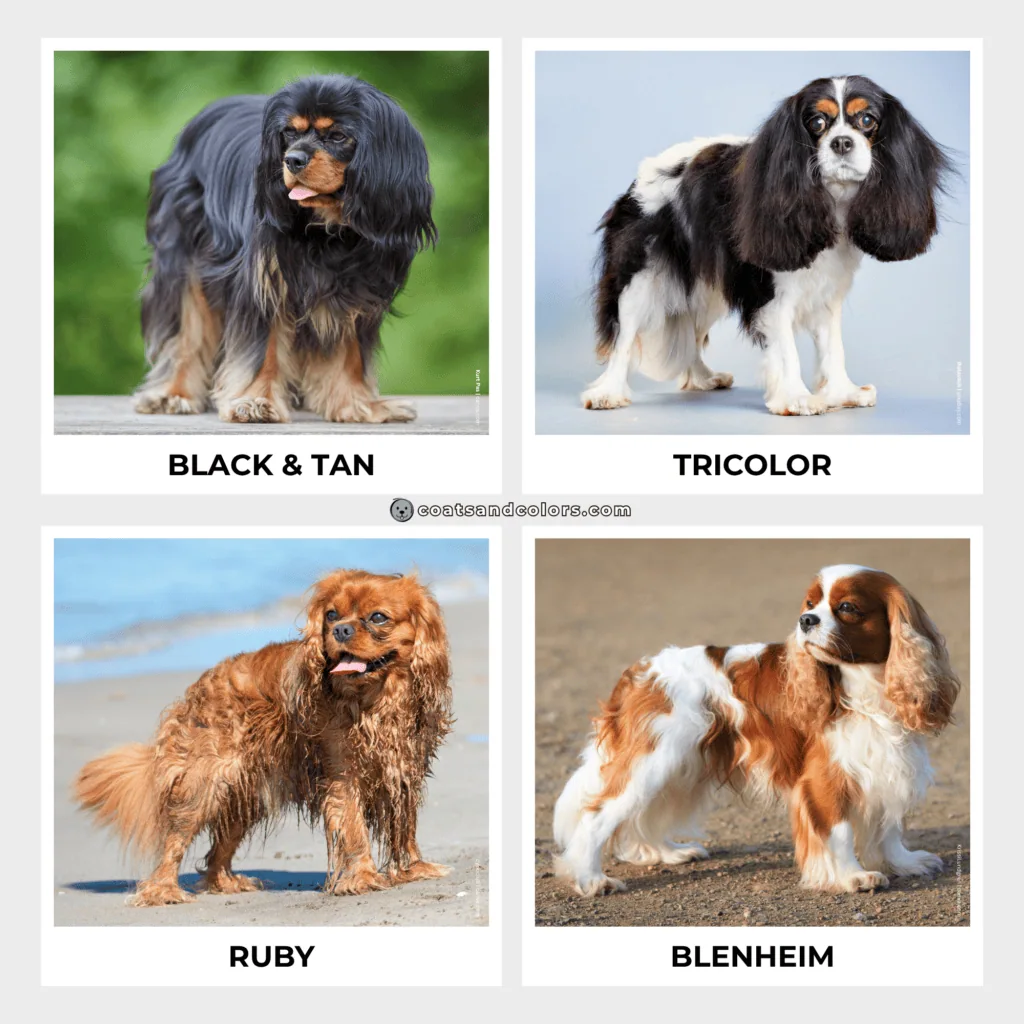
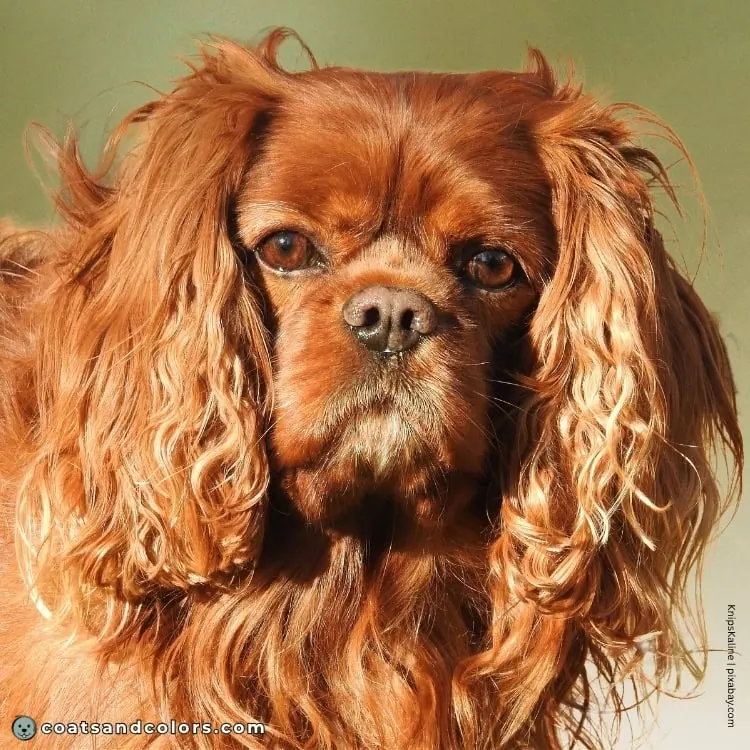
The Cavalier King Charles Spaniel is a toy companion dog from Great Britain. It has a long, silky coat with feathering. They are red or black & tan, either can be solid or have white.
Ruby
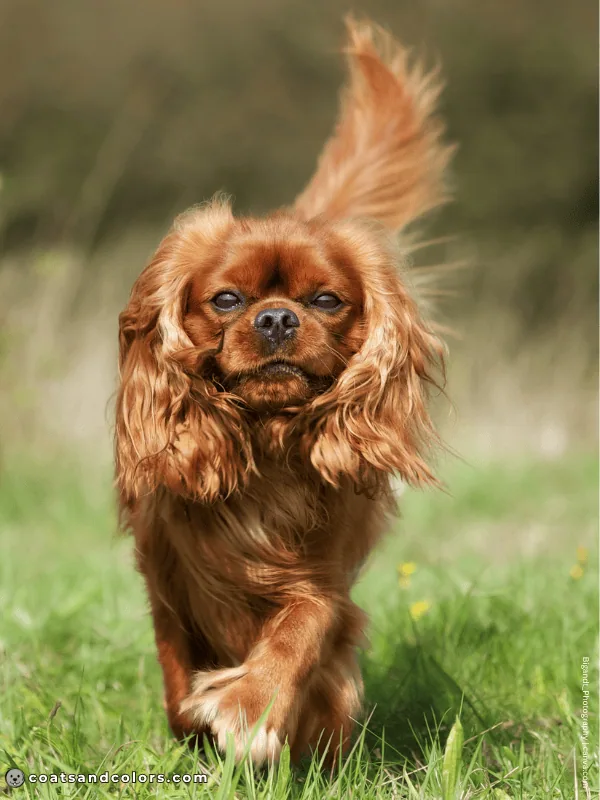
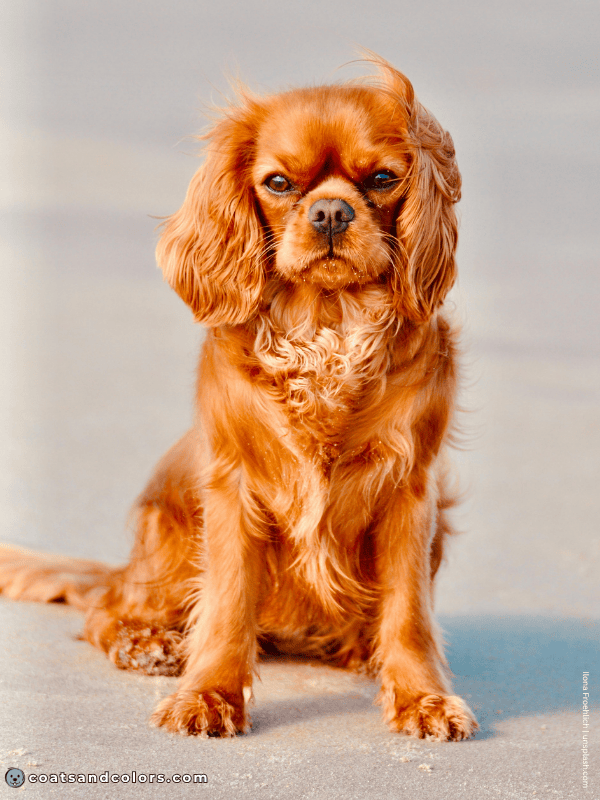
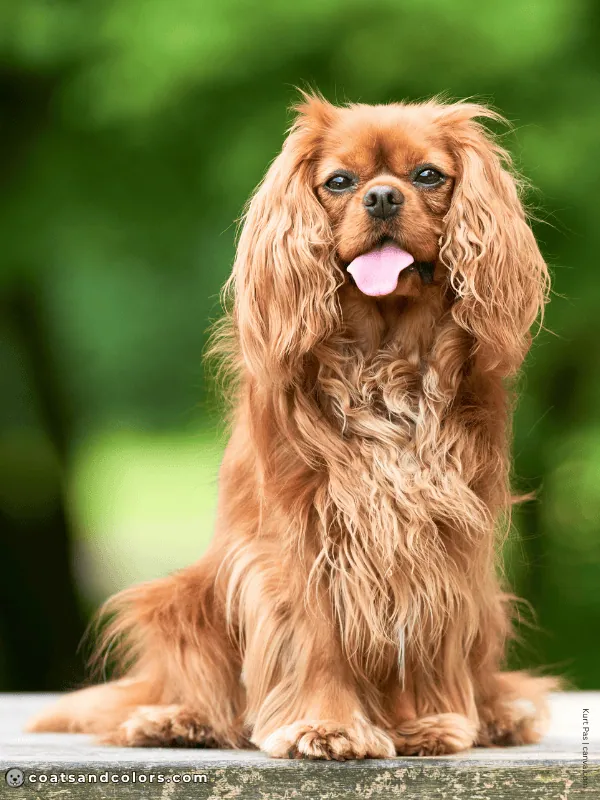
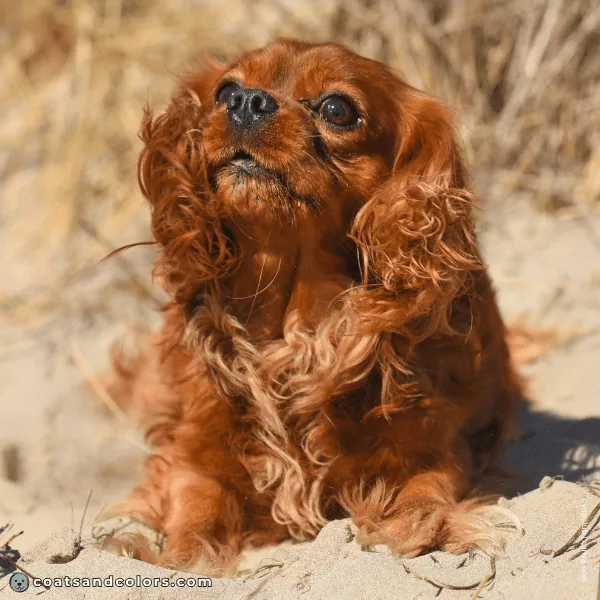
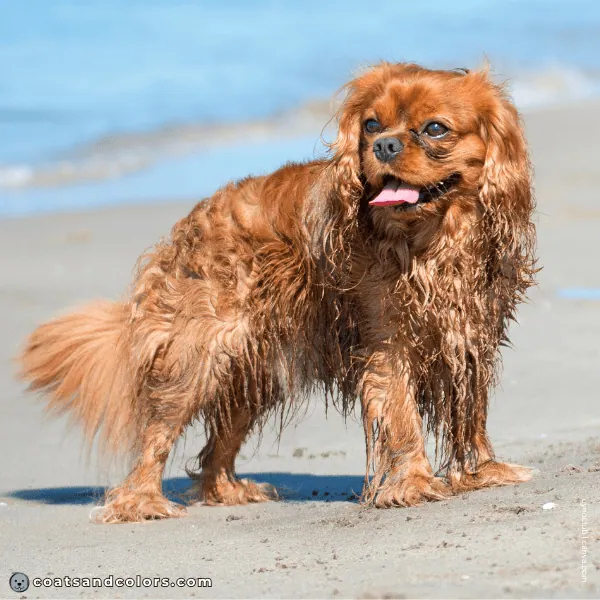
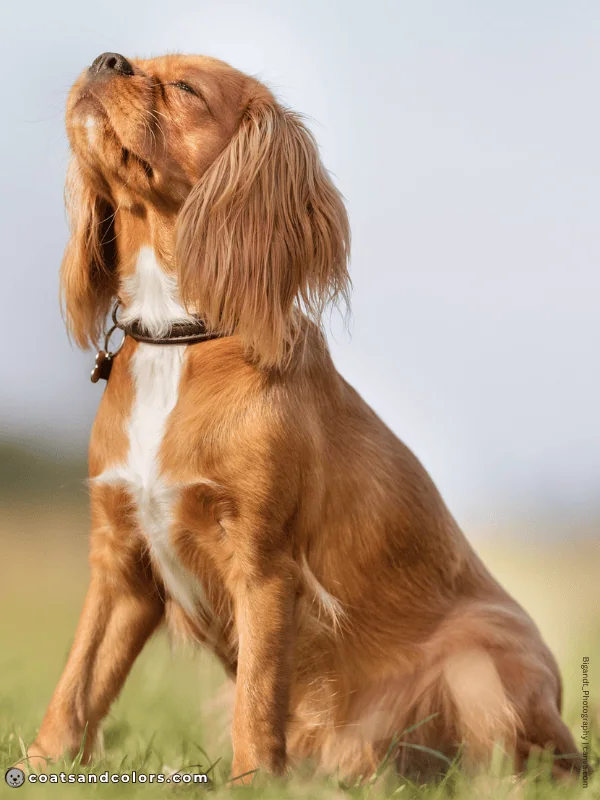
A ruby Cavalier King Charles Spaniel is recessive red (e/e) without white markings.
BASE PATTERN
recessive red
MERLE
–
OTHER
–
EUMELANIN
black
INTENSITY
red
WHITE
solid
Blenheim
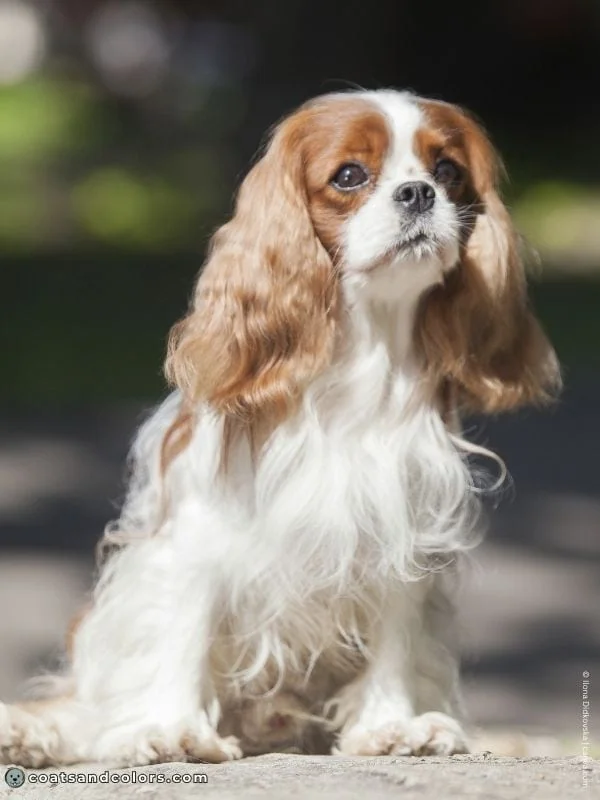
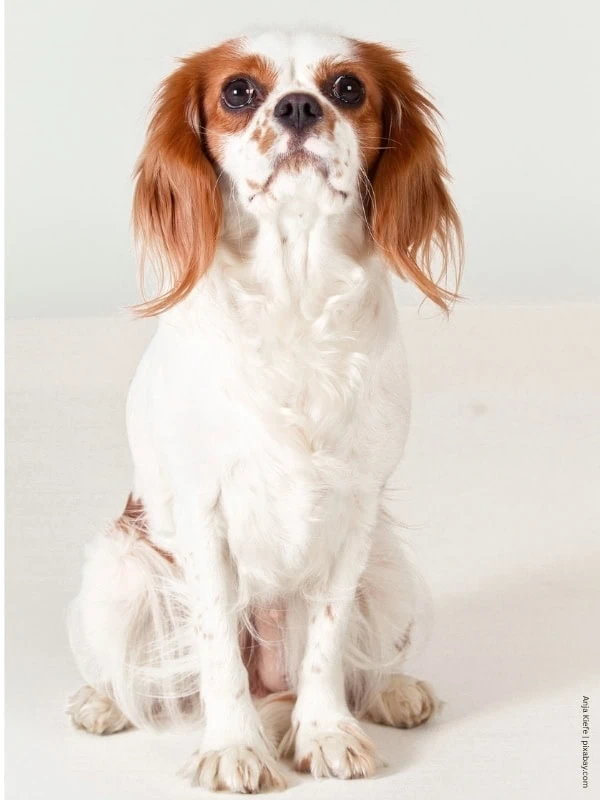
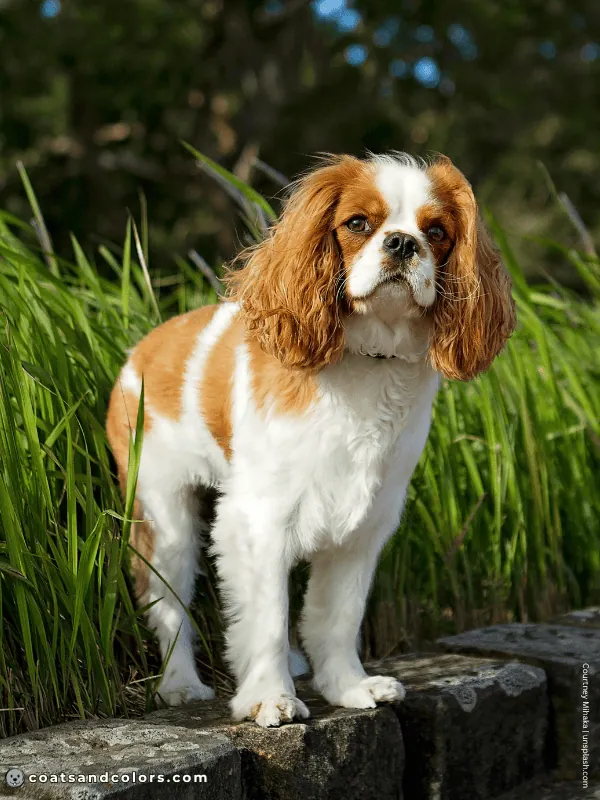
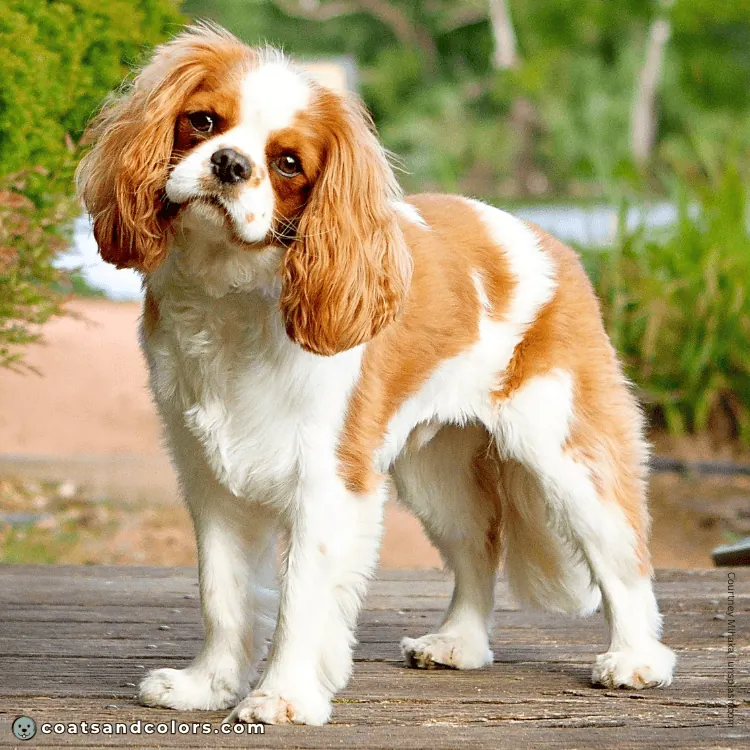
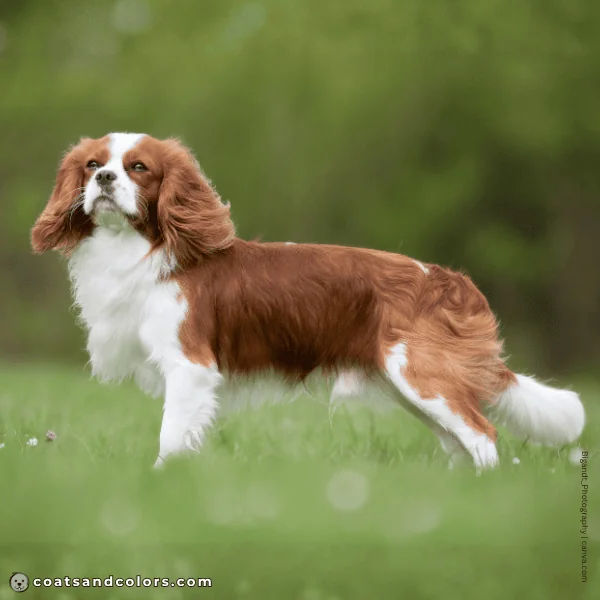
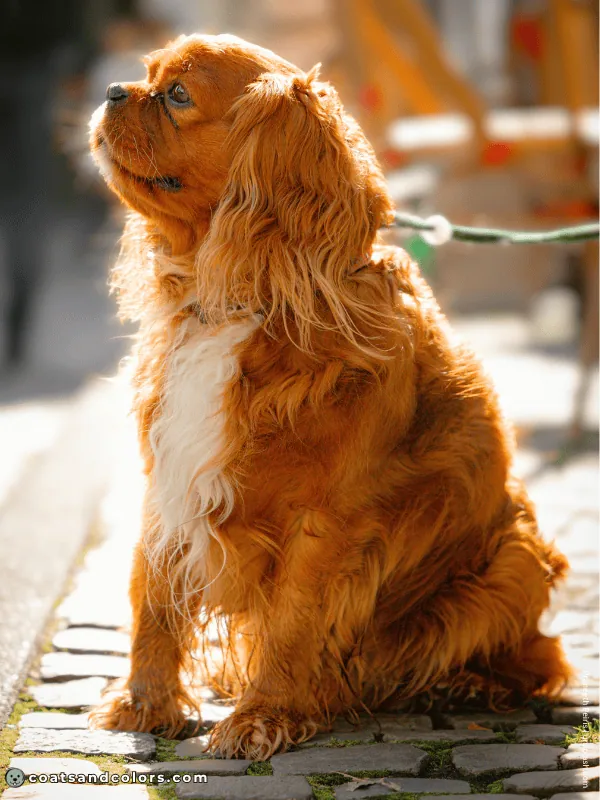
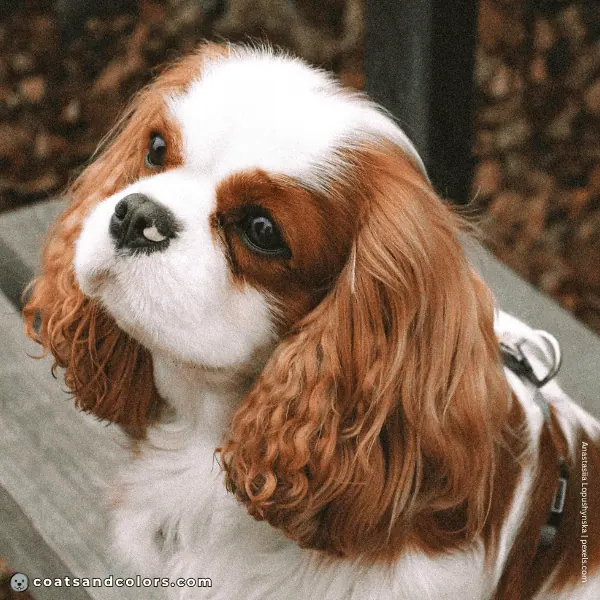
A Blenheim Cavalier King Charles Spaniel is recessive red (e/e) with white markings.
BASE PATTERN
recessive red
MERLE
–
OTHER
–
EUMELANIN
black
INTENSITY
red
WHITE
white markings
Black & Tan
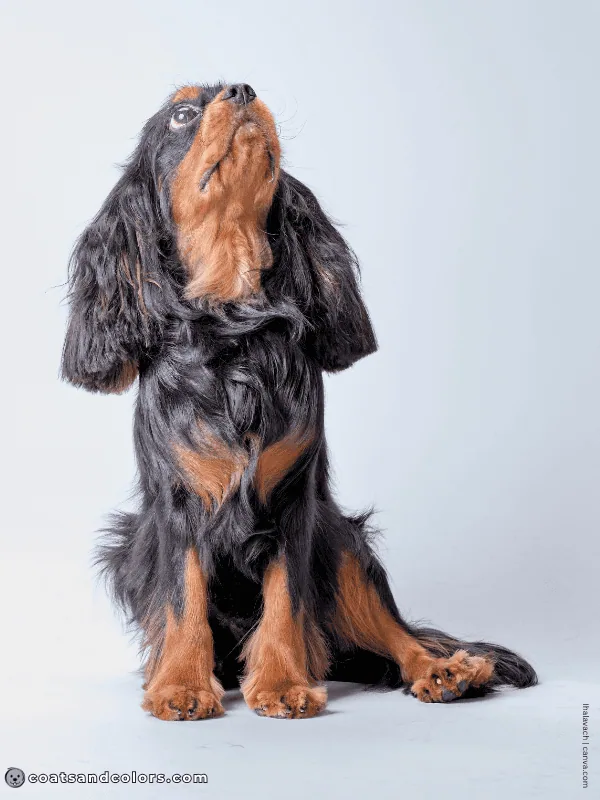
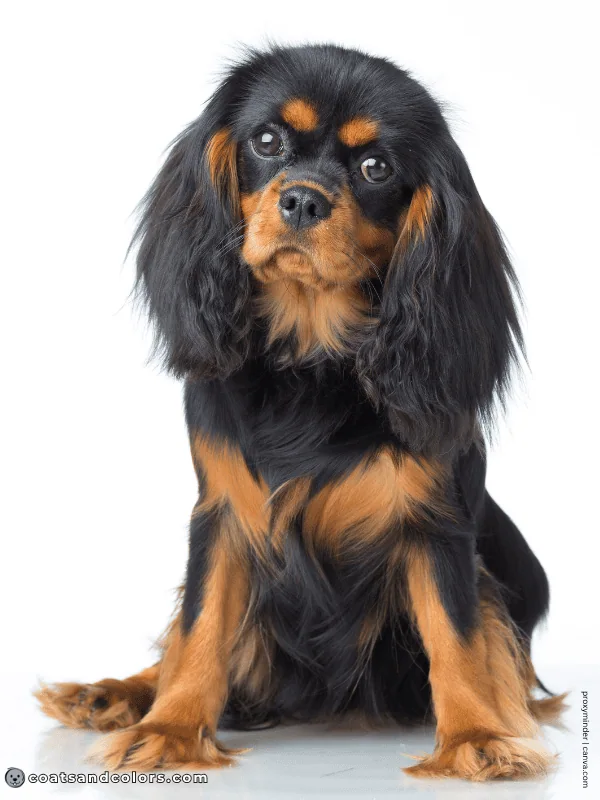
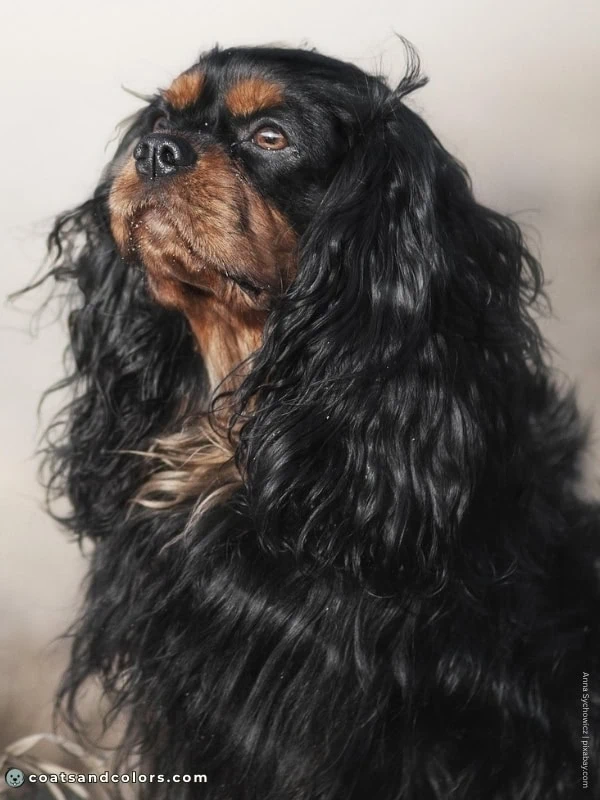
A black and tan Cavalier King Charles Spaniel has a mainly black coat with tan markings.
BASE PATTERN
tan point
MERLE
–
OTHER
–
EUMELANIN
black
INTENSITY
tan, red
WHITE
solid
Black Tricolor
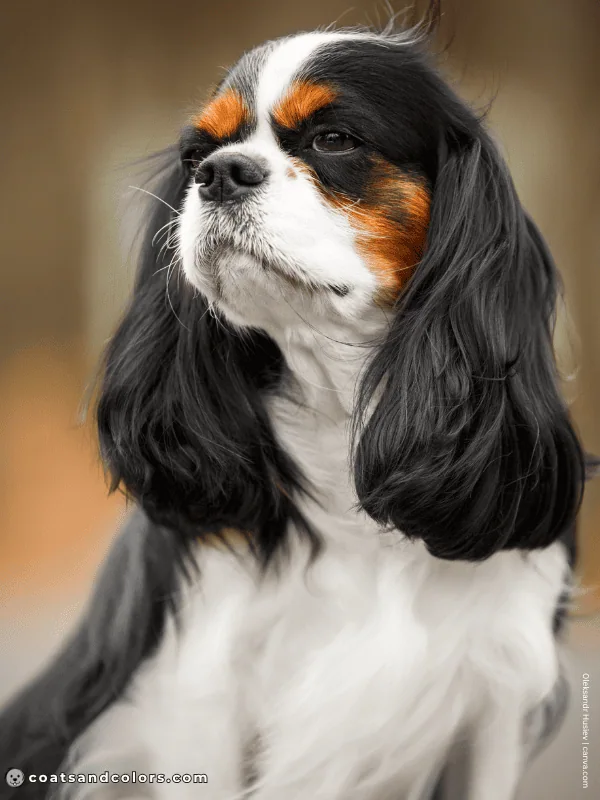
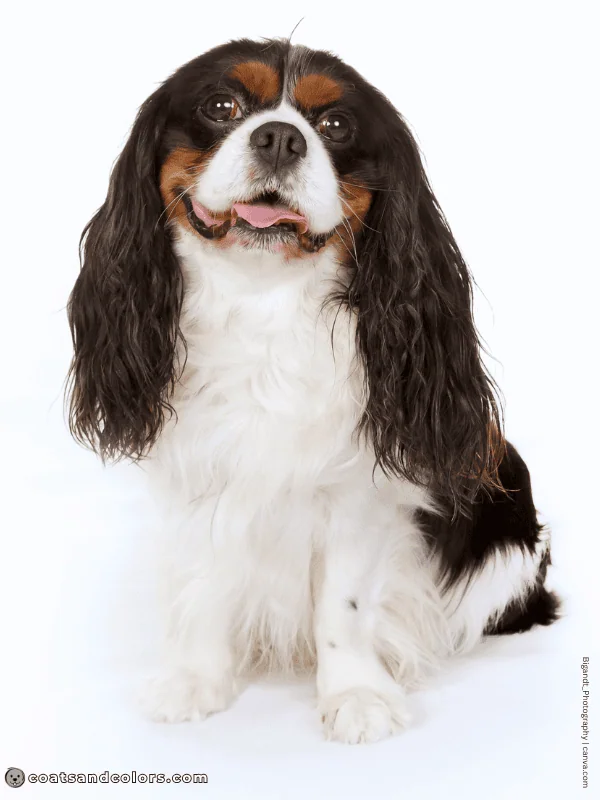
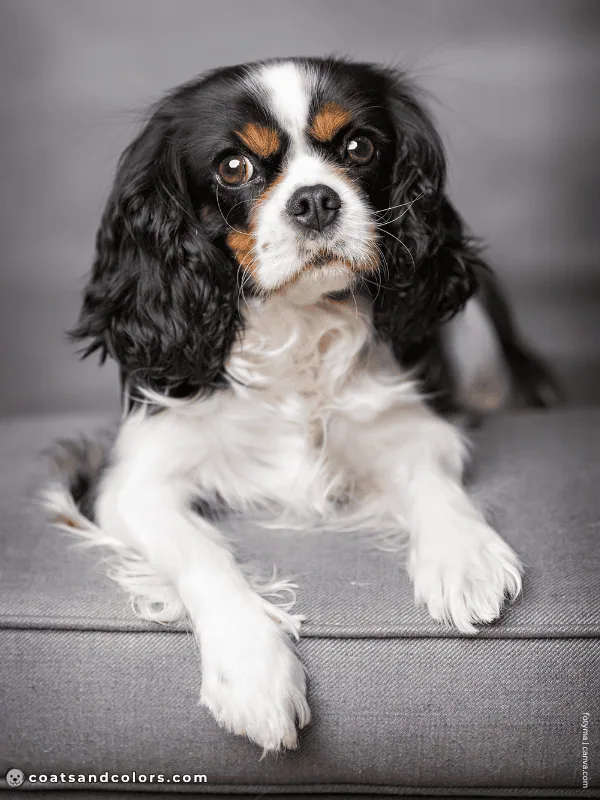
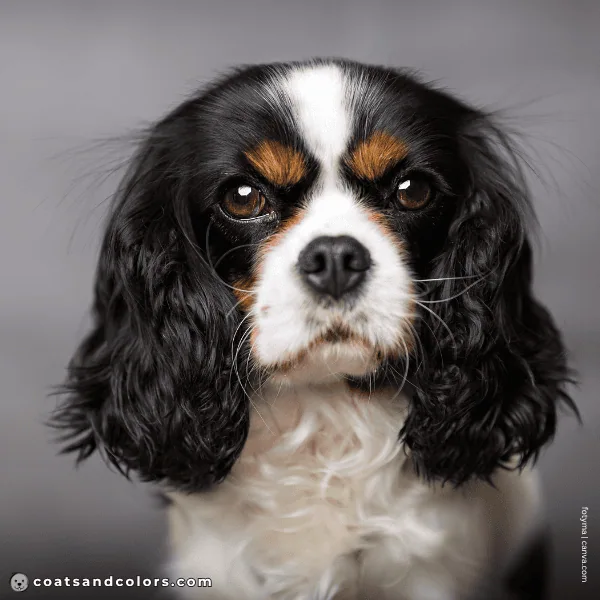
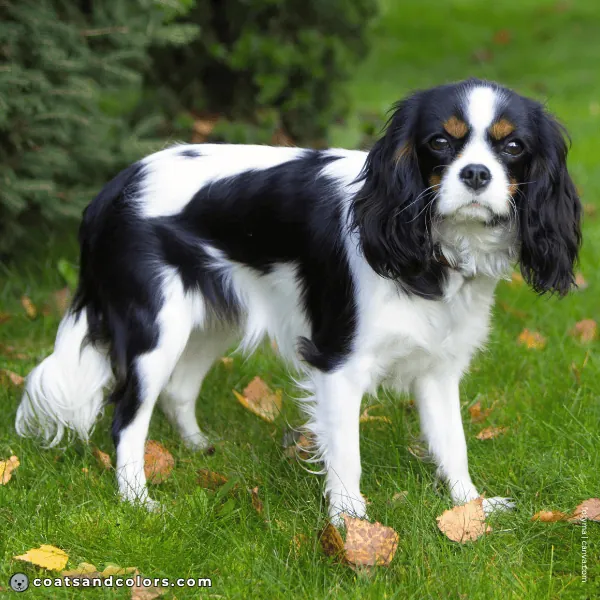
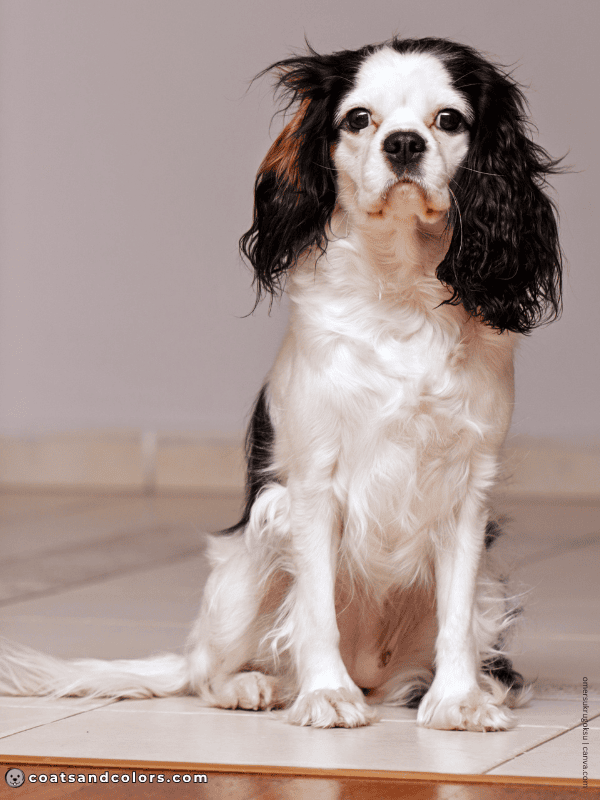
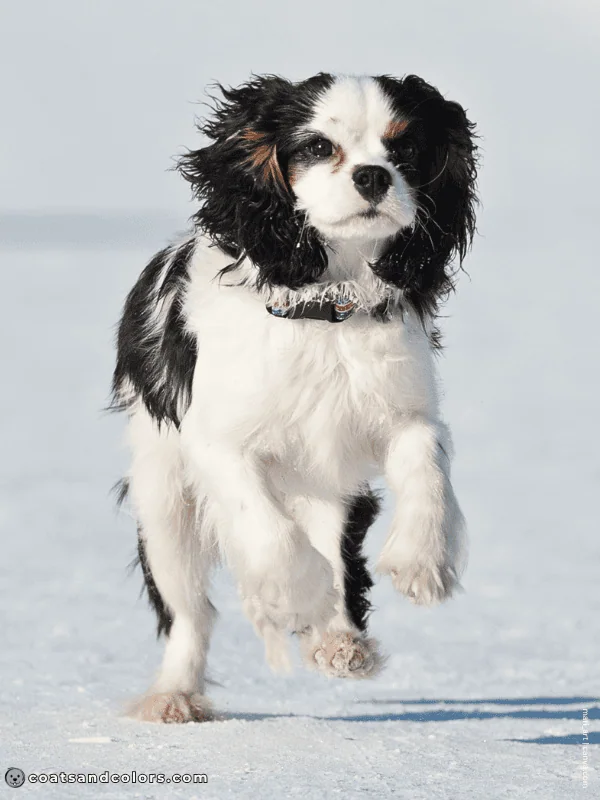
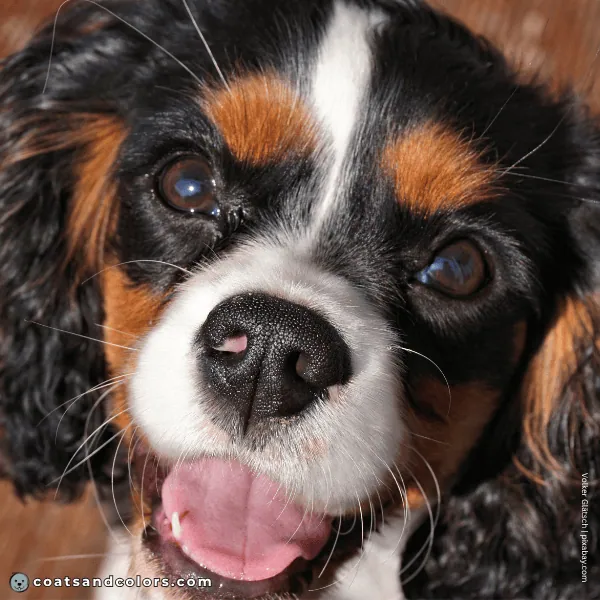
A tricolor Cavalier King Charles Spaniel is black and tan with white markings.
BASE PATTERN
tan point
MERLE
–
OTHER
–
EUMELANIN
black
INTENSITY
tan, red
WHITE
white markings
Faulty Colors
Very few Cavaliers carry recessive black (at/a). Breeding two carriers can produce solid black or black and white puppies. A few Cavaliers carry chocolate (B/b) and can produce brown-based puppies (b/b).
Also, too little white is equally faulty as excessive white.
And color breeders have merlified the breed a while ago by crossbreeding with merle dogs. This practice can not only produce merle Cavaliers, but might also introduce other faulty patterns.
“There shall be four allowed colors for the Cavalier King Charles Spaniel (Blenheim, Ruby, Tricolor, Black and Tan). DQ: Dogs not of an allowed color.”
AKC Breed Standard[1]
“Recognized colours are: Black and Tan, Ruby, Blenheim, Tricolor. Any other colour or combination of colours highly undesirable.”
FCI Breed Standard[2]
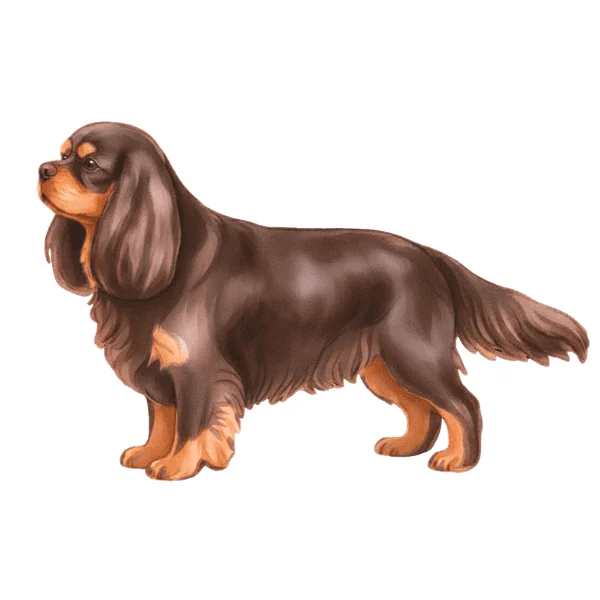
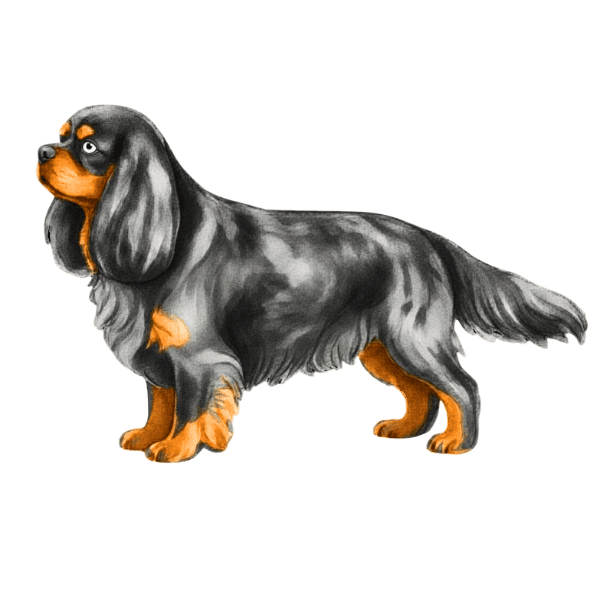
Base Patterns
The base pattern describes the placement of phaeomelanin and eumelanin in the coat. There is an epistatic hierarchy between the A locus < K locus < E locus.
- The A locus controls the basic distribution of both pigment types.
- Next, the K locus can add black to the A locus pattern.
- Finally, the E locus regulates the general ability to produce black pigment.
A Locus
| at | tan point |
| a | recessive black |
The Cavalier breed is almost fixed for tan points (at/at).
But the recessive black (a) variant is also present. Dogs with at/a might have smallish or smutty tan markings. And dogs with a/a will be solid black (unless they are e/e, of course).
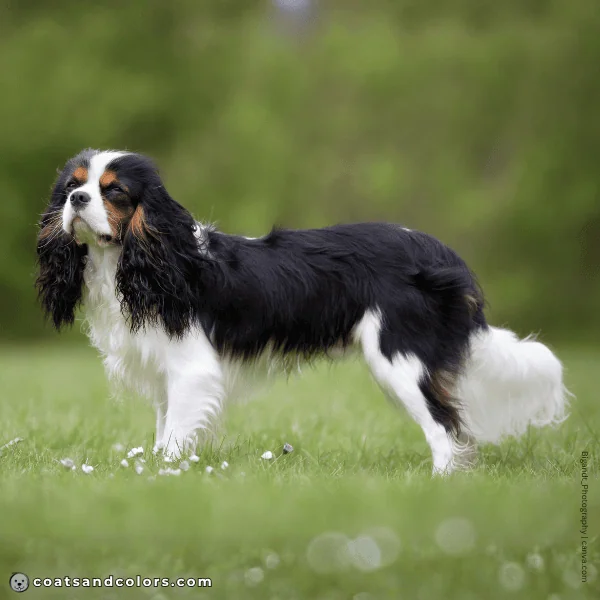
(ky/ky E/- at/-)
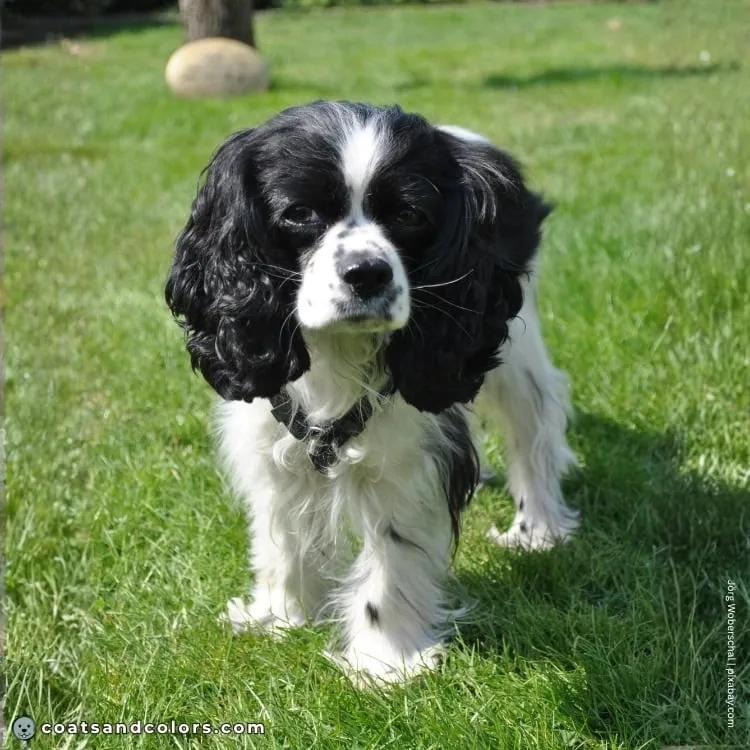
(ky/ky E/- a/a)
K Locus
| ky | wild-type |
All Cavaliers are capable of normal pattern expression (ky/ky).
E Locus
| E | wild-type |
| e | recessive red |
Dogs with normal pattern expression (E/-) will express their tan point pattern. Dogs with two copies of recessive red (e/e) can’t produce black hairs and will be clear red.
Sometimes, black & tan or tricolor dogs that carry red (E/e) can have larger-than-usual tan markings.

(e/e)
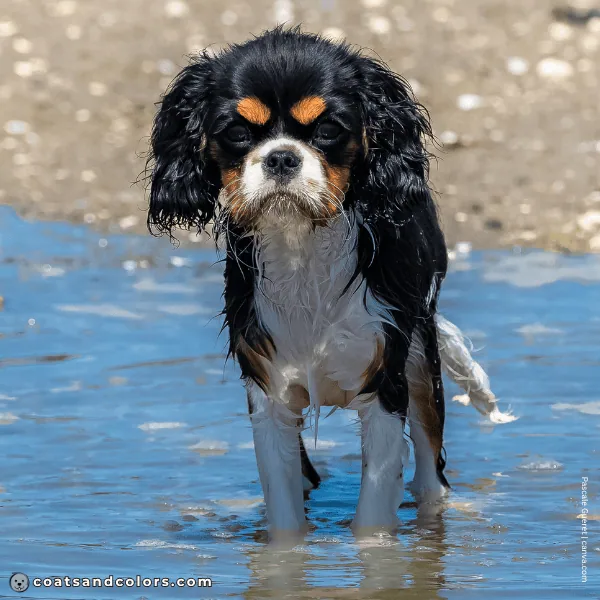
(ky/ky E/- at/-)
Cavalier Base Patterns
| A LOCUS | K LOCUS | E LOCUS | PATTERN |
|---|---|---|---|
| at/at | ky/ky | E/- | tan point “black & tan” or “tricolor” |
| at/at | ky/ky | e/e | recessive red “ruby” or “blenheim” |
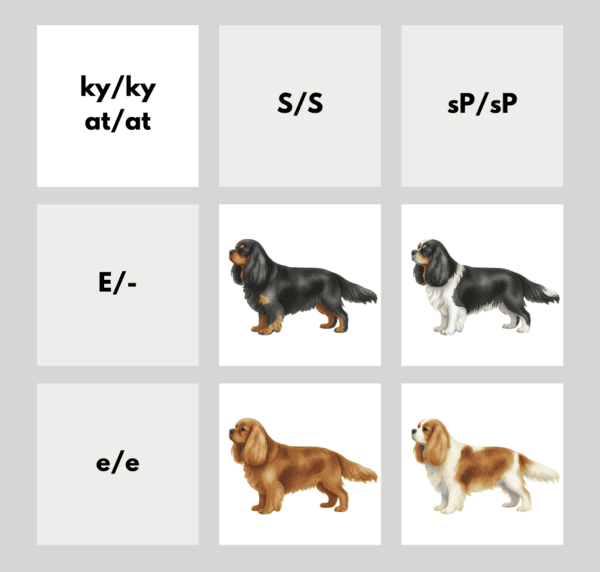
And here is the Cavalier color chart:
Base Colors
The base color is determined by the B locus and D locus.
B Locus
| B | black |
| b | brown |
Cavaliers should be fixed for black pigment (B/B).
But variants for recessive brown (bs, bc) are also present at low frequencies. Dogs with any b/b combination will be chocolate & tan/chocolate tri or chocolate-based ruby/blenheim.
D Locus
| D | normal |
Cavalier Spaniels are fixed for normal pigment (D/D).
Red Intensity
The main phaeomelanin color in Cavalier King Charles Spaniels is a rich chestnut red. Ruby and Blenheim puppies can be lighter and then darken over time. Some dogs may lean more towards reddish yellow than red, but any shade that is too light to look like a “ruby red” color is not desired.

White Markings
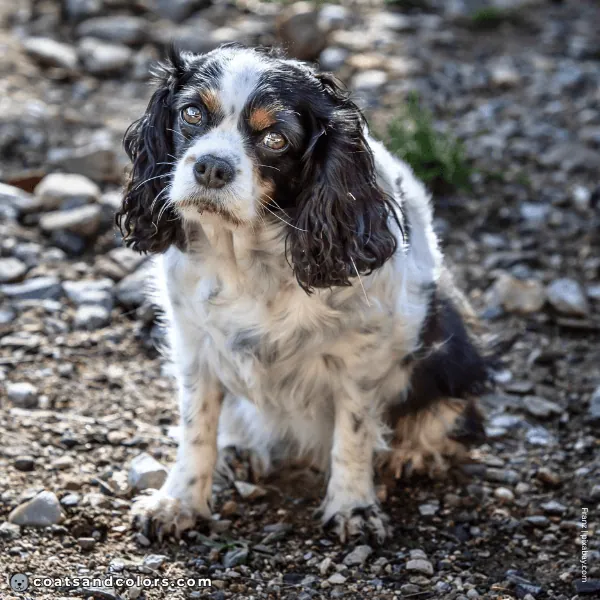
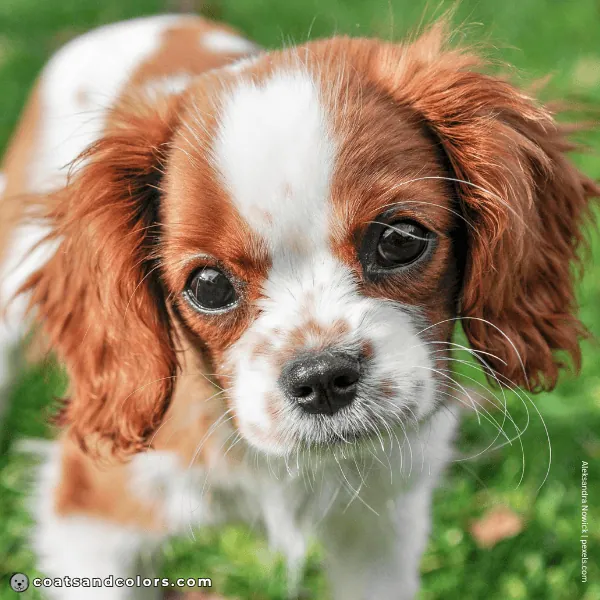
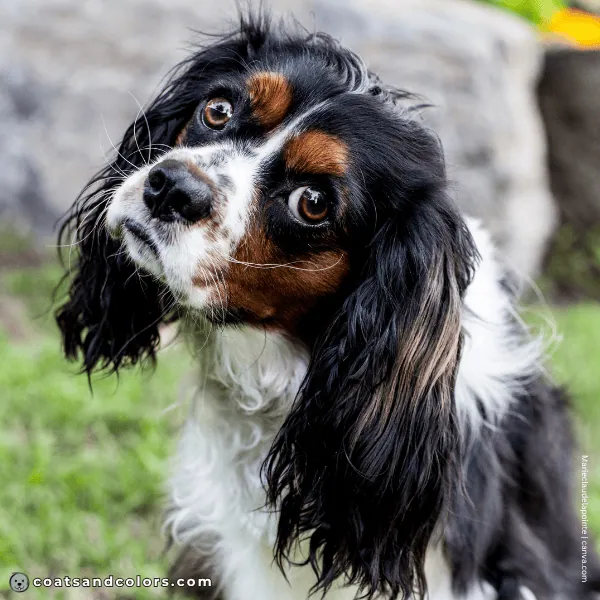
The Blenheim and tricolor Spaniels have white markings.
The white in Cavalier King Charles Spaniels is typically caused by piebald.
“Blenheim – Rich chestnut markings well broken up on a clear, pearly white ground. The ears must be chestnut and the color evenly spaced on the head and surrounding both eyes, with a white blaze between the eyes and ears, in the center of which may be the lozenge spot.
Tricolor – The ears must be black and the color evenly spaced on the head and surrounding both eyes, with a white blaze between the eyes.”
AKC Breed Standard[1]
“Blenheim: Rich chestnut markings well broken up, on pearly white ground. Markings evenly divided on head, leaving room between ears for much valued lozenge mark or spot (a unique characteristic of the breed).
Tricolour: Black and white well spaced, broken up, with tan markings over eyes, cheeks, inside ears, inside legs, and on underside of tail.”
FCI Breed Standard[2]
The ruby and black and tan dogs don’t have white markings. The whole colors test as solid (S/S).
Adding white turns these patterns into Blenheim (ruby and white) and tricolor (black and tan and white), respectively. The parti colors typically test as homozygous piebald (sP/sP).
The amount of white you get from having one copy (S/sP) or two copies (sP/sP) of piebald is highly dependent on the breed (some breeds select for more white, others select for less white). And there is always a range of possible outcomes, since white from the S locus is never fully predictable.
In Cavaliers, sP/sP gives a medium to high amount of white. The breed standard calls for well broken-up markings and a wide blaze up the muzzle and forehead. Breeds that select for lots of face white in their piebald dogs occasionally produce dogs with too much white (like a split face, hourglass blaze, eyes fully surrounded by white, blue eyes, mainly white body coat with a little head pigment, etc.).
In Cavaliers, parti patterns are known to come with a rather wide blaze. But dogs should not have too much white. Patches of color should always be “evenly spaced on the head and surround both eyes“.
Some homozygous sP/sP dogs are heavily blanketed, while others have a mainly white coat.
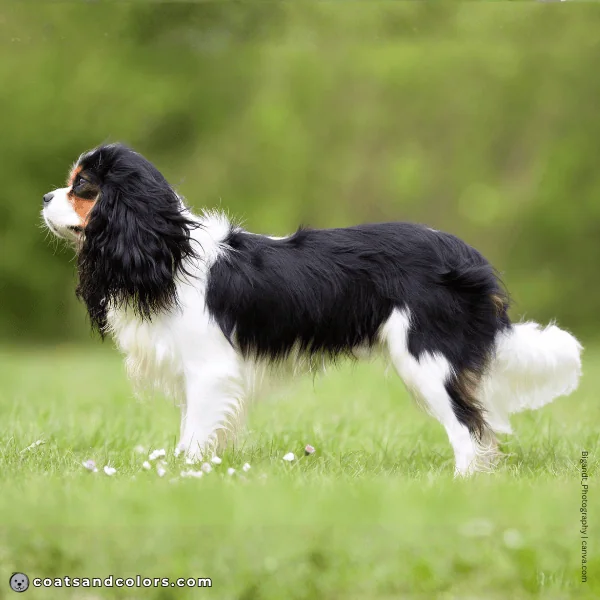
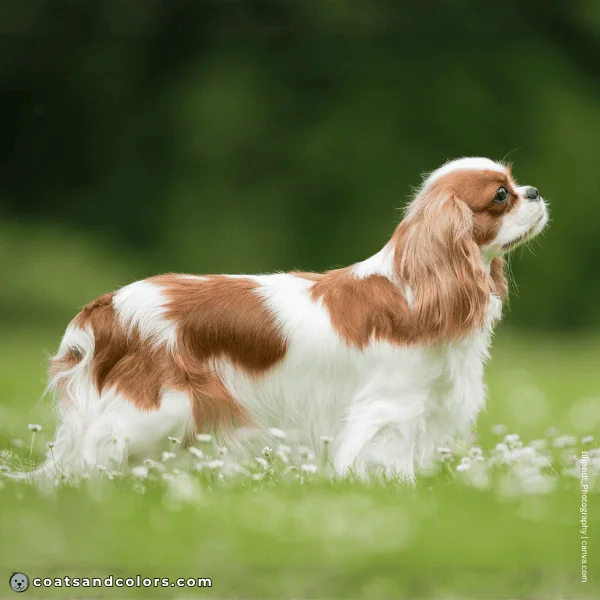
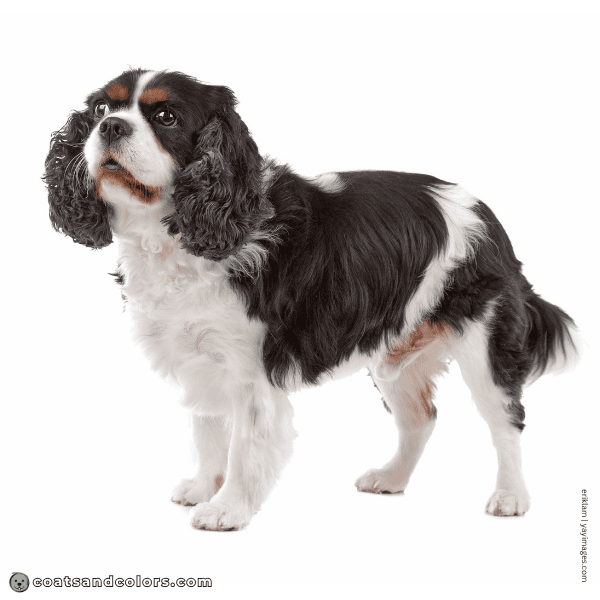
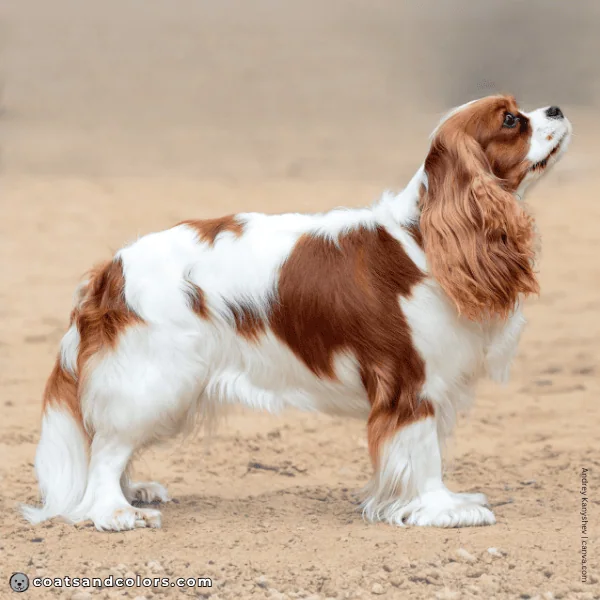
Also, it is known that puppies with e/e, on average, tend to produce larger white markings. This way, Blenheims can have just a little more white or wider blazes than their tricolor siblings.
Overall, Blenheims tend to have more dramatic hourglass or panda blazes.
Many red and white Cavaliers have a “Blenheim spot” or “lozenge spot“. This term refers to a small red patch inside the white blaze on the forehead of Blenheim Cavalier King Charles Spaniels.
This is neither “a unique characteristic of the breed” nor super uncommon. Many dog breeds with white blazes have this. This is just a small flicker of pigment that resisted deletion.
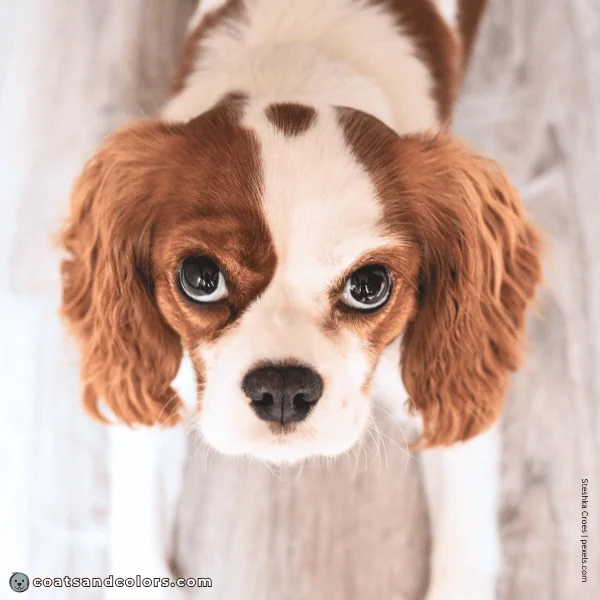
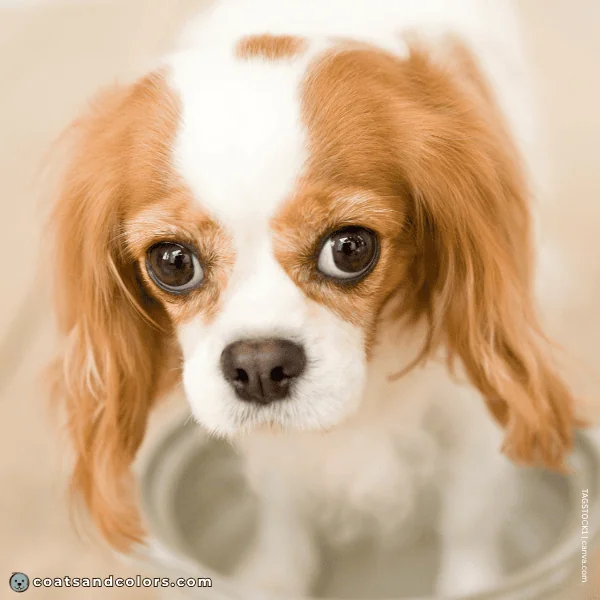
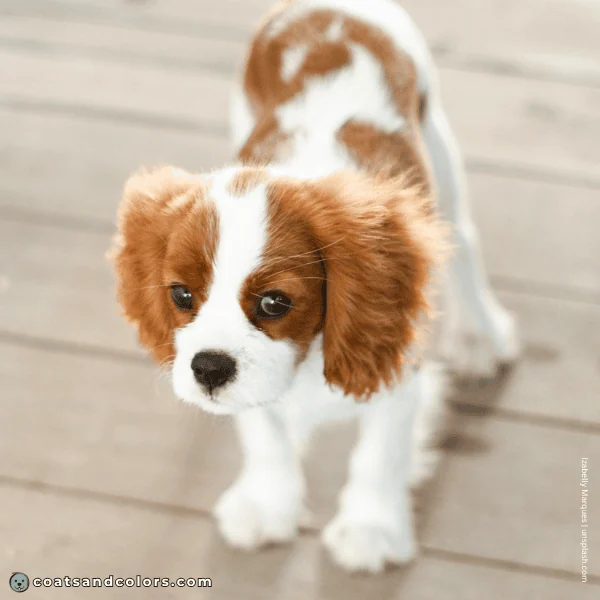
In Cavaliers, S/sP typically causes some small amount of white. These “piebald carriers” can produce a very minimal pattern with little to no white. Louder S/sP dogs often produce a fake Irish pattern that can give almost enough white to resemble a parti pattern. But they usually lack the wide blaze and have too little white overall to fit the standard. Which is a shame, since this artificially leads breeders to not cross solid dogs (S/S) with parti dogs (sP/sP) to avoid breeding S/sP. In a breed with already low diversity…
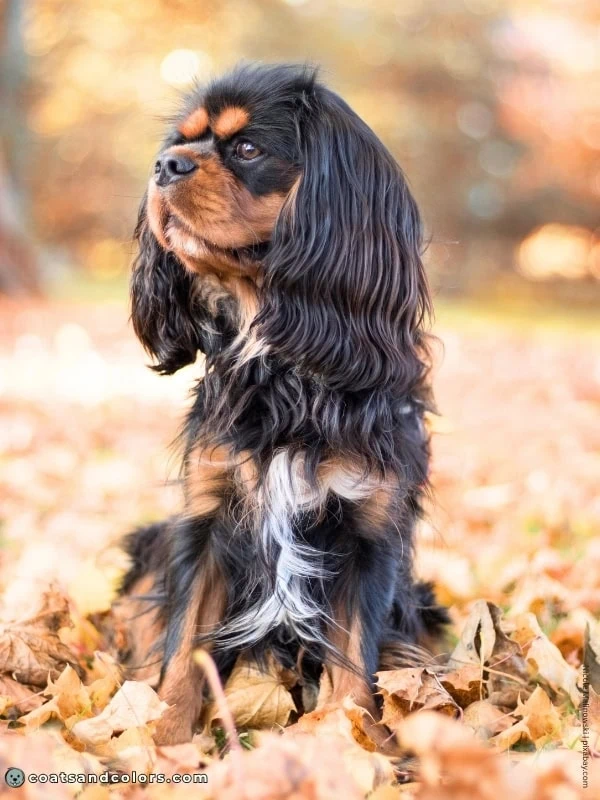
Mainly white dogs with extreme piebald can lose a lot of their head pigment. This is not ideal, since this much white also increases the risk of blue eyes, pink noses and eye rims, and hearing impairment.
The Cavalier breed also seems to have whitehead. This can add to the amount of white on the chest and face. But it can sometimes “slip” and cause a split face or crooked and uneven markings. One eye fully surrounded by white is a half mask, white over both eyes is called a clown face.

Ticking
Dogs with a lot of white on the face sometimes have false ticking (very minor ear or muzzle spotting). And Blenheims sometimes have jagged or spotty edges around their red patches.
Real ticking also happens in this breed, but it is not a desired trait.
While other spaniel breeds like the Cocker Spaniel accept mottles and roan as normal patterns, the Cavalier does not. They consider any “heavy ticking on Blenheims or Tricolors” a mismark[1].
However, ticking needs white marking to be expressed. So it may be present but hidden in solid dogs.
Cavalier Eye Colors
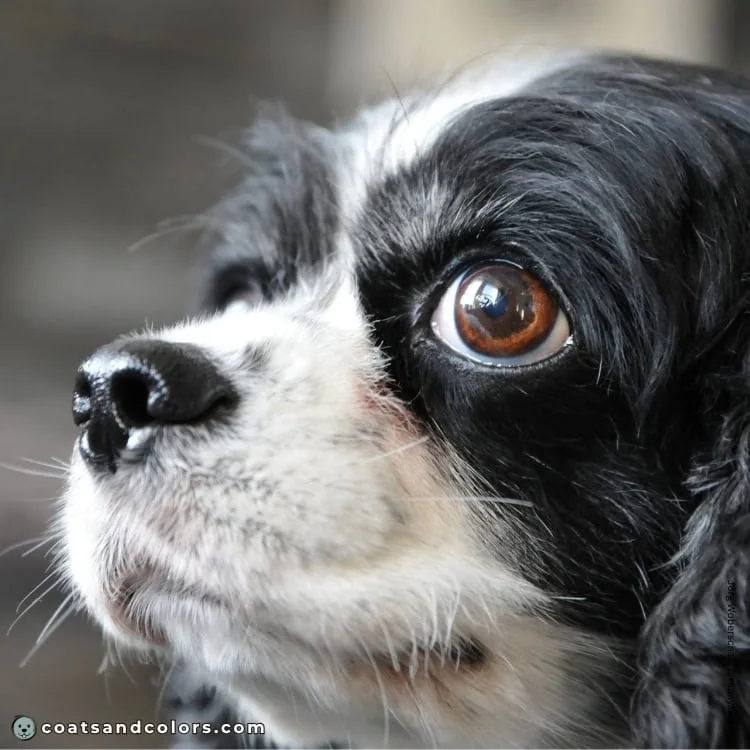
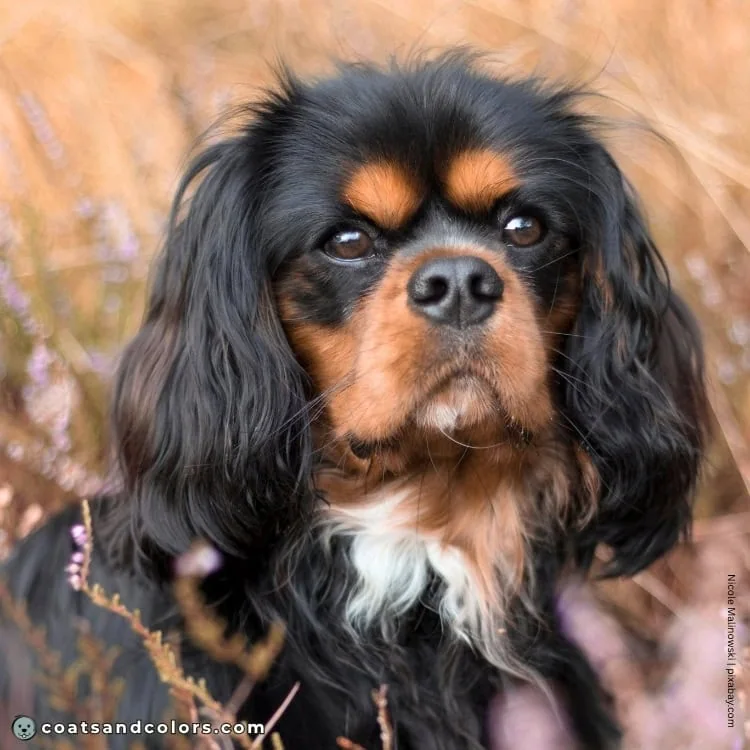
This little companion breed typically has brown eyes.
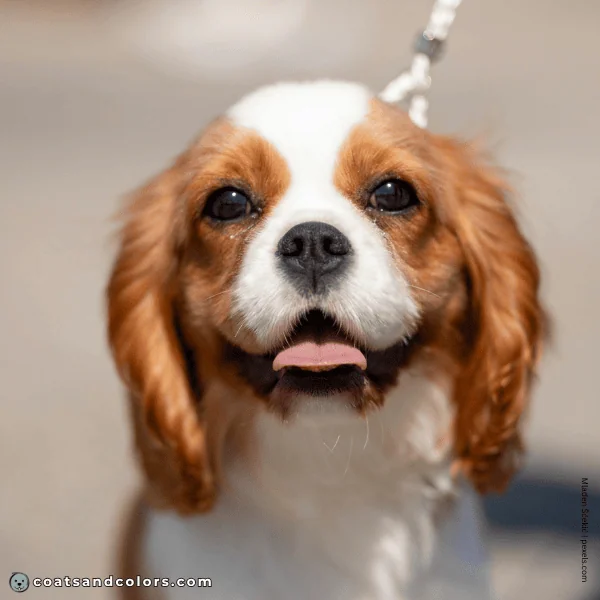
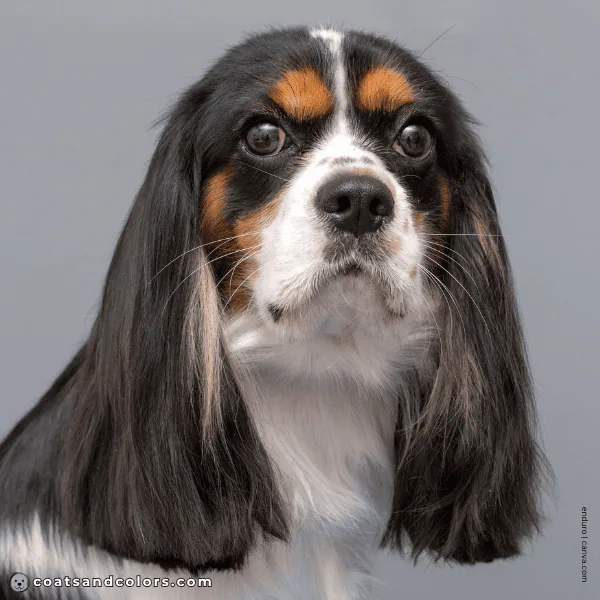
Dogs with a lot of white in the face, even just a wide blaze, are more prone to having blue eyes. This is not that common in breeds that had a long time to select against it, but it still happens.
“Large, round, but not prominent and set well apart; color a warm, very dark brown; giving a lustrous, limpid look. Rims dark.“
“Faults – … light eyes“
AKC Breed Standard[1]
“Large, dark, round but not prominent; spaced well apart.”
FCI Breed Standard[2]
Cavalier Nose Colors
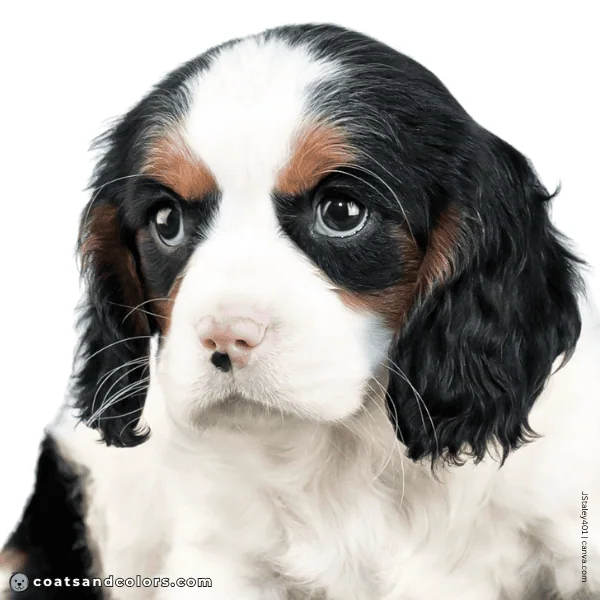
All standard Cavaliers have a black nose. Dogs with recessive red (e/e) patterns (ruby and blenheim) can sometimes have weak nose pigment and slightly grayish or pinkish noses with darker rims.
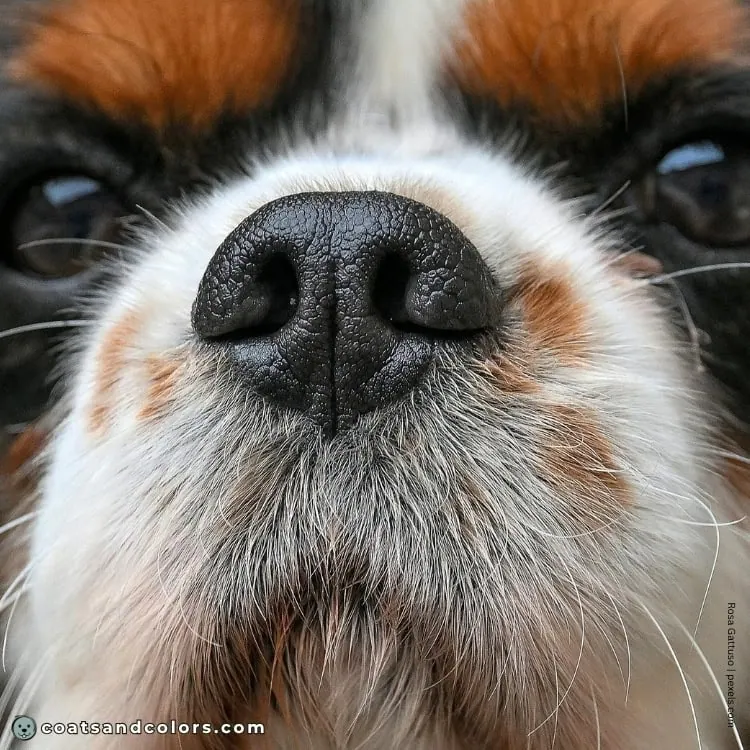
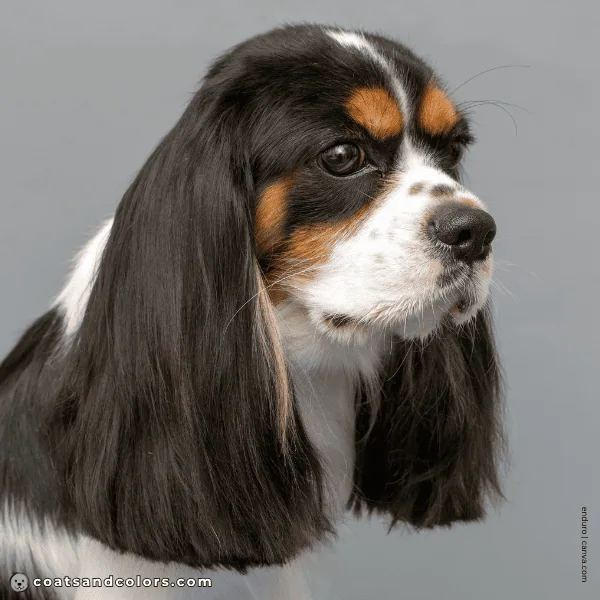
Puppies with a lot of white on the muzzle can sometimes have pink spots on the nose. But the missing pigment will usually fill in over time. This can take longer in some dogs than others.
“Nose pigment uniformly black without flesh marks and nostrils well developed”
AKC Breed Standard[1]
“Nostrils black and well developed without flesh marks.”
FCI Breed Standard[2]
Cavalier King Charles Spaniel Coat Type
Cavalier Spaniels are long-haired. They have a smooth face, but long feathering on their ears and legs. Oh, and they also tend to have very hairy paws.
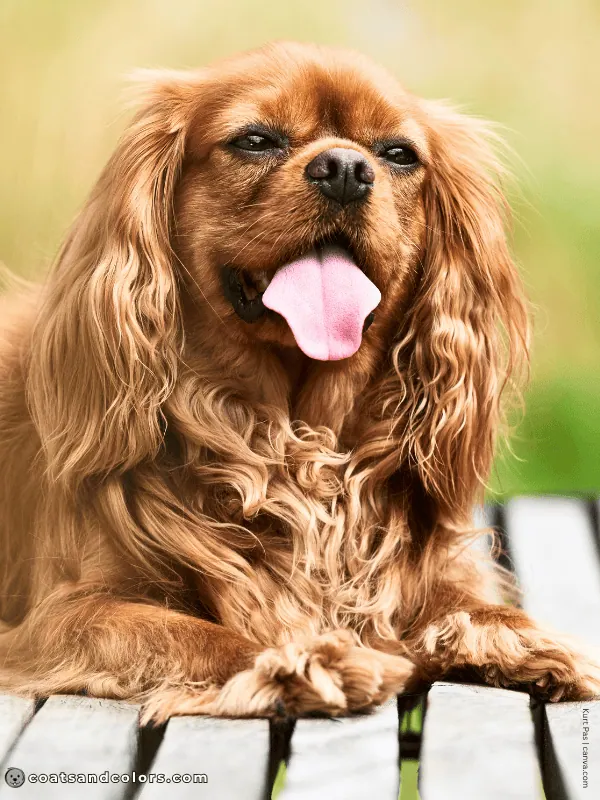
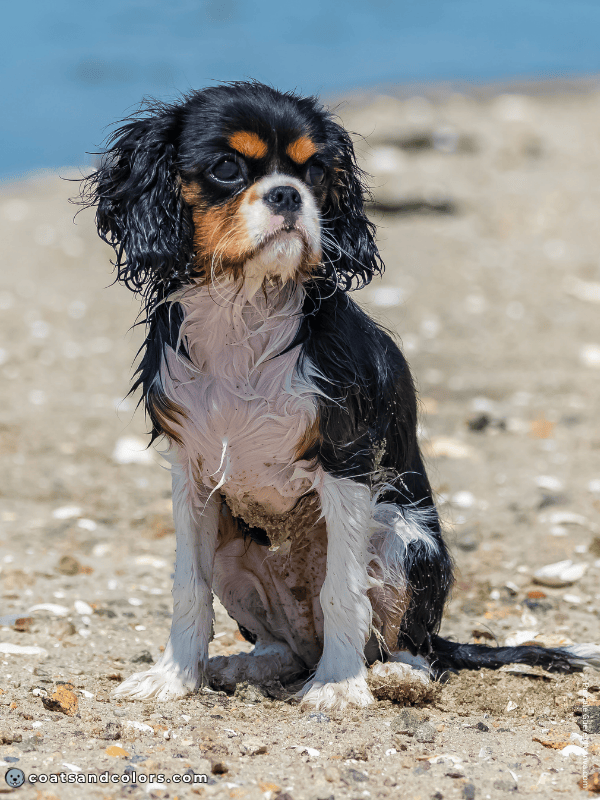
Many Cavalier King Charles Spaniels have very wavy feathering. This can happen in dogs with one copy of curly coat (Cu/N). Dogs that end up with two copies (Cu/Cu) can have more dramatic curling going on.
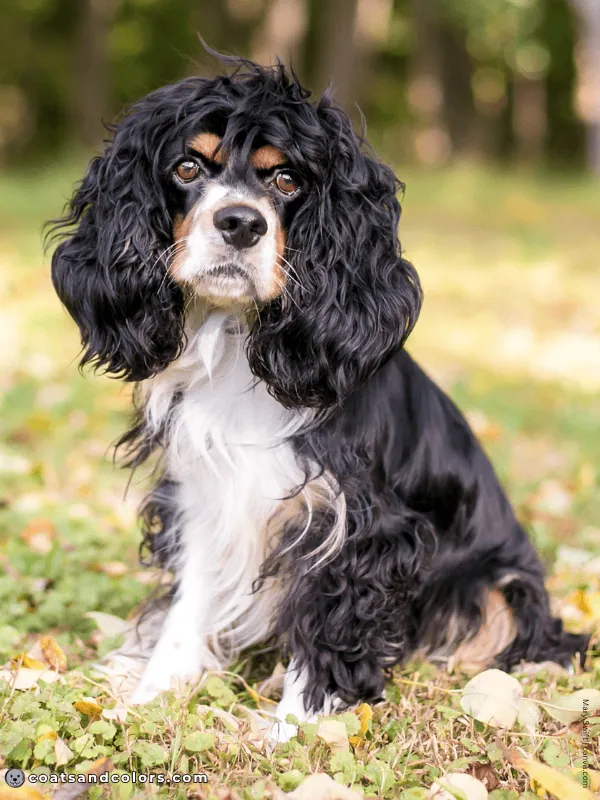
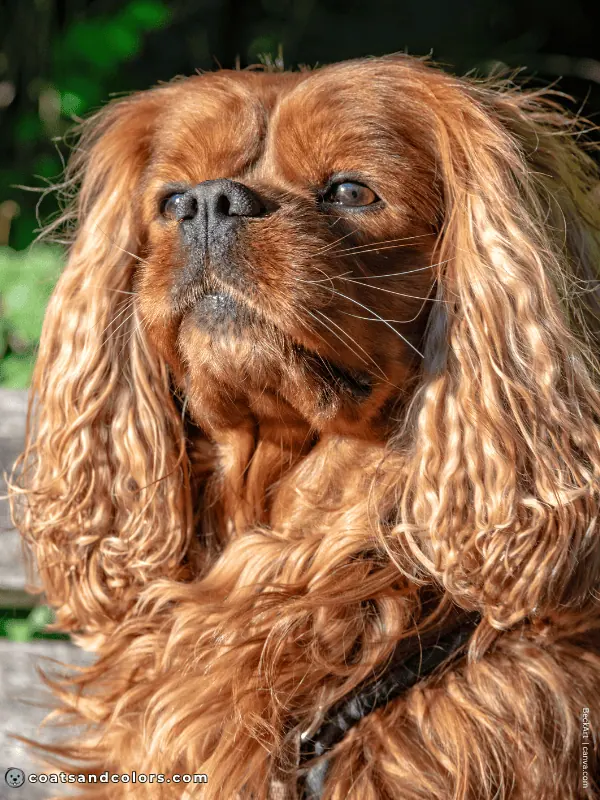
“Of moderate length, silky, free from curl. Slight wave permissible. Feathering on ears, chest, legs and tails should be long, and the feathering on the feet is a feature of the breed. Hair growing between the pads on the underside of the feet may be trimmed.”
AKC Breed Standard[1]
“Long, silky, free from curl. Slight wave permissible. Plenty of feathering. Totally free from trimming.”
FCI Breed Standard[2]
Related Breeds
The Cavalier is a companion dog that was bred down from working spaniels centuries ago. It is also related to the flat-faced English Toy Spaniel (or King Charles Spaniel, if you are in the UK).
Learn More


Links
[1] American Kennel Club (AKC): Cavalier King Charles Spaniel
[2] Fédération Cynologique Internationale (FCI): Cavalier King Charles Spaniel
[3] Royal Kennel Club (RKC): Cavalier King Charles Spaniel
[4] Canadian Kennel Club (CKC): Cavalier King Charles Spaniel
[5] Dreger et al. (2019). True Colors: Commercially-acquired morphological genotypes reveal hidden allele variation among dog breeds, informing both trait ancestry and breed potential. PLoS ONE 14(10): e0223995. https://doi.org/10.1371/journal.pone.0223995
Image Credits
Aleksandra Nowick/pexels.com
Anastasiia Lopushynska/pexels.com
Andrey Kanyshev/canva.com
Anna Sychowicz/pixabay.com
Bigandt_Photography/canva.com
Courtney Mihaka/unsplash.com
cynoclub/canva.com
enduro/canva.com
eriklam/yayimages.com
fotyma/canva.com
Franz/pixabay.com
Ihalavach/canva.com
Ihalavach/pixabay.com
Ilona Didkovska/canva.com
Ilona Froehlich/unsplash.com
Izabelly Marques/unsplash.com
Jörg Woberschal/pixabay.com
JStaley401/canva.com
KnipsKaline/pixabay.com
KrissiLundgren/canva.com
Kurt Pas/canva.com
mari_art/canva.com
Marieclaudelapointe/canva.com
Mary Swift/canva.com
Mladen Šćekić/pexels.com
Nicole Malinowski/pixabay.com
Oleksandr Husiev/canva.com
omersukrugoksu/canva.com
Pascale Gueret/canva.com
Praneeth Peiris/unsplash.com
proxyminder/canva.com
Rosa Gattuso/pexels.com
StephM2506/canva.com
Steshka Croes/pexels.com
TAGSTOCK1/canva.com
Volker Glätsch/pixabay.com
Hi! I’m Steffi. I am a biologist and a big time dog nerd. You are curious about coat color genetics? You’ve come to the right place! Read more.