

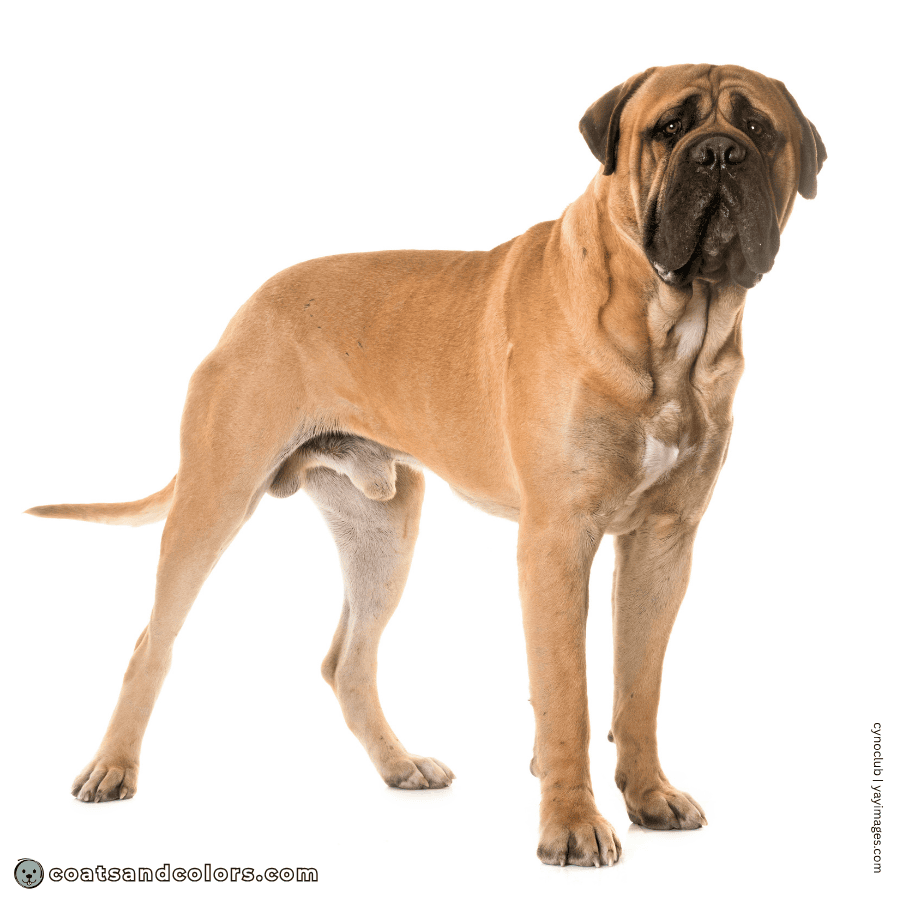
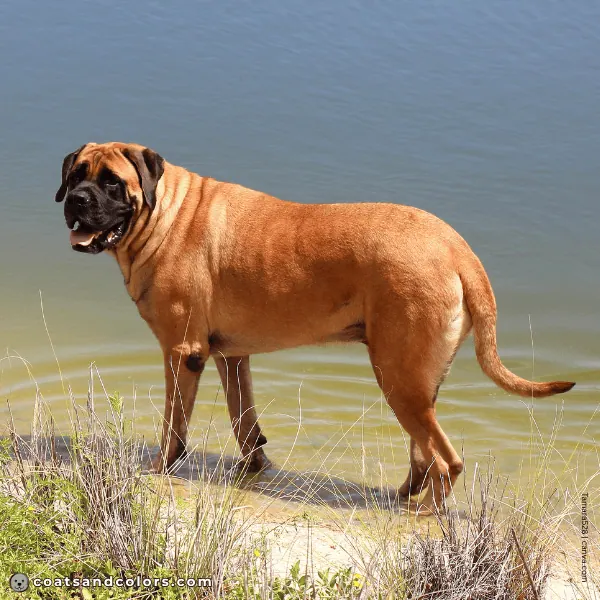
The Bullmastiff was originally bred as a guard dog for gamekeepers. This molosser breed has a short and very square muzzle. Its short coat can be fawn or red, with optional brindling on top.
Learn more about Bullmastiff colors.
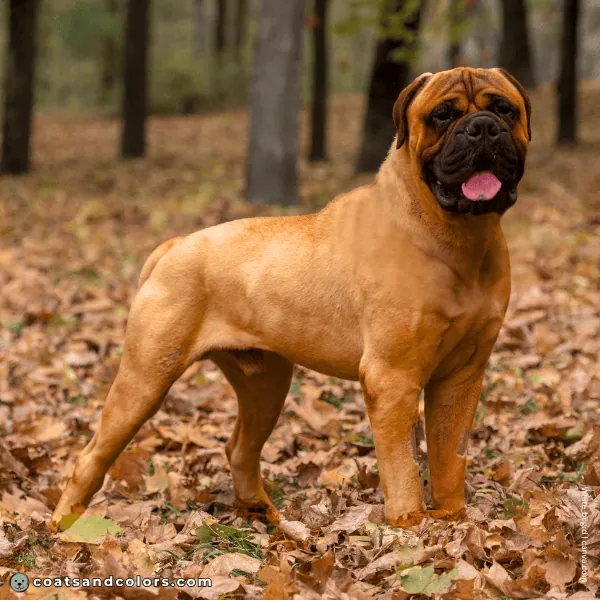
Fawn
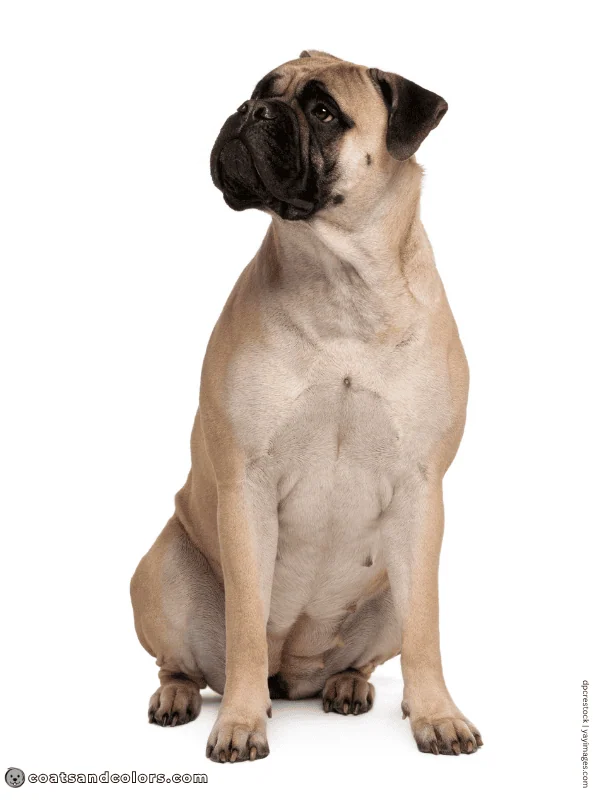
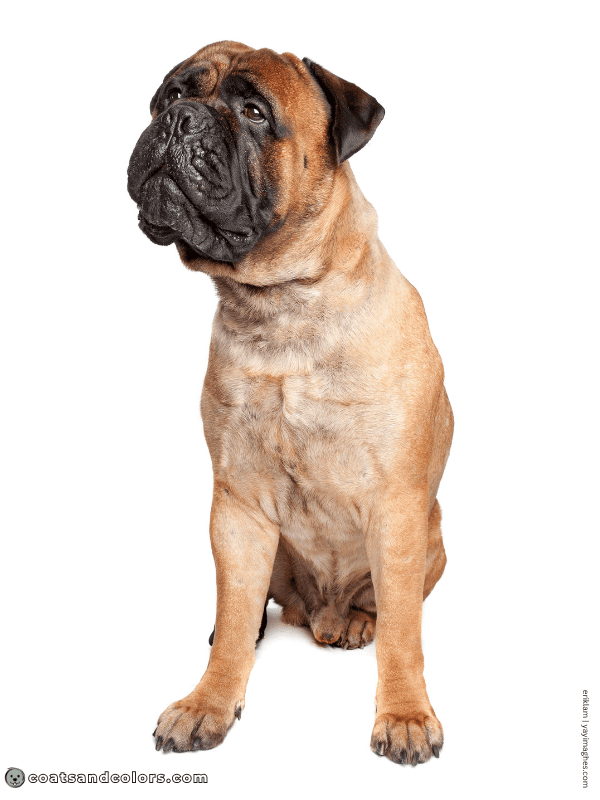
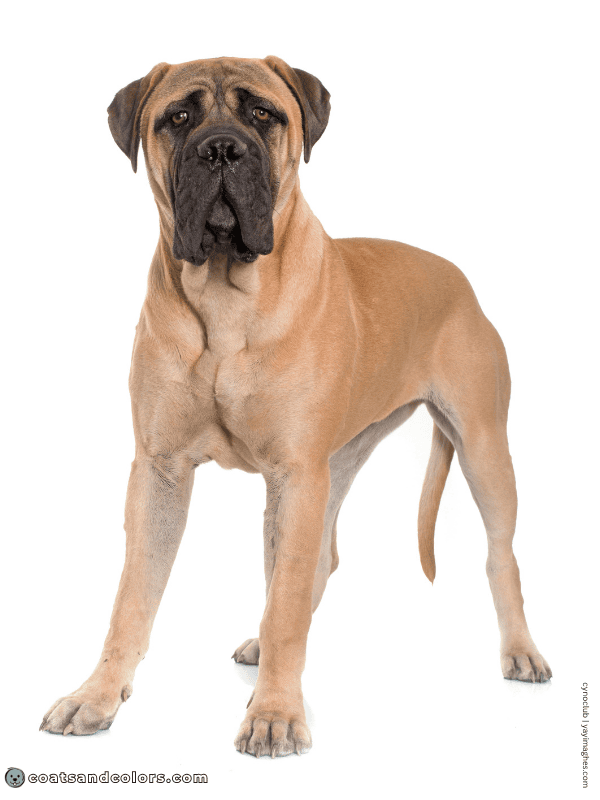
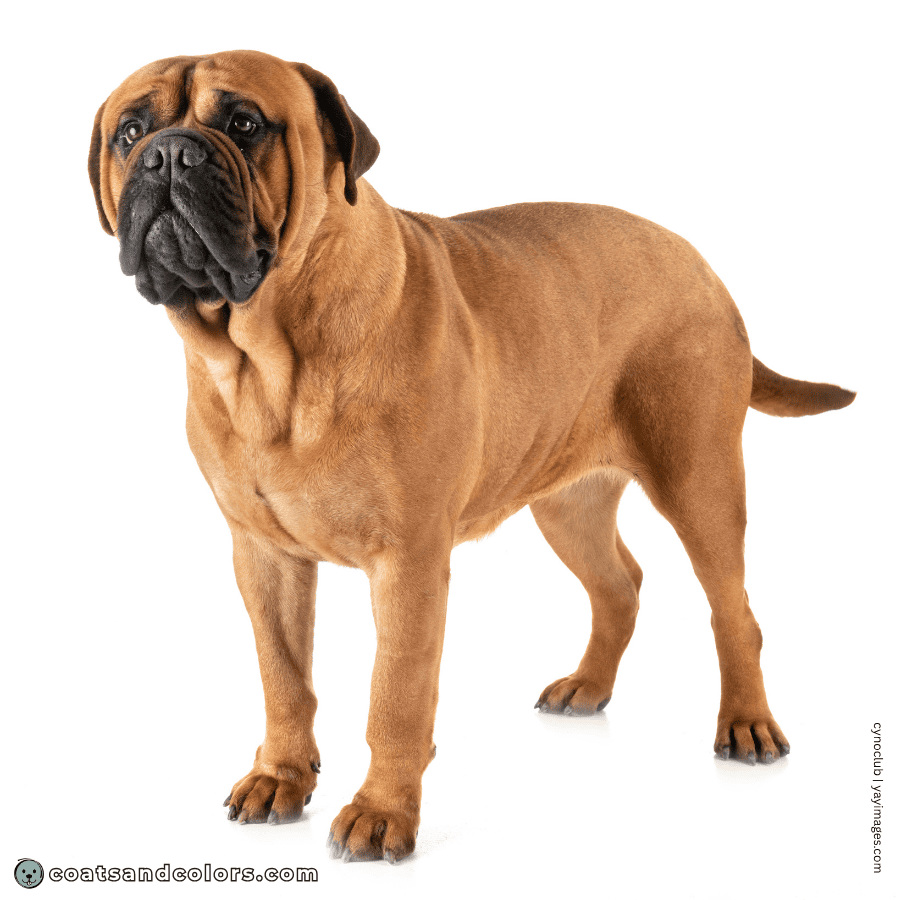
A fawn Bullmastiff has a clear sable pattern. This means it has no black overlay in its adult coat other than a black mask. The red intensity can vary from light fawn to red fawn or red.
BASE PATTERN
clear sable, black mask
MERLE
–
OTHER
–
EUMELANIN
black
INTENSITY
fawn, red fawn, red
WHITE
solid
Brindle
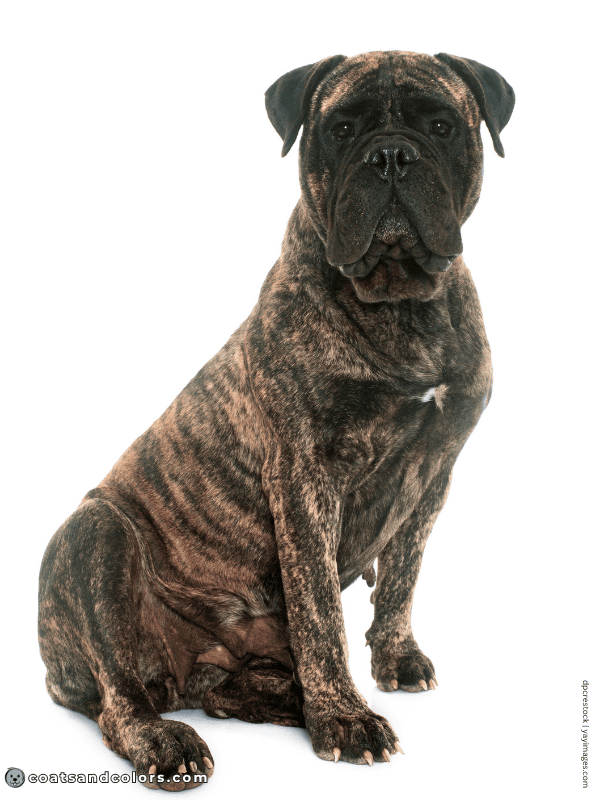
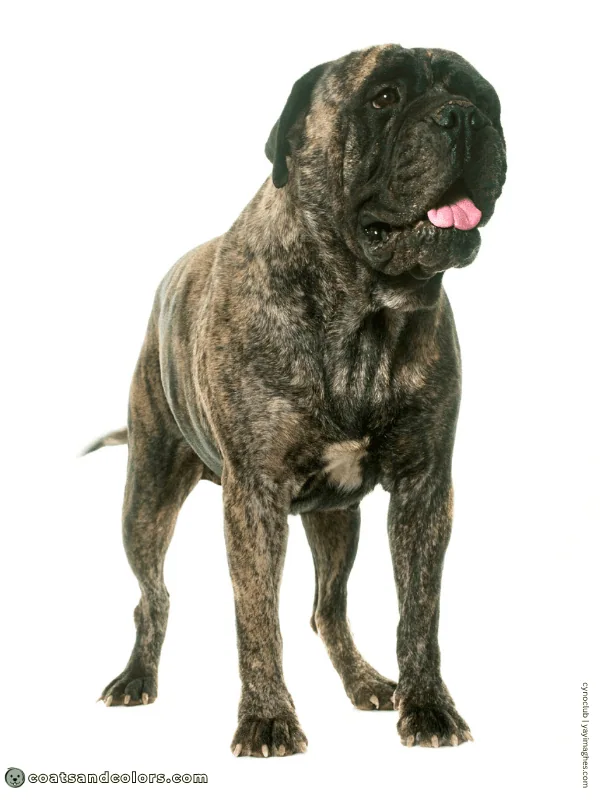
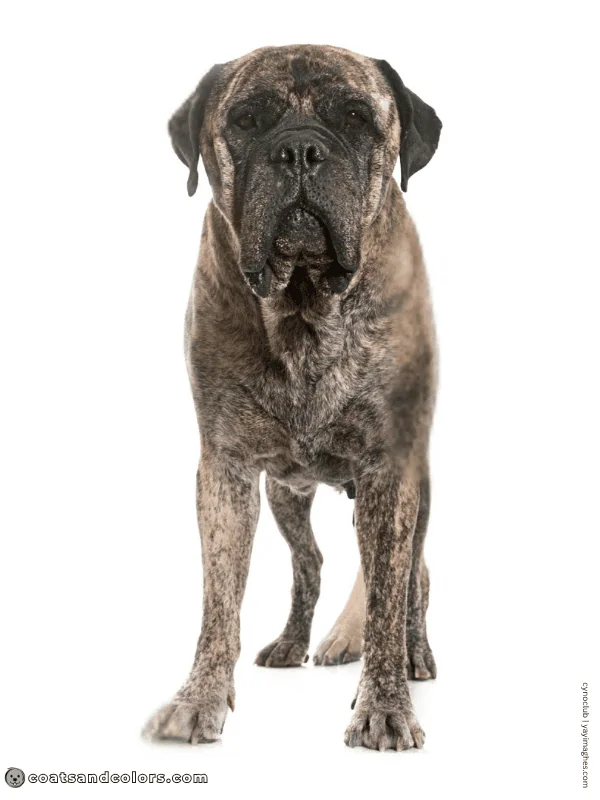
A brindle Bullmastiff has a clear sable pattern with a black mask and black brindling on top. Depending on the red intensity underneath the brindle stripes, dogs are called fawn brindle, red fawn brindle, or red brindle. Some darker brindles can look black brindle.
BASE PATTERN
sable brindle, black mask
MERLE
–
OTHER
–
EUMELANIN
black
INTENSITY
fawn, red fawn, red
WHITE
solid
Faulty Colors
this is pretty straightforward: Faulty colors include any base pattern other than fawn or brindle and any base color other than black. Also, all Bullmastiffs have to have a black mask.
Base Patterns
The base pattern describes the placement of phaeomelanin and eumelanin in the coat. There is an epistatic hierarchy between these genes: A locus < K locus < E locus.
- The A locus controls the basic distribution of both pigment types.
- Next, the K locus can add black to the A locus pattern.
- Finally, the E locus regulates the general ability to produce black pigment.
A Locus
| Ay | clear sable |
| Ays | shaded sable |
The breed should be fixed for clear sable (Ay/Ay).
However, a small number of Bullmastiffs seem to express shaded sable. These dogs have a dark overlay, which makes me think they also might have the shaded sable allele (Ays).
Sabling is not a desirable trait in Bullmastiffs.
The FCI breed standard asks for “colour to be pure and clear“. The CKC explicitly says that “black shading on body, legs or tail (of reds or fawns)” is a fault. But then, maybe this wording is from a time in the past when some dogs were tan point carriers (Ay/at), which can also produce sabling?
It’s normal for sable dogs to be born with some darker puppy shading, which will fade after a while.
K Locus
| kbr | brindle |
| ky | wild-type |
All fawn Bullmastiffs have normal pattern expression (ky/ky).
The brindles have black stripes on top of their fawn pattern (kbr/-). Some brindles may be seal brindle. Some untestable trait makes their brindle appear very reddish in bright sunlight.
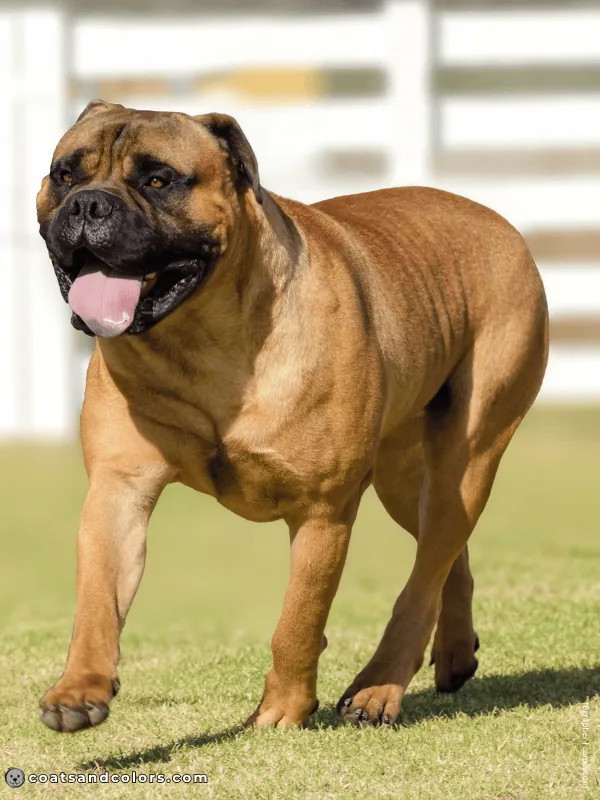
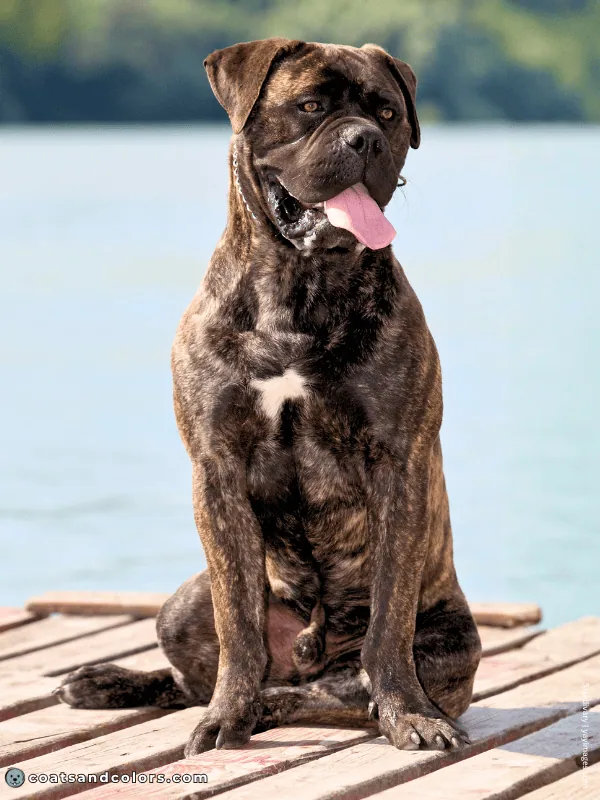
Brindle Bullmastiffs can be fawn brindle or red brindle, depending on the intensity of their red pigment. Also, the black brindling can vary from moderate to dense. Interestingly, I found no reference to the ideal amount of brindling. There are dark brindle Bullmastiffs as well as sparsely striped dogs.
“The Bullmastiff originally worked as a night dog. Dark color was beneficial. Brindle was the original desired color as it was the best camouflage. There is no present day color preference.“
American Bullmastiff Association Illustrated Standard [6]
E Locus
| Em | black mask |
| E | wild-type |
All Bullmastiffs should have a black mask (Em/-). The mask typically covers the muzzle and reaches up to the eyes. It’s normal for sable dogs with a black mask to also have darker ear shading. Sometimes, the mask extends further and causes some extra black on the head, chest, legs or paws.
The presence of a mask is not that obvious in dark brindle dogs. This might be the reason for the wild-type variant (E) also being present in this breed. Dogs with two copies of normal pattern expression (E/E) will be maskless. Which again, is hard to see in black brindle dogs.
“Black muzzle essential, toning off towards eyes, with dark markings around eyes contributing to expression.“
FCI Breed Standard [2]
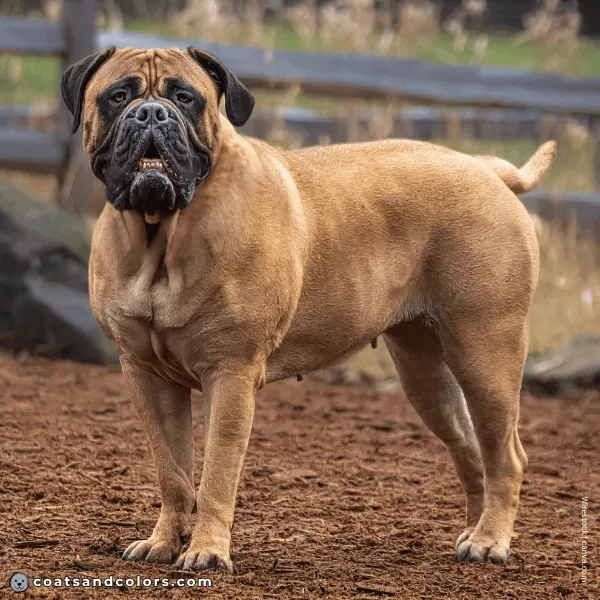
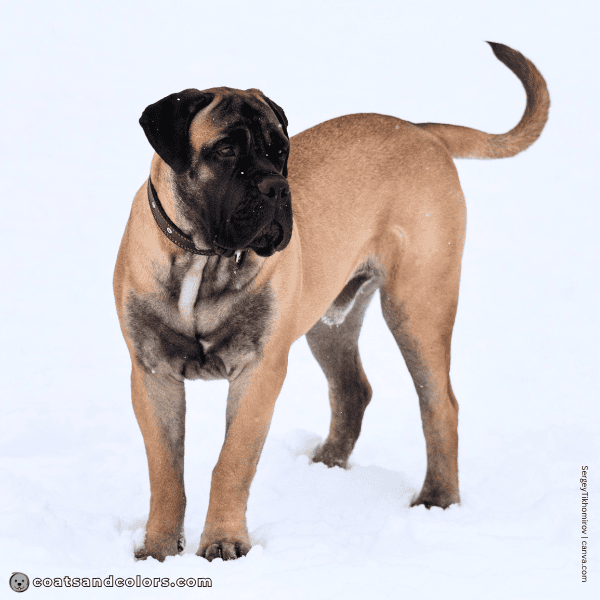
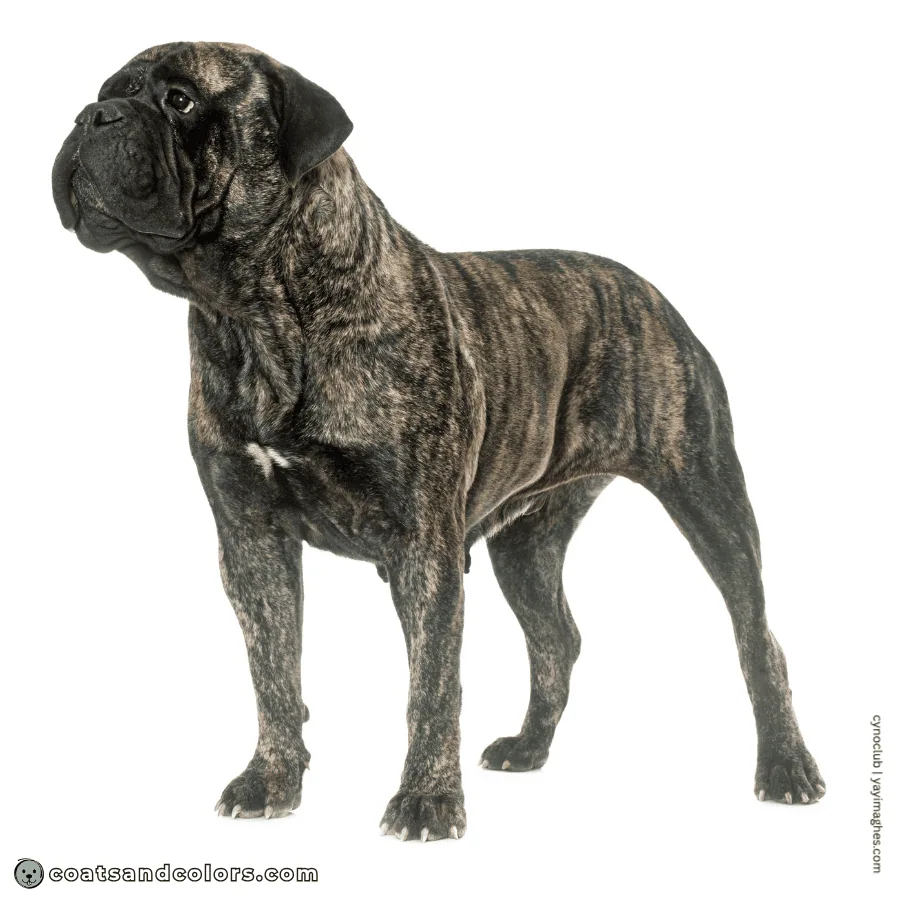
Bullmastiff Base Patterns
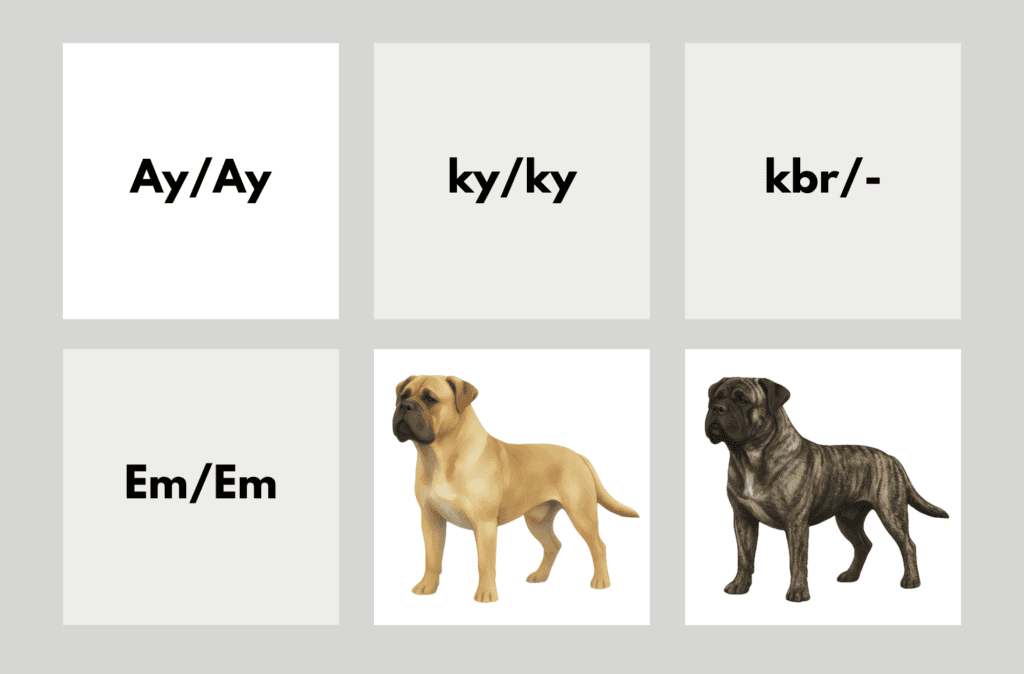
| A LOCUS | K LOCUS | E LOCUS | PATTERN |
|---|---|---|---|
| Ay/Ay | ky/ky | Em/Em | sable, mask “fawn” |
| Ay/Ay | kbr/- | Em/Em | sable brindle, mask “brindle” |
And here is the Bullmastiff color chart:
Base Colors
The base color is determined by the B locus and D locus.
B Locus
| B | black |
| b | brown |
Bullmastiffs should have black pigment (B/B).
But recessive variants for brown pigment (b) are also in the breed.
D Locus
| D | normal |
Bullmastiffs should have normal pigment (D/D).
Red Intensity
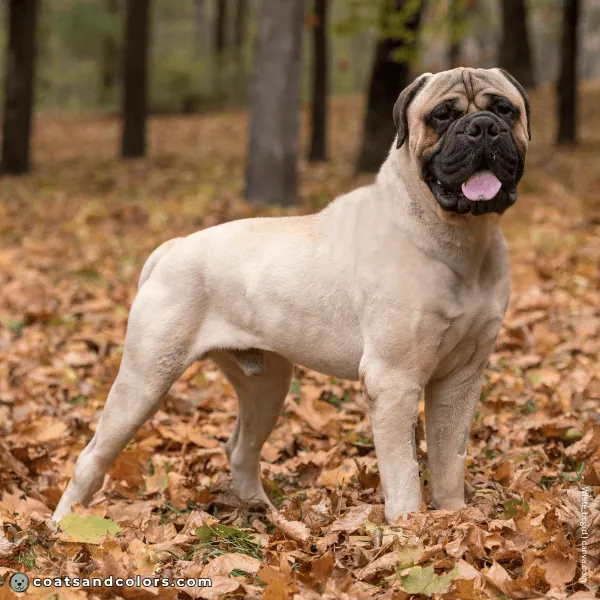
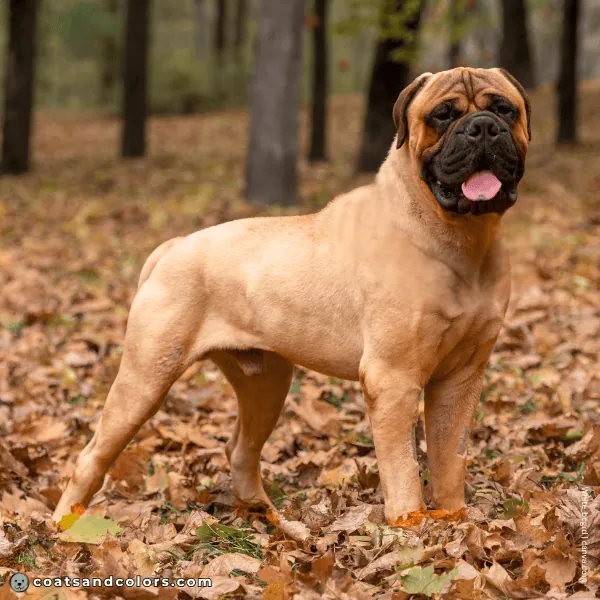
The phaeomelanin colors of the Bullmastiff sable pattern can be fawn, red fawn, or red. This range of colors also affects the red pigment underneath the brindling in brindle Bullmastiffs.
Red colors in Bullmastiffs can range from a whitish tan to intense orange-red or deep red colors. The American Bullmastiff Association tries to define ideal red colors. Unfortunately, like many breeds, they use the terms “light brown” and “reddish brown” to describe their tan colors.
““Fawn can range from a very light brown (they mean tan!) to a reddish brown (again, tan!). Red can range from a light red-fawn to a dark, rich red.”
American Bullmastiff Association [6]
White Markings
Bullmastiffs have a solid coat color (S/S).
The minimal white in some dogs is likely caused by residual white. Any white that goes beyond a small white chest spot is already considered “excessive white“ in this breed.
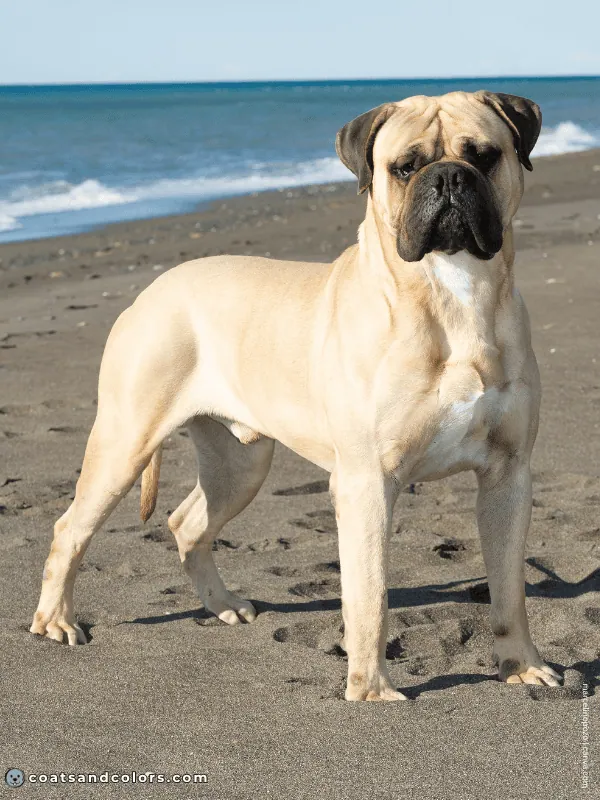
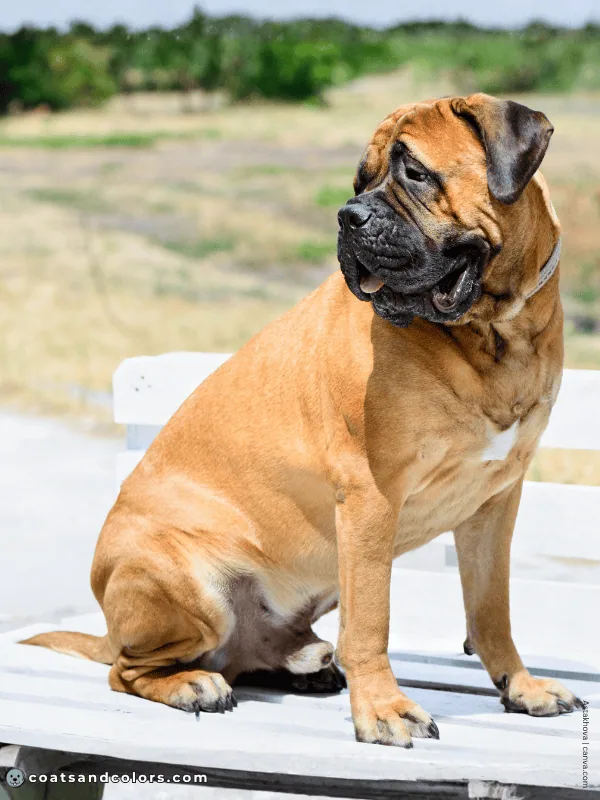
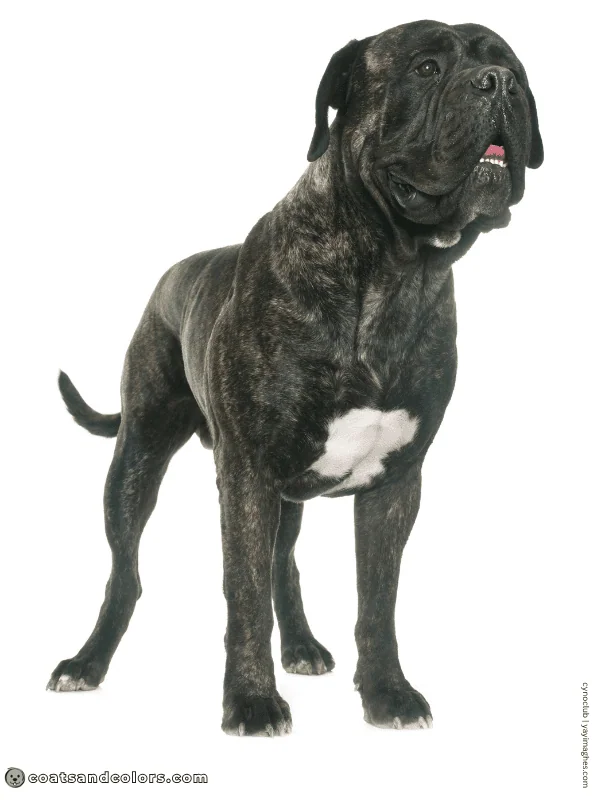
“Except for a very small white spot on the chest, white marking is considered a fault.”
AKC Breed Standard[1]
“A slight white marking on chest permissible. Other white markings undesirable.”
FCI Breed Standard[2]
Bullmastiff Eye Colors
Bullmastiffs usually have dark brown or hazel eyes.
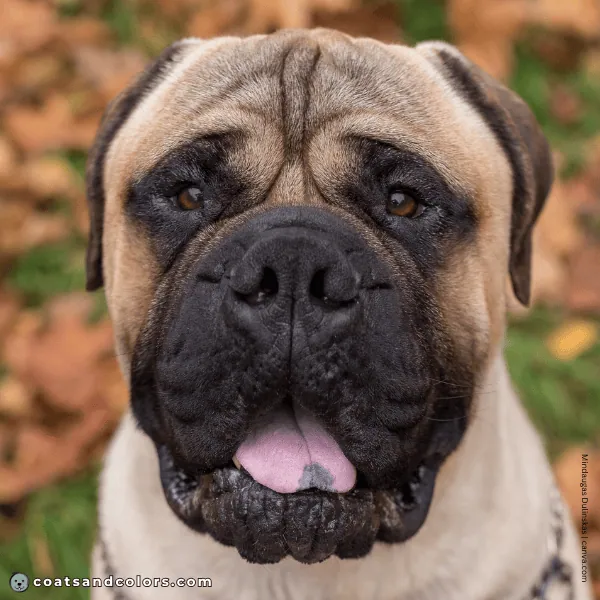
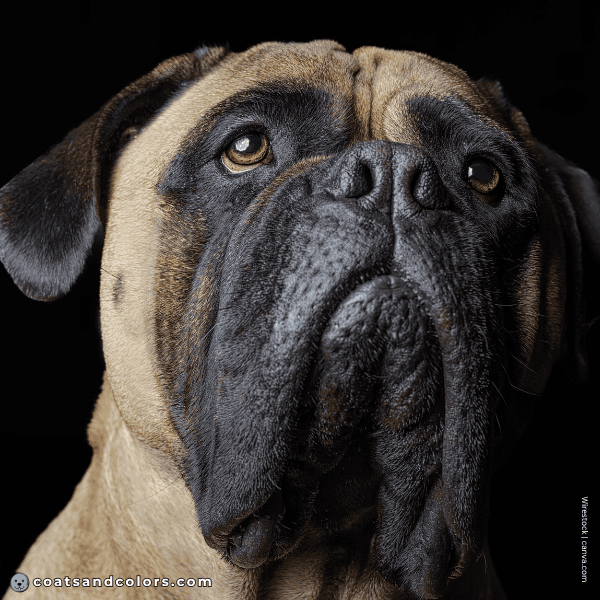
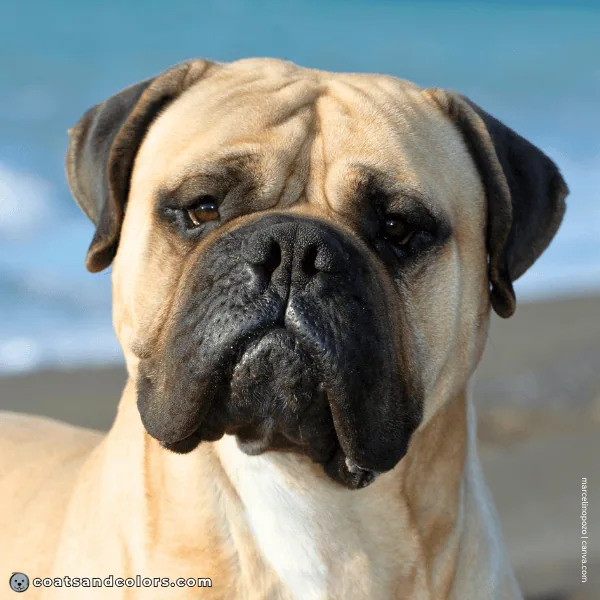
Very light or piercing yellow eyes do happen, but they are considered highly undesirable.
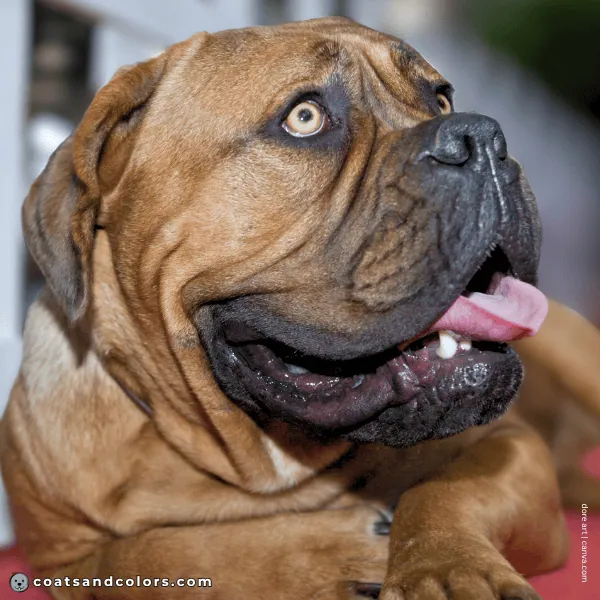
“Eyes dark and of medium size.”
AKC Breed Standard[1]
“Dark or hazel, of medium size, set apart the width of muzzle with furrow between. Light or yellow eyes highly undesirable.”
FCI Breed Standard[2]
Bullmastiff Nose Colors
Bullmastiffs produce black eumelanin. Their nose is always black.
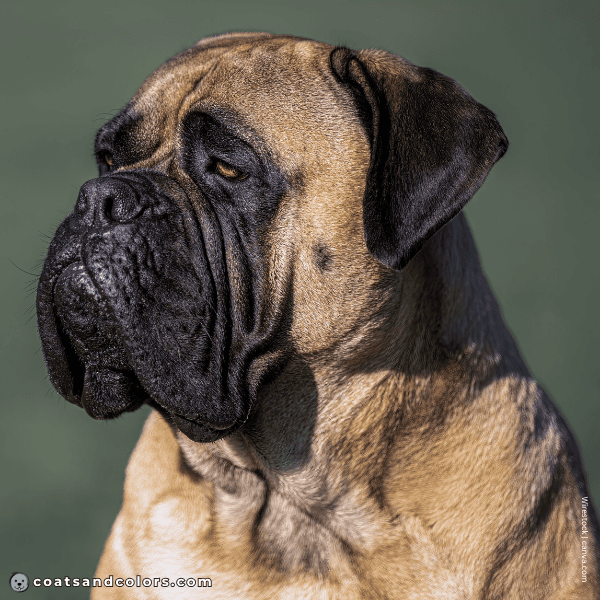
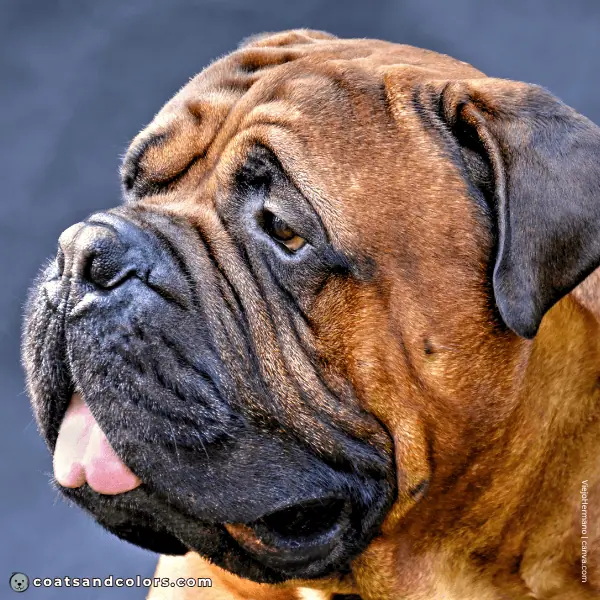
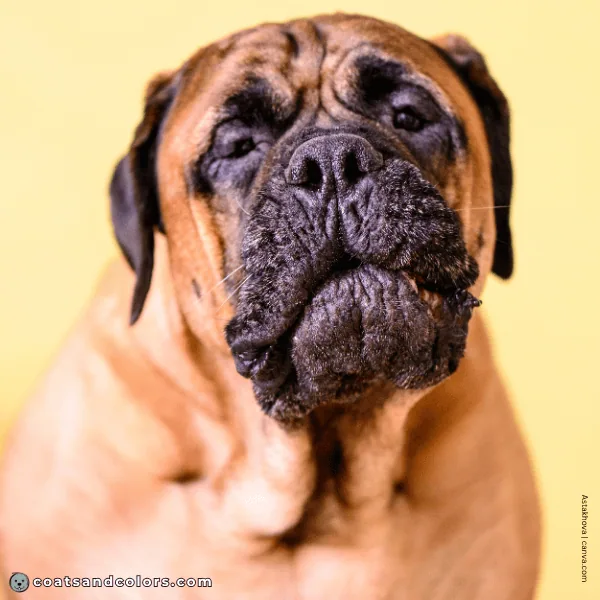
“Nose black, with nostrils large and broad.”
AKC Breed Standard[1]
Bullmastiff Coat Type
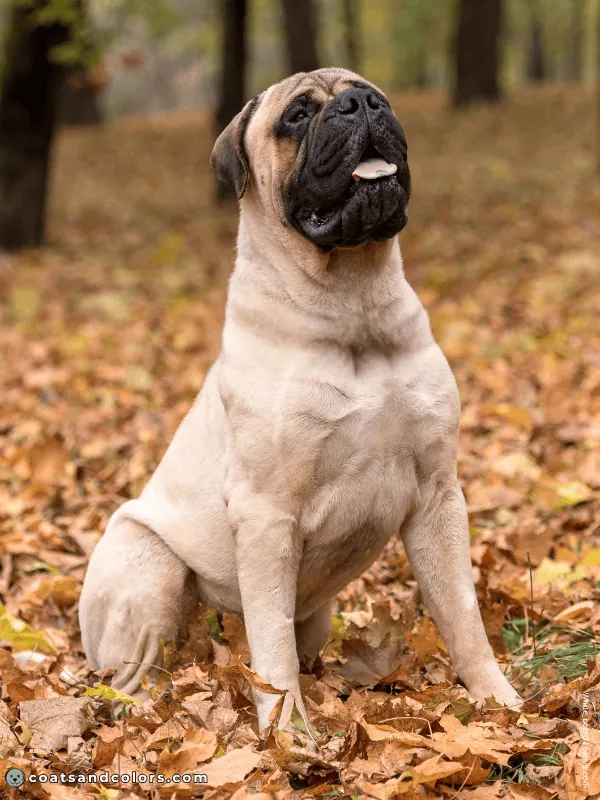
This is obviously a short-haired breed.
“Short and dense, giving good weather protection.”
AKC Breed Standard[1]
“Short and hard, weather-resistant, lying flat to body.”
FCI Breed Standard[2]
A small number of Bullmastiffs carry for a long coat (N/l). Two carriers can produce fluffy puppies (l/l)!
“Long, silky or woolly coats highly undesirable.”
FCI Breed Standard[2]
Related Breeds
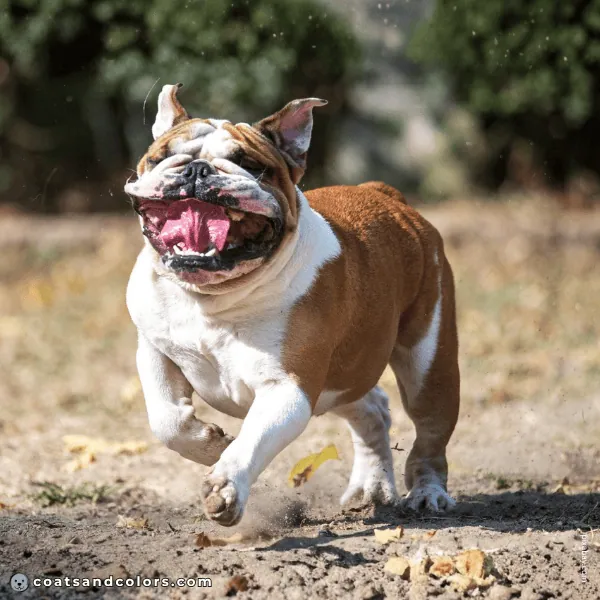
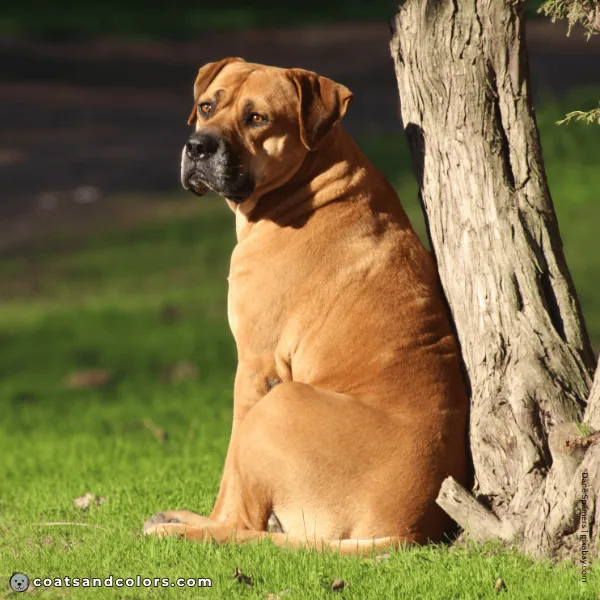
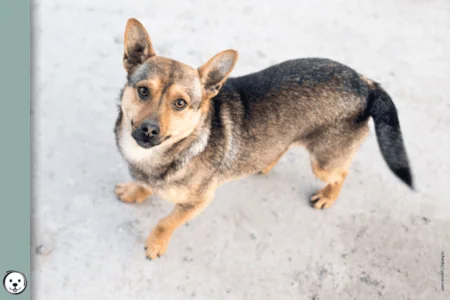
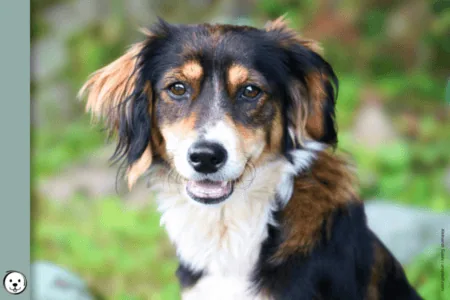
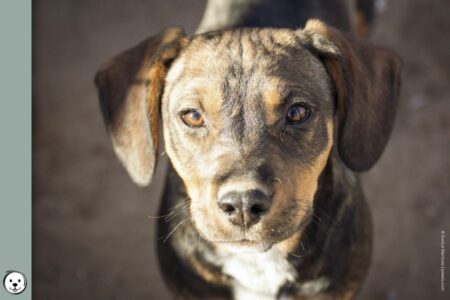
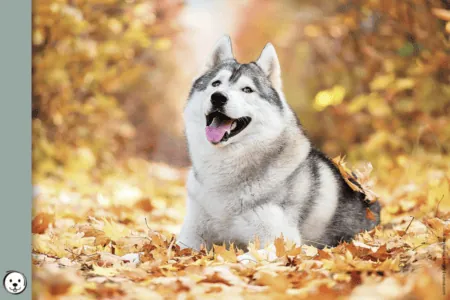
The Bullmastiff was bred from Old English Mastiffs and Bulldogs. As a result, it is related to a wide variety of dog breeds that also also trace their lineage back to Mastiffs or Bulldogs.
Learn More

Links
[1] American Kennel Club (AKC): Bullmastiff
[2] Fédération Cynologique Internationale (FCI): Bullmastiff
[3] Royal Kennel Club (RKC): Bullmastiff
[4] Canadian Kennel Club (CKC): Bullmastiff
[5] Dreger et al. (2019). True Colors: Commercially-acquired morphological genotypes reveal hidden allele variation among dog breeds, informing both trait ancestry and breed potential. PLoS ONE 14(10): e0223995. https://doi.org/10.1371/journal.pone.0223995
[6] American Bullmastiff Association: Illustrated Breed Standard
[7] Caduff, Bauer, Jagannathan & Leeb (2017). A single base deletion in the SLC45A2 gene in a Bullmastiff with oculocutaneous albinism. Animal Genetics 48. https://doi.org/10.1111/age.12582
Image Credits
Astakhova/canva.com
cynoclub/yayimages.com
Dané Spamers/pixabay.com
dore art/canva.com
dpcrestock/yayimages.com
eriklam/yayimaghes.com
f8grapher/canva.com
marcelinopozo/canva.com
Mindaugas Dulinskas/canva.com
SergeyTikhomirov/canva.com
Stradivary/yayimages.com
Tamara528/canva.com
ViejoHermano/canva.com
White_bcgrd/canva.com
Wirestock/canva.com
Hi! I’m Steffi. I am a biologist and a big time dog nerd. You are curious about coat color genetics? You’ve come to the right place! Read more.