

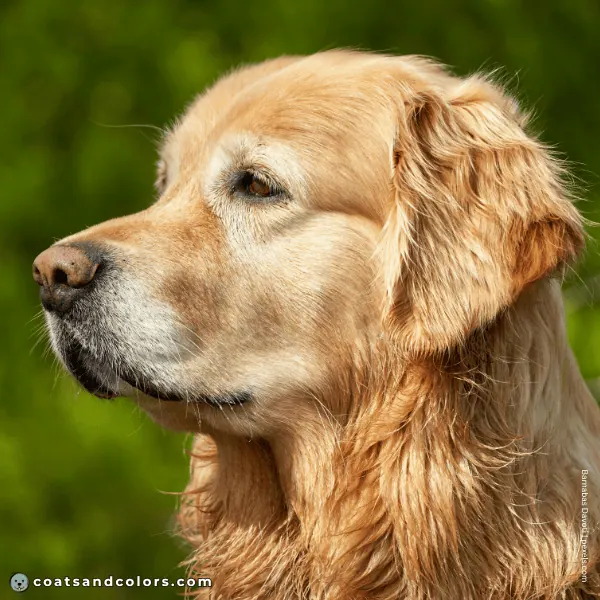
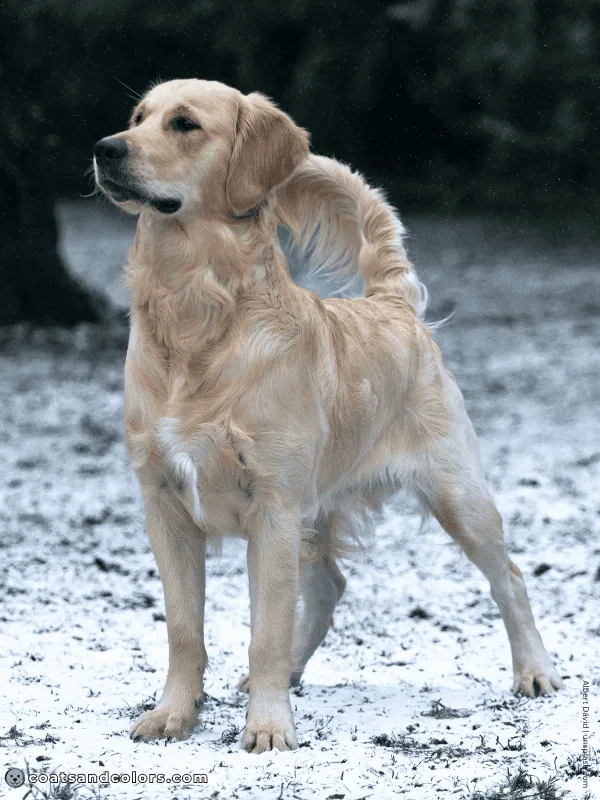
The Golden Retriever has a double coat with feathering. They are named for their golden yellow coat color, but shades can vary from a light yellow cream to a more intense reddish gold.
Cream
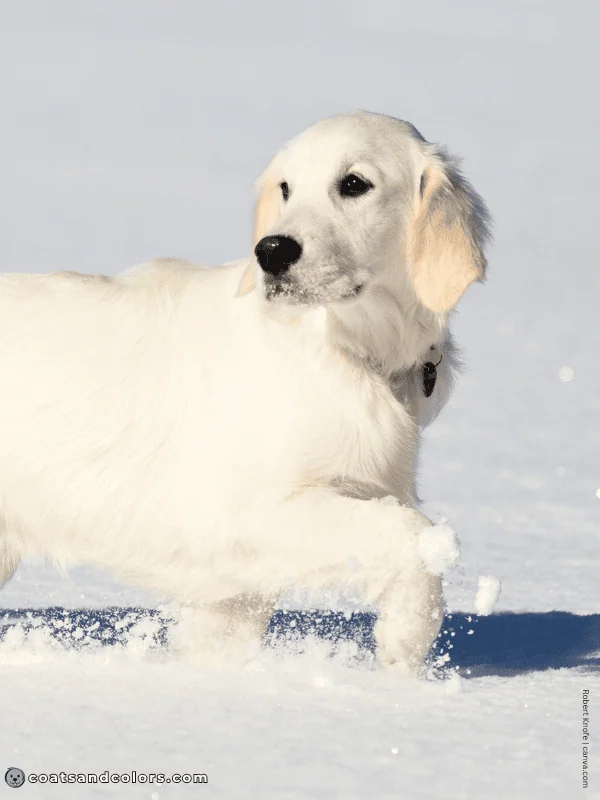
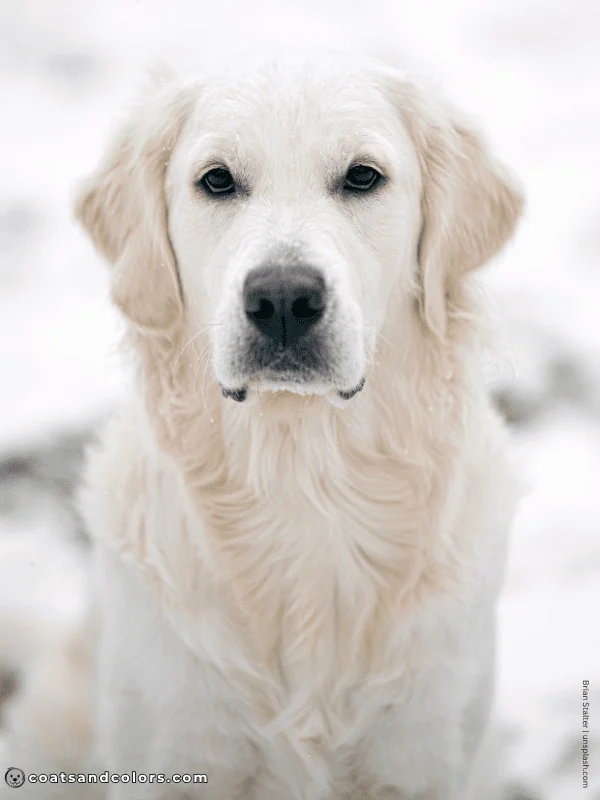
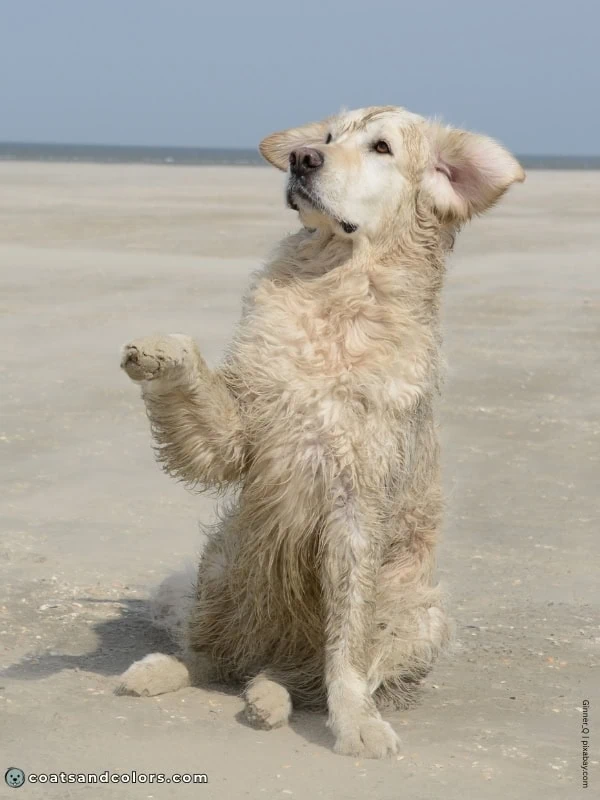
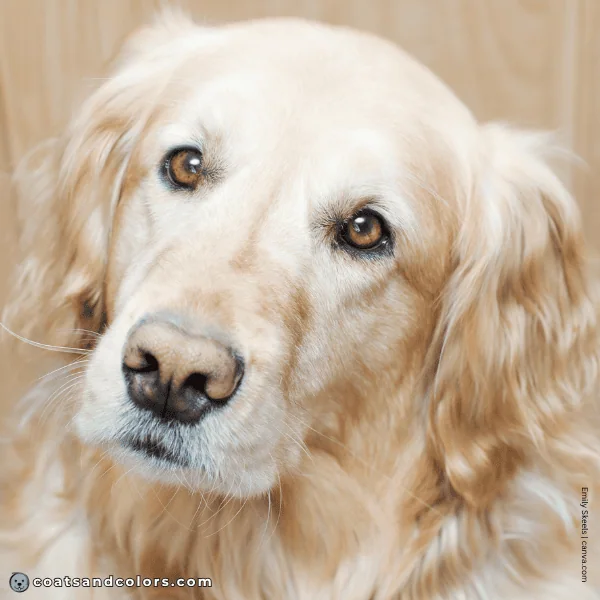
Cream Golden Retrievers are recessive red (e/e) with low phaeomelanin intensity.
They are too light to be classified as “light golden“. But they still appear light yellow and do not look white (some breeders produce off-standard English Cream). The FCI breed standard lists cream as a standard color, while the AKC barely just tolerates it[1,2].
BASE PATTERN
recessive red
MERLE
–
OTHER
–
EUMELANIN
black
INTENSITY
cream
WHITE
solid
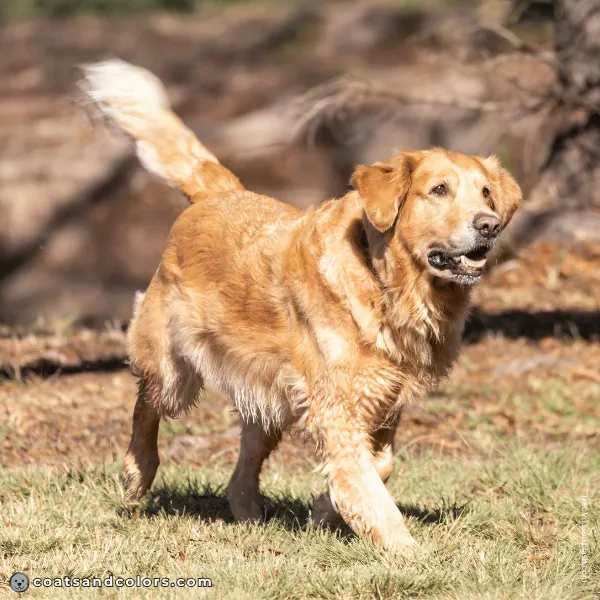
Light Golden
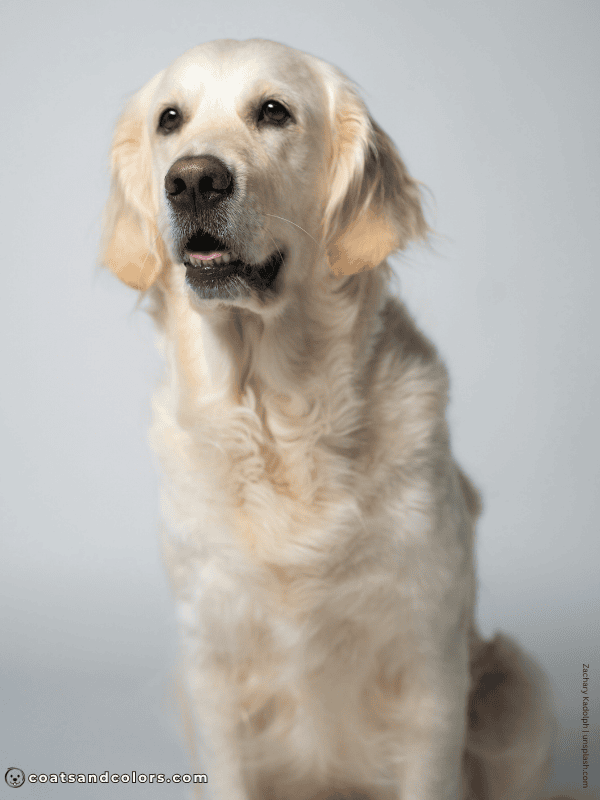
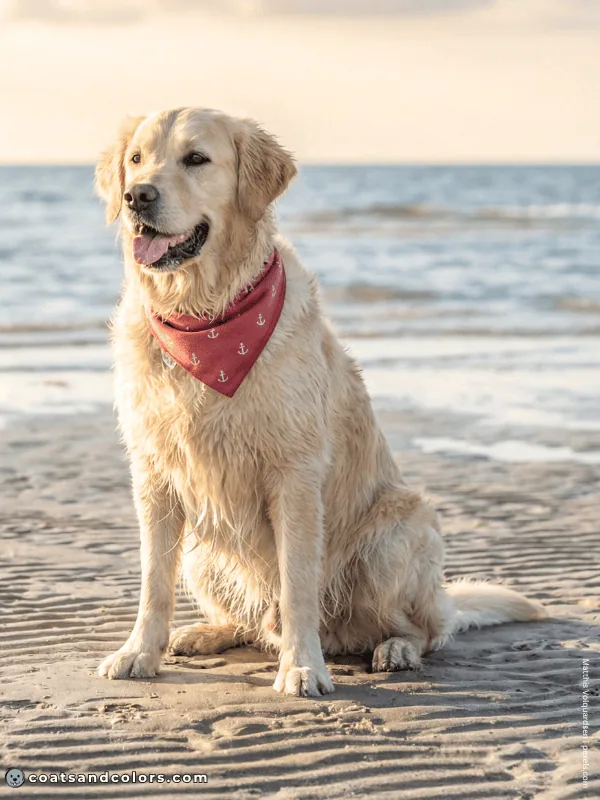

Light Golden Golden Retrievers have a recessive red pattern (e/e) with a low-medium red intensity. These dogs appear yellow, it’s a lighter shade of golden.
BASE PATTERN
recessive red
MERLE
–
OTHER
–
EUMELANIN
black
INTENSITY
light golden
WHITE
solid
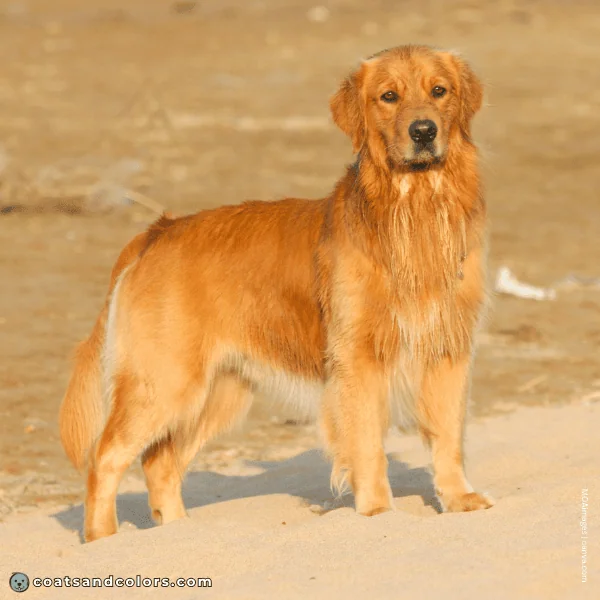
Golden
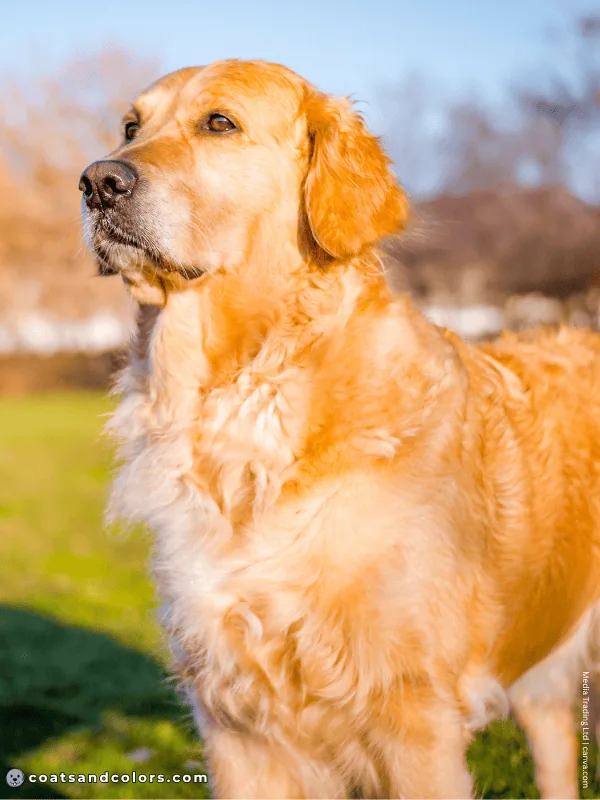
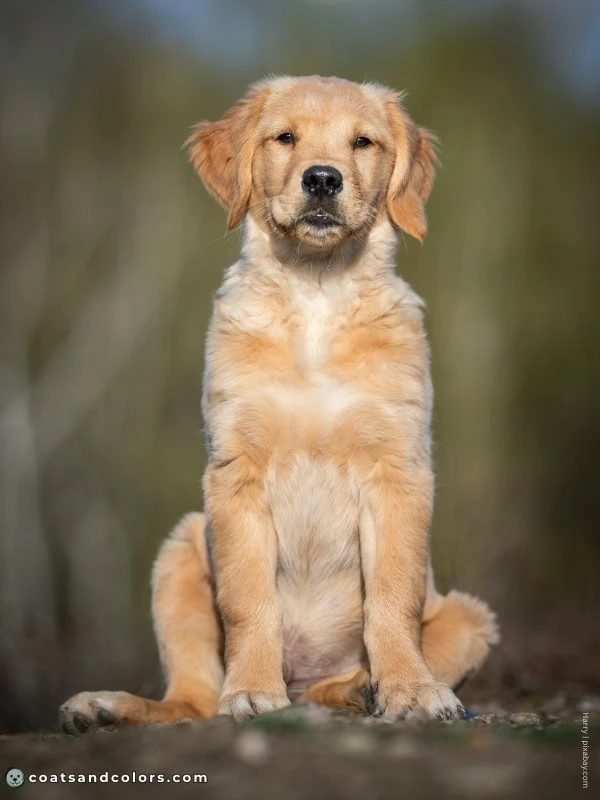
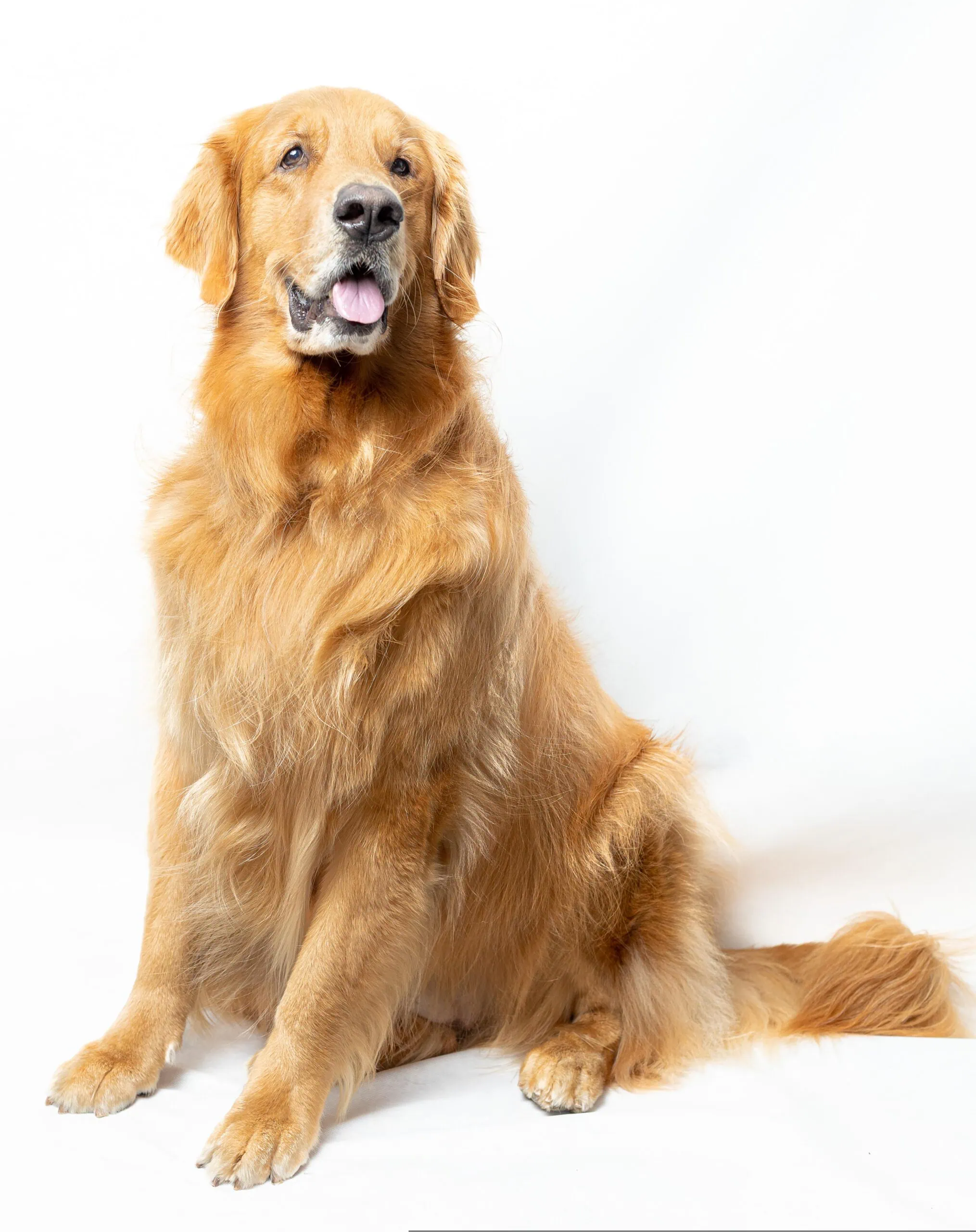
These Golden Retrievers have the rich saturated yellow color that gave the breed its name.
BASE PATTERN
recessive red
MERLE
–
OTHER
–
EUMELANIN
black
INTENSITY
golden
WHITE
solid
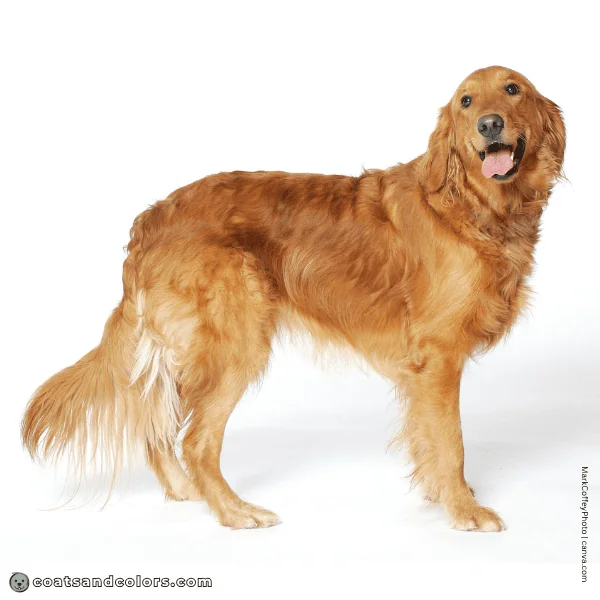
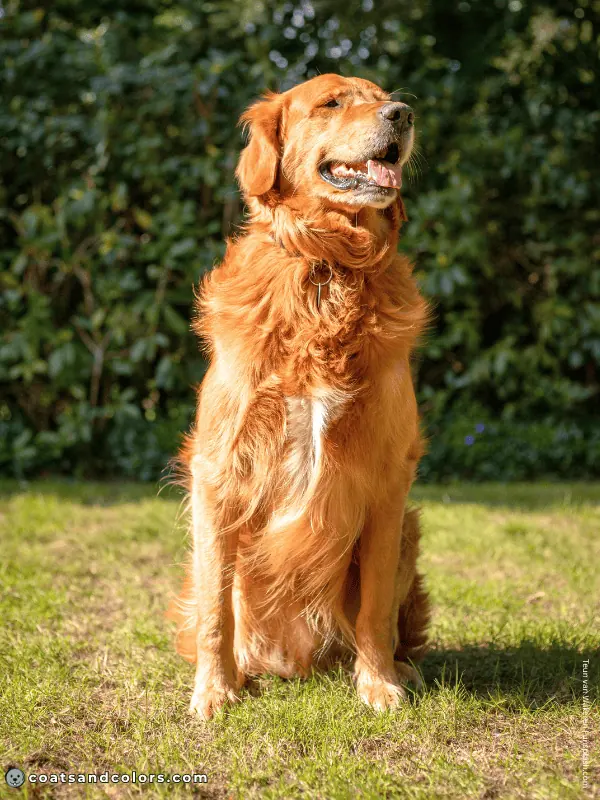
Dark Golden
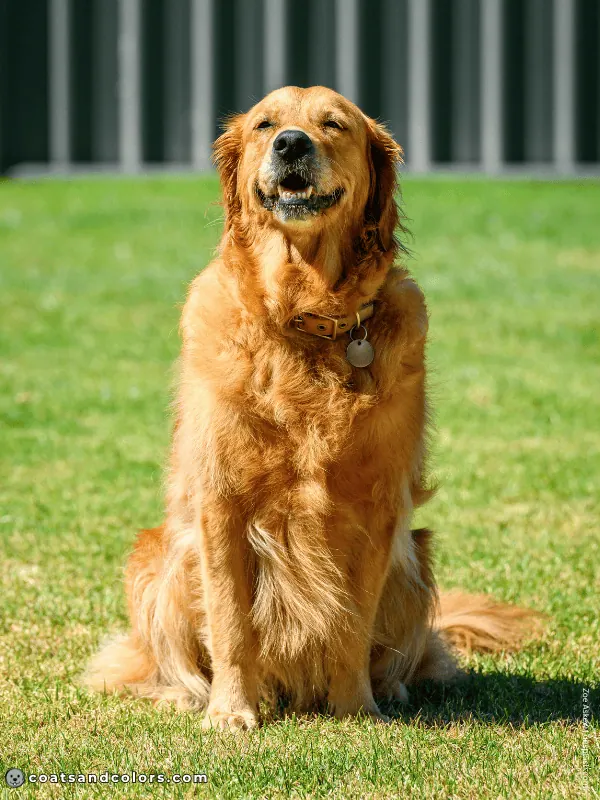
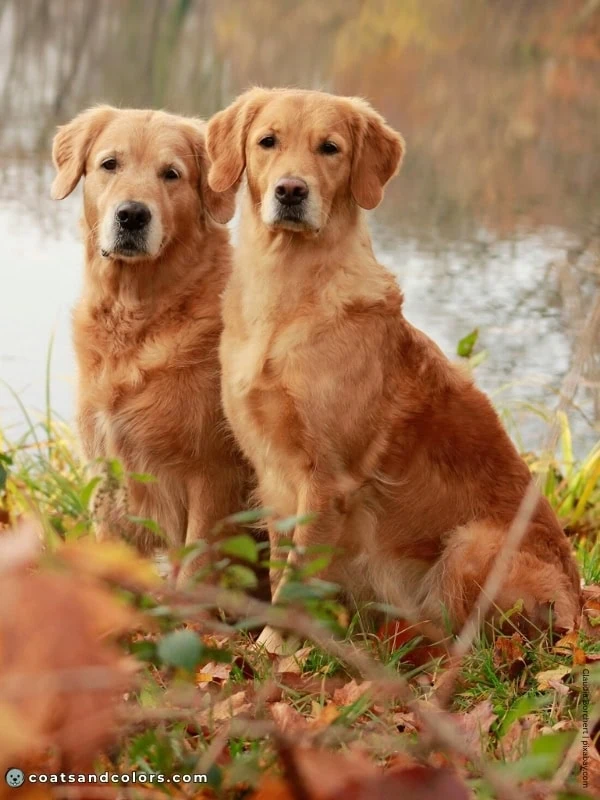
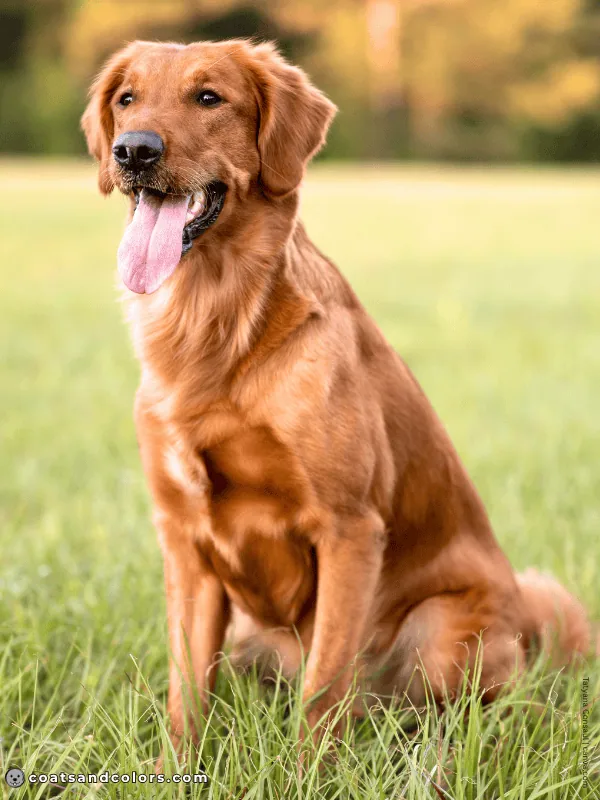
The recessive red (e/e) on a dark golden Golden Retriever has a richer red intensity. Their dark yellow coat can border on a rusty yellow or orange, but dogs should not look red.
BASE PATTERN
recessive red
MERLE
–
OTHER
–
EUMELANIN
black
INTENSITY
dark golden
WHITE
solid
Faulty Colors
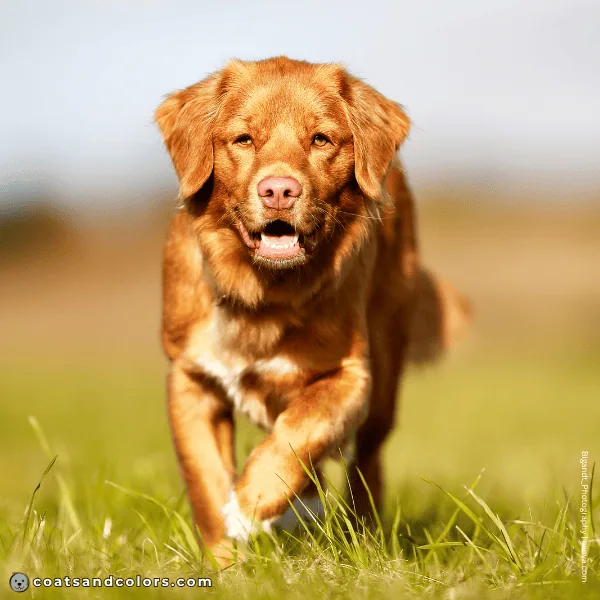
All Golden Retrievers have a solid red coat with a black nose. Dogs with a chocolate “Dudley” nose have become rare in the Golden breed. The b/b and e/e combination happens way more regularly in Labradors. And chocolate-based yellow is the standard color in Duck Tolling Retrievers.
The intensity of red pigment in Golden Retrievers ranges from very light to darker golden colors. The official breed standards do not tolerate dogs that look too light with a ivory or white coat (they call them English Cream) nor dogs that look too dark red to still be called golden (Setter-Red, Fox-Red, Mahogany).
“Predominant body color which is either extremely pale or extremely dark is undesirable.“
“Any noticeable area of black or other off-color hair is a serious fault.“
AKC Breed Standard[1]
“Neither red nor mahogany“.
FCI Breed Standard[2]
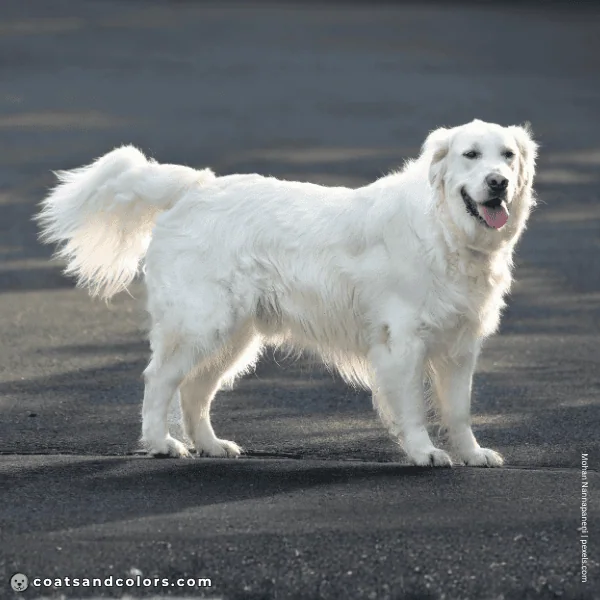
(very low intensity)
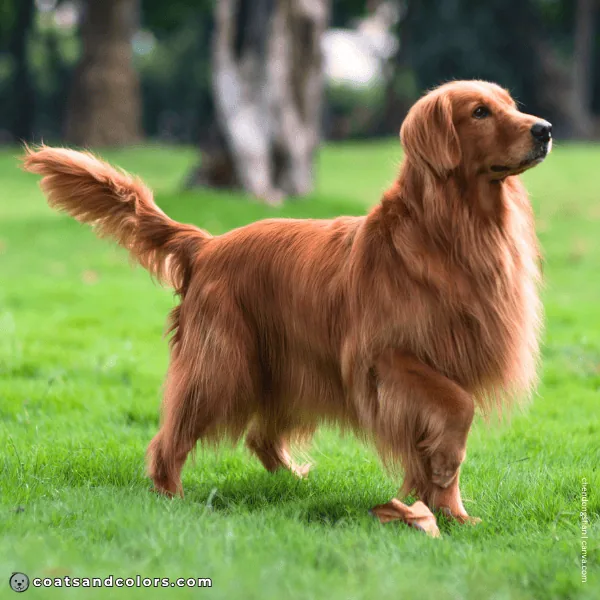
(very high intensity)
Normally, all the body cells are e/e. Sometimes, one of the recessive red alleles (e) in one of the body cells reverts back to its wild type state (E). This creates a mosaic genotype where most body cells are e/e, but some are E/e. The areas with the E/e cell will show up as patches of black or patterned hairs. A somatic mutation only affects the body and will not be passed on to puppies!
Base Patterns
The base pattern describes the placement of phaeomelanin and eumelanin in the coat.m There is an epistatic hierarchy between these genes: A locus < K locus < E locus.
- The A locus controls the basic distribution of both pigment types.
- Next, the K locus can add black to the A locus pattern.
- Finally, the E locus regulates the general ability to produce black pigment.
A Locus
| at | tan point |
| a | recessive black |
A dog with e/e can not express its A locus. So it does not really matter since the pattern is hidden anyway. Most Goldens seem to have tan points (at), some have recessive black (a).
But other patterns are likely also present in the breed.
K Locus
| KB | dominant black |
| kbr | brindle |
| ky | wild-type |
Dogs with e/e can not express their K locus either. Golden Retrievers have all possible variants (ky, kbr, KB) in their gene pool, but all of these phenotypes will be hidden.
E Locus
| e | recessive red |
The Golden Retriever breed is fixed for e/e.
The recessive red pattern prevents pigment cells from making any black pigment (eumelanin) in the coat. So whatever the other loci want, all they can do is make red pigment (phaeomelanin).
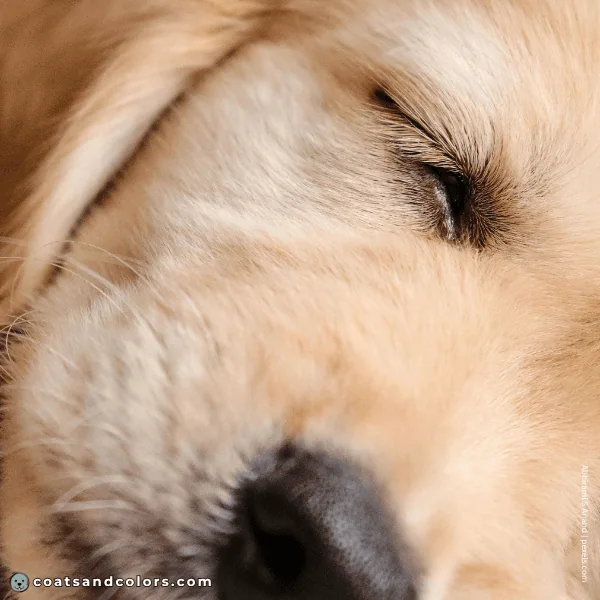
They will also have pale whiskers, pale eyelashes, and pale nails. And snow noses are common.
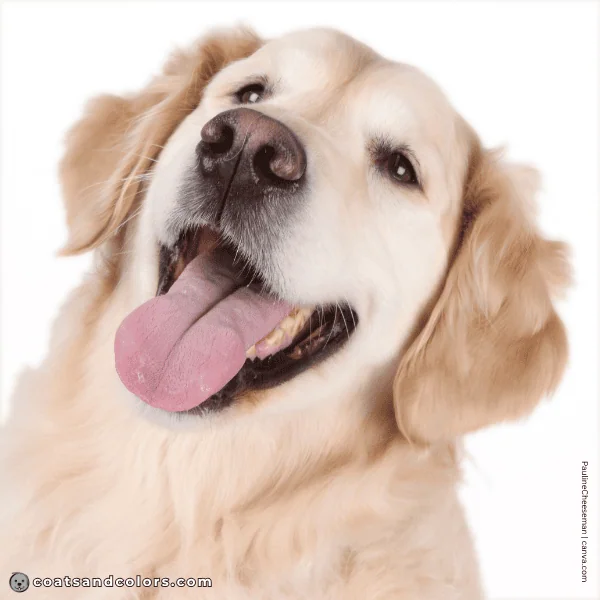
Golden Retriever Base Patterns
| A LOCUS | K LOCUS | E LOCUS | PATTERN |
|---|---|---|---|
| e/e | recessive red |
Base Colors
The base color is determined by the B locus and D locus. Even if not present in their coat color, it is always eumelanin you see in the nose, lips, eye rims, or eyes.
B Locus
| B | black |
| b | brown |
Golden Retrievers aim to fixate black pigment (B/B).
But recessive alleles for brown pigment (bs, bc) are also present. A dog with any two of these alleles (either combi of b alleles counts as b/b) will have a liver nose (“Dudley”) and brown lips and eye rims.
D Locus
| D | normal |
Golden Retrievers are fixed for normal pigment (D/D).
Red Intensity
Goldens only produce phaeomelanin in their coat.
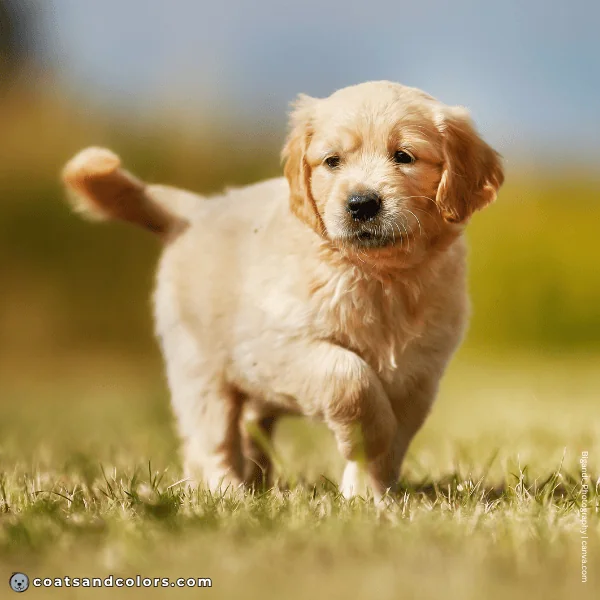
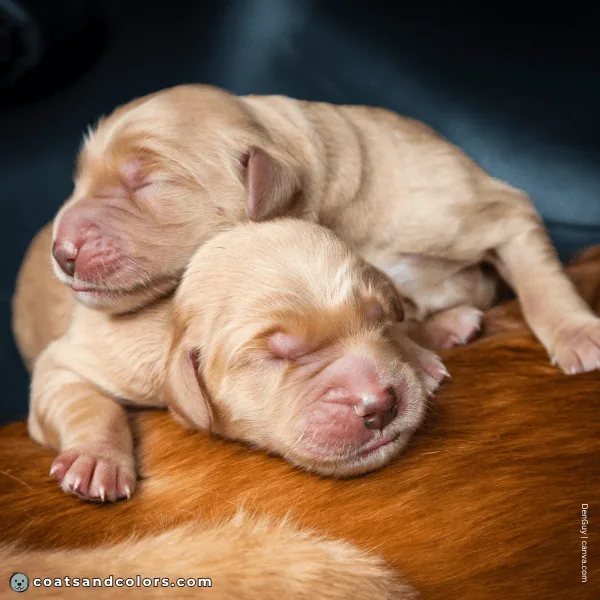
However, there is a rainbow of breed terms to describe the different shades of golden. You’ll find descriptions such as light golden or dark golden red or pale gold or reddish gold. The important thing is that their red pigment should be a shade of “golden” color that lives up to the breed’s name.

The more extreme whitish cream or deep fox-red colors are not preferred in the show ring[5]. But even a light cream or dark red coat is considered undesirable, but not a major fault. But breeding and advertising one specific color should never be the most important goal when breeding Retrievers!
In breeding, the more intense colors usually override the lighter colors.
So theoretically, two very red parents can be low-intensity carriers and produce light-colored pups, but not vice versa. But the phaeomelanin intensity is multigenic and can be difficult to predict.
The amount of red phaeomelanin in the hair shaft causes the variation in intensity. And recessive red puppies still build up pigment in their first year or so. It’s normal for them to darken quite a bit.

“Rich, lustrous golden of various shades. Feathering may be lighter than rest of coat.”
AKC Breed Standard[1]
“Any shade of gold or cream.”
FCI Breed Standard[2]
The judge’s education material on the Golden Retriever Club of America‘s website claims that “Some Goldens also carry pattern genes on the A locus that can affect the shading on the coat“.
This is not true! First of all, all dogs have something on their A locus and “carry a pattern gene” or the other. However, these A locus patterns will never show up on recessive red dogs.
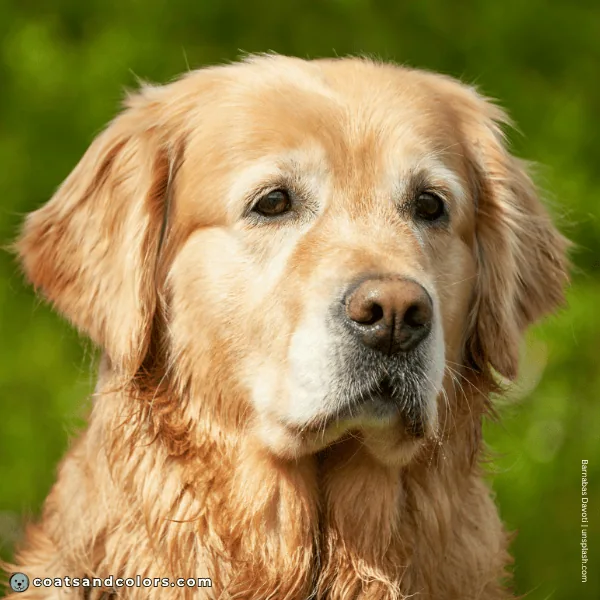
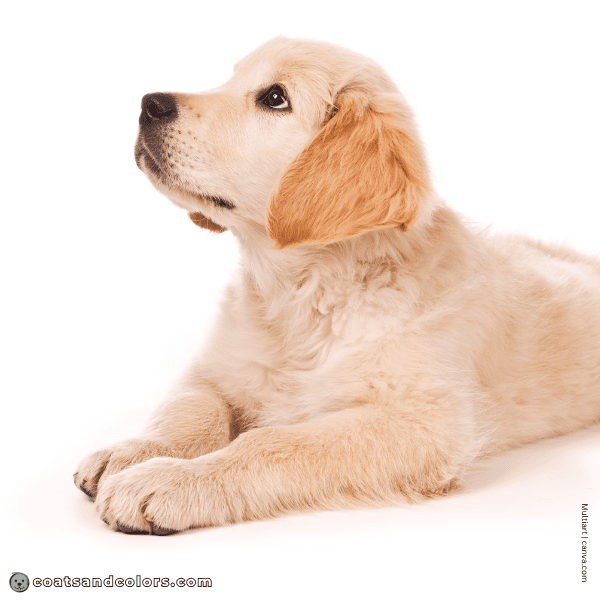
What they likely mean is darker ear lacing or some more intense red on the face, back, or ears. Or some very light undercoat on a dark golden dog. This is very normal for recessive red dogs.
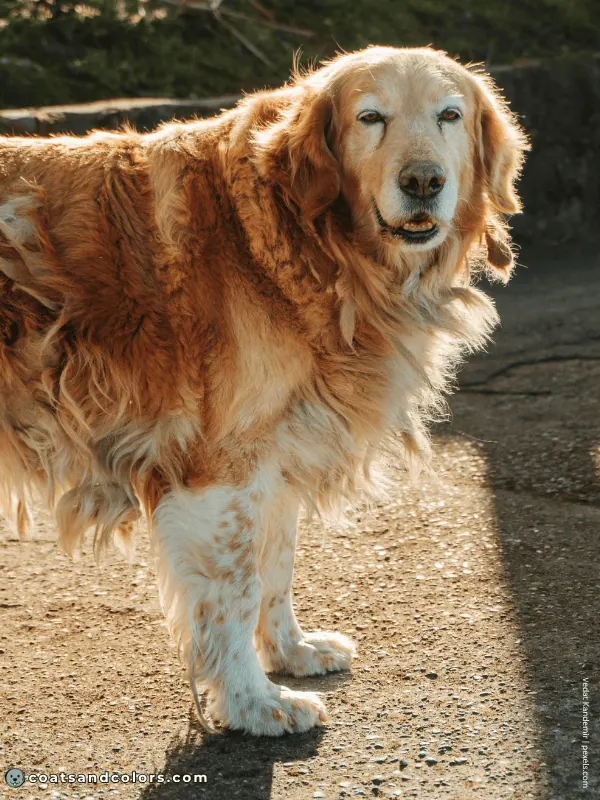
Many Golden Retrievers are prone to premature graying.
None of this indicates any type of a hidden pattern showing through!

White Markings
Golden Retrievers are solid, they typically don’t have white markings.
But some residual white like a thin white patch on the chest can sometimes happen.
These small white puppy markings often disappear as more pigment fills in in the weeks after birth. Only very few Goldens keep more than a tiny sliver of white hairs in their adult coat.
Many of the solid breeds unconsciously select for ticking. This can further help to fill in the missing pigment in white markings.
“With the exception of graying or whitening of face or body due to age, any white marking, other than a few white hairs on the chest, should be penalized according to its extent.”
AKC Breed Standard[1]
“A few white hairs on chest only, permissible.”
FCI Breed Standard[2]
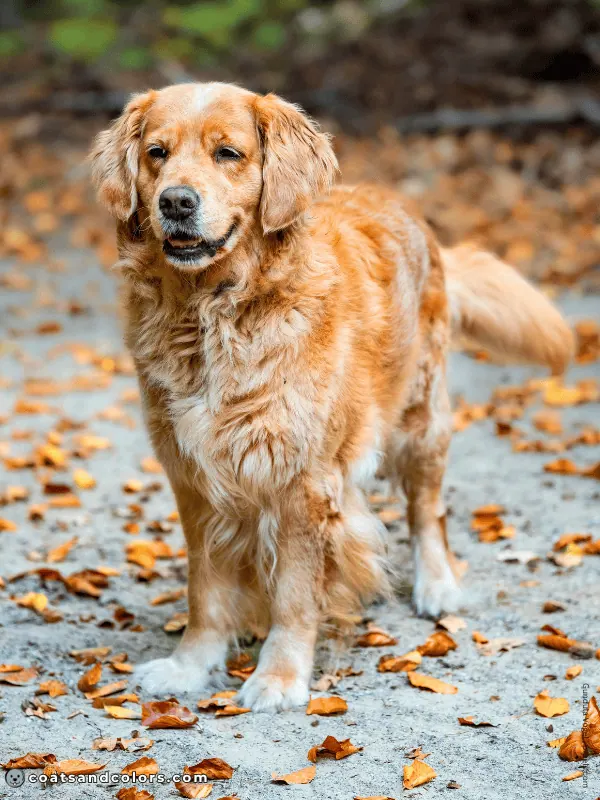
Some dogs can get very white socks or a white face in their golden years (pun intended!). But this kind of pigment loss is a progressive thing and not the same as crisp white markings.
Golden Retriever Eye Colors
Golden Retrievers have brown eyes with black rims.
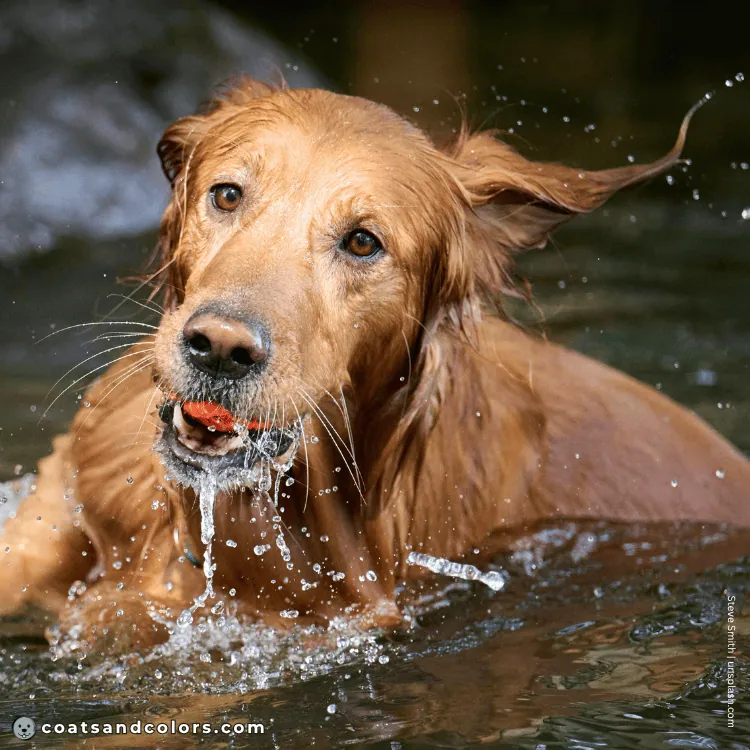
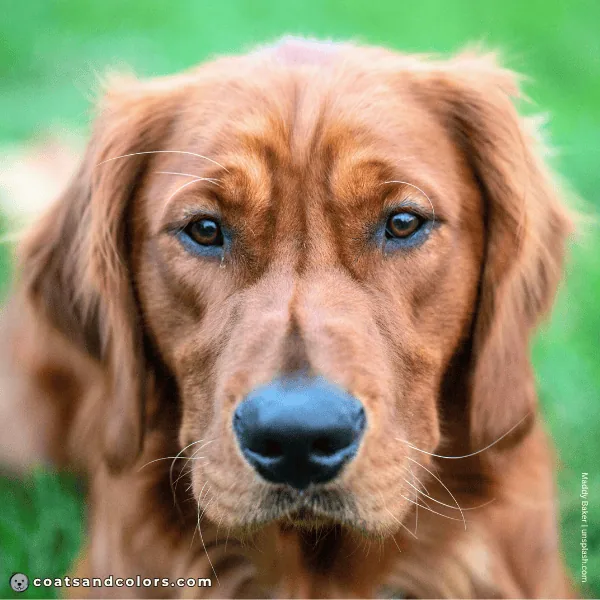
“Eyes […] medium large with dark, close-fitting rims […] Color preferably dark brown; medium brown acceptable.“
AKC Breed Standard[1]
“Dark brown, set well apart, dark rims.“
FCI Breed Standard[2]
Golden Retriever Nose Colors
The eye rims, lips, paw pads, and the nose on a Golden should be black.
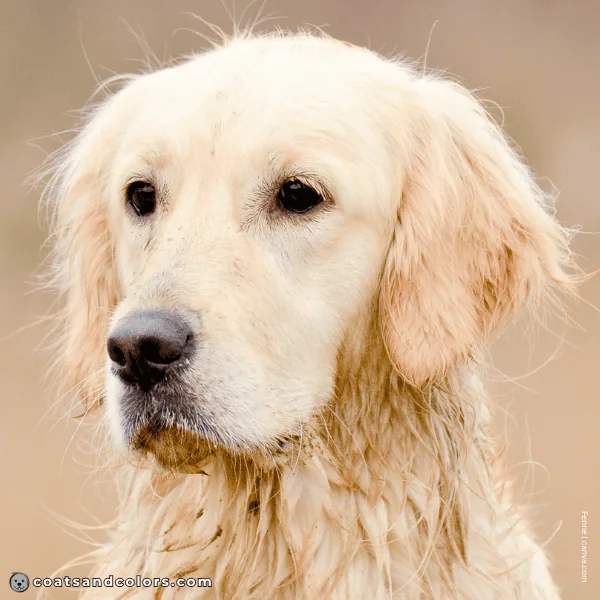
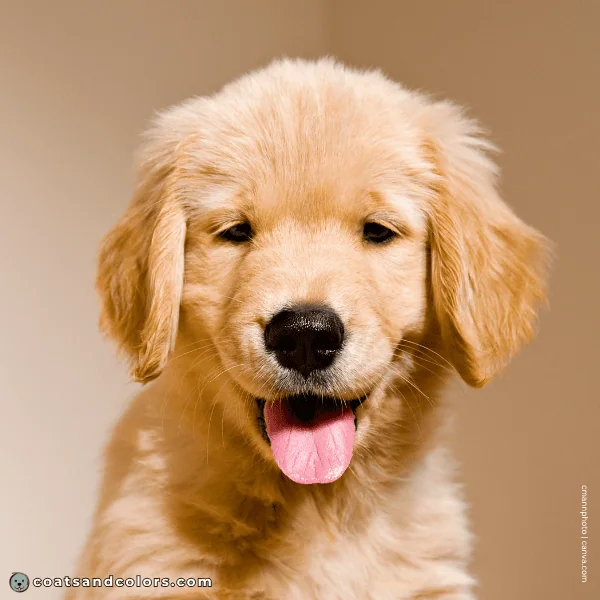
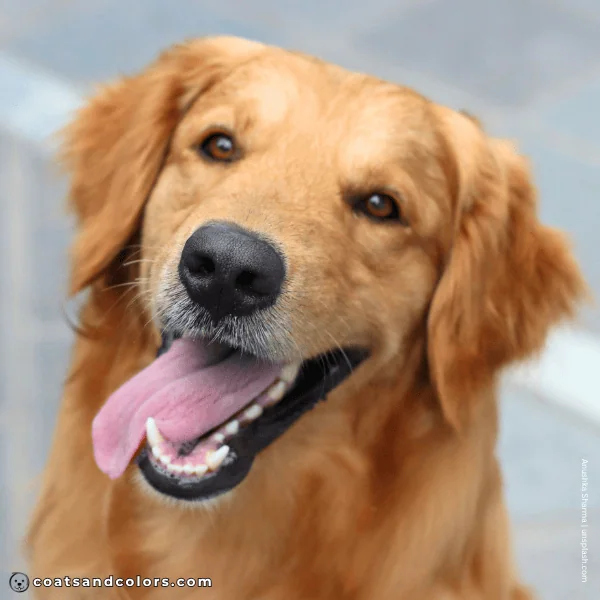
However, their recessive red pattern usually causes some depigmentation of the nose, lips, and eye rims. Almost all adult Golden Retrievers have some hints of snow nose.

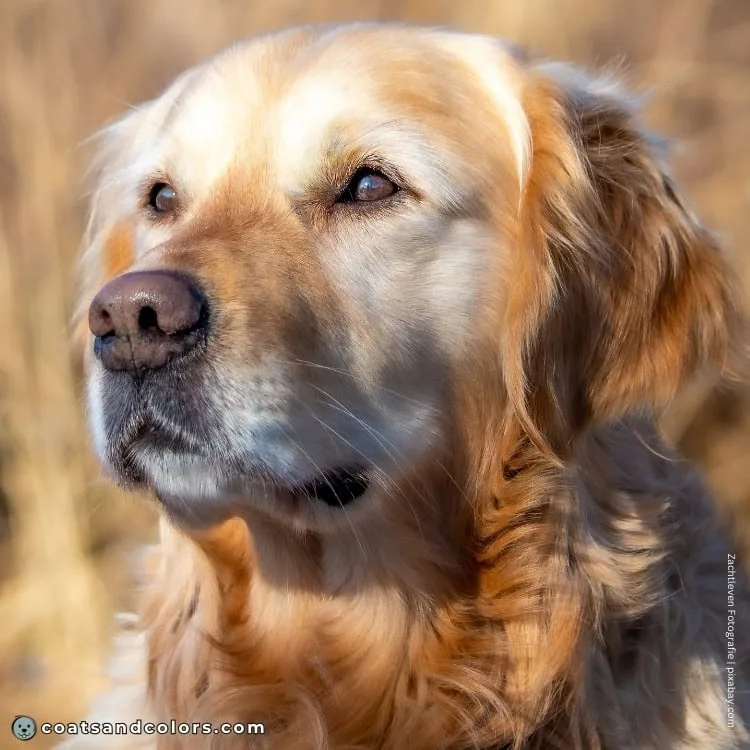
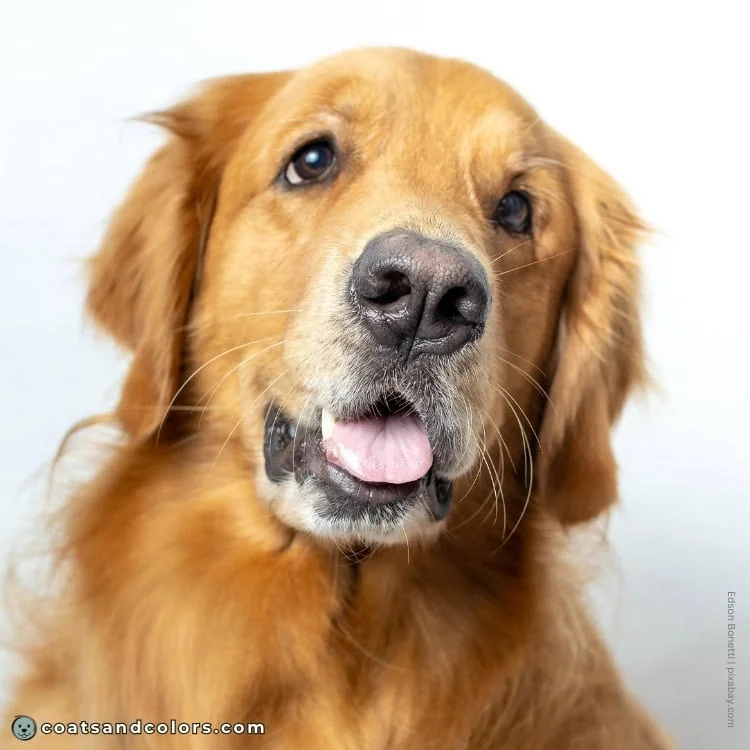
“Nose black or brownish black, though fading to a lighter shade in cold weather not serious. Pink nose or one seriously lacking in pigmentation to be faulted.“
AKC Breed Standard[1]
“Nose: Preferably black.”
FCI Breed Standard[2]
Golden Retriever Coat Type
Golden Retrievers are fixed for a long-haired coat.
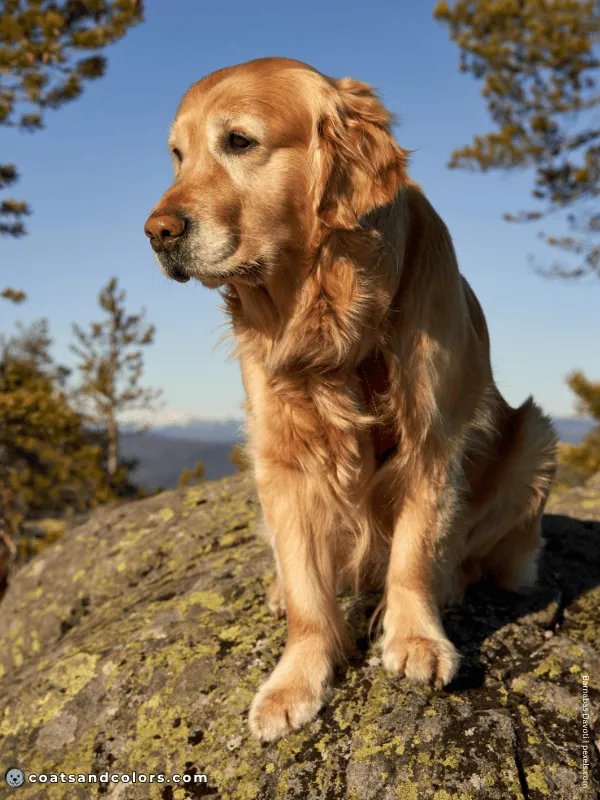
They have a natural ruff and can have quite some feathering on the back of their legs, chest, underbody, and the underside of their tail. However, the coat on their head and lower legs is short.

“Dense and water-repellent with good undercoat. Outer coat firm and resilient, neither coarse nor silky, lying close to body; may be straight or wavy.“
AKC Breed Standard[1]
“Flat or wavy with good feathering, dense water-resisting undercoat.“
FCI Breed Standard[2]
The curly variant (Cu) occurs at low frequencies in the Golden breed. This seems to be what causes the very wavy coat in some dogs. However, breeding two wavy dogs can cause a homozygous curly dog.
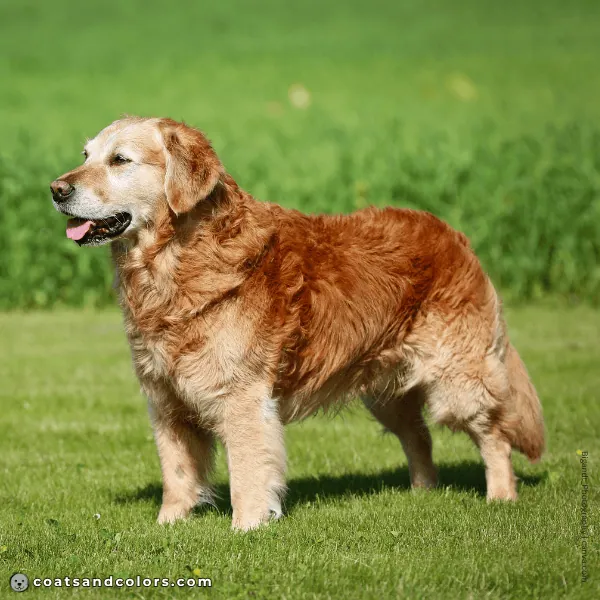
Related Breeds
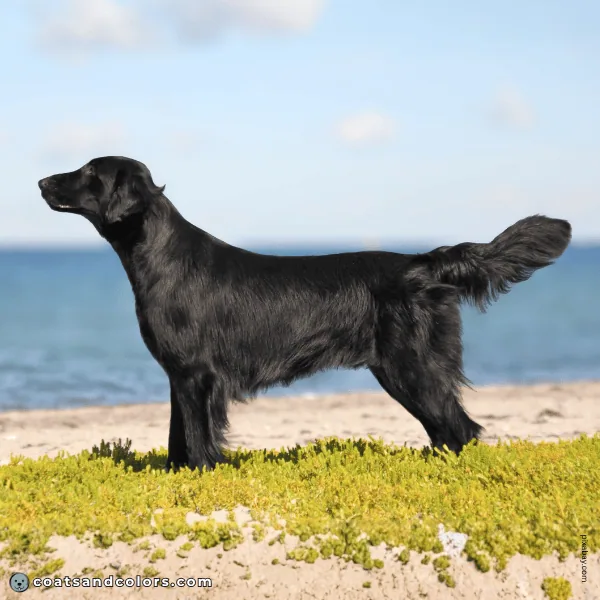
The breed originated from the odd yellow specimens of the otherwise black Wavy Coated Retriever. Of course, black dogs can produce yellow puppies if both are e carriers (E/e x E/e).
Before these “Yellow Retrievers” were recognized as a breed of their own and adopted the “Golden” name, they were registered as off-colored Flat Coated Retrievers.
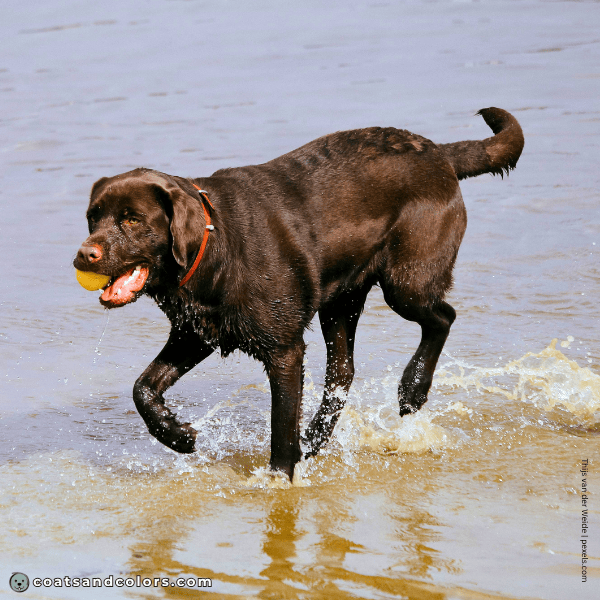
Several other dogs, such as the Irish Setter or Labrador, were used to refine the breed type. By only keeping the solid yellow puppies, the Golden was soon fixed for a recessive red (e/e) pattern.
Learn More




Links
[1] American Kennel Club (AKC): Golden Retriever
[2] Fédération Cynologique Internationale (FCI): Golden Retriever
[3] Royal Kennel Club (KC): Golden Retriever
[4] Canadian Kennel Club (CKC): Golden Retriever
[5] Dreger et al. (2019). True Colors: Commercially-acquired morphological genotypes reveal hidden allele variation among dog breeds, informing both trait ancestry and breed potential. PLoS ONE 14(10): e0223995. https://doi.org/10.1371/journal.pone.0223995
Image Credits
Abhirami S Anand/pexels.com
Albert Dávid/unsplash.com
Anushka Sharma/unsplash.com
Barnabas Davoti/pexels.com
Barnabas Davoti/unsplash.com
Bigandt_Photography/canva.com
Brian Stalter/unsplash.com
chendongshan/canva.com
Claudia Borchert/pixabay.com
cmannphoto/canva.com
DenGuy/canva.com
eAlisa/canva.com
Edson Bonetti/pixabay.com
Emily Skeels/canva.com
Fenne/canva.com
foun/yayimages.com
Garosha/canva.com
Ginner_Q/pixabay.com
Gundula Vogel/pexels.com
Harry/pixabay.com
Maddy Baker/unsplash.com
MarkCoffeyPhoto/canva.com
Matthis Volquardsen/pexels.com
Media Trading Ltd/canva.com
Melanie Mai/pixabay.com
MOAimages/canva.com
Mohan Nannapaneni/pexels.com
Multiart/canva.com
PaulineCheeseman/canva.com
Robert Knofe/canva.com
Steve Smith/unsplash.com
suriya silsaksom/canva.com
Tatyana Consaul/canva.com
Teun van Wakeren/unsplash.com
Thijs van der Weide/pexels.com
Trac Vu/unsplash.com
Vedat Kandemir/pexels.com
Wirestock/canva.com
Zachary Kadolph/unsplash.com
Zoe Askew/unsplash.com
Hi! I’m Steffi. I am a biologist and a big time dog nerd. You are curious about coat color genetics? You’ve come to the right place! Read more.
1 thought on “Golden Retriever Colors”
Comments are closed.