

What do pigment cells do?
This article will give you a basic understanding of pigment cell function. This is necessary if you want to really explain how exactly different mutations can cause a variation in coat colors.
The Pigment Cell
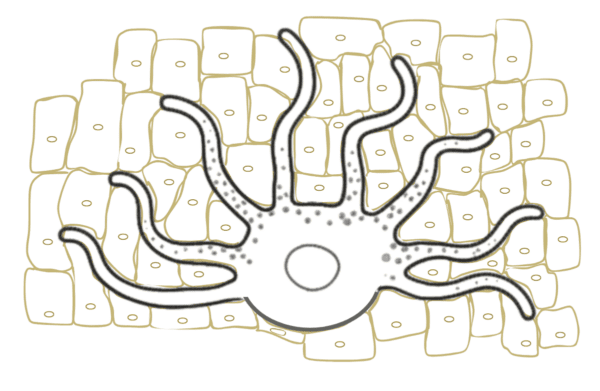
A pigment cell is the type of cell that makes melanin.
We also call them a melanocyte.
Each pigment cell has many tentacle-like branches called dendrites that can weave around the neighbouring cells of the skin or hair follicle to reach as many of them as possible.
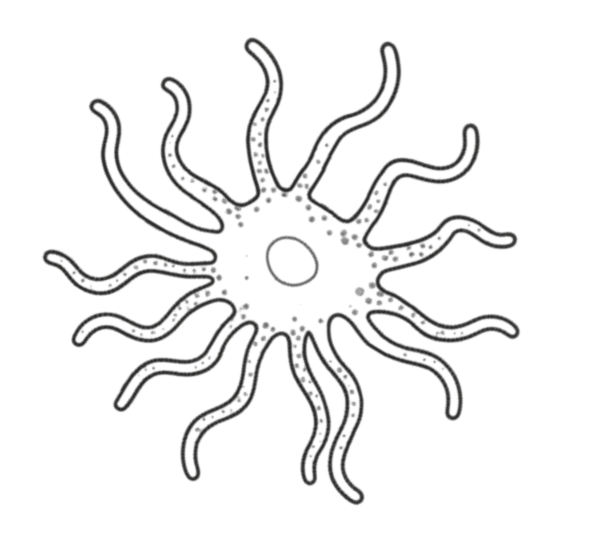
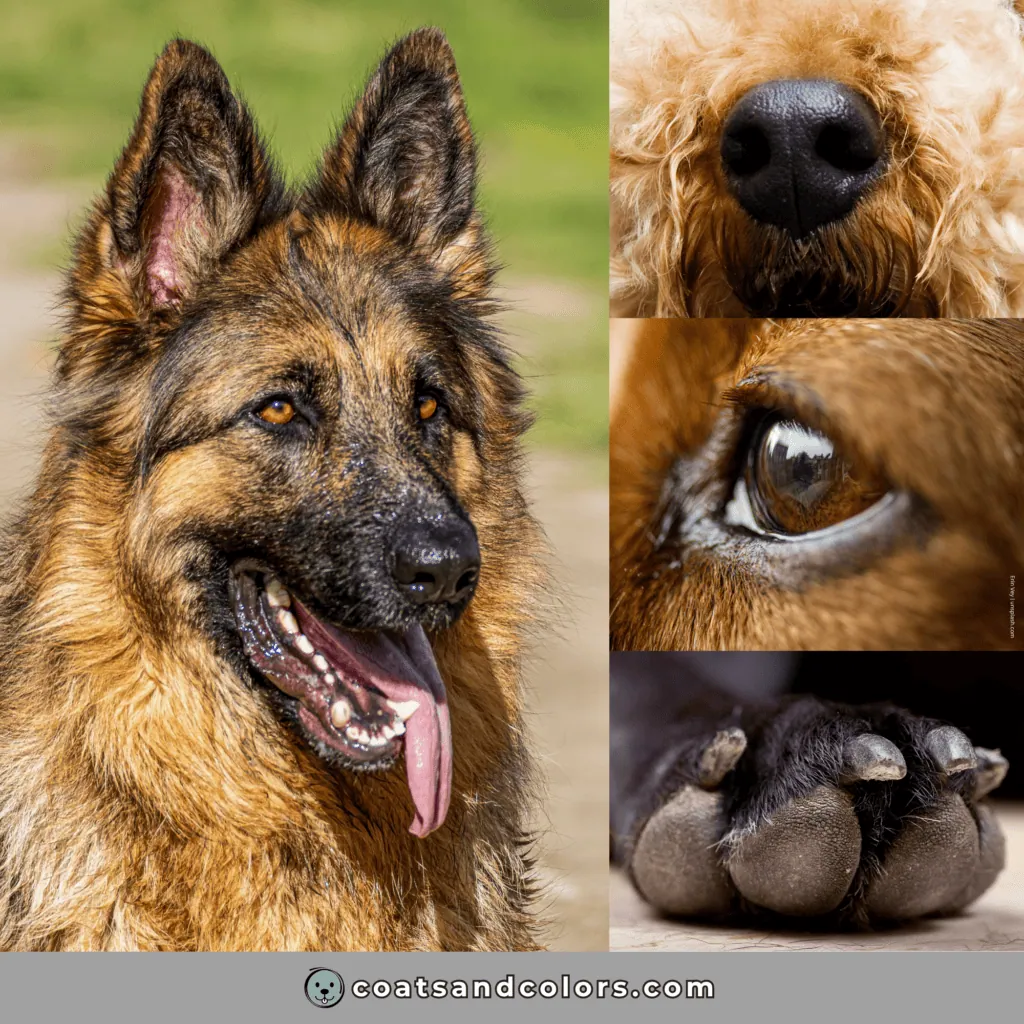
You can find melanocytes anywhere where the body needs pigment (e.g. epidermis, hair follicles, eyes, inner ear, nerves, mucous membranes). Every color on your dog ultimately traces back to these cells.
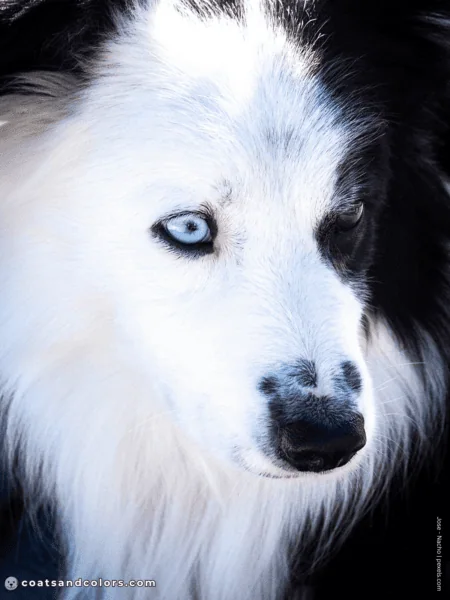
A failure to make functional pigment cells during embryonic development causes a lack of pigment. This is what causes white markings, pink skin, and blue eyes (and cases of deafness) in some dogs.
Pigment Types
The pigment cells in dogs can produce two chemically distinct types of melanin:
- eumelanin (black pigment) –> can be modified to brown/blue/lilac
- phaeomelanin (red pigment) –> can be modified to cream/yellow/red
The color of the hair, skin, and eyes depends on the quantity and distribution of both pigment types.
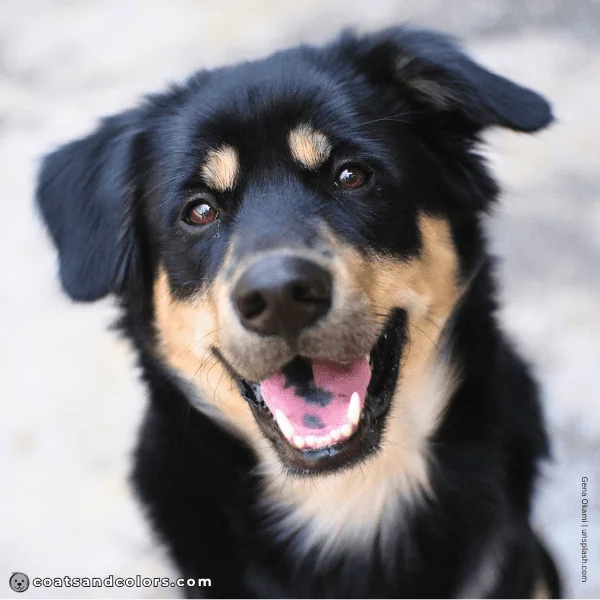
The difference in color boils down to different physical properties:
- Eumelanin is a very stable polymer that absorbs a broad spectrum of light, which is why it looks black.
- Phaeomelanin contains more sulfur and absorbs light more selectively, so it appears yellow-red.
Exposure to UV radiation causes DNA damage.
And eumelanin is better at dissipating ultraviolet radiation than pheomelanin. So, having a lot of eumelanin in the skin and eyes is an adaptation to prevent phototoxic reactions.
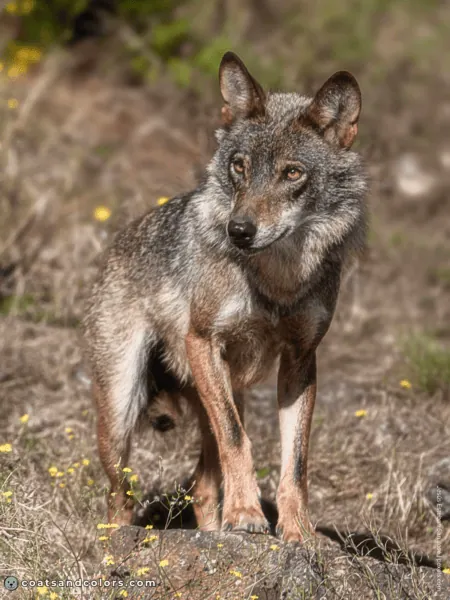
This is one of the reasons why the wild-type agouti pattern has more eumelanin in the more sun-exposed areas on the upper half of the body. The other reason is likely camouflage.
Pigment Transfer
Pigment cells manufacture pigment granules inside of melanosomes, tiny organelles inside the melanocyte. Melanosomes travel through the dendrites to be donated to the surrounding cells.
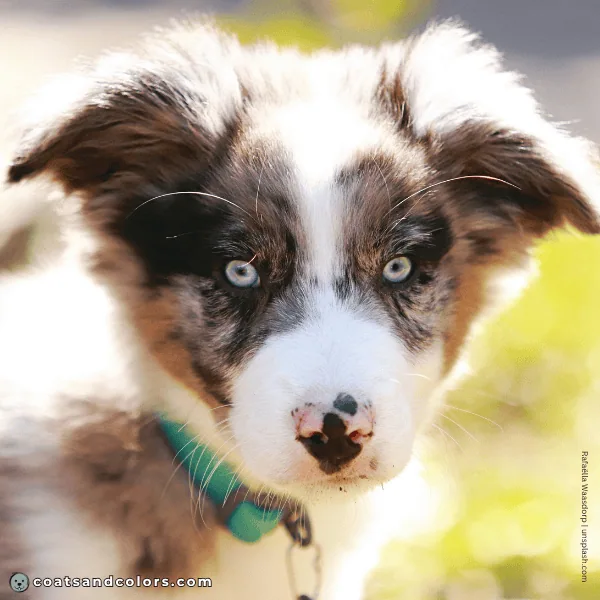
Merle is a trait that affects the structure inside developing melanosomes.
Dogs with a long enough SINE insertion in the PMEL gene can not build proper internal scaffolding. This causes melanin to cluster abnormally, causing a “washed-out” appearance of merled areas. Severe cases of merle may also impede melanocyte survival, which can delete pigment from some areas.
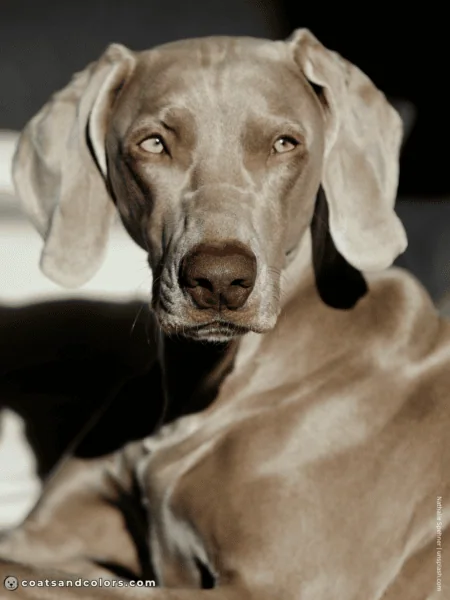
Dilution is a trait that affects the transport of melanosomes.
A loss-of-function mutation in the MLPH gene leads to eumelanosome clumping in the hair shaft. And this is what makes coat colors appear diluted. Black pigment looks blue and brown looks lilac.
Pigment Factories
Both eumelanin and phaeomelanin are built from the amino acid tyrosine through a series of enzymatic reactions. The steps that build melanin are called the melanogenesis pathway.
The first step of melanin synthesis is carried out by an enzyme called tyrosinase (encoded by the TYR gene). The amino acid tyrosine is converted into a molecule called DOPA, and then immediately into dopaquinone. The speed of tyrosinase is what limits how much pigment can be produced.
From dopaquinone, the pathway splits into one of two directions.
This is where eumelanin and phaeomelanin diverge.
- Dopaquinone can react with cysteine to produce cysteinyl-DOPA, which is then converted through several steps into phaeomelanin (red pigment).
- Dopaquinone can undergo a series of reactions through DOPAchrome and eventually into DHI and DHICA, which join into larger eumelanin (black pigment) polymers.
We really do not need to understand any of these steps in detail! The first important thing is that pigment cells can switch between eumelanin and phaeomelanin depending on external signals.
This is how some portion of a hair or areas in a pattern can have more eumelanin than others.
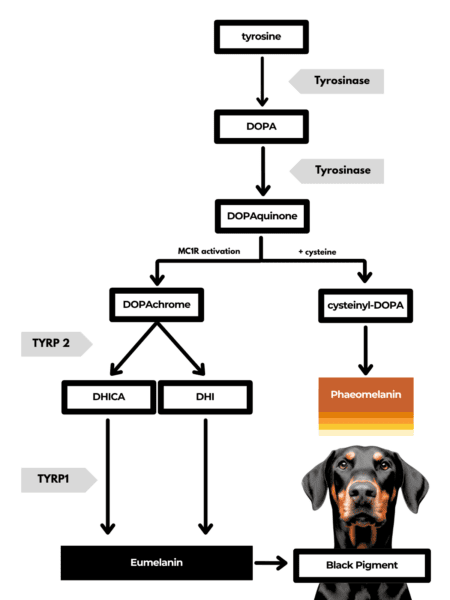
The second important thing is that loss-of-function mutations can affect pigment formation.
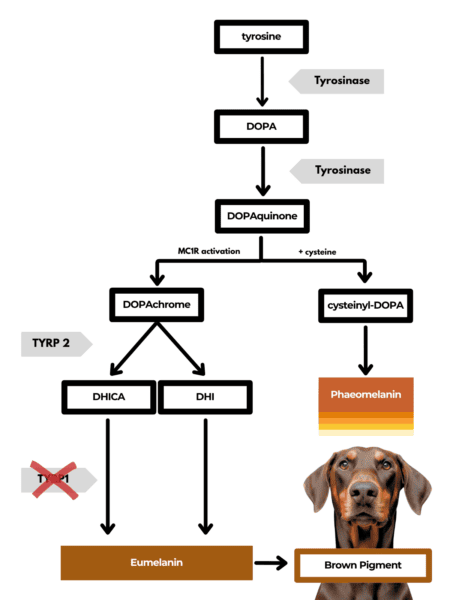
A loss of TYRP1 (at the B locus) prevents black pigment, so eumelanin will look brown.
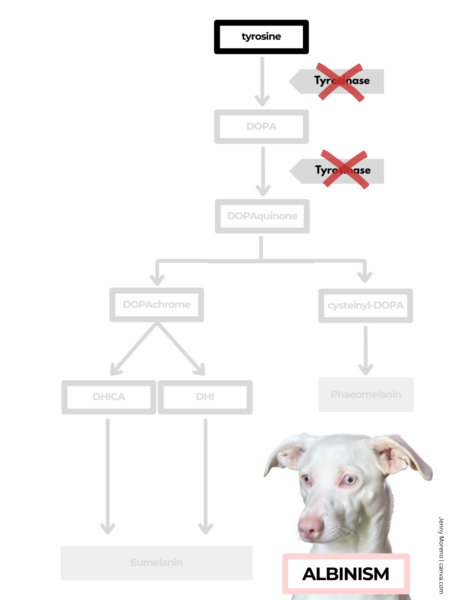
And a loss of tyrosinase function or activity prevents pigment, so the dog is albino.
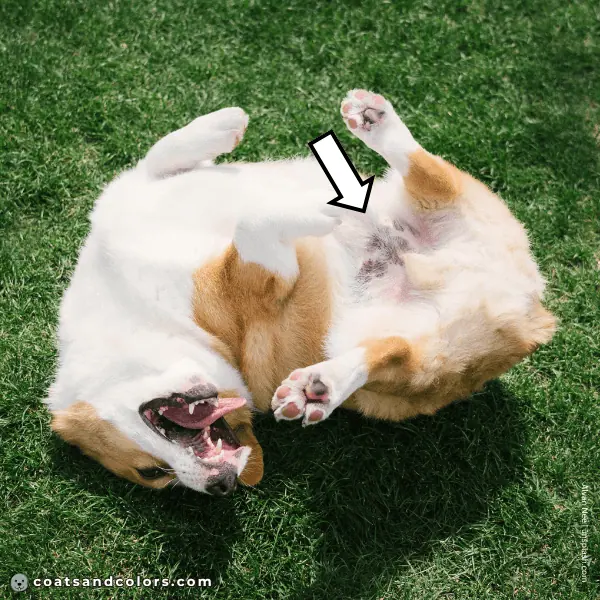
Pigment production is stimulated by sunlight. This is what causes darker skin and more UV protection in exposed areas, e.g. dark skin around the nose and eyes, or skin spotting in hairless areas.
Pigment Type Switch
Both eumelanin and phaeomelanin are produced by the exact same pigment cells. Dogs have the ability to switch between eumelanin and phaeomelanin production.
Different base patterns vary in the distribution of pigment types.
Some dogs only have phaeomelanin. Some only have eumelanin. And many dogs have both.
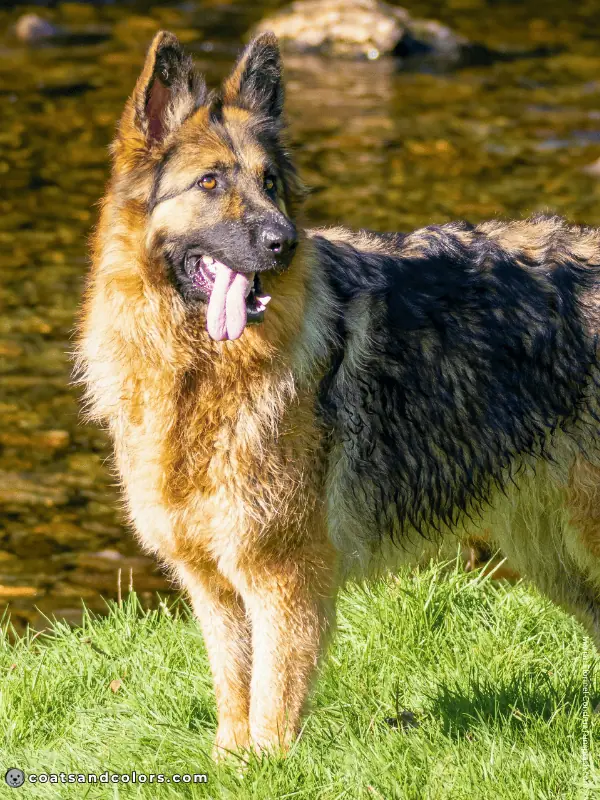
The central instrument of the switching system is the MC1R receptor (encoded by the E locus) in the pigment cell membrane. It detects and translates instructions to make this type of pigment or that.
The other two genes that control pigment types are the A locus and the K locus.
The signal the melanocyte receives during hair growth, and in which part of the body, ultimately determines if and where a dog will grow dark hairs, or red hairs, tipped or banded hairs.
You can learn more about pigment switching here.
Learn More

Links
[1] D’Alba, L. (2023). Melanosome Origins, Diversity and Functional Relevance Across Animals. https://doi.org/10.1007/978-3-031-27799-3_3
[2] Elkin et. al. (2023): Analysis of the genetic loci of pigment pattern evolution in vertebrates. Biological Reviews. https://doi.org/10.1111/brv.12952
[3] Schlessinger et al (updated 2025). Biochemistry, Melanin. StatPearls Publishing. Available from: www.ncbi.nlm.nih.gov/books/NBK459156/
[4] Ito et al (2018): Photodegradation of Eumelanin and Pheomelanin and Its Pathophysiological Implications. Photochem Photobiol, 94: 409-420. https://doi.org/10.1111/php.12837
Image Credits
Gena Okami/unsplash.com
Jesús Esteban San José/pexels.com
Jenny Moreno/canva.com
Alvan Nee/unsplash.com
Rafaëlla Waasdorp/unsplash.com
Jose – Nacho/pexels.com
Nathalie Spehner/unsplash.com
Marian Florinel Condruz/unsplash.com
Hi! I’m Steffi. I am a biologist and a big time dog nerd. You are curious about coat color genetics? You’ve come to the right place! Read more.