

Agouti is the wild-type pattern in dogs. It causes banded dorsal hairs and clear ventral tan markings. The transition from dorsal to ventral coat causes distinct agouti markings.
This is an image guide to make you better at recognizing agouti. The placement of banded hair on the face is one of the distinguishing features that helps my readers tell sable from agouti.
Dorsal Banding
Agouti is one of the many A locus patterns.
These patterns vary in the placement of pigment types in different areas of the body.
The agouti pattern shows solid tan markings on the lower body (the ventral surface).
And hairs with multiple tan and black bands on the upper body (the dorsal surface).
Face Markings
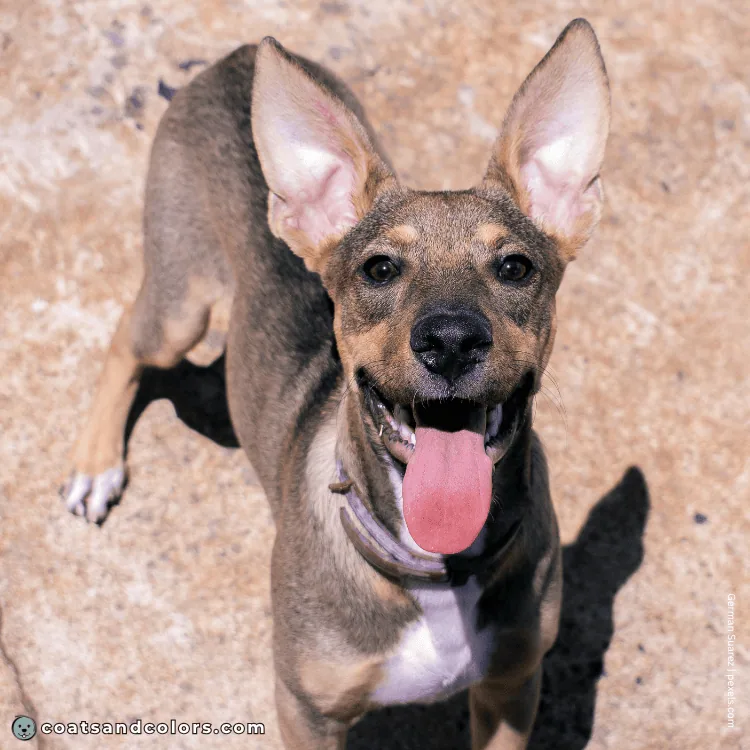
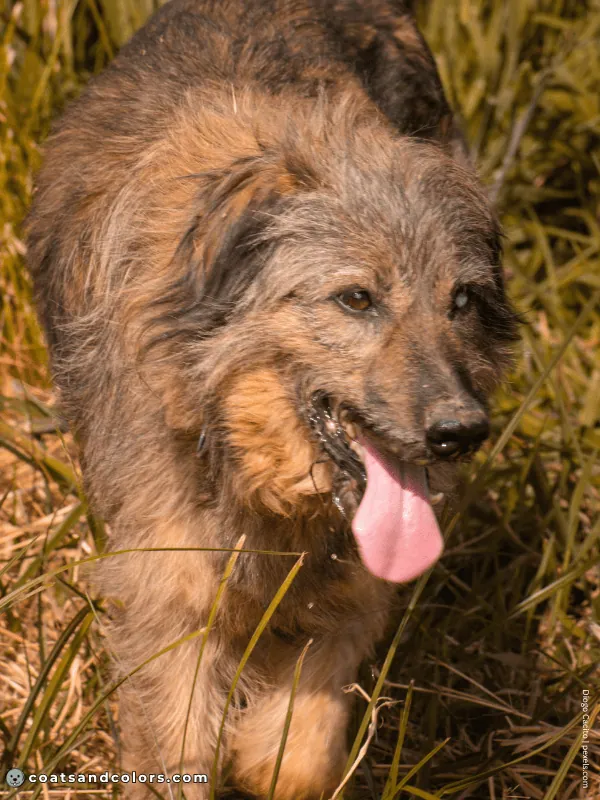
Agouti dogs have an overlay of banded hairs on their face.
The area covered by the markings may vary slightly between agouti dogs.
The banded hair frames their face from one temple across the forehead to the other temple. The banded coat also outlines the lighter “goggles” around the eyes.

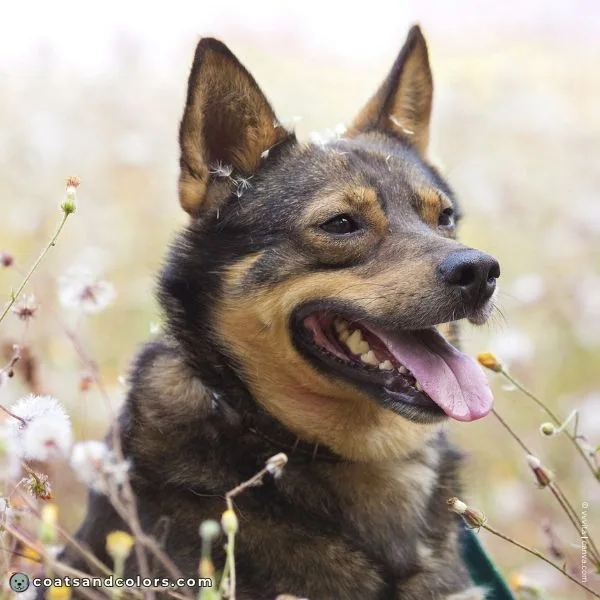
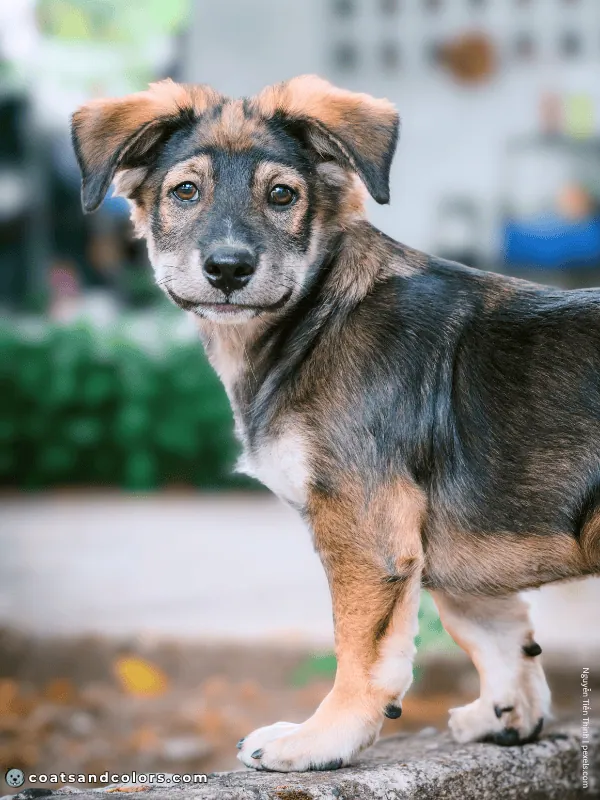
Agoutis also have a banded nose bar that runs along the bridge of the nose.

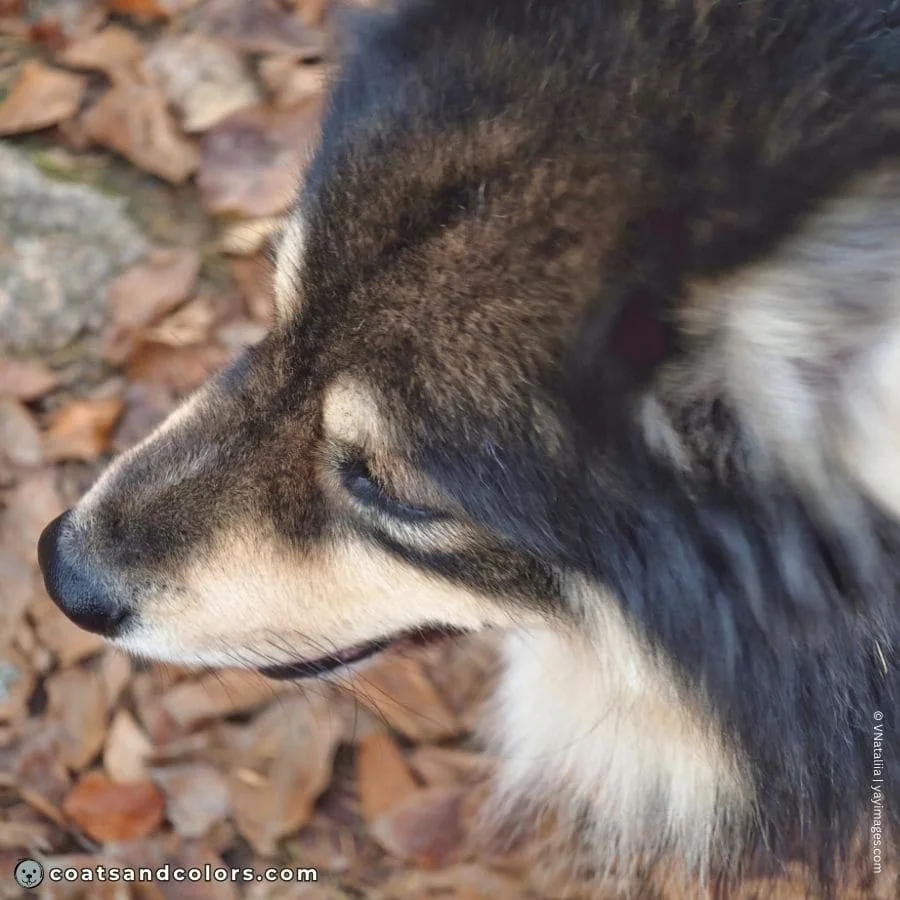
Often, there are triangular markings reaching towards the tan cheeks.
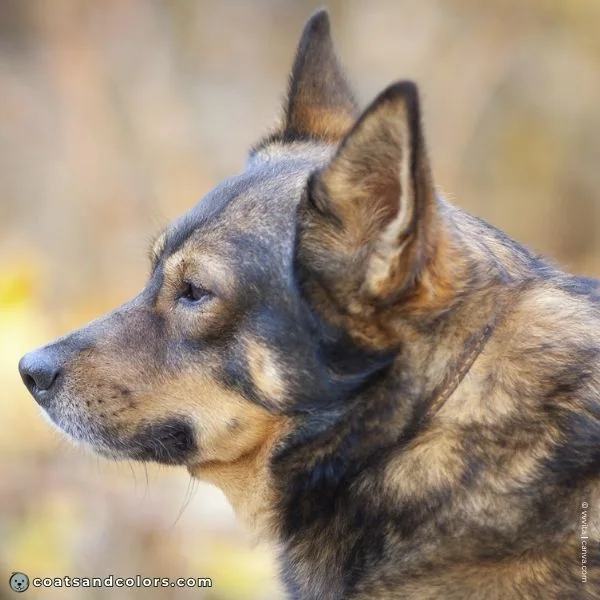
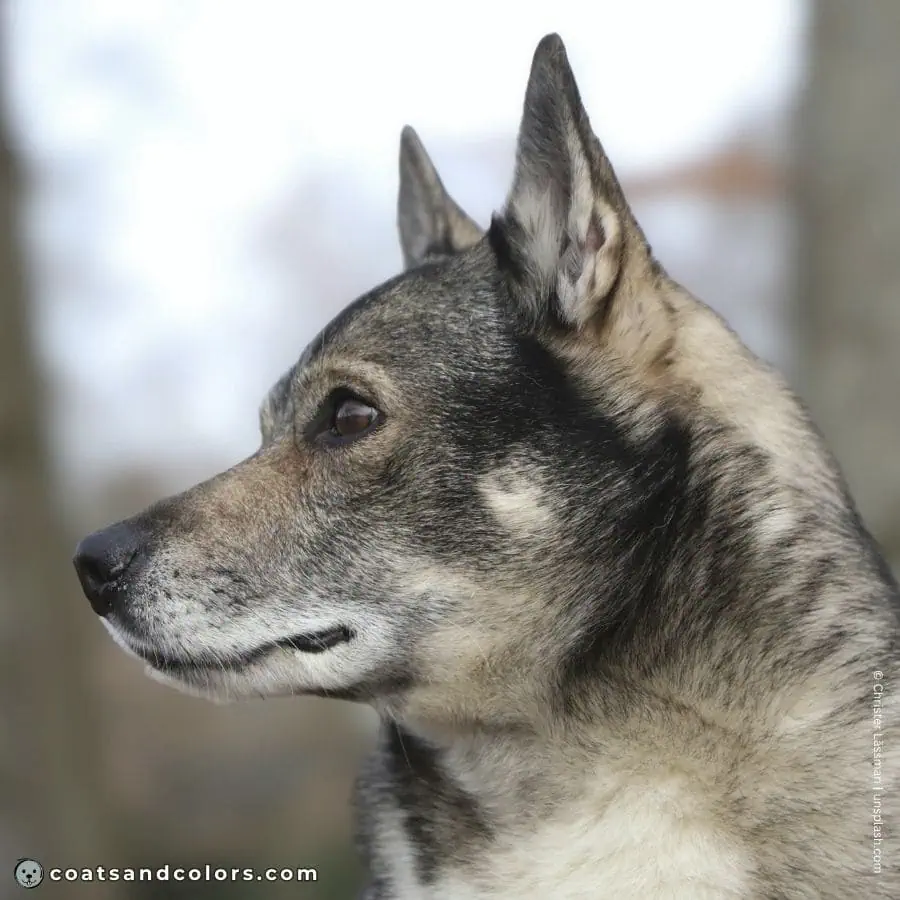
Agouti dogs also have solid ventral tan markings without dark banding.
They can show these solid cream, yellow, or red markings above the eyes, on the sides of the muzzle and cheeks, from where the tan markings extend downwards to cover the chin and throat.
The tan areas can be bigger in agouti dogs that carry recessive red (E/e) or domino (E/eG, E/eA).
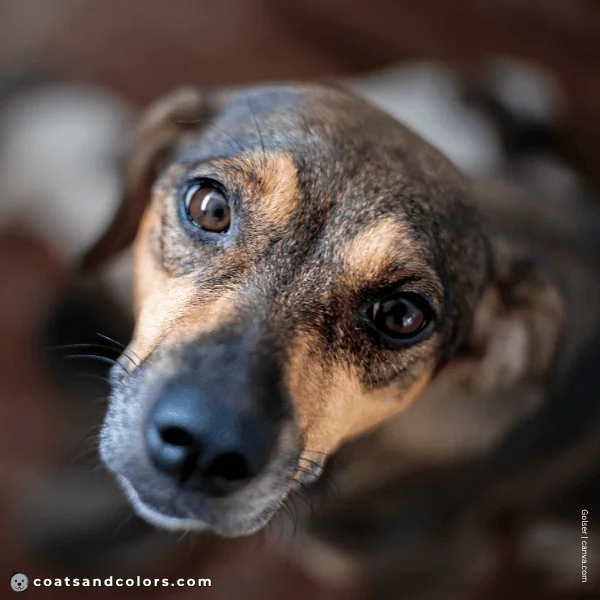
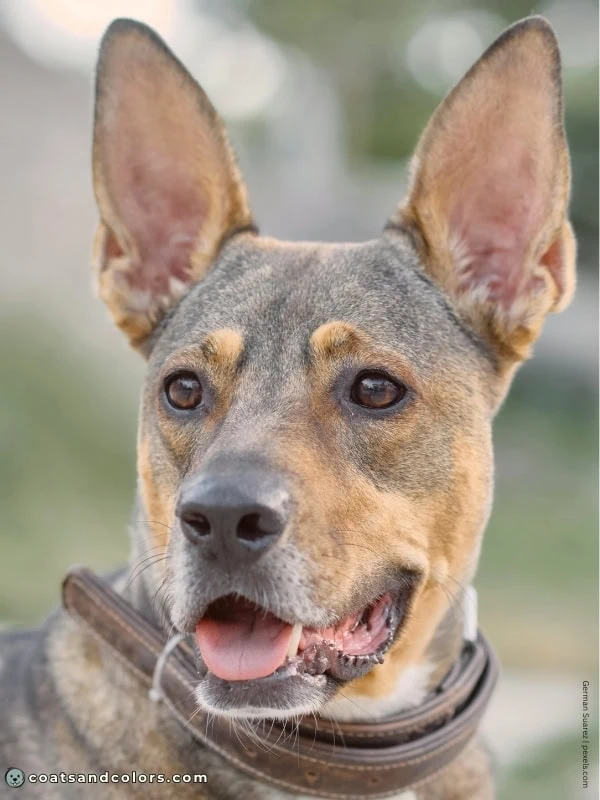
But some agouti dogs are darker than others.
Their face can sometimes be nearly fully shaded with banded hair. These dogs only have very little visible pheomelanin and lack the prominent eye pips or cheek markings.
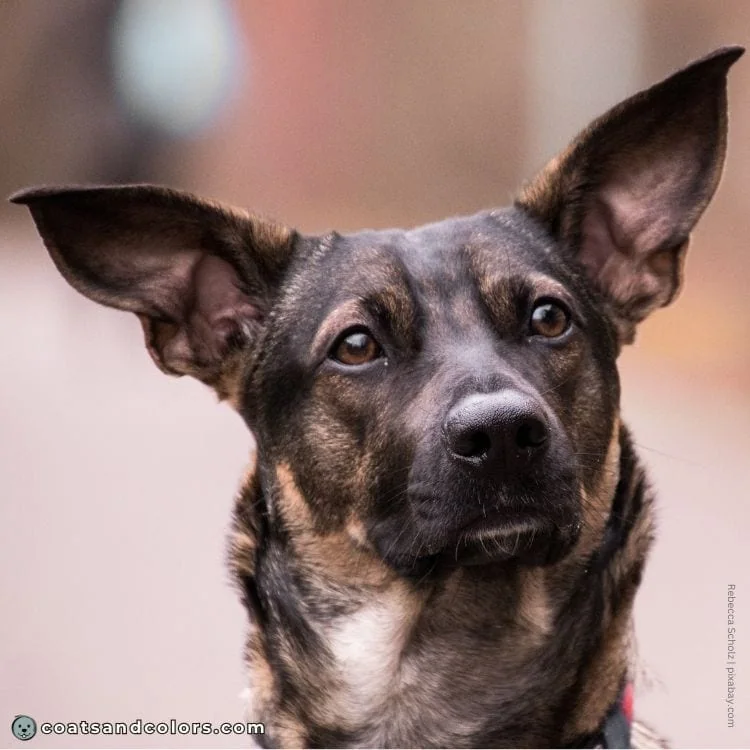

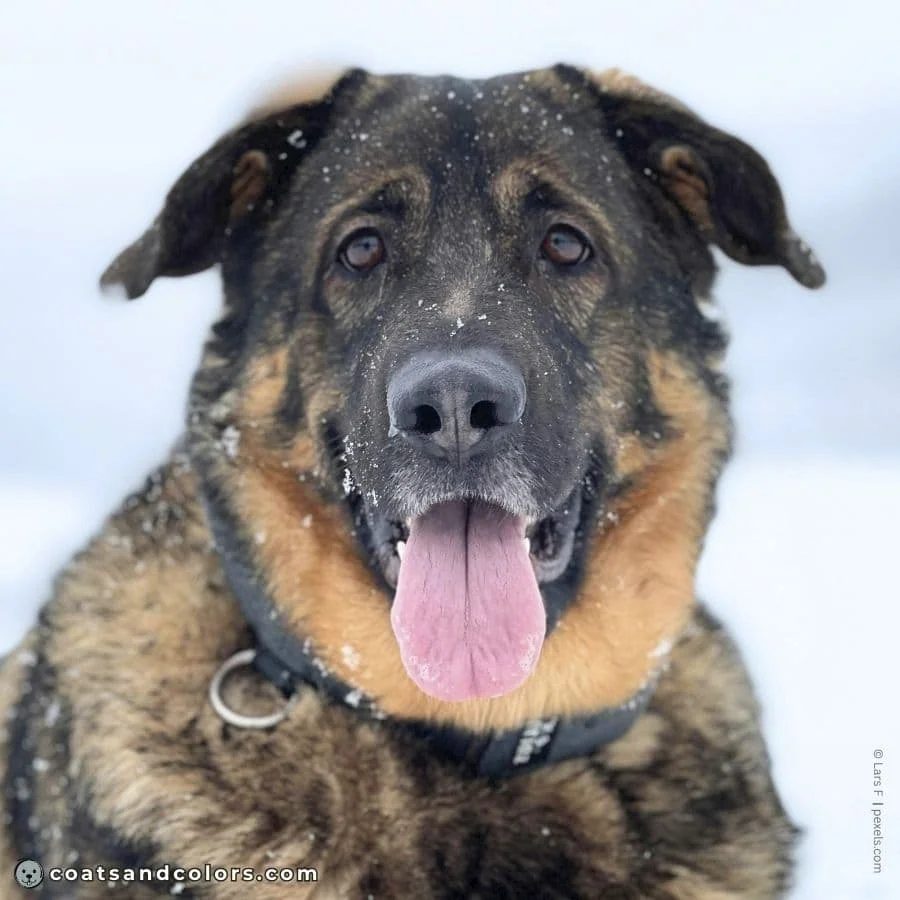
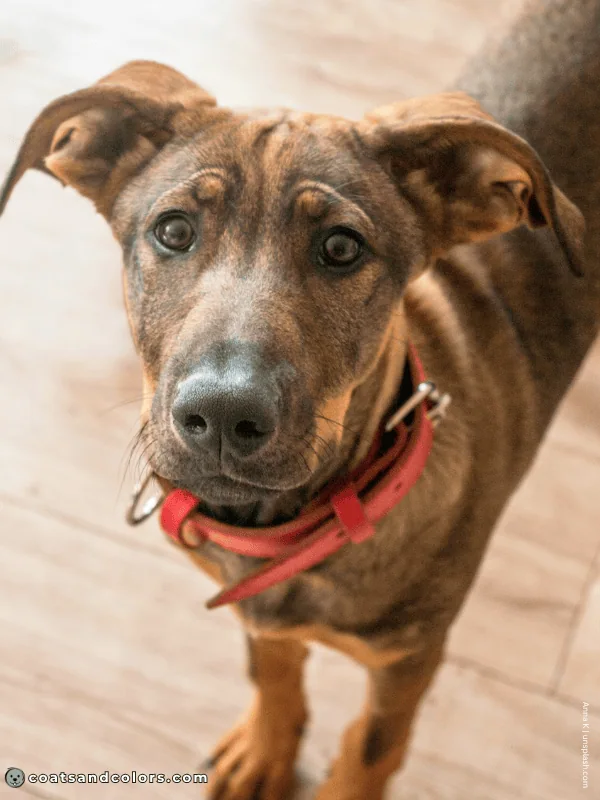
The dark overlay on the face is one of the differences between sable and agouti.
In adults, only very dark sables with an Ays/at or Ays/a genotype are known to sometimes retain darker shading down the legs, across the chest, and below the eyes. Only these very, very shaded sables can look somewhat agouti-like, but still with overall more tan areas than a normal agouti.
Agouti Puppies
Agouti puppies are typically born with a lot of dark overlay over all the body. Some can look nearly solid black at first, before the tan pigment starts to come in, e.g. at the back of the ears.
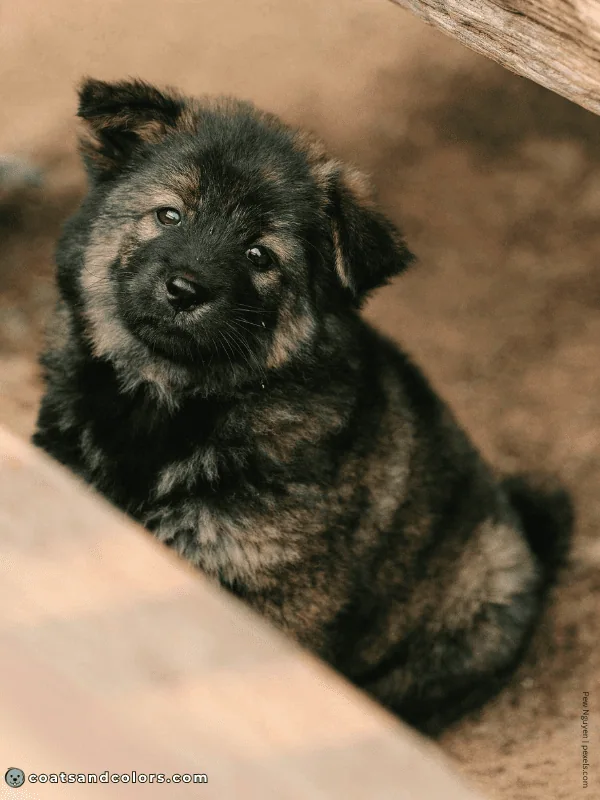
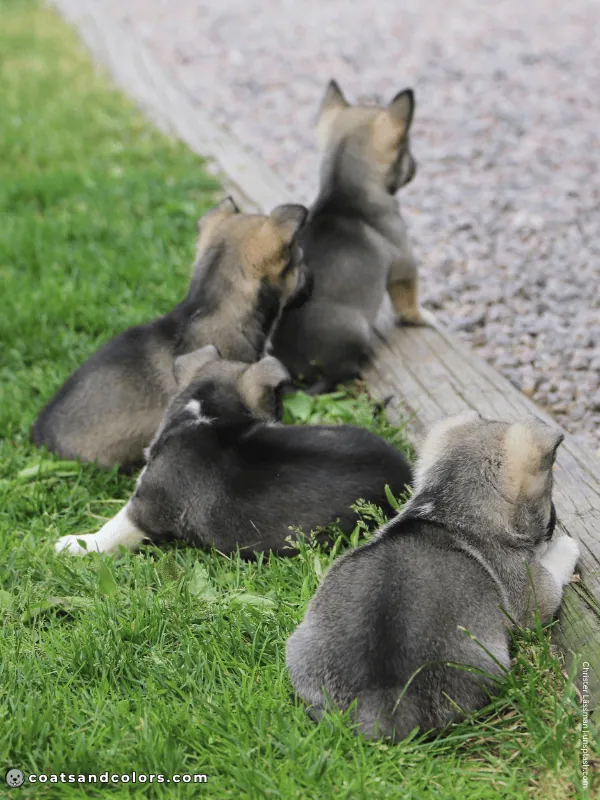
This dark overlay happens because pigment cells need the ASIP molecule (encoded by the A locus) to make pheomelanin for the growing hairs. And ASIP production seems to be delayed in young puppies.
Also, some puppies have a dark puppy mask that will fade over time.
So the typical face markings might appear gradually in younger agouti puppies.
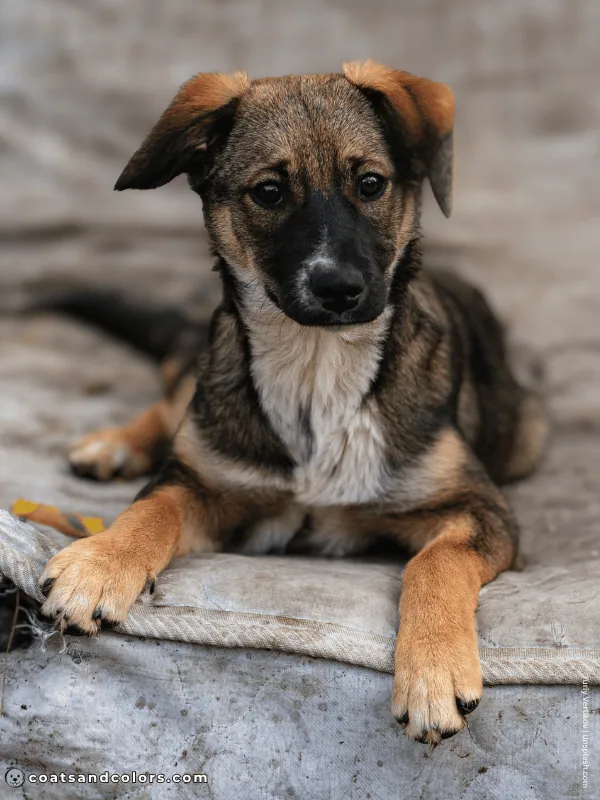
It can take a while to tell really dark sable puppies and lighter agouti puppies apart. The main difference is that all sables will eventually lose the dark overlay on their faces. But agouti pups will keep much of their darker markings (both can go through a paler phase before the dark shading returns).
Dark Agouti
Dogs always have two alleles at the A locus.
Agouti dogs can be homozygous and have two identical alleles (aw/aw).
Or they can be heterozygous and carry saddle (aw/asa), tan points (aw/at), or recessive black (aw/a).
And having two different A locus alleles often involves incomplete dominance.
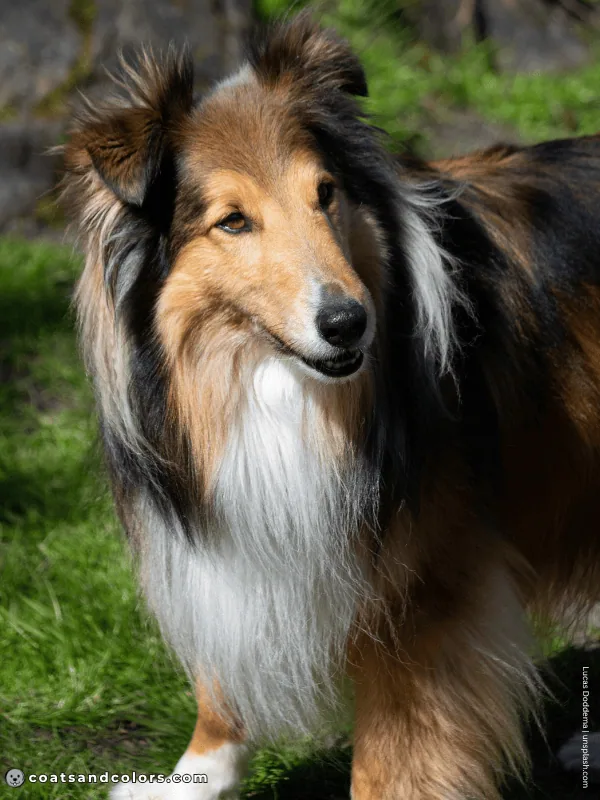
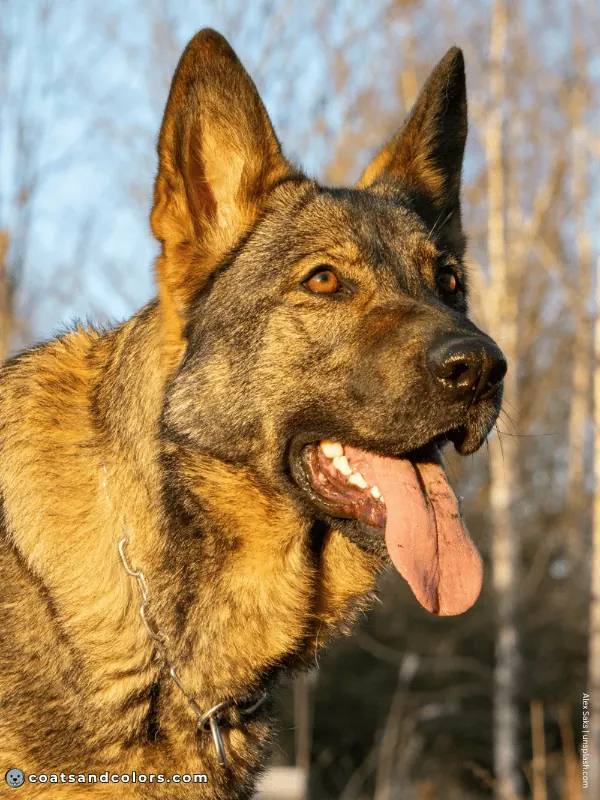
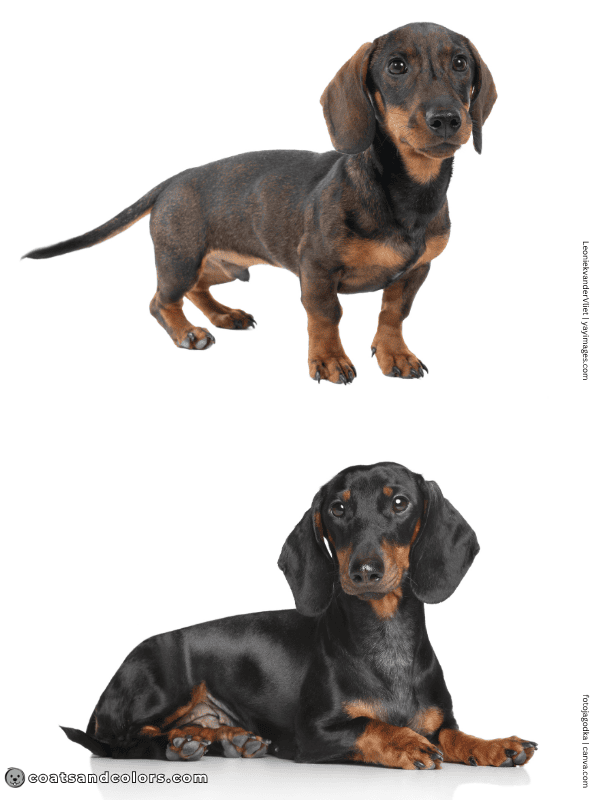
The darker hair bands in heterozygous dogs with aw/at or aw/a are wider, which makes the whole dog look darker. Some very dark agoutis can almost look like they had tan points.
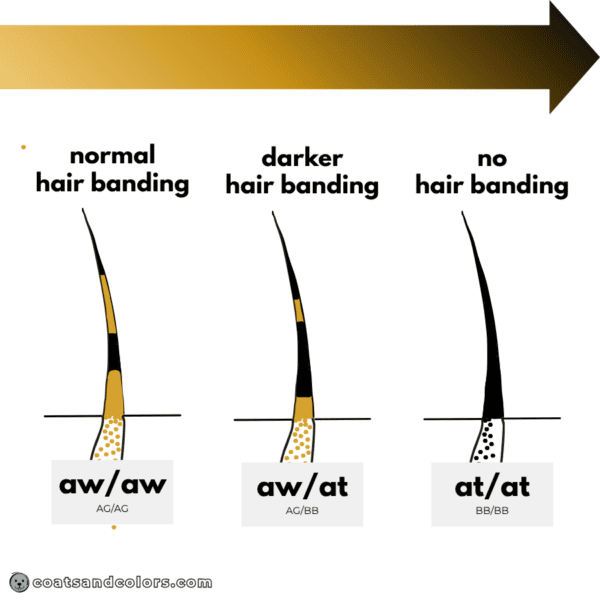
The banding in darker agouti dogs can look very dark which gives very distinct tan markings.
The only real difference between agouti and tan point is that agoutis have banded dorsal hairs and tan points have solid dark dorsal hairs. Agouti with very dark banding mimics a tan point pattern.
Saddle Agouti
Another phenotype in heterozygous dogs is saddle agouti.
This happens in some aw/asa dogs.
The ventral tan is caused by high levels of ASIP (the stuff that triggers pheomelanin) on the lower body. The amount of ASIP that is made on the lower body is controlled by the “ventral promoter” (VP), a small segment of DNA next to the ASIP gene that controls the expression of this gene.
There are two versions of this promoter. One is called VP2. That’s the “normal” one that gives normal tan markings (like in an agouti or tan point pattern). And then there’s an overactive one called VP1 that causes the pheomelanin to cover a larger area (like in saddle dogs).

So back to our aw/asa dog. The agouti pattern produces normal ventral tan markings (VP2). But the carried saddle pattern wants to produce very extended ventral tan markings (VP1).
Having both promoters (VP1 + VP2) often causes only partially extended tan markings. This is basically an intermediate phenotype, where an agouti dog shows much more ventral tan than expected.
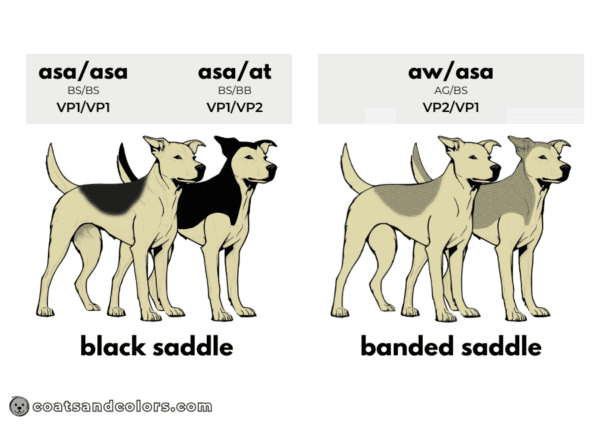
A saddle agouti still has banded hairs, but combined with extended tan markings. Meaning, saddle agoutis might have no dark face markings, just mainly tan without the banded overlay.
Lighter saddle agouti can sometimes resemble a shaded sable pattern or maybe even a very faded black saddle. It can be hard to tell the difference, sometimes testing is the only way to get a definitive answer.

Agouti Domino
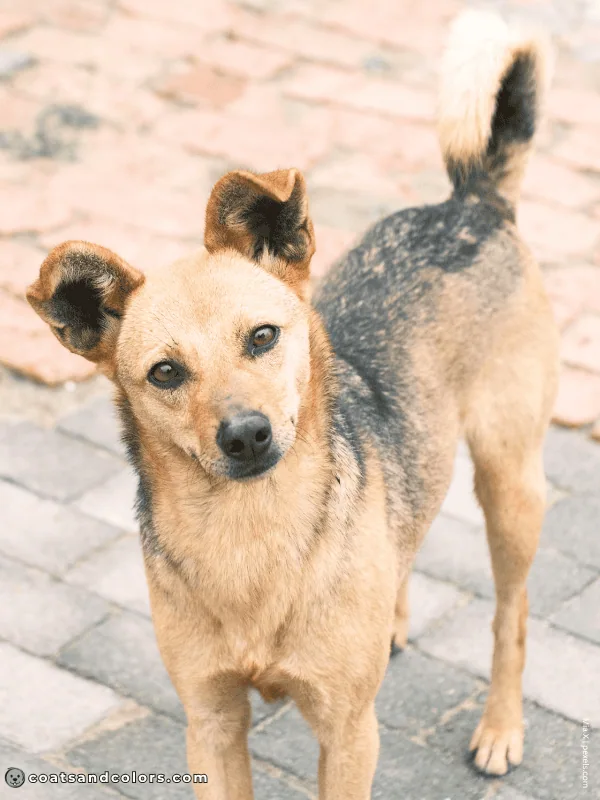
The domino traits (either eA or eG) reduce the amount and spread of eumelanin.
This removes much of the face shading in agouti domino dogs and replaces it with a solid tan “open face” that might show only residual hints of the agouti nose bar or spectacles.
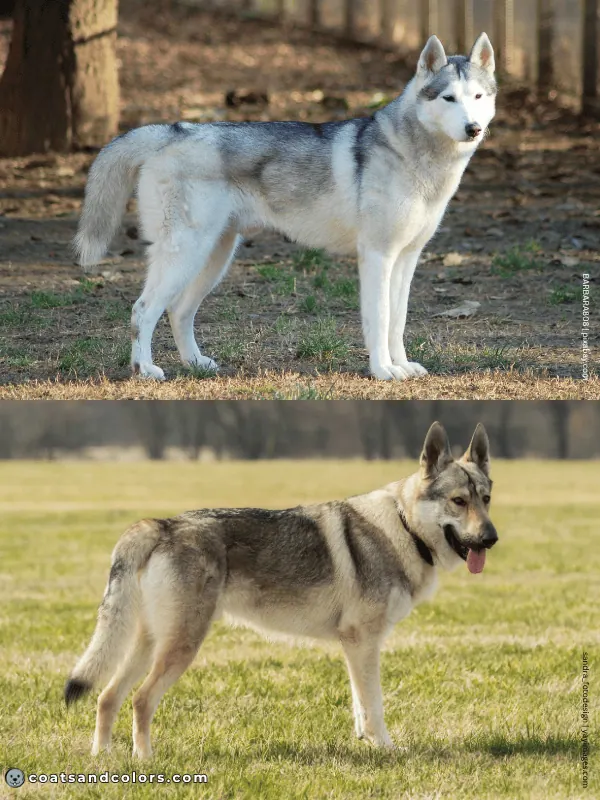
Agouti Variations
Agouti is just a pattern. This tells pigment cells when and where to place either type of pigment.
Other traits can change pigment colors or add or remove pigment.
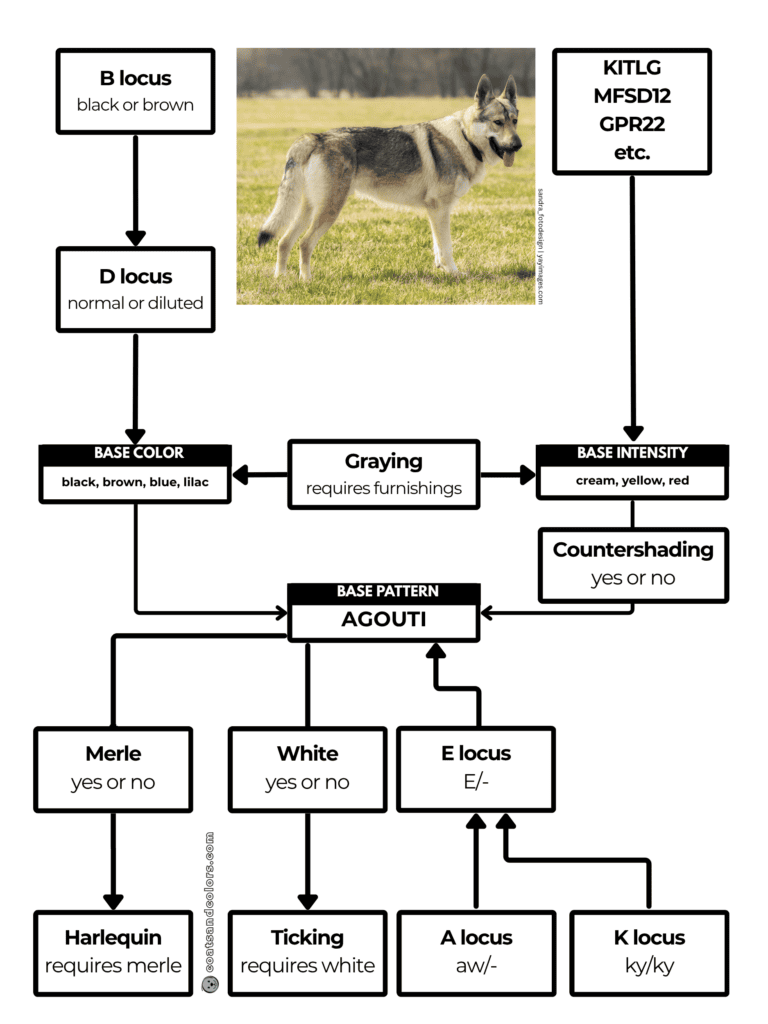
Pigment Colors
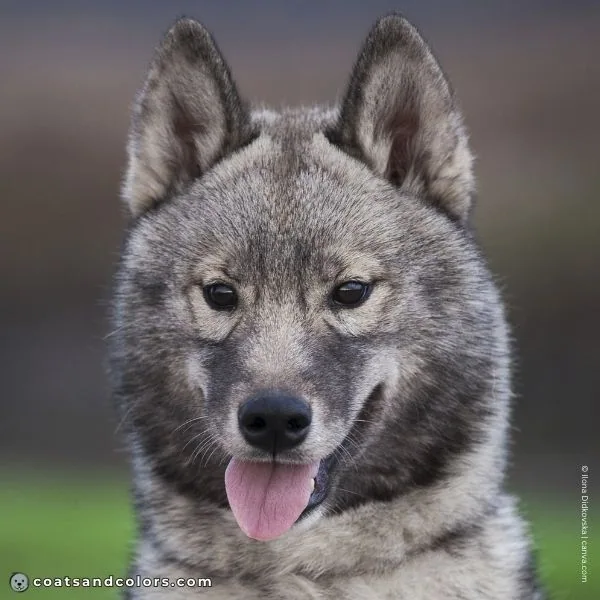
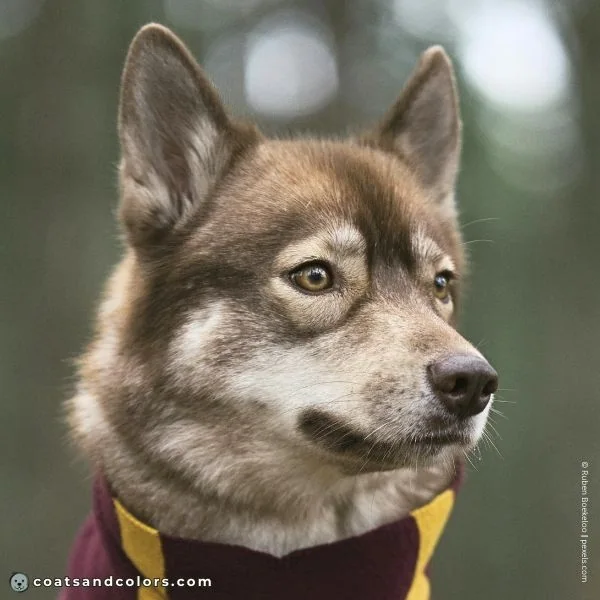
The tan markings show pheomelanin. And pheomelanin can vary in intensity from cream to red.
Countershading causes the dilution of ventral pheomelanin This affects the face markings of an agouti dog and gives a very wolf-like appearance.
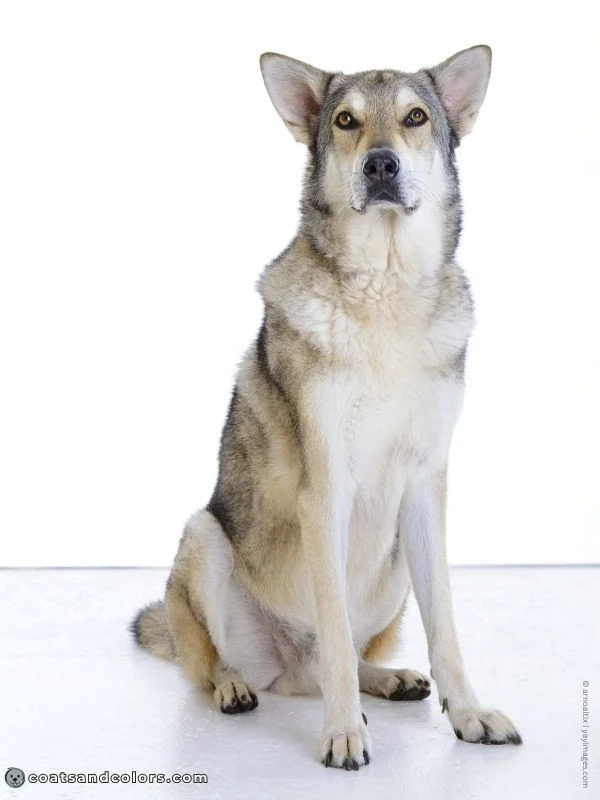
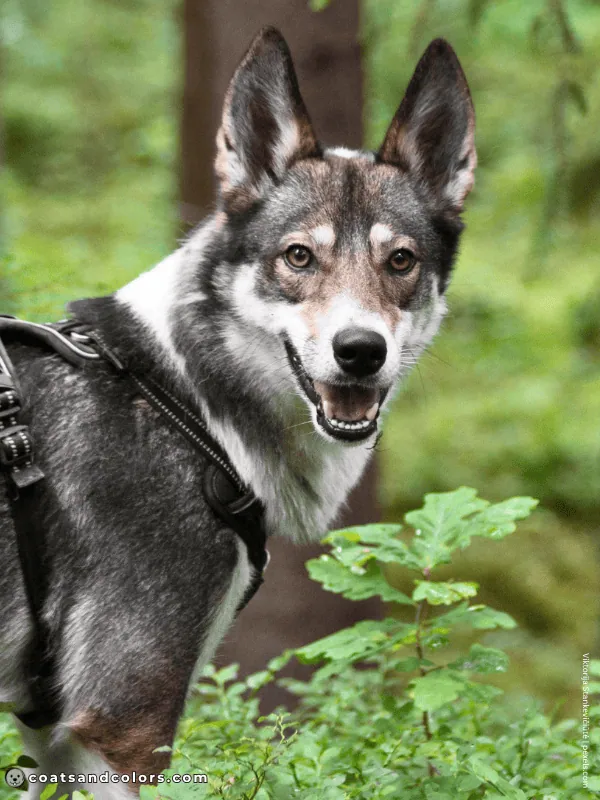
The dark dorsal hair banding is caused by eumelanin.
And eumelanin can have different base colors.
Dogs can be either black-based agouti or chocolate-based agouti.
They can also have diluted colors, but blue agouti and lilac agouti are rare.
More Pigment
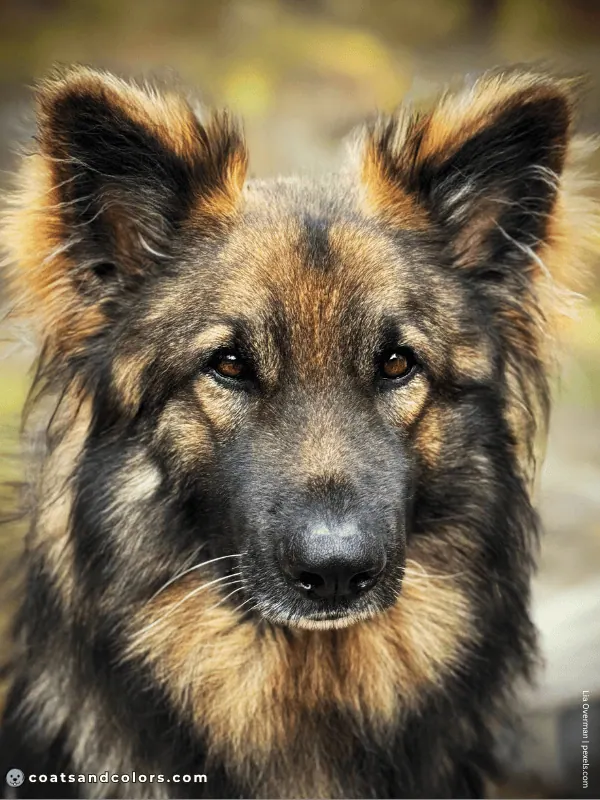
A black mask can cover some of the agouti face markings.
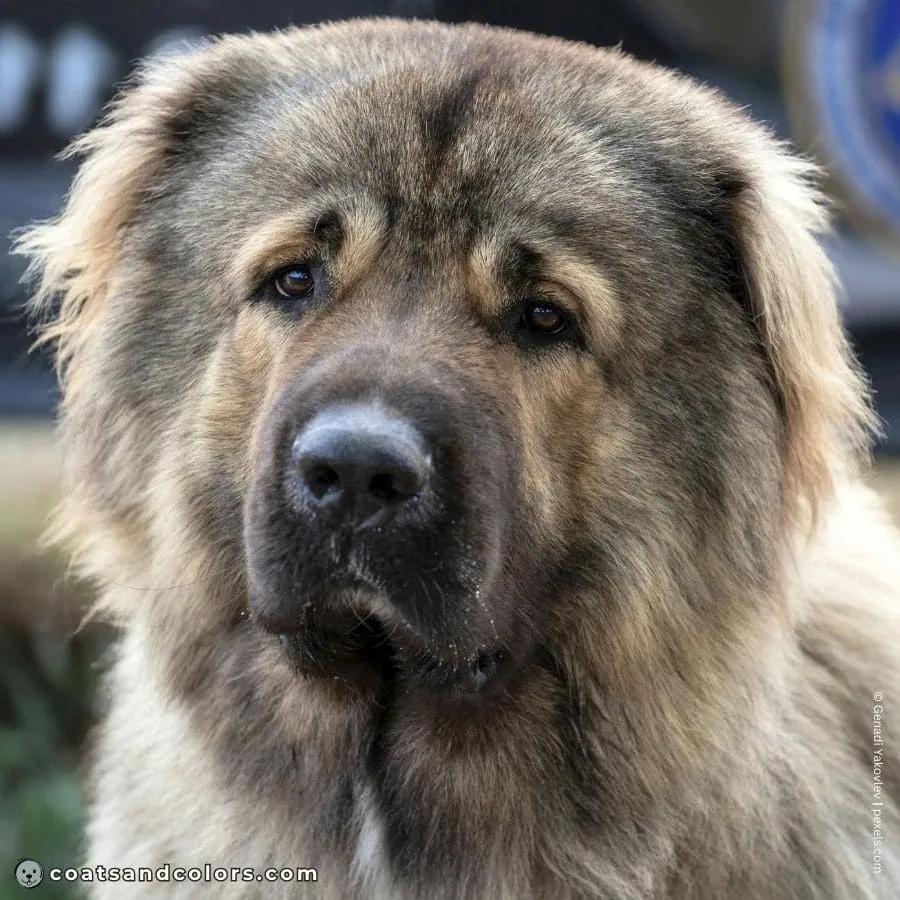
Brindle adds dark stripes on top of the agouti pattern. Dark brindling can sometimes be very dense, which might cover almost all of the tan face markings.
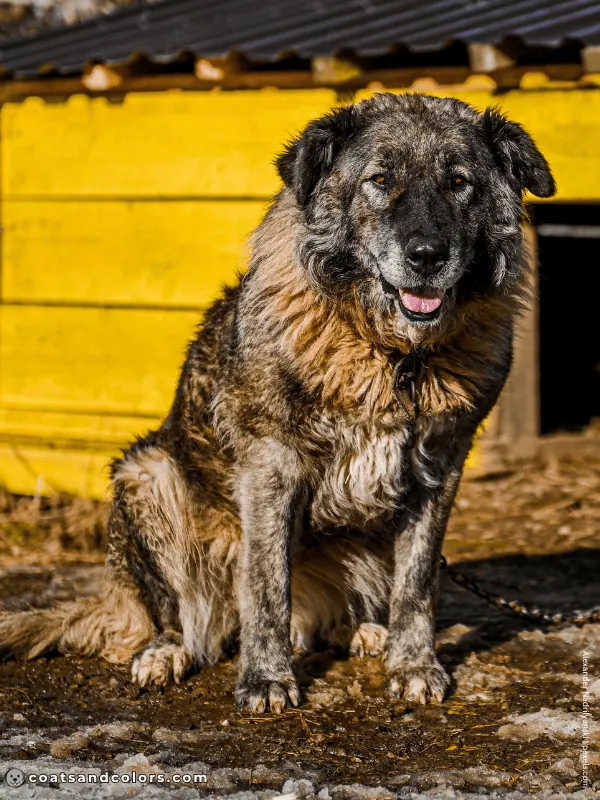
Less Pigment
Having white markings on the face can delete some of the agouti face markings.
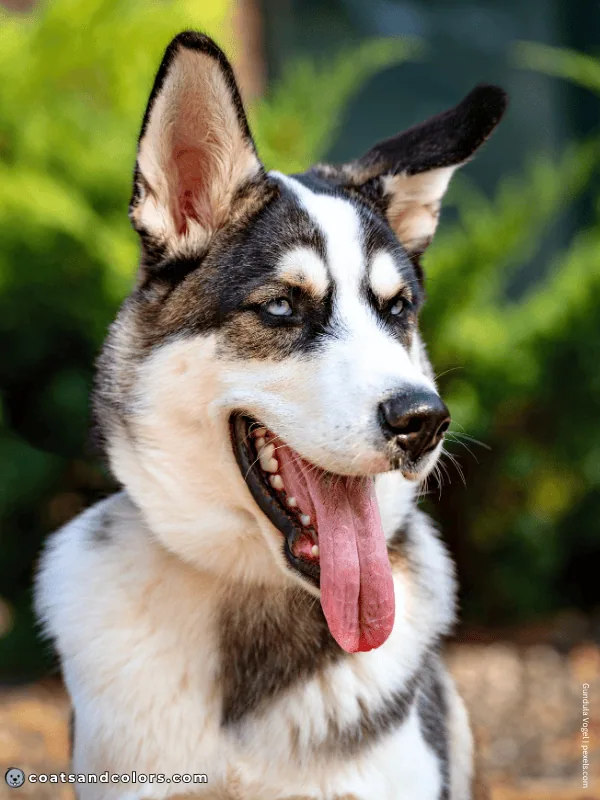
Merle partially removes mainly eumelanin in random patches. If you have an agouti merle dog, please send me a picture, so I can post it here.
Coat Texture
The coat type can affect how well we can spot the agouti pattern.
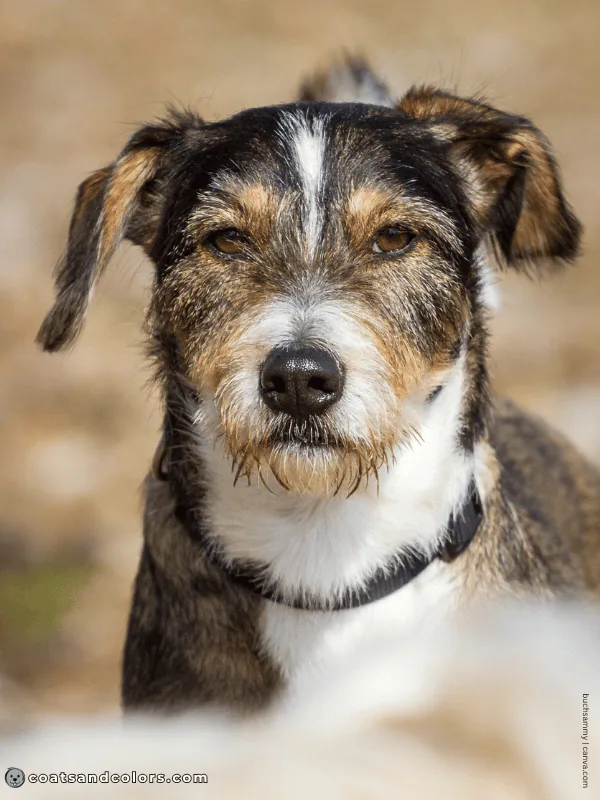
For example, the markings are less distinct in dogs with fluffy furnishings or curls. And long-haired dogs often look darker than short-haired dogs (because longer hair can grow wider black banding).
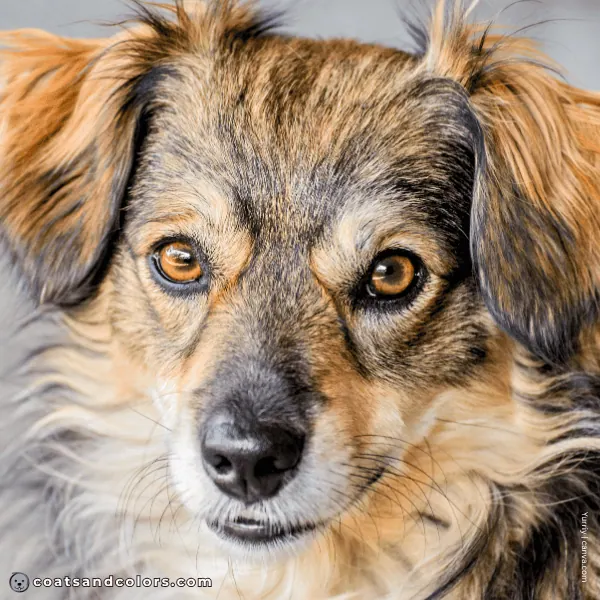
Bearded dogs also can have graying, which will gradually fade the darker hair banding from black to gray (or from brown to beige). Of course, that really muddies the agouti markings.
And that concludes this article about face markings in agouti dogs. I hope you’ve learned something new!
Learn More


Image Credits
Alex Saks/unsplash.com
Alexander Nadrilyanski/pexels.com
Anna K/ unsplash.com
Anna Sychowicz/pixabay.com
arnoaltix/yayimages.com
BARBARA808/pixabay.com
buchsammy/canva.com
Christer Lässman/unsplash.com
Diogo Cacito/pexels.com
Ela Jochim/peels.com
Eunice Martinez/pexels.com
fotojagodka/canva.com
Genadi Yakovlev/pexels.com
German Suarez/pexels.com
German Suraez/pexels.com
Golser/canva.com
Gundula Vogel/pexels.com
Ilona Didkovska/canva.com
Lars F/pexels.com
LeoniekvanderVliet/yayimages.com
Lia Overman/pexels.com
Lucas Doddema/unsplash.com
Mia X/pexels.com
Mônica Rodrigues/pexels.com
Nguyễn Tiến Thịnh/pexels.com
Pew Nguyen/pexels.com
Rebecca Scholz/pixabay.com
Recep Fatih Kaya/pexels.com
Robert Bogdan/pexels.com
Ruben Boekeloo/pexels.com
sandra_fotodesign/yayimages.com
Viktorija Stankevičiūtė/pexels.com
VNataliia/yayimages.com
vvvita/canva.com
Yuriy Vertikov/unsplash.com
Yurriy/canva.com
Hi! I’m Steffi. I am a biologist and a big time dog nerd. You are curious about coat color genetics? You’ve come to the right place! Read more.