

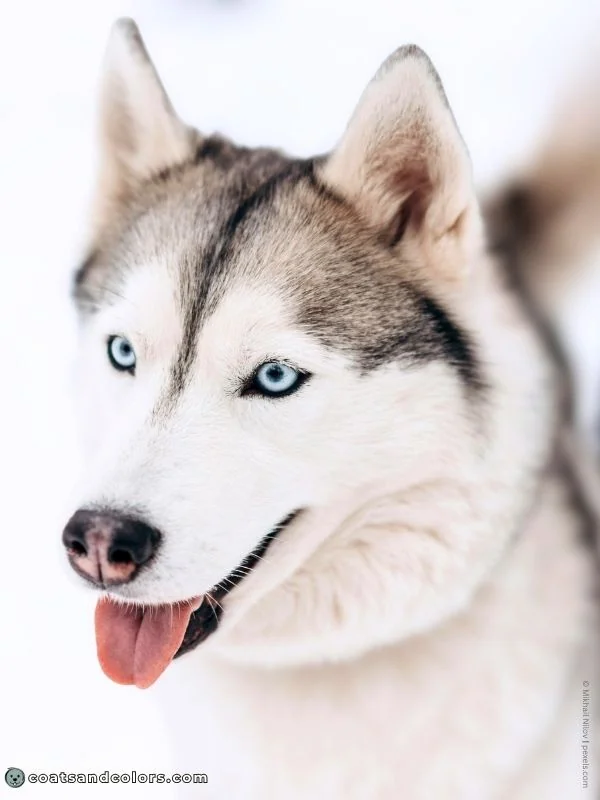
The domino trait partially inhibits eumelanin synthesis. This creates a washed-out version of agouti with less dark banding and reduced tan markings. Some breeds call it “gray & white” or “agouti grizzle“.
This creates an overall lighter, washed‑out version of the agouti pattern. Agouti domino dogs commonly have a pale undercoat, reduced eumelanin banding in their dorsal hairs, and pale whiskers. Dark face markings are often removed to the point where the dogs get a very pale “open face“.
Normal Agouti
Agouti is the wild-type pattern in dogs. To understand how domino changes the agouti pattern, we should first recap what normal agouti (E/- ky/ky aw/-) should look like without the domino.
- Dogs with aw/- have an agouti pattern.
- Dogs with ky/ky can express their A locus pattern.
- Dogs with E/- show normal amounts of eumelanin.
Normal agouti dogs have banded hairs on their dorsum and solid ventral tan markings.
The banded coat runs across the front and down the outer legs, around the eyes, and down the bridge of the nose. The solid tan typically appears on the cheeks, throat, chest, lower legs, underbody, and rear. However, some dogs have more pronounced ventral tan markings than others.
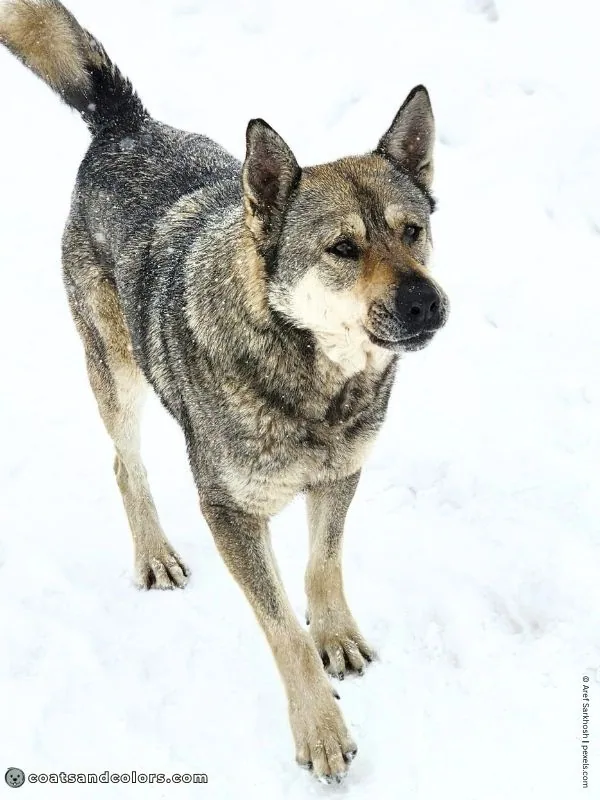
Many agoutis have wild-type tan markings over their eyes and on their cheeks. But these lighter face markings are more defined in some dogs than others and can be missing in some dogs.
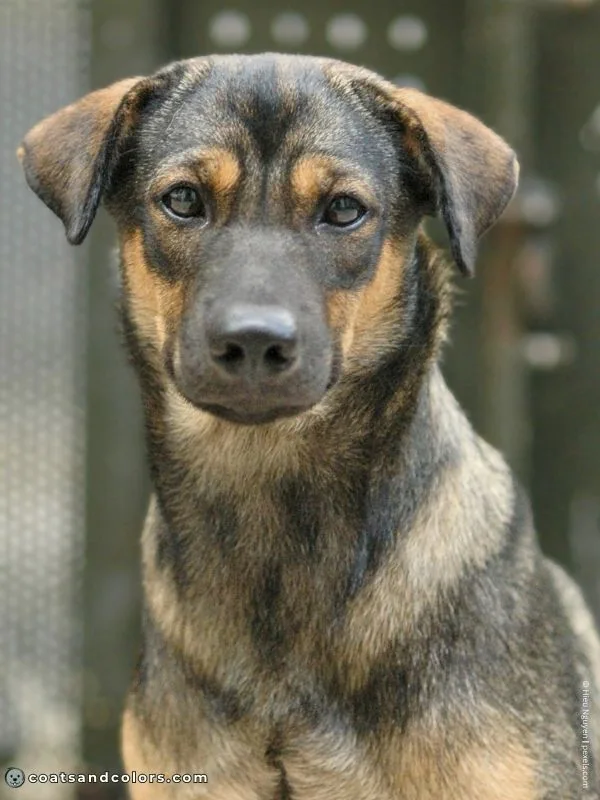
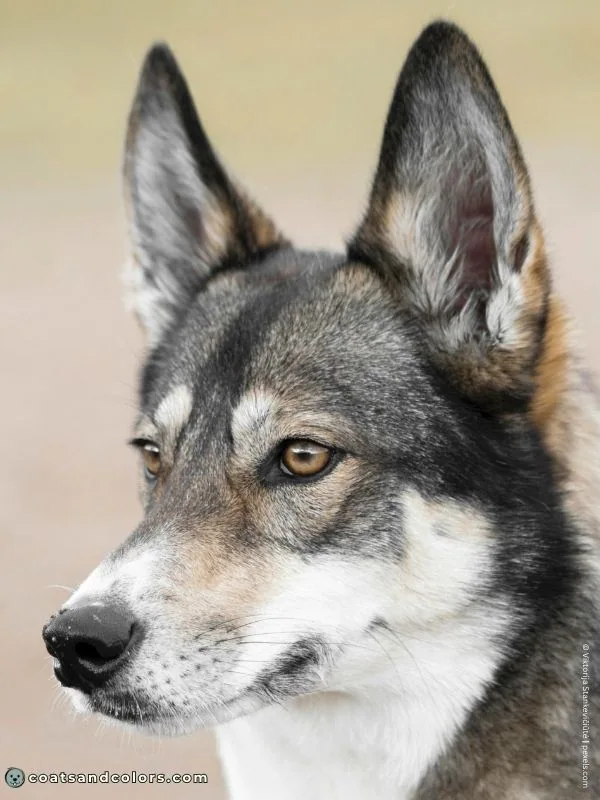
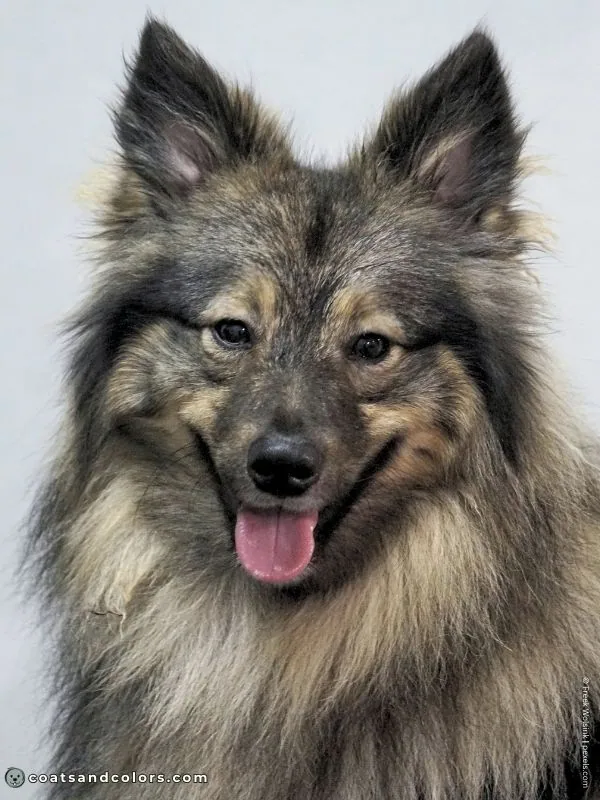
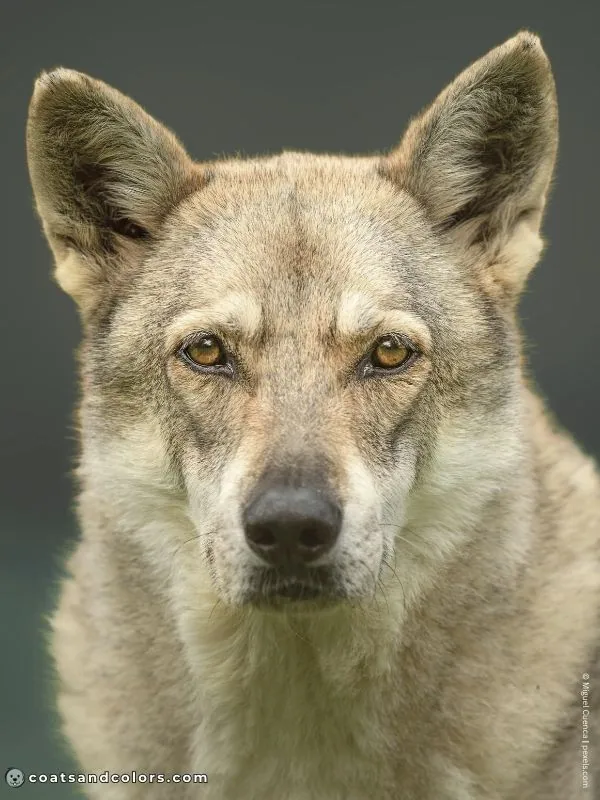
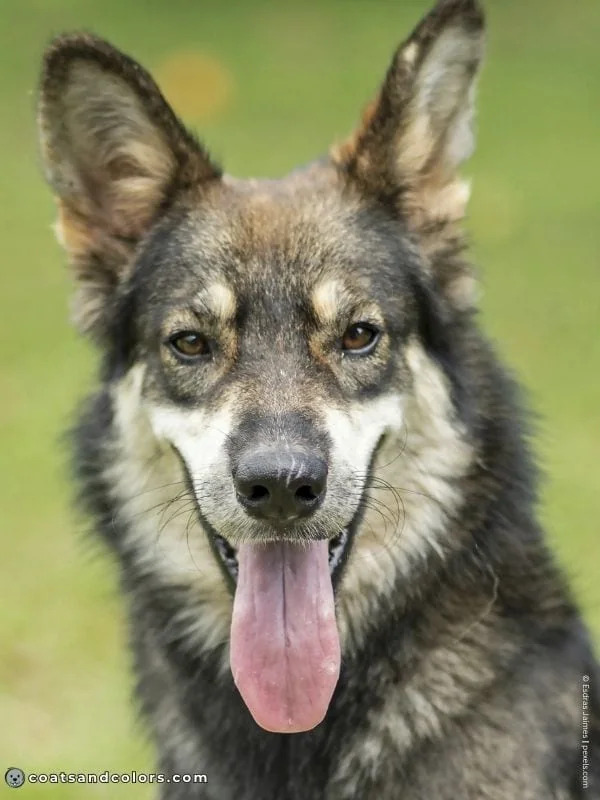
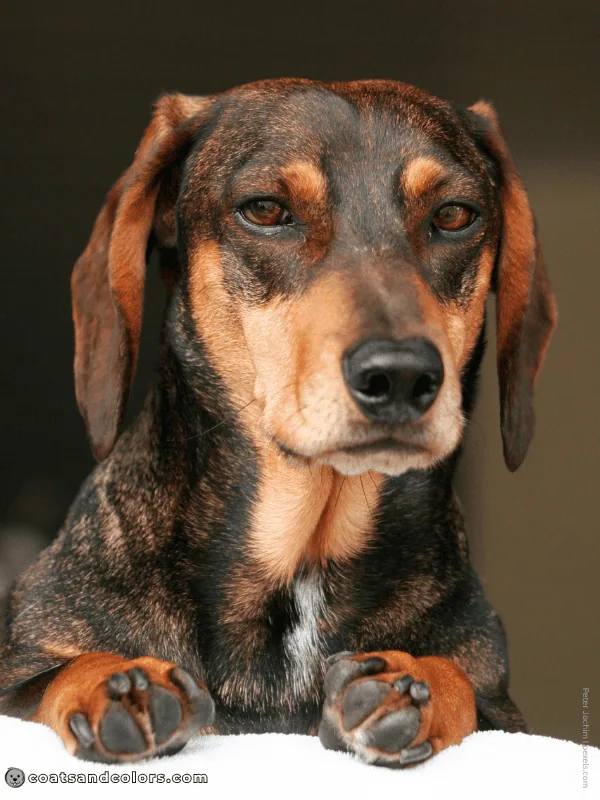
Agouti dogs that carry domino (E/eA, E/eG) or recessive red (E/e) can have slightly larger tan markings.
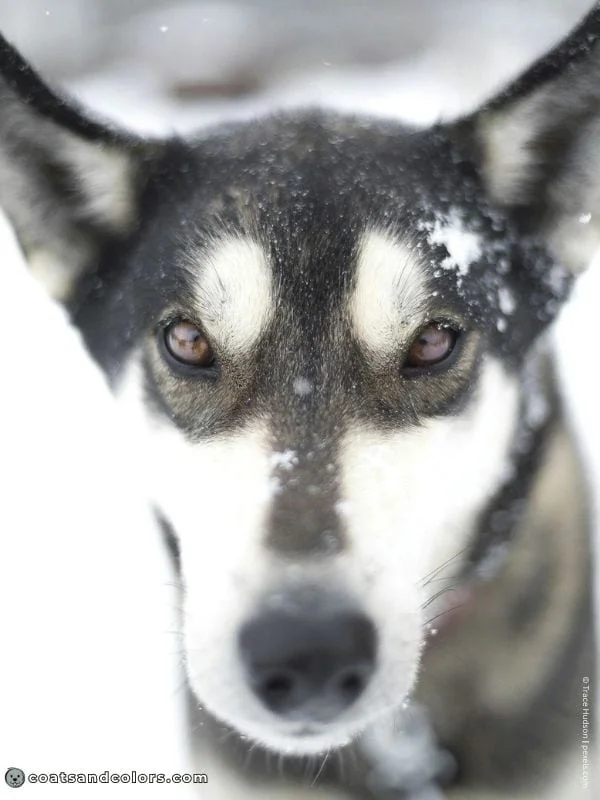
Also, some agouti dogs (ky/ky aw/-) come with a melanistic mask (Em/-). This adds a dark overlay over their muzzle or face and may thereby hide some of the original agouti markings.
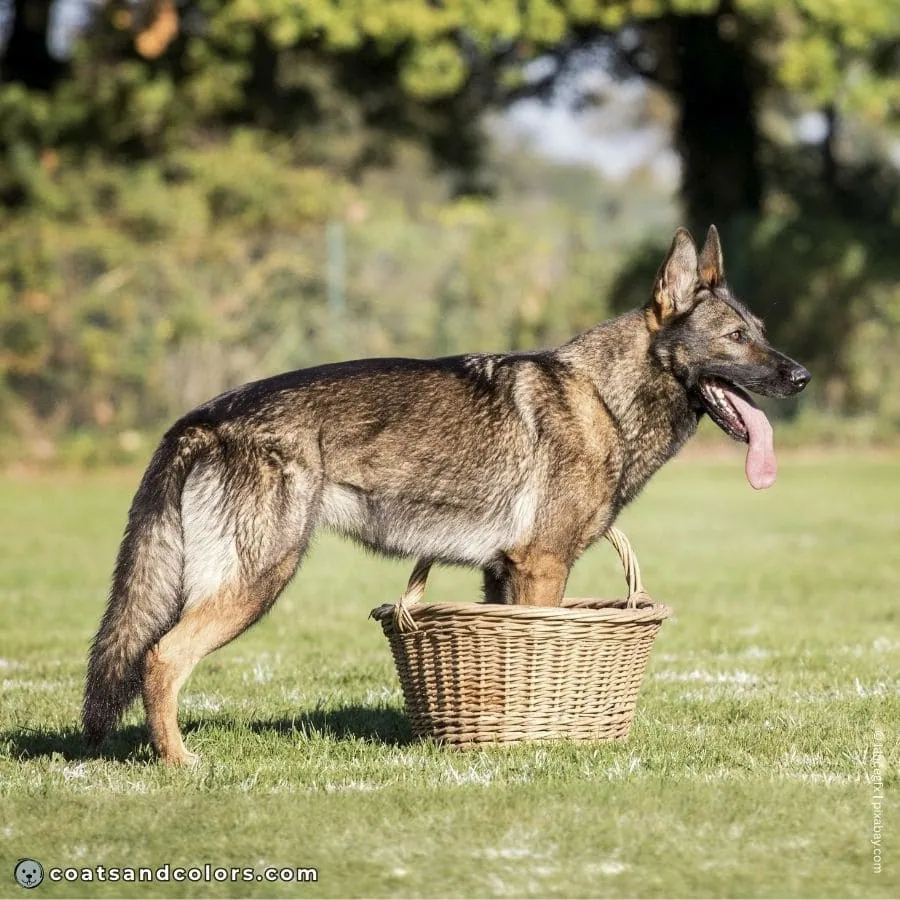
The banded face markings often form goggles around the eyes with a triangular shape reaching towards the cheeks. Agoutis have a full nose bar of banded hairs running down the bridge of the nose.
Most agouti dogs have some tan on the back of their ears and down their neck.
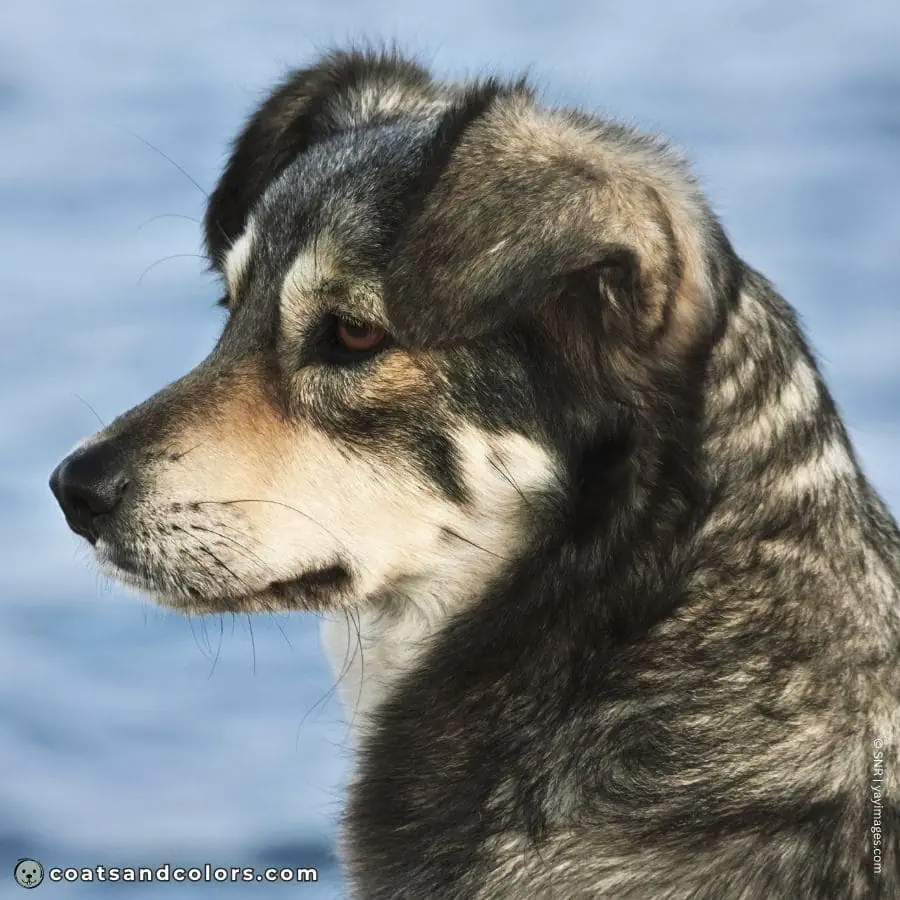
Normal agouti puppies are born quite a lot darker than they will be as adults. Also, most long-haired agoutis go through a pale phase. They lighten significantly, then become darker again.
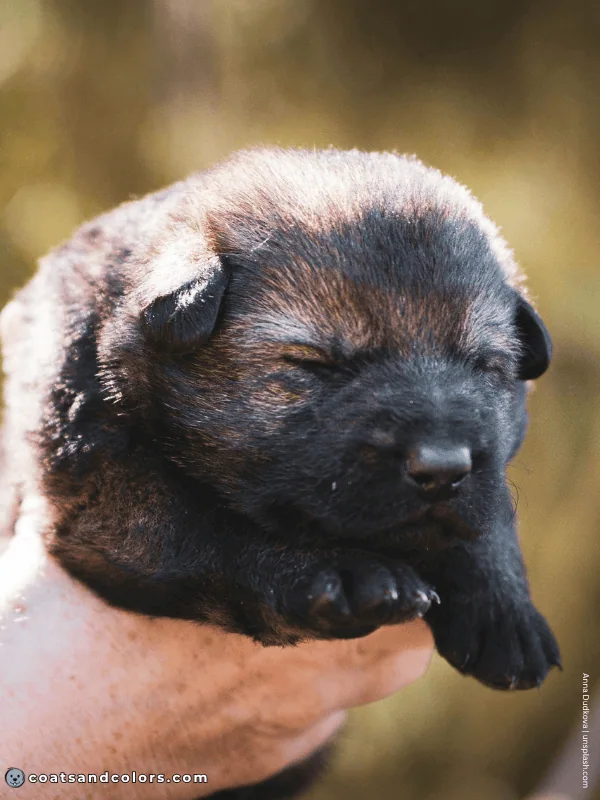
Having white markings can obscure some of the agouti markings. Normal agouti dogs have dark whiskers, but muzzle white can also delete pigment from the whiskers.
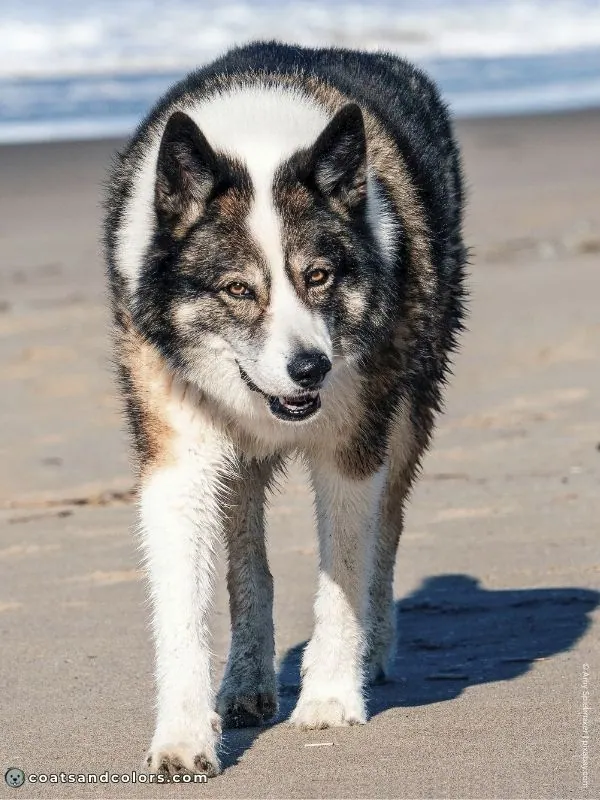
The agouti pattern is very variable, and many traits can affect how an agouti dog looks.
Agoutis can have any eumelanin base color, any red intensity, and many of them have countershading. Nordic breeds tend to have very pale phaeomelanin even in their normal agouti pattern.
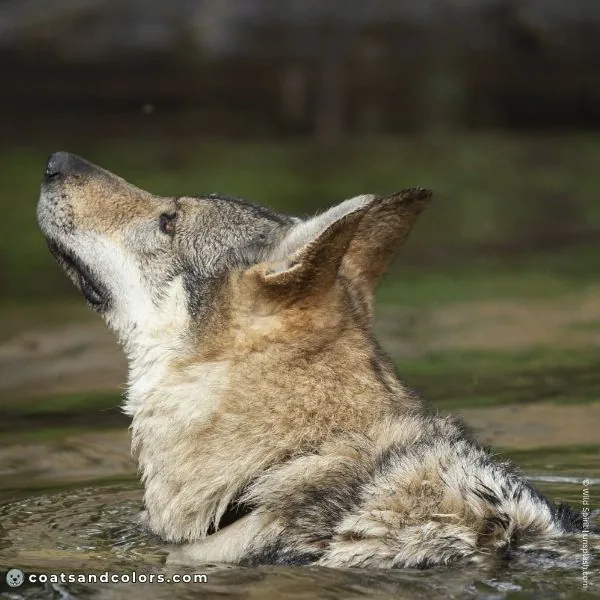
The banded dorsal hairs can be lightly or heavily banded.
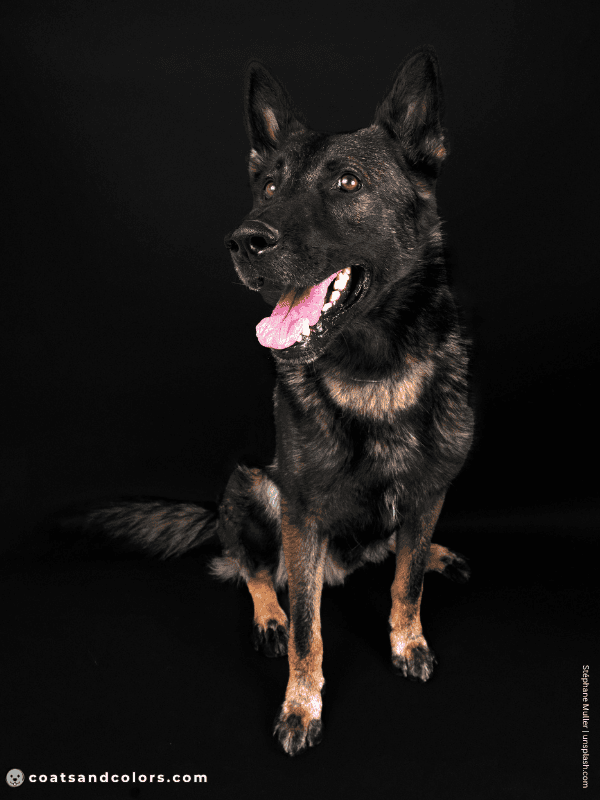
Oftentimes, tan point carriers (aw/at) and recessive black carriers (aw/a) express a dark agouti pattern. Also, long-haired agouti dogs often appear a lot darker than short-haired dogs.
Overall, there is a spectrum from very silvery to very blackish agouti dogs.
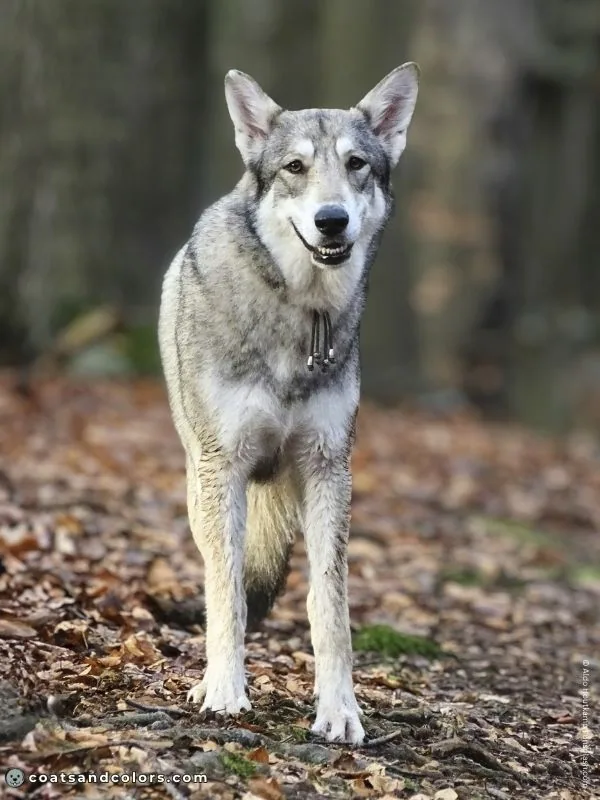
Agouti Domino
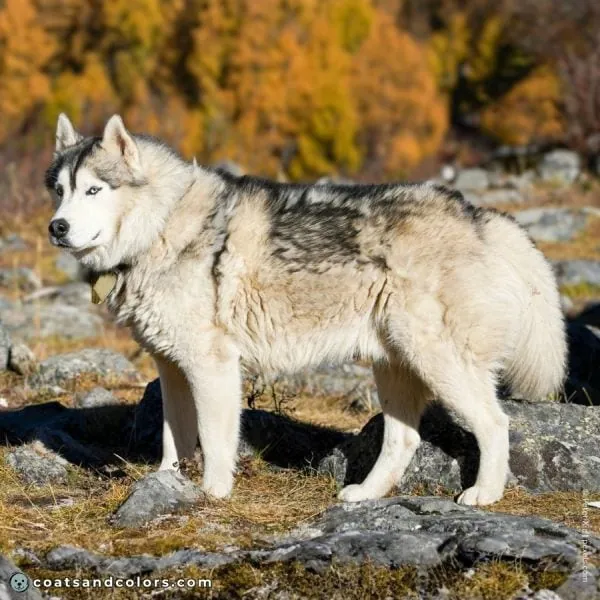
Agouti domino is a variation of the agouti base pattern with less eumelanin. It shows less dark hair banding and an overall reduced distribution of black pigment in the pattern.
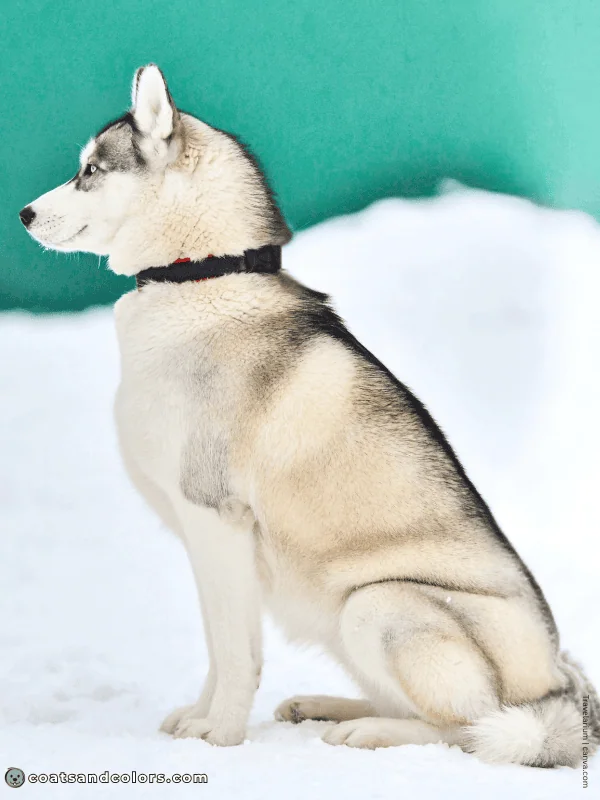
Agouti domino is caused by either grizzle domino (eG/-) or Northern domino (eA/-).
- Dogs with aw/- have an agouti pattern.
- Dogs with ky/ky can express their A locus pattern.
- Dogs with eG/- or eA/- show reduced eumelanin.
Domino traits are thought of as partial recessive red.
A recessive red (e/e) dog can never have black hairs and will always have pale whiskers. A domino (eG/- or eA/-) dog, on the other hand, can still make black pigment, it is just not good at it.
The E locus encodes the MC1R receptor in the wall of pigment cells. Signals from outside the cell can activate MC1R at certain times during hair growth, which triggers eumelanin synthesis.
The domino alleles represent “lazy” versions of MC1R that are not activated as easily as they should. So they are less likely to trigger eumelanin production.
Agouti domino is agouti with reduced eumelanin.
The effect is stronger towards the extremities. Domino dogs typically keep more dark pigment between their forehead and the top of the tail. They lose more pigment on their underside and face.
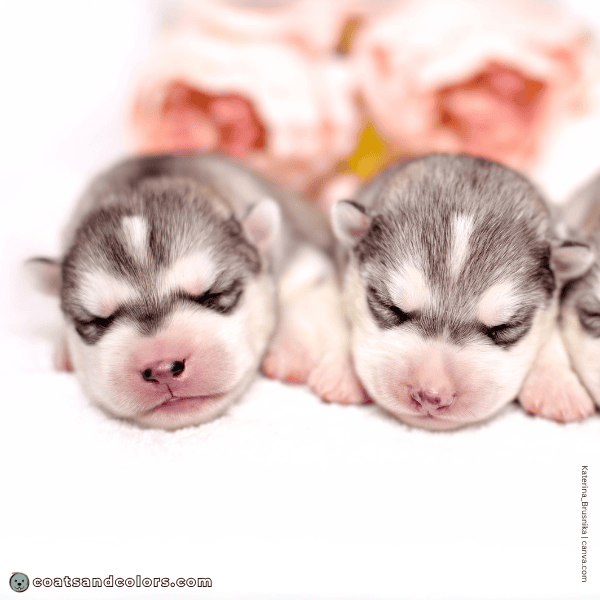
This is already obvious at birth.
Agouti domino puppies are already born with very large tan eyebrow and cheek markings. With time, the banded areas on their face will fade in color and size until tan covers most of the face.
Northern breeds tend to have very light phaeomelanin, Huskies call this pattern “gray & white“.
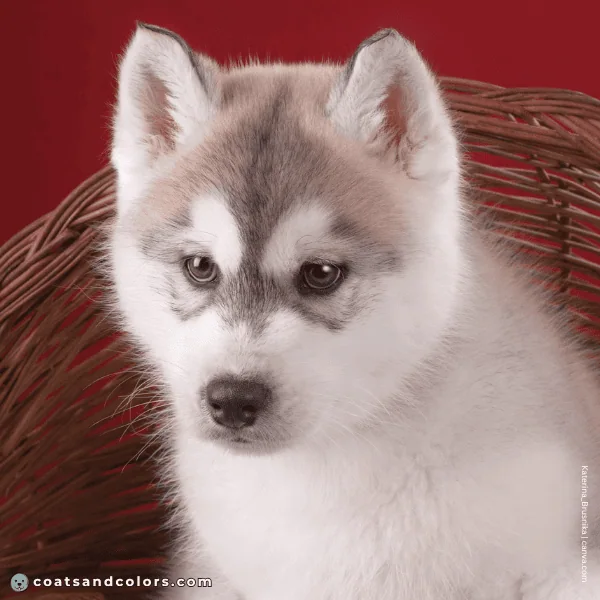
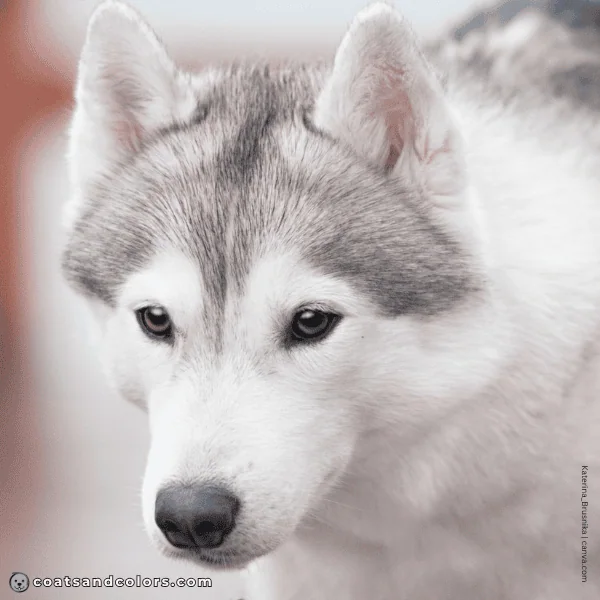
The “open face” is typically framed by a widow’s peak. The face can show residual goggles, but rarely produces a full nose bar. Most aw dominos have pale inner ear rims.
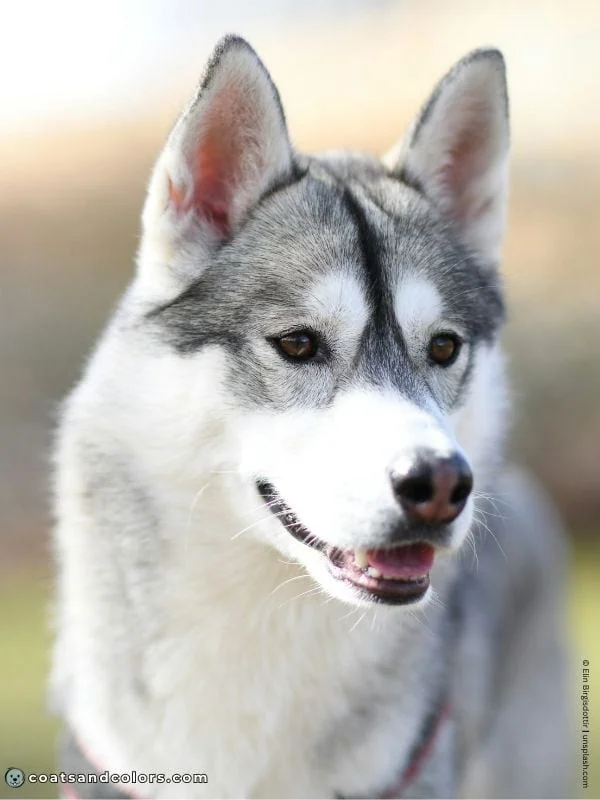
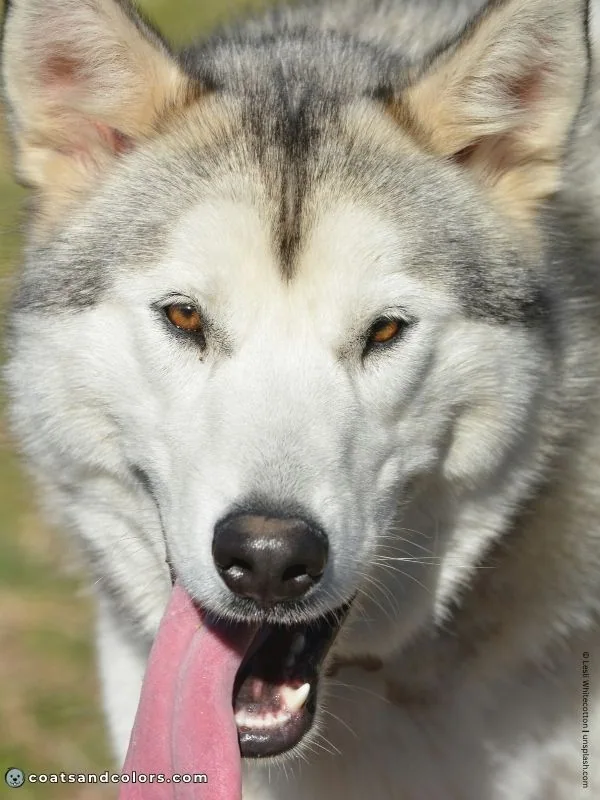
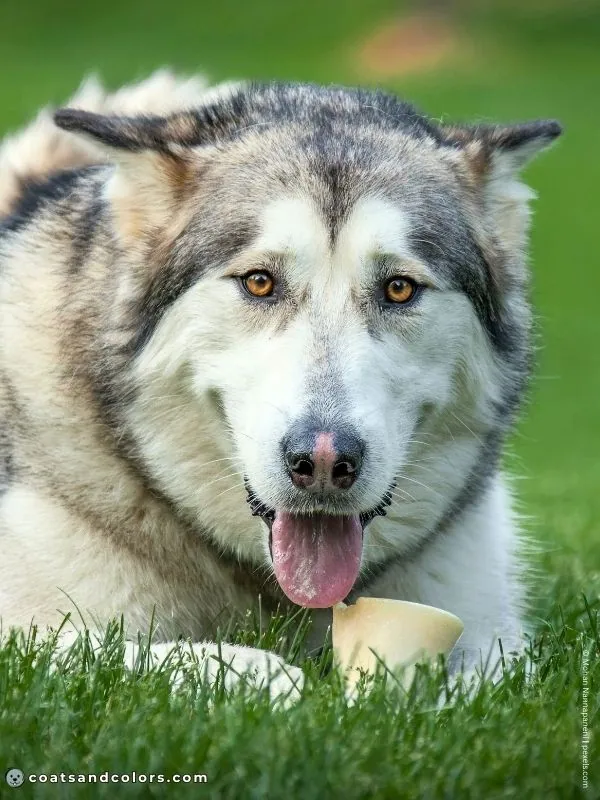
Agouti domino causes washed‑out dorsal banding. Combined with low-intensity paheomelanin and a light undercoat, this can make a dog appear pale gray or silvery.
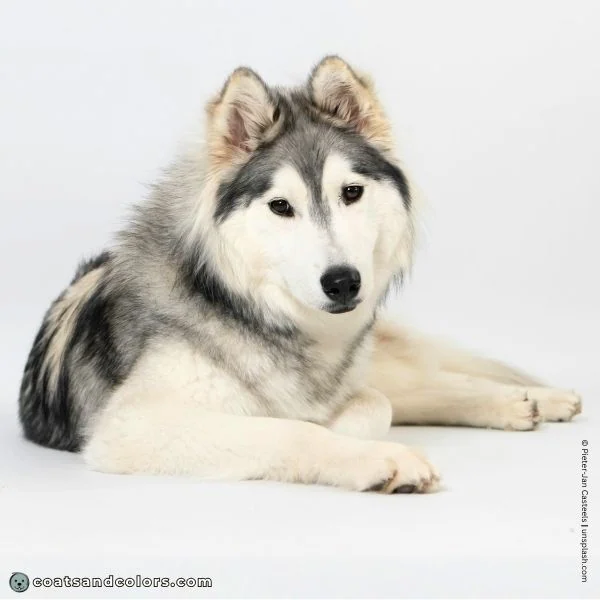
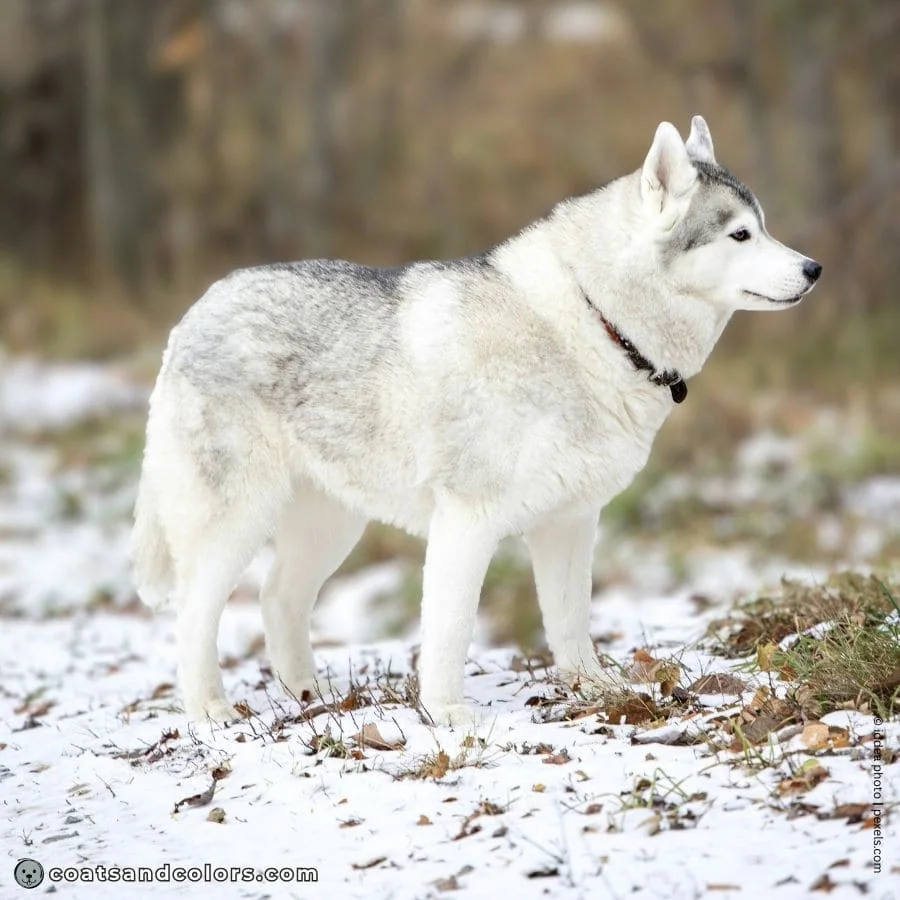
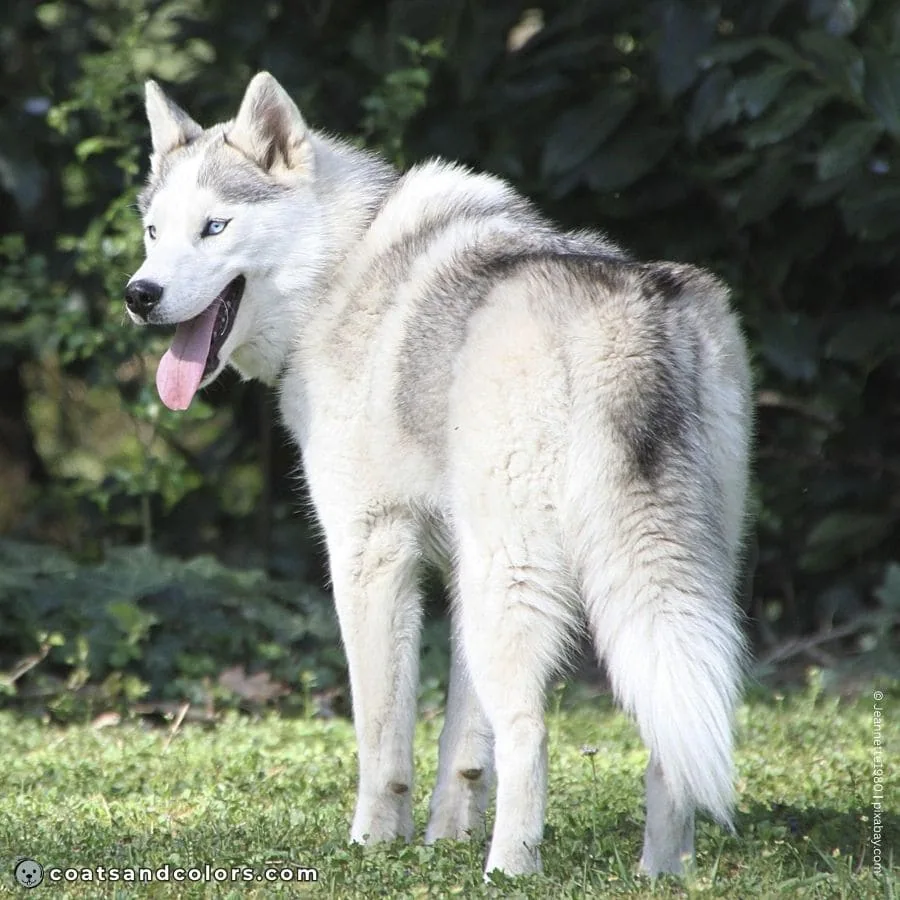
Agouti domino very often causes pale whiskers and a vertical pink stripe down the nose.
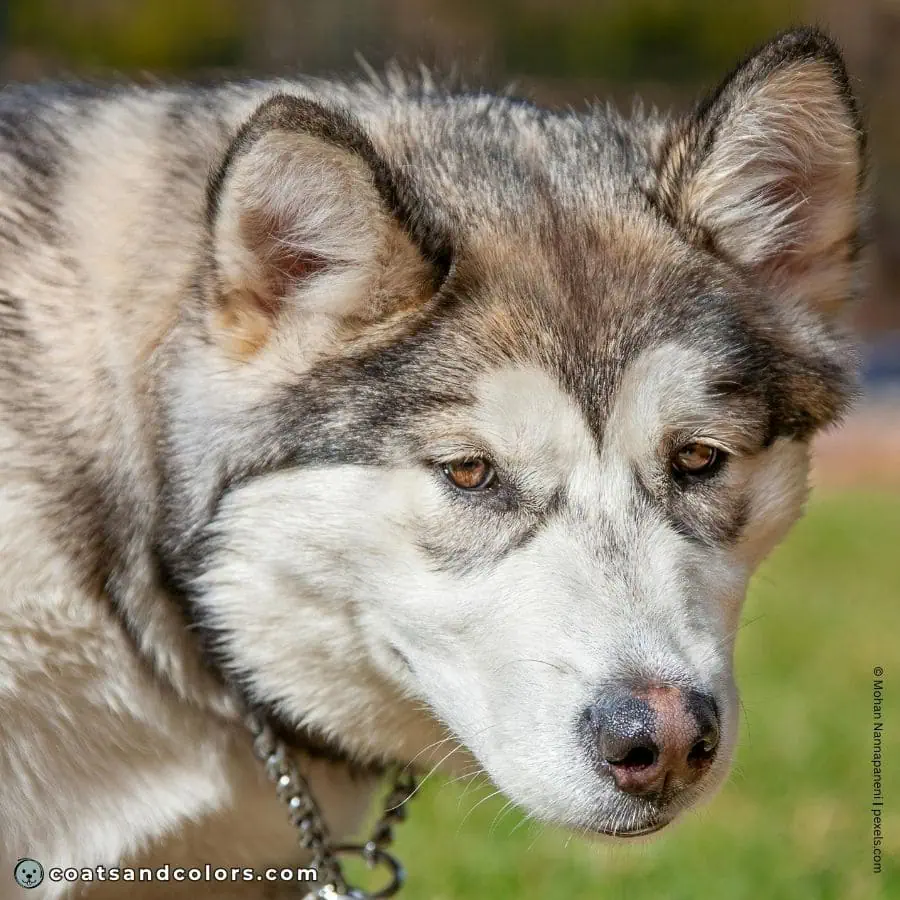
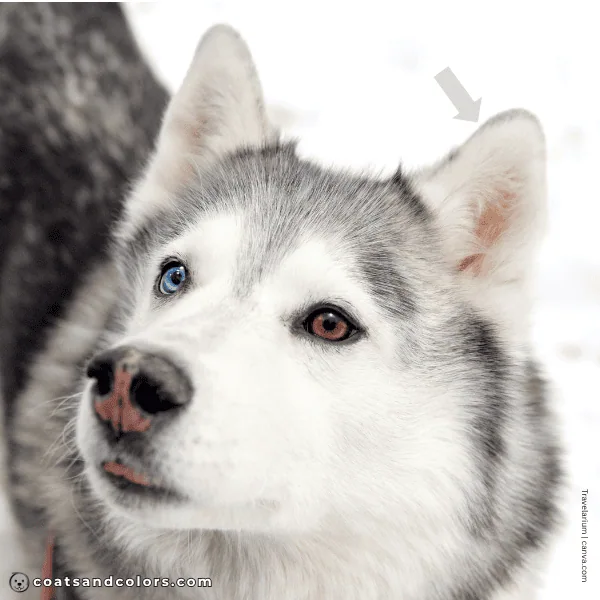
The normal agouti pattern can vary a lot to begin with.
I’ve shown you plenty of examples at the beginning of this article.
And the effect of domino can also vary a lot between dogs.
Some dogs lose most of their eumelanin to domino and turn out very light with an almost solid whitish “silver” coat and only some residual dark frosting on their topline. But other dogs keep lots of their dark face markings and can look almost like proper non-domino agouti at first glance.
At the end of the day, there is a wide range of phenotypes that all fall under agouti domino.
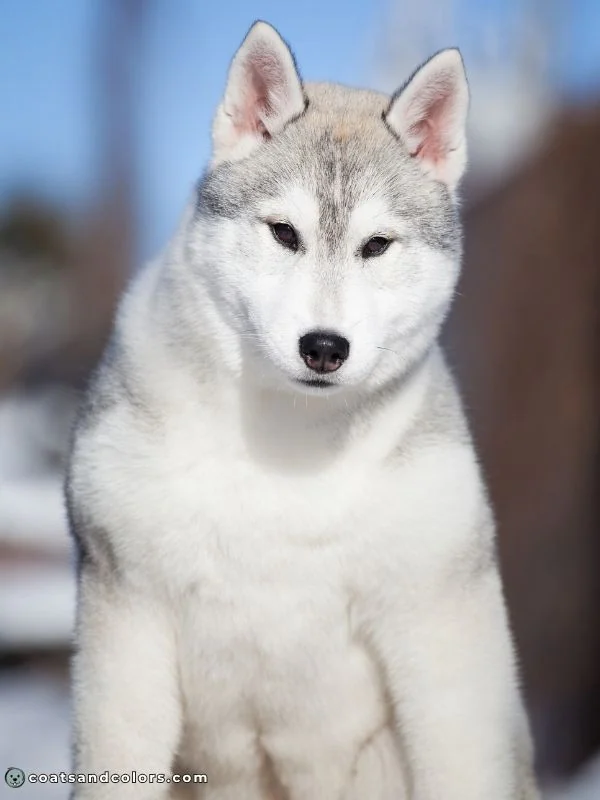
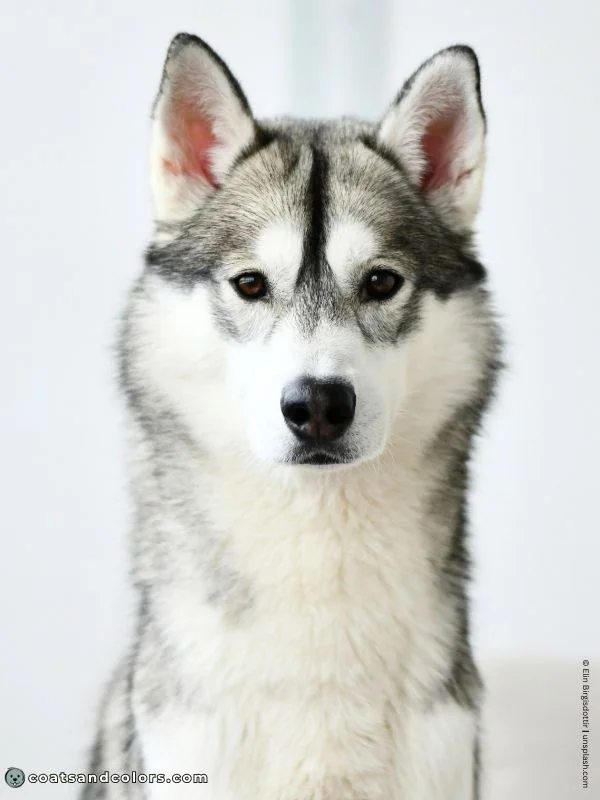
The range of possible outcomes can make it a little tricky to sort out what kind of domino pattern a dog has. There is a slight overlap between very light tan point domino and very dark agouti domino.
In addition, a/a domino and KB domino can also produce so many phenotypes, some of which can look very agouti-like. Sometimes, you have to test the dog in question to get your answer.
Learn More
Links
[1] Honkanen et. al. (2024). Canine coat color E locus updates: Identification of a new MC1R variant causing’sable’coat color in English Cocker Spaniels and a proposed update to the E locus dominance hierarchy. Animal Genetics. https://doi.org/10.1111/age.13398
Image Credits
Aldo Houtkamp/unsplash.com
Amy Spielmaker/pixabay.com
AnatoliiFoto/yayimages.com
Anna Dudkova/unsplash.com
Aref Sarkhosh/pexels.com
Bessudov_Sergey/canva.com
ClarkandCompany/canva.com
Dürken Abb/pixabay.com
Ekam Juneja/pexels.com
Elin Birgisdottir/unsplash.com
Esdras Jaimes/pexels.com
Freek Wolsink/pexels.com
Haberdoedas Photography/pexels.com
Hieu Nguyen/pexels.com
iddea photo/pexels.com
Ilona Didkovska/canva.com
Jeannette1980/pixabay.com
lancegfx/pixabay.com
Lesli Whitecotton/unsplash.com
Miguel Cuenca/pexels.com
Mikhail Nilov/pexels.com
Mohan Nannapaneni/pexels.com
Peter Jochim/pexels.com
Peter Xie/pexels.com
Pieter-Jan Casteels/unsplash.com
SNR/yayimages.com
Stéphane Muller/unsplash.com
Trace Hudson/pexels.com
Travelarium/canva.com
Viktorija Stankevičiūtė/pexels.com
Hi! I’m Steffi. I am a biologist and a big time dog nerd. You are curious about coat color genetics? You’ve come to the right place! Read more.