

Agouti is the wild-type base pattern in dogs.
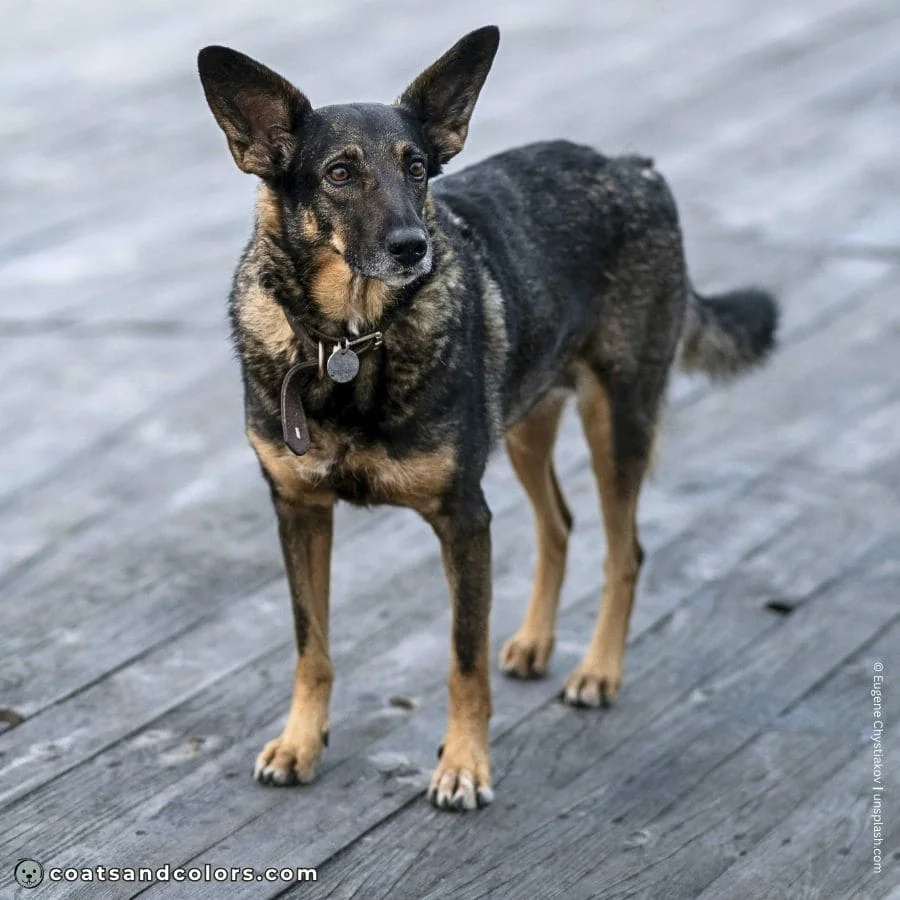
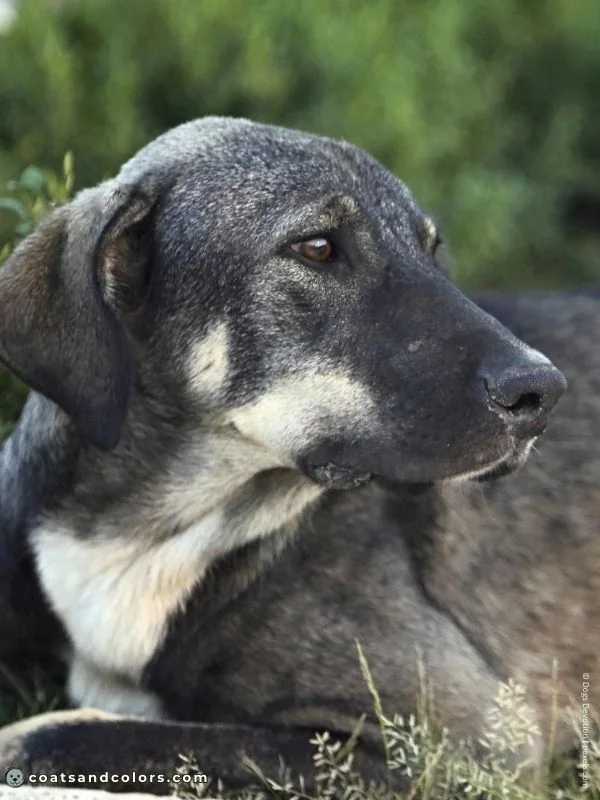
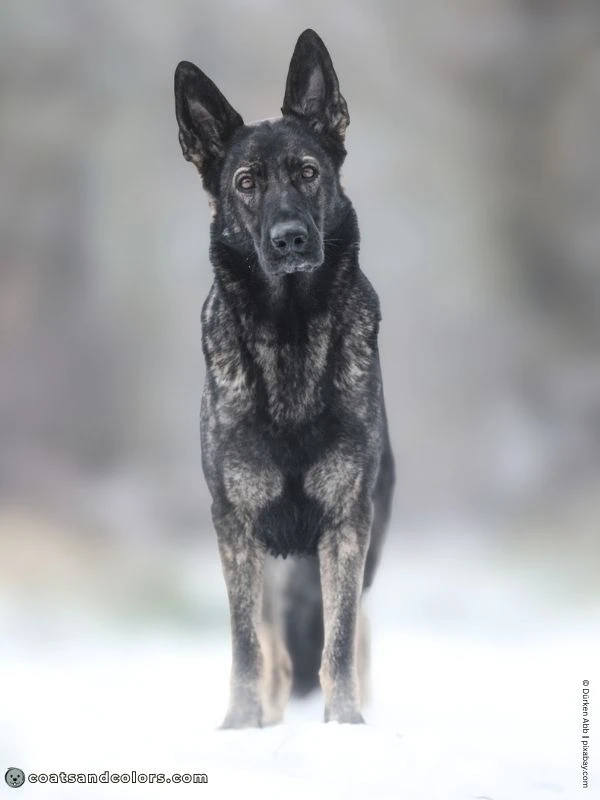
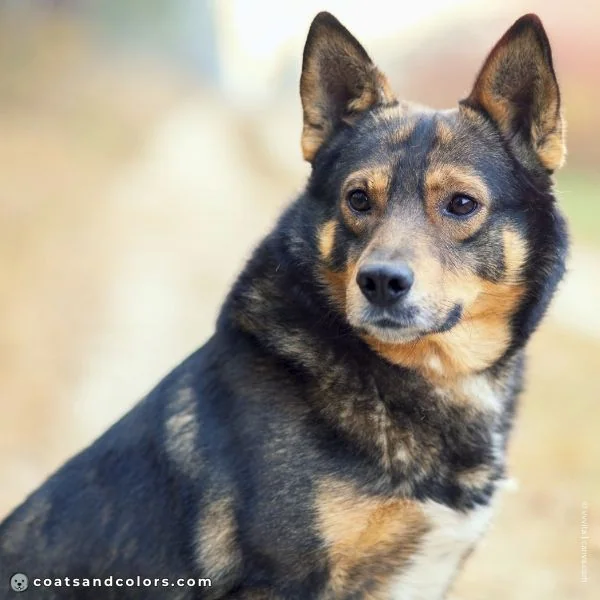
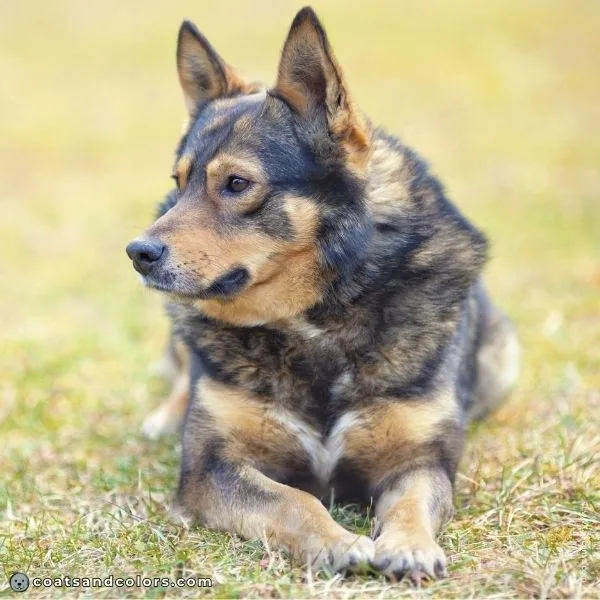
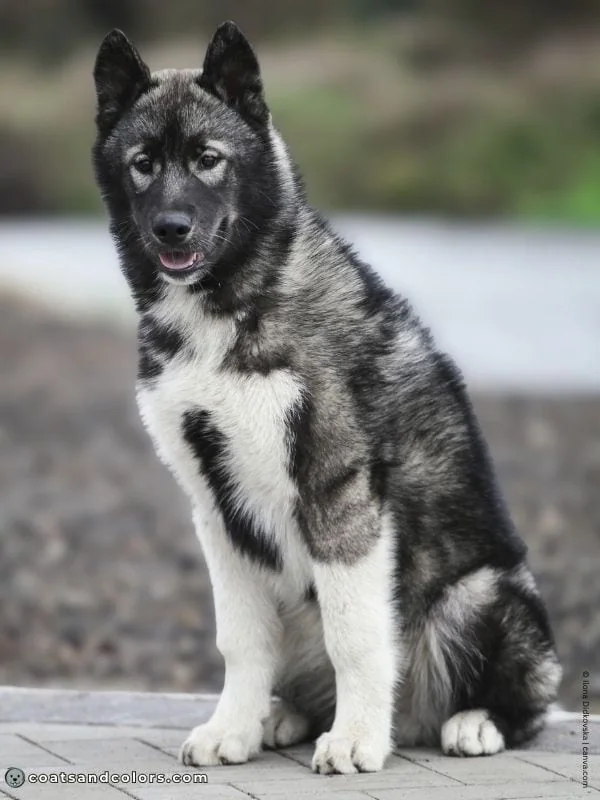
The agouti pattern causes banded dorsal hairs with solid tan markings on the lower body and wolf-like face markings. But some agouti dogs get so dark on top that they look almost black & tan.
That’s dark agouti.

What’s Actually Happening
Agouti dogs are E/- ky/ky aw/-.
The aw allele controls how much ASIP (agouti-signalling protein) their pigment cells produce. And ASIP is what switches a pigment cell from making eumelanin (black) to pheomelanin (tan).
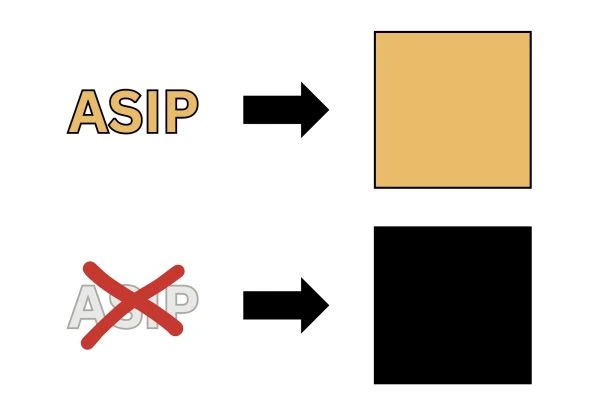
Two promoters control where and how much ASIP gets made. Each promoter can have different versions that are numbered from more ASIP (1) to normal ASIP (2) to less ASIP (3-5):
- VP (ventral promoter):
VP2 permanently produces high levels of ASIP on in the lower body. This causes solid tan markings. - HCP (hair cycle promoter):
HCP2 switches ASIP on and off repeatedly on the upper body. This causes banded hairs on the back.

The aw allele is the combination of VP2-HCP2 combo.
VP2 gives normal ventral tan, HCP2 gives normal banding.

Why Some Agoutis Look Darker
Most normal agouti dogs are aw/aw.
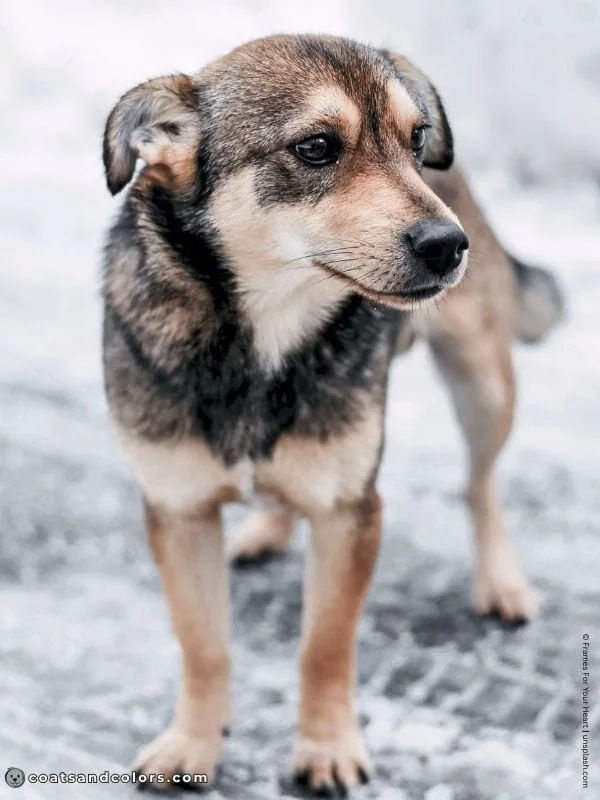
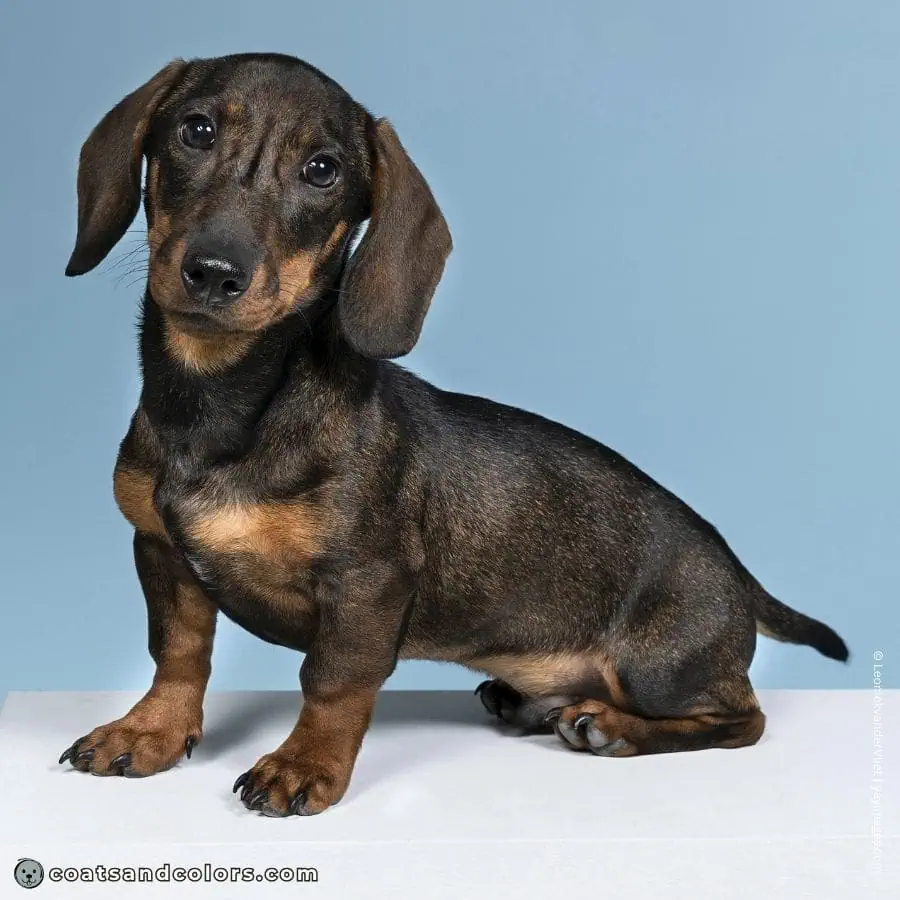
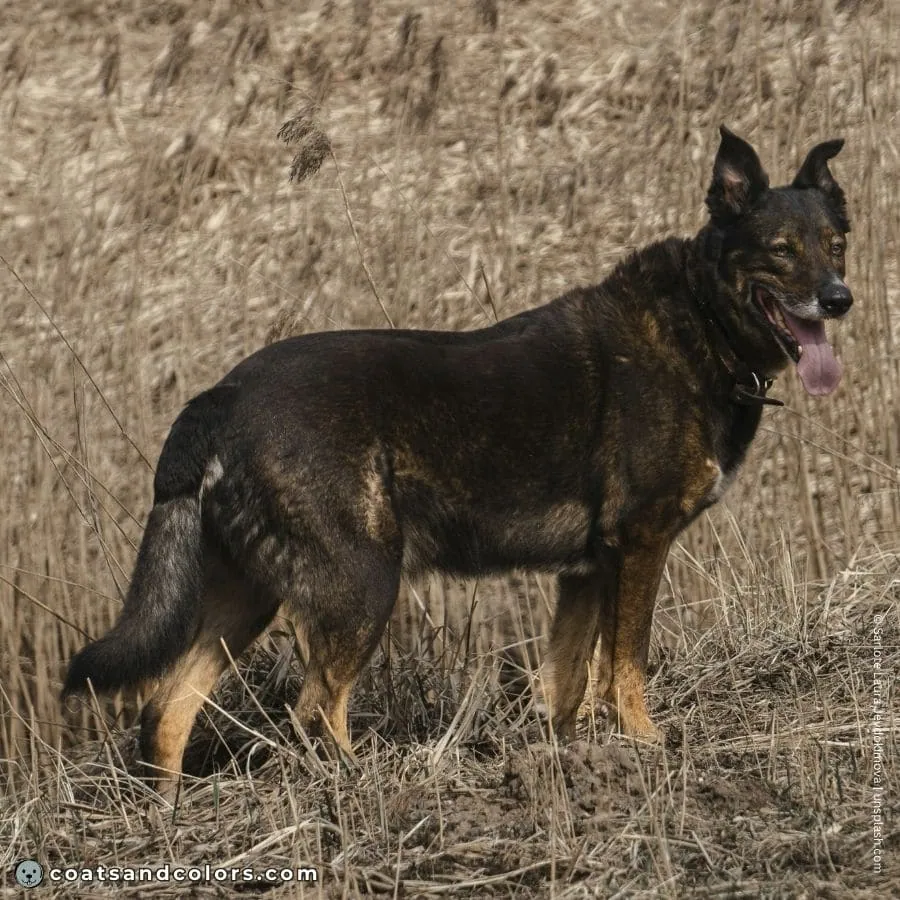
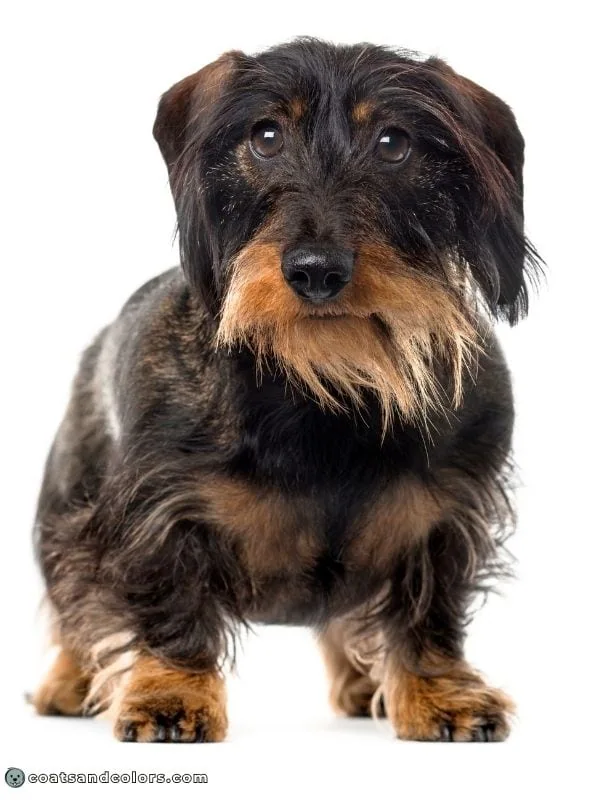
Dark agouti is common in dog breeds that recognize agouti and darker patterns. For example, it’s super common in German Shepherds (which can be aw, asa, at, or a) or Dachshunds (which have aw and at).
Most dark agouti dogs are heterozygous, either aw/at or aw/a.
They express agouti, but carry a darker pattern.
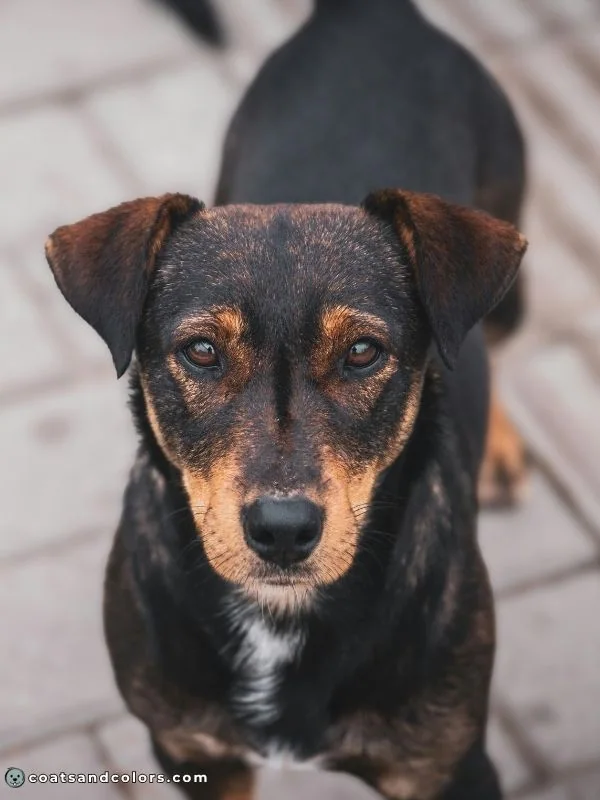
The A locus often shows incomplete dominance.
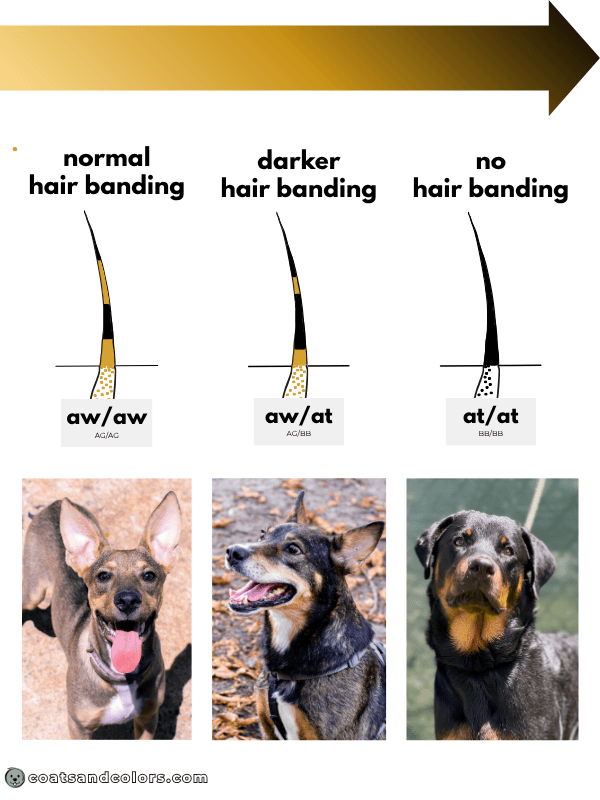
In an aw/at dog, both alleles get expressed.
The tan point allele (at) has a broken hair cycle promoter (HCP345), so it barely contributes to dorsal ASIP. That leaves only one working copy of HCP2 doing the job of two.
One copy is sometimes not enough to keep the hair cycling evenly from black to tan. Instead, the bands skew toward black, and you get a much darker, more “tan-pointy” agouti.
The same thing happens in aw/a dogs.
The recessive black allele (a) is essentially a broken ASIP gene. So again, only the one copy of HCP2 helps making ASIP. This is why aw/a dogs also tend to show darker banded hairs.
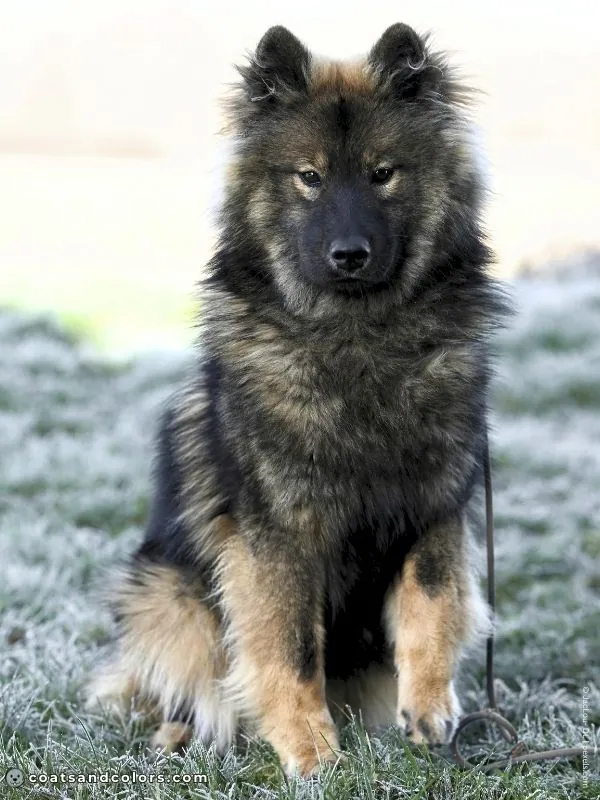
But not all heterozygous aw/at dogs look darker than aw/aw dogs.
The idea is that some E locus variants can shift how much ASIP is needed to trigger pheomelanin switching in the first place, which is likely why not every aw/at or aw/a dog goes dark. The threshold for what counts as “enough ASIP to make proper hair banding” isn’t fixed.
A Testing Caveat Worth Knowing
Legacy A locus tests can’t detect the less common at3 tan point variant and will misreport it as aw.
So a dog that tests aw/aw could actually be aw/at3 or at3/at3. If your dog looks tan-pointed or dark agouti but tests as aw/aw, this is worth digging into further.
Dark Agouti Puppies
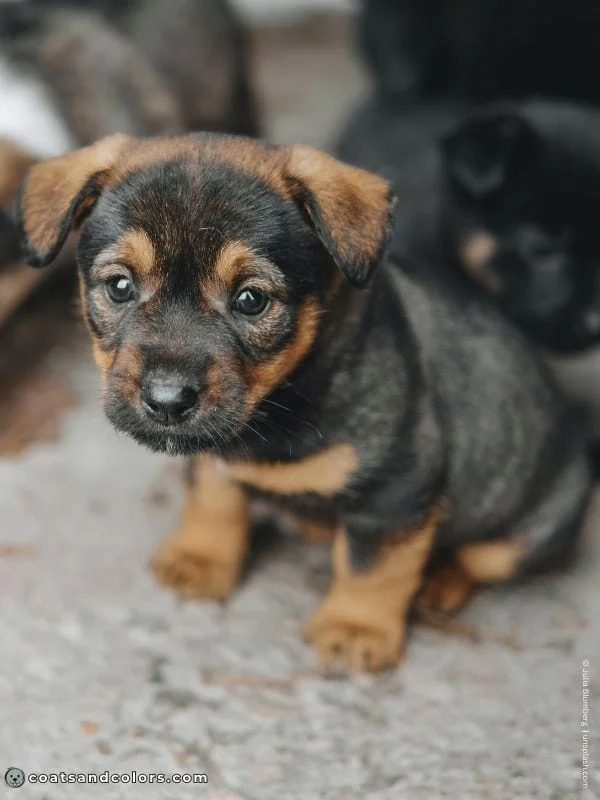
ASIP production is delayed in puppies, so agouti pups are born with a dark overlay. Sometimes dark enough to look black at birth. The darker the adult coat will be, the more pronounced this tends to be.
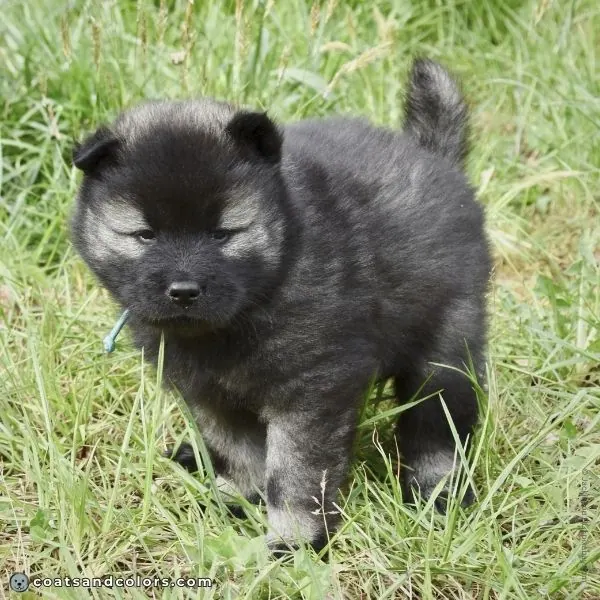
Ventral areas clear before dorsal ones, so young agouti puppies can briefly look like they’re black & tan, often with tan showing behind the ears early on. Many go through a pale in-between phase before darkening again toward their adult coat.
Traits That Change How Dark an Agouti Looks
- Must be ky/ky to show normal agouti.
- kbr/- gives agouti brindle.
- Can never be KB/-.
- Em/- adds a melanistic mask, which can extend into dark ventral overlay.
- E/E gives normal agouti.
- E/e, E/eA, or E/eG dogs tend to run lighter with more extended tan.
- Being eA/- or eG/- domino turns agouti into washed-out agouti domino.
- Can never be e/e.
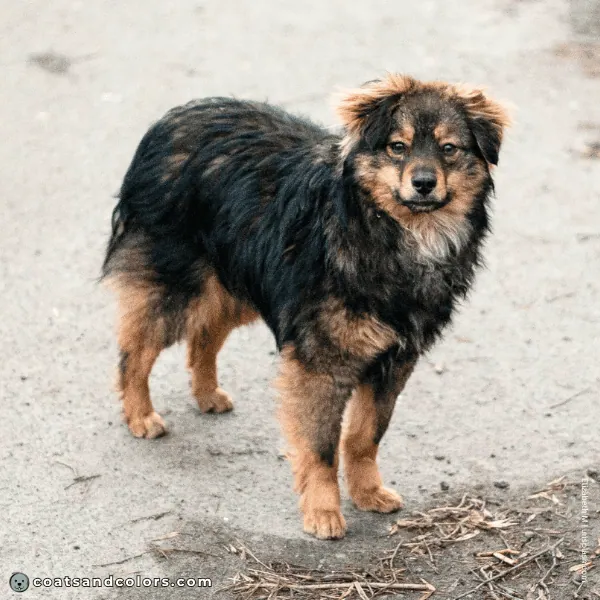
- Longer coats tend to look darker.
- Curly or wiry coats can make dark agouti harder to tell apart from other patterns.
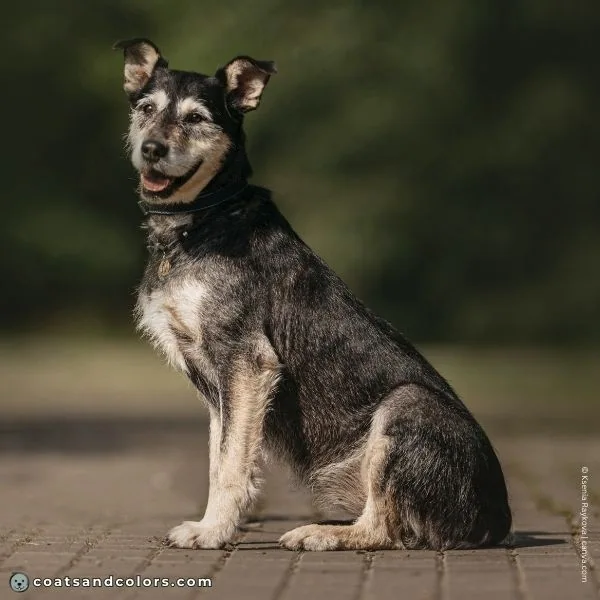
- Agoutis can have black, brown, blue, or lilac eumelanin.

- Richer pheomelanin makes for a darker-looking dog.
- Pale phaeomelanin lightens the phenotype.
- Countershading lightens vetral pheomelanin.
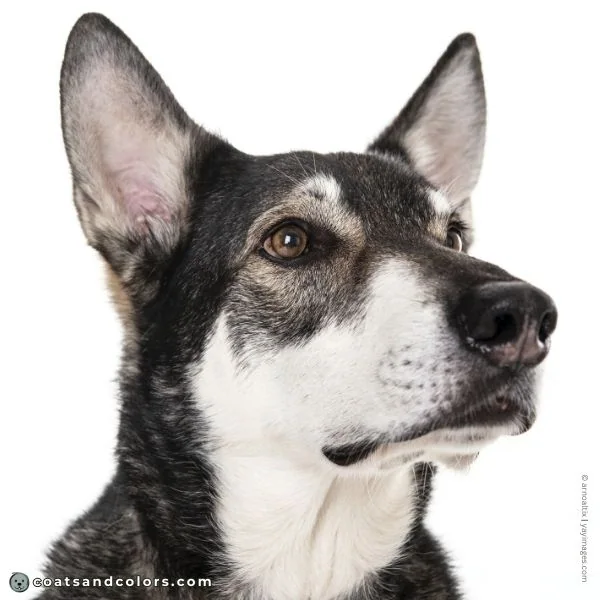
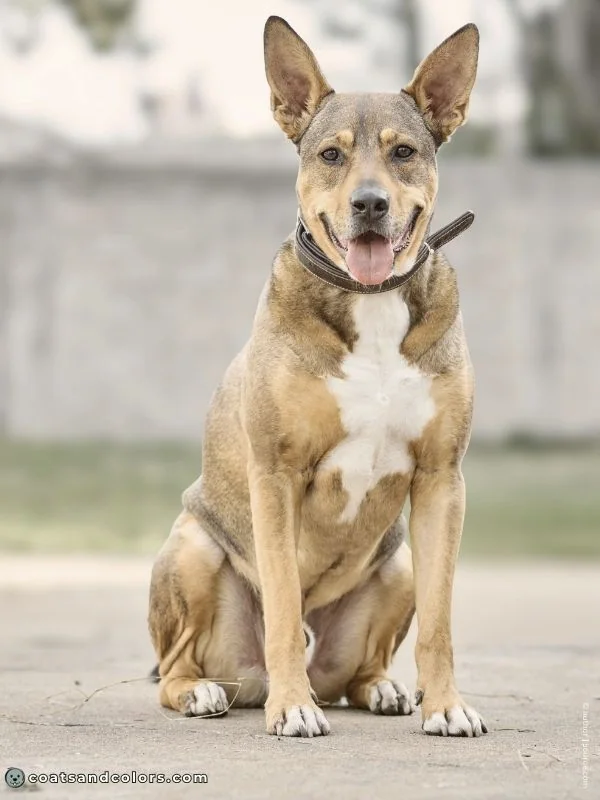
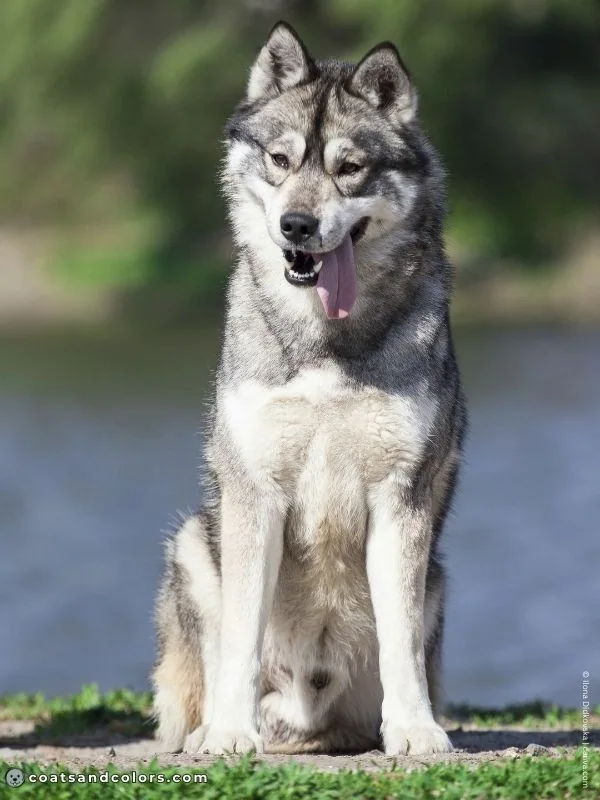
Traits That Remove Pigment:
- Progressive graying fades pigment colors.
- White deletes pigment.
- Merle lightens pigment in random areas.
Learn More
Image Credits
Aleksandr Gusev/unsplash.com
Angelo Festi/pexels.com
arnoaltix/yayimages.com
Daniel Cosma/pexels.com
Dogs Devotion/pexels.com
dpcrestock/yayimages.com
Elizabeth M/unsplash.com
Eugene Chystiakov/unsplash.com
fotojagodka/canva.com
Frames For Your Heart/unsplash.com
German Suarez/pexels.com
Ilona Didkovska/canva.com
JacLou- DL/pexels.com
Julia Blumberg/unsplash.com
Katrinbechtel/pixabay.com
Ksenia Raykova/canva.com
LeoniekvanderVliet/yayimages.com
RosaJay/yayimages.com
Sarlote Laura Jevdokimova/unsplash.com
vvvita/canva.com
Hi! I’m Steffi. I am a biologist and a big time dog nerd. You are curious about coat color genetics? You’ve come to the right place! Read more.