

The Affenpinscher is a wire-haired and bearded toy dog from Germany. In the US, Affenpinschers come in a variety of different coat colors and patterns like red, gray, silver, or black-and-tan. Many breed clubs only accept solid black, making it the most common of all Affenpinscher colors.
Learn all about the different Affenpinscher coat colors.
Black
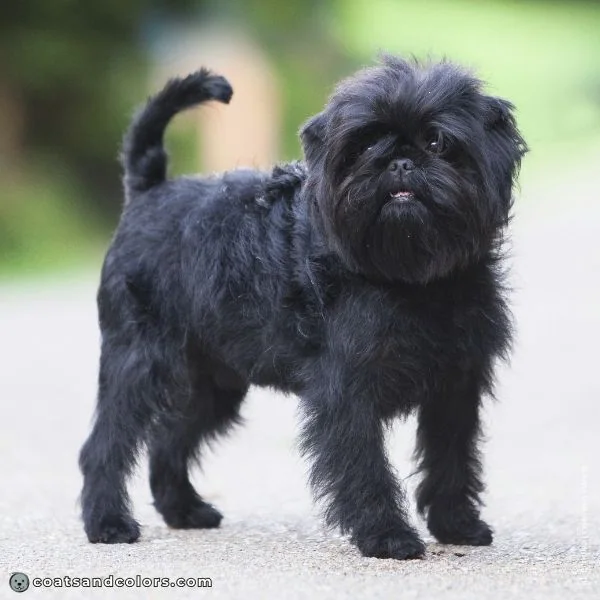
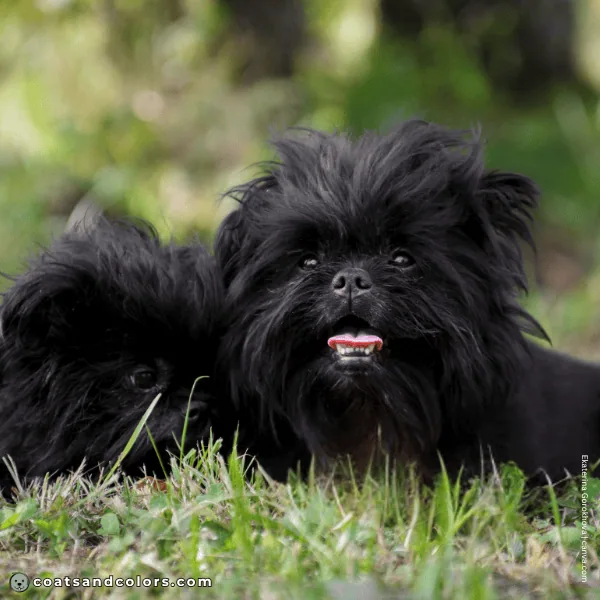
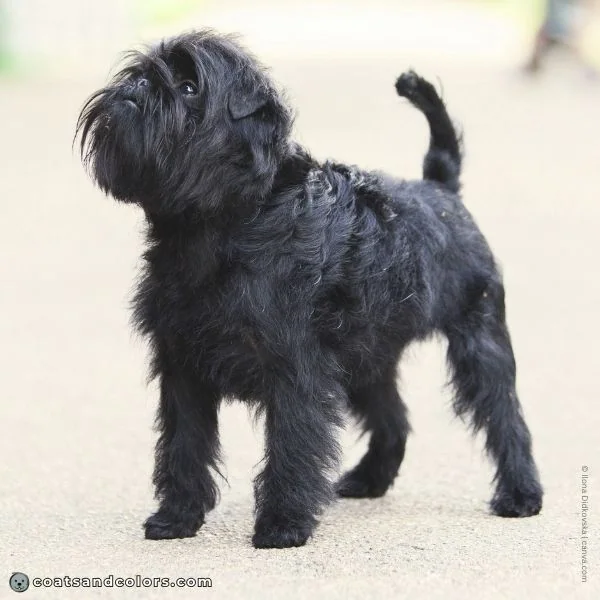
A black Affenpinscher is solid black.
Some black dogs can have a reddish cast or a light frosting of gray hairs.
Black is the most common Affenpinscher color. A black Affenpinscher can be either dominant black (KB/-) or recessive black (ky/ky a/a), since both base patterns do occur in this breed.
BASE PATTERN
dominant black
recessive black
MERLE
–
OTHER
–
EUMELANIN
black
INTENSITY
–
WHITE
solid
Gray, Silver
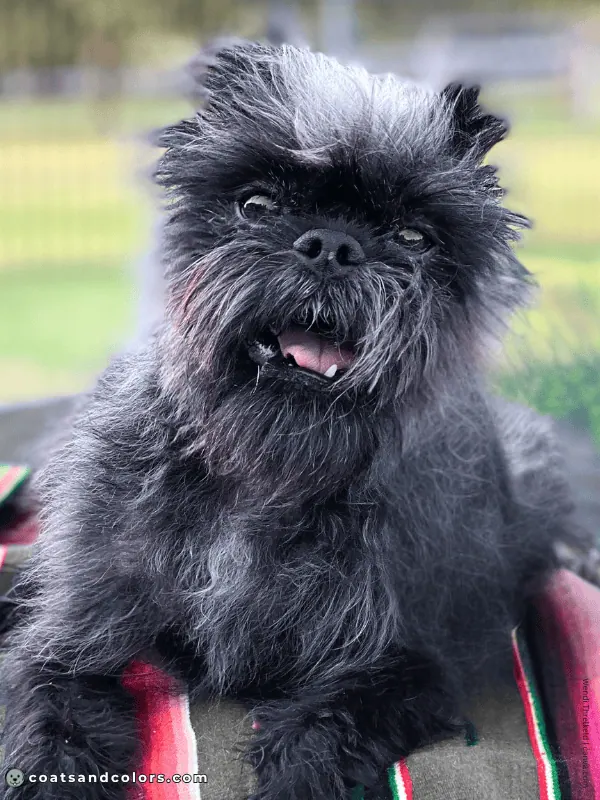
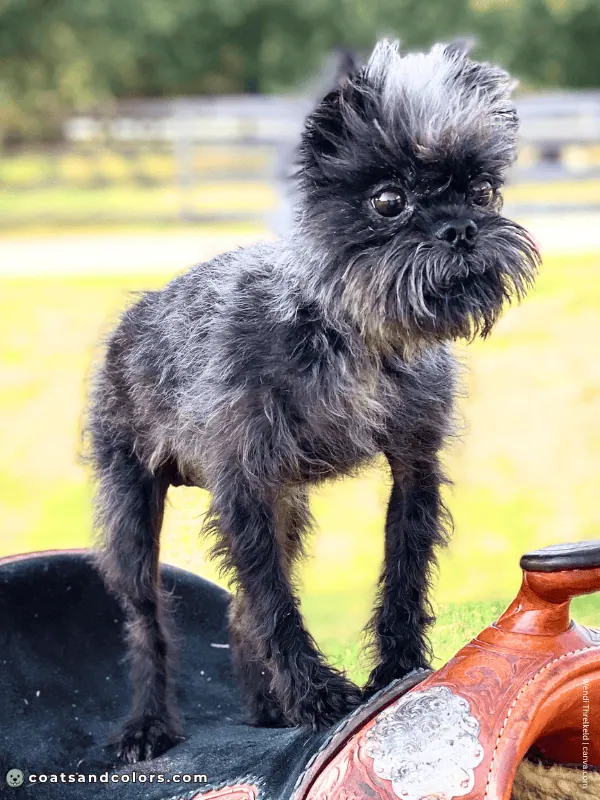
A silver Affenpinscher has a light gray coat. A gray Affenpinscher has a dark gray coat.
These dogs are born solid black. But progressive graying causes their black pigment to fade over time. This starts in young dogs and can turn them to a dark gray or silver color.
Some gray Affenpinschers keep a darker face. This might be related to dogs also having a melanistic mask (Em/-), which seems to protect some muzzle pigment from graying.
BASE PATTERN
dominant black
recessive black
MERLE
–
OTHER
progressive graying
EUMELANIN
black
INTENSITY
–
WHITE
solid
Black & Tan
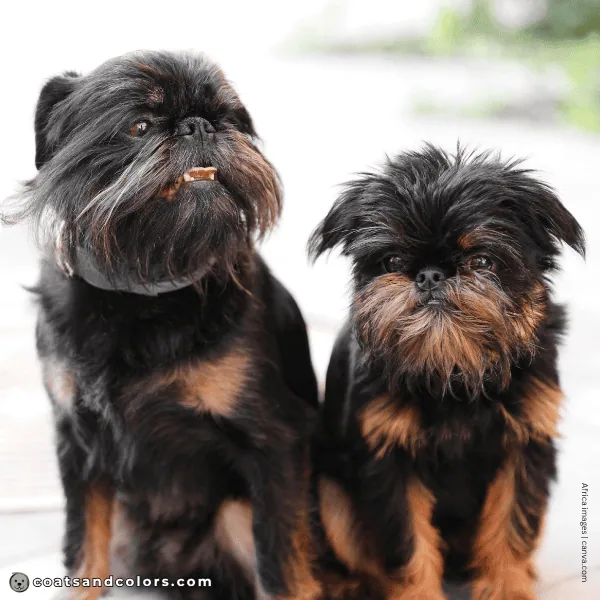
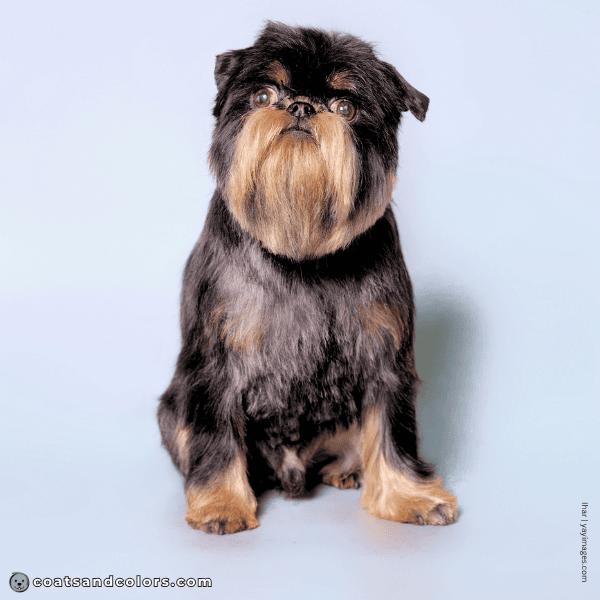
A black and tan Affenpinscher is mainly black with tan markings.
These dogs have a classic tan point pattern (ky/ky at/-) with a mainly black coat and tan markings on its muzzle, eyebrows, throat, chest, underbody, lower legs, and under the tail. They can be maskless (E/-) or have a black mask (Em/- ) cover some of their face markings.
Dogs that carry recessive black (at/a) may have smaller tan markings.
The progressive graying trait can also affect any black and tan Affenpinscher. Graying can fade a black and tan pattern to a silver or dark gray color with less obvious or faded tan points.
BASE PATTERN
tan point (mask)
MERLE
–
OTHER
graying possible
EUMELANIN
black
INTENSITY
red, tan
WHITE
solid
Red Affenpinscher
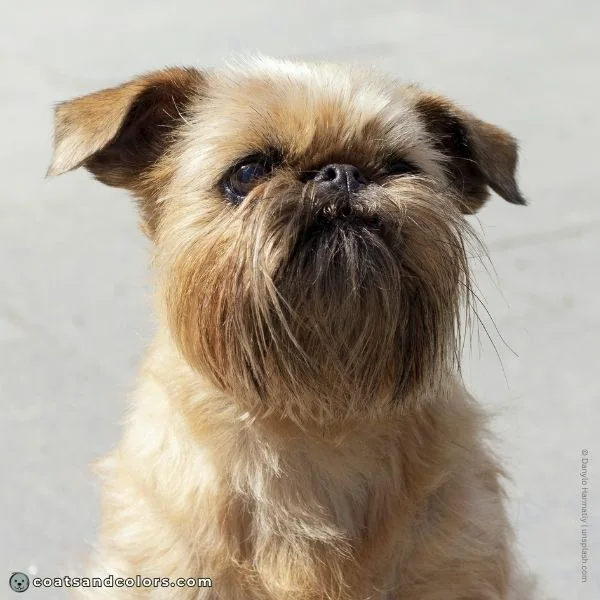
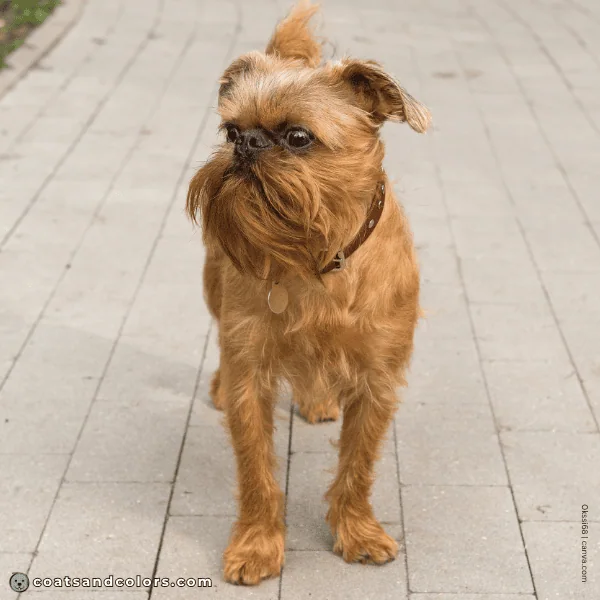
A red Affenpinscher is solid orangey tan to red.
These dogs are mostly clear sable (ky/ky Ay/-). They are either maskless (E/-) or have a black mask (Em/-). Their nose and whiskers will be black. Other breeds call the same pattern red fawn.
It’s worth mentioning that a small number of red Affenpinschers seem to be recessive red (e/e)[4]. These dogs can’t produce black in their coat and will never have a black mask.
It can be virtually impossible to distinguish clear sable from recessive red since both only express red pigment. But recessive reds have pale whiskers and often show weak nose pigment.
BASE PATTERN
clear sable (mask)
(recessive red)
MERLE
–
OTHER
graying possible
EUMELANIN
black
INTENSITY
red, tan
WHITE
solid
Belge
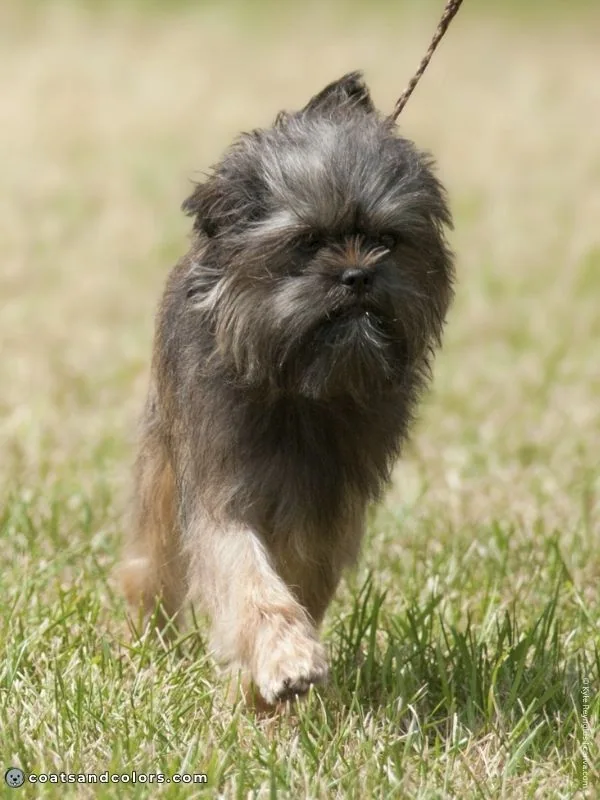
A belge Affenpinscher is red with sabling.
Belge is a breed term for a red Affenpinscher with a black overlay on their red coat due to black hair tips or minimal black banding in dorsal hairs. This phenotype is also called shaded sable.
The new shaded sable allele (Ays, SY) has not yet been confirmed for too many breeds. This “darker sable” phenotype also often happens in tan point carriers (ky/ky Ay/at) or recessive black carriers (ky/ky Ay/a) due to incomplete dominance between A locus alleles.
A belge Affenpinscher can be maskless (E/-) or have a black mask (Em/-). The amount of dark shading varies from dog to dog. And progressive graying can fade all the black sabling to gray.
BASE PATTERN
shaded sable (mask)
MERLE
–
OTHER
graying possible
EUMELANIN
black
INTENSITY
red, tan
WHITE
solid
Faulty Colors
In theory, any color that is not defined in the standard is automatically considered a faulty color:
- All base colors other than black (chocolate, blue)
- All nose colors other than black (snow nose)
- Brindle
- Merle
- White markings
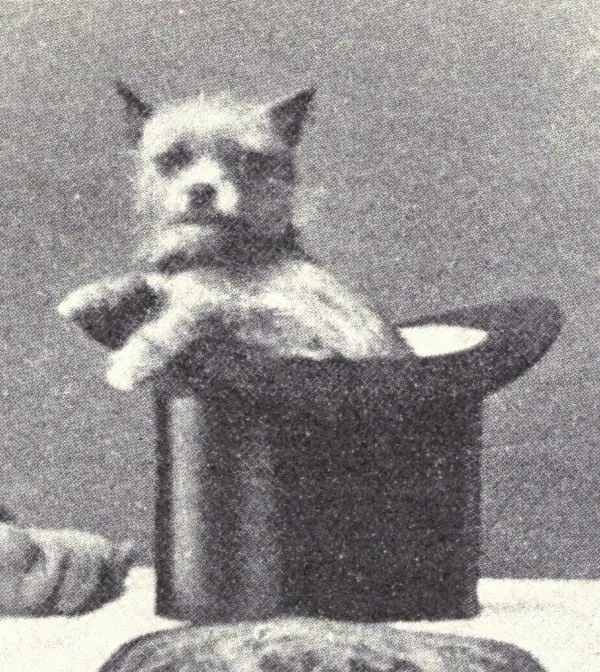
According to the FCI, traditional Affenpinscher colors once ranged from solid or dirty yellow or red to silver and gray, black-gray, and pure black[2]. However, they now only accept solid black, meaning that all other coat colors (red, belge, etc.) are automatically considered faults under the FCI and RKC.
Base Patterns
The base pattern describes the placement of phaeomelanin and eumelanin in the coat. There is an epistatic hierarchy between the A locus < K locus < E locus.
- The A locus controls the basic distribution of both pigment types.
- Next, the K locus can add black to the A locus pattern.
- Finally, the E locus regulates the general ability to produce black pigment.
A Locus
| Ay | clear sable |
| Ays | shaded sable |
| at | tan point |
| a | recessive black |
There is some incomplete dominance between alleles. For example, Ays/at often produces very dark belge, Ay/at produces belge, but Ay/Ay is clear red. And at/a can give small tan points.
Dogs with a/a will express recessive black. Dogs can be solid black or show minor tan on their legs.
K Locus
| KB | dominant black |
| ky | wild-type |
A KB/- dog will be solid black. Only dogs with ky/ky can express sable or tan points.
E Locus
| Em | black mask |
| E | wild-type |
| e | recessive red |
Many Affenpinscher express a black mask (Em/-). Or they can also be maskless (E/-). Being e/e produces recessive red aka clear red. This is rare and often causes fading nose pigment.
Here are some Affenpinscher color charts:
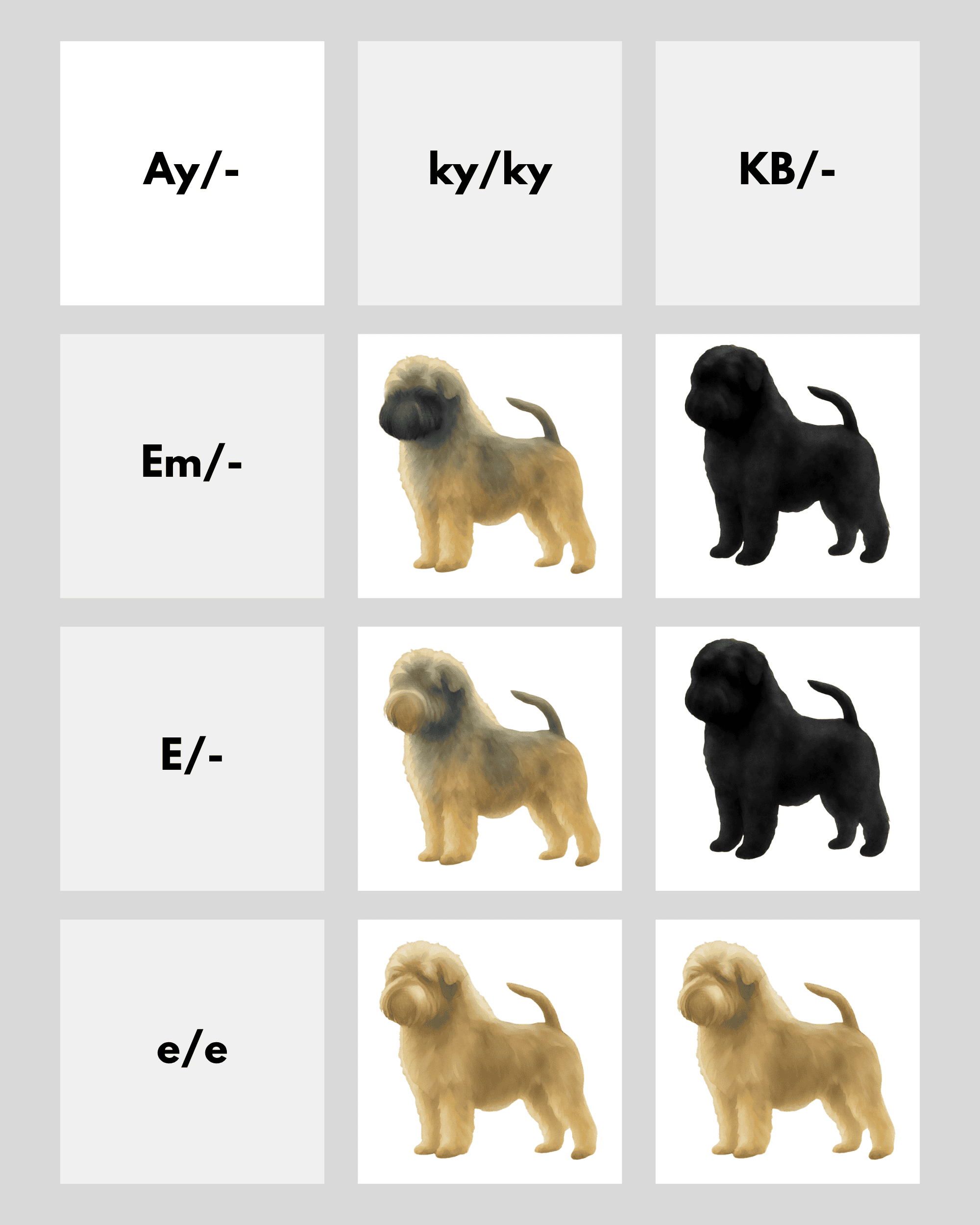
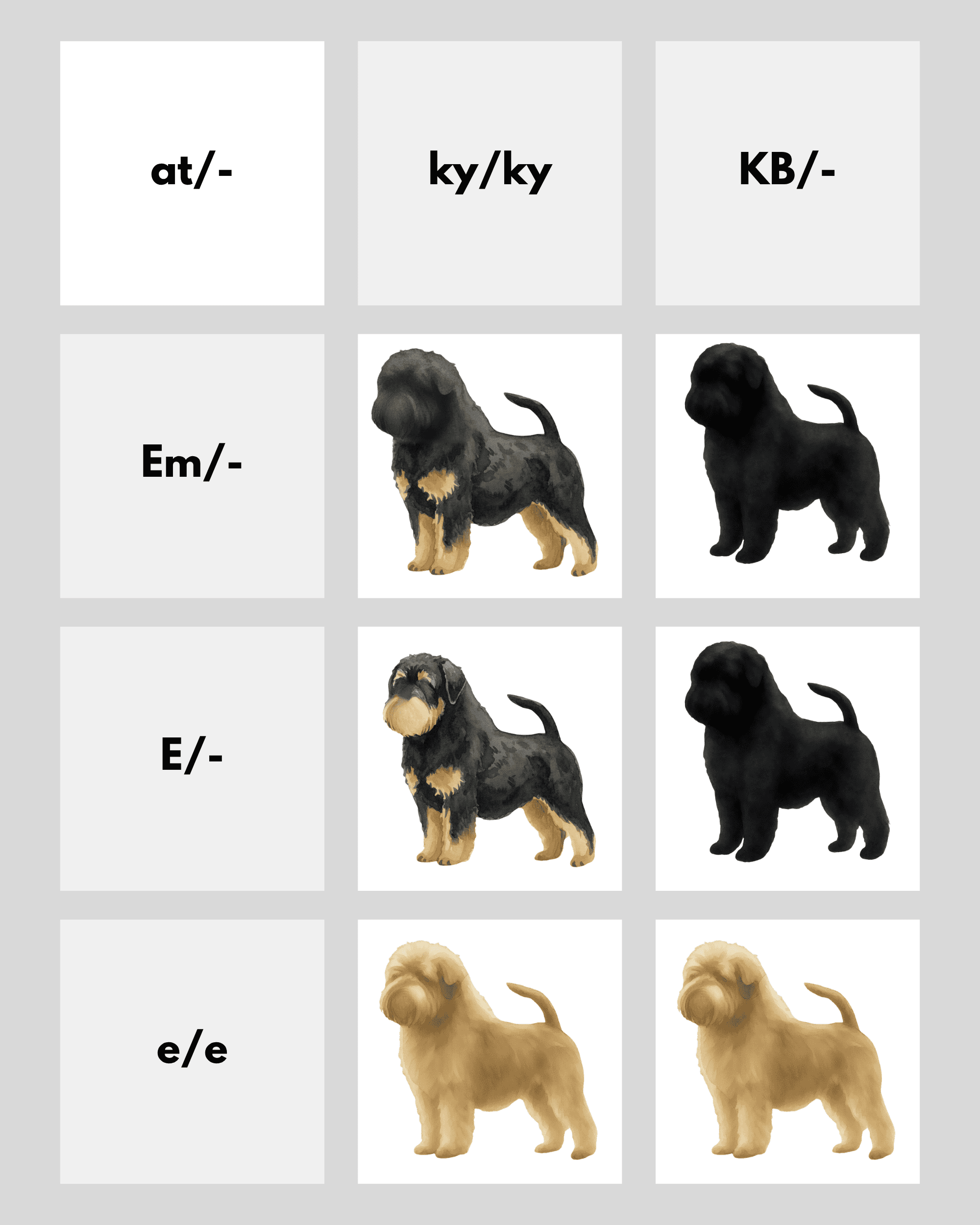
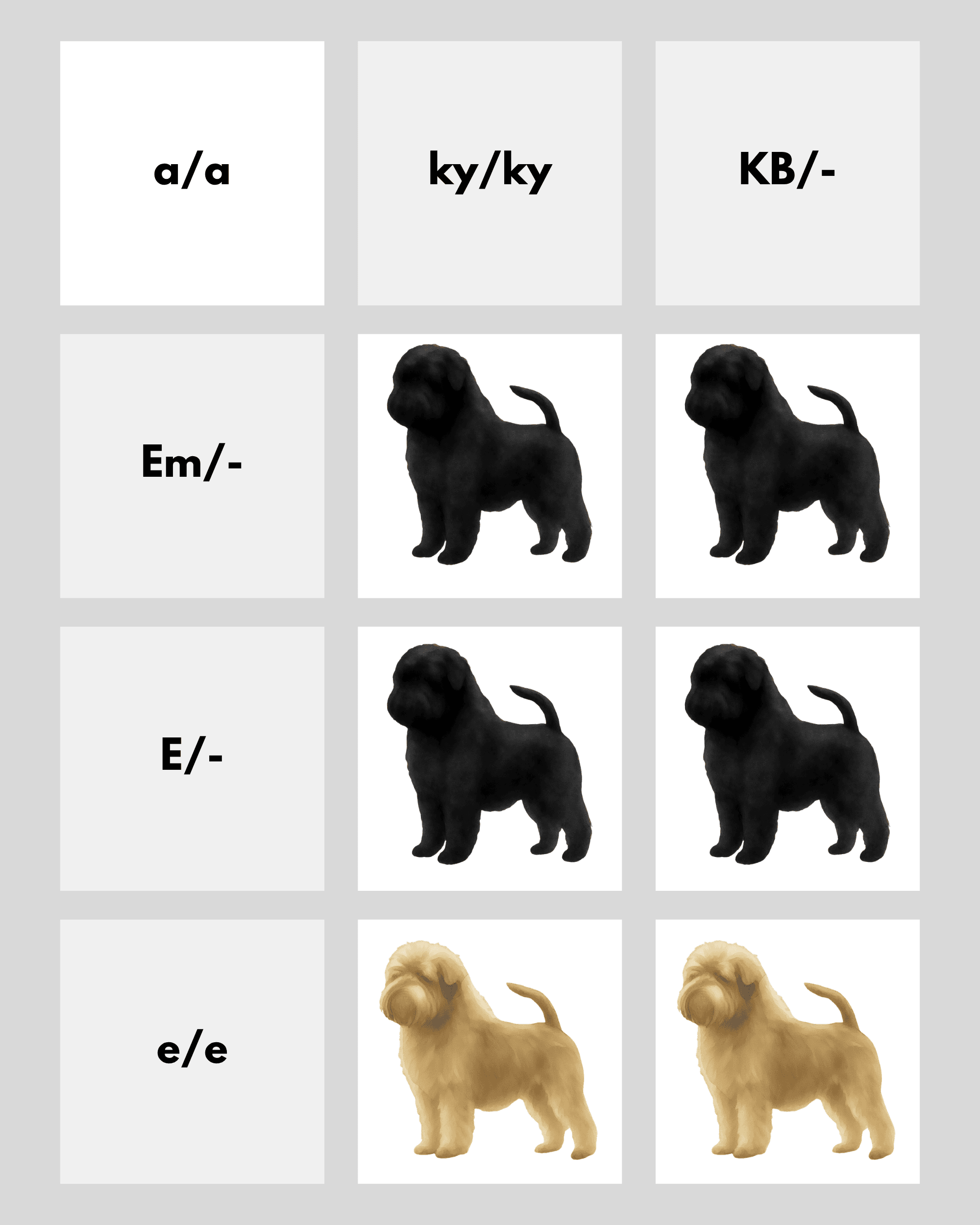
Affenpinscher Base Patterns
The genotypes of Affenpinscher breed standard patterns:
| A LOCUS | K LOCUS | E LOCUS | PATTERN |
|---|---|---|---|
| Ay/Ay | ky/ky | Em/- | sable, mask “red“ |
| Ay/- | ky/ky | Em/- | sable, mask “belge“ |
| Ay/Ay | ky/ky | E/- | sable “red” |
| Ay/- | ky/ky | E/- | sable “belge” |
| at/- | ky/ky | Em/- | tan point, mask “black & tan” |
| at/- | ky/ky | E/- | tan point “black & tan” |
| a/a | ky/ky | Em/-, E/- | recessive black “black” |
| KB/- | Em/-, E/- | dominant black “black” | |
| e/e | recessive red “clear red” |
Base Colors
The base color is determined by the B locus and D locus.
B Locus
Affenpinschers are fixed for black pigment (B/B) at the B locus.
| B | black |
D Locus
The D locus controls color dilution. Affenpinschers are fixed for normal pigment (D/D).
| D | normal |
Affenpinscher Base Colors
The genotypes of possible base colors in the Affenpinscher breed:
| B LOCUS | D LOCUS | COLOR |
|---|---|---|
| B/B | D/D | black |
Graying
Any pattern can be affected by more or less intense progressive graying. This trait can only affect dog breeds with furnishings and causes some black puppies to fade to gray or silver.
| BASE COLOR | GRAYING | GRAYING+++ |
|---|---|---|
black | gray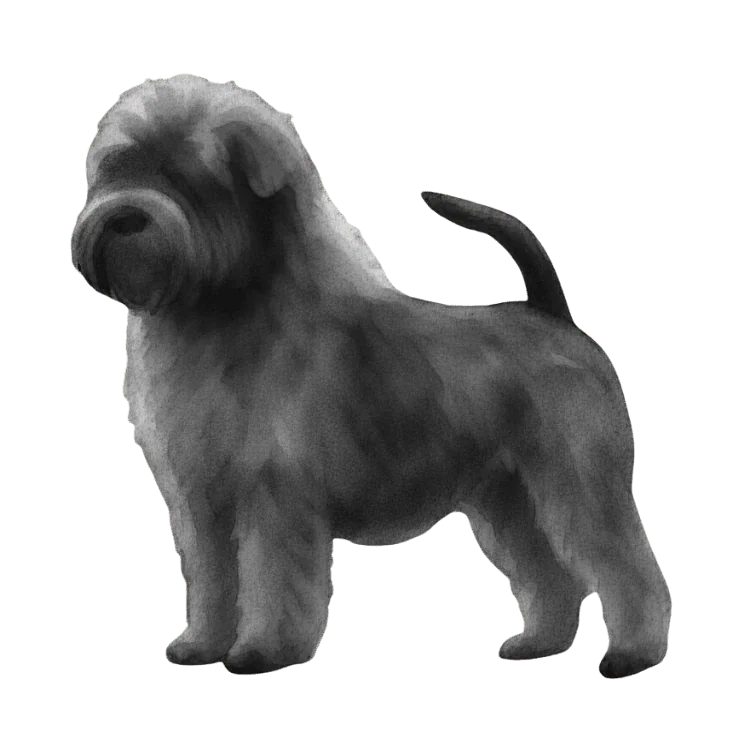 | silver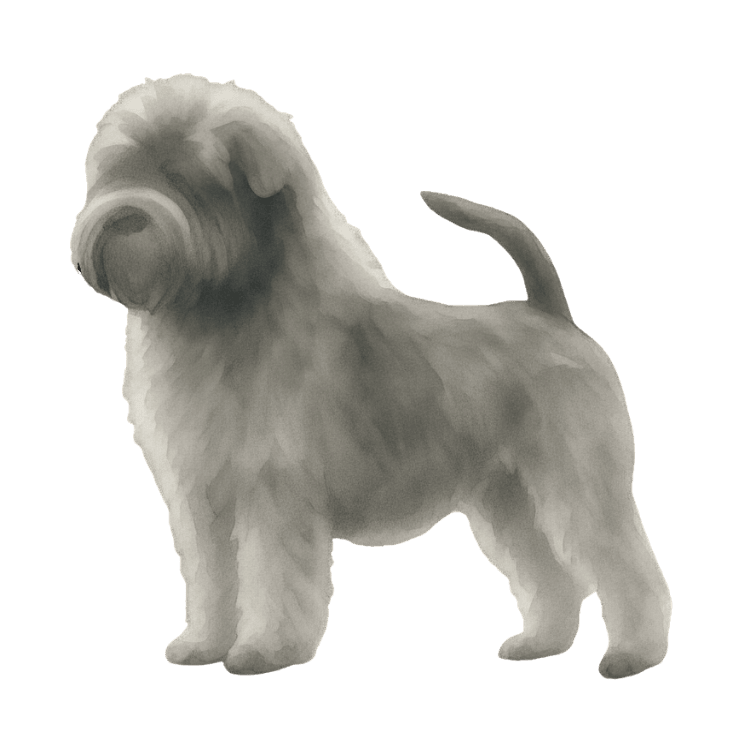 |
Red Intensity
The color intensity of phaeomelanin has a gradient of possible colors between high intensity red and orange colors, to medium intensity yellow and tan colors, to low intensity cream and ivory colors.

The AKC breed standard describes Affenpinscher colors as brownish red or orangey tan[1].
In dog breeds with graying, the red intensity can be affected by more or less intense red color fading. This may cause some red Affenpinscher puppies to turn blonde over time.
White Markings
Different traits can remove pigment from the coat and replace it with white.
Affenpinschers have a solid pattern without white markings (S/S). However, some dogs may still have a small white patch or a thin white line on the chest from residual white.
“A small white spot on the chest is not penalized, but large white patches are undesirable.“
AKC Breed Standard[1]
“Faults: […] white or spotted coat“
FCI Breed Standard[2]
“A small white spot or fine line of white hairs on the chest is not penalized, but large white patches are undesirable.”
CKC Breed Standard[4]
Affenpinscher Eye Colors
Affenpinschers are supposed to have dark brown eyes.
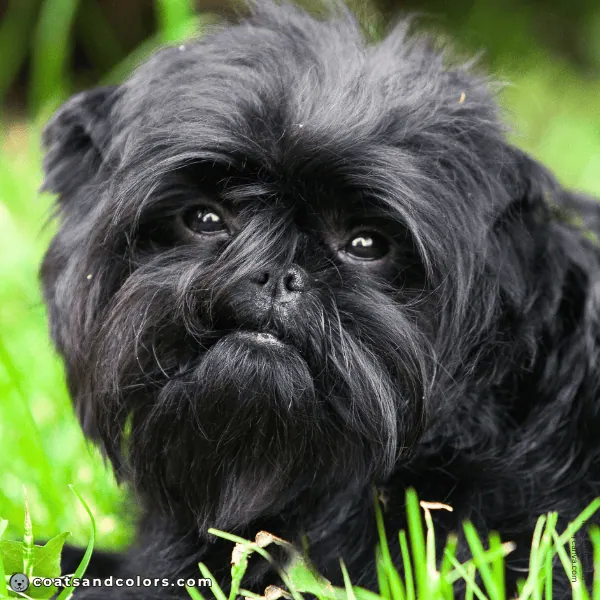
“Round, dark, brilliant, […] Eye rims are black.“
AKC Breed Standard[1]
“Full, round, dark, brilliant, […]”
CKC Breed Standard[4]
“Dark, rather round and full. Black pigmented, close fitting eyelids […]”
FCI Breed Standard[2]
“Round, very dark and sparkling. […]”
RKC Breed Standard[3]
Affenpinscher Nose Colors
Affenpinscher can only have a black nose.
A clear red Affenpinscher is recessive red (e/e), which is often linked to weak nose pigment. The nose on these dogs is still black-pigmented, but may appear brownish or pinkish.
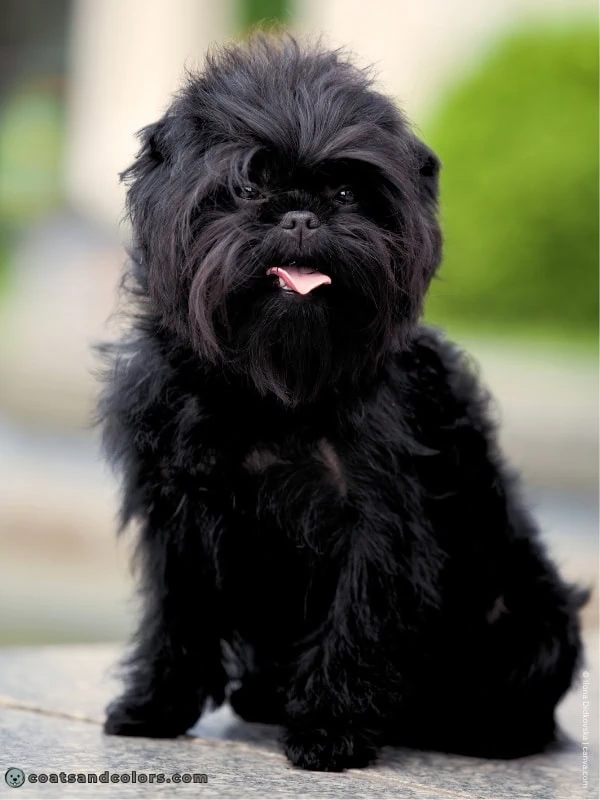
“Black, turned neither up nor down.”
AKC Breed Standard[1]
“Not obviously turned up or down, with black pigmentation.”
CKC Breed Standard[4]
“Noseleather round, full, and black.”
FCI Breed Standard[2]
“Distance between dark eyes and black nose forming an equal sided triangle.”
RKC Breed Standard[3]
Affenpinscher Coat Type
Affenpinschers are wire-haired.

“Dense hair, rough, harsh […] The longer hair on the head, eyebrows and beard stands off and frames the face to emphasize the monkey-like expression.”
AKC Breed Standard[1]
“The hair is dense, rough, harsh textured […], but may be shorter on the rear and tail in contrast to the longer, shaggier and less harsh hair on the head, neck, chest, stomach and legs. At maturity the neck and chest coat may grow longer to form a cape.”
CKC Breed Standard[4]
“The body coat should be harsh and dense. The head is typically adorned by bushy, bristly eyebrows and wreath-like hair surrounding the eyes, by an impressive beard, by the top knot and by the hair on the cheeks. The coat on the head should be as hard, straggly and sticking out as possible. It contributes essentially to the monkey-like general expression”
FCI Breed Standard[2]
“[…] rough and harsh in texture, short and dense on some parts of body and shaggy on others. In particular, longer on shoulders, neck and head where loose shaggy hair stands away from skull framing eyes, nose and chin giving desired monkey-like appearance.”
RKC Breed Standard[3]
The basic hair morphology is determined by hair length and the presence of furnishings or curls. Other factors, like “hair thickness” or the amount of undercoat, can vary within each coat type.
This causes a spectrum of coat types with different degrees of shedding and different coat textures, e.g. thick hair with a stiff and coarse feel, as opposed to fine hair with a silky or cotton-like quality.
Furnished dogs always tend to be low shedders, regardless of their testing result. They also tend to appear slightly curly even without having a curly variant. And the hairs on short-haired dogs typically don’t grow long enough to actually curl, even if they have a curly variant in their genotype.
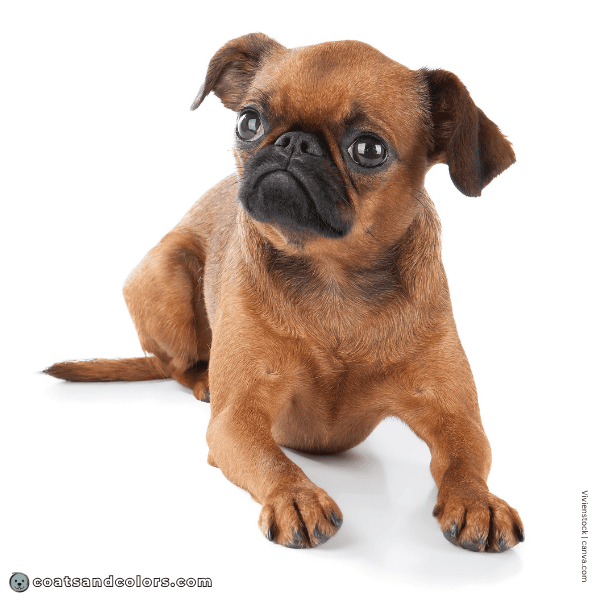
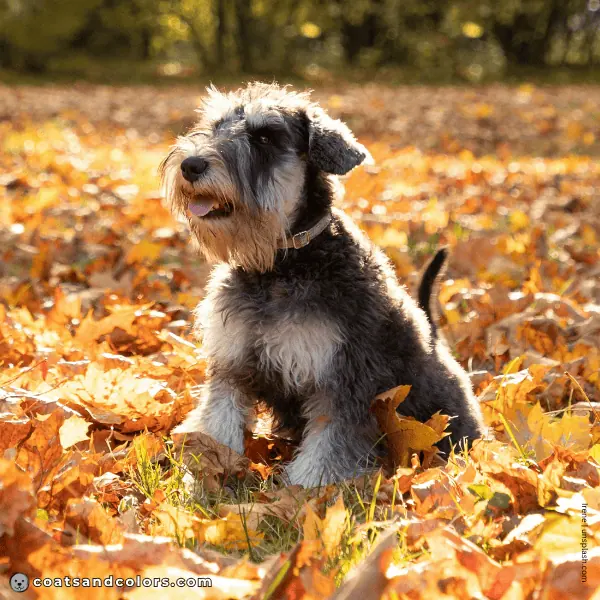
Related Breeds
Learn More

Links
[1] American Kennel Club (AKC): Affenpinscher
[2] Fédération Cynologique Internationale (FCI): Affenpinscher
[3] Royal Kennel Club (RKC): Affenpinscher
[4] Canadian Kennel Club (CKC): Affenpinscher
[5] Dreger et al. (2019). True Colors: Commercially-acquired morphological genotypes reveal hidden allele variation among dog breeds, informing both trait ancestry and breed potential. PLoS ONE 14(10): e0223995. https://doi.org/10.1371/journal.pone.0223995
[6] Showsight Magazine: Acceptable Colors of the Affenpinscher.
[7] W. E. Mason (1915): Dogs of All Nations.
Image Credits
Danylo Harmatiy/unsplash.com
Ekaterina Gorokhova/canva.com
Erik Mclean/unsplash.com
f8grapher/yayimages.com
Grace Anne Bobadilla/unsplash.com
Ihar/yayimages.com
Ilona Didkovska/canva.com
Irene/unsplash.com
Kyle Reynolds/canva.com
Patrick Collins/unsplash.com
Vivienstock/canva.com
Wendi Threlkeld/canva.com
Hi! I’m Steffi. I am a biologist and a big time dog nerd. You are curious about coat color genetics? You’ve come to the right place! Read more.
1 thought on “Affenpinscher Colors”
Comments are closed.