

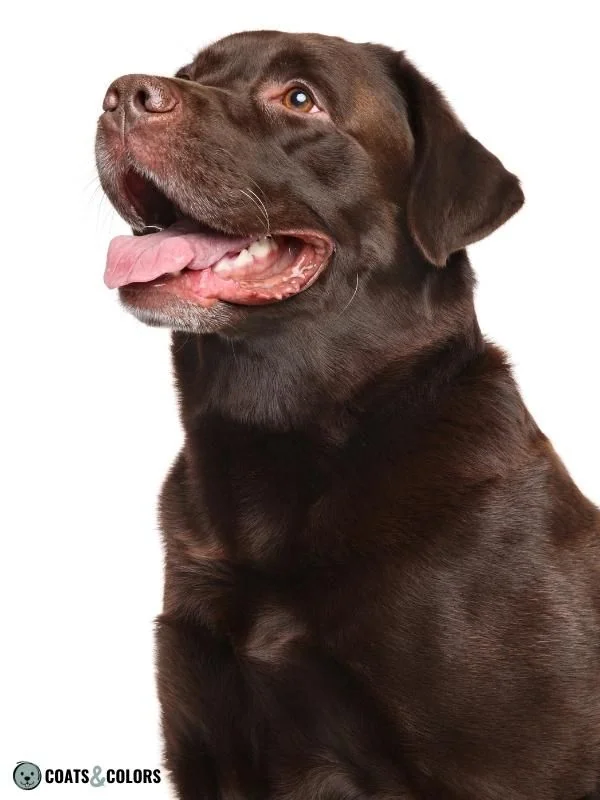
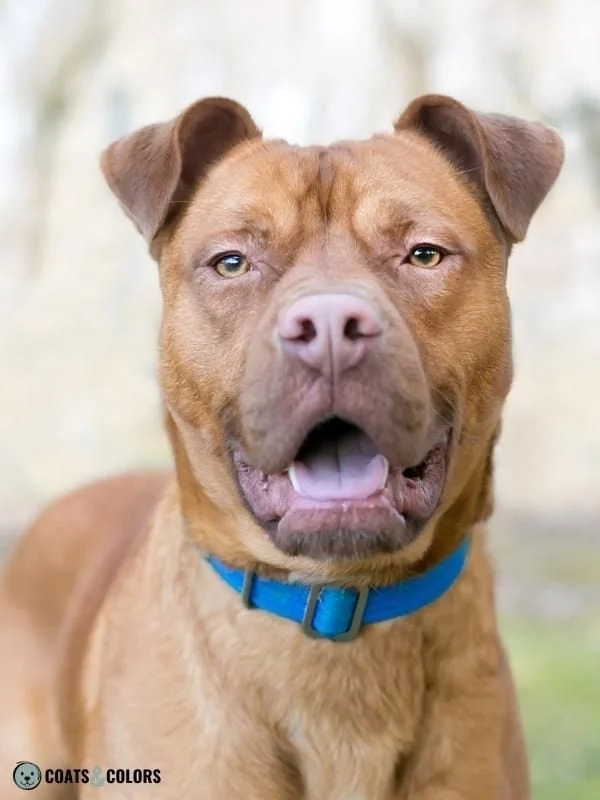
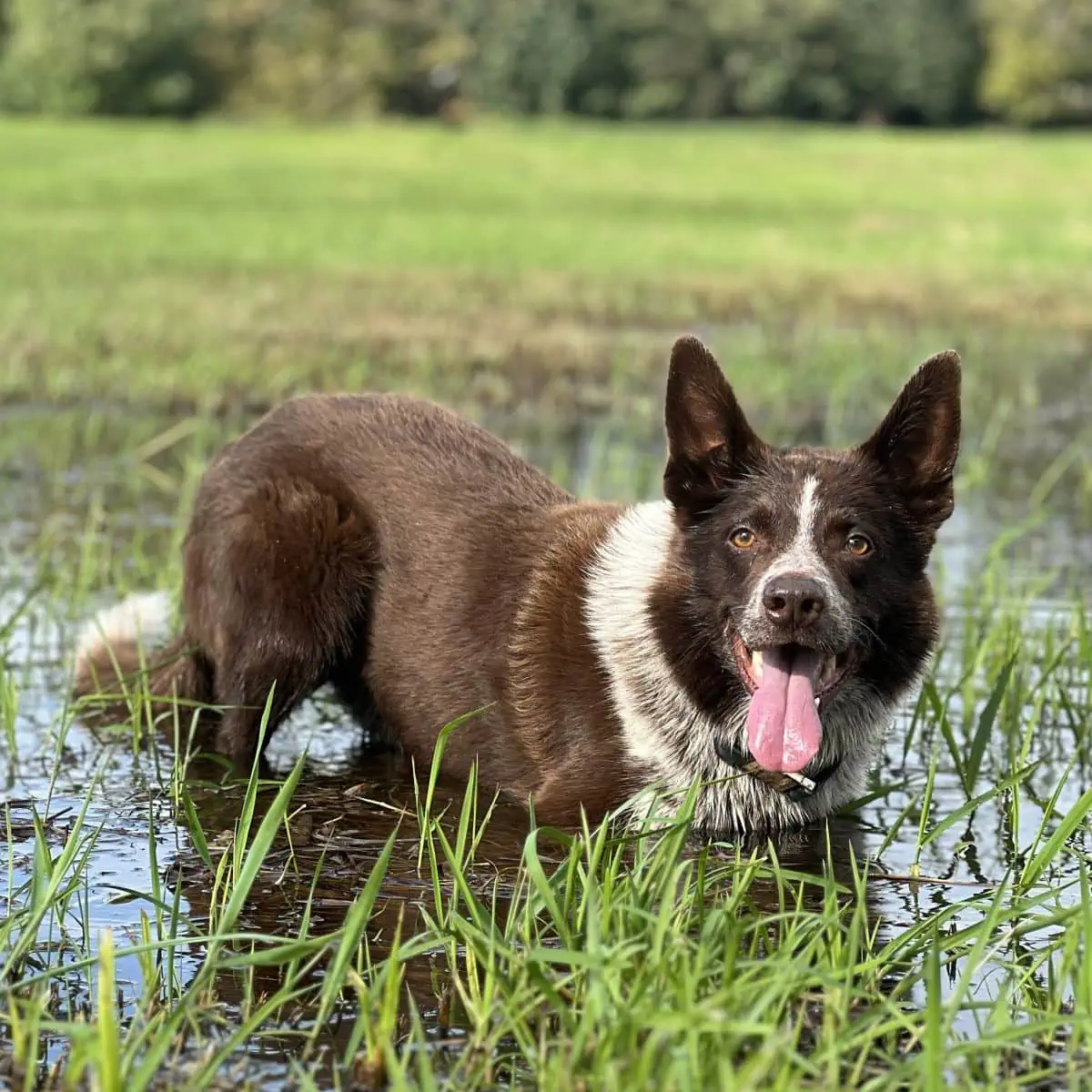
Dogs that are homozygous recessive at the B locus (b/b) will express brown eumelanin. This affects all the dark pigment in a dog’s coat, as well as the color of skin spots, nose, footpads, lips, eye rims, or nails, which will all be brown.
What is Brown Coat Color?
In coat color genetics, “brown” always means eumelanin.
Brown eumelanin is often called liver or chocolate.
In some breeds like Aussies or Border Collies, brown is traditionally called “red“ (e.g. red tri, red merle, etc.). But in color genetics, only phaeomelanin can be a red pigment.
Learn more about pigment types in your dog’s coat.
The B locus only affects eumelanin.
If a dog is b/b at the B locus, all of the black pigment in its pattern will be modified to brown. A dog with b/b will not have any black anywhere in its coat or on its body.
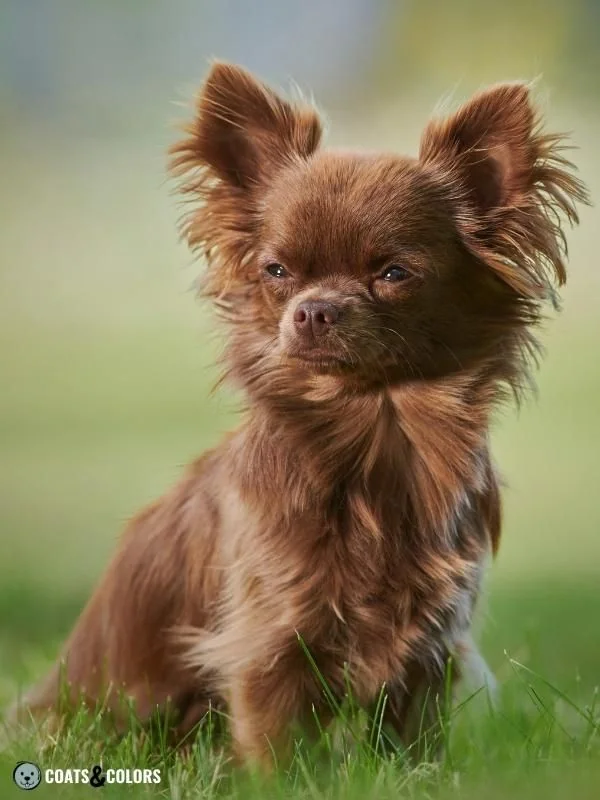
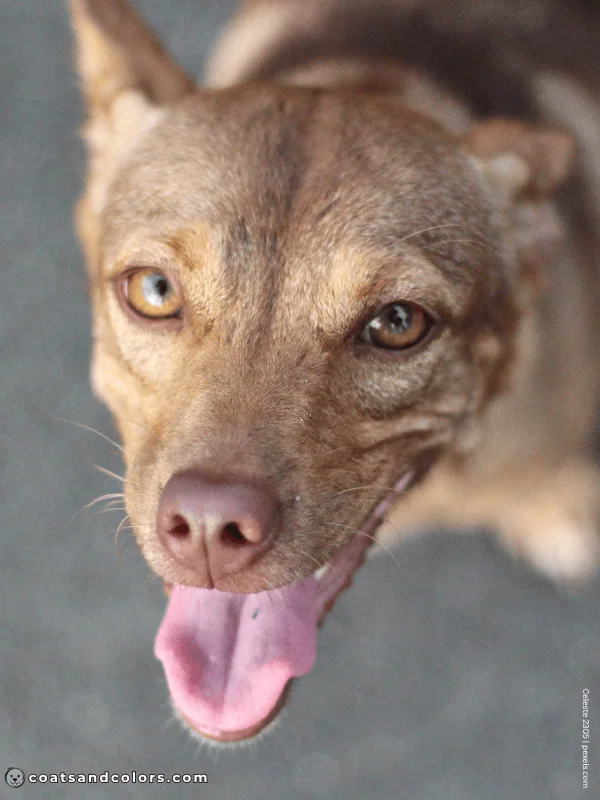
All brown-based patterns come with a brown nose as well as brown lips, gums, eye rims, skin spots, footpads, and nails. Typically, chocolate dogs will also have somewhat lighter eye colors compared to black dogs. But they don’t have to.
The b Allele
Brown is caused by a loss-of-function mutation in the TYRP1 gene (Tyrosinase Related Protein 1) on dog chromosome 11. This mutation interferes with normal eumelanin production.
Melanosomes are large organelles inside of the pigment cells. Think of them as containers, in which pigment gets produced, stored, and then transported into the growing hair. And TYRP1 plays an important role in eumelanin biosynthesis and the maintenance of melanosomes.
Without TYRP1, a dog can’t produce black eumelanin.
When regular eumelanin production is disrupted, the next best pigment color a dog can produce is brown. This alternative pigment structure reflects light differently and appears brown. So technically, liver is not a dilution but a modification of eumelanin.
We know of several mutations that can cause a loss-of-function of TYRP1. But it doesn’t really matter where exactly the TYRP1 DNA sequence is broken. The outcome is always the same (black turns to brown).
We still don’t know all of the mutations that can cause liver pigment. But we currently do know of six different mutations that can break TYRP, which we call ba, bc, bd, bs, be, and bh.
- The alleles bc, bd, bs are common in a variety of different dog breeds[7].
- The bh allele was found in Siberian Huskies[2].
- The be allele was found in Lancashire Heelers[9].
- The ba allele was found in Australian Shepherd Dogs and Miniature American Shepherd Dogs[3,4].
The wild-type B allele is dominant over any recessive b allele:
Expressing Brown
B shows complete dominance over b. A brown carrier with B/b will have black pigment. Brown coat is an autosomal recessive trait and will only be visible in b/b puppies that inherited “b” from both parents.
From a functional standpoint, every b allele is recessive to the wild-type B allele. All of the b variants will produce a brown-pigmented phenotype in any combination, e.g. ba/bc or bd/bs or bd/bd.
This allows us to simply group all b mutations under b (= bc, bd, bs, bh, be, ba).
To actually have brown hairs, a dog must express eumelanin in its coat.
So it can’t be recessive red (these dogs can only produce phaeomelanin). It can also not have too extreme white, which deletes all the color from the coat. But we can always see if a dog produces brown eumelanin by looking at its nose and footpads, where eumelanin is, in many cases, still visible.
B Locus Calculator
This simple tool can help you predict different B Locus combinations:
Brown-Based Patterns
Being b/b will turn all the black eumelanin in any base pattern to brown. But it does not affect phaeomelanin.
Brown can have different shades from a light reddish brown to a very dark chocolate color. The shade of brown can be affected by sun-bleaching, some chocolate dogs look almost orange at the end of summer.
Nose Color & Eye Color
When a dog is brown, this also affects the color of its nose, lips, eye rims, skin, or footpads. All brown-pigmented dogs will also have brown skin spotting.
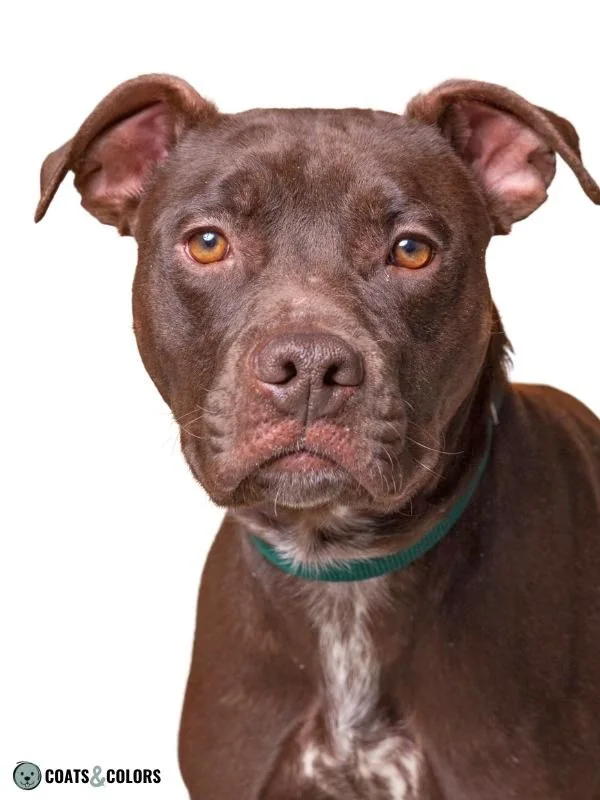
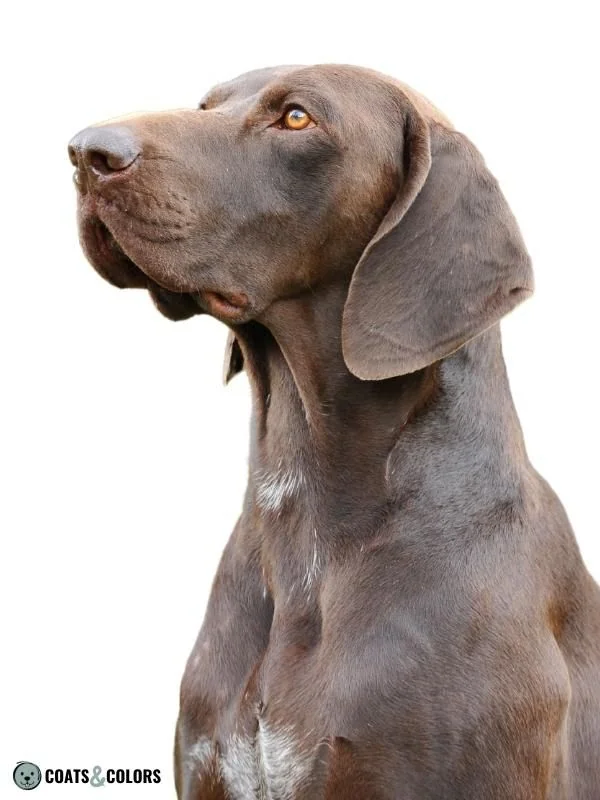
On average, brown dogs will also have a lighter eye color compared to black dogs. Most often, adults have amber or yellow eyes, and brown puppies often have very pale greenish eyes.
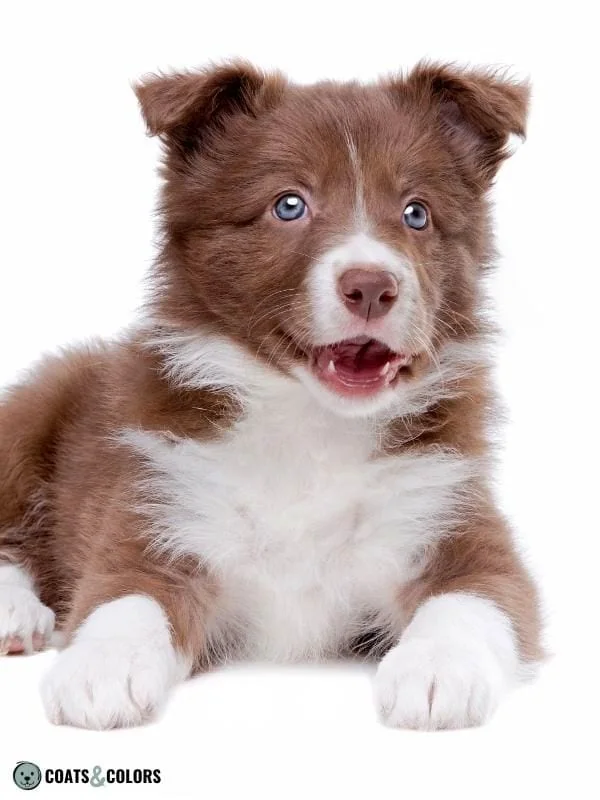
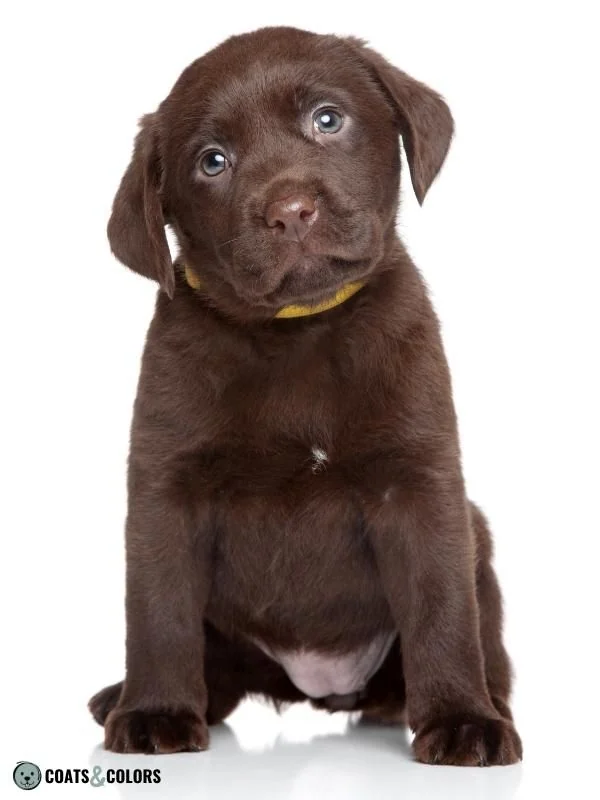
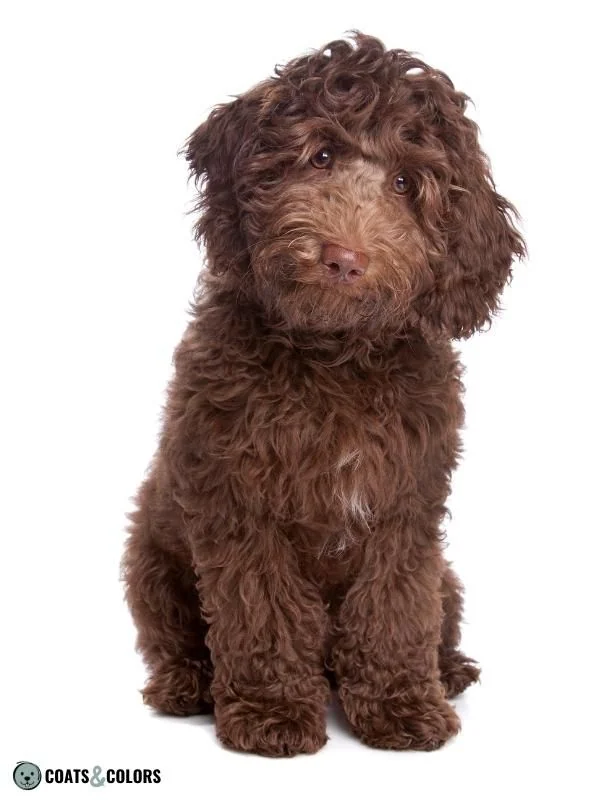
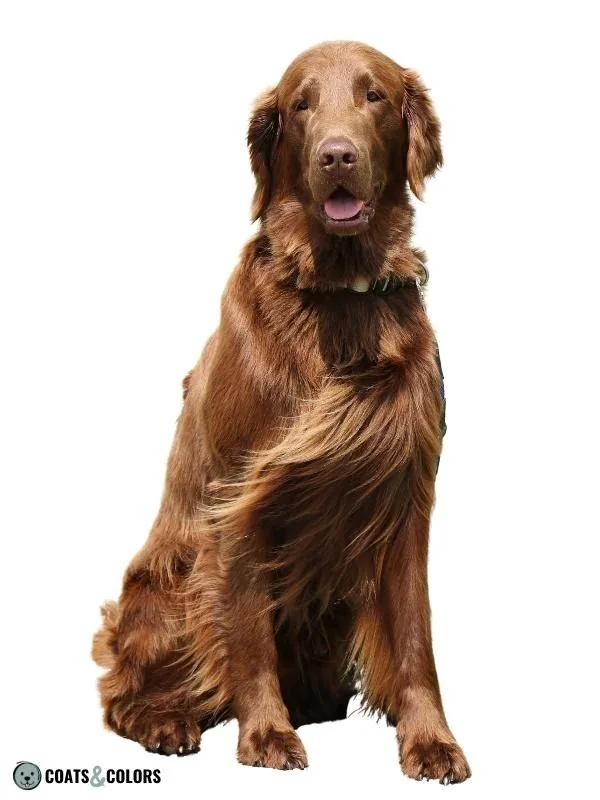
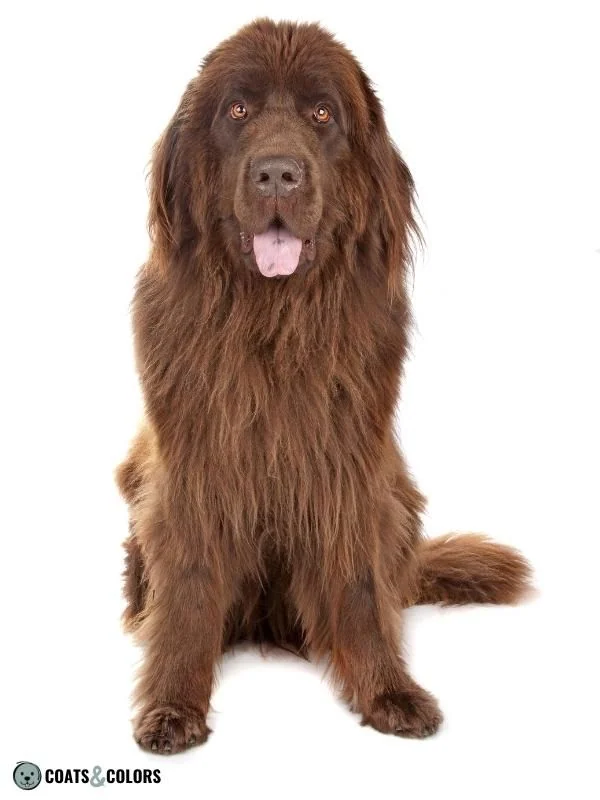
Solid Chocolate
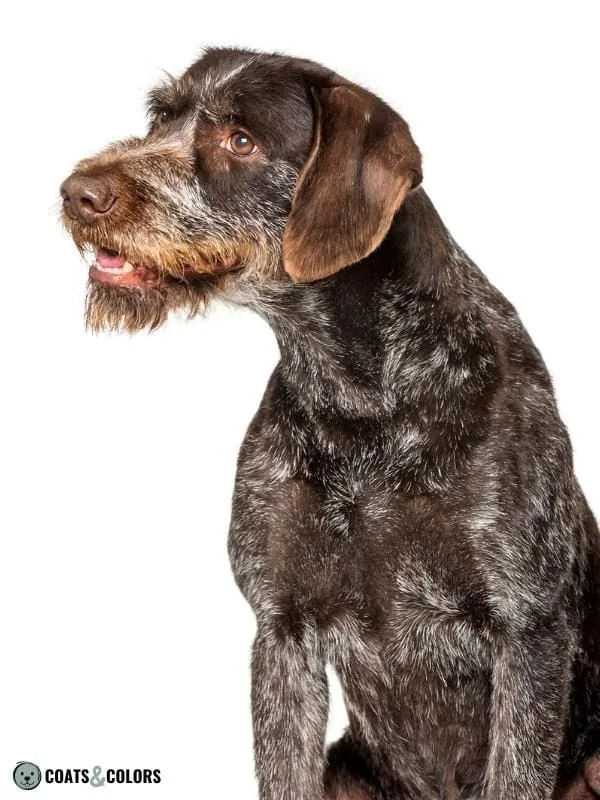
Very many dog breeds have a solid liver coat. Think of Labradors, Newfoundlands, German Shorthaired Pointers, Cocker Spaniels, or Poodles.
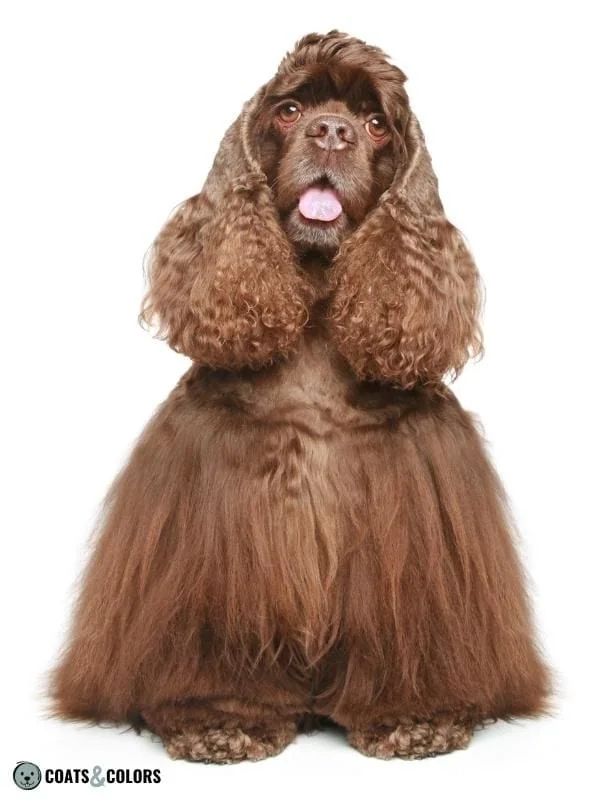
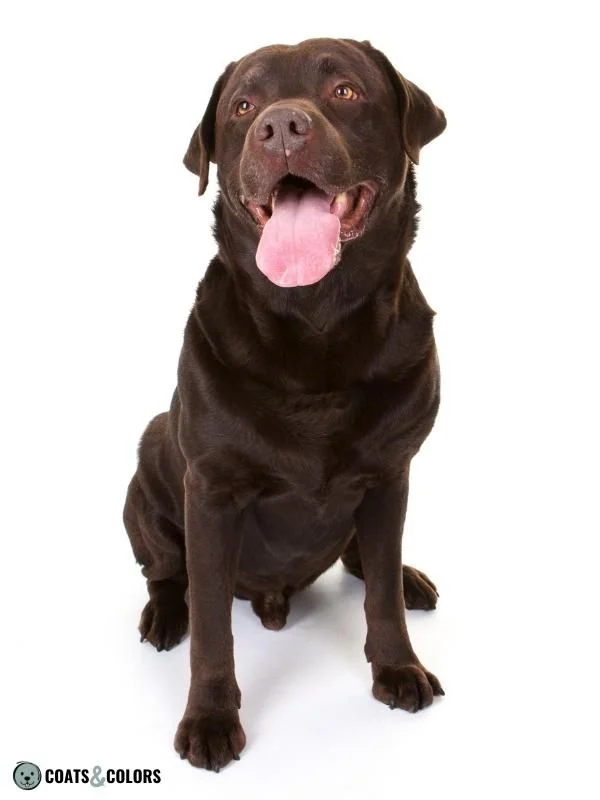
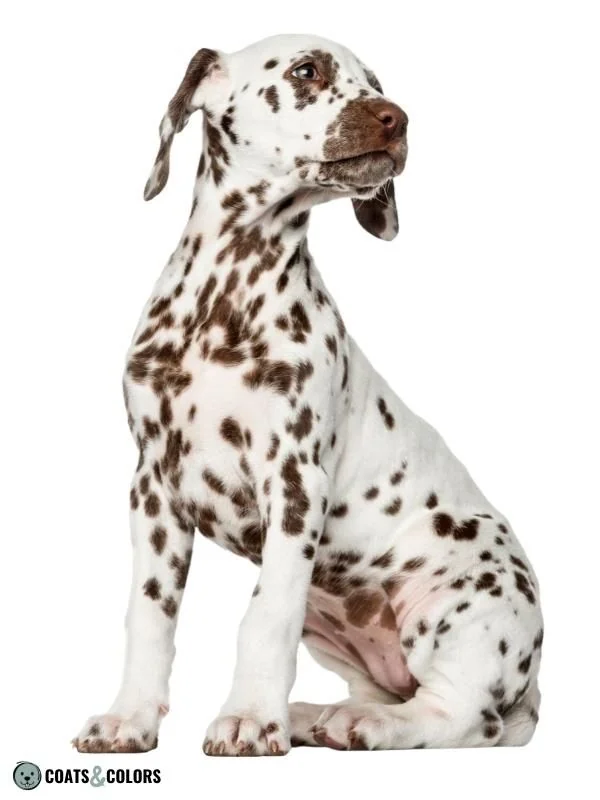
Chocolate & White
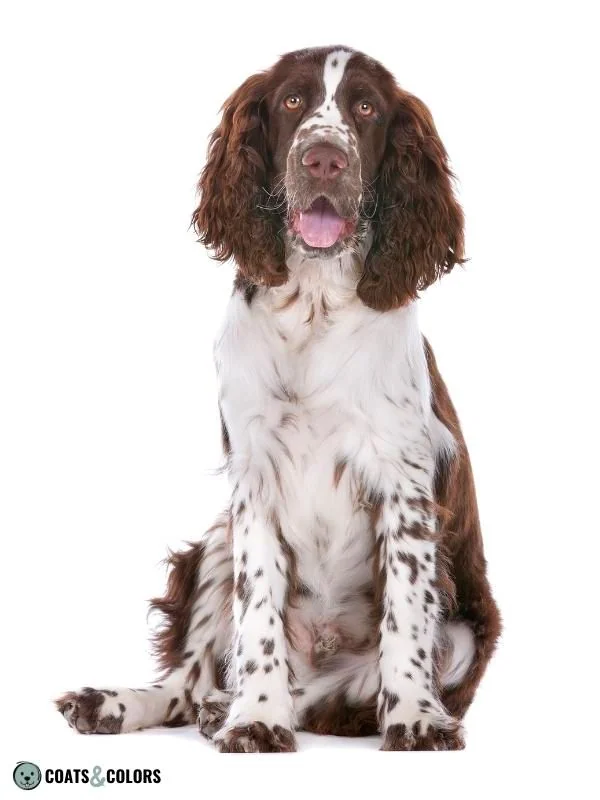
White markings can delete some of a dog’s original coat color. Some brown & white dog breeds have ticking or roan, which can fill in some of the missing color.
Chocolate-Based Red
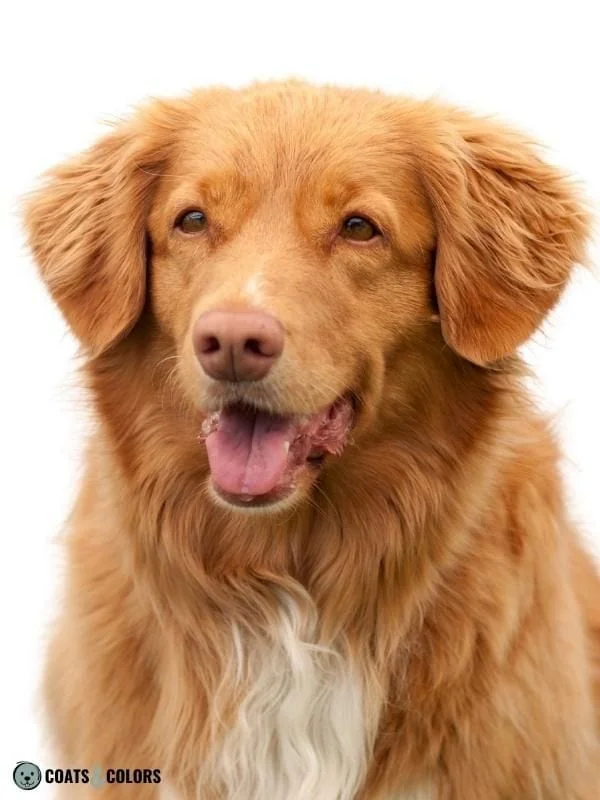
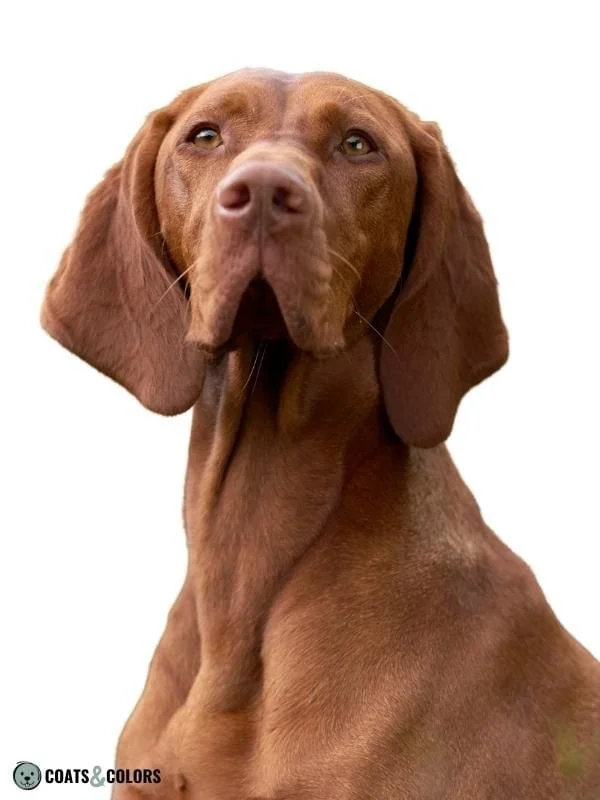
Dogs with a solid red coat (recessive red) can have a brown nose.
Example breeds for a brown-based recessive red phenotype are Duck Tolling Retriever, Ibizan Hound, or Vizsla.
And even cream or white dogs like Labrador Retrievers (they call it “Dudley”) or Poodles can have a brown nose (although most breed clubs consider these off-colors).
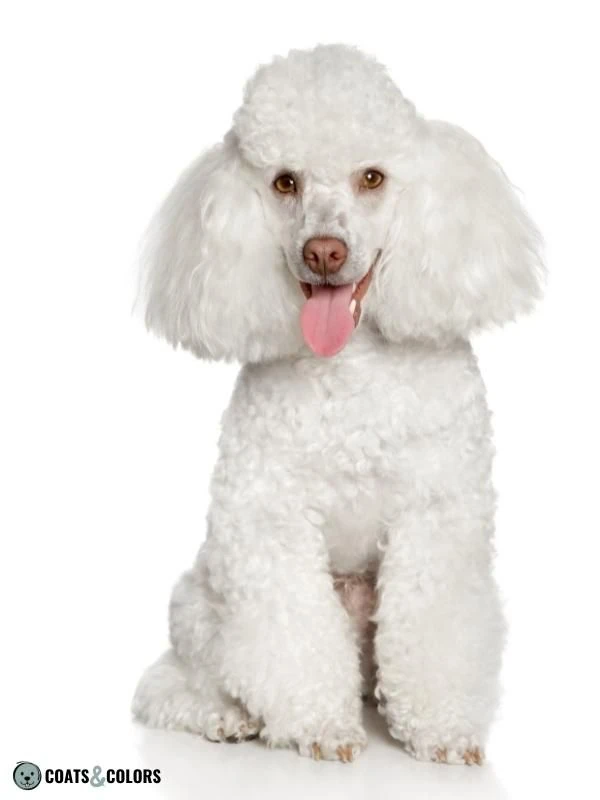
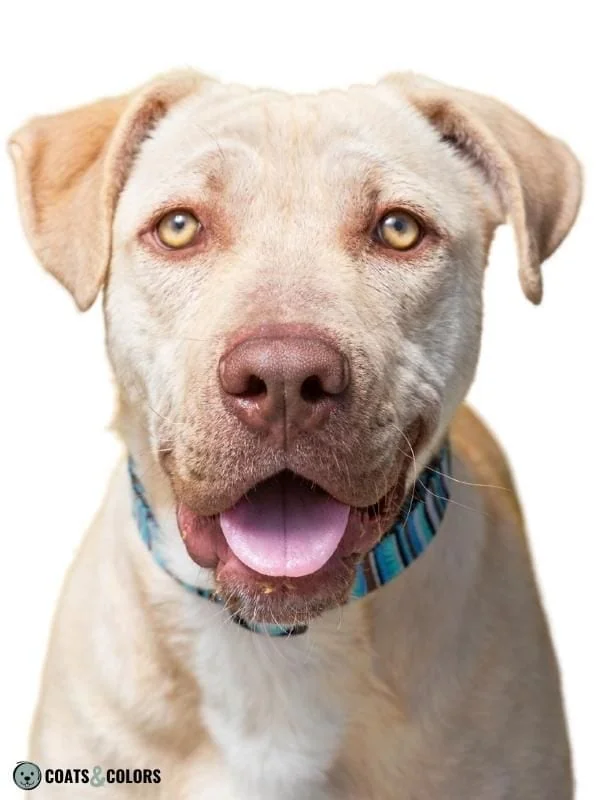
Chocolate Fawn
A clear sable usually has too little eumelanin to see brown pigment, especially against a red base. But a heavily shaded sable dog can have a lot of brown hair tips.
The chocolate fawn pattern is common in French Mastiffs and can happen in Chihuahuas, Border Collies, Dachshunds, or Rhodesian Ridgebacks.
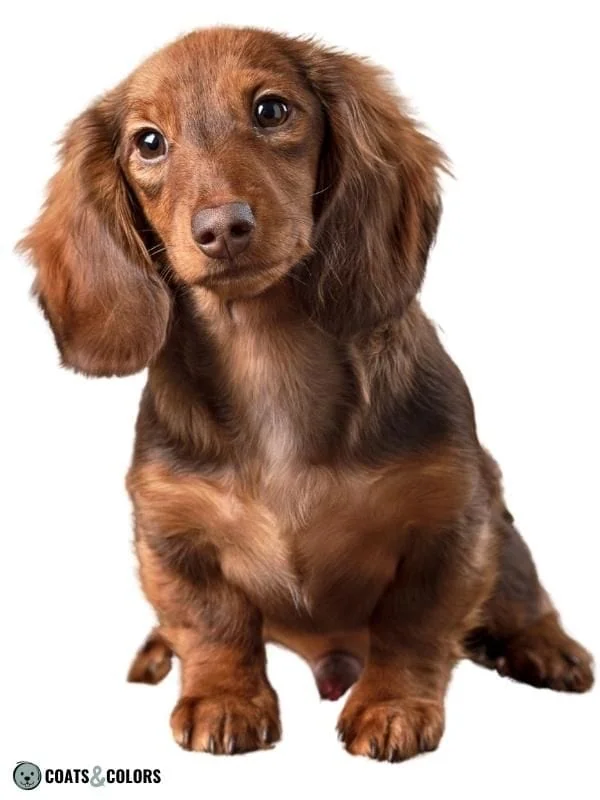
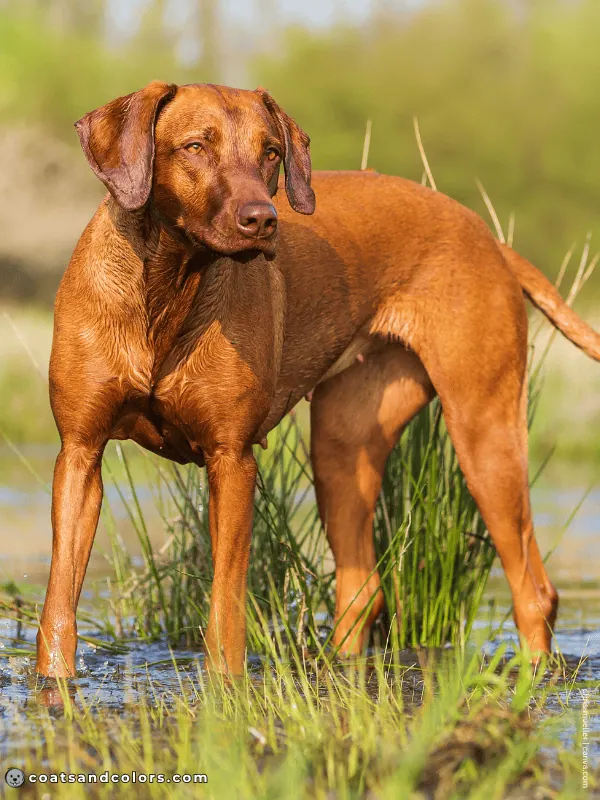
Chocolate Agouti
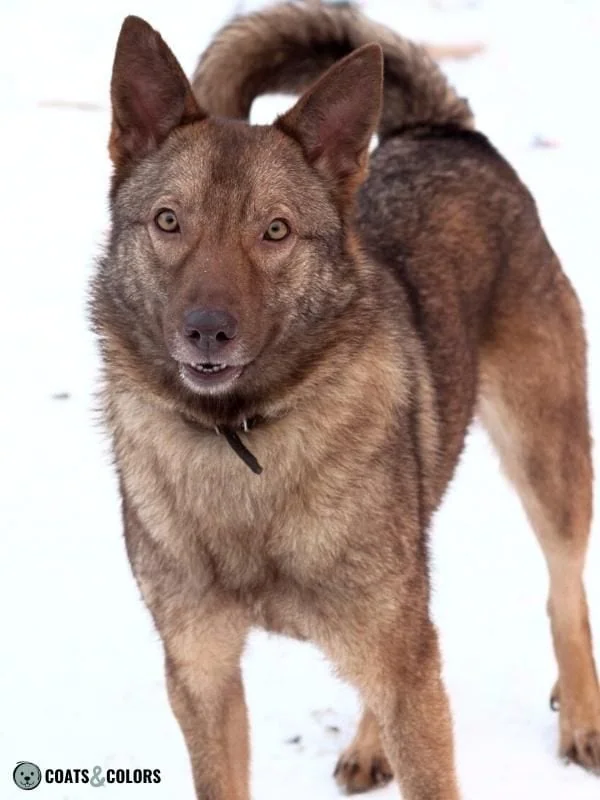
Agouti causes ventral tan markings and banded dorsal hairs. This happens by alternating between eumelanin and phaeomelanin bands during active hair growth.
Liver Agouti is not a common combination but can be found in some liver-colored GSD or Siberian Huskies. It also happens in “wild boar” Dachshunds with brown eumelanin.

Chocolate Saddle
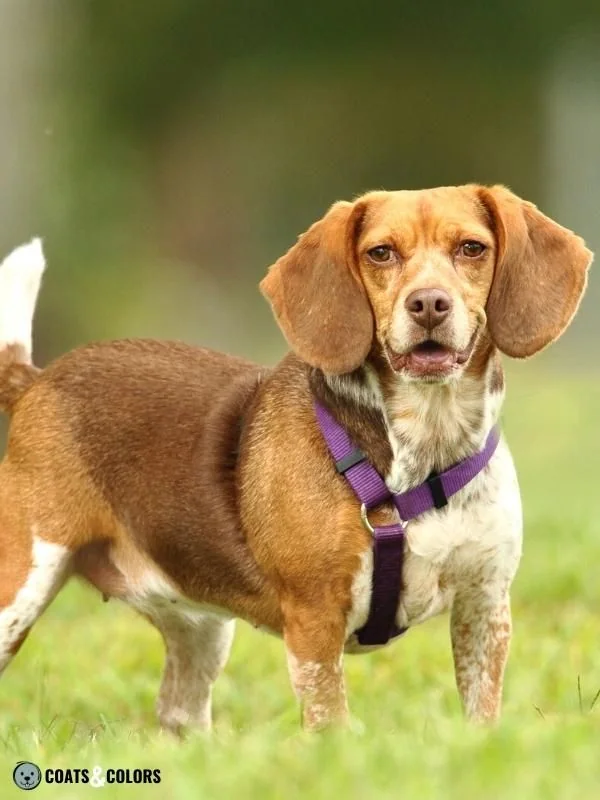
In dogs with a saddle pattern, the dark saddle will be brown. These dogs will be born with a tan point pattern, the tan markings then expand til there is only some eumelanin left on the back.
Dogs with a brown saddle pattern are sometimes found in liver-colored German Shepherd Dogs, Otterhounds, Beagles, or Bloodhounds.
Chocolate & Tan
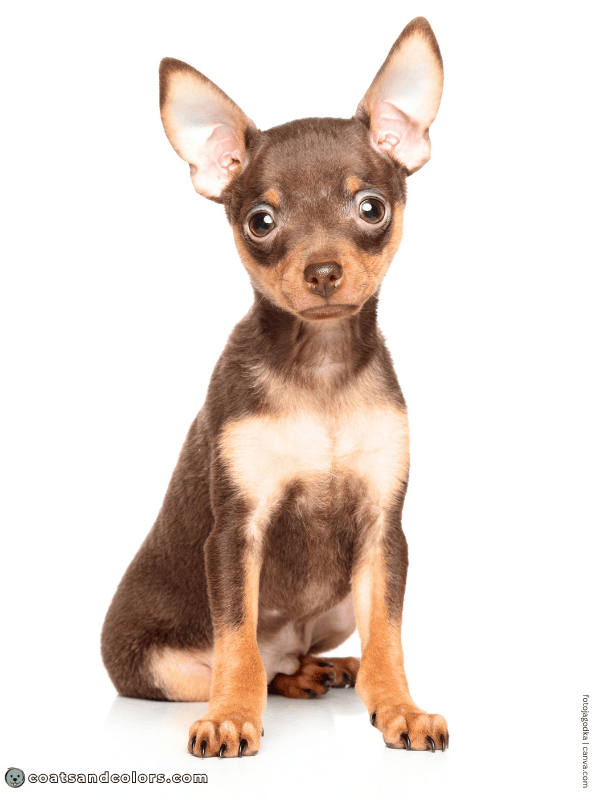
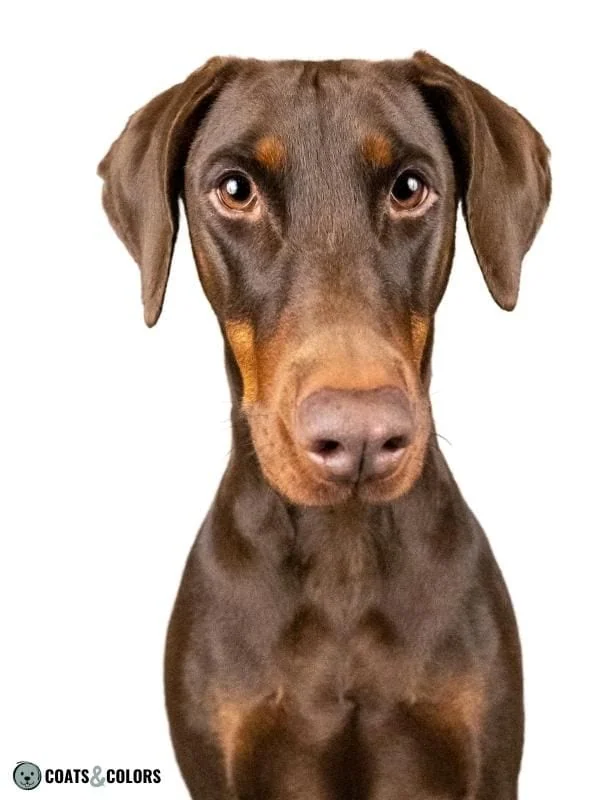
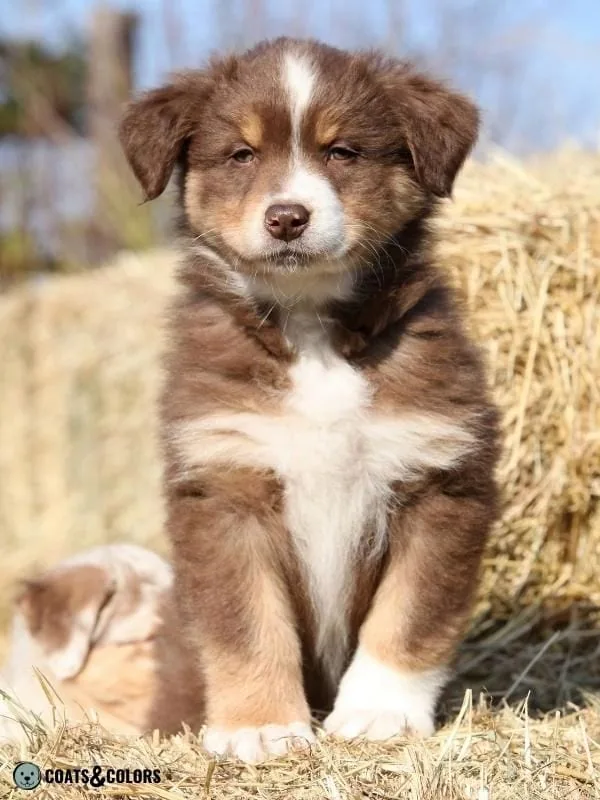
Dogs with a tan point pattern have a solid dark coat on their back and ventral phaeomelanin markings. In brown dogs, the dark areas will be liver while the tan markings are not affected.
Dogs with tan points and white are commonly called “tricolor” (“brown tri”, “red tri”).
Chocolate Brindle
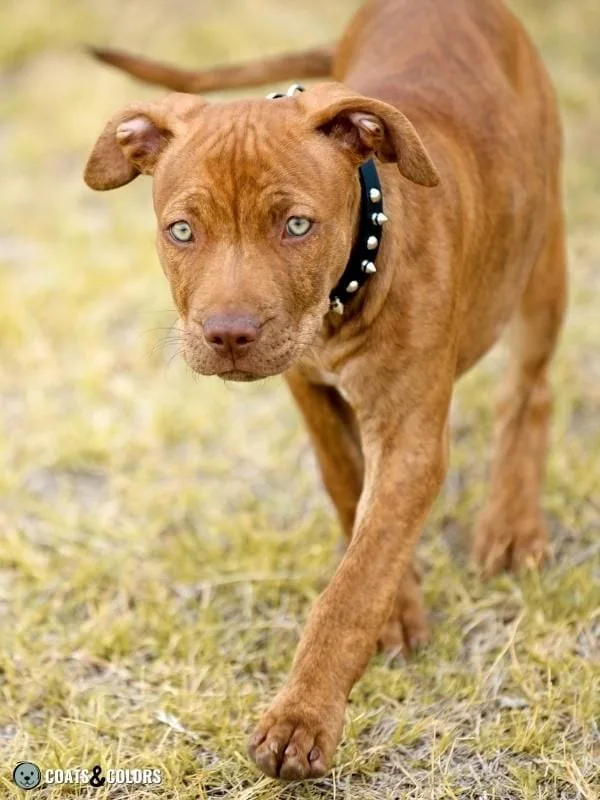
Brindle causes stripes of eumelanin on top of all phaeomelanin in a dog’s pattern.
If a dog has brown pigment, all its brindle striping will be brown.
Chocolate Masks
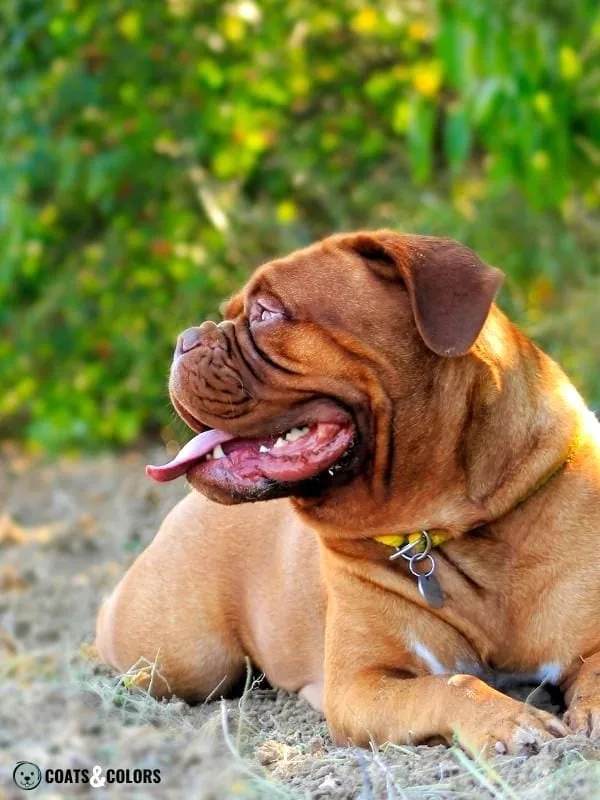
Melanistic Masks add some eumelanin to a dog’s muzzle. Of course, if a dog produces liver-colored pigment, the dark mask will also be brown.
Chocolate Merle
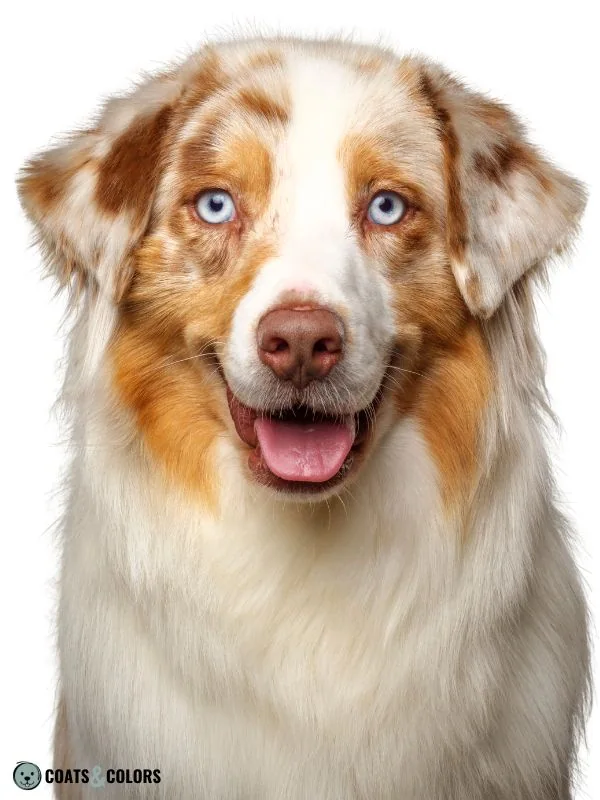
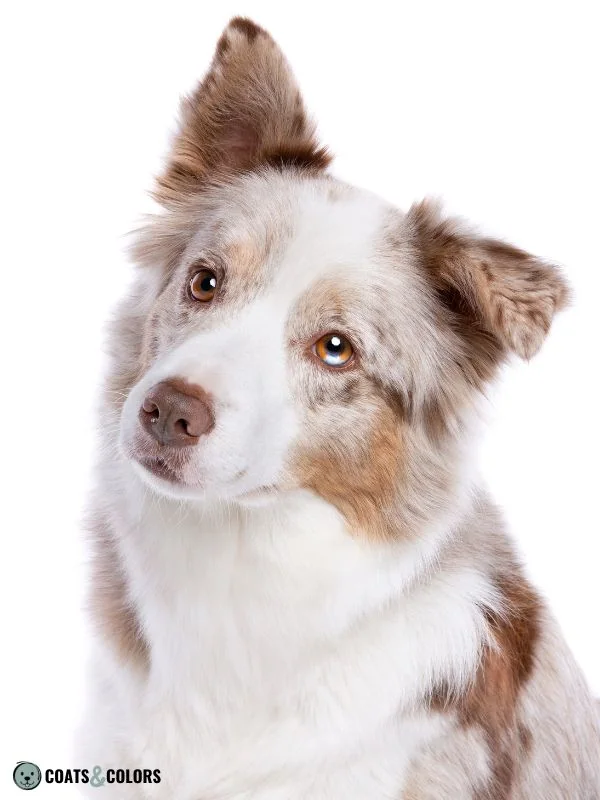
Classic merle deletes some eumelanin in random areas. Many herding breeds call a combination of merle and liver a “red merle,” although the dogs are brown and not red.
Merle creates a marbled pattern with patches of lighter and darker shades of brown. It most often does not affect phaeomelanin, e.g. in a brown merle & tan pattern, the tan points will keep their original color and only the brown areas will be affected by merle.
Diluted Brown
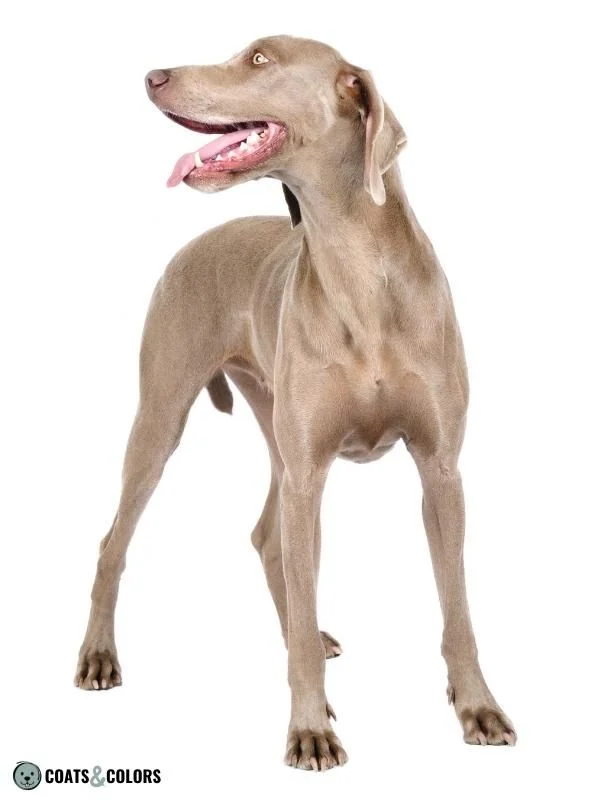
Color dilution at the D locus can turn brown to lilac (this goes by different names such as isabella, lavender, etc.). Diluted brown usually looks like a silvery mousy-brownish color.
Isabella occurs in some breeds such as Weimaraner or Slovak Rough-Haired Pointer which are all b/b d/d. Diluted brown has also been introduced in a range of color-bred bully-type dogs.
Chocolate and Graying
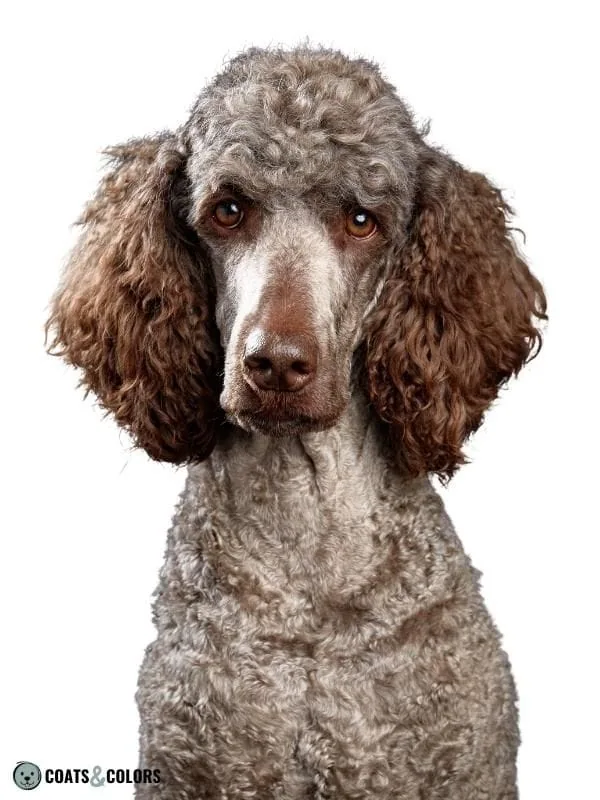
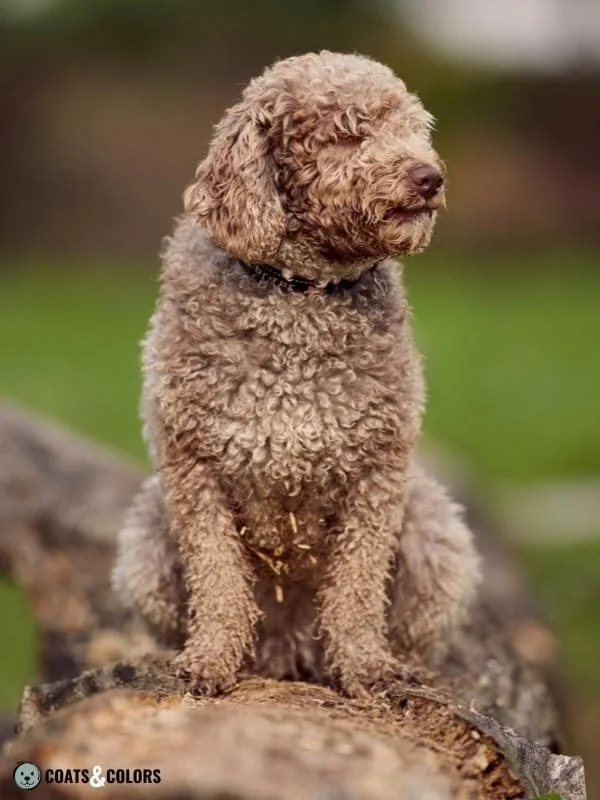
In some furnished breeds, the brown pigment fades to a beige color. Typical breeds with brown and progressive graying are Poodle, Bearded Collie, Lagotto Romagnolo, or Spanish Water Dog.
Chocolate Domino
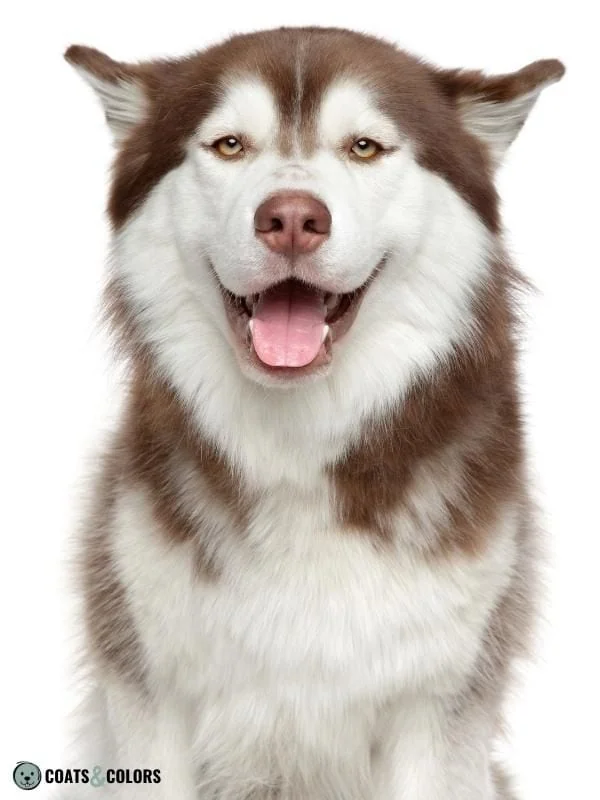
Domino restricts eumelanin production and and reduces brown pigment in any pattern.
This can be observed in some Northern breeds that also come in brown, e.g. Siberian Huskies and Alaskan Malamutes, which are often liver agouti domino or liver tan point domino.
Brown Look-Alikes
Not every dog that looks brownish really produces brown eumelanin.
- One notable exception is cocoa in French Bulldogs. Cocoa is a dark brown color and is caused by a mutation in a completely different gene (HPS3).
- Black-based dogs with a seal coloration (“ghost sable” in KB/- Ay/- dogs with incomplete dominant black) can have a very coppery look about them. But their nose pigment will obviously still be black.
- A sun-bleached coat on a black dog can also have red or brown shades. But affected dogs will still mainly have black pigment visible in some areas.
- Recessive red dogs with very rich pigment like Irish Setters can almost look like a lighter chocolate-colored dog. The faded black nose in e/e dogs can also look brownish.
- In one family of German Spitz, a mutation in the OCA2 gene caused a form of albinism with a light brown coat.
Dog Breeds with Brown Eumelanin
Many dog breeds accept brown-based patterns as standard colors. But brown is not present in many older or primitive breeds, it is rare in Asian spitz-type dogs, mastiffs, or sighthounds.
Here are some examples of dog breeds with brown pigment:
- Alaskan Malamute
- American Cocker Spaniel
- Australian Kelpie
- Australian Shepherd
- Bearded Collie
- Bloodhound
- Border Collie
- Boykin Spaniel
- Bracco Italiano
- Brittany
- Catahoula Leopard Dog
- Chesapeake Bay Retriever
- Chihuahua
- Dachshund
- Dalmatian
- English Cocker Spaniel
- English Springer Spaniel
- Field Spaniel
- Finnish Lapphund
- Flat Coated Retriever
- German Shorthaired Pointer
- German Spitz
- German Wirehaired Pointer
- Irish Water Spaniel
- Koolie
- Labrador Retriever
- Lagotto Romagnolo
- Lancashire Heeler
- Large Munsterlander
- Neapolitan Mastiff
- Newfoundland
- Otterhound
- Pointer
- Pomeranian
- Poodle
- Portuguese Water Dog
- Rhodesian Ridgeback
- Shar Pei
- Siberian Husky
- Spanish Water Dog
- Sussex Spaniel
- Wirehaired Pointing Griffon
B Locus Testing
When choosing a company to test a dog’s B locus, you should keep in mind that there are different b variants and not every company tests for all of them. A dog that looks brown but tests as black (B/b or B/B) likely has a b mutation this company couldn’t test for.
As said above, a dog will express brown eumelanin whenever it inherited a b allele from both parents and has a b/b genotype. It doesn’t matter which combination of b alleles it has (e.g. bs/bd)
Sometimes, different mutations that cause b can be found inside the same gene.
So there are some compound alleles like bc+d where the TYRP1 gene is broken in more than one place at the same time. This can be a source of confusion when testing a dog.
For example, a dog that is B/bc+d is technically B/b since it has one normal wild-type B and one (double-)broken recessive b. But testing will find both mutations (bc+bd) and will report such a dog as b/b! A dog that looks black but tests as brown is likely a compound heterozygote with B/b*+*.
Learn More

Links
[1] Schmutz, S., Berryere, T. & Goldfinch, A. TYRP1 and MC1R genotypes and their effects on coat color in dogs. Mamm Genome 13, 380–387 (2002). https://doi.org/10.1007/s00335-001-2147-2
[2] Van Buren SL, Mickelson JR, Minor KM. A novel TYRP1 mutation associated with brown coat color in Siberian huskies. Anim Genet. 2021 Apr;52(2):245-246. Epub 2021 Jan 9. PMID: 33421162. https://doi.org/10.1111/age.13037
[3] Jancuskova T, Langevin M, Pekova S. TYRP1:c.555T>G is a recurrent mutation found in Australian Shepherd and Miniature American Shepherd dogs. Anim Genet. 2018 Oct;49(5):500-501. 12709. Epub 2018 Aug 14. PMID: 30109695. https://doi.org/10.1111/age.12709
[4] Hrckova Turnova E, Majchrakova Z, Bielikova M, Soltys K, Turna J, Dudas A. A novel mutation in the TYRP1 gene associated with brown coat colour in the Australian Shepherd Dog Breed. Anim Genet. 2017 Oct;48(5):626. Epub 2017 May 12. PMID: 28497851. https://doi.org/10.1111/age.12563
[5] Monteagudo LV, Tejedor MT. The b(c) allele of TYRP1 is causative for the recessive brown (liver) colour in German Shepherd dogs. Anim Genet. 2015 Oct;46(5):588-9. Epub 2015 Sep 15. PMID: 26370740. https://doi.org/10.1111/age.12337
[6] Letko A, Drögemüller C. Two brown coat colour-associated TYRP1 variants (bc and bd ) occur in Leonberger dogs. Anim Genet. 2017 Dec;48(6):732-733. Epub 2017 Oct 5. PMID: 28983931. https://doi.org/10.1111/age.12612
[7] Anderson, H., Honkanen, L., Ruotanen, P. et al. Comprehensive genetic testing combined with citizen science reveals a recently characterized ancient MC1R mutation associated with partial recessive red phenotypes in dog. Canine Genet Epidemiol 7, 16 (2020). https://doi.org/10.1186/s40575-020-00095-7
[8] Cargill, E.J., Famula, T.R., Schnabel, R.D. et al. The color of a Dalmatian’s spots: Linkage evidence to support the TYRP1gene. BMC Vet Res 1, 1 (2005). https://doi.org/10.1186/1746-6148-1-1
[9] Wright, H.E., Schofield, E., Mellersh, C.S., Burmeister, L.M., Wright, H.E., Schofield, E., Mellersh, C.S., Burmeister, L.M. : A novel TYRP1 variant is associated with liver and tan coat colour in Lancashire Heelers. Anim Genet :, 2019. Pubmed reference: 31468558. http://dx.doi.org/10.1111/age.12839
Image Credits
chris-mueller/canva.com
fotojagodka/canva.com
Celeste 2305/pexels.com
Hi! I’m Steffi. I am a biologist and a big time dog nerd. You are curious about coat color genetics? You’ve come to the right place! Read more.
1 thought on “B Locus – Black vs Brown”
Comments are closed.