
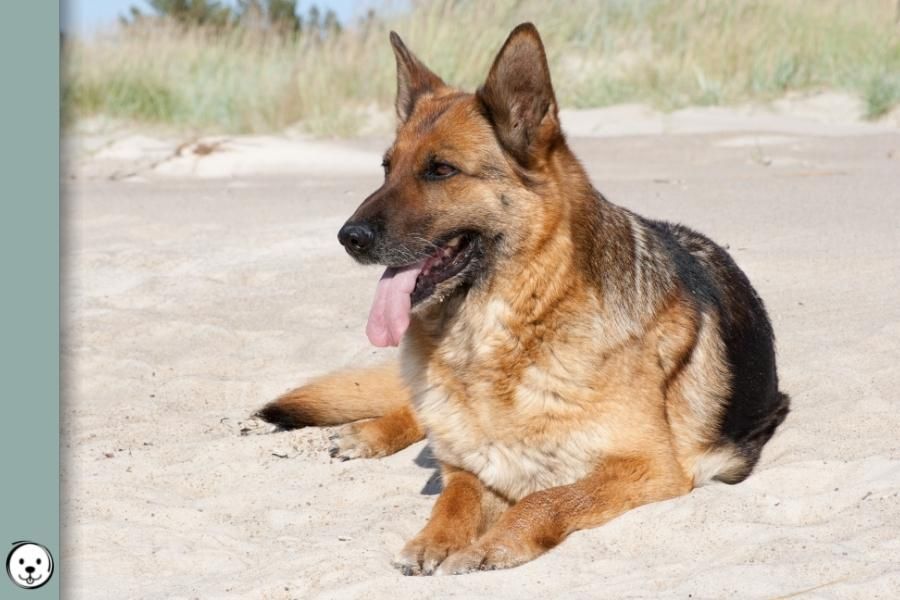
Dogs with a black saddle are tan with a patch of dark hairs on their back. Dogs with a saddle pattern are born with a dark overlay, their tan markings will expand over time.
What Is A Saddle Pattern?
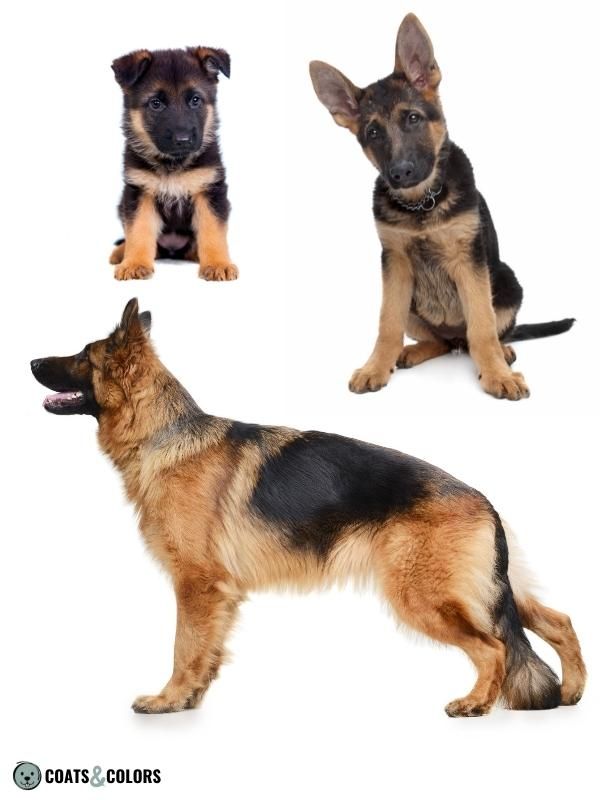
Some puppies that look black-and-tan at birth can change quite a bit during their first months. Their tan markings extend to a point where only a black saddle is left.
Until a few years ago, a black saddle pattern was considered a modified version of the tan point pattern[2]. But testing for the RALY locus ( the supposed tan point modifier) could only predict the saddle in some breeds. While some companies still offer RALY testing, the RALY gene has been debunked as the cause of the saddle pattern. The RALY test has been rendered obsolete by more recent research.
Saddles have been found as a distinct pattern at the A locus. Newer testing can now predict if a black-and-tan-looking puppy will develop a creeping tan or saddle tan pattern.

The ASIPBS allele (asa)
The A locus promotes phaeomelanin production in a variety of different patterns.
The ASIP gene patterns control the distribution of yellow and black pigment in the coat. Dogs have to be able to produce both pigment types. This means a patterned dog can not be dominant black (KB/- causes solid black) at the K locus, and neither recessive red (e/e causes solid yellow) at the E locus.
Legacy testing could only distinguish between a few of the A locus alleles, namely Ay (sable) > aw (agouti) >at (tan point) >a (recessive black). This test explained most patterns, but not all of them. One of its shortcomings was that it could not tell apart tan point from saddle, both patterns tested as at/-.
A newer approach to A locus testing can now distinguish between six different variants:
| ASIPDY | Ay | Dominant Yellow, Clear Sable |
| ASIPSY | Ays | Shaded Yellow, Shaded Sable |
| ASIPAG | aw | Agouti, Wolf Grey |
| ASIPBS | asa | Black Saddle |
| ASIPBB | at | Black Back, Tan Point |
| ASIPa | a | Recessive Black |
This means: Black saddle (asa) has been confirmed as its own A locus allele. It is recessive to clear sable, shaded sable, and agouti. It is dominant over tan point and recessive black.
A saddle pattern is caused by a particular combination of two promoters next to the ASIP gene:
ASIP causes yellow pigment. And the promoters can increase or decrease how much ASIP will be produced, causing different patterns. The ventral promoter (VP) affects ASIP levels on the lower body, this controls the spread of ventral tan markings. The hair cycle promoter (HCP) affects ASIP levels on the upper body, this controls the amount of yellow in dorsal hair banding.
The wild-type promoter (VP2) causes traditional tan points on the cheeks, throat, eyebrows, chest, belly, lower legs, and under the tail. But the more active variant of the ventral promoter (VP1) causes ventral tan markings to extend to the upper body.
The hair cycle promoter (HCP) normally produces a tipped coat (HCP1) or a banded coat (HCP2). If the HCP loses its functionality (HCP3, HCP4 or HCP5). all banded hairs will not have proper phaeomelanin banding and hairs will be mainly black. Dogs with saddle pattern so far all test as HCP4.
This combination or haplotype (VP1-HCP4) represents the new dominant yellow allele ASIPBS. It combines extended tan markings with mainly black dorsal hairs.
Other promoter haplotypes represent other alleles (see the A-Locus for more info).
| Phenotype | Allele | VP | HCP |
| Dominant Yellow | Ay | VP1 | HCP1 |
| Shaded Yellow | Ays | VP2 | HCP1 |
| Agouti | aw | VP2 | HCP2 |
| Black Saddle | asa | VP1 | HCP4 |
| Black Back | at | VP2 | HCP3,4,5 |
| Recessive Black | a | (VP2) | (HCP3) |
Dogs with asa can be homozygous (asa/asa), carry tan point (asa/at) or recessive black (asa/a).
A locus allels are known to often show incomplete dominance. A dog with asa/asa will produce a black saddle, a dog with asa/at or asa/a might produce only halfway extended tan markings (we call this “creeping tan“).
Remember that tests applying the old method will report both real tan point (at/-) and saddle tan (asa/-) as at/-. Legacy testing can not distinguish between those patterns!
Black Saddle Patterns
Dogs with saddle patterns are born with a dark overlay that mimics a tan point pattern. But by the time they reach 18-24 months of age, the tan markings will have extended to cover most of the dog.
The production of ASIP is delayed after birth, and new hair growth needs to happen for it to take effect. This is why yellow areas only start to appear after a few days and extend over a period of time.
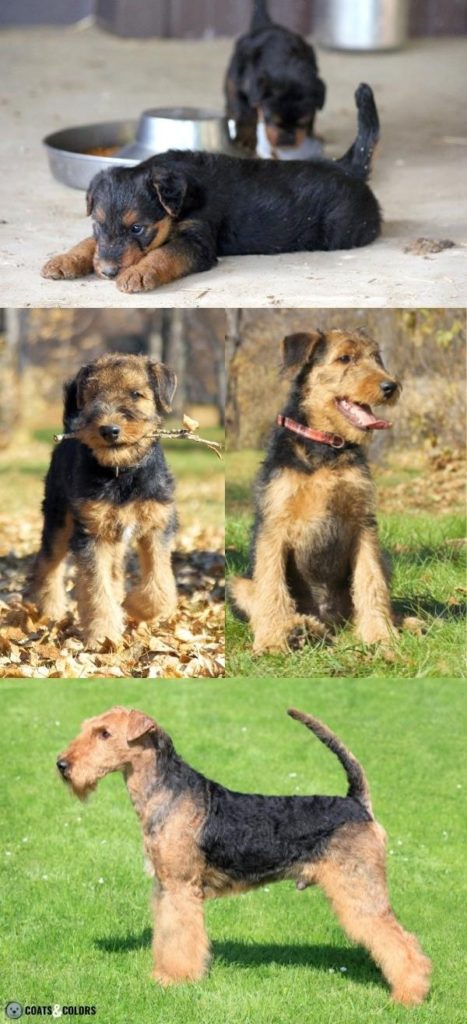
Not long ago, saddles were considered a modified version of tan points. We now understand that saddle tan is caused by a loss-of-function (less active) hair cycle promoter combined with a gain-of-function (more active) ventral promoter. This produces large tan markings with a black saddle.
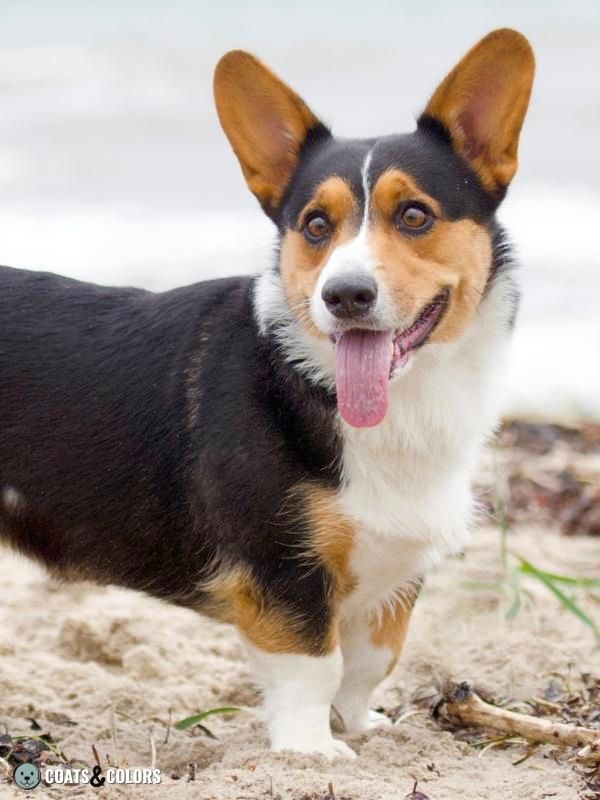
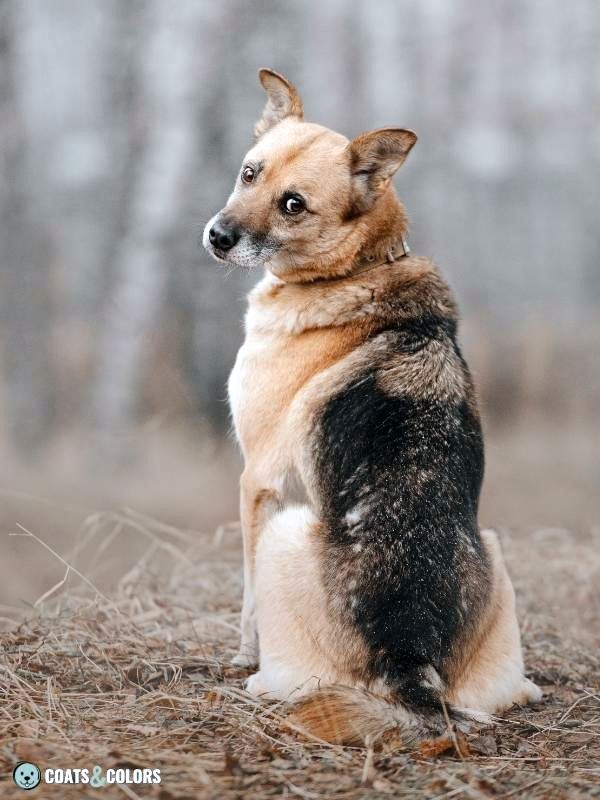
Black saddle phenotypes cover anything between creeping tan to classic saddle tan. A half-saddle can give a hooded phenotype with a widow’s peak on the dog’s forehead.
Sometimes, the yellow areas extend very far and leave only minimal saddles. The saddle hairs can be solid black or show minor tan banding or tan roots, often with stray yellow hairs inside the saddle.
Some dogs have a very small or faded saddle or a yellow stripe down their topline.
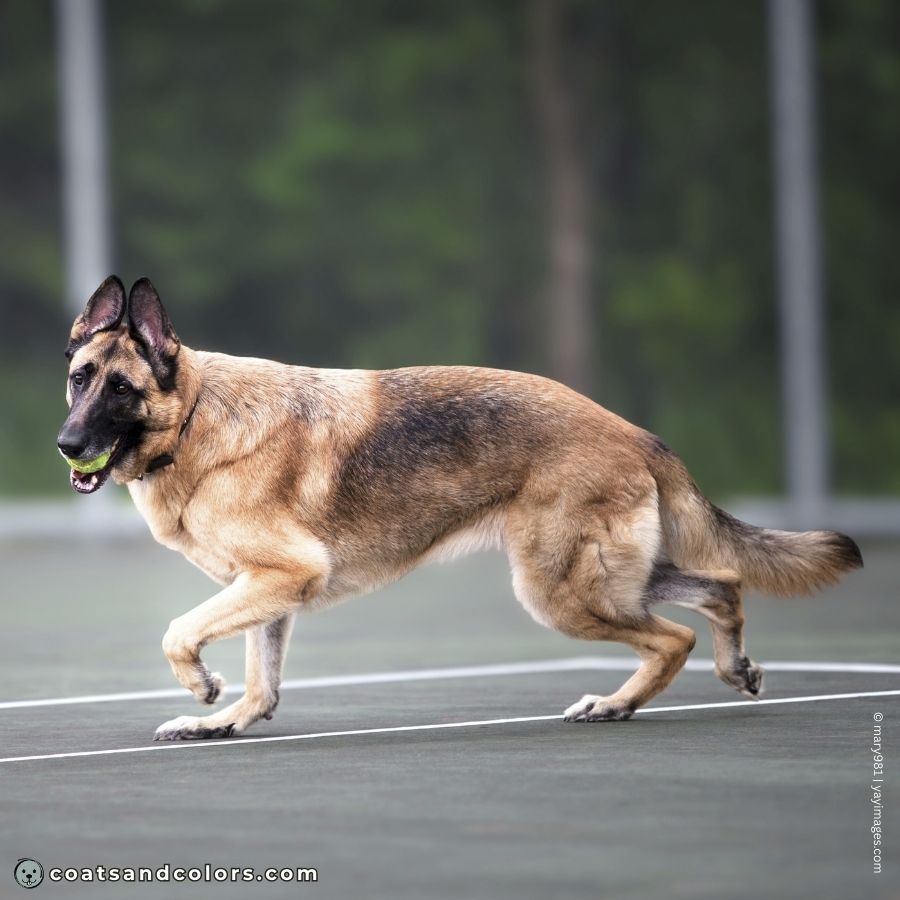
Saddle & Coat Type
Dogs can have short or long coats, bearded or smooth faces, and curly or straight hair. Each of the different coat types can affect how we perceive coat colors.
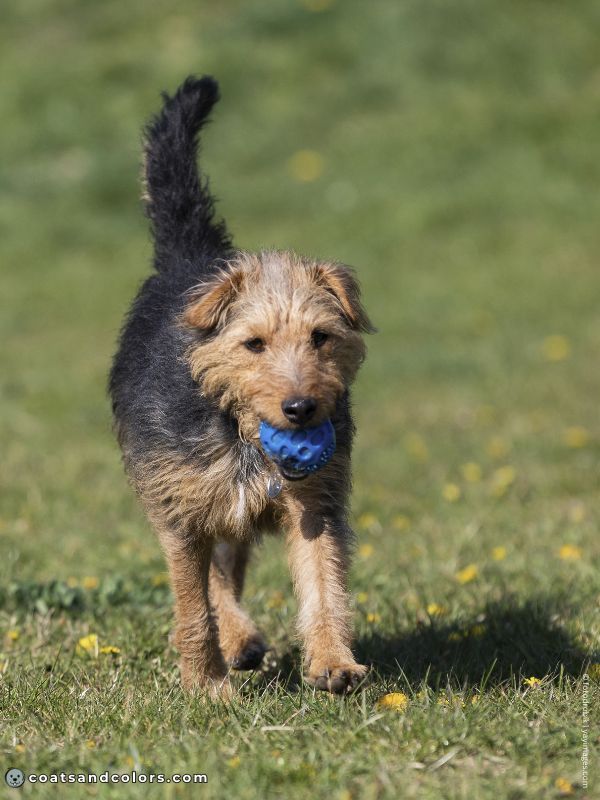
Saddle & Phaeomelanin Intensity
The color of the big tan markings on a black saddle dog can vary from white to yellow or red. But for now, we can’t explain all factors that influence phaeomelanin intensity.
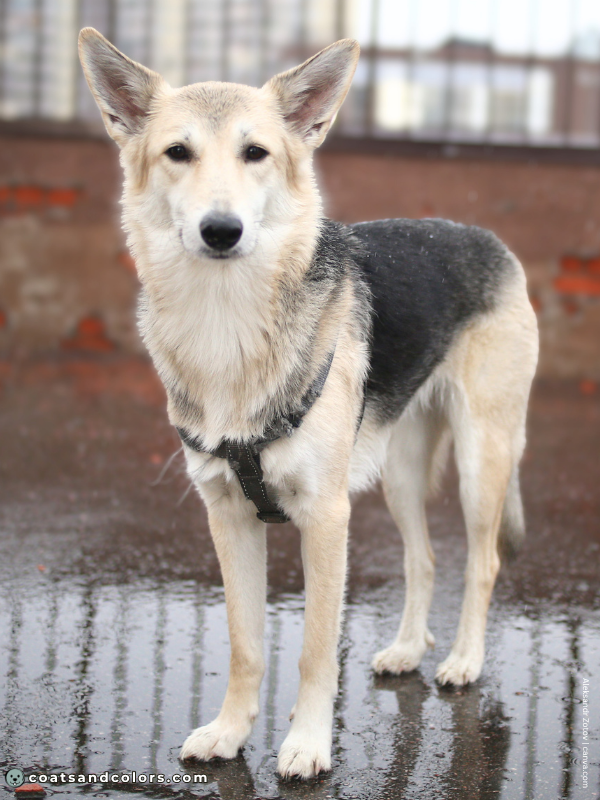

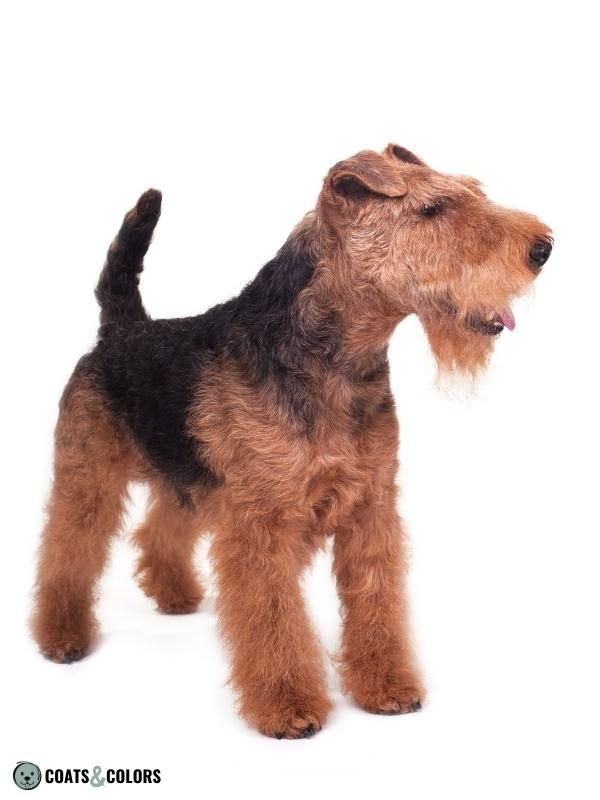
Saddle & Eumelanin Colors
Although this pattern is called black saddle, the saddle can actually have any base color.
Some dogs have a brown saddle, a blue saddle, or a lilac saddle.
Eumelanin is also visible in the nose, eye rims, lips, nails, and eyes. For example, a dog with a brown-based saddle pattern will also have a brown nose.
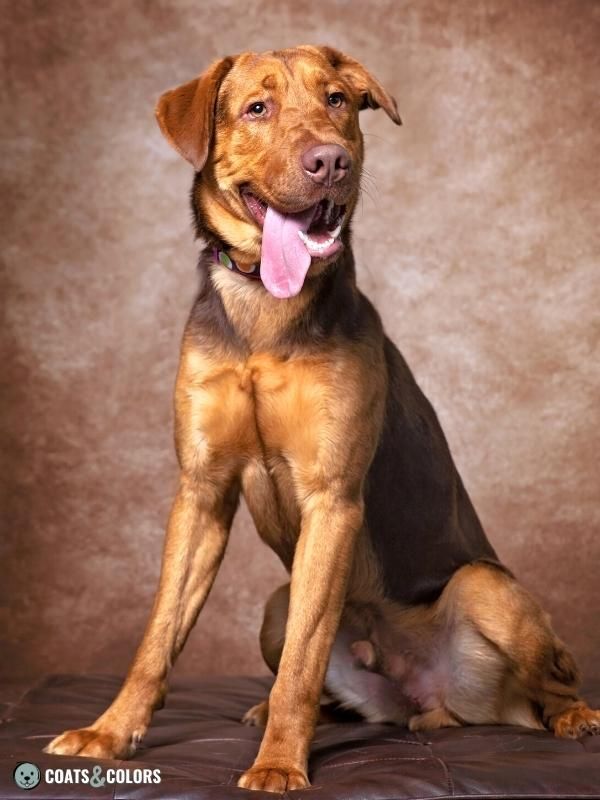
Saddle & Masks
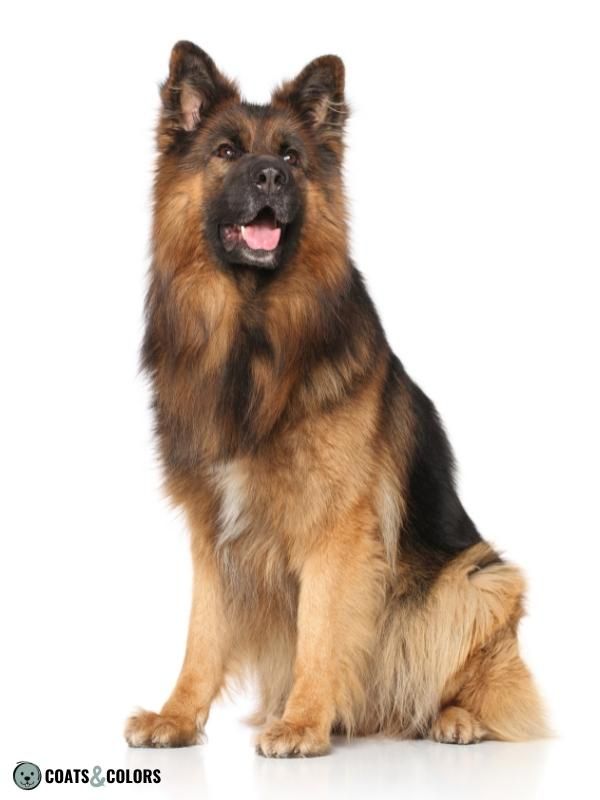
Melanistic masks add eumelanin to a dog’s muzzle.
As seen in many German Shepherd Dogs, this also works on dogs with saddle tan.
Saddle & Brindle
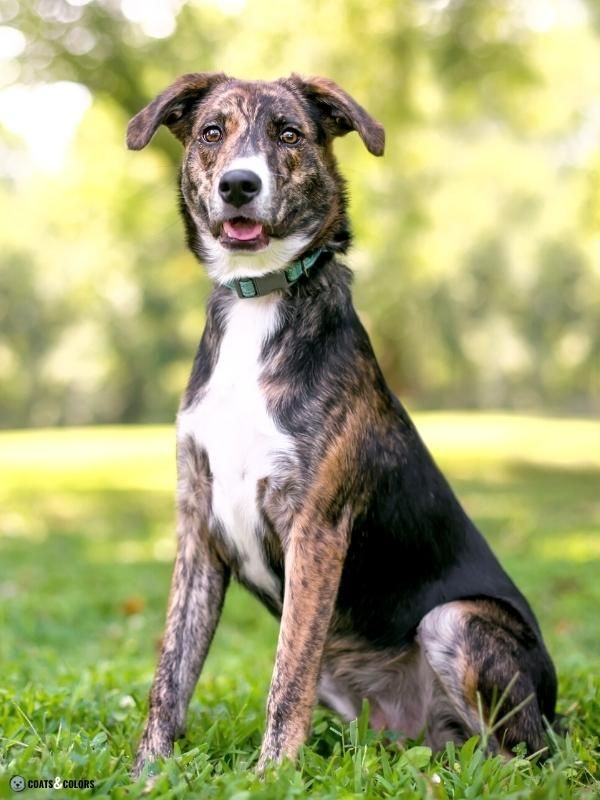
Brindle adds a striping pattern to all areas with phaeomelanin.
All the tan areas in a saddle phenotype will be covered in brindle.

Saddle & White
White markings add areas without pigment. This can cause part of a dog’s pattern to “disappear”.
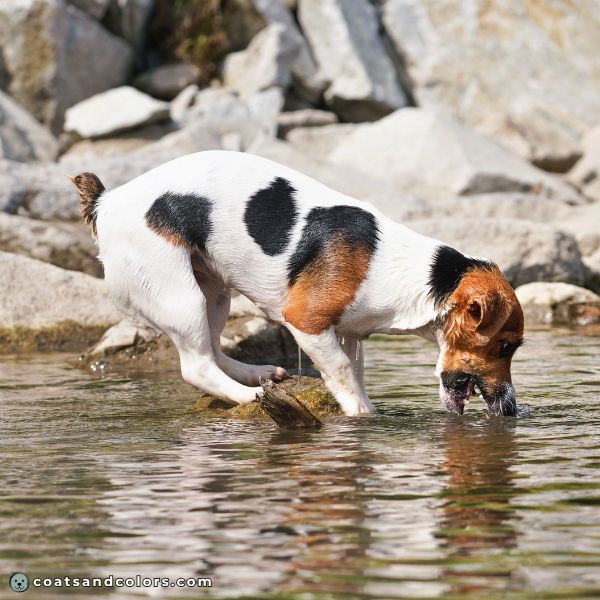
Different white spotting traits can cause different spreads of white in dogs. The most common traits in dogs are piebald (white tends to spread from bottom to top) and whitehead (white tends to spread from front to back). Unknown modifiers cause minimal to extended versions of these white markings.
A black saddle pattern with white markings is often described as tricolor or saddle tri.
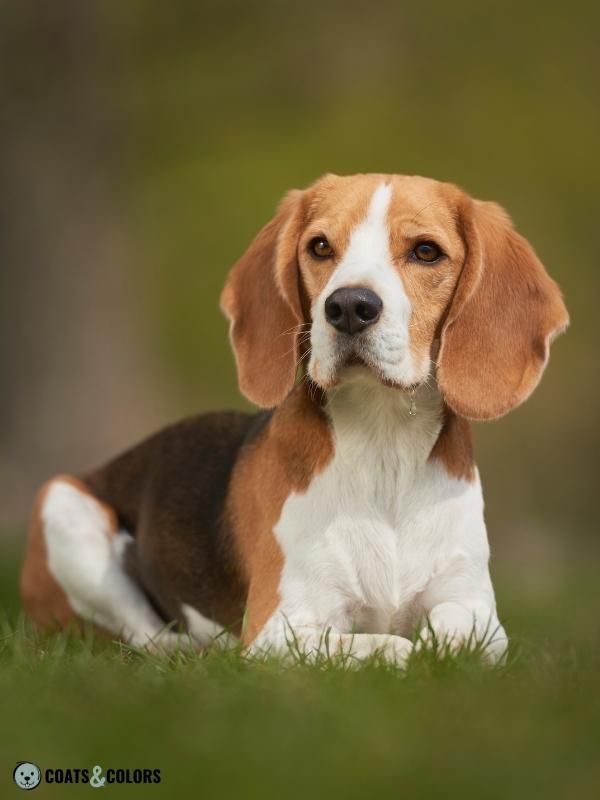
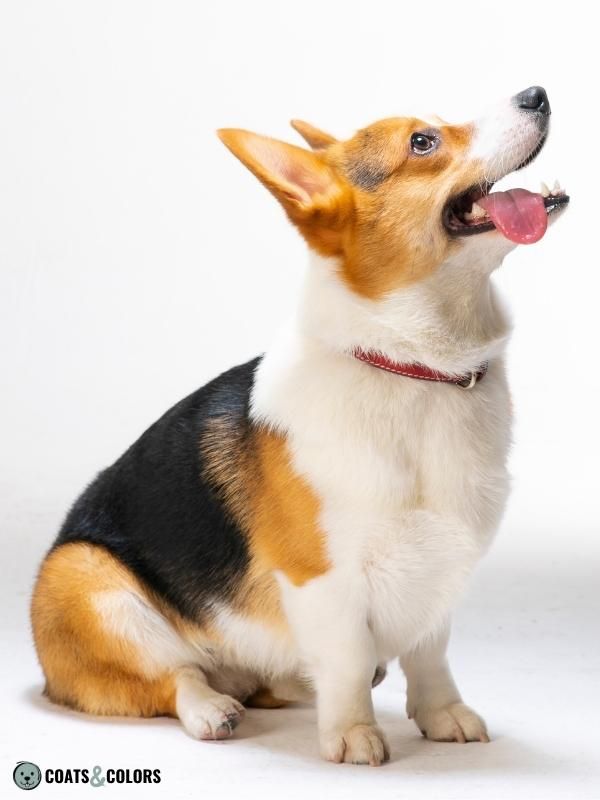
Saddle Tri & Ticking
Ticking or roan can add pigment back into white markings.
At birth, white markings will be solid white. But over the course of some weeks and months, some pigmented spots (ticking) or fully pigmented hairs (roan) may appear inside the white areas.
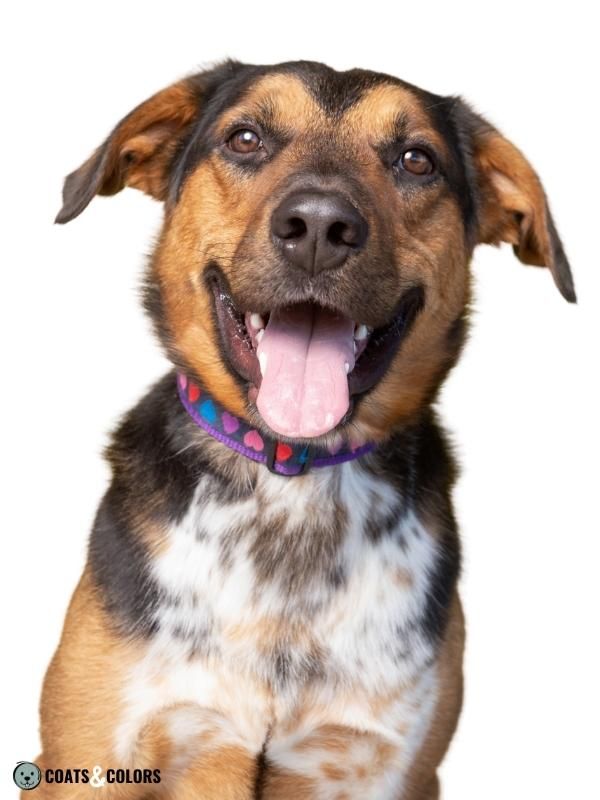
All mottles will have exactly the color a dog would produce in its normal pattern. So on a dog with a saddle pattern, ticking on the legs will be red, and ticking on the back will be black.
Saddle Merle
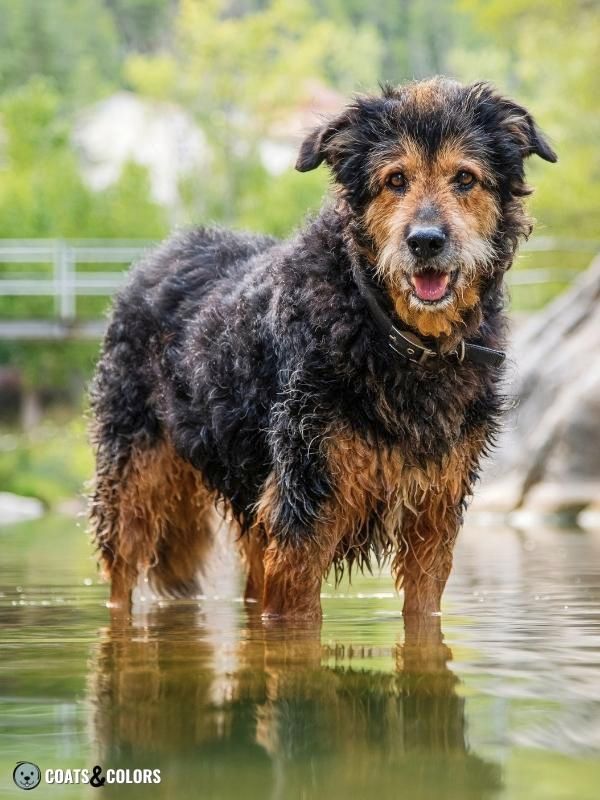
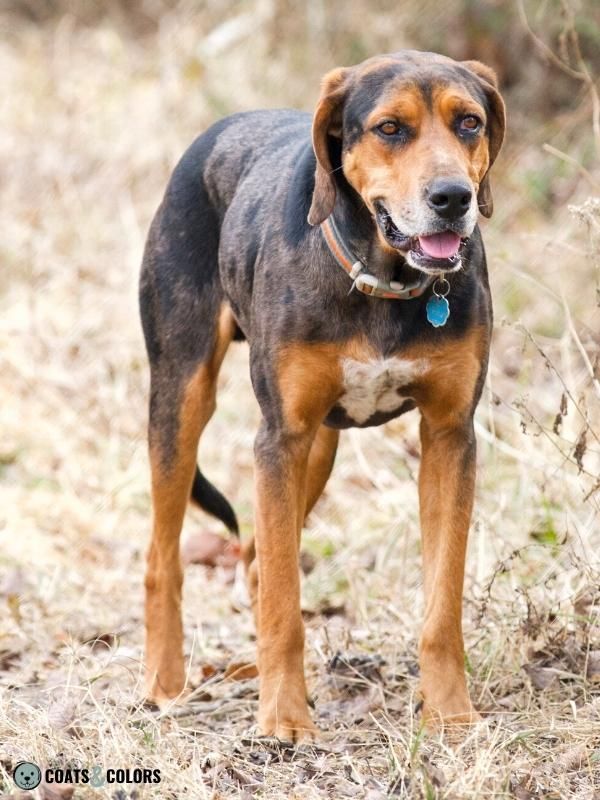
Merle deletes random areas of pigment. Classic Merle only affects eumelanin, meaning only the black saddle will show a merle pattern. This combination is mainly found in mixes, but it also happens in some breeds such as the Norwegian Dunker, Catahoulas, or Border Collies.
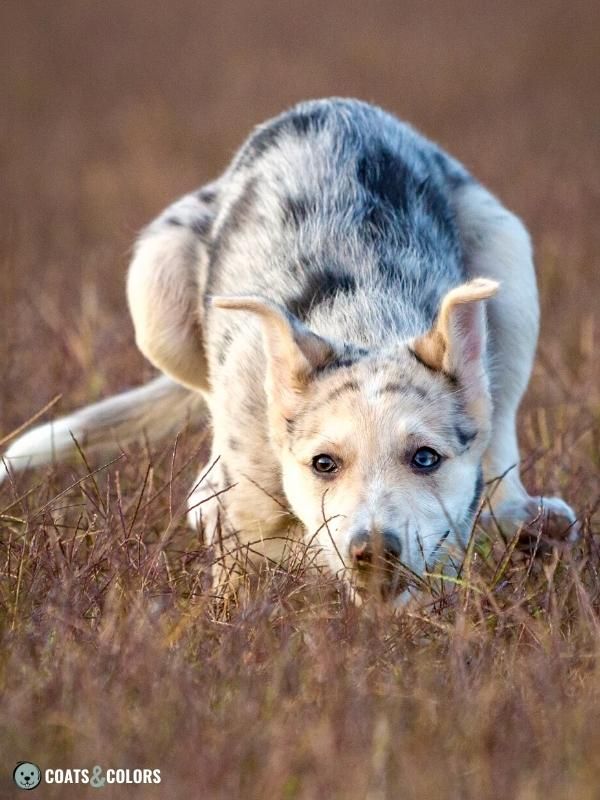
Saddle & Graying
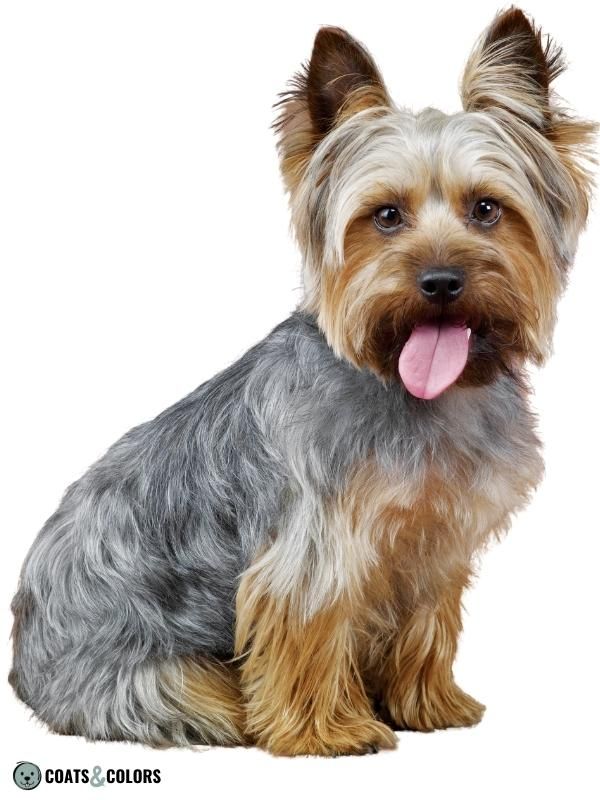
Some furnished dogs show fading eumelanin colors.
Their black saddle fades to gray. A brown saddle may fade to beige.
Since progressive graying only works on eumelanin, it naturally only affects the dark saddle area. A well-known example of this phenotype can be observed in Yorkshire Terriers.
Saddle & Countershading
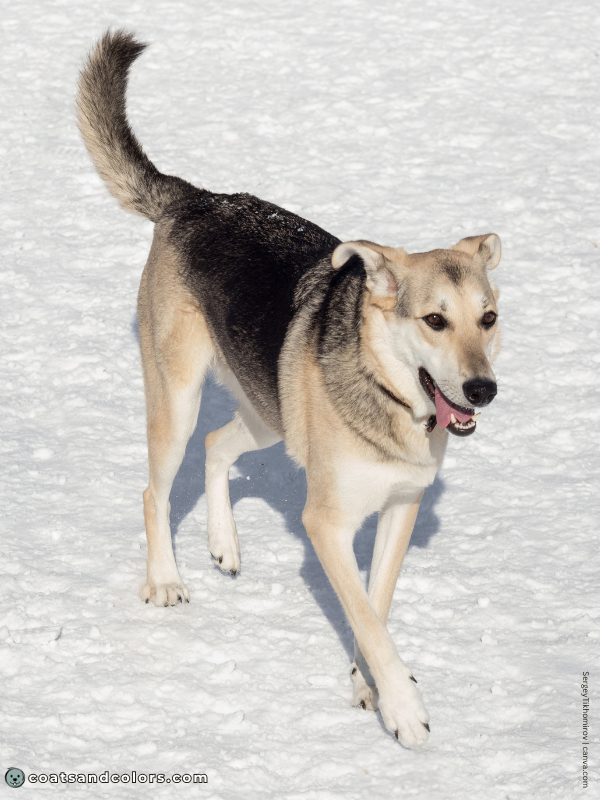
Some dogs express a very pale ventral phaeomelanin intensity. This can significantly lighten the red pigment on their belly, throat, and muzzle while leaving the color on the upper body intact.
This is called countershading.
Saddle Domino
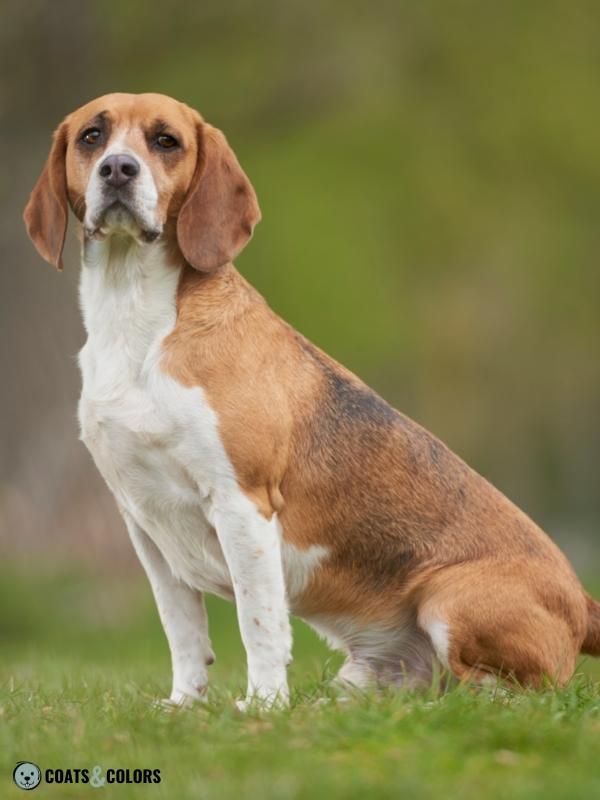
Domino traits restrict the production of eumelanin in any given pattern. In some hound breeds and northern breeds, we can observe the effect of domino on a saddle pattern.
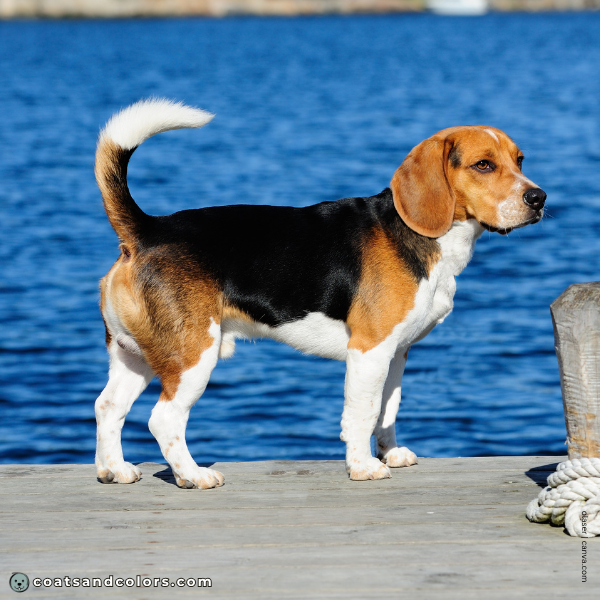
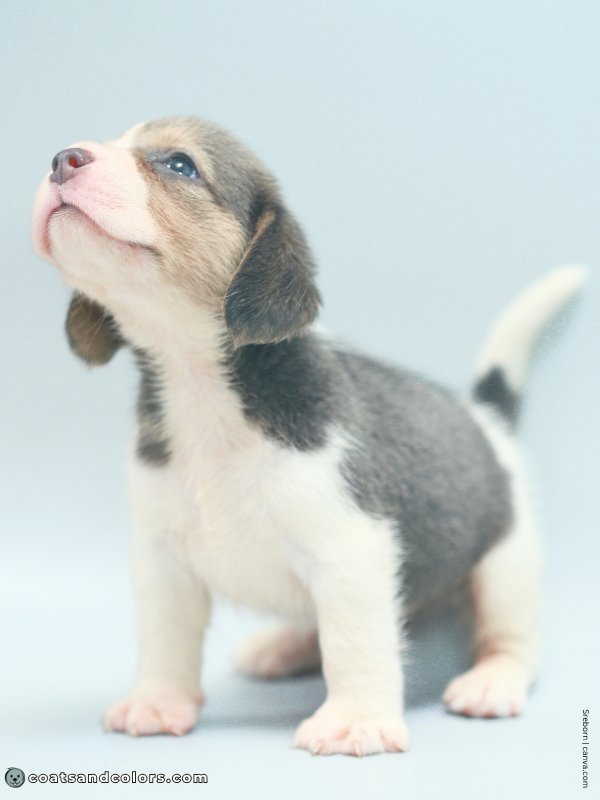
Domino will cause the saddle to shrink even more until only a little patch of black coat remains. It can also cause a very pale hair base and light undercoat. This can make a saddle way smaller and more grizzled than expected. In Beagles, this phenotype is known as pied.
Dog Breeds with Black Saddle
Saddle tan is very common in many different dog breeds:
- Airedale Terrier
- American Foxhound
- Australian Silky Terrier
- Australian Terrier
- Basset Hound
- Beagle
- Bloodhound
- Border Collie
- Border Terrier
- Chihuahua
- Danish Swedish Farmdog
- German Shepherd Dog
- Grand Basset Griffon Vendéen
- English Foxhound
- Fox Terrier
- Harrier
- Jack Russell Terrier
- Lakeland Terrier
- Löwchen
- Norfolk Terrier
- Norwich Terrier
- Otterhound
- Papillon
- Parson Russell Terrier
- Petite Basset Griffon Vendéen
- Swiss Hound
- Treeing Walker Coonhound
- Welsh Corgi
- Welsh Terrier
- Yorkshire Terrier
Learn More
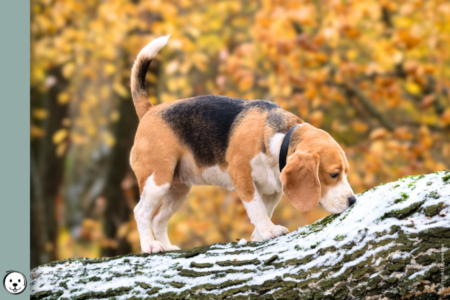
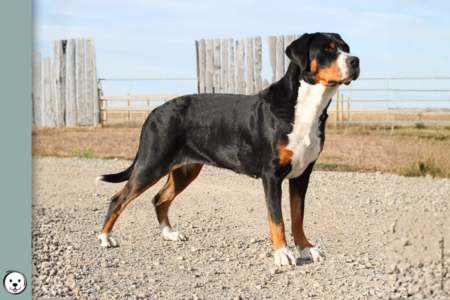
Links
[1] Bannasch, D.L., Kaelin, C.B., Letko, A. et al. Dog colour patterns explained by modular promoters of ancient canid origin. Nat Ecol Evol 5, 1415–1423 (2021). https://doi.org/10.1038/s41559-021-01524-x
[2] Dayna L. Dreger, Heidi G. Parker, Elaine A. Ostrander, Sheila M. Schmutz. Identification of a Mutation that Is Associated with the Saddle Tan and Black-and-Tan Phenotypes in Basset Hounds and Pembroke Welsh Corgis. Journal of Heredity, Volume 104, Issue 3, May-June 2013, Pages 399–406. https://doi.org/10.1093/jhered/est012
Image Credits
Ivanko/yayimages.com
olaser/canva.com
eriklam/yayimages.com
mary981/yayimages.com
SergeyTikhomirov/canva.com
Sreborn/canva.com
fotodrobik/yayimages.com
eventsfb/pixabay.com
Aleksandr Zotov/canva.com
Hi! I’m Steffi. I am a biologist and a big time dog nerd. You are curious about coat color genetics? You’ve come to the right place! Read more.