

The Chow Chow is a solid-colored spitz breed with either a white, cream, red, cinnamon, black, or blue coat. Read on, and learn all there is to Chow standard colors.
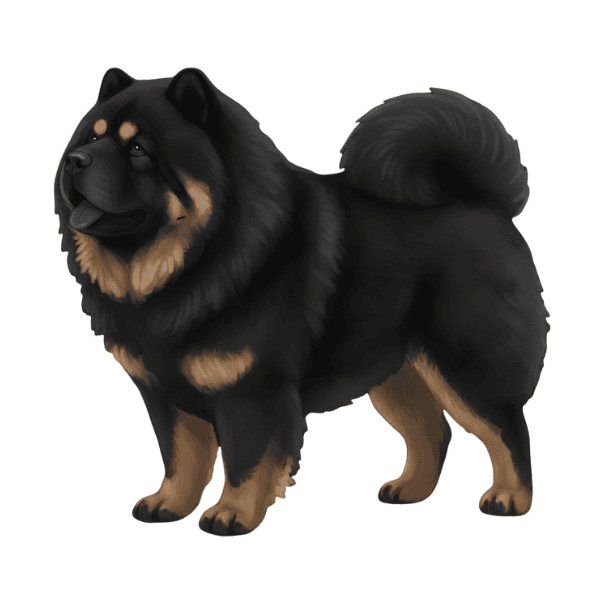
Black
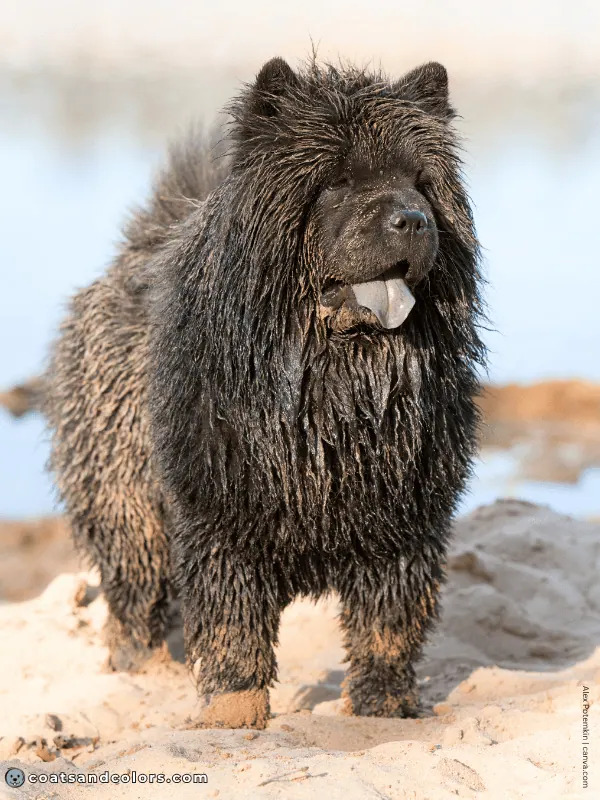
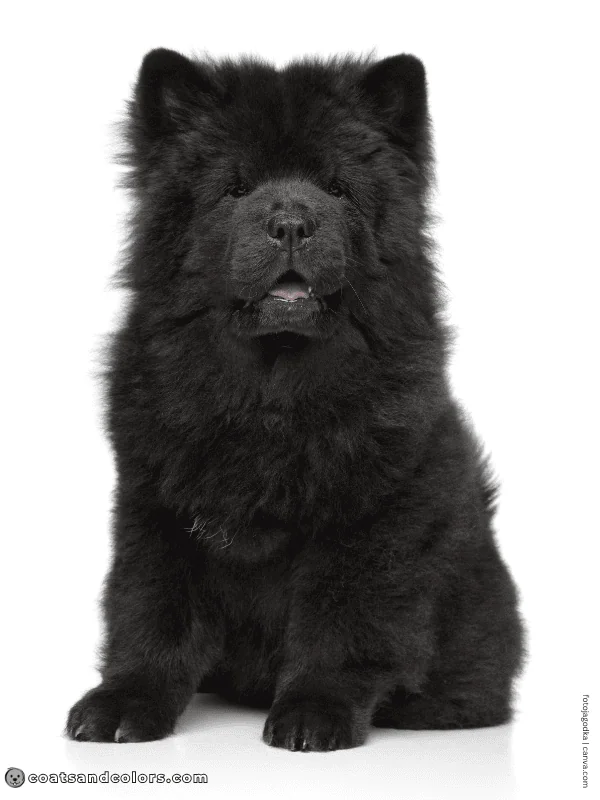
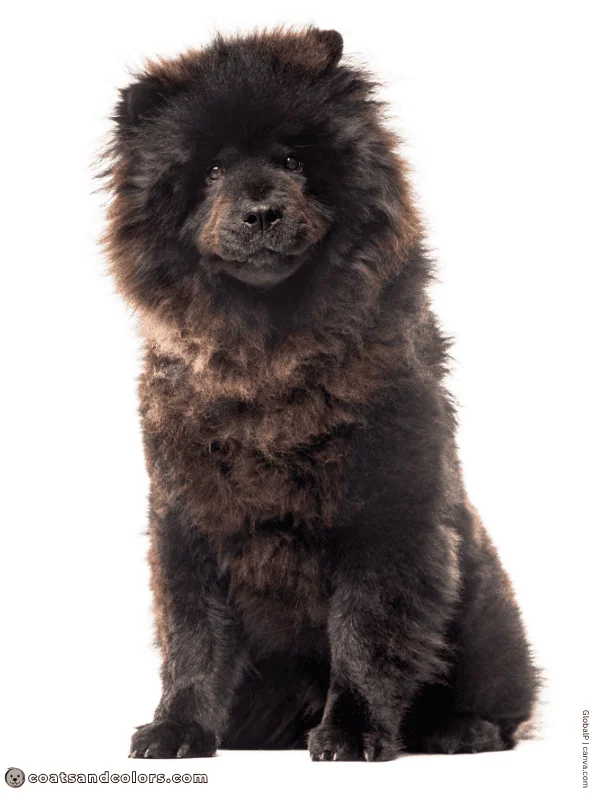
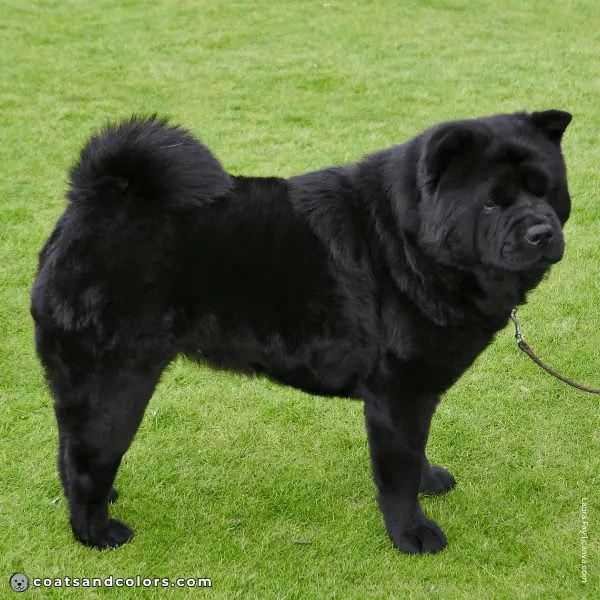
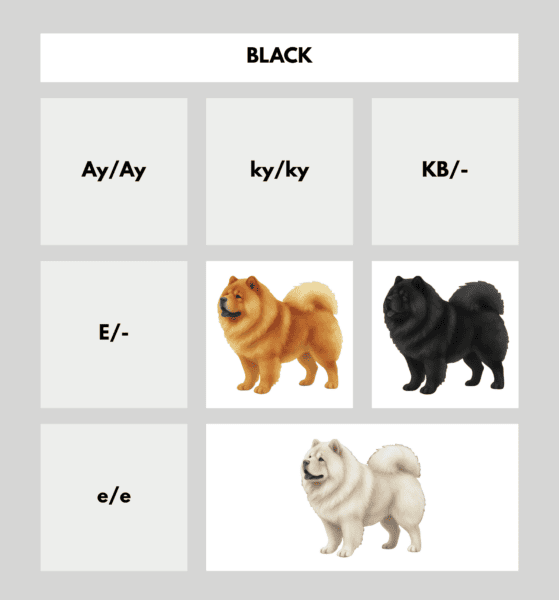
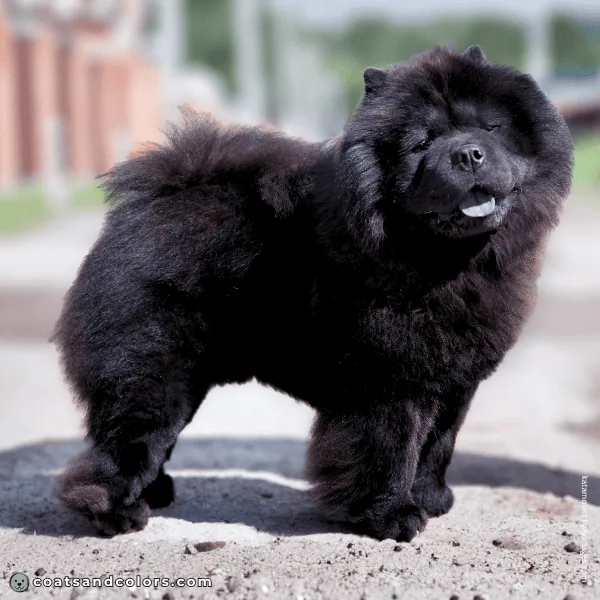
A solid black Chow Chow has a dominant black pattern with black eumelanin.
Many black Chows have some rusting or light feathering due to being seal.
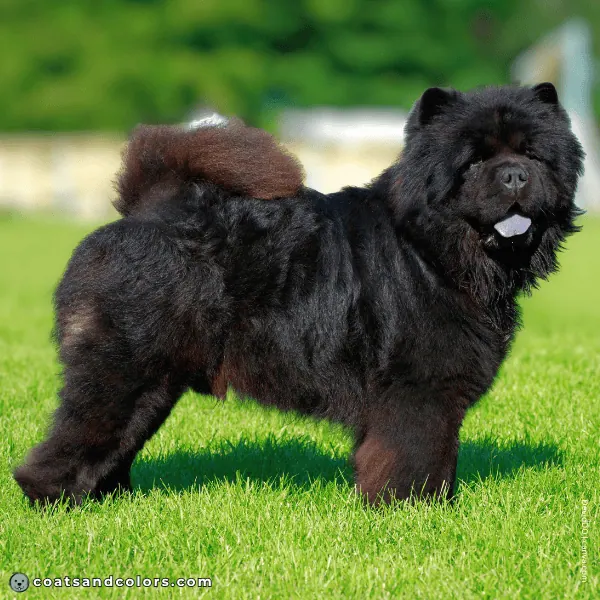
BASE PATTERN
dominant black
MERLE
–
OTHER
seal
EUMELANIN
black
INTENSITY
–
WHITE
solid
Blue
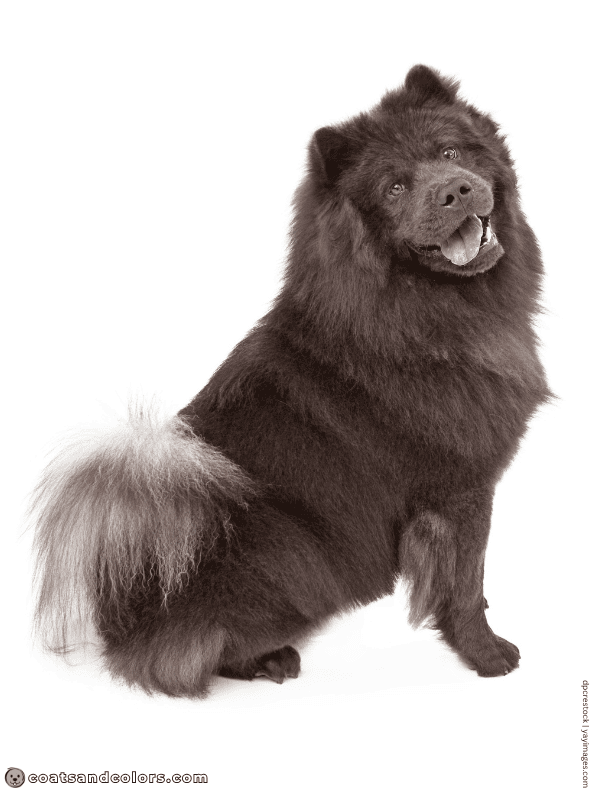
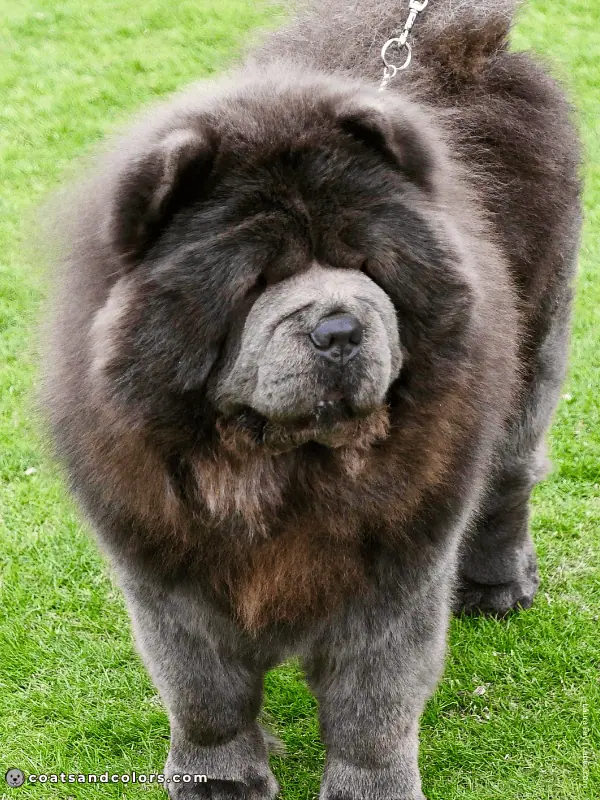
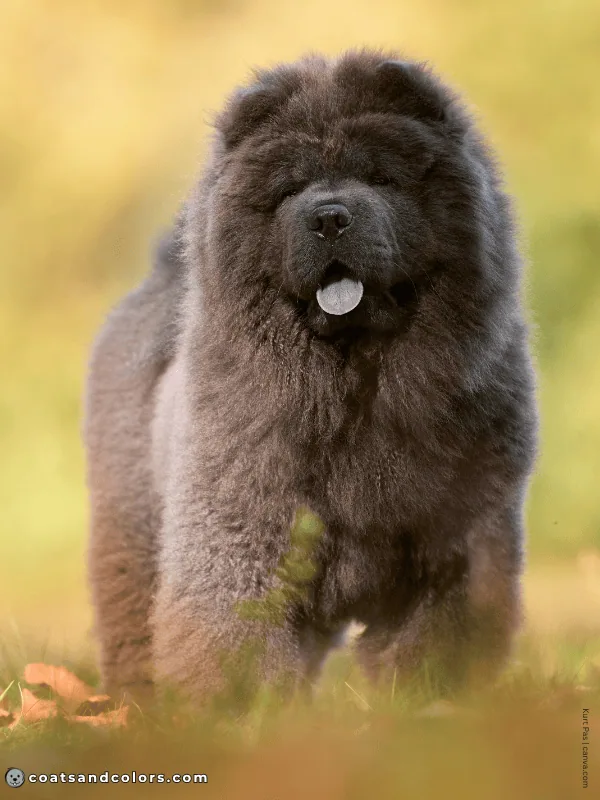
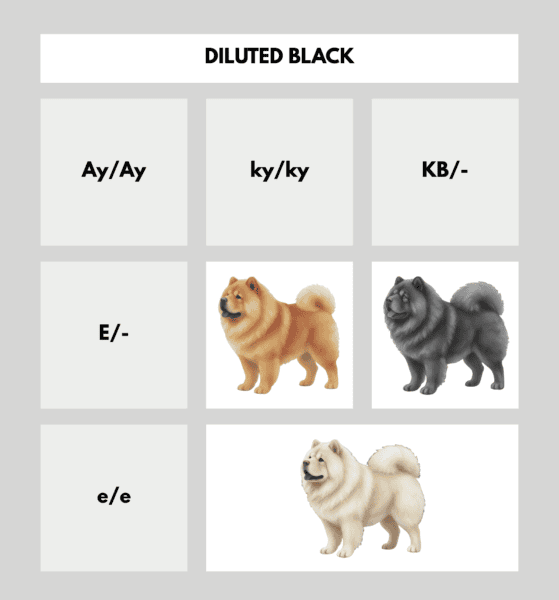
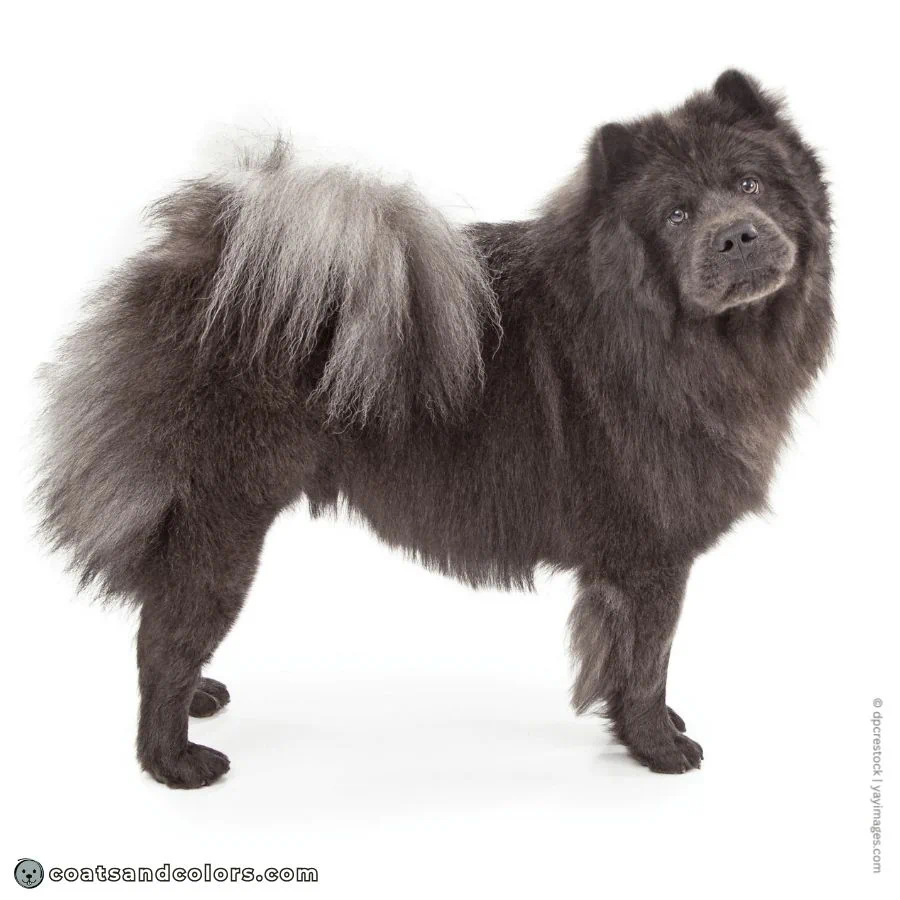
A solid blue Chow Chow has a dominant black pattern with diluted black eumelanin. A blue seal pattern can give whitish feathering on the tail or ruff.
BASE PATTERN
dominant black
MERLE
–
OTHER
seal
EUMELANIN
diluted black
INTENSITY
–
WHITE
solid
Red
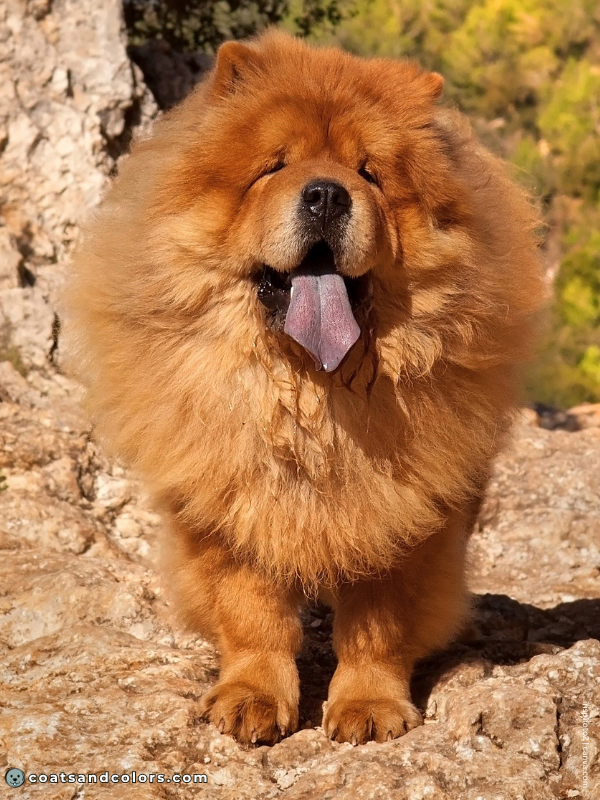
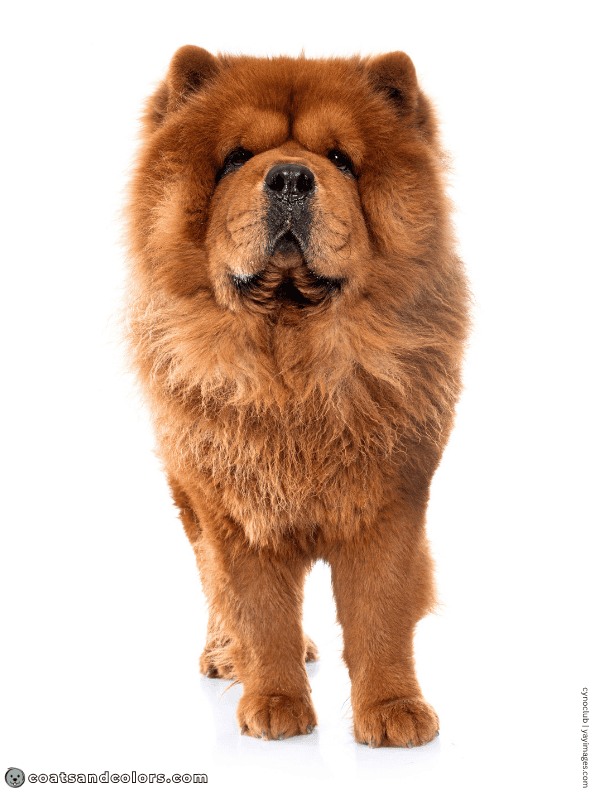
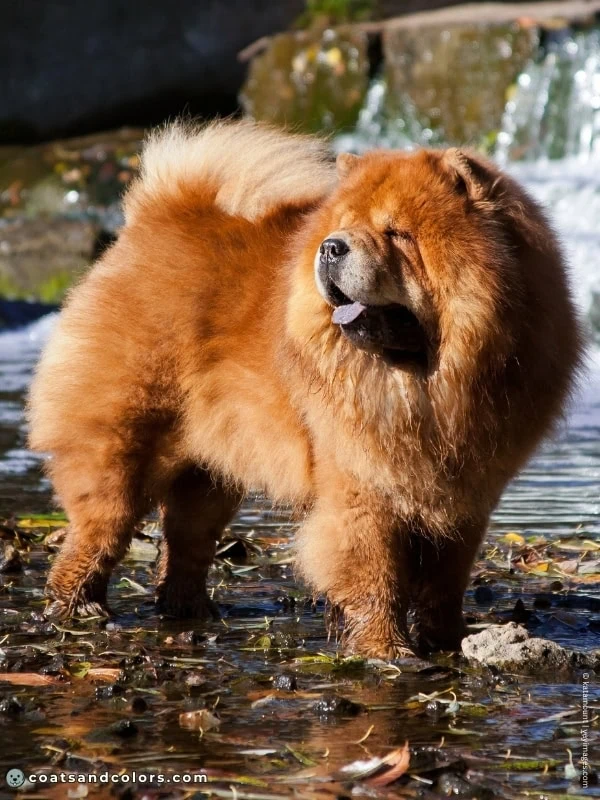
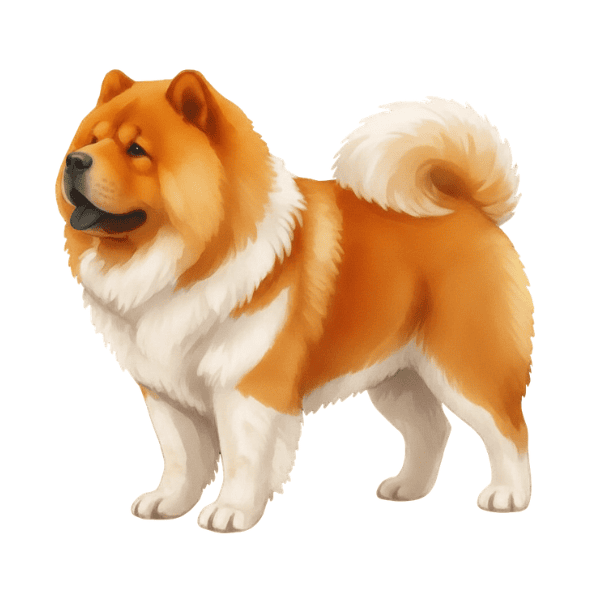
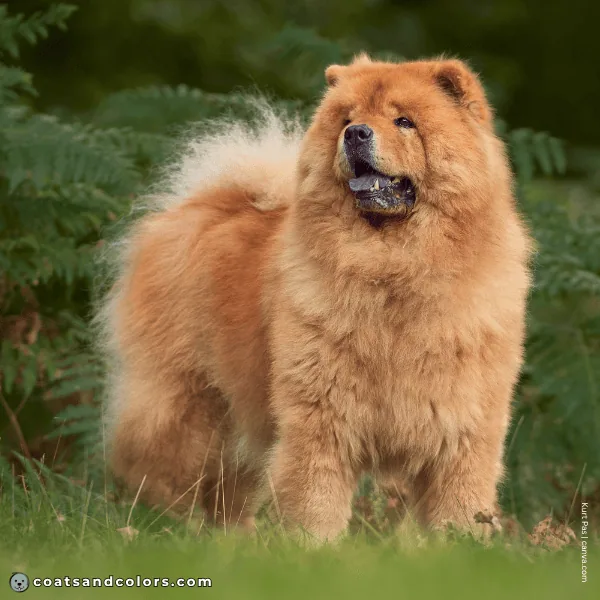
A red Chow Chow is sable.
A shaded red Chow Chow has lighter feathering or some countershading.
BASE PATTERN
sable
MERLE
–
OTHER
countershading
EUMELANIN
black
INTENSITY
red
WHITE
solid
Cinnamon
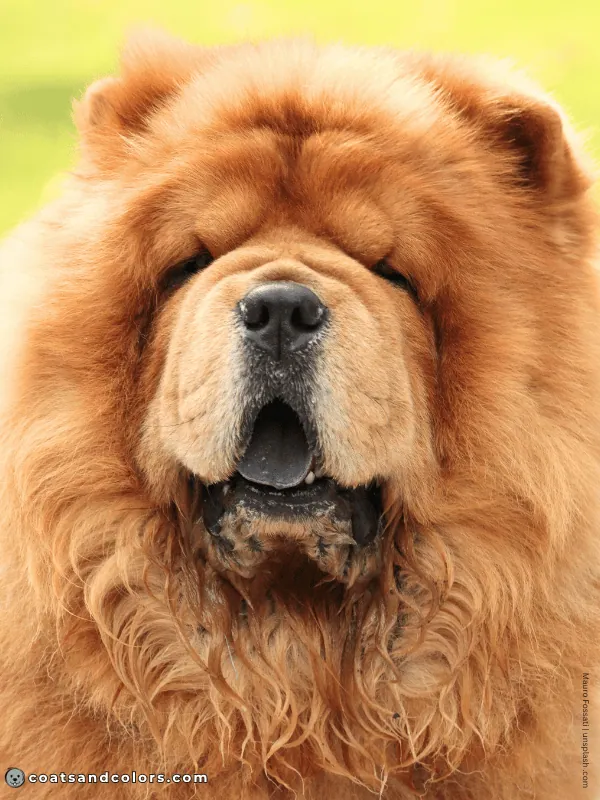
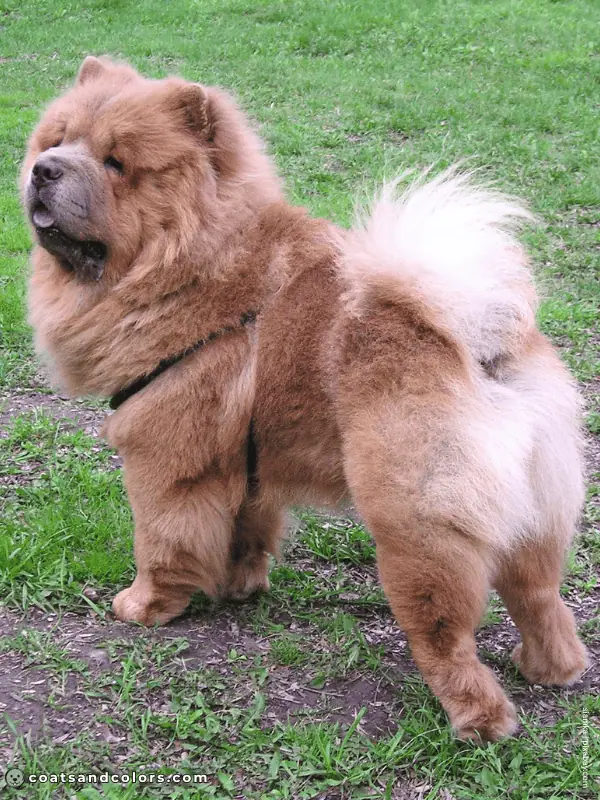
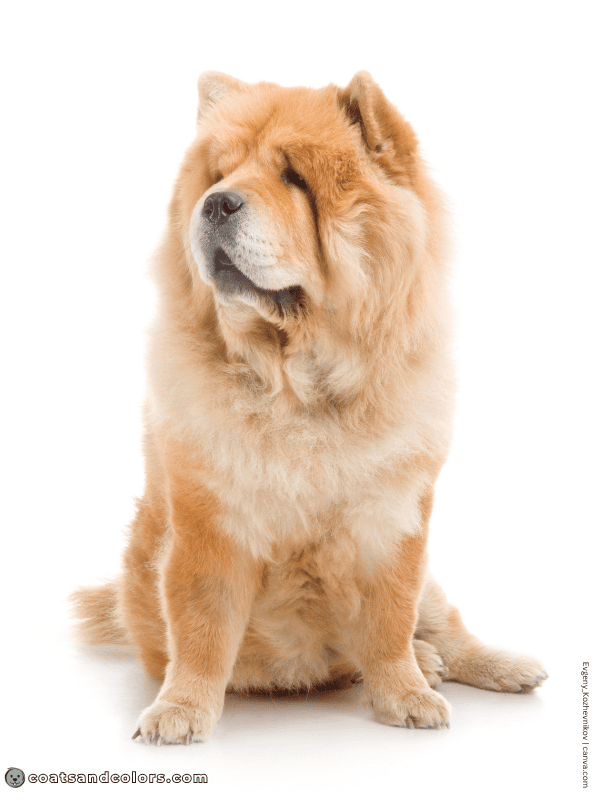
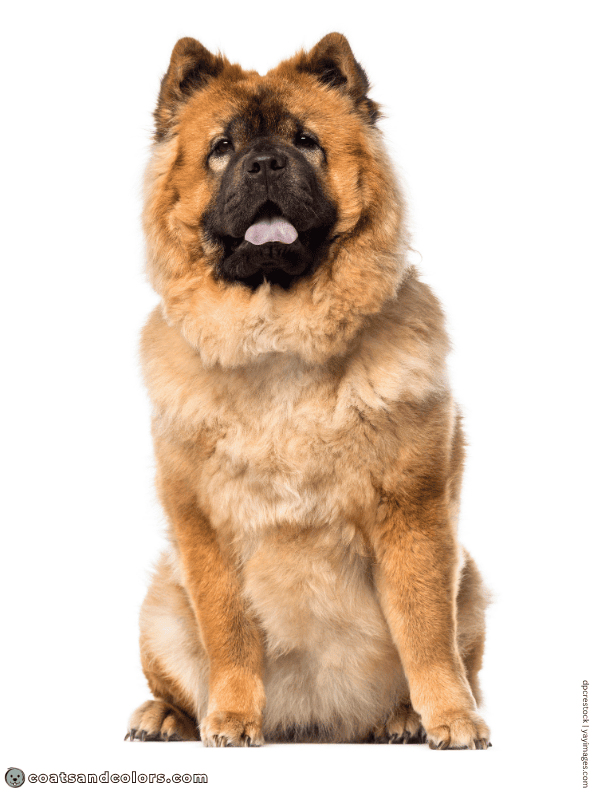
A cinnamon Chow Chow has a sable pattern with diluted black eumelanin. They have a dark gray nose (which can be so dark that it mimics a black nose) and gray nails, lips, and eye rims. Any sabling, masks, or dark puppy overlay in their reddish coat will be gray.
Both “fawn” and “cinnamon” are Chow Chow breed terms used for a blue fawn pattern. The AKC uses cinnamon, while the FCI calls the same pattern fawn. Both terms imply that these dogs typically have a lighter shade of red than a normal red Chow Chow.
BASE PATTERN
sable
MERLE
–
OTHER
countershading
EUMELANIN
diluted black
INTENSITY
cinnamon
WHITE
solid
Cream
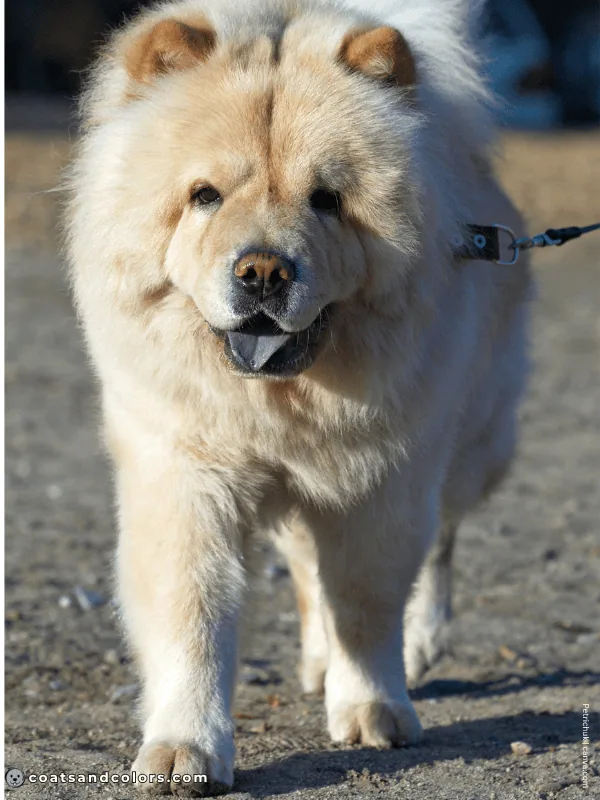
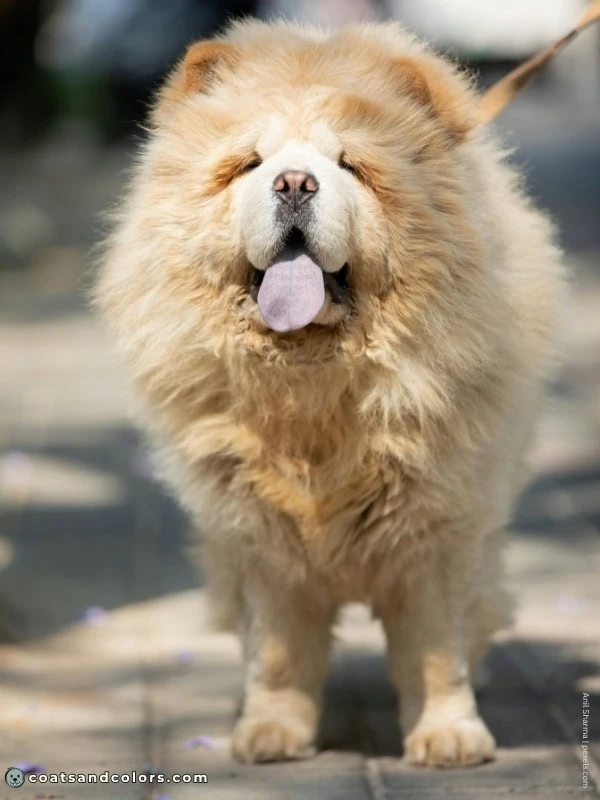
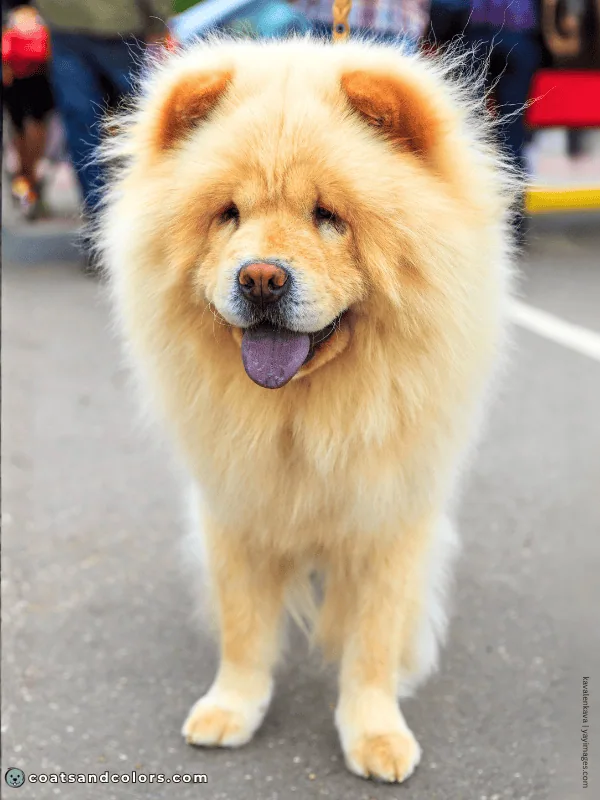
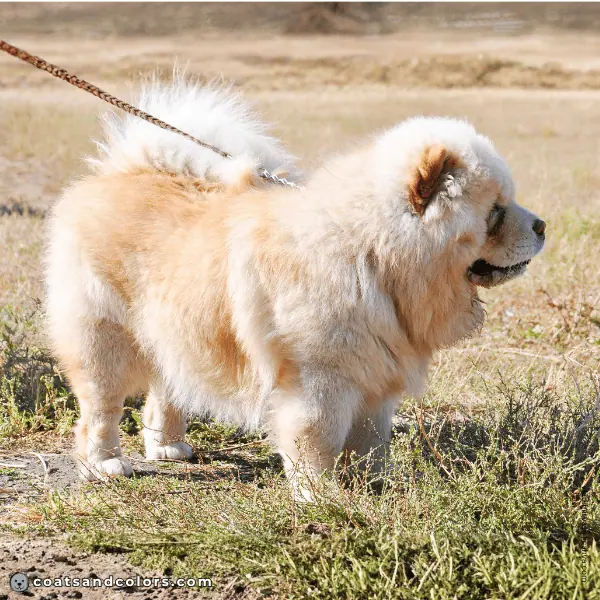
A cream Chow Chow has a recessive red pattern with a very light red intensity.
They can come with black or blue eumelanin, but often have fading nose pigment anyway.
BASE PATTERN
recessive red
MERLE
–
OTHER
EUMELANIN
(diluted) black
INTENSITY
cream
WHITE
solid
White
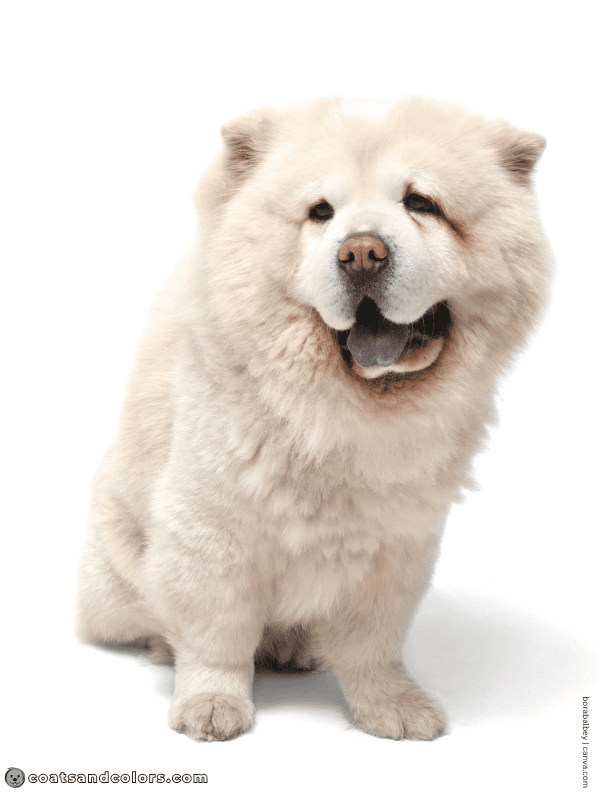
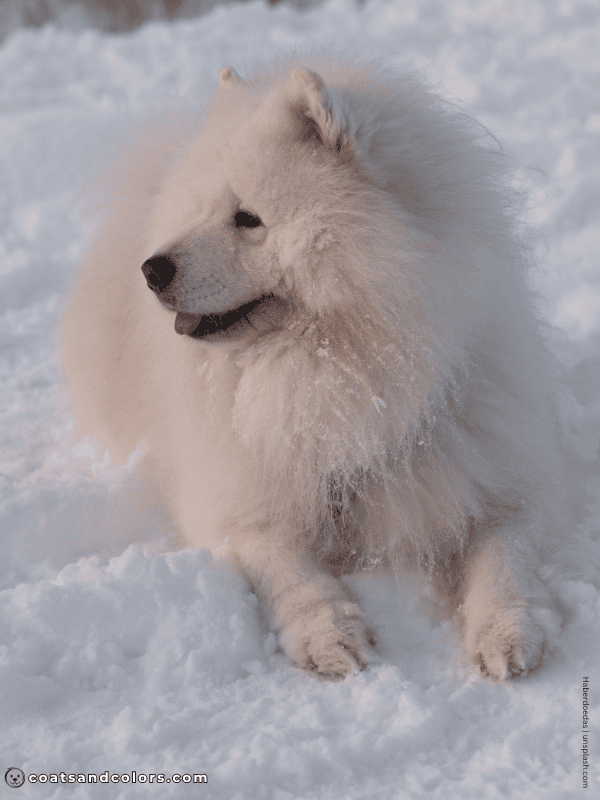
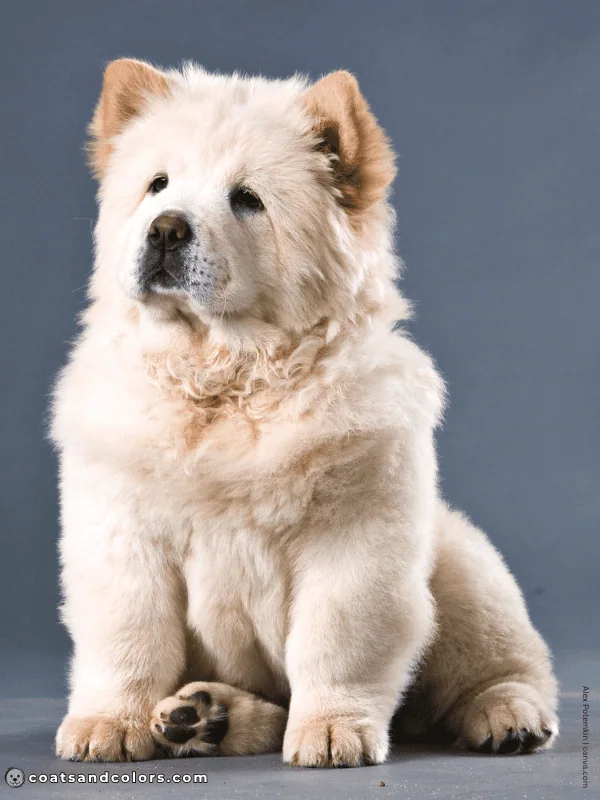
A white Chow Chow has a recessive red pattern with a pale off-white color.
BASE PATTERN
recessive red
MERLE
–
OTHER
EUMELANIN
(diluted) black
INTENSITY
white
WHITE
solid
Tongue Colors
The blue-black tongue is one of the trademarks of the Chow Chow breed. But dogs with diluted black pigment (which can look almost black in this breed) will have gray skin pigment. And whatever makes the nose pigment fade in recessive red dogs, can also affect the eye rims, lips, or tongue color.
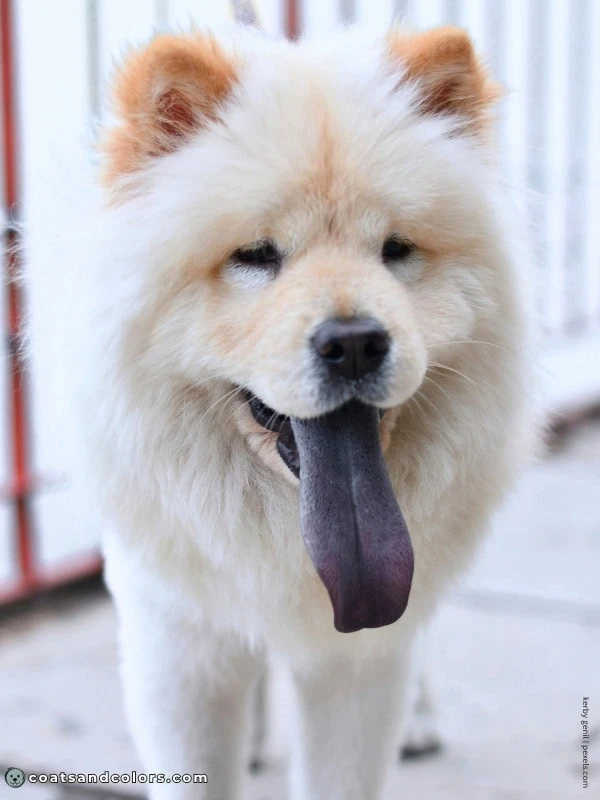
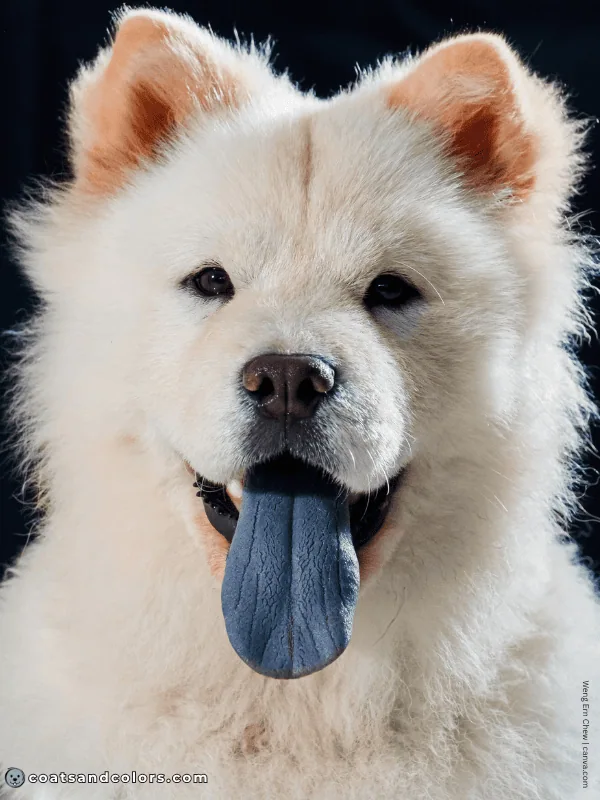
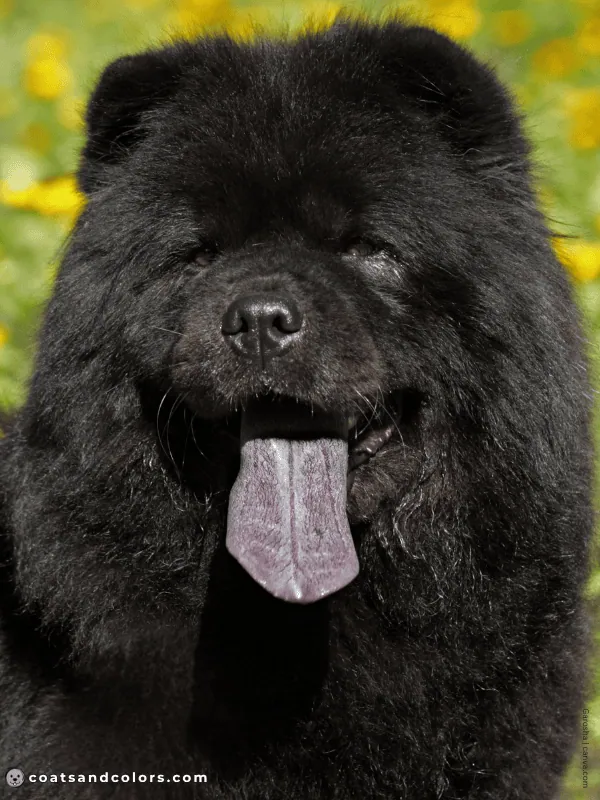
“Essential to true Chow type are his unique blue-black tongue, scowling expression and stilted gait.”
“Edges of the lips black, tissues of the mouth mostly black, gums preferably black. A solid black mouth is ideal. The top surface and edges of the tongue a solid blue-black, the darker the better.”
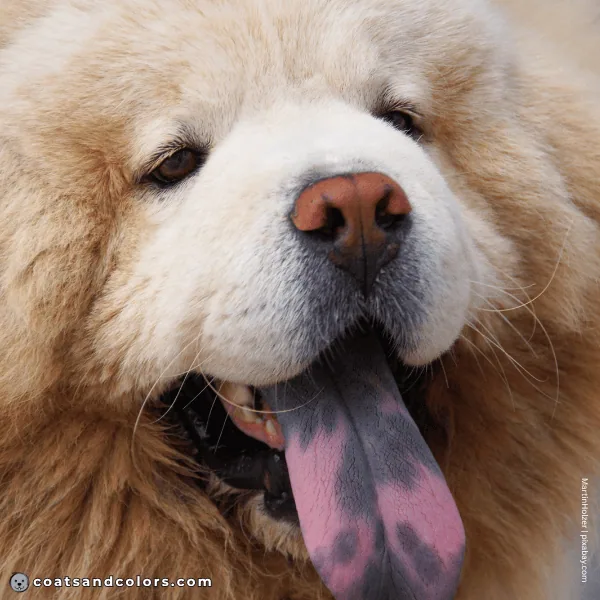
“Disqualifying Fault – The top surface or edges of the tongue red or pink or with one or more spots of red or pink.”
AKC Breed Standard[1]
“A solid black mouth including the roof and flews, with a bluish black tongue is ideal. However, some dilution may be evident in the gums of blues and fawns and this dilution may be more pronounced in creams and whites.”
FCI Breed Standard[2]
Some Chow Chows have pink spots on their tongue. Or a pink tongue with some darker spots. However, this is not up to the aesthetic ideal they strive for in this breed…
Faulty Colors
The only accepted colors are red, black, blue, cinnamon, and cream. This automatically means that any other color (e.g. chocolate) and any pattern other than solid (e.g. black-and-tan) are not accepted.

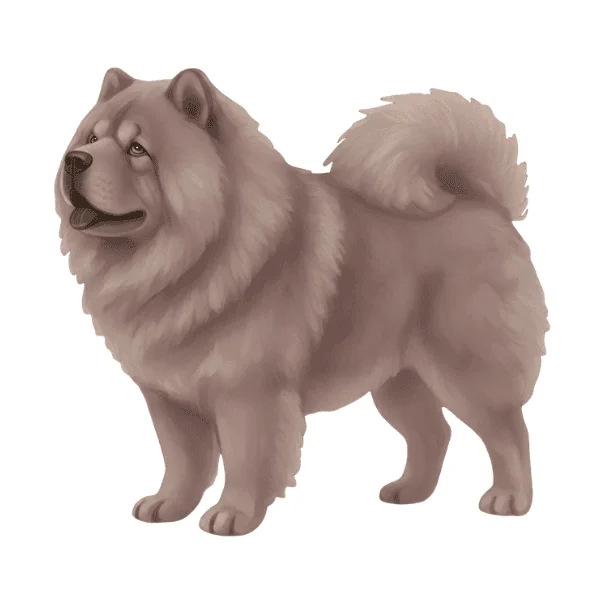
Base Patterns
The base pattern describes the placement of phaeomelanin and eumelanin in the coat. There is an epistatic hierarchy between these genes: A locus < K locus < E locus.
- The A locus controls the basic distribution of both pigment types.
- Next, the K locus can add black to the A locus pattern.
- Finally, the E locus regulates the general ability to produce black pigment.
Ay/Ay ky/ky E/-
KB/- E/-
e/e
A Locus
| Ay | clear sable |
| at | tan point |
The Chow Chow breed selects towards clear sable only (Ay/Ay).
But some dogs carry tan points (Ay/at), which might also explain the dark overlay in some red dogs. Breeding two carriers can potentially produce black & tan puppies (at/at).
K Locus
| KB | dominant black |
| kbr | brindle |
| ky | wild-type |
Only dogs with normal pattern expression (ky/ky) can actually express their sable pattern. Dogs with dominant black (KB/-) will be solid dark (black or blue), some of them are seal.
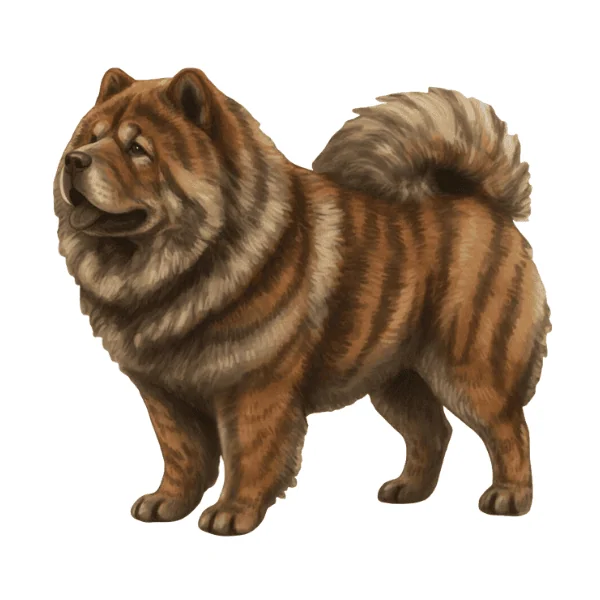
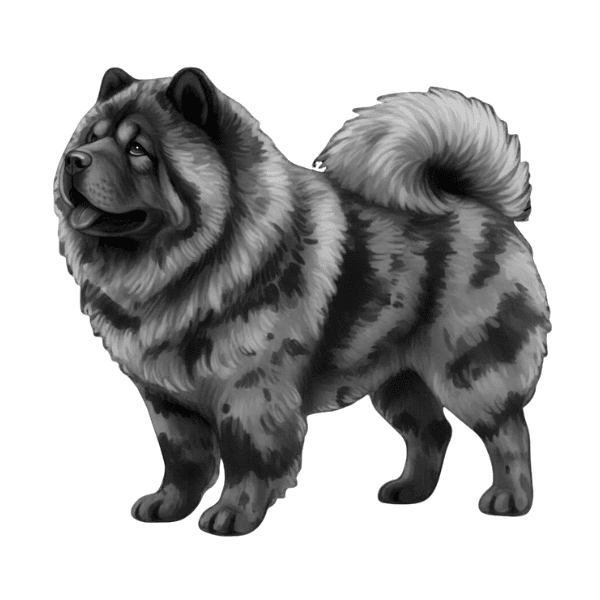
The brindle variant (kbr) is also present in this breed.
E Locus
| Em | black mask |
| E | wild-type |
| e | recessive red |
Having two copies of recessive red (e/e) eliminates all dark pigment from the coat. This causes the dog to have a cream or ivory white color and pale whiskers.
A Chow Chow needs normal pattern expression (E/-) to be either sable (ky/ky Ay/Ay) or solid dark (KB/- Ay/Ay). Some of these dogs have a dark mask (Em/-), which is only visible in sables.
Keep in mind that many puppies will show a puppy mask without being Em/-. The dark muzzle overlay will not last and will fade as the dog grows up.
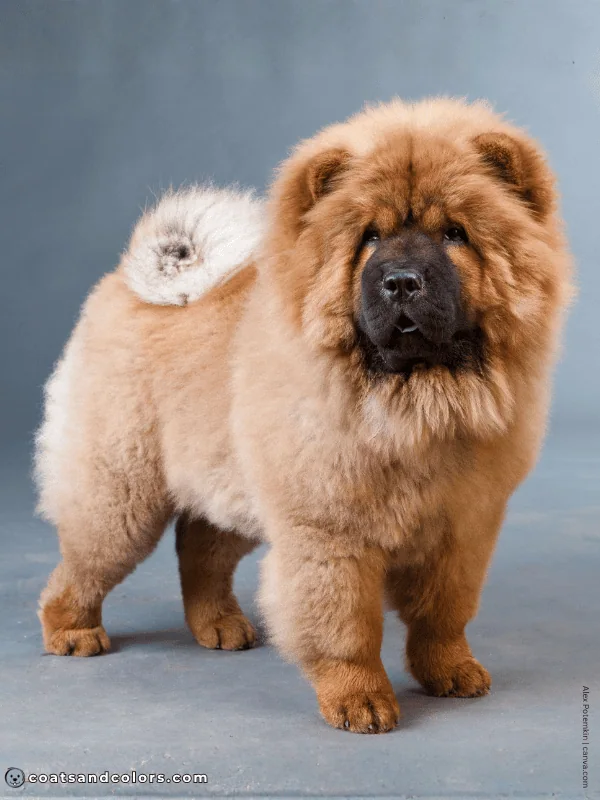
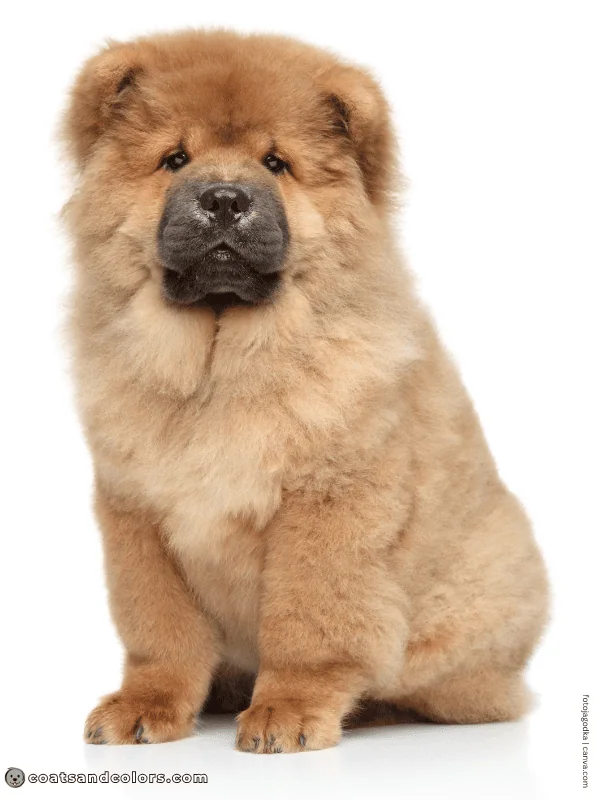
Chow Chow Base Patterns
| A LOCUS | K LOCUS | E LOCUS | PATTERN |
|---|---|---|---|
| Ay/Ay | ky/ky | E/- | sable “red” –> “cinnamon” |
| KB/- | E/- | dominant black “black” –> “blue” | |
| e/e | recessive red “cream” |
Here are the color charts for Chow Chow standard colors:
Base Colors
The base color is determined by the B locus and D locus.
B Locus
| B | black |
| b | brown |
Chows should have black pigment (B/B).
But chocolate (b) is also present in pet breeding.
D Locus
| D | dense |
| d | diluted |
Chows can have normal (D/-) or diluted (d/d) black.
Interestingly, the Chow Chow breed has both the common d1 allele and the relatively rare d2 allele. This separate recessive allele was also confirmed in Sloughis and Thai Ridgebacks[9].
Most breeds only have the d1 allele. The effect of d1 and d2 is the same, meaning all combinations (d1/d1, d1/d2, and d2/d2) will cause color dilution and can be simplified into “d/d“. But it’s relevant for genetic testing coat color in Chows to choose a company that can actually look for both d1 and d2.
Red Intensity
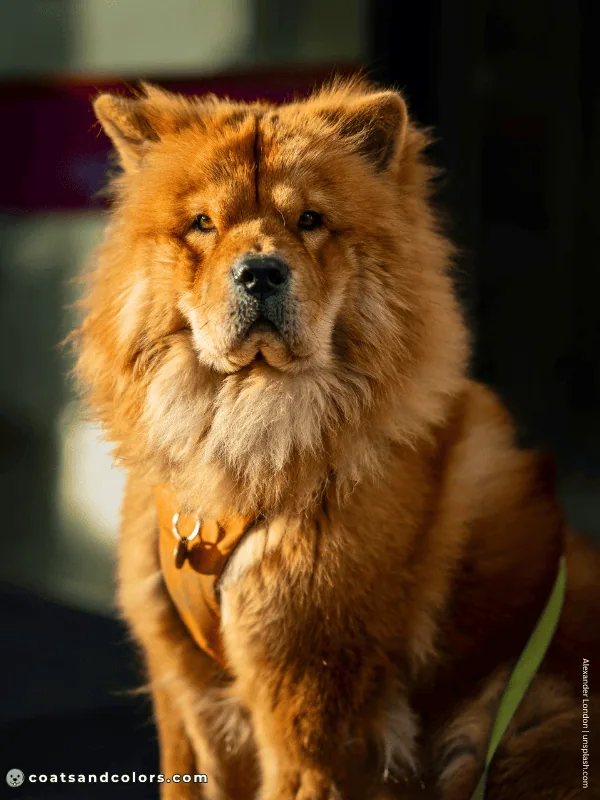
The red colors in Chow Chows range from red and orange to cream and white.
The black-based sables can be light golden to deep mahogany red. And the blue-based sable dogs tend to have a slightly lighter fawn or matte reddish cinnamon color.
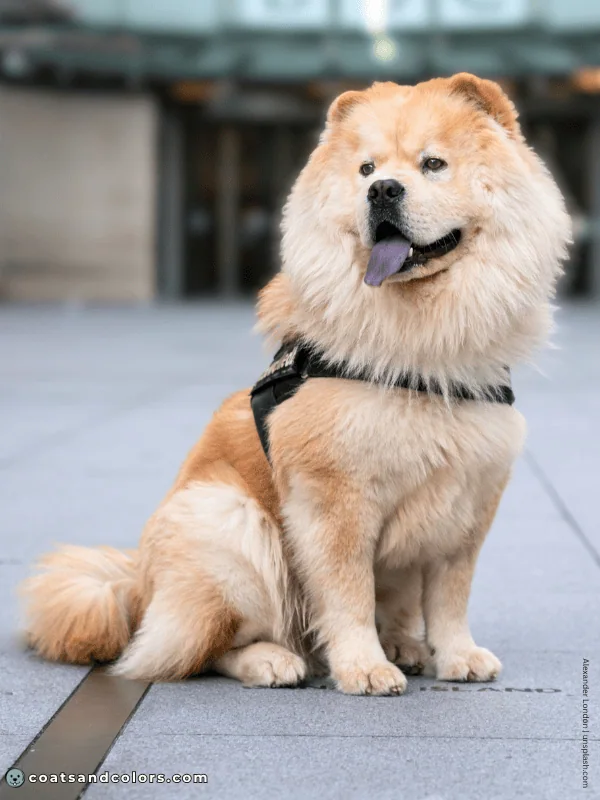
There also seems to be an untestable modifier that lightens the red intensity only in recessive red (e/e) dogs. This is likely why cream e/e and red sable puppies can be born in the same litter.
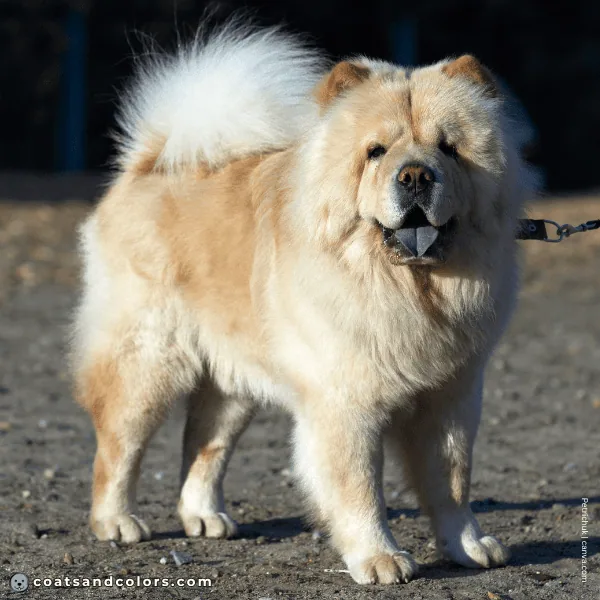
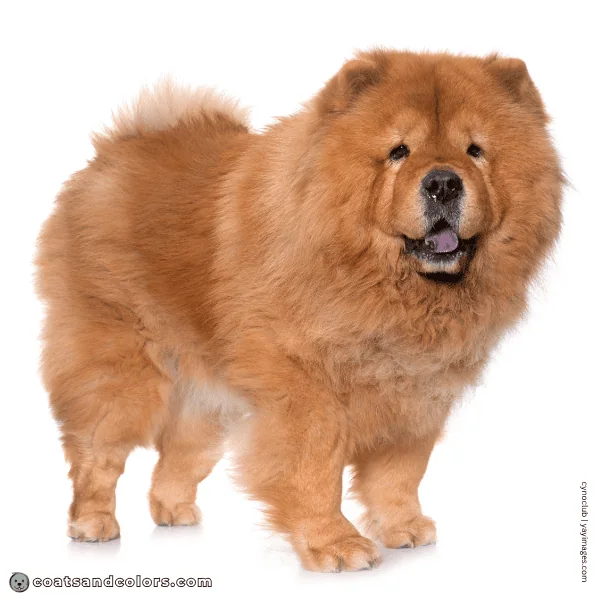
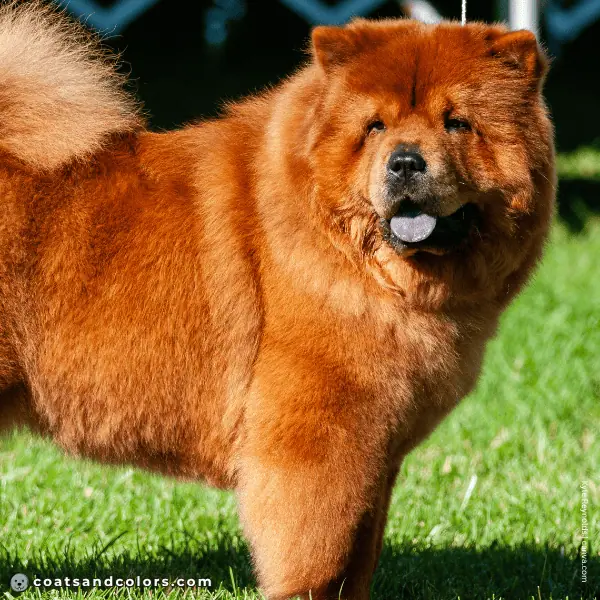
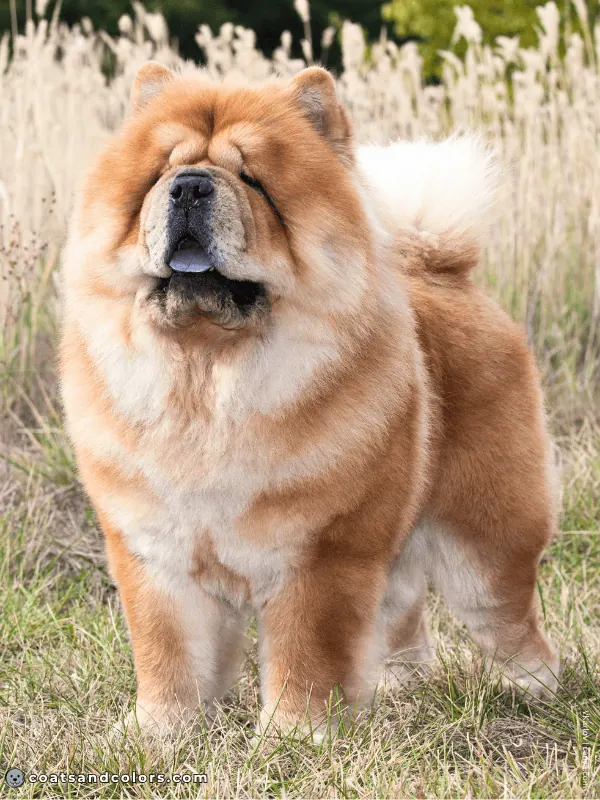
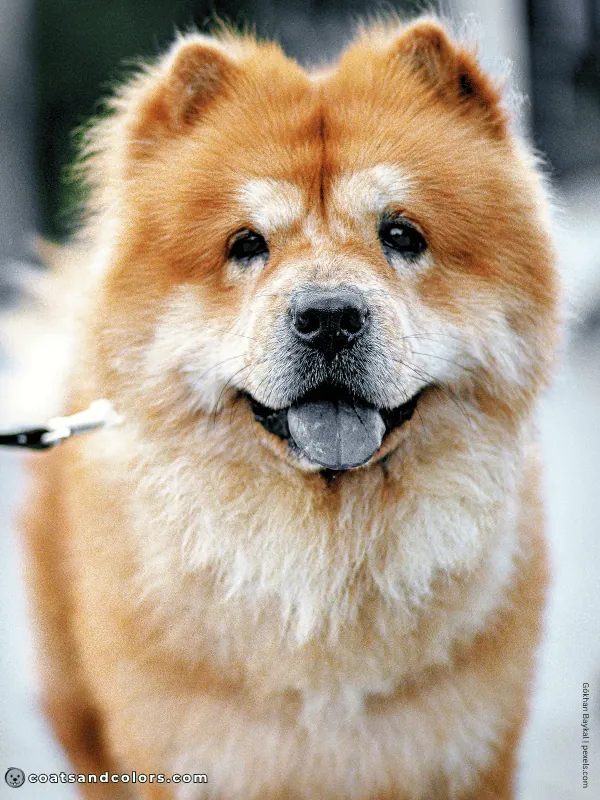
Some Chow Chows show countershading. This causes the dilution of red intensity towards the ventral body surface, e.g. dogs have less intense red on their underbody, lower legs, front, and face.
White Markings
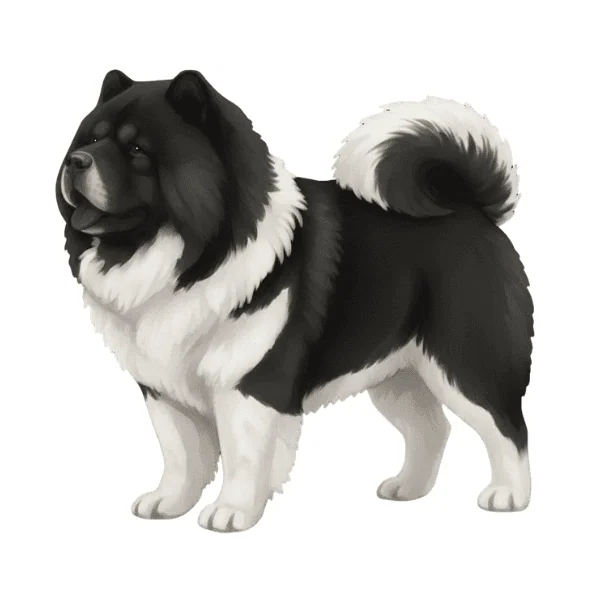
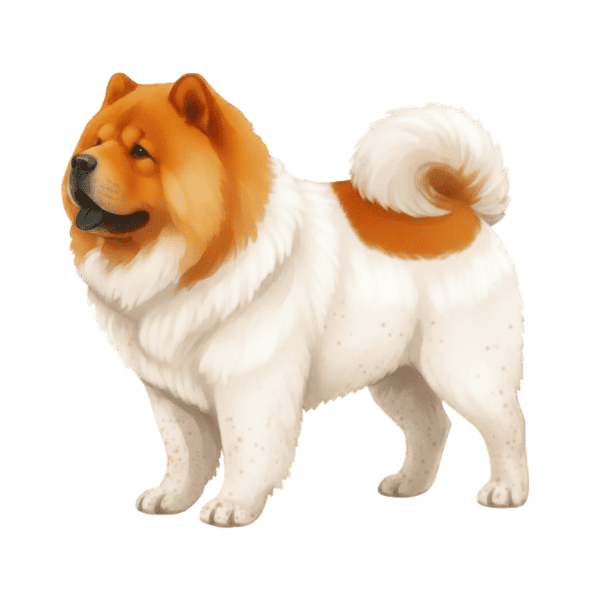
The Chow Chow breed should have a solid coat color (S/S). Some dogs are “solid with lighter shadings in the ruff, tail and featherings“. This variation in shade can happen due to factors like lighter undercoat and countershading in red and cinnamon Chows, and rusting or seal in black or blue dogs.
The extended white used in color breeding to make parti Chow Chows is typically caused by piebald (sP). Some of these piebald Chow Chows can have ticking with mottles in their white areas.
Chow Chow Eye Colors
Chow Chows are supposed to have dark brown eyes with black eye rims per the AKC standard. However, it’s quite normal for diluted eumelanin (cinnamon, blue) to also cause lighter eye colors.
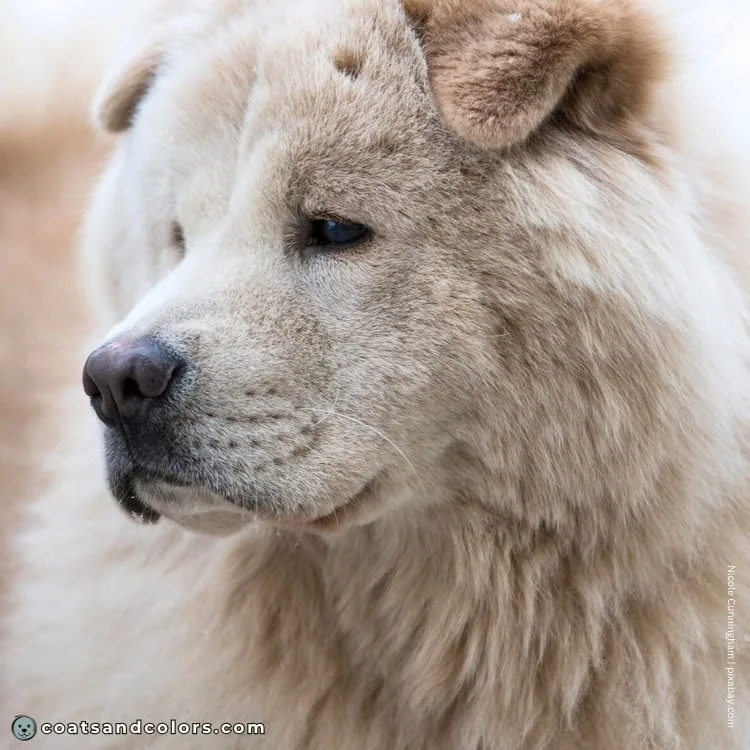
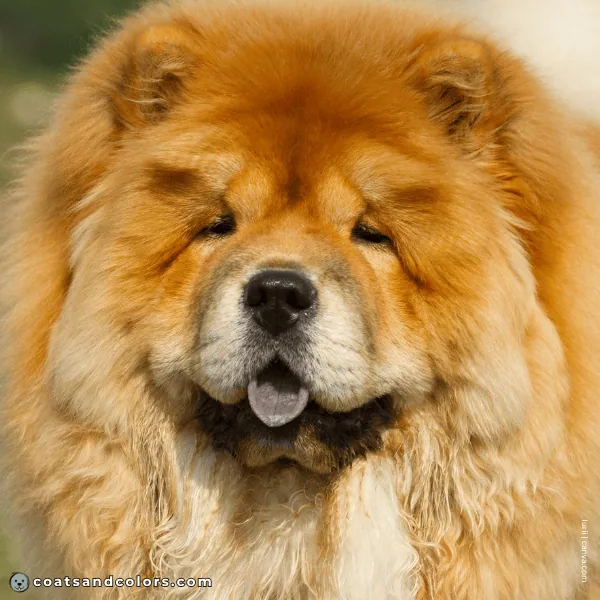
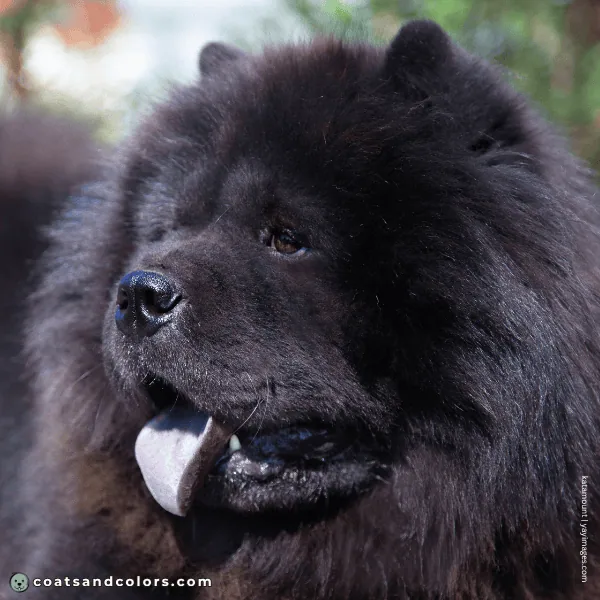
“Eyes dark brown, deep set and placed wide apart and obliquely, of moderate size, almond in shape.”
AKC Breed Standard[1]
“Dark, oval shaped, medium sized and clean. A matching coloured eye permissible in blues and fawns.“
FCI Breed Standard[2]
Chow Chow Nose Colors
The black and red Chow Chows have a black nose. And blue or cinnamon Chow Chows have a gray nose (they have bred towards a very, very dark gray nose for a long time because the standard claims that all dogs should have black noses). The cream and white Chow Chows can have a fading nose.
And weak nose pigment can also just sometimes happen with any coat color.
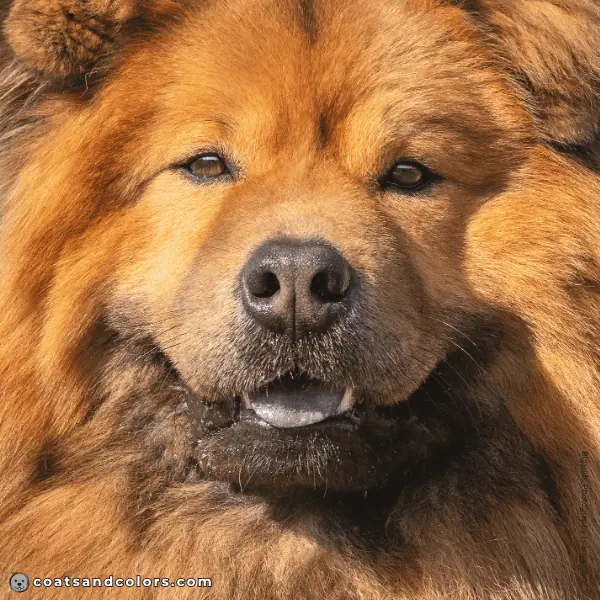
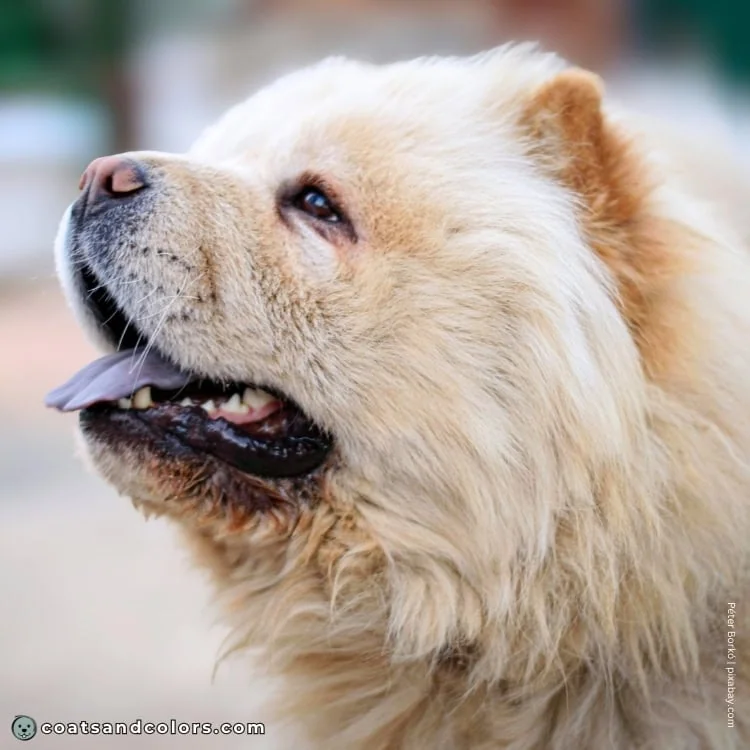
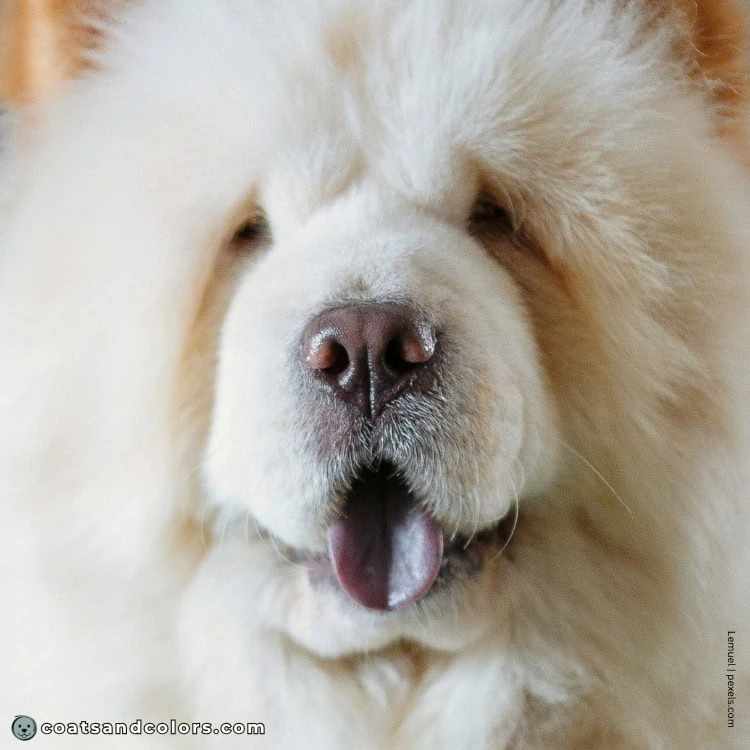
“Reds, Blacks and Cinnamons must have a solid black nose. Blue chows may have a solid blue or slate nose. Cream chows may have a range of nose color, from dark black/brown solid pigment, fading to pinkish pigment, with or without darker nose rim pigment at the outer edge, as puppies or adults; all of which are equally correct.”
AKC Breed Standard[1]
“Large and wide in all cases, black (with exception of cream and near white, in which case a lighter coloured nose is permissible, and in blues and fawns a self-coloured nose (but black preferable in all cases).”
FCI Breed Standard[2]
Chow Chow Coat Type
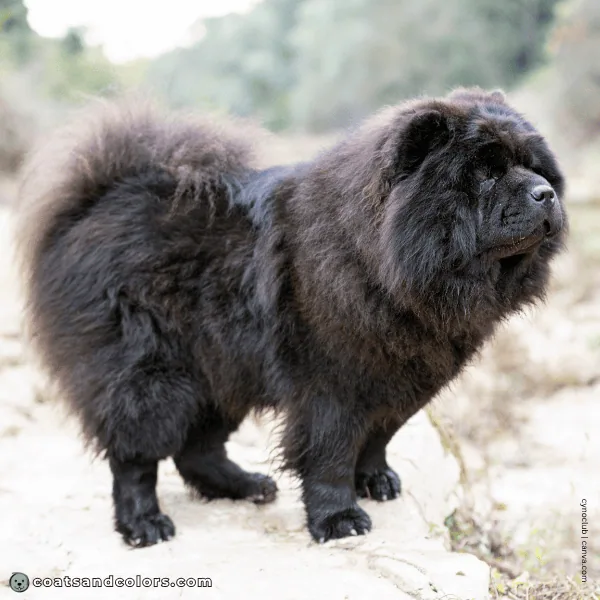
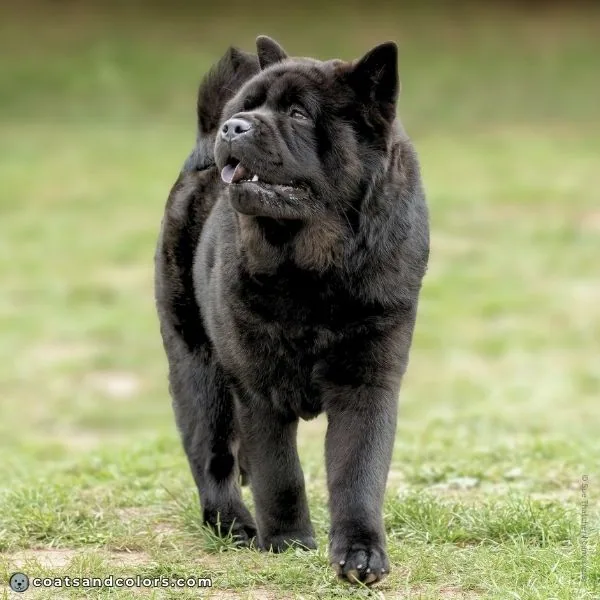
This breed has a rough and a smooth variety.
“There are two types of coat; rough and smooth. Both are double coated.”
AKC Breed Standard[1]
“Either rough or smooth.”
FCI Breed Standard[2]
Smooth Variety
“The smooth Chow has a hard, dense, smooth outer coat with a definite undercoat. There should be no obvious ruff or feathering on the legs or tail.”
AKC Breed Standard[1]
“Coat short, dense, straight, upstanding, not flat, plush-like in texture.”
FCI Breed Standard[2]
Rough Variety
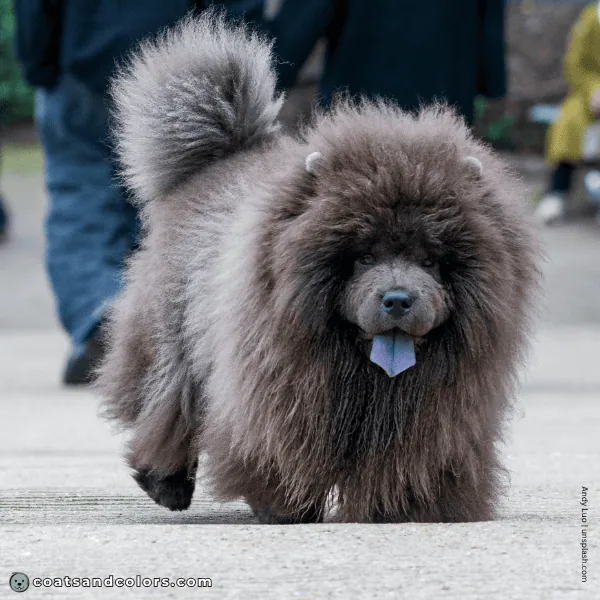
“In the rough coat, the outer coat is abundant, dense, straight and offstanding, rather coarse in texture. The coat forms a profuse ruff around the head and neck, framing the head. The coat length varies markedly on different Chows and thickness, texture and condition should be given greater emphasis than length. Obvious trimming or shaping is undesirable.“
AKC Breed Standard[1]
“Profuse, abundant, dense, straight and stand-off but not excessive in length. Outer coat coarse, with soft woolly undercoat. Especially thick round neck forming mane or ruff and with good culottes or breechings on back of thighs.”
FCI Breed Standard[2]
Chow Chows have a ton of undercoat. And some have even more extreme fluff than others. The grooming requirements for the long-haired variety should not be underestimated.
Related Breeds
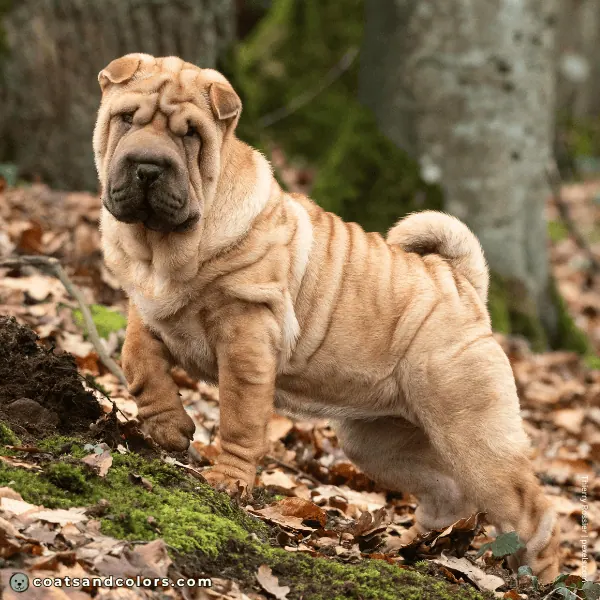
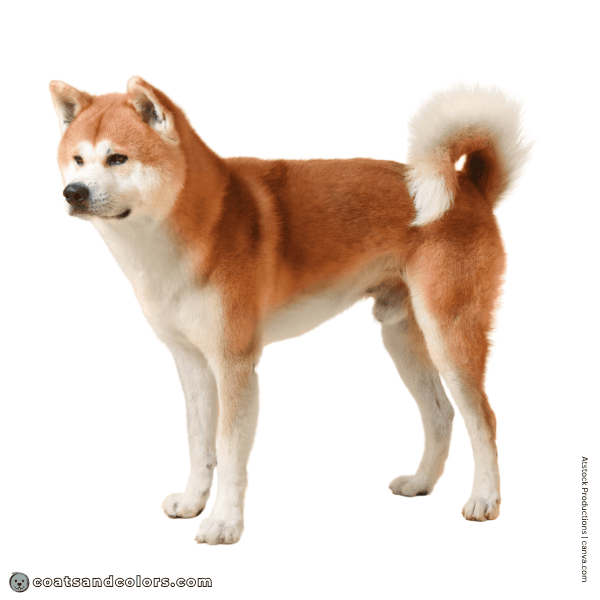
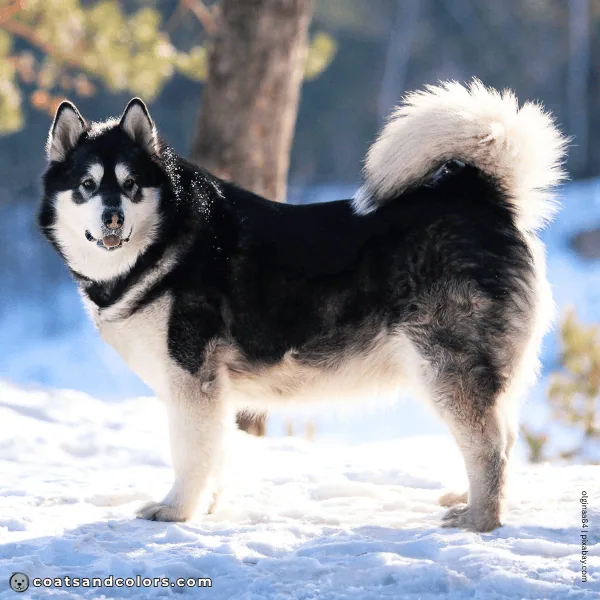
The Chow Chow is a very old primitive breed that originated from indigenous Chinese dogs. It is related to spitz dogs of the Nordic type and other East Asian breeds, such as the Shar Pei or Akita[2,6].
Learn More

Links
[1] American Kennel Club (AKC): Chow Chow
[2] Fédération Cynologique Internationale (FCI): Chow Chow
[3] Royal Kennel Club (RKC): Chow Chow
[4] Canadian Kennel Club (CKC): Chow Chow
[5] Dreger et al. (2019). True Colors: Commercially-acquired morphological genotypes reveal hidden allele variation among dog breeds, informing both trait ancestry and breed potential. PLoS ONE 14(10): e0223995. https://doi.org/10.1371/journal.pone.0223995
[6] Yang et al. The origin of chow chows in the light of the East Asian breeds. BMC Genomics 18, 174 (2017). https://doi.org/10.1186/s12864-017-3525-9
[7] Dr. Gail Forsythe. Comparative AKC CKC FCI breed standard interpretation. 2023.
[8] Chow Chow Club Inc: Judges Education.
[9] Bauer, Kehl, Jagannathan, Leeb: A novel MLPH variant in dogs with coat colour dilution. Anim Genet. 2018. http://dx.doi.org/10.1111/age.12632
Image Credits
Alex Potemkin/canva.com
Alexander London/unsplash.com
Andy Luo/unsplash.com
Anil Sharma/pexels.com
Atstock Productions/canva.com
Bigandt_Photography/canva.com
borabalbey/canva.com
cynoclub/canva.com
cynoclub/yayimages.com
DevidDO/canva.com
Diyanski/canva.com
dpcrestock/yayimages.com
Evgeny_Kozhevnikov/canva.com
fotojagodka/canva.com
Garosha/canva.com
GlobalP/canva.com
Gökhan Baykal/pexels.com
Haberdoedas/unsplash.com
irisphoto2/canva.com
Iurii/canva.com
katamount/yayimages.com
kavalenkava/yayimages.com
kerby genil/pexels.com
Kurt Pas/canva.com
Laura Fay/canva.com
Lemuel/pexels.com
MartinHolzer/pixabay.com
Mauro Fossati/unsplash .com
Nicole Cunningham/pixabay.com
olginaa84/pixabay.com
Péter Borkó/pixabay.com
Petrichuk/canva.com
siamka/pixabay.com
Sue Thatcher/canva.com
Thierry Rossier/pexels.com
VKarlov/canva.com
vladimirvasil/canva.com
Weng Ern Chew/canva.com
Hi! I’m Steffi. I am a biologist and a big time dog nerd. You are curious about coat color genetics? You’ve come to the right place! Read more.