

You all know the Labrador standard coat colors are black, chocolate, or yellow. But there are a lot of off-colors, too. Read on, and I’ll show you some examples.
Black
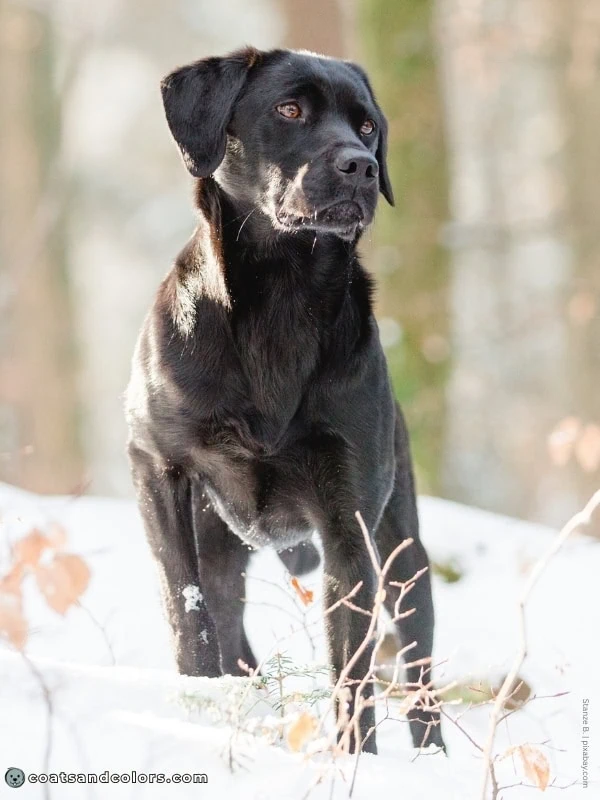
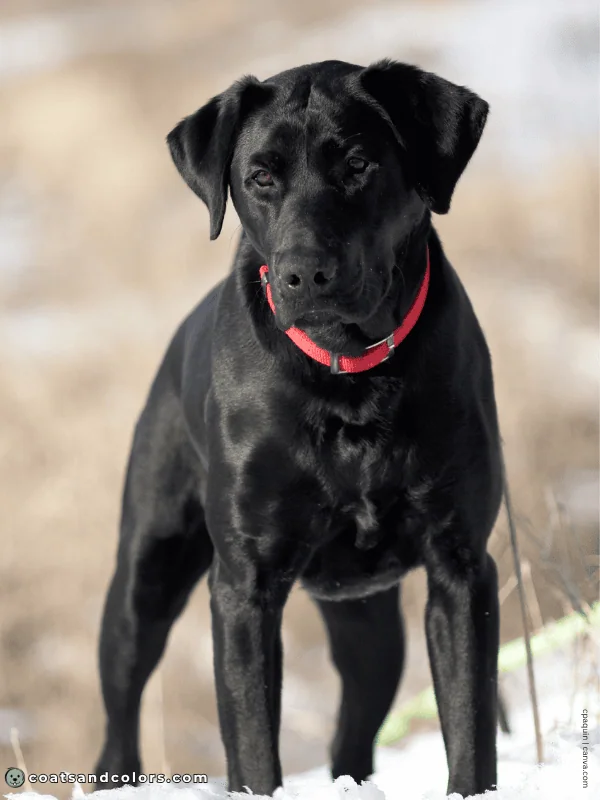
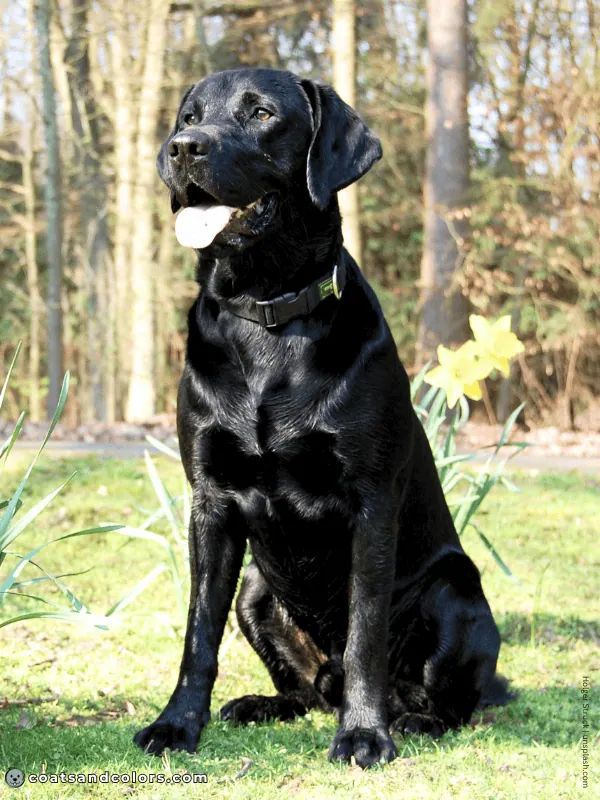
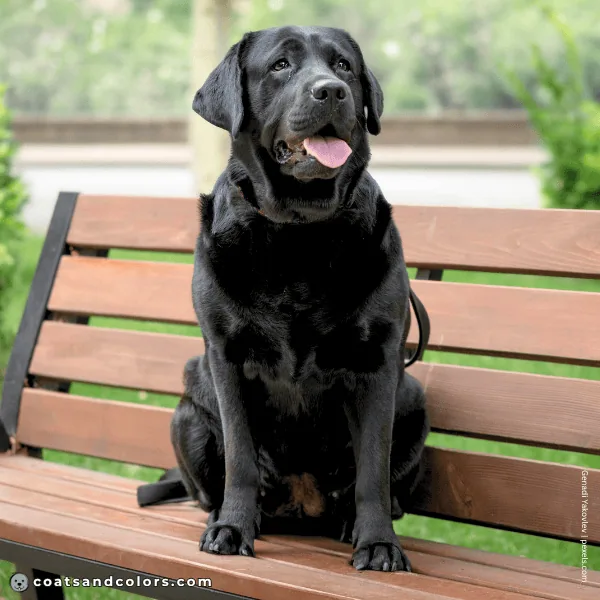
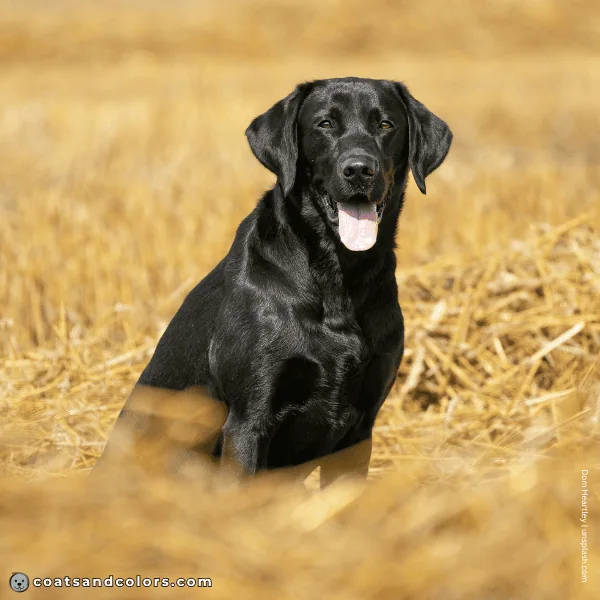
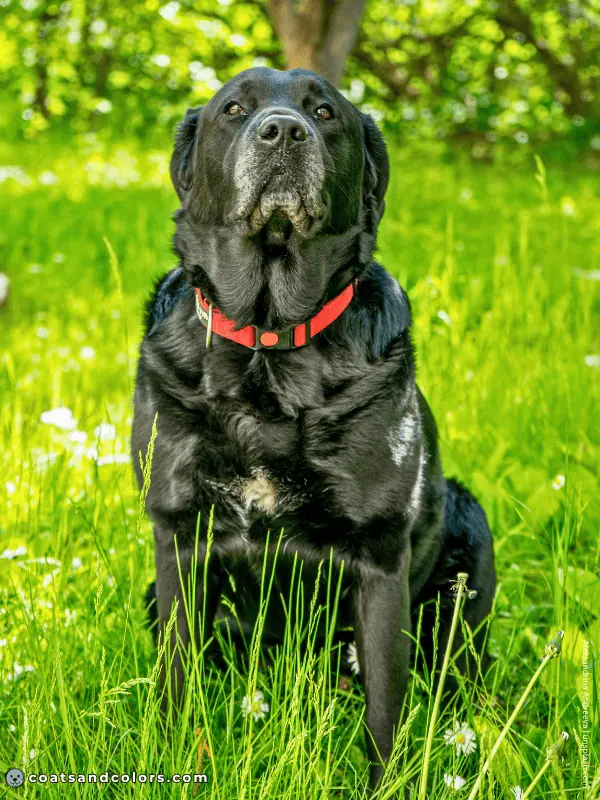
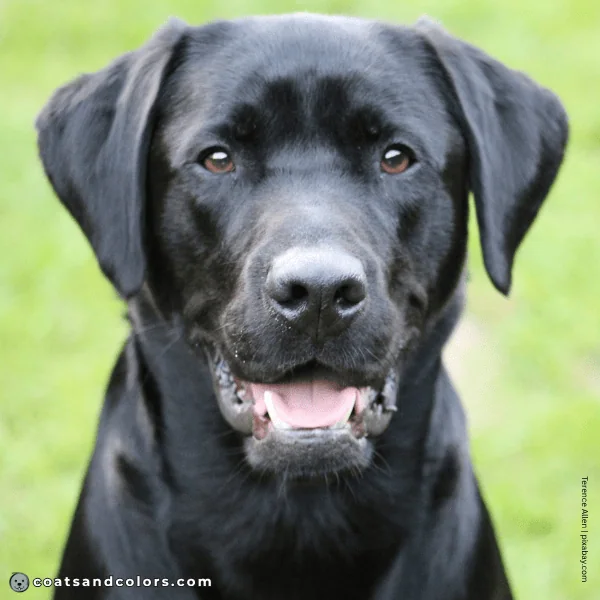
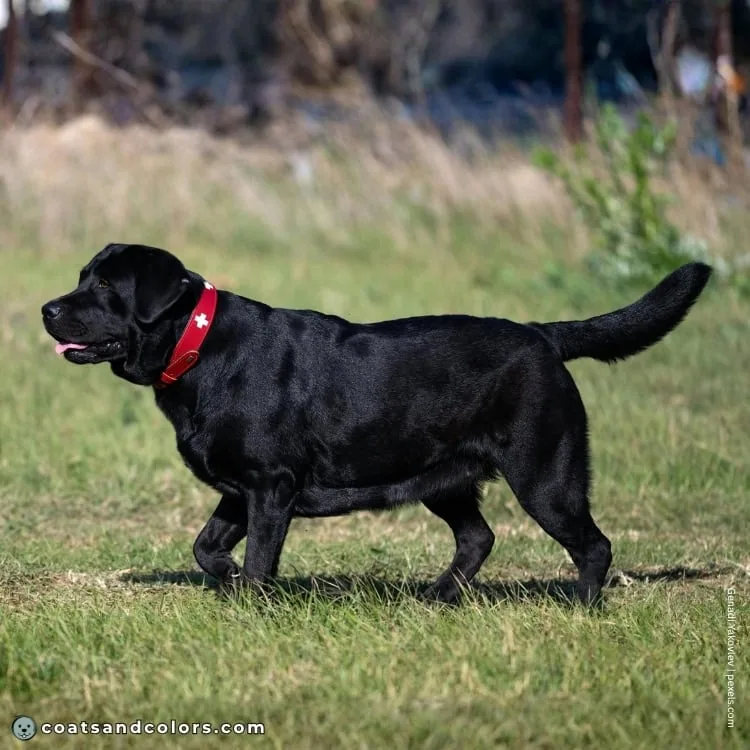
I’m sure you have seen plenty of black Labs in your life. You know they are supposed to be jet black with no hints of tan or white. Their pattern is officially called dominant black.
Did you know that most of them have tan points or brindle points underneath their black coat? But the dominant black pattern hides all the tan color, so the dog appears solid dark.
Still, a very small number of Labradors may show faint hints of reddish ghost tan.
BASE PATTERN
dominant black
MERLE
–
OTHER
–
EUMELANIN
black
INTENSITY
–
WHITE
solid
Chocolate
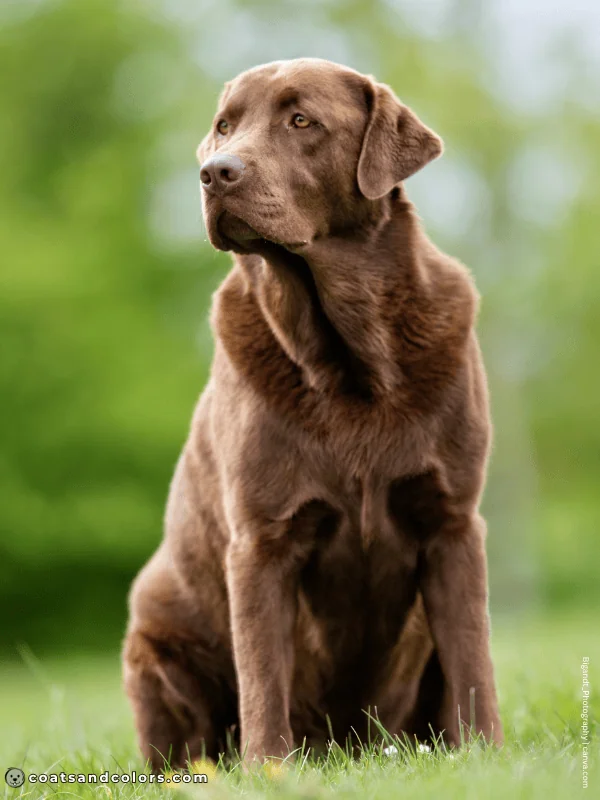
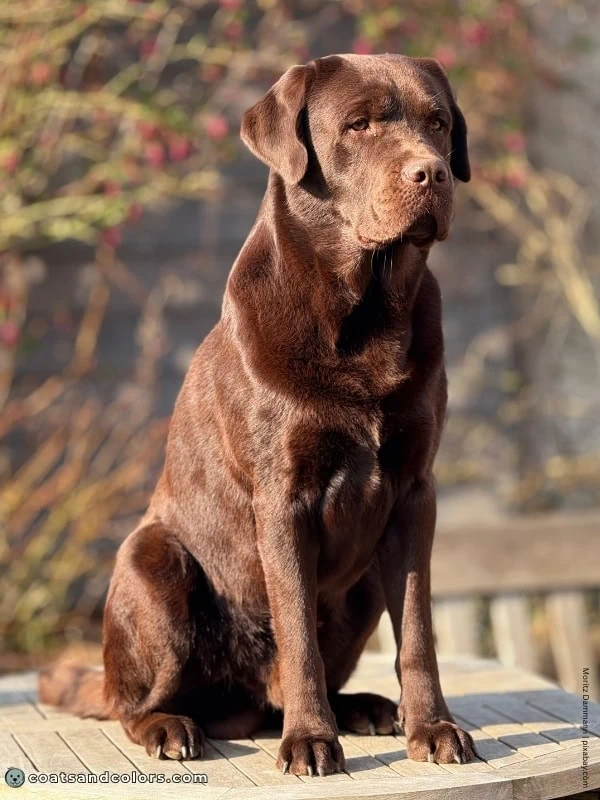
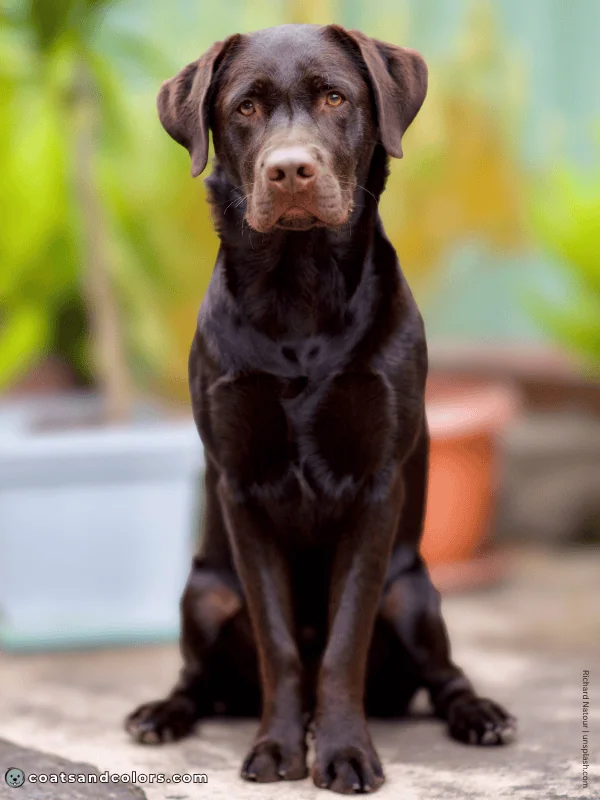
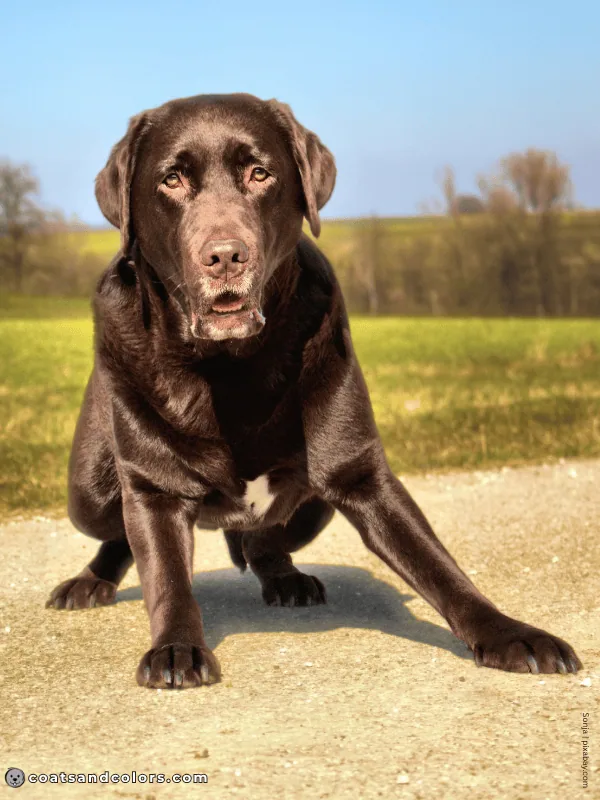
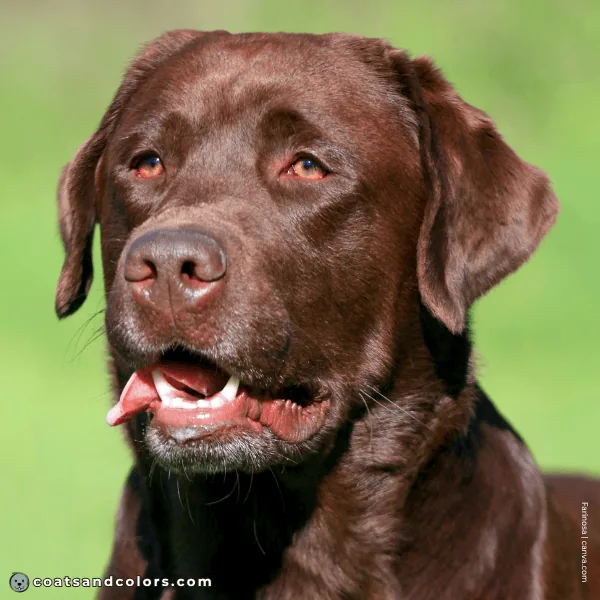
The chocolate Labrador has a dominant black pattern, but with brown eumelanin.
This is the most favorite color for pet dogs. We still don’t know what causes different shades of brown. But colors range from lighter milky chocolate to very dark chocolate. Also, brown pigment tends to sun-bleach a little more easily. Some brown dogs have patches of lighter colors in their old coat on their back just before the next shedding season is upon them.

BASE PATTERN
dominant black
MERLE
–
OTHER
–
EUMELANIN
brown
INTENSITY
–
WHITE
solid
Yellow


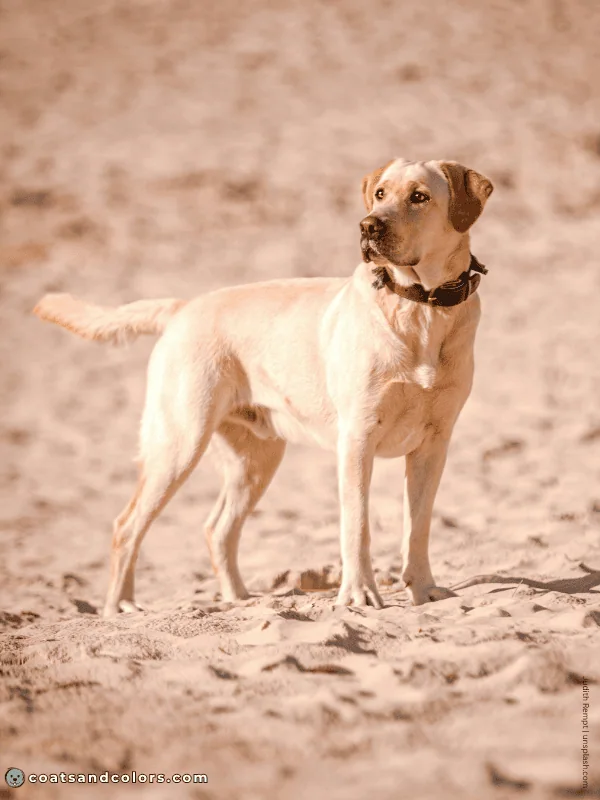
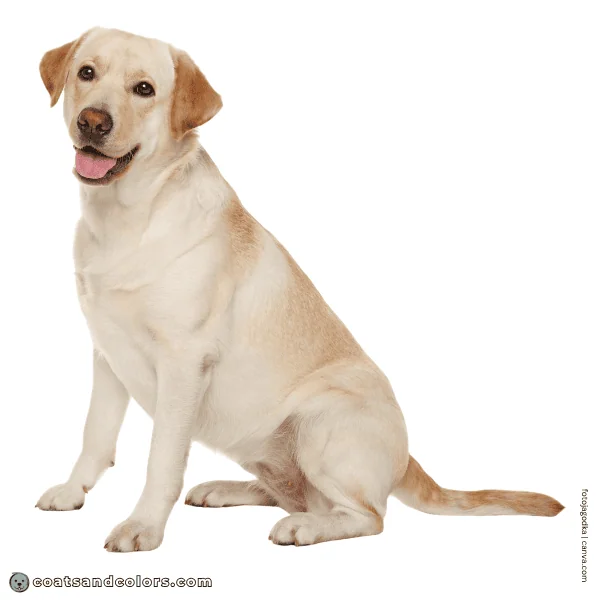
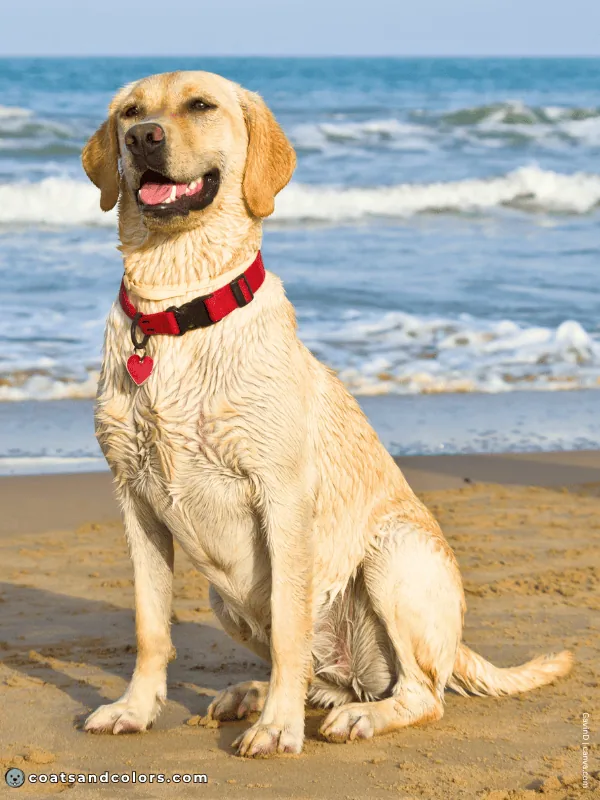
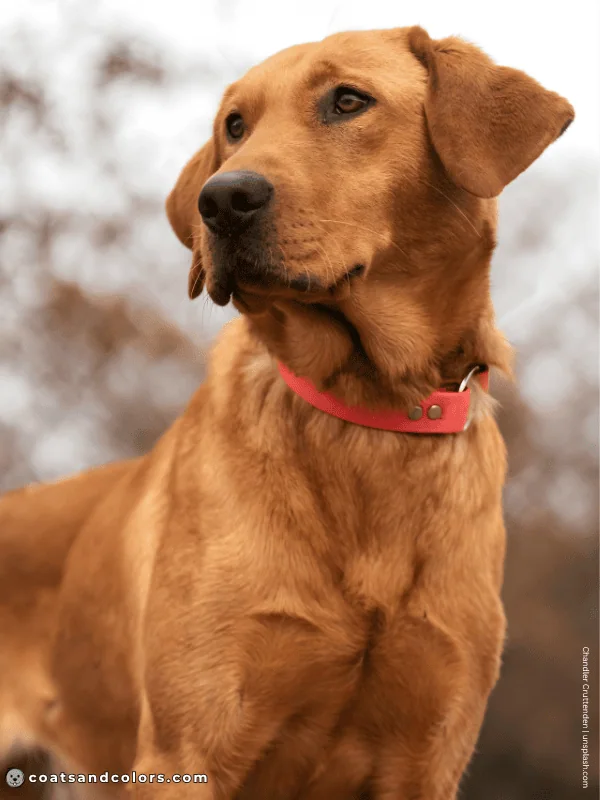
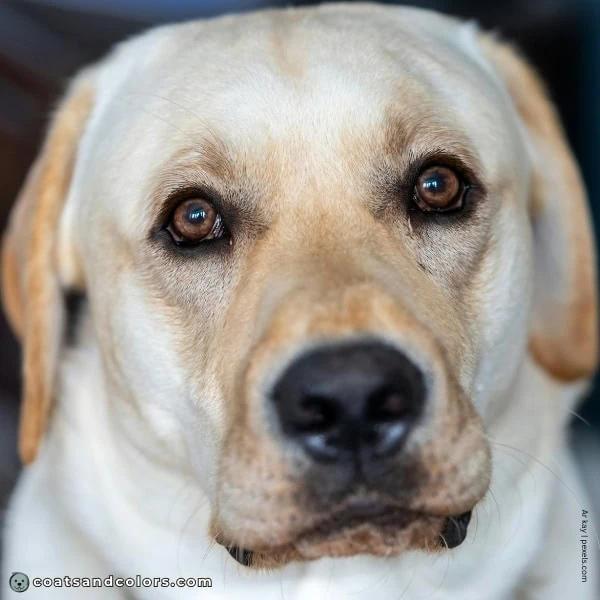
The color of yellow Labs ranges from cream to dark golden. In working lines, you will also find darker “fox red” dogs.
A yellow Labrador can not make black or brown pigment (eumelanin) in its hair. This leaves them with a solid yellow coat (phaeomelanin) and pale whiskers. Their pattern is called recessive red.
You can still see the color of their eumelanin in their nose color.
All recessive red dogs (e/e) in this breed are supposed to have black pigment showing in their nose and eye rims. A yellow Lab with a chocolate nose is called “dudley“.
BASE PATTERN
recessive red
MERLE
–
OTHER
–
EUMELANIN
black
INTENSITY
cream, golden, red
WHITE
solid
Faulty Colors
Labradors are supposed to be either solid dark or solid yellow. Any pattern with both pigment types (black and tan, chocolate and tan, sable, brindle, etc.) is considered an off-color.
“The Labrador Retriever coat colors are black, yellow and chocolate. Any other color or a combination of colors is a disqualification.”
AKC Breed Standard[1]
“Disqualifying Fault: Any other coat colour or combination of colours.”
FCI Breed Standard[2]
The traits that make a Labrador express these patterns (multi-colored Labs need to be anything but e/e and anything but KB/-) are already in the breed. They are just rare enough that it does not happen that often.
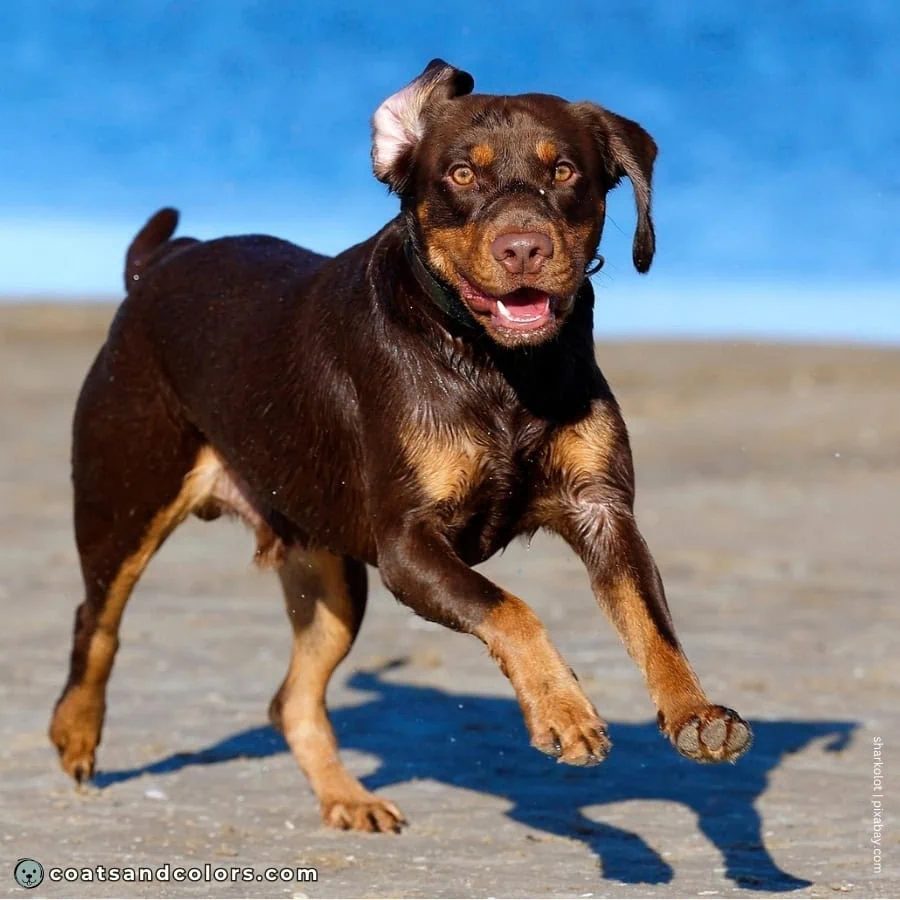
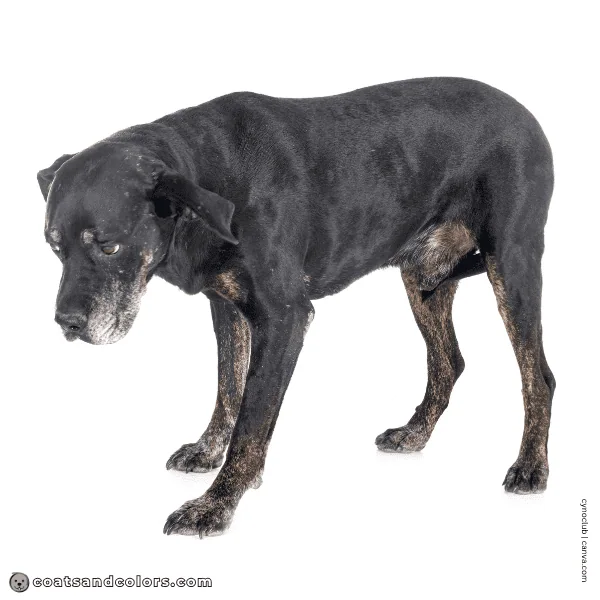

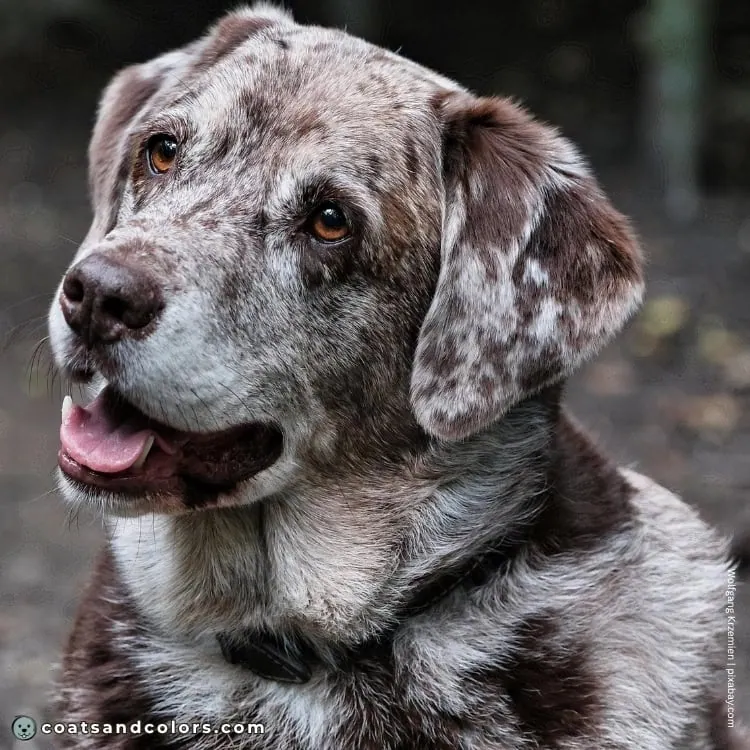
Then there are the “rare colors” produced by color breeders. The only thing that makes them rare is that they did not occur in purebred Labradors before someone decided to introduce them on purpose.

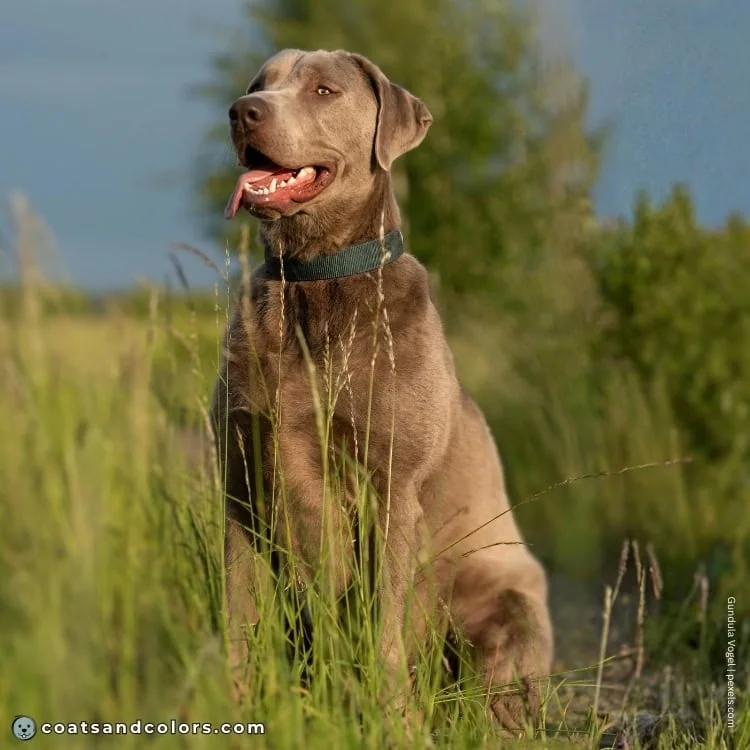
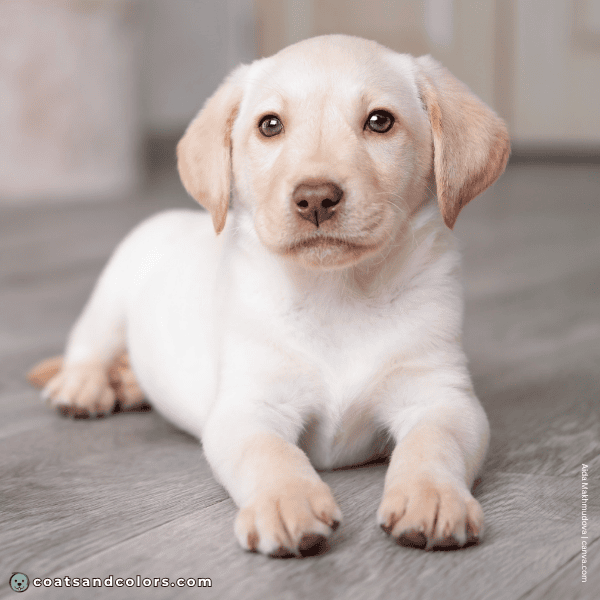
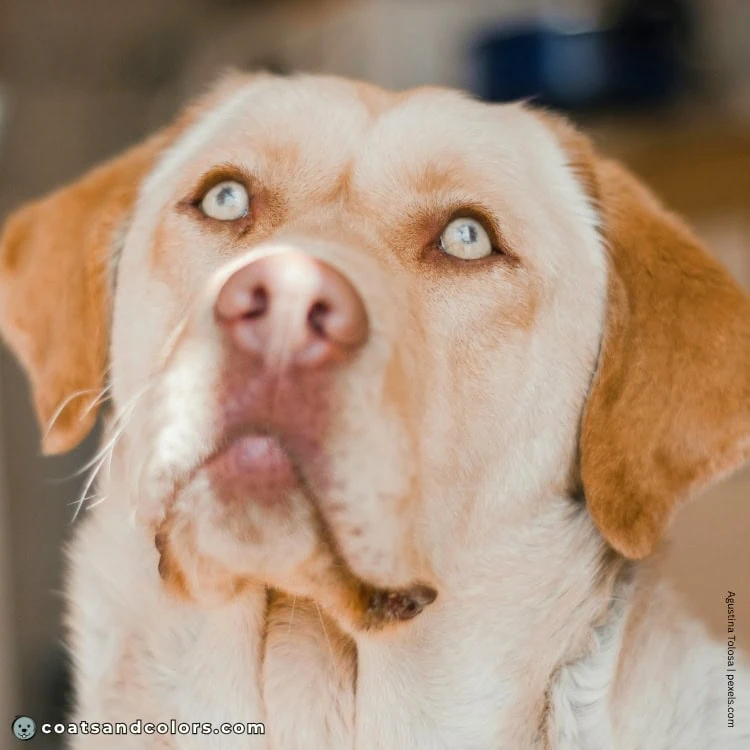
The yellow Labradors can have a chocolate nose (“Dudley”). Color breeders sometimes produce light yellow labs with a very faded blue or lilac nose and pale eye colors (they call it “champagne”).
Base Patterns
The base pattern describes the placement of phaeomelanin and eumelanin in the coat. The Labrador breed only has two patterns, solid dark (only eumelanin) or solid yellow (phaeomelanin).
There are only three genes that control the general placement of pigment types:
- The A locus controls the basic distribution of both pigment types.
- Next, the K locus can add black to the A locus pattern.
- Finally, the E locus regulates the general ability to produce black pigment.
A Locus
| Ay | clear sable |
| at | tan point |
| a | recessive black |
The A locus produces patterns that need both types of pigment.
Most Labradors are tan point at this locus. But Labradors can not express their A locus, so you can’t see their pattern. Meaning it does not really matter which patterns are present in the breed.
K Locus
| KB | dominant black |
| kbr | brindle |
| ky | wild-type |
Labradors should be fixed for dominant black (KB/KB). This forces their pigment cells to only produce eumelanin. And that replaces their A locus pattern with a solid dark coat.
But some Labs carry brindle (KB/kbr) or normal pattern expression (KB/ky). So there is a slim chance to produce puppies that are kbr/- or ky/ky and can express their A locus pattern (e.g. black & tan).
“A black with brindle markings or a black with tan markings is a disqualification.”
AKC Breed Standard[1]
Another interesting thing happens when a dog expresses the still untestable “seal factor”. This causes what we call incomplete dominant black and lets some of the hidden A locus pattern show through. This is rare, but some black Labradors have very obvious reddish ghost tan points.
E Locus
| Em | black mask |
| E | wild-type |
| e | recessive red |
Most black and chocolate Labradors are E/- and can express their KB/KB. Dark masks are also present in the breed, since it does not matter if a KB/KB dog is masked (Em/-) or maskless (E/-). You can’t see a black mask on a black dog anyway. Or a brown mask on a chocolate Lab.
Yellow Labradors are e/e. This replaces their solid dark KB/KB pattern with a solid yellow coat.
Here is the Labrador Retriever color chart:
Labrador Base Patterns
| A LOCUS | K LOCUS | E LOCUS | PATTERN |
|---|---|---|---|
| KB/KB | E/- | solid dark “black” –> “chocolate” | |
| e/e | recessive red “yellow” |
Base Colors
The base color is determined by the B locus and D locus.
B Locus
| B | black |
Labradors can have black (B/-) or brown (b/b) eumelanin.
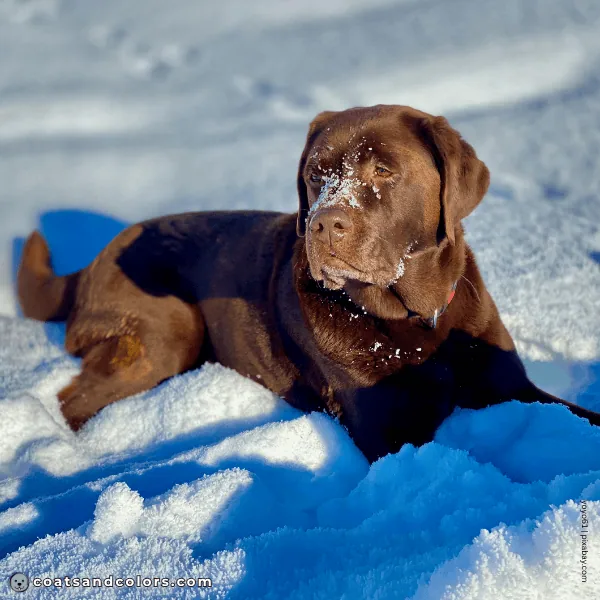
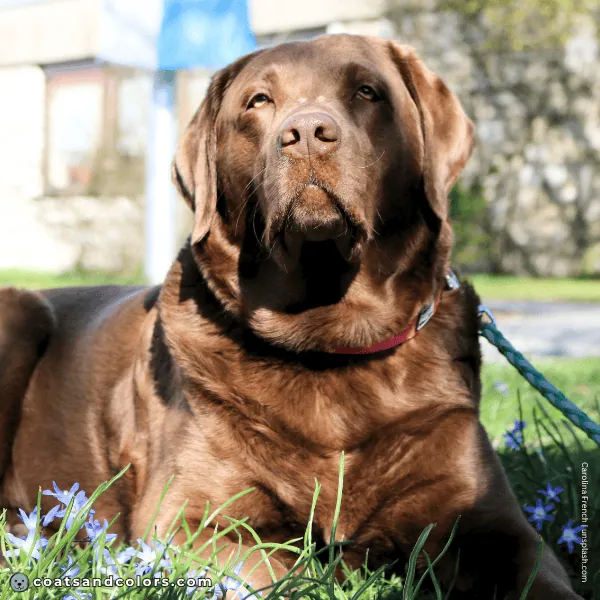
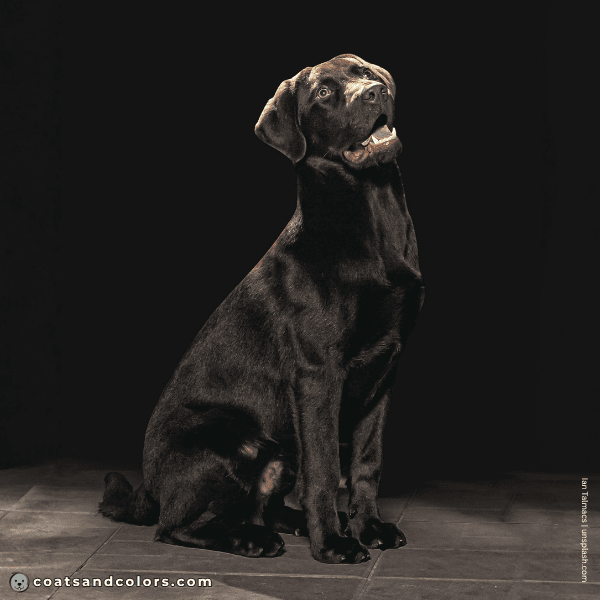
Brown colors can range from light chocolate to very dark chocolate. But most dogs have a warm liver brown color.

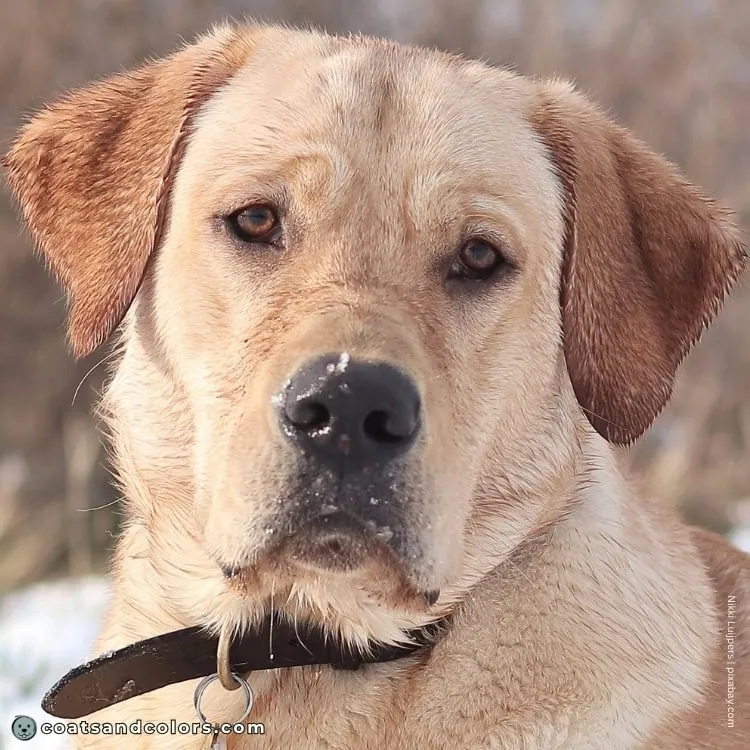
The yellow Labradors can have either base color, but only black-based yellow (B/- e/e) is suitable for show dogs. The chocolate-based yellow Labrador (b/b e/e) is called “Dudley”.
D Locus
| D | normal |
| d | diluted |
The purebred Labrador is fixed for a normal pigment color (D/D).
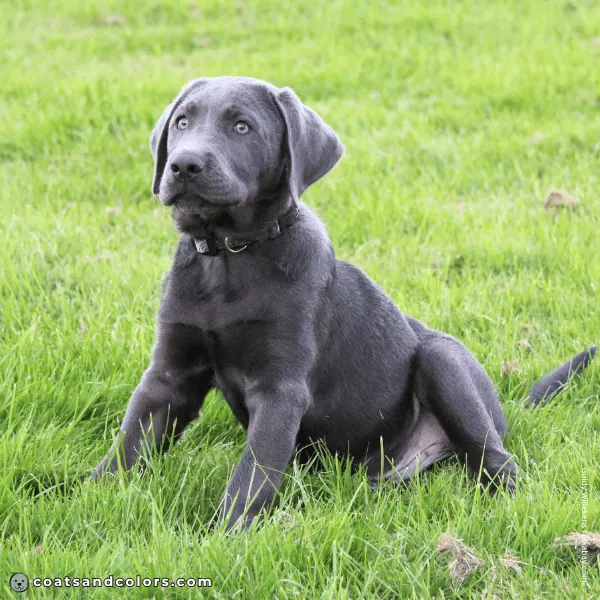
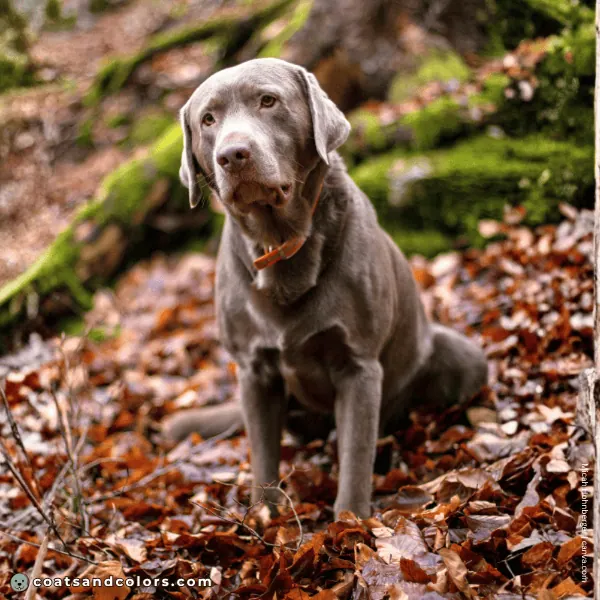
However, color breeders have long since introduced color dilution (d/d) via crossbreeding, mainly with Weimaraners and possibly with other blue or lilac dogs, too.
Dogs with a blue or lilac coat are at risk to develop CDA.
“charcoal“
“silver“
Labrador Base Colors
The genotypes of possible base colors in the Labrador breed:
| B LOCUS | D LOCUS | COLOR |
|---|---|---|
| B/- | D/- | black |
| b/b | D/- | brown “chocolate” |
| B/- | d/d | diluted black “charcoal” |
| b/b | d/d | diluted brown “silver” |
Red Intensity
In Labs, they mostly use “yellow” to describe their desired of red. This is the same color you get in “Golden” Retrievers. But Labradors colors can, in fact, range from very light cream to very red colors.
Puppies with a recessive red pattern tend to be born a little lighter and then darken over time.
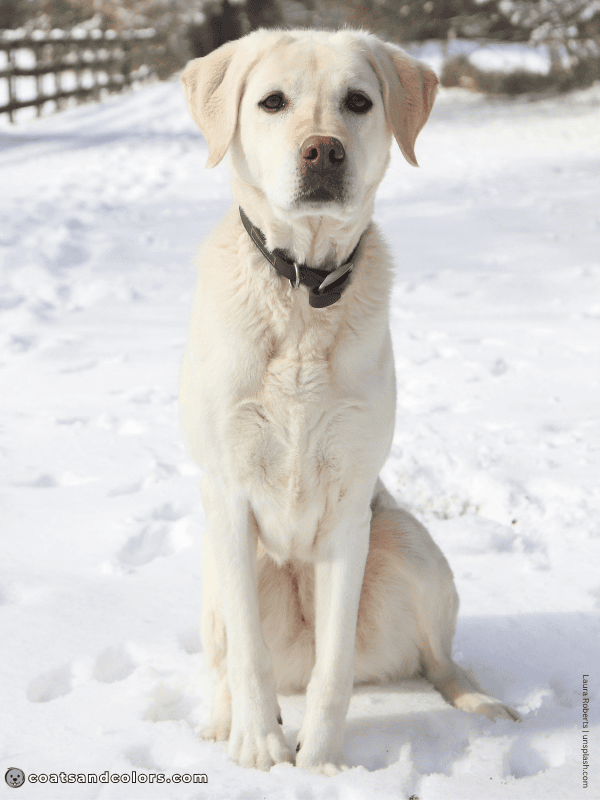


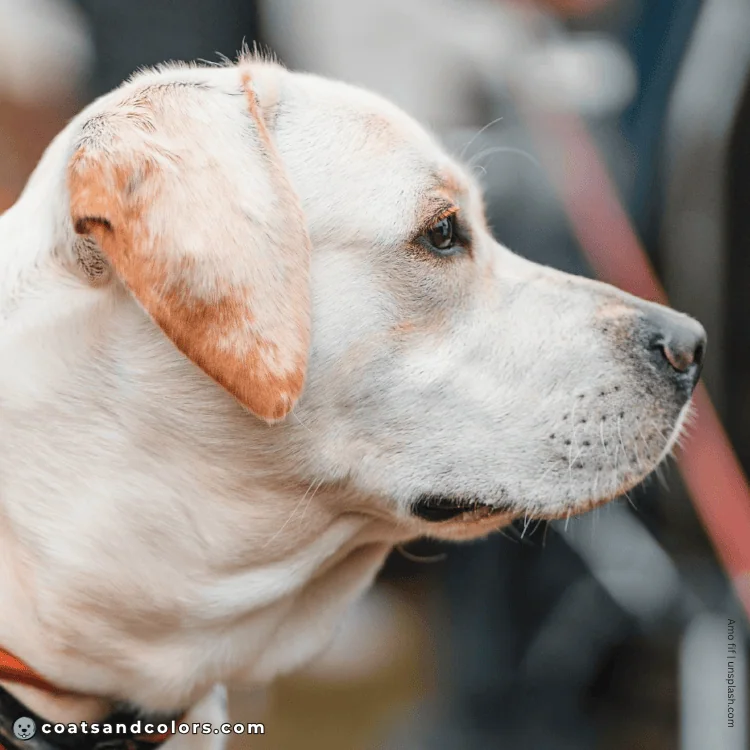
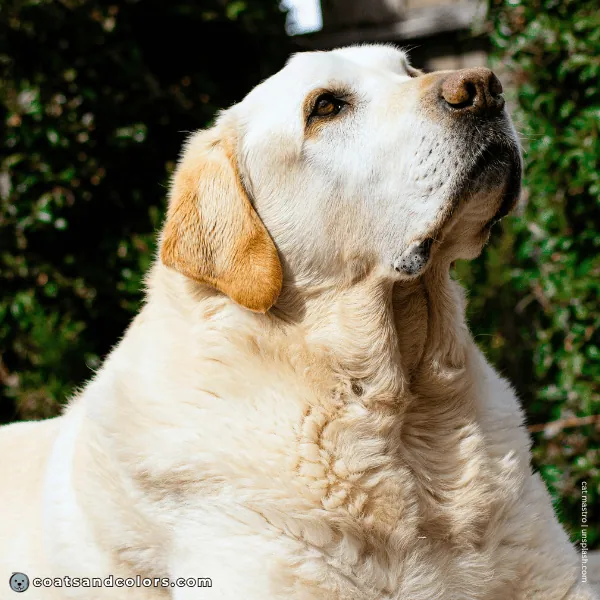
Many yellow Labs show lacing, a pooling of red pigment in some areas. Mostly the edge of the ears, but sometimes also on the face, back, lower legs, or thighs. Areas with very concentrated pigment can sometimes give “pseudo-mottling” on the ears. It’s not real ticking because this requires white markings.
White Markings
Labradors have a solid coat color (S/S).
However, a few dogs still show small white markings as puppies. And some keep a small patch of white hairs on their chest or toes in their adult coat.
“A small white spot on the chest is permissible, but not desirable.”
AKC Breed Standard[1]
“Small white spot on chest and the rear of pasterns permissible.”
FCI Breed Standard[2]
The thing with residual white is that often gives so little white that the missing pigment will still fill in after a while. So you can’t see if a solid adult dog had some minor puppy white or not. But if you breed dogs that both had puppy white to each other, this can build up from generation to generation until you end up with white patches that are too large to go away. Labrador breeders are aware of that.
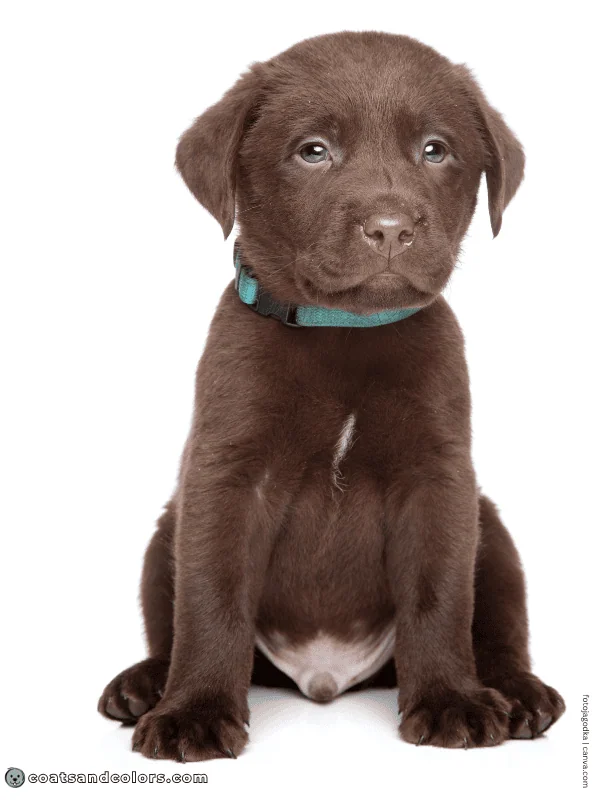
Also, breeds that do not wish for white markings often select for ticking without being aware of it (because heavy ticking can hide any white by covering it with dark mottles).
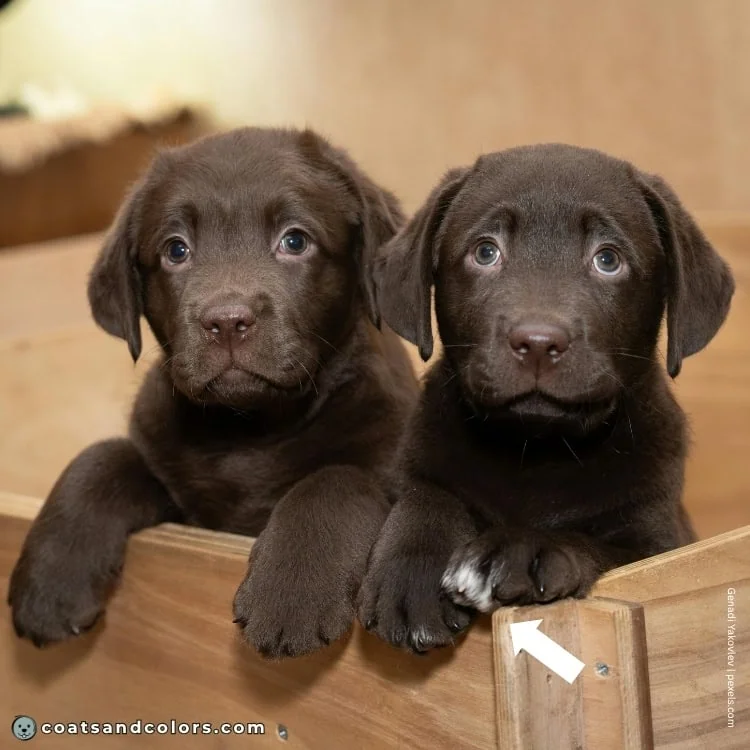
The breed also has some oddities:
Some Labs have a small white dot or a few stray white hairs on the back of the front paws. This is called a “Bolo spot,” named after dual-purpose champion “Banchory Bolo” (*1915) that had this kind of marking.
Another interesting phenotype in this breed is “hailstone“, small white spots on black dogs. This is a rare phenomenon in modern Labradors. Other breeds call it “snowflake“.
There is another untestable trait in Labradors that causes lots of white hairs to appear in some black puppies. This is incredibly rare, affected puppies look very “salt-and-peppered” for a while.
Merle
The Labrador has NEVER been a merle breed!
But being a popular pet dog, it is one of the breeds that has been merlified a while ago. The “Leopard Labrador” got its marbled coat color via crossbreeding with merle dogs, e.g. Catahoulas or Aussies (the latter might also have introduced the ALX4 trait for blue eyes into the pet population).
Labrador Eye Colors
“Eye color should be brown in black and yellow Labradors, and brown or hazel in chocolates. Black, or yellow eyes give a harsh expression and are undesirable.”
AKC Breed Standard[1]
“Eyes brown or hazel.”
FCI Breed Standard[2]
Eye color is largely determined by the base color and the amount of pigment present.
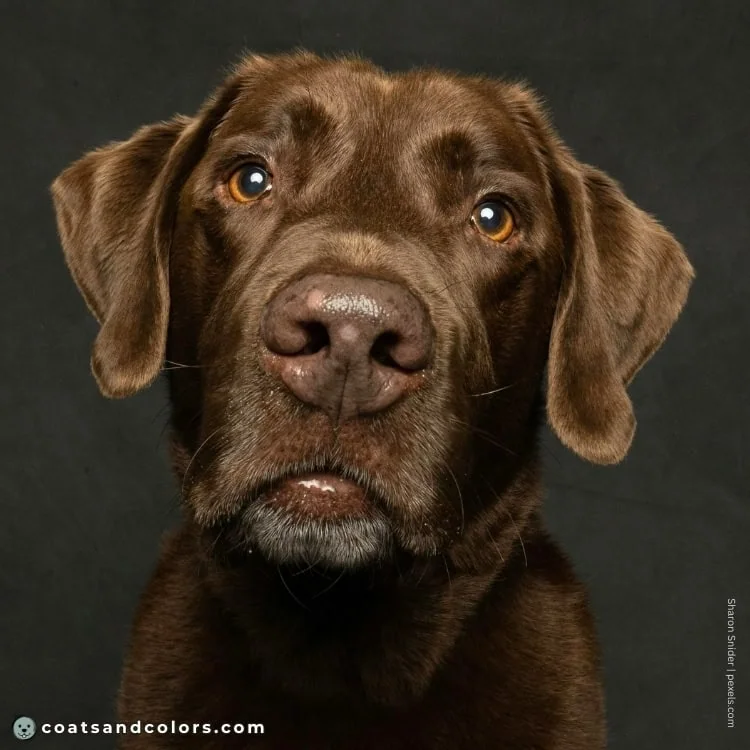
Ideally, black and black-based yellow Labradors have brown eyes. And chocolate Labradors (and Dudleys) have brown or lighter hazel to amber eyes due to their modified brown pigment color.
But lighter yellowish eye colors can still happen even in black Labradors. It’s just an undesired iris color for show dogs. The breed community feels that yellow eyes might look too harsh or piercing.
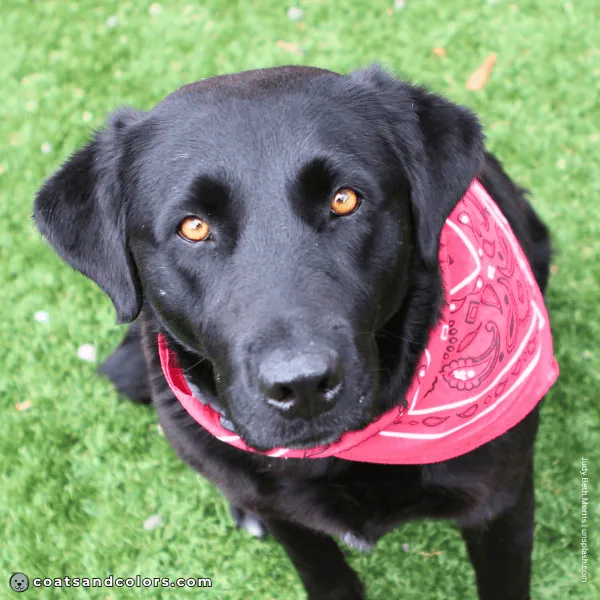
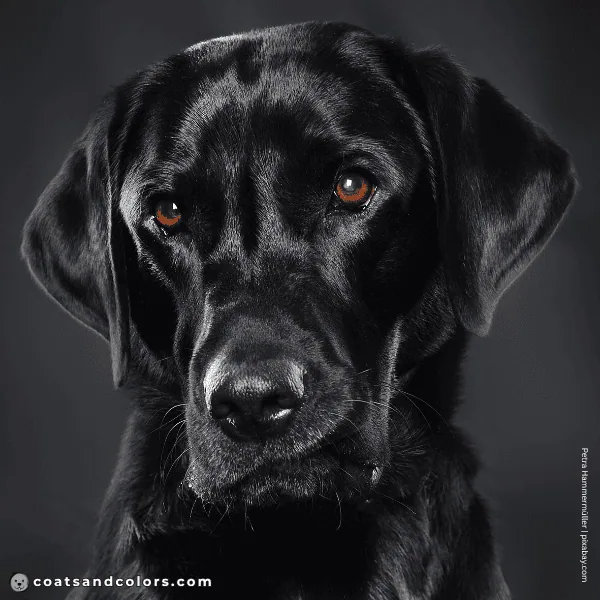
Here are some examples of eye colors in chocolate Labs:

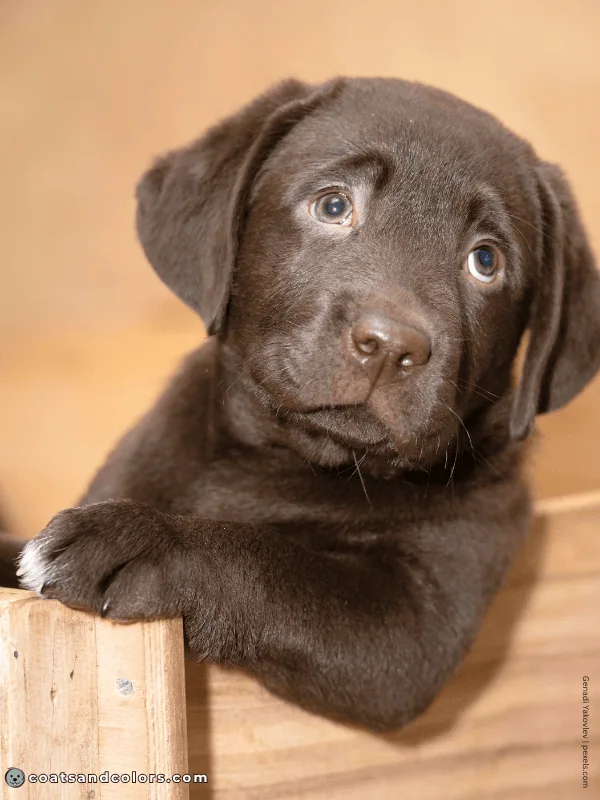
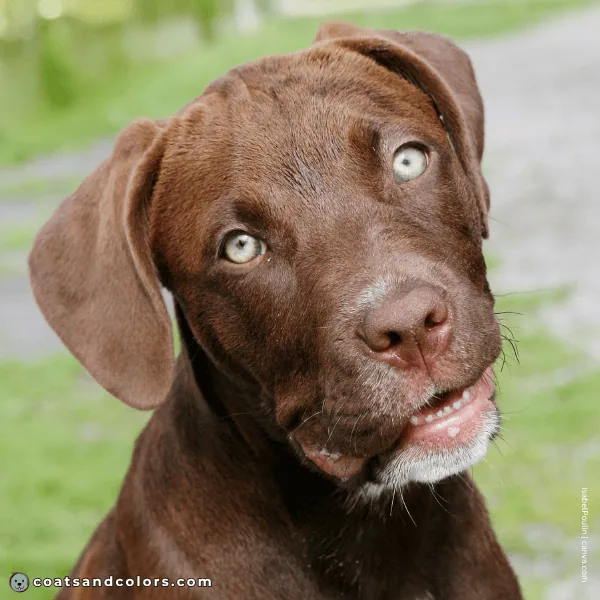
The chocolate puppies often have very light pale greenish or yellow-greenish eyes. This is totally normal, their eye color will get darker over time. It can take years for eye color to build up.


Labrador Nose Colors
“The nose should be black on black or yellow dogs, and brown on chocolates. Nose color fading to a lighter shade is not a fault. A thoroughly pink nose or one lacking in any pigment is a disqualification.”
AKC Breed Standard[1]
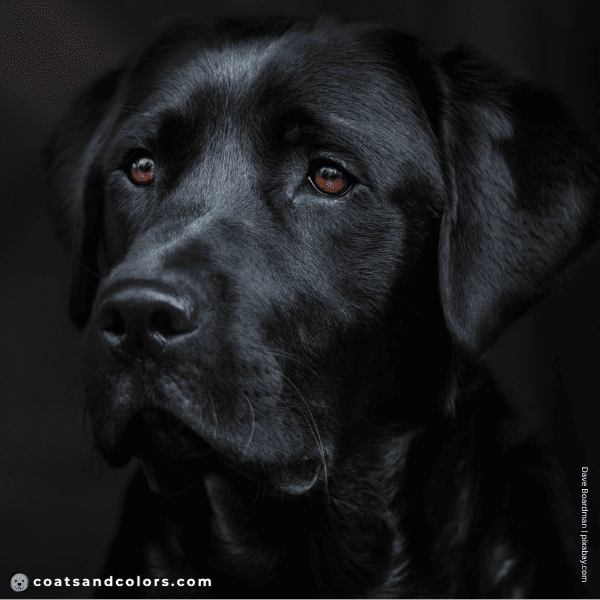
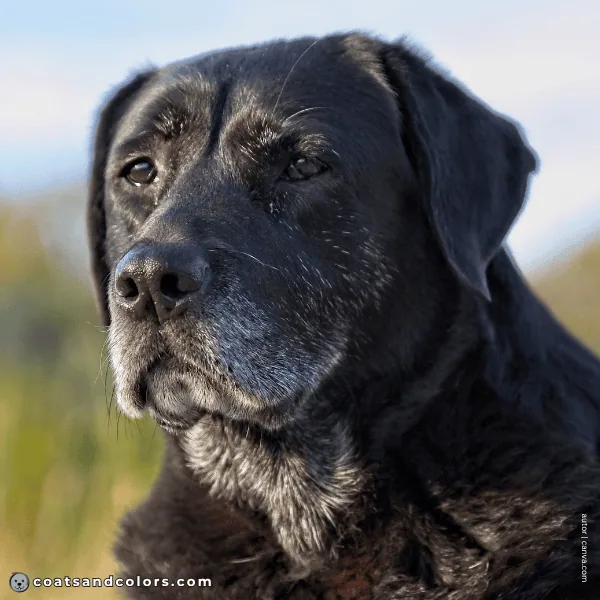
Black Labs have a black nose:

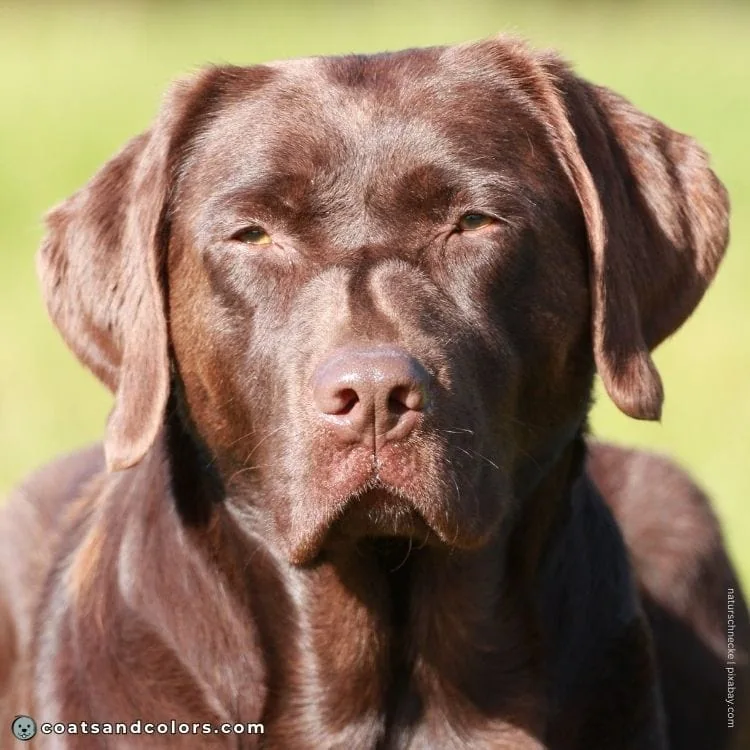
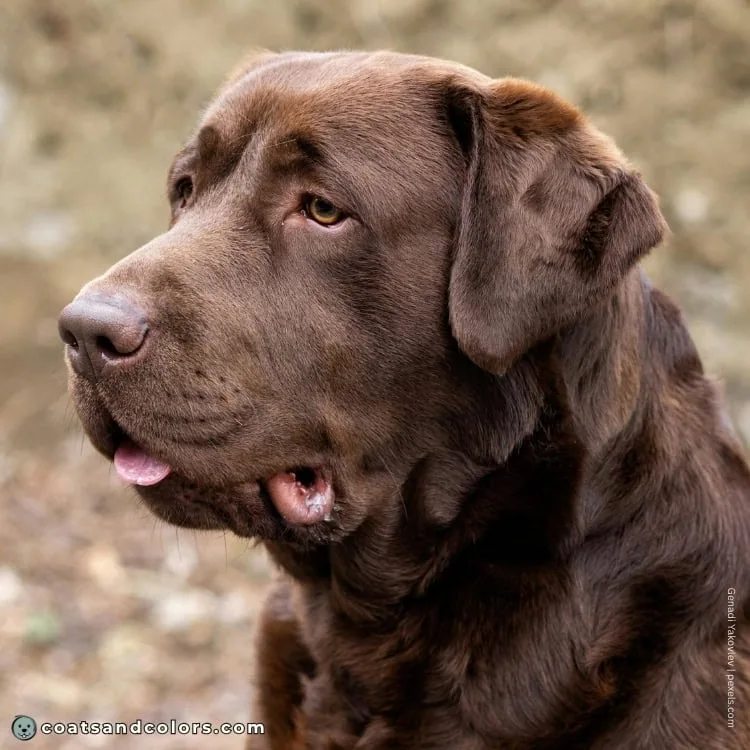
Chocolate Labs have a liver nose:

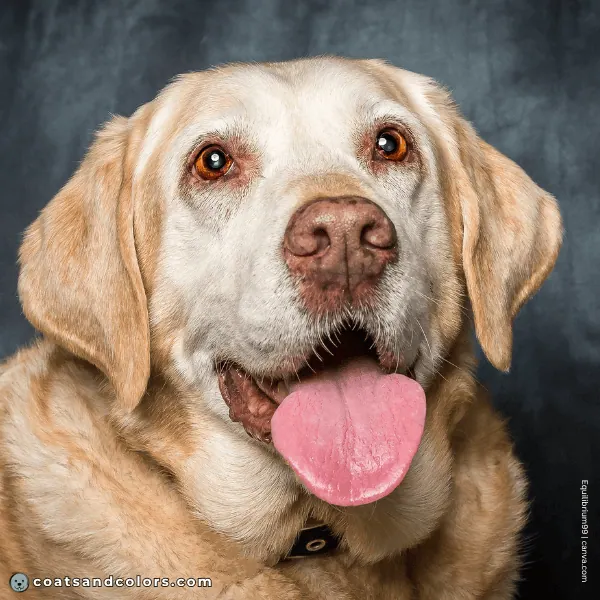
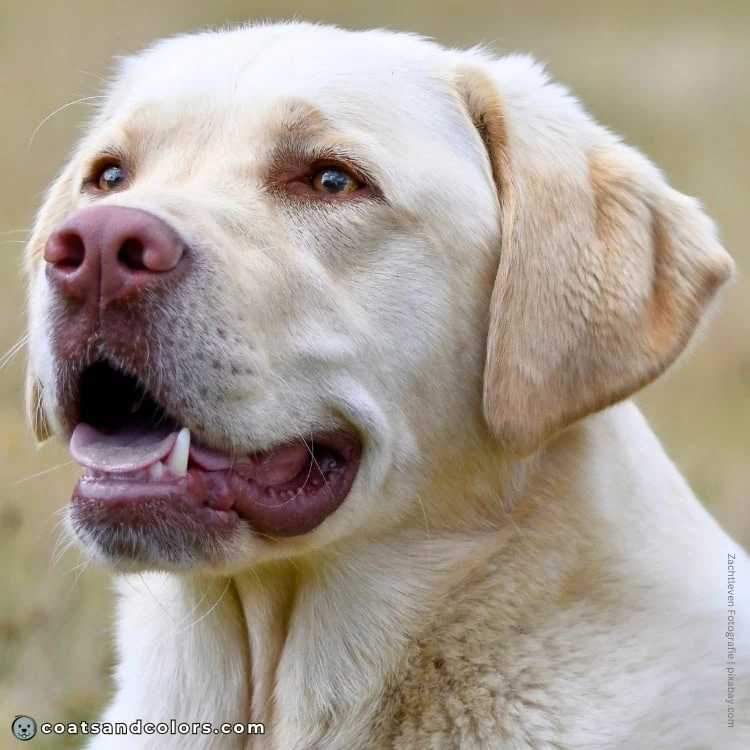
All yellow Labs are supposed to have a black nose, which often fades to a pink snow nose:
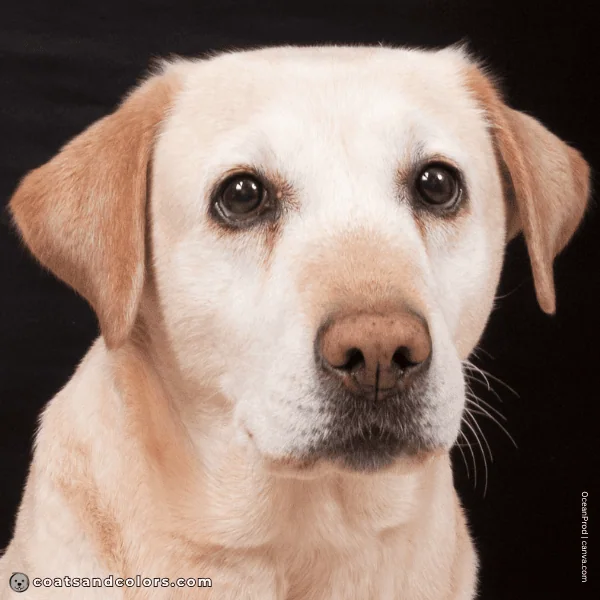
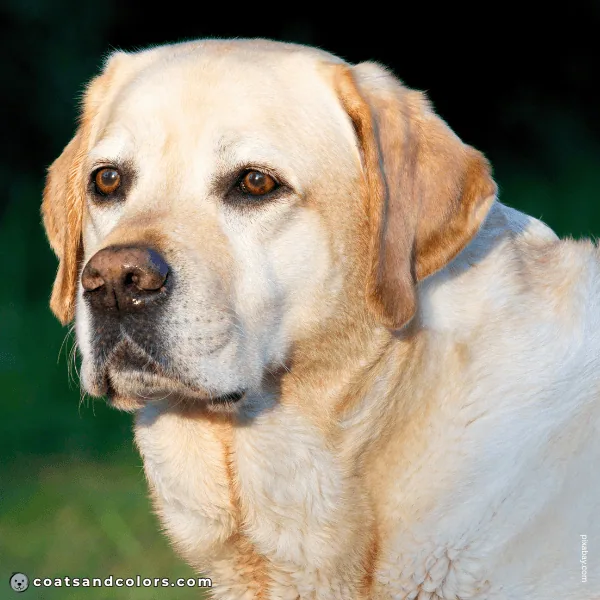
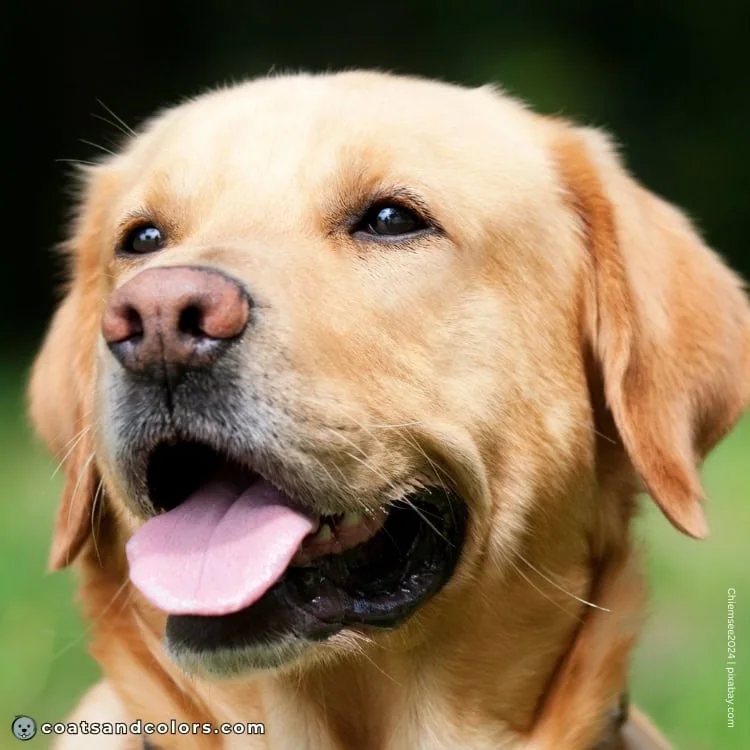
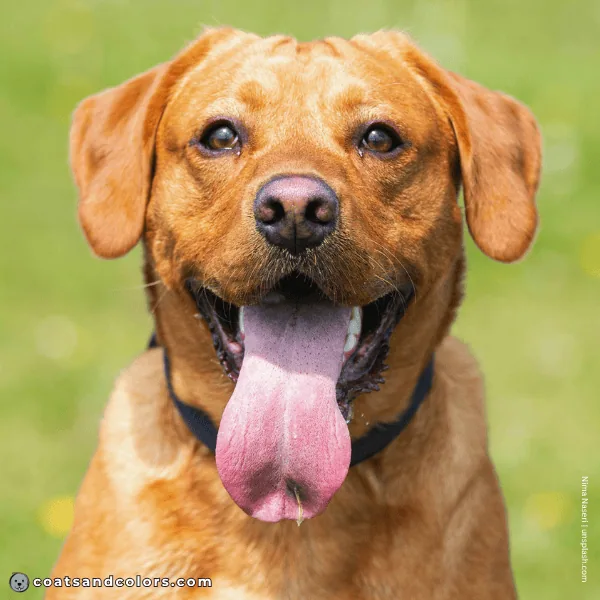

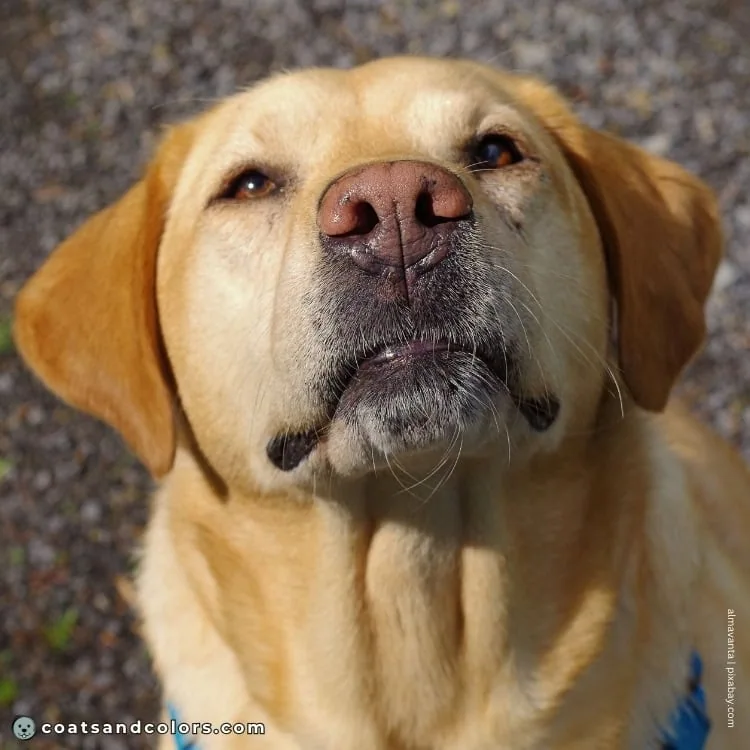
A chocolate-based yellow Lab with a liver nose is called Dudley. It will have brown eye rims and lips. And brown noses tend to show even more extreme fading due to snow nose.

Labrador Coat Type
What a Retriever needs is drive, endurance, and a functional coat that repels cold water. The Labrador is a short-haired breed with a thick undercoat. The longer hackles can be wavy.
“The coat is a distinctive feature of the Labrador Retriever. It should be short, straight and very dense, giving a fairly hard feeling to the hand. The Labrador should have a soft, weather-resistant undercoat that provides protection from water, cold and all types of ground cover. A slight wave down the back is permissible.”
AKC Breed Standard[1]
“Distinctive feature, short, dense, without wave or feathering, giving fairly hard feel to the touch; weather-resistant undercoat.”
FCI Breed Standard[2]
The Labrador is one of those breeds with a wide shift between chunky show lines and more athletic field line dogs. Naturally, working dog people care less about coat colors if the dog can perform its job effectively (you’ll find more dogs with white chest spots or a dark fox-red color in field lines).

Related Breeds
Learn More


Links
[1] American Kennel Club (AKC): Labrador Retriever
[2] Fédération Cynologique Internationale (FCI): Labrador Retriever
[3] Royal Kennel Club (RKC): Labrador Retriever
[4] Canadian Kennel Club (CKC): Labrador Retriever
[5] Dreger et al. (2019). True Colors: Commercially-acquired morphological genotypes reveal hidden allele variation among dog breeds, informing both trait ancestry and breed potential. PLoS ONE 14(10): e0223995. https://doi.org/10.1371/journal.pone.0223995
Image Credits
Agustina Tolosa/pexels.com
Aida Makhmudova/canva.com
Aleksandrina Andreeva/unsplash.com
almavanta/pixabay.com
Amo fif/unsplash.com
Annette Shaff/canva.com
Ar kay/pexels.com
fotojagodka/canva.com
Bigandt_Photography/canva.com
Carolina French/unsplash.com
cat mastro/unsplash.com
Chandler Cruttenden/unsplash.com
Chiemsee2024/pixabay.com
Corinne/pixabay.com
cpaquin/canva.com
cynoclub/canva.com
Dave Boardman/pixabay.com
Denise Henze/pixabay.com
Dom Heartley/unsplash.com
Doris Metternich/pixabay.com
Equilibrium99/canva.com
Farinosa/canva.com
fotojagodka/canva.com
GavinD/canva.com
Genadi Yakovlev/pexels.com
GlobalP/canva.com
Goddard_Photography/canva.com
Guidy Willekens/pixabay.com
Gundula Vogel/pexels.com
Holger Struck/unsplash.com
Ian Talmacs/unsplash.com
ian600f/canva.com
IsabelPoulin/canva.com
Judith Rempt/unsplash.com
Judy Beth Morris/unsplash.com
Kathy Brant/canva.com
Laura Roberts/unsplash.com
Micah Hohnberger/canva.com
Moritz Dammann/pixabay.com
NadejdaReid/canva.com
naturschnecke/pixabay.co
Nick & Djalila/unsplash.com
Nikki Luijpers/pixabay.com
Pendleton/yayimages.com
Petra Hammermüller/pixabay.com
Ria/pixabay.com
Richard Natour/unsplash.com
Ruben Boekeloo/pexels.com
Sabine Geringer/pixabay.com
sharkolot/pixabay.com
Sharon Snider/pexels.com
Sonja/pixabay.com
Stanze B./pixabay.com
Terence Allen/pixabay.com
Tom Meaker/canva.com
Wolfgang Krzemien/pixabay.com
yoyo61/pixabay.com
Zachtleven Fotografie/pixabay.com
Екатерина Котик/pexels.com
Hi! I’m Steffi. I am a biologist and a big time dog nerd. You are curious about coat color genetics? You’ve come to the right place! Read more.