
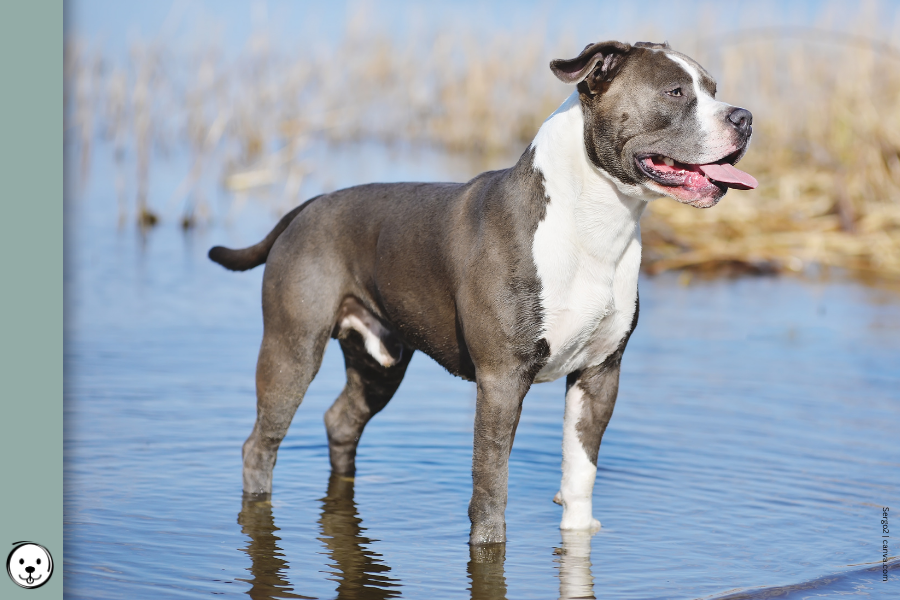
The American Staffordshire Terrier is a muscular breed. Its smooth, low‑maintenance coat can show lots of different colors and patterns. Scroll down to look at all the AmStaff colors.
White
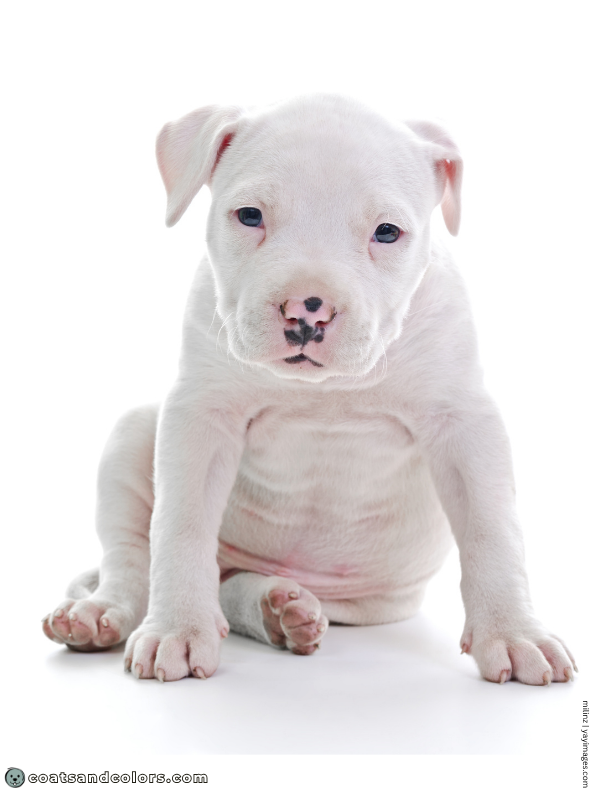
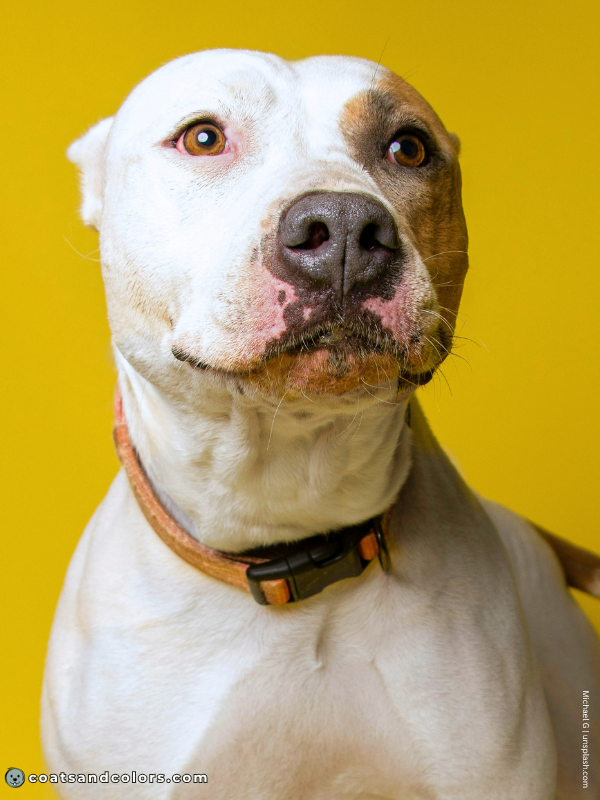
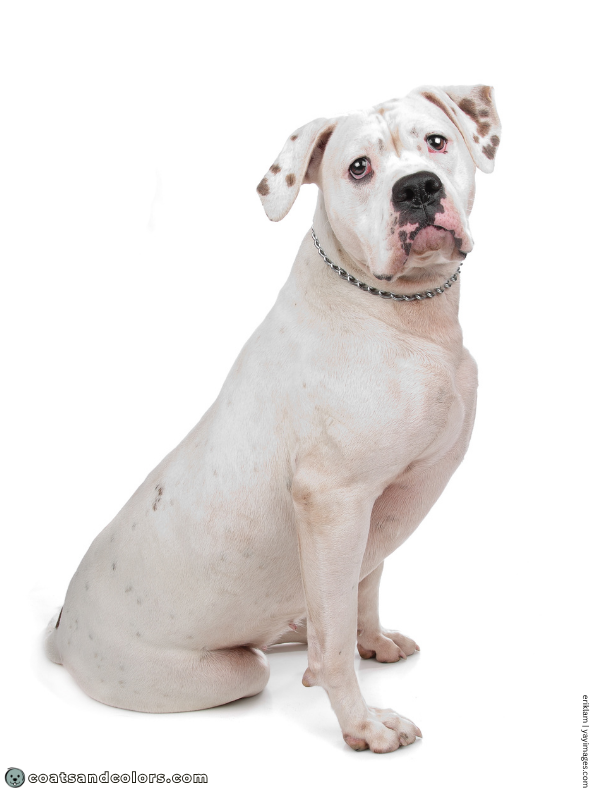
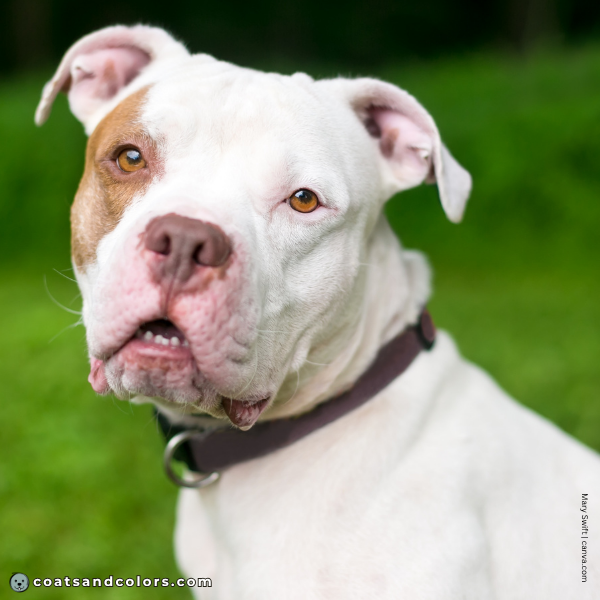
A white AmStaff has more than 80 percent white.
The AKC standards says too much white is not to be encouraged. Still, some dogs show “extreme white” from very extended piebald or whitehead or a combination of both. Underneath the white, they can have any of the common AmStaff colors (fawn, brindle, etc.).
They can have a black nose or blue nose (red-nosed liver or lilac dogs are not desired). Many white dogs have one or two patches of color, mainly on the eyes, ears, or back.
BASE PATTERN
any
MERLE
–
OTHER
–
EUMELANIN
any
INTENSITY
any
WHITE
extreme white
Black

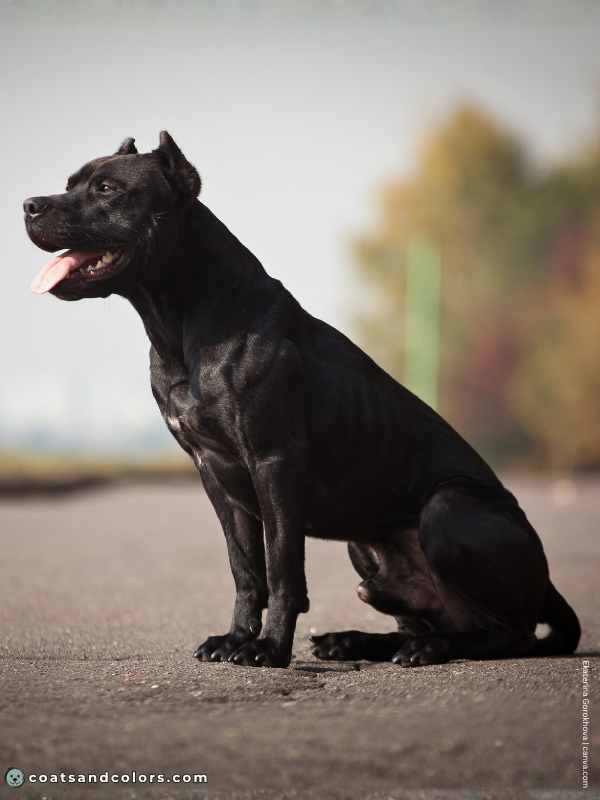
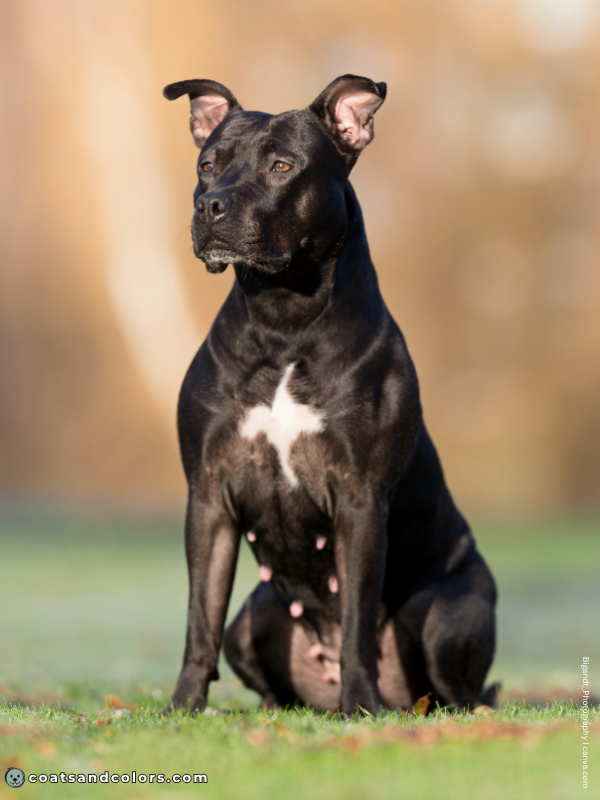
A black AmStaff is solid black.
A black AmStaff with white markings is “black & white“.
BASE PATTERN
dominant black
MERLE
–
OTHER
–
EUMELANIN
black
INTENSITY
–
WHITE
solid
white markings
“Brown”
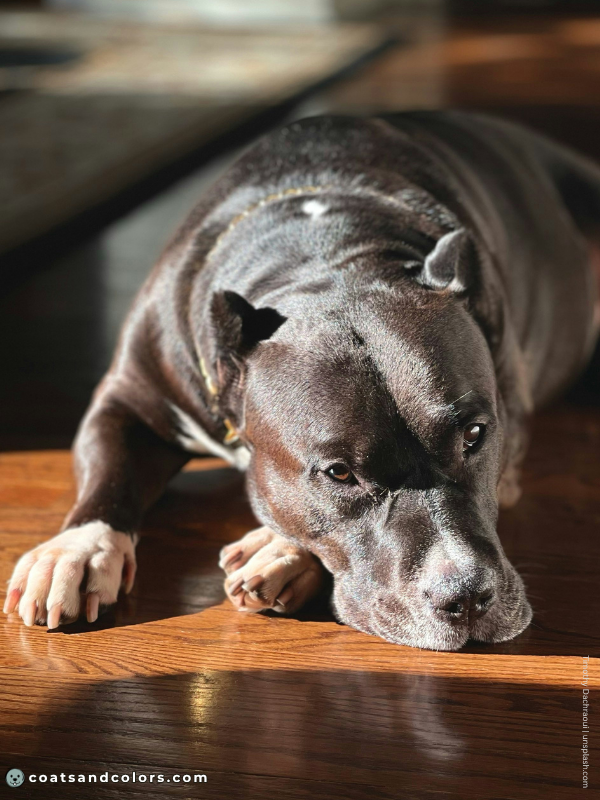
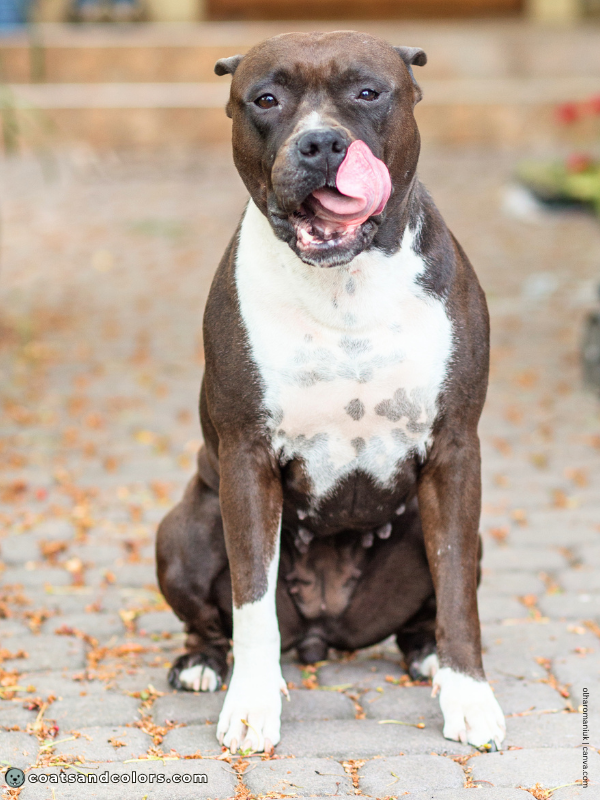
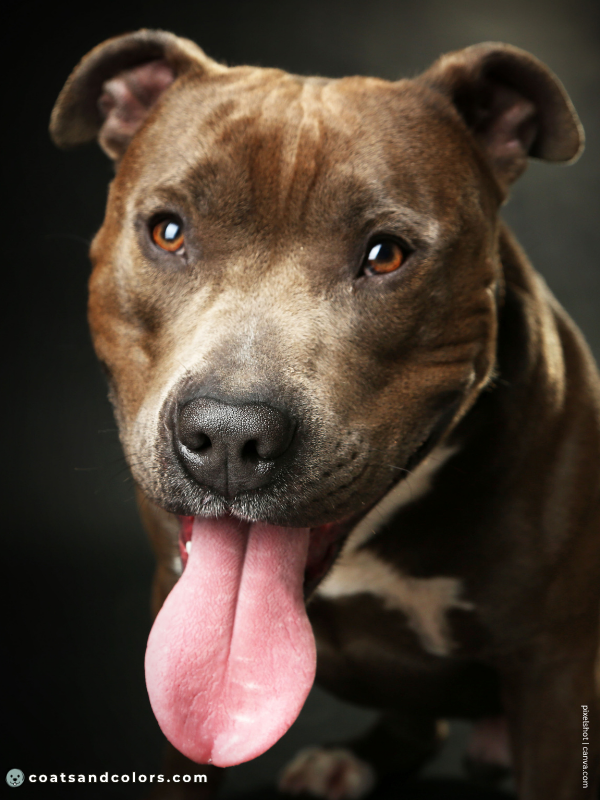
A black dog with incomplete dominant black can show a ghost sable pattern. This is called seal and can look brown due to reddish undertones.
Most seals are black seal. But a darker blue seal can also look brownish or coppery. A small number of seal dogs that carry brindle (KB/kbr) may show ghost brindle.
BASE PATTERN
incomplete dominant black
MERLE
–
OTHER
seal
ghost brindle
EUMELANIN
(diluted) black
INTENSITY
–
WHITE
solid
white markings
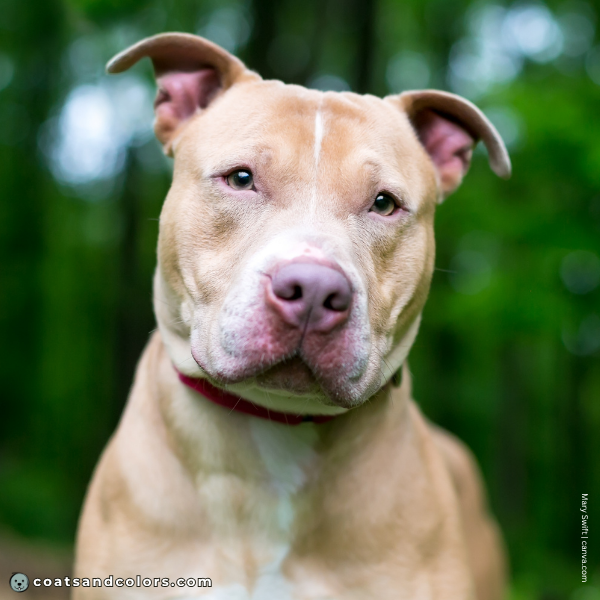
Fawn
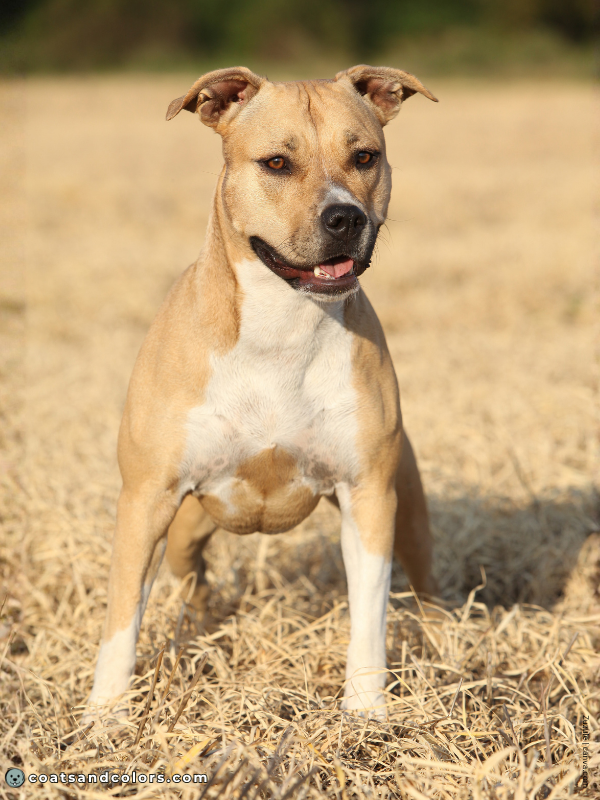
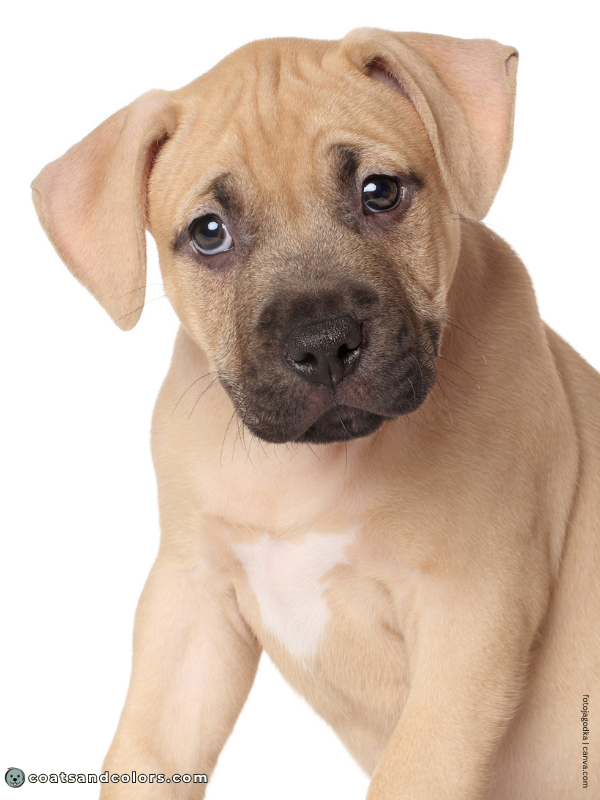
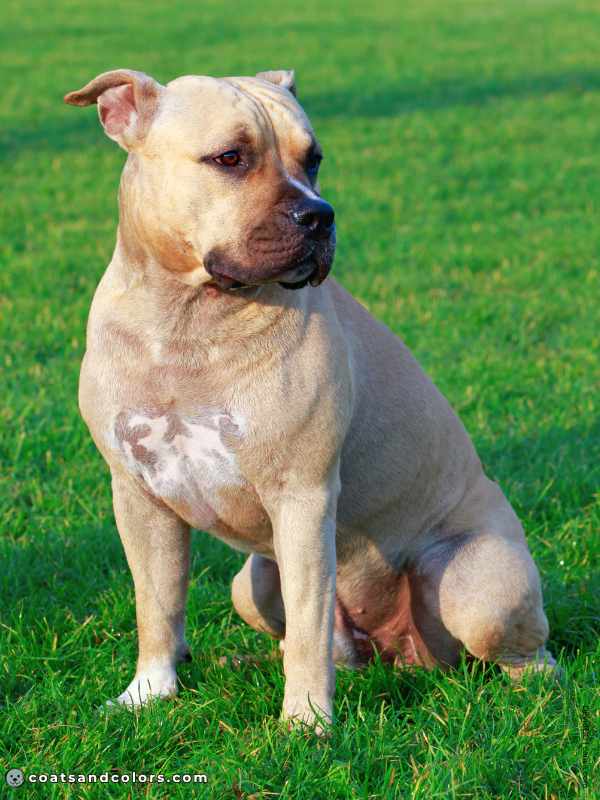
A fawn AmStaff has a solid tan or golden color. This is a clear sable pattern with a not too intense red color. Fawns can have a black mask and white markings.
BASE PATTERN
clear sable (black mask)
MERLE
–
OTHER
–
EUMELANIN
black
INTENSITY
fawn
WHITE
solid
white markings
Red
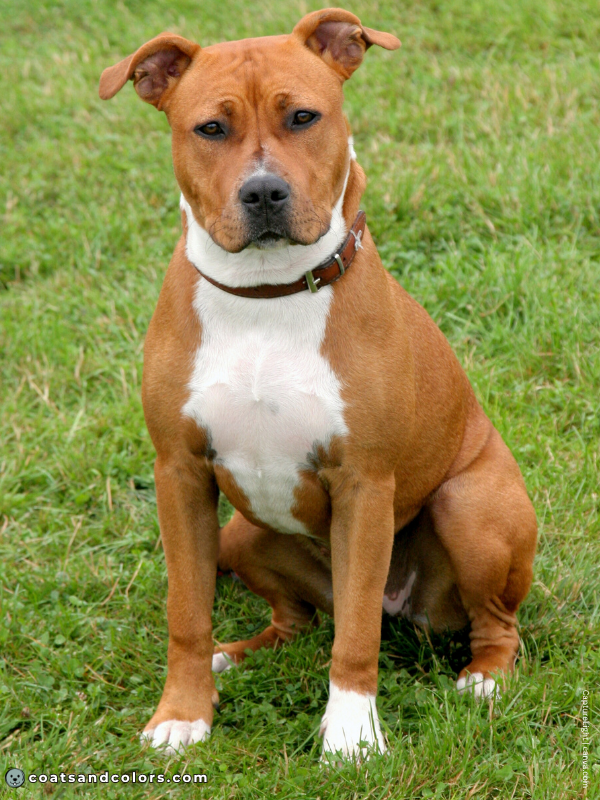


A red AmStaff has an orange to red color. This is a clear sable pattern with a more intense red color than fawn. Reds can have a black mask and white markings.
BASE PATTERN
clear sable (black mask)
MERLE
–
OTHER
–
EUMELANIN
black
INTENSITY
red
WHITE
solid
white markings
Sable + Buckskin
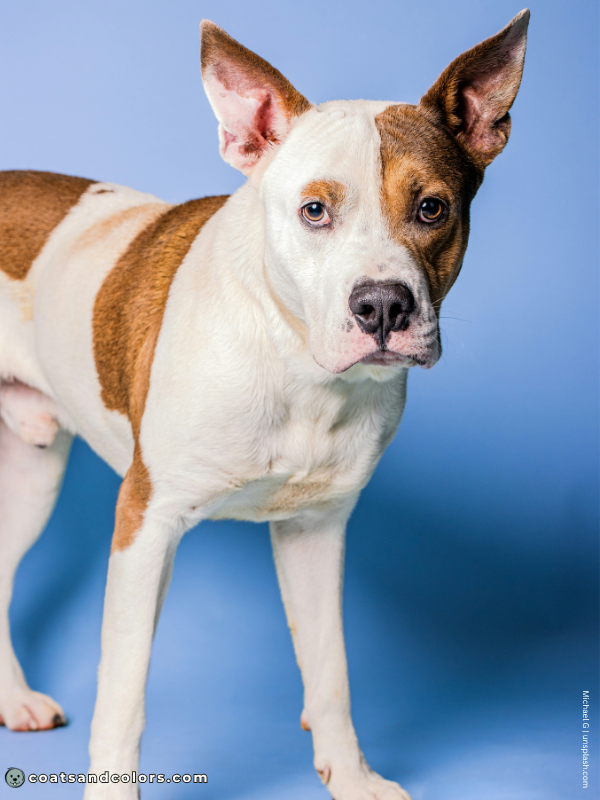
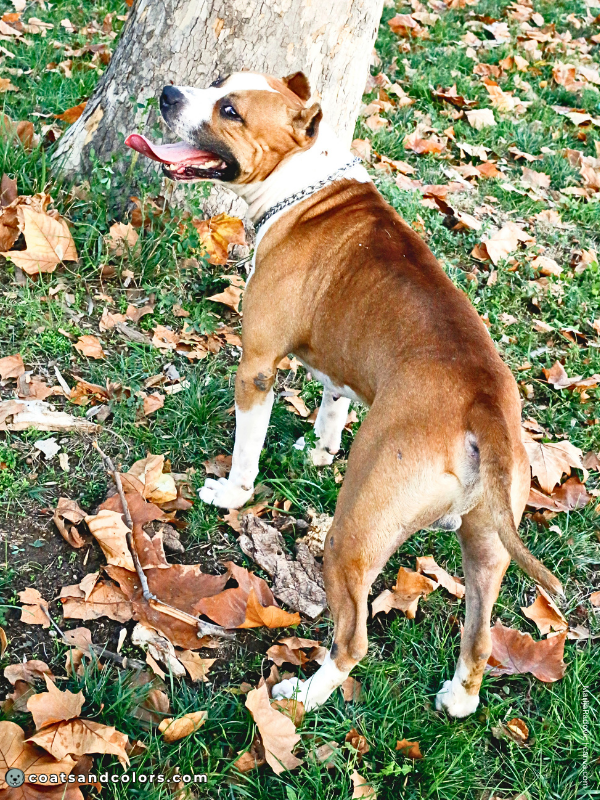

A sable AmStaff has a heavy black overlay with a pointy widow’s peak on the forehead. Of course, you can’t see this if the dog has a white face or a very broad white blaze).
Sables can have a black mask and white markings.
Dogs can be called fawn sable or red sable. The sabling (dark hair tips or mild banding) is also called “smut” in this breed. This phenotype often happens in sables that carry tan points (Ay/at).
Dogs that only have some sabling on their topline are called “buckskin“. The topline often appears a little darker in red and fawn dogs, because this is where the hackles are. These hairs grow slightly longer, so the darker hair tips can also grow slightly longer.
BASE PATTERN
shaded sable (black mask)
MERLE
–
OTHER
–
EUMELANIN
black
INTENSITY
fawn, red
WHITE
solid
white markings
Brindle
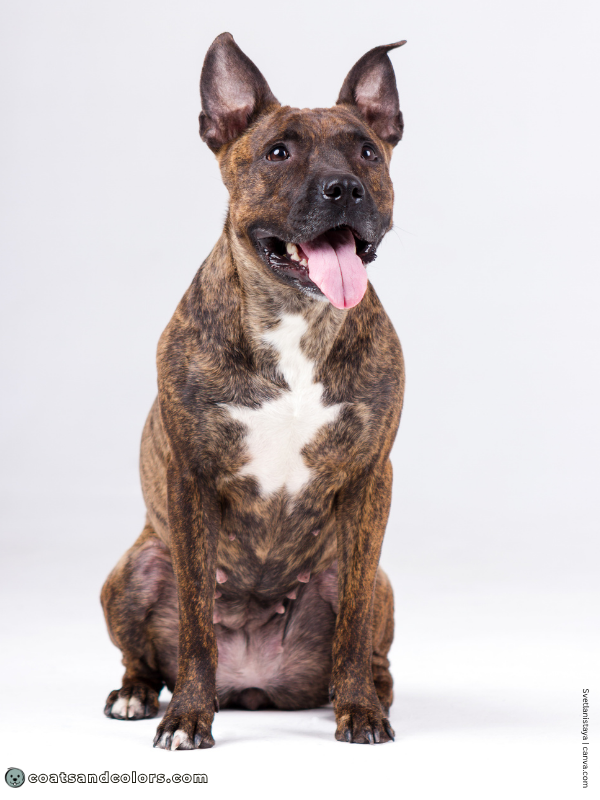
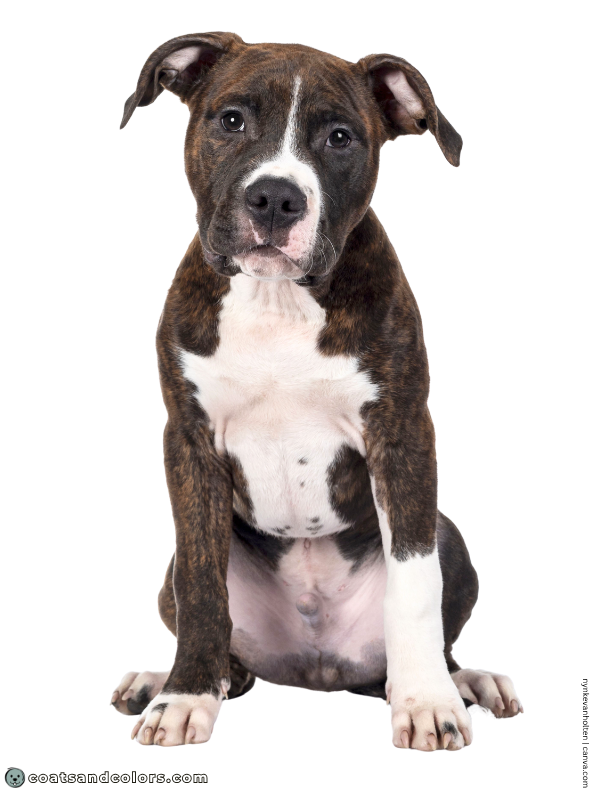
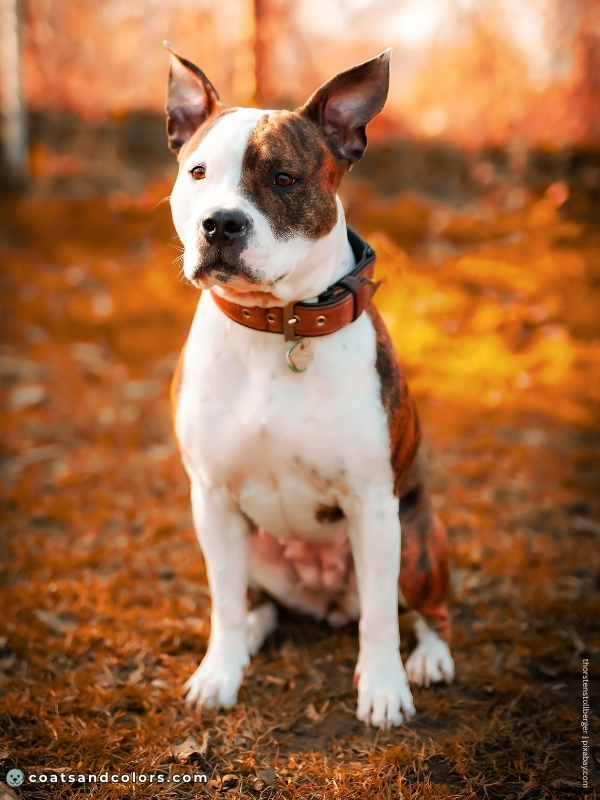
A brindle AmStaff is sable with black brindle striping in top.
Dogs can be fawn or red (or sable) underneath the brindle. And striping density can vary a lot.
The different phenotypes are often named based on the most prominent color. For example, brindle dogs might be called black brindle, dark brindle, red brindle, fawn brindle, etc.
Brindles can have a black mask and white markings.
BASE PATTERN
sable brindle (black mask)
MERLE
–
OTHER
–
EUMELANIN
black
INTENSITY
fawn, red
WHITE
solid
white markings
“Brown Brindle”
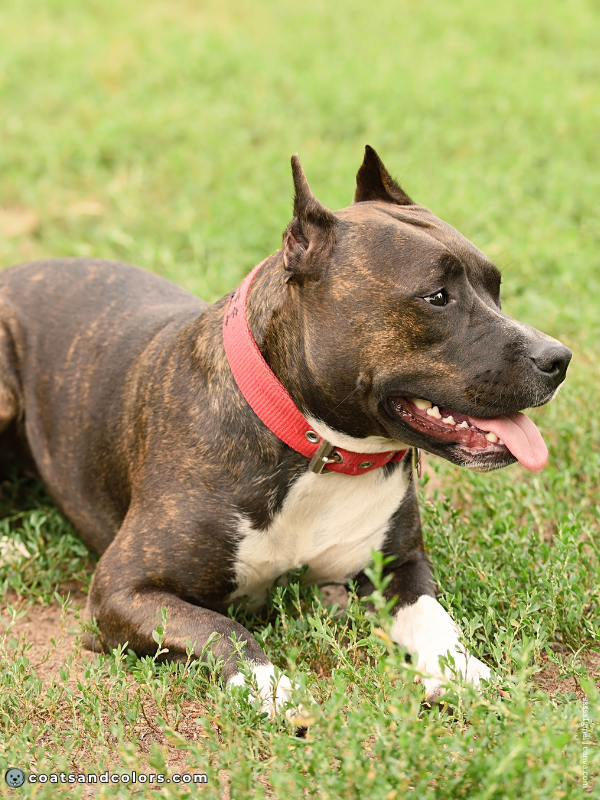
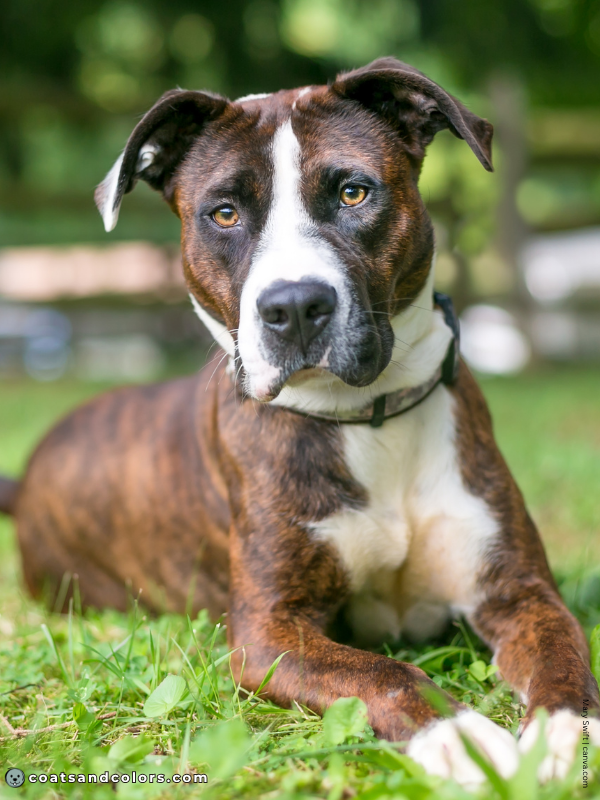
Some dark brindle dogs are seal brindle. Their brindling appears brownish instead of black. There is also the term “mahogany brindle” for darker red brindles with brownish striping.
This “reddish brindling” on the torso is super obvious if you look at the dog next to a normal black brindle in direct sunlight. But it’s really hard to capture in images.
BASE PATTERN
incomplete brindle (black mask)
MERLE
–
OTHER
seal brindle
EUMELANIN
black
INTENSITY
fawn, red
WHITE
solid
white markings
Black & Tan
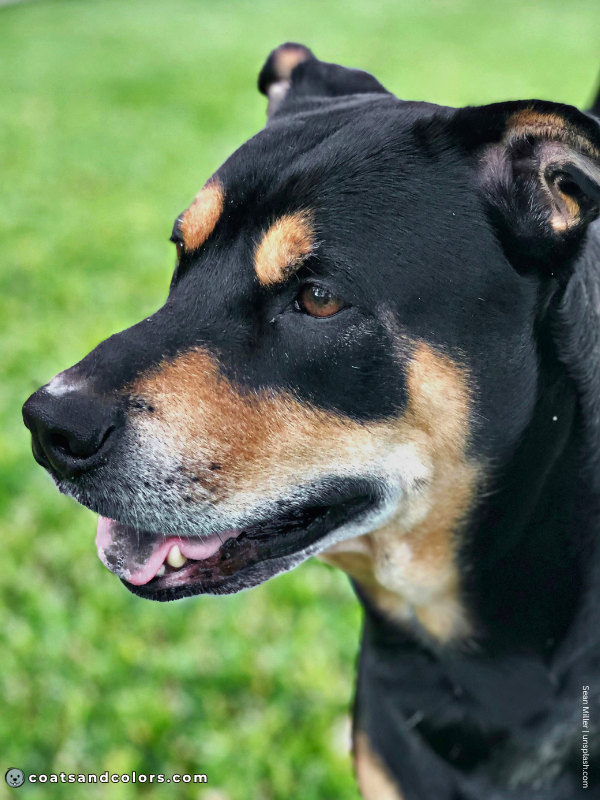
These dogs have a tan point pattern. Some can have a black mask.
The tan markings can be fawn or red.
If they also have white, they are called black tricolor. A black and tan AmStaff can have brindle points. A black & brindle pattern with white is called tricolor brindle or trindle.
BASE PATTERN
tan point (black mask)
MERLE
–
OTHER
–
EUMELANIN
black
INTENSITY
fawn, red
WHITE
solid
white markings
Blue
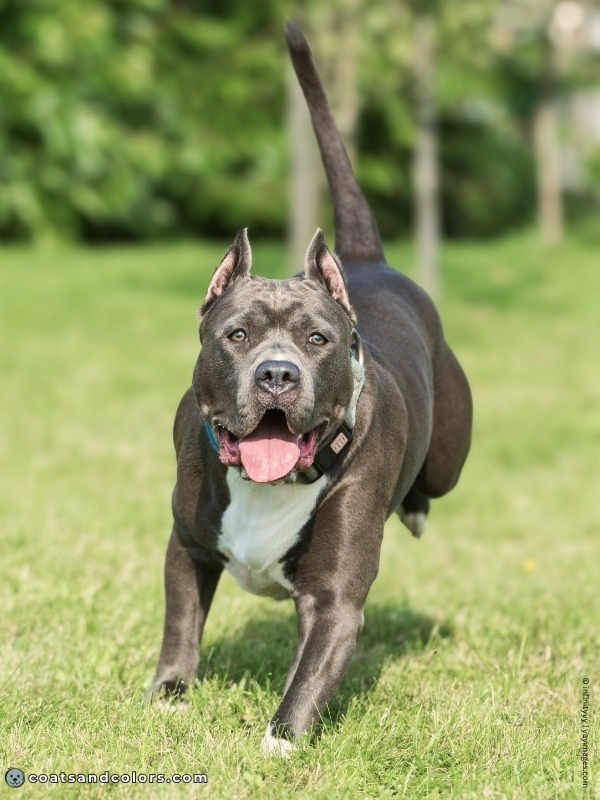
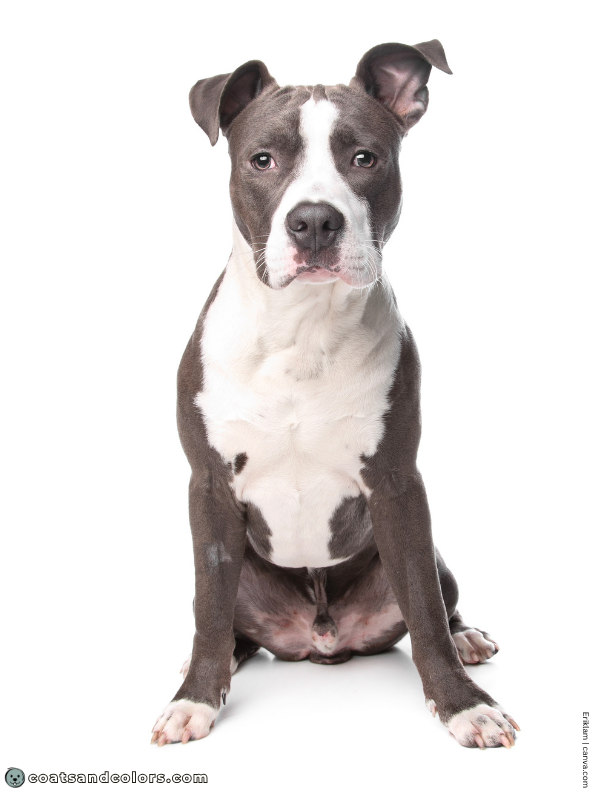
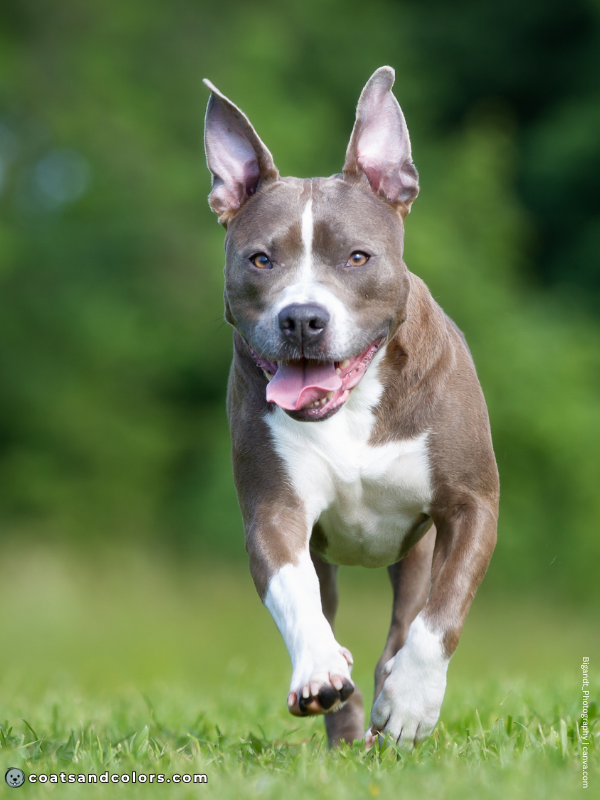
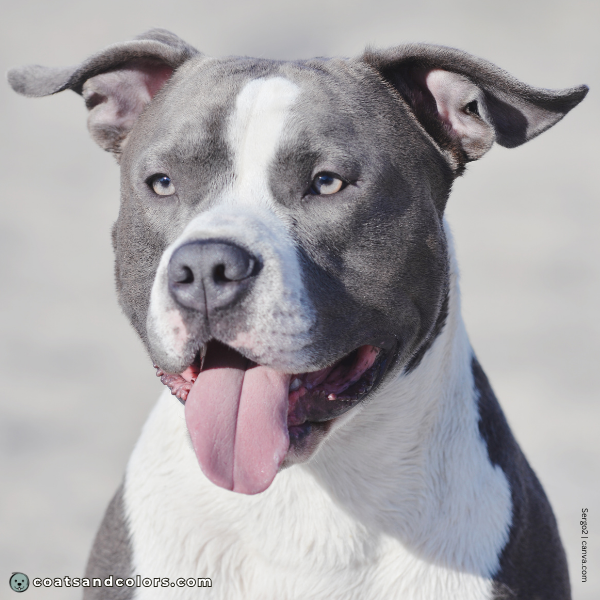
The blue AmStaff has a solid gray coat color.
It has a dominant black pattern with diluted black pigment. This causes a gray coat color and a blue nose. A blue & white AmStaff has the same color, but with white markings.
Blue dogs can be blue seal and show reddish undertones in their coat.
BASE PATTERN
dominant black
MERLE
no
OTHER
–
EUMELANIN
diluted black
INTENSITY
–
WHITE
solid
white markings
Blue Fawn
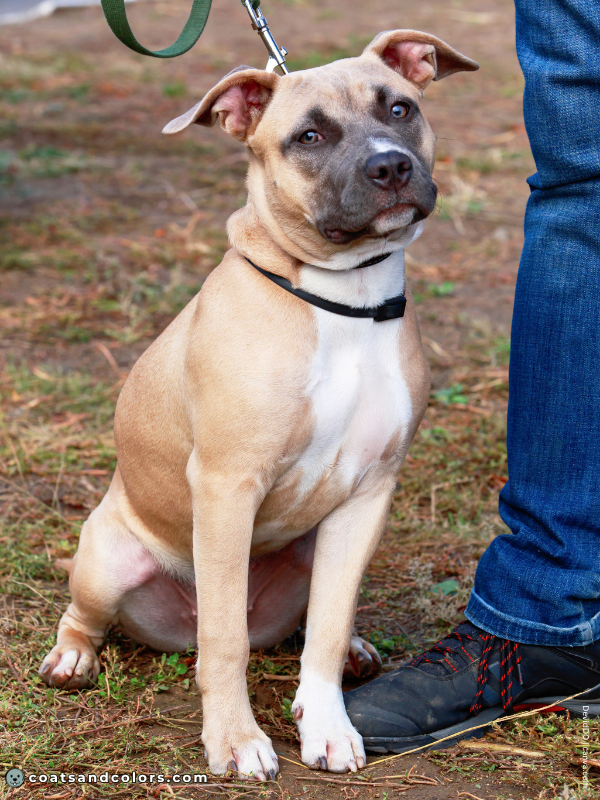
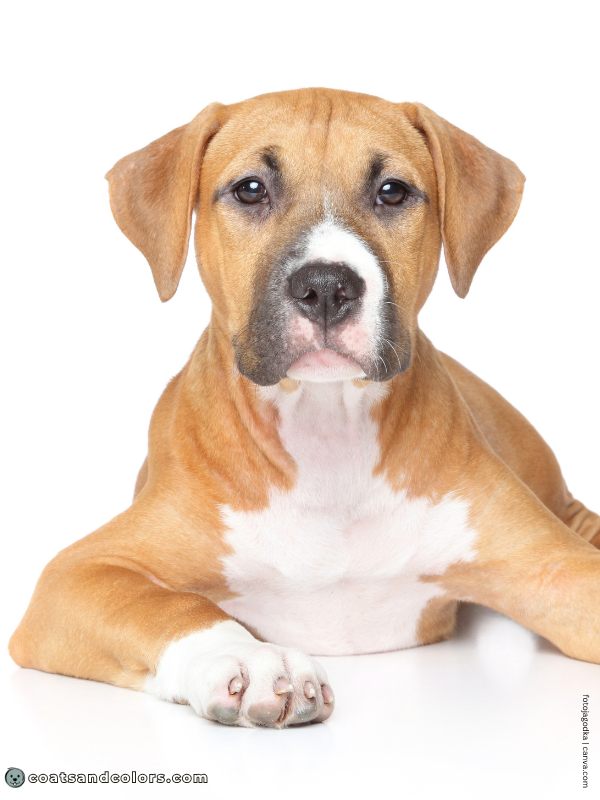
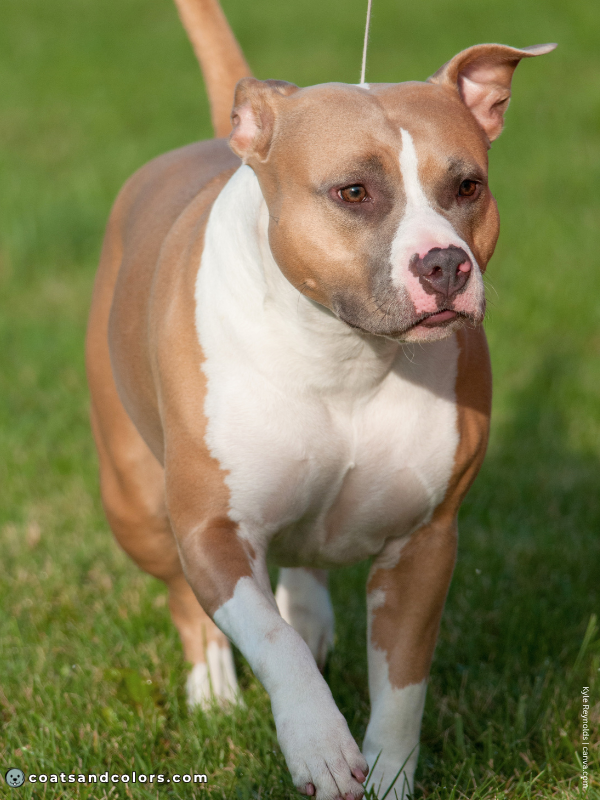
A blue fawn AmStaff has a clear sable pattern with diluted black pigment. They can have a blue mask and white markings.
A blue sable AmStaff can have smut and show a lighter blue bucksin or a dense blue smut pattern.
BASE PATTERN
clear sable (blue mask)
MERLE
–
OTHER
–
EUMELANIN
diluted black
INTENSITY
fawn, red
WHITE
solid
white markings
Blue Brindle
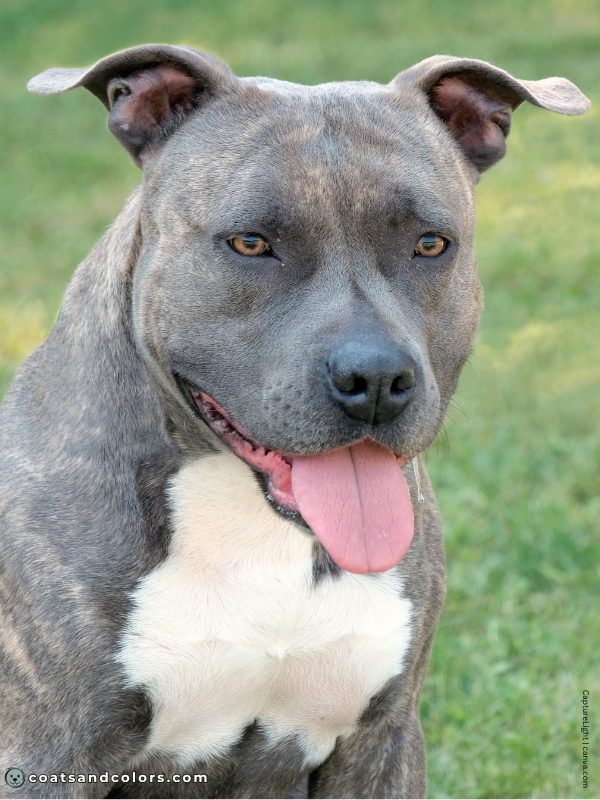
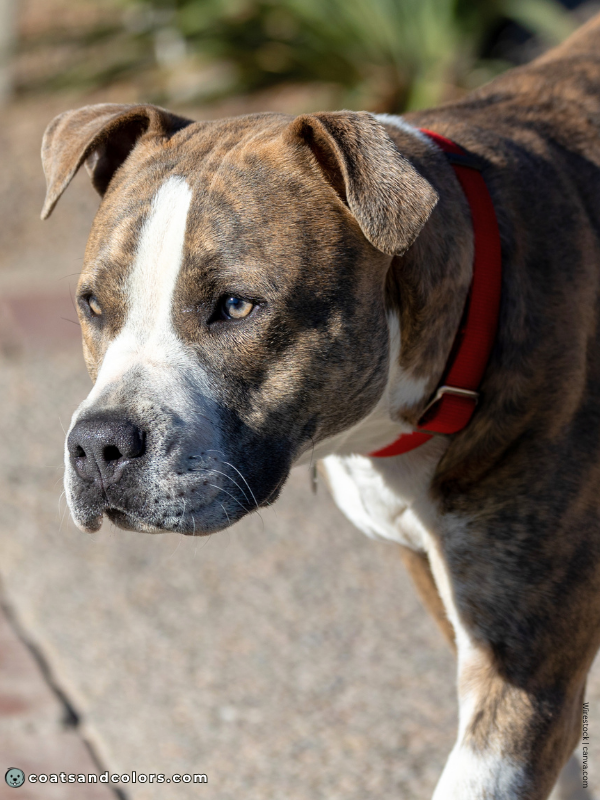
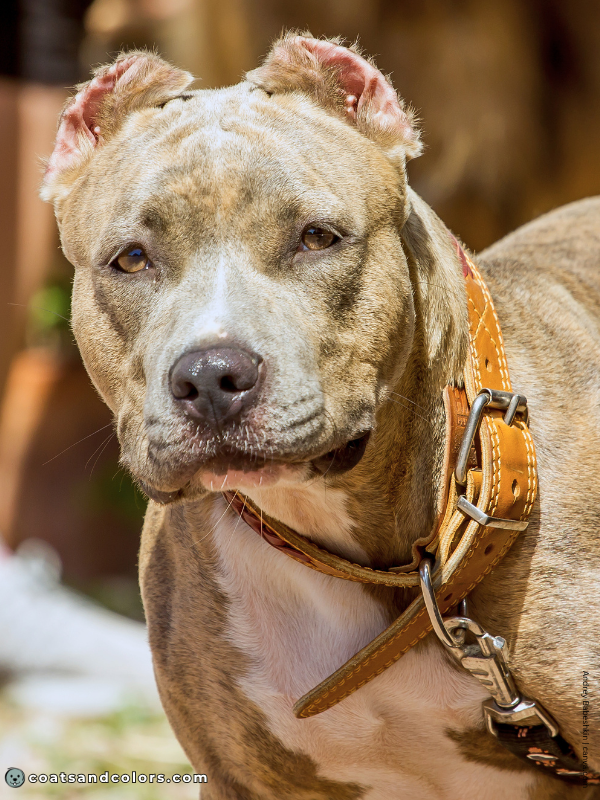
A blue brindle AmStaff is sable with diluted black brindle striping on top.
The different phenotypes are often named based on the most prominent color. For example, diluted brindle dogs might be called dark blue brindle or blue fawn brindle, etc.
The blue brindling can appear reddish if the dog is seal brindle.
Brindles can have a blue mask and white markings.
Some dogs have blue seal brindle with reddish-gray instead of solid gray stripes. But this often goes unnoticed unless the dog has very dense striping.
BASE PATTERN
sable brindle (blue mask)
MERLE
–
OTHER
–
EUMELANIN
diluted black
INTENSITY
fawn, red
WHITE
solid
white markings
Blue & Tan
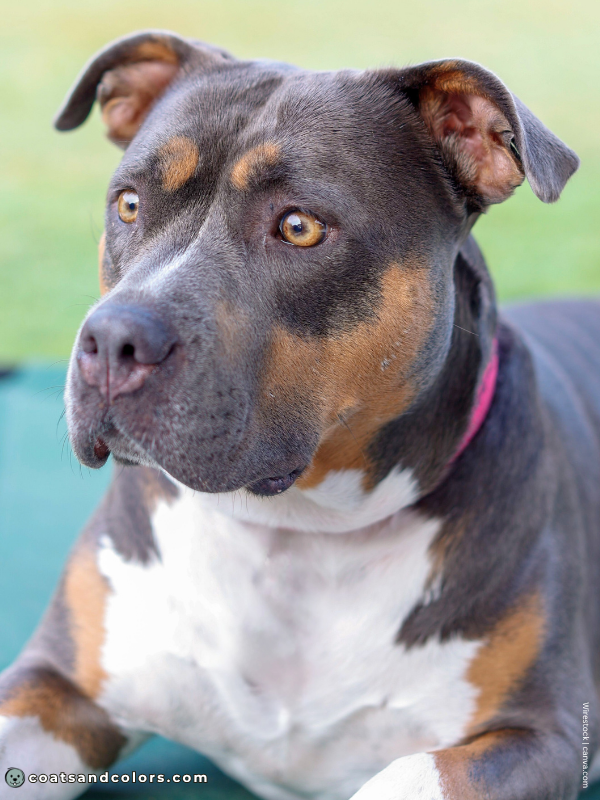
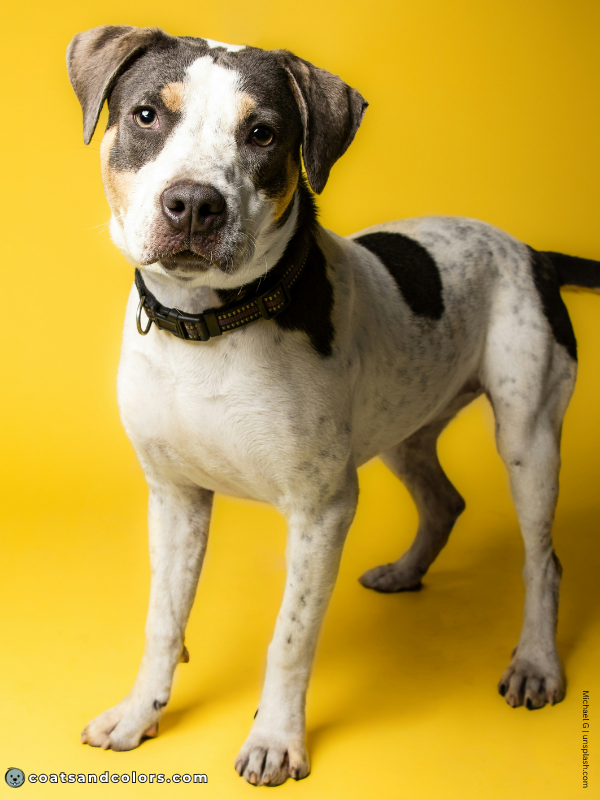

A blue & tan AmStaff is blue with tan markings. Some can have a blue mask.
If they also have white, they are called blue tricolor. A blue and tan AmStaff can have brindle points. A blue tri pattern with brindle is called blue trindle.
BASE PATTERN
tan point (blue mask)
MERLE
–
OTHER
–
EUMELANIN
diluted black
INTENSITY
fawn, red
WHITE
solid
white markings
Liver
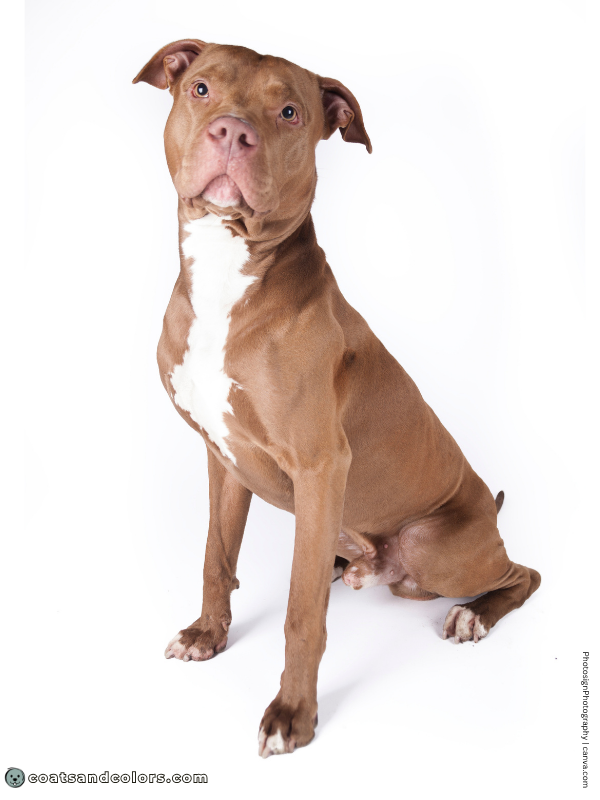
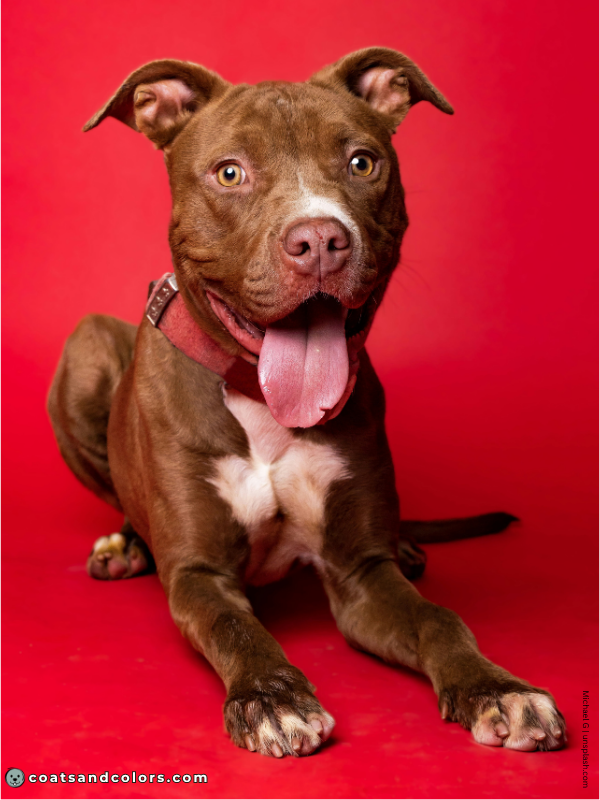
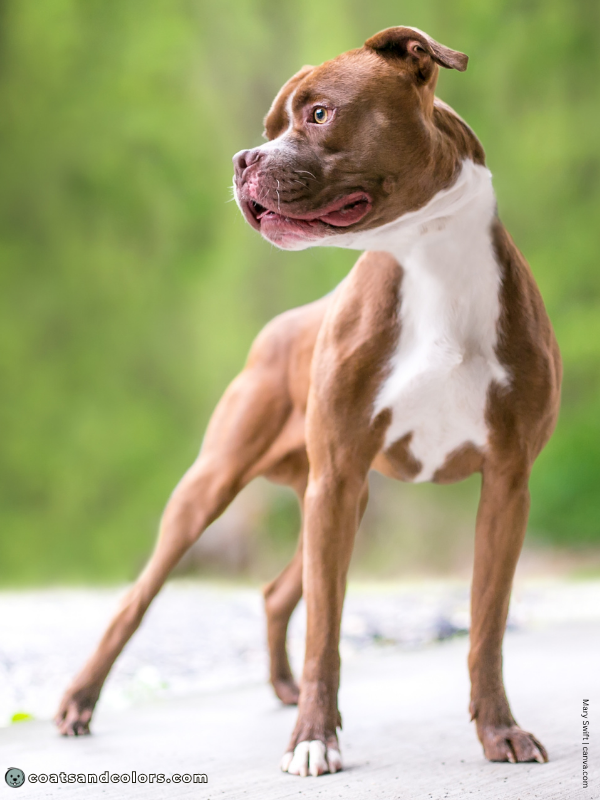
A liver AmStaff has a solid chocolate color.
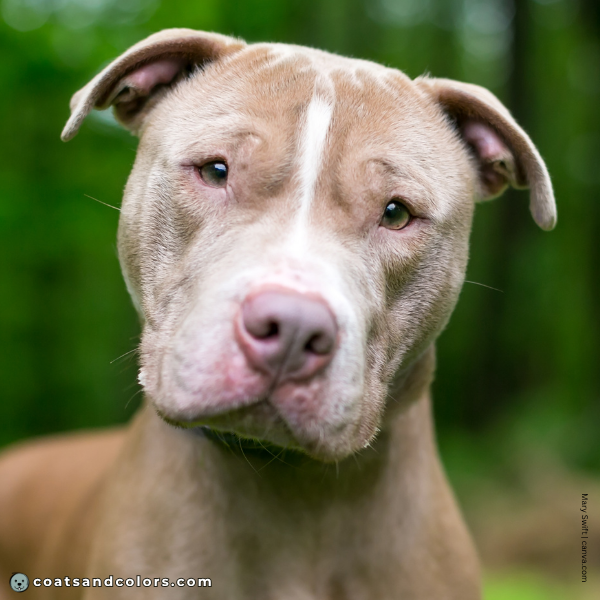
It has a dominant black pattern with brown pigment. They also have a brown nose (or “red nose”). A liver & white AmStaff has the same color, but with white markings.
Liver dogs can be liver seal and look not quite solid brown due to tan showing through.
BASE PATTERN
dominant black
MERLE
–
OTHER
–
EUMELANIN
liver
INTENSITY
–
WHITE
solid
white markings
Liver Fawn
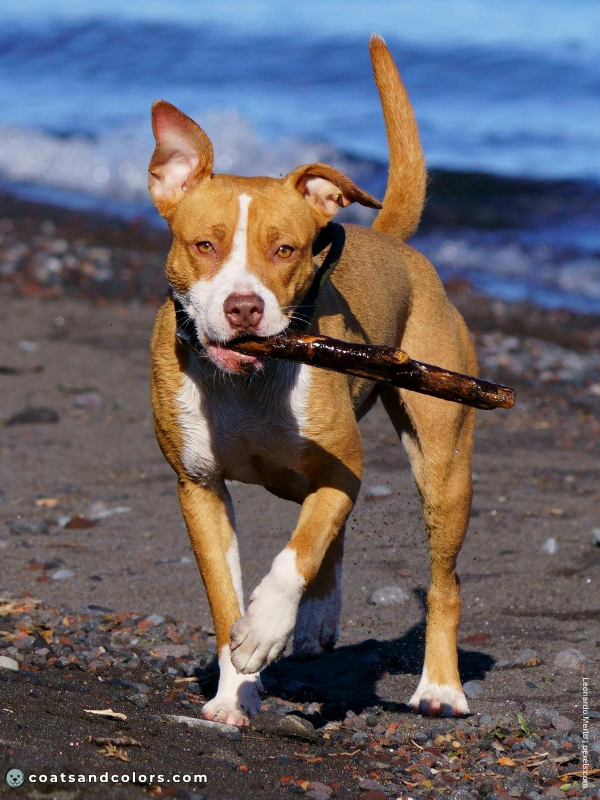
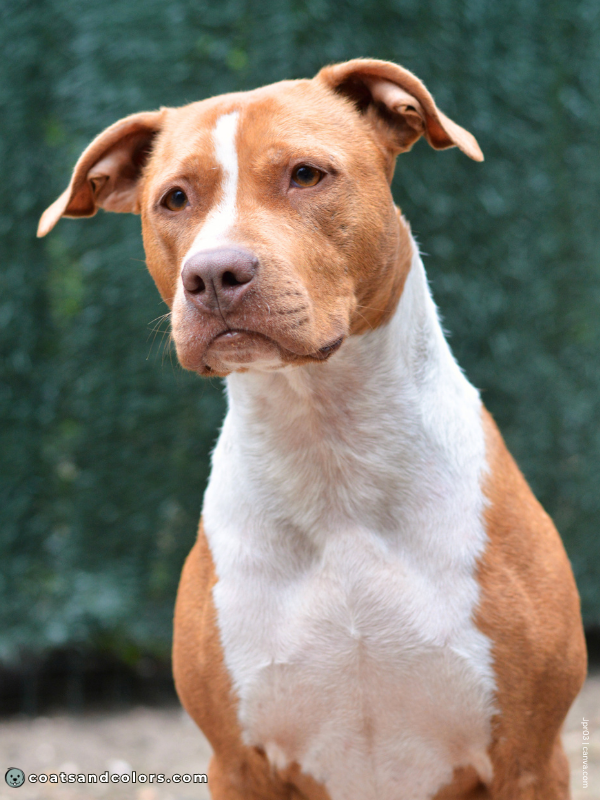
A liver fawn AmStaff has a clear sable pattern with brown pigment. They can have a brown mask and white markings.
A liver sable AmStaff can have a dark overlay and show a liver bucksin or a dense liver smut pattern.
BASE PATTERN
clear sable (black mask)
MERLE
–
OTHER
–
EUMELANIN
liver
INTENSITY
fawn, red
WHITE
solid
white markings
Liver Brindle
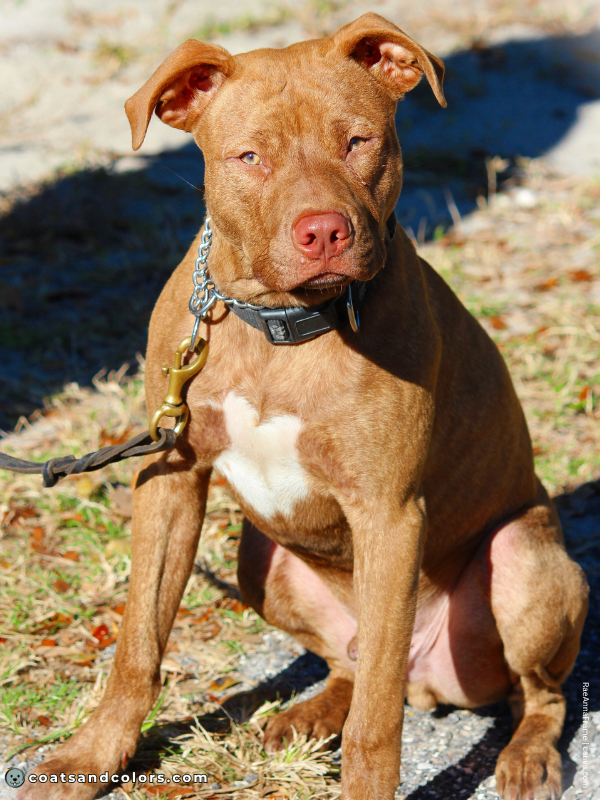
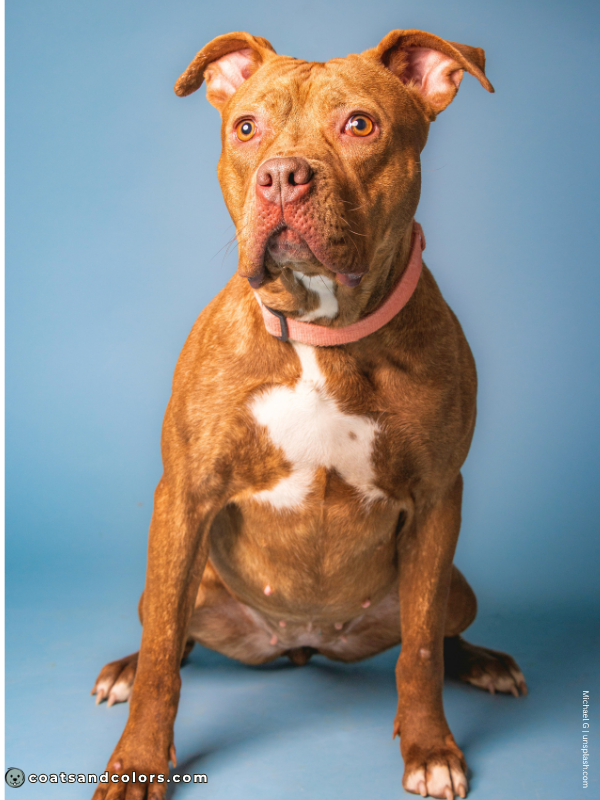
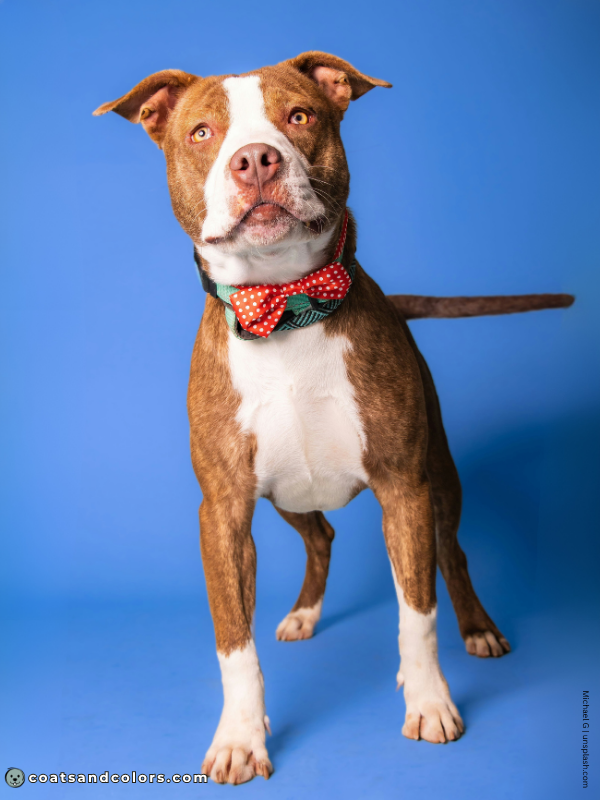
A liver brindle AmStaff is sable with liver brown brindle striping on top.
Brindles can have a liver mask and white markings.
BASE PATTERN
sable brindle (blue mask)
MERLE
–
OTHER
–
EUMELANIN
liver
INTENSITY
fawn, red
WHITE
solid
white markings
Liver & Tan
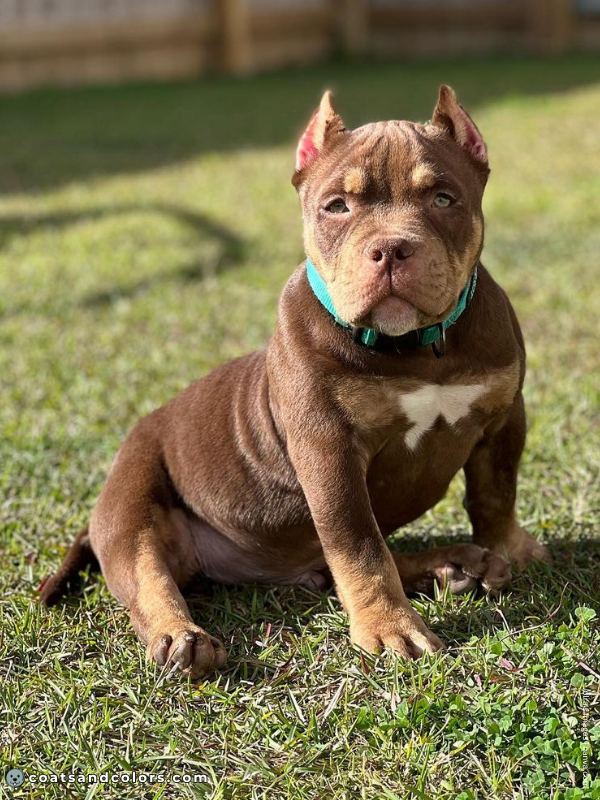
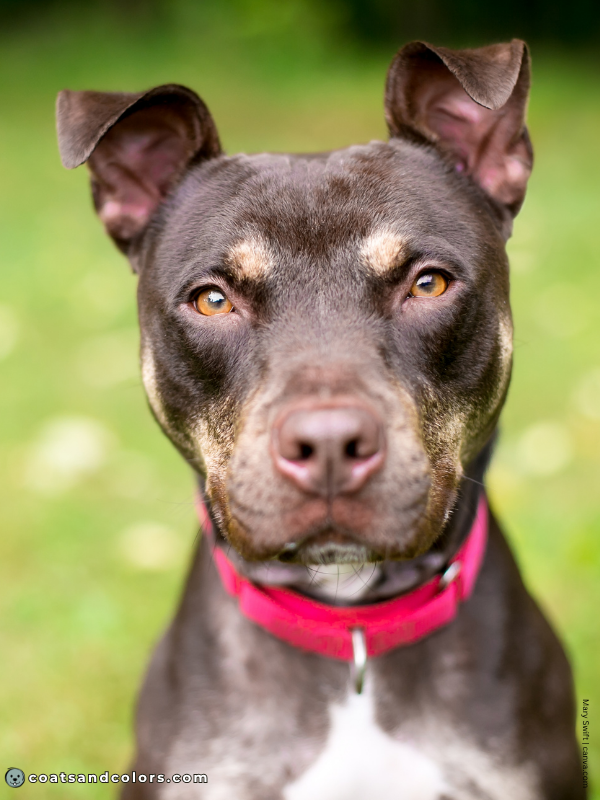
A liver & tan AmStaff is liver with tan markings. Some can have a liver mask.
If they also have white, they are called liver tricolor. A liver and tan AmStaff can have brindle points. A liver tri pattern with brindle is called liver trindle.
BASE PATTERN
tan point (liver mask)
MERLE
–
OTHER
–
EUMELANIN
liver
INTENSITY
fawn, red
WHITE
solid
white markings
Lilac
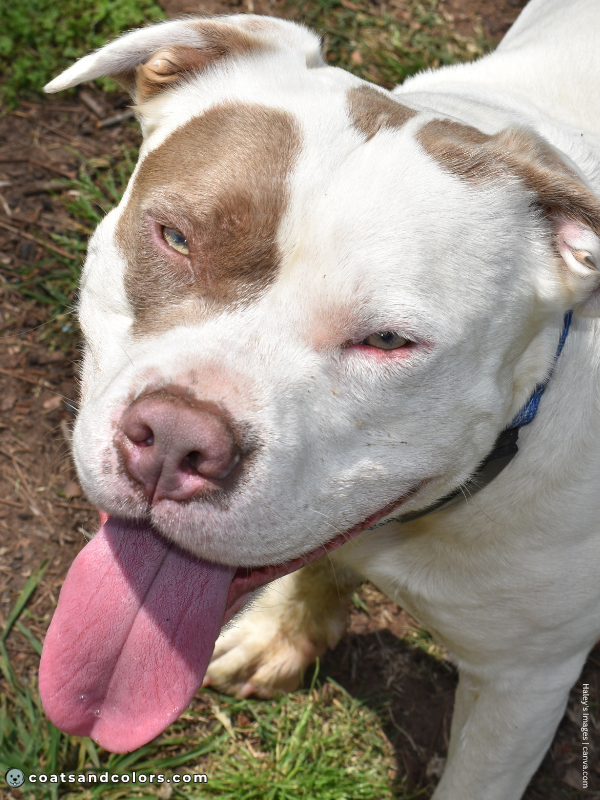
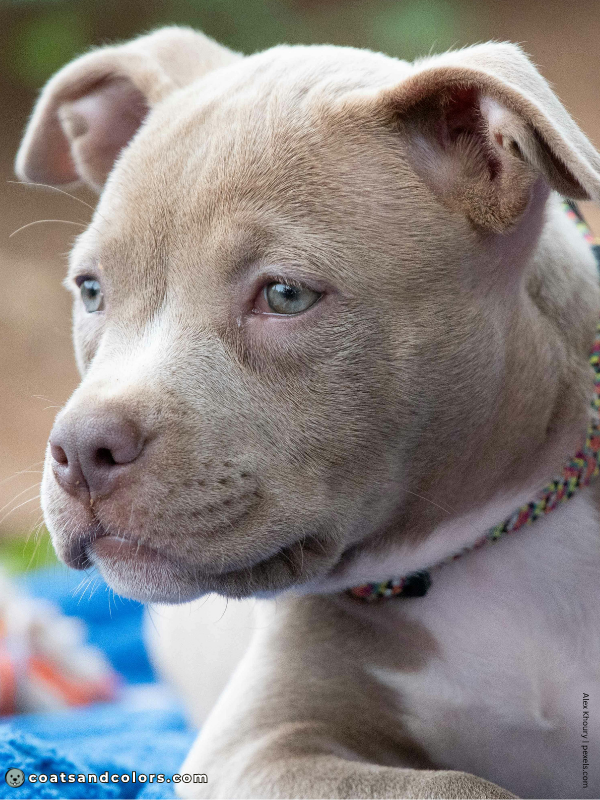
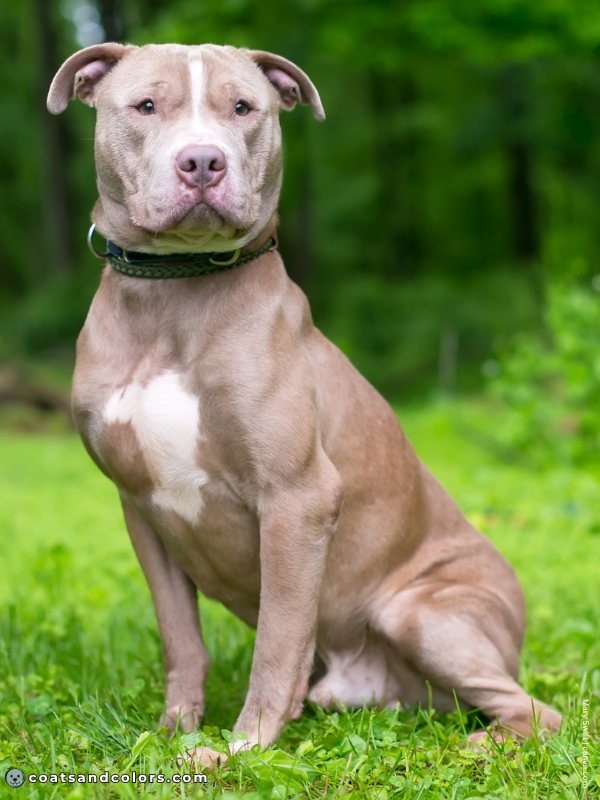
A lilac AmStaff has a diluted chocolate color.
It has a dominant black pattern with diluted brown pigment. They also have a light brown nose. A lilac & white AmStaff has the same color, but with white markings.
BASE PATTERN
dominant black
MERLE
–
OTHER
–
EUMELANIN
diluted liver
INTENSITY
–
WHITE
solid
white markings
Lilac Fawn

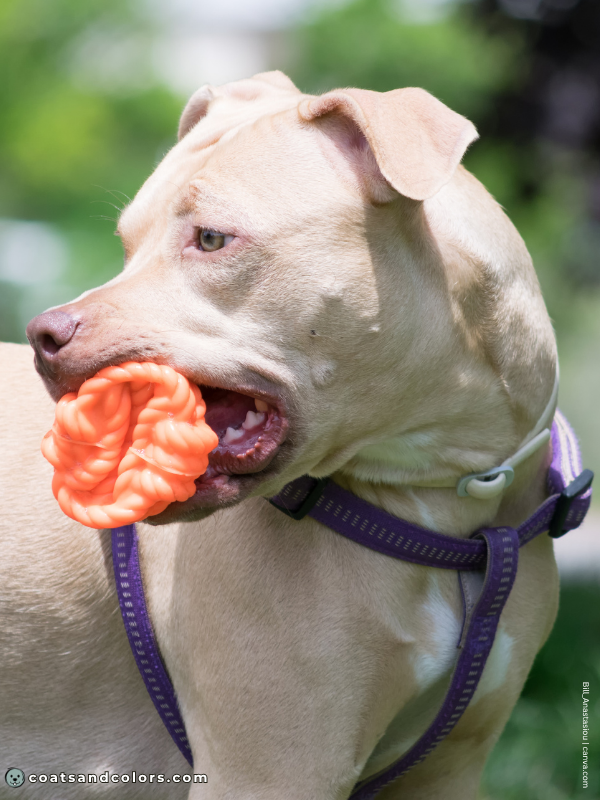

A lilac fawn AmStaff has a clear sable pattern with diluted brown pigment. They can have a lilac mask and white markings.
An overlay of lilac sabling can be hard to see.
BASE PATTERN
clear sable (lilac mask)
MERLE
–
OTHER
–
EUMELANIN
diluted liver
INTENSITY
fawn, red
WHITE
solid
white markings
Lilac Brindle
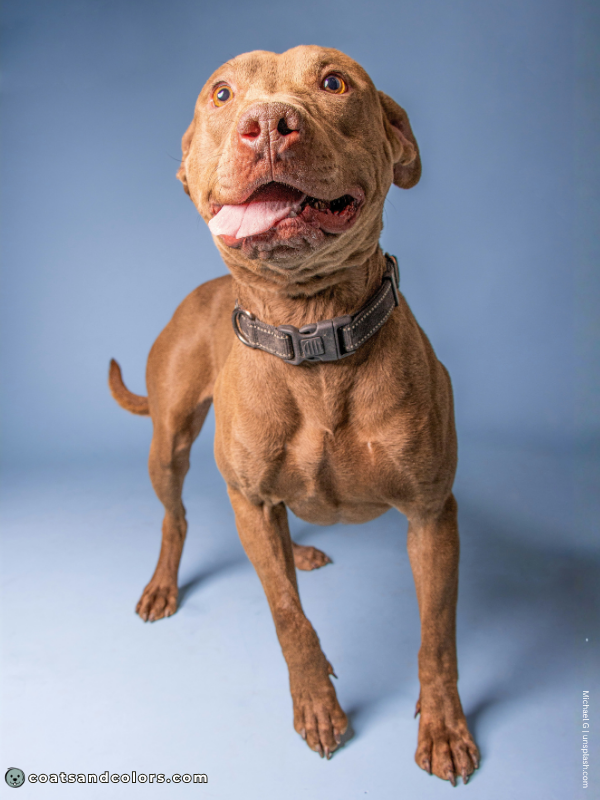
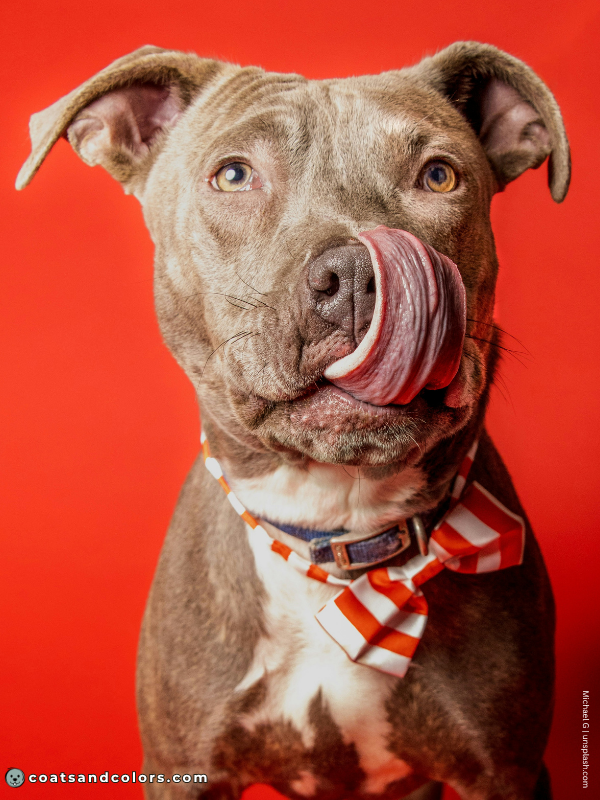
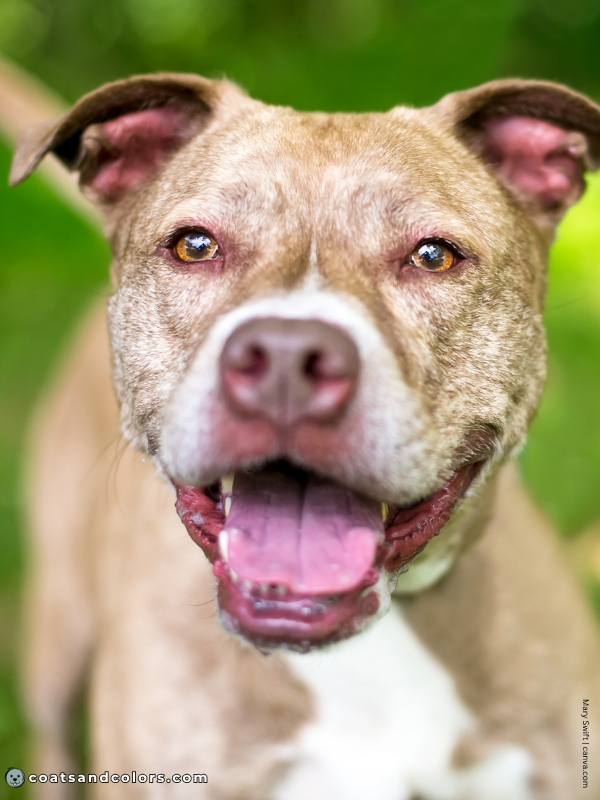
A lilac brindle AmStaff is sable with diluted brown striping on top. But lilac brindle can be hard to see against a red coat. And darker lilac striping can look like liver brindle.
BASE PATTERN
sable brindle (lilac mask)
MERLE
–
OTHER
–
EUMELANIN
diluted liver
INTENSITY
fawn, red
WHITE
solid
white markings
Lilac & Tan
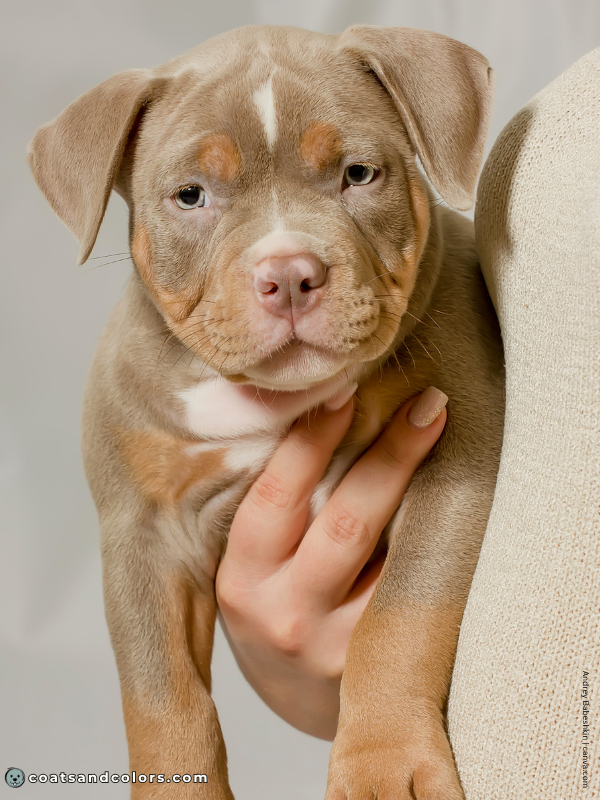
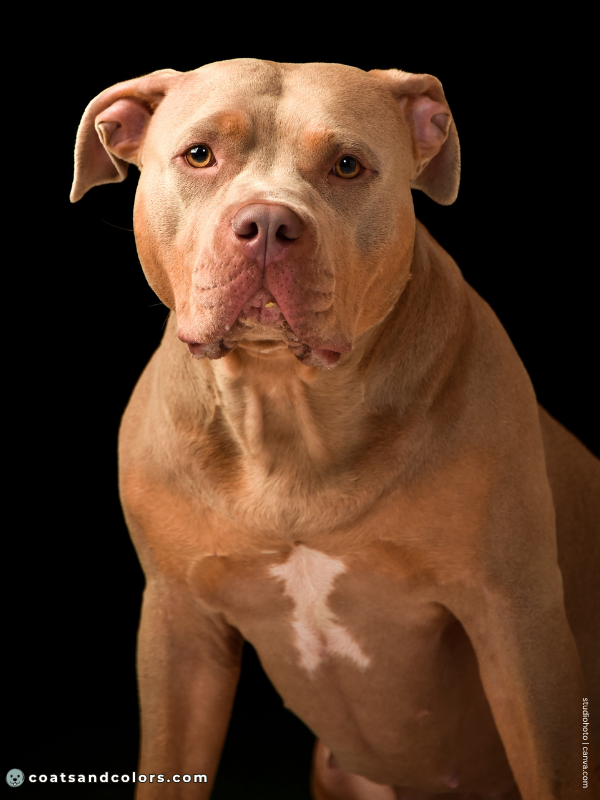
A lilac & tan AmStaff is diluted liver with tan markings. Some can have a lilac mask.
If they also have white, they are called lilac tricolor. A lilac and tan AmStaff can have brindle points. A lilac tri pattern with brindle would be lilac trindle.
BASE PATTERN
tan point (lilac mask)
MERLE
–
OTHER
–
EUMELANIN
diluted liver
INTENSITY
fawn, red
WHITE
solid
white markings
Faulty Colors
The breed standard says that extreme white phenotypes, the tan point pattern, and liver colors are not desired. They also say that noses should be black and eyes should be dark. Dudley noses and light eyes get penalized, making liver and lilac colors not only undesirable, but faulty for show dogs.
“Any color, solid, parti, or patched is permissible, but all white, more than 80 per cent white, black and tan, and liver not to be encouraged.”
AKC Breed Standard[1]
Base Patterns
The base pattern describes the placement of phaeomelanin and eumelanin in the coat. There is an epistatic hierarchy between the A locus < K locus < E locus.
A Locus
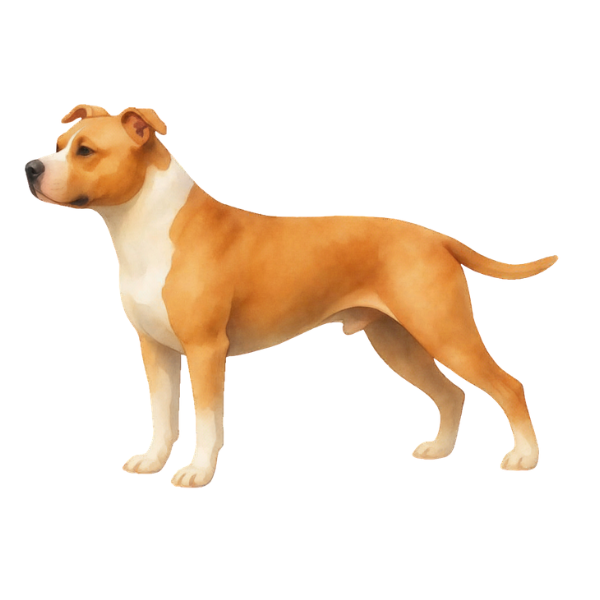
| Ay | clear sable |
| at | tan point |
The most common allele in AmStaffs is sable (Ay). Most dogs are clear sable and Ay/Ay. Some dogs produce dark hair tips, this can sometimes happen in heterozygous tan point carriers (Ay/at).
Dogs that express tan points (ky/ky at/at) or brindle points (kbr/- at/at ) and white are tricolor.


K Locus
| KB | dominant black |
| kbr | brindle |
| ky | wild-type |
Being homozygous for the wild-type (ky/ky) means the dog can express its A locus pattern. A brindle AmStaff (kbr/-) expresses its pattern with brindle striping on top.
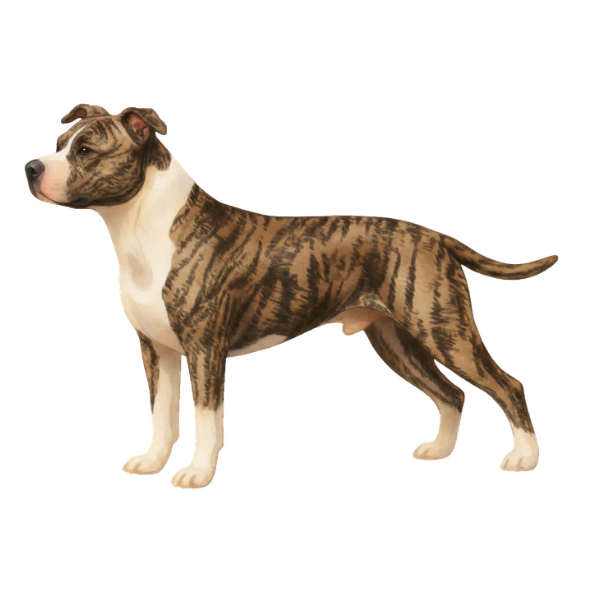
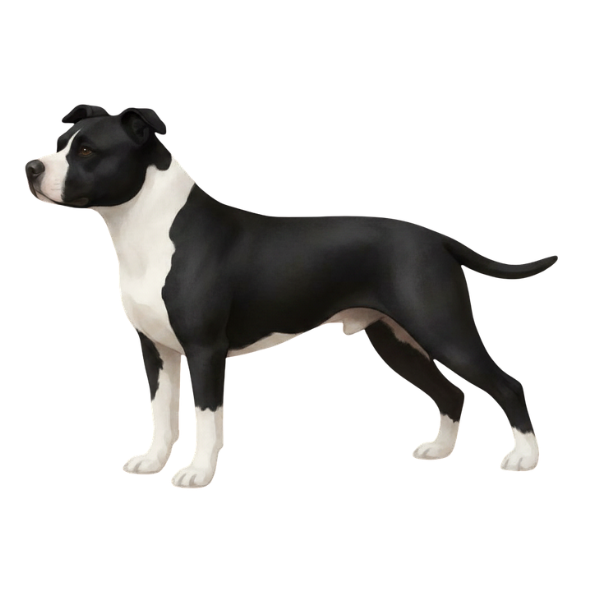
And dominant black (KB/-) hides the pattern and causes a solid dark coat color. Unless dogs are seal, where the KB lets some of the hidden sable pattern show through anyway.
Seal dogs with KB/kbr can show ghost brindle.

E Locus
| Em | black mask |
| E | wild-type |
| e | recessive red |
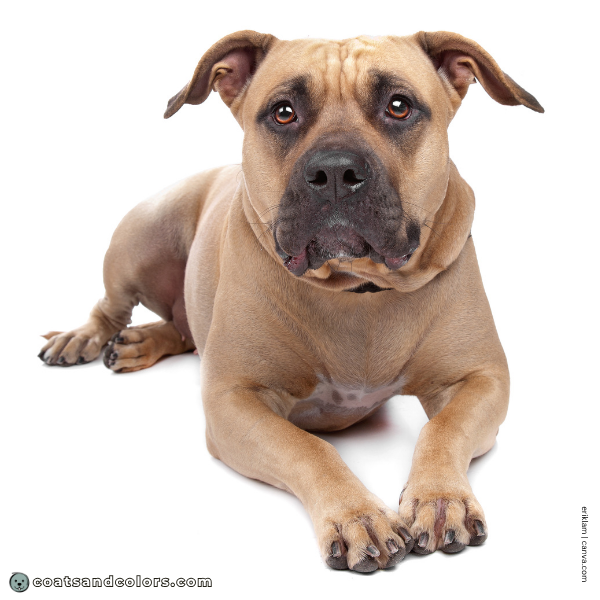
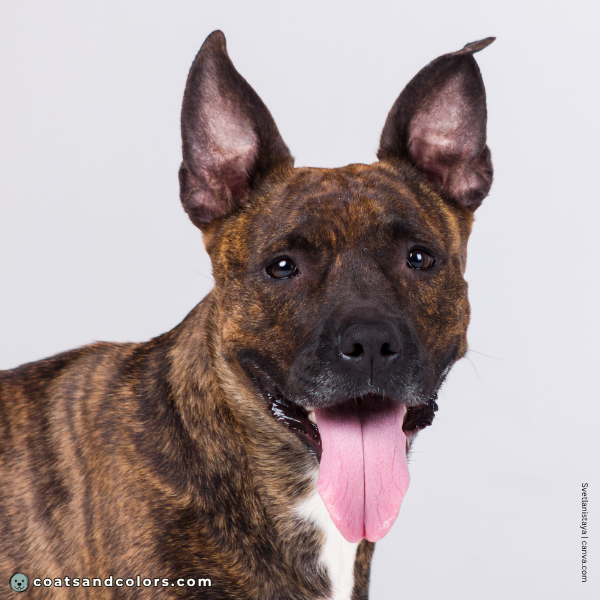
Most AmStaffs have a dark mask (Em/-), which is often hidden by a high amount of white on the head. Dogs with the wild-type (E/-) can express their A locus and K locus pattern normally. The recessive red pattern (e/e) is rare in this breed, it fully removes eumelanin from the coat.
AmStaff Base Patterns
The genotypes of American Staffordshire Terrier breed standard patterns:
| A LOCUS | K LOCUS | E LOCUS | PATTERN |
|---|---|---|---|
| Ay/- | ky/ky | Em/- | sable, mask “red, fawn, sable” |
| Ay/- | ky/ky | E/- | sable “red, fawn, sable” |
| Ay/- | kbr/- | Em/- | sable brindle, mask “brindle” |
| Ay/- | kbr/- | E/- | sable brindle “brindle” |
| at/at | ky/ky | Em/- | tan point, mask “black & tan” |
| at/at | ky/ky | E/- | tan point “black & tan” |
| at/at | kbr/- | Em/- | brindle point, mask “black & brindle“ –> tricolor |
| at/at | kbr/- | E/- | brindle point “black & brindle” –> trindle |
| KB/- | Em/-, E/- | dominant black “black” | |
| e/e | recessive red “red, fawn” |
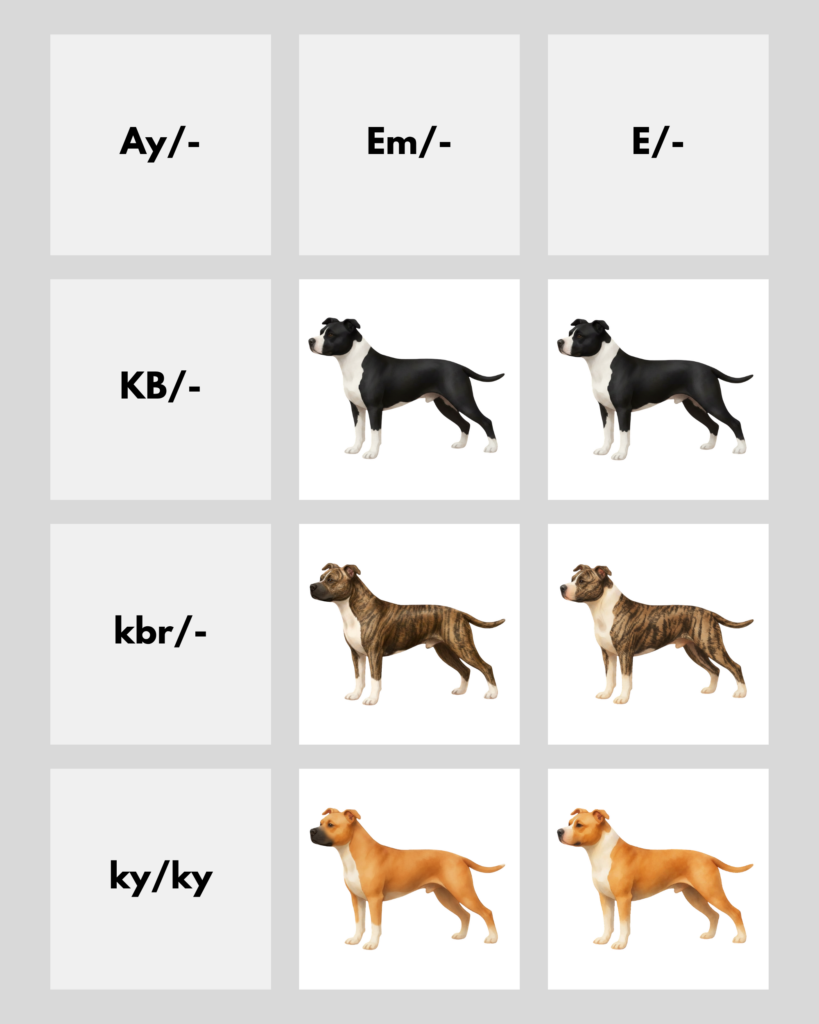
Here is a simplified AmStaff color chart:
Base Colors
The base color is determined by the B locus and D locus.
B Locus
| B | black |
| b | brown |
Most AmStaffs have black pigment (B/B) at the B locus. The recessive liver color (b/b) can happen in the breed, but is not desired.
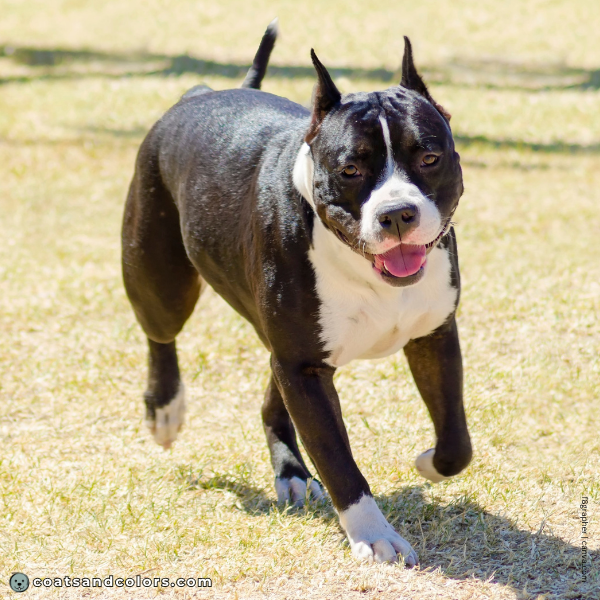

D Locus
| D | dense |
| d | diluted |
The D locus controls color dilution.
AmStaffs can have normal (D/-) or diluted (d/d) colors.
AmStaff Base Colors
The genotypes of possible base colors in the American Staffordshire breed:
| B LOCUS | D LOCUS | BASE COLOR |
|---|---|---|
| B/- | D/- | black “black” |
| b/b | D/- | brown “liver” |
| B/- | d/d | diluted black “blue” |
| b/b | d/d | diluted brown “lilac” |
Red Intensity
The color intensity of phaeomelanin in the phenotype is a polygenic trait, meaning it is regulated by a number of different genes. This causes a gradient of colors of possible colors between high intensity red and orange colors to medium intensity yellow and tan colors to low intensity cream colors.

Different dog breeds often use their own wording to describe the most common or desired red colors in their breed. The breed standard describes the shades seen in ____ as “____“.
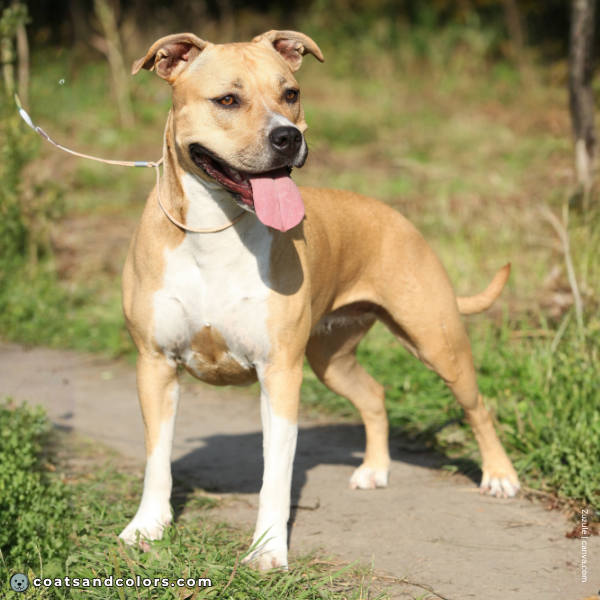
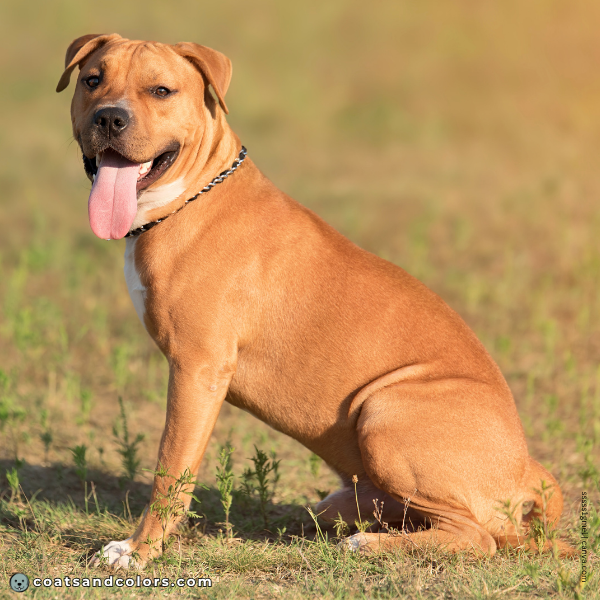

Dogs with color dilution sometimes produce lighter tan colors. But phaeomelanin is often not affected.
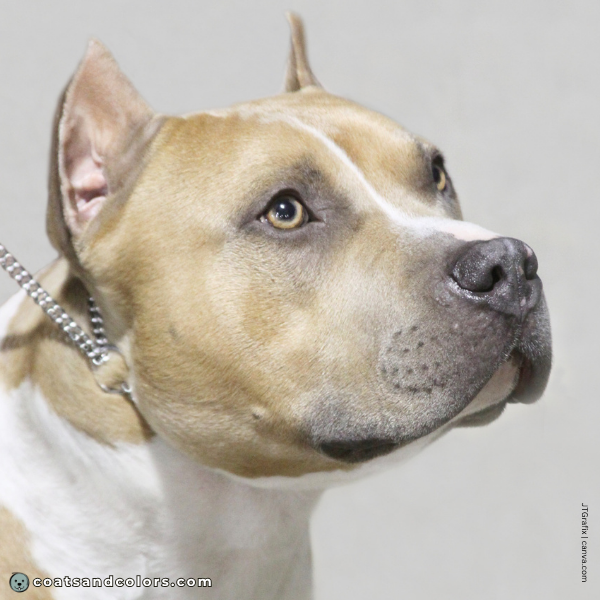
White Markings
Different traits can remove pigment from the coat and replace it with white.
The white in AmStaffs is typically caused by whitehead (but piebald is also present). The whitehead pattern deletes pigment from front to back. The amount of white depends on unknown modifiers.
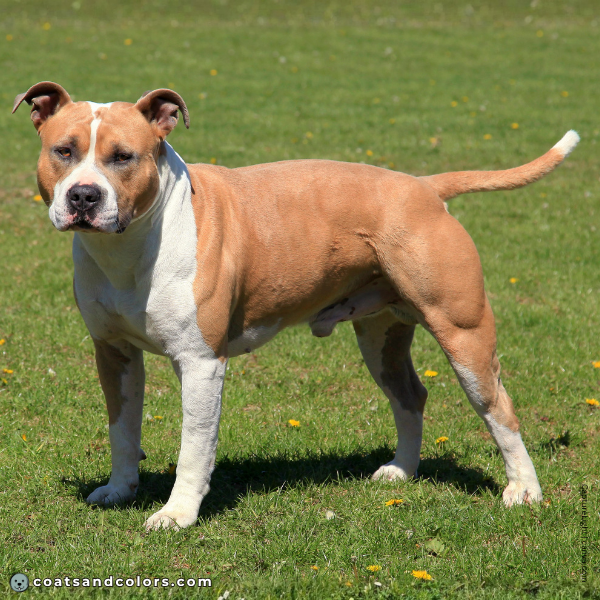

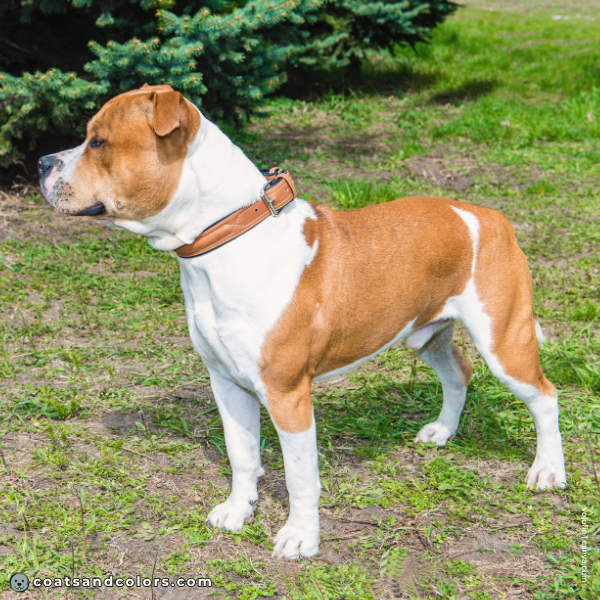

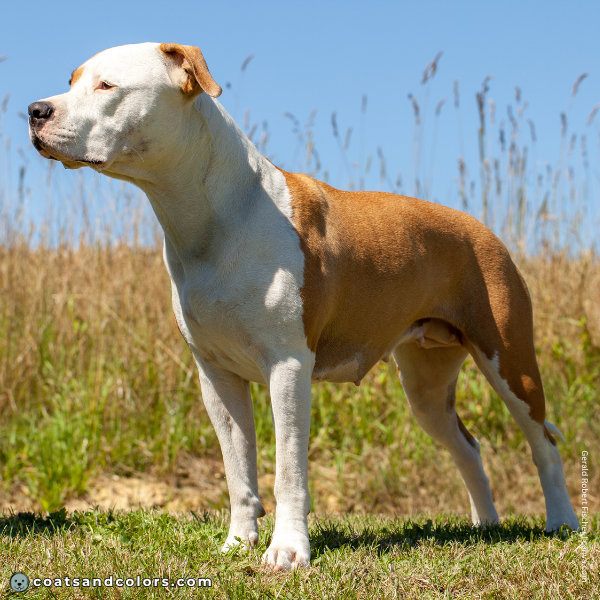
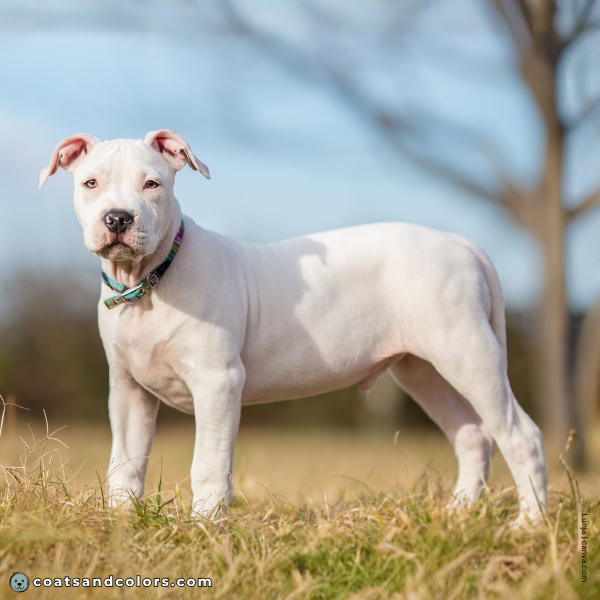
Whitehead can cause a split face. A fully white face is called a “white mask” in this breed.
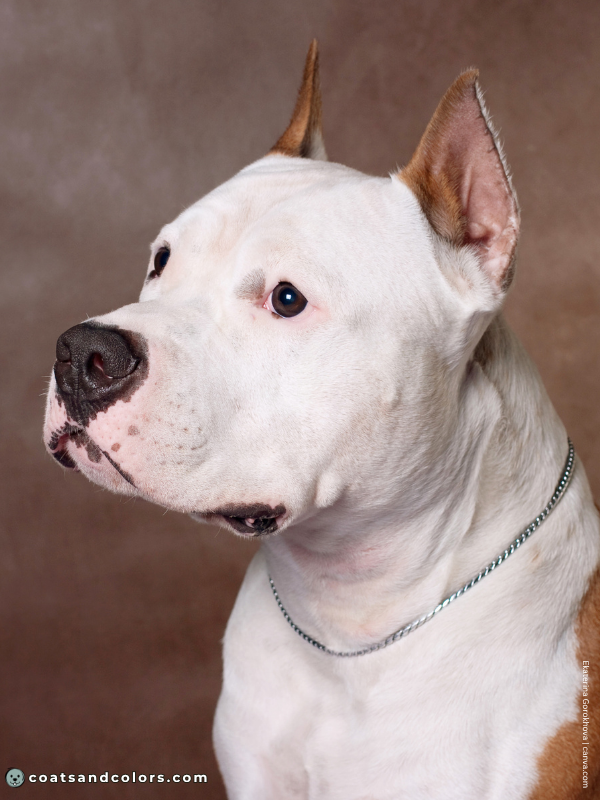
This much white on the head predisposes a dog for having missing pigment in other areas as well (blue eyes, pink eye rims, butterfly nose). Unfortunately, it also increases the risk of hearing impairment.
“No pink eyelids.”
AKC Breed Standard[1]
Spotting
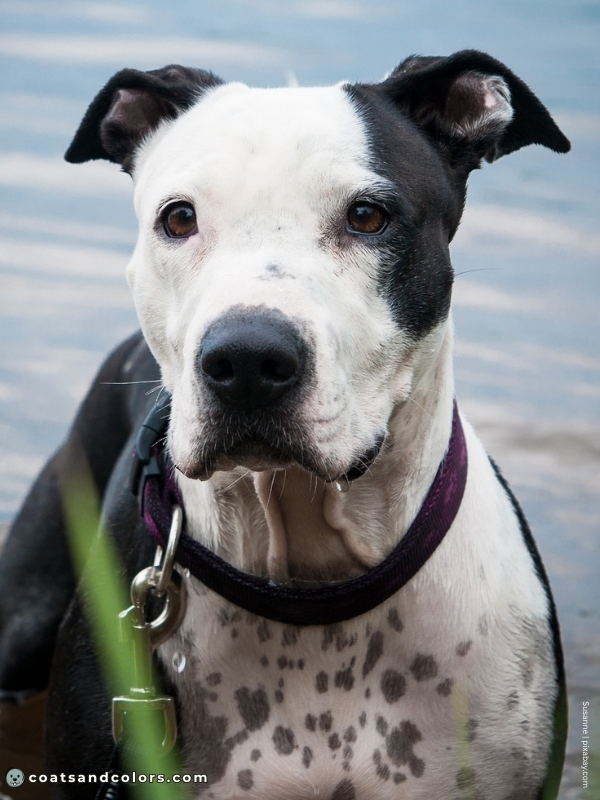
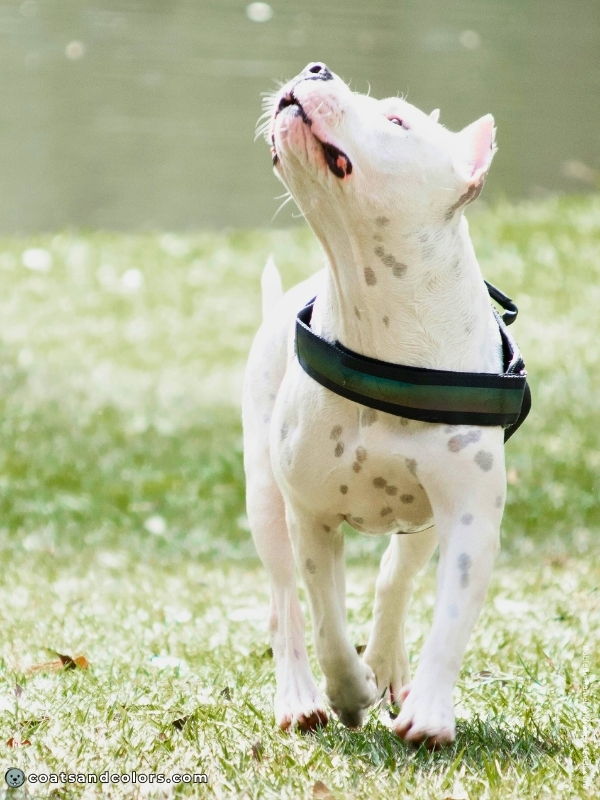
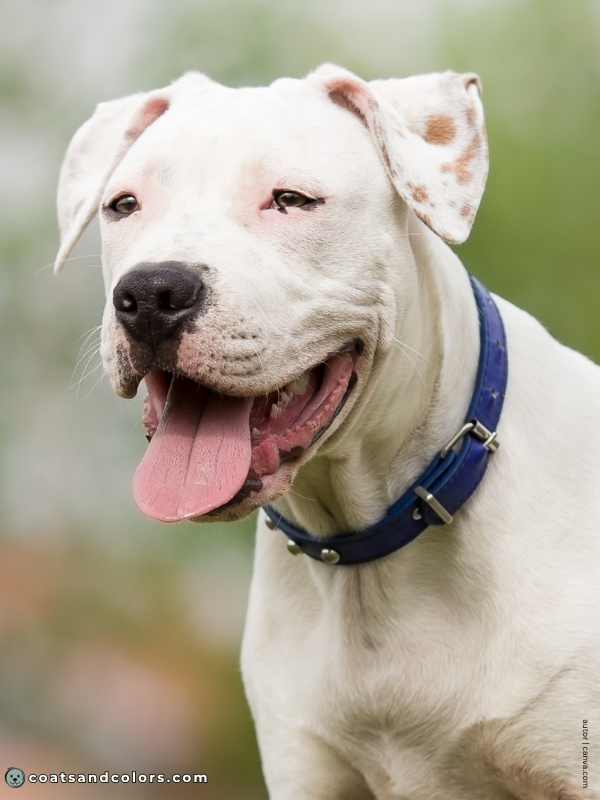
Only very few AmStaffs have real ticking.
What often happens more often is skin spotting showing through the thin white coat. And dogs with white heads often show residual ear spotting (unless they are cropped).
Merle
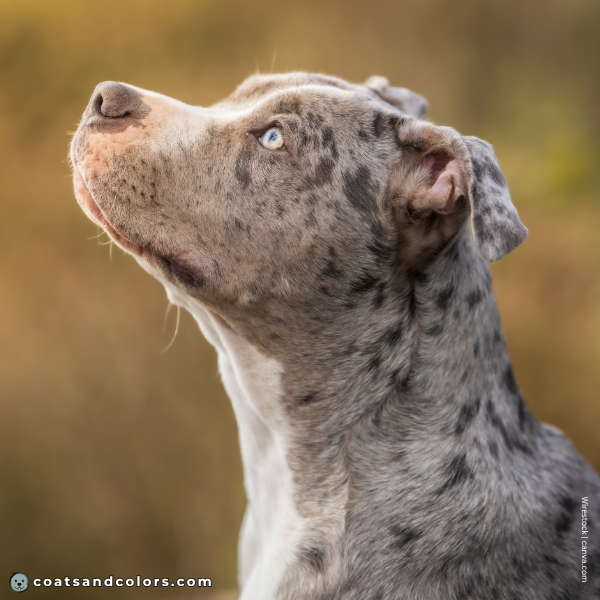
There is no merle in purebred AmStaffs! But this is one of the breeds that has been merlified by greeders to produce new fancy colors. They achieved this by crossbreeding with merle dogs.
AmStaff Eye Colors
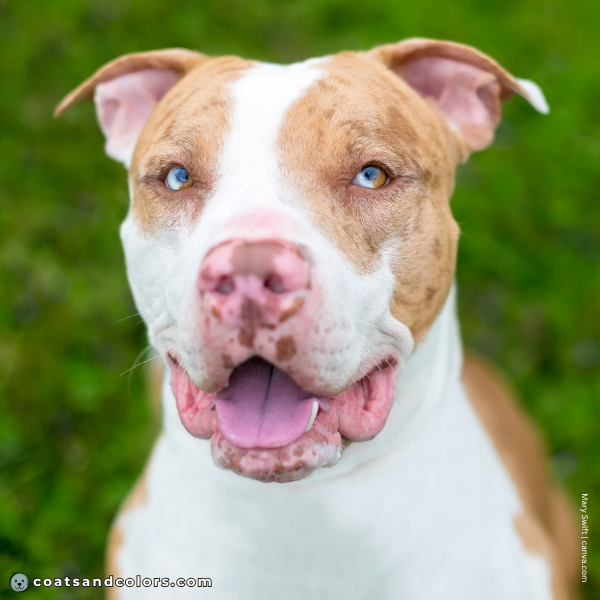
The breed standards want dark eyes and don’t favor light eyes. Most AmStaffs have black eumelanin and produce brown eyes. But eye color can vary a lot.
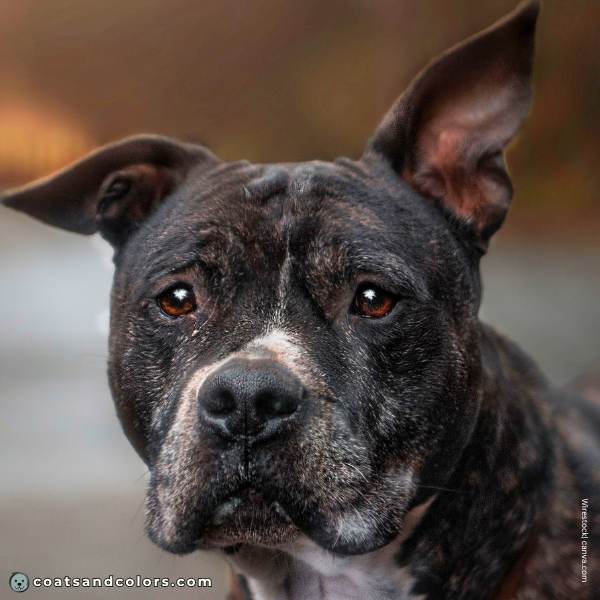
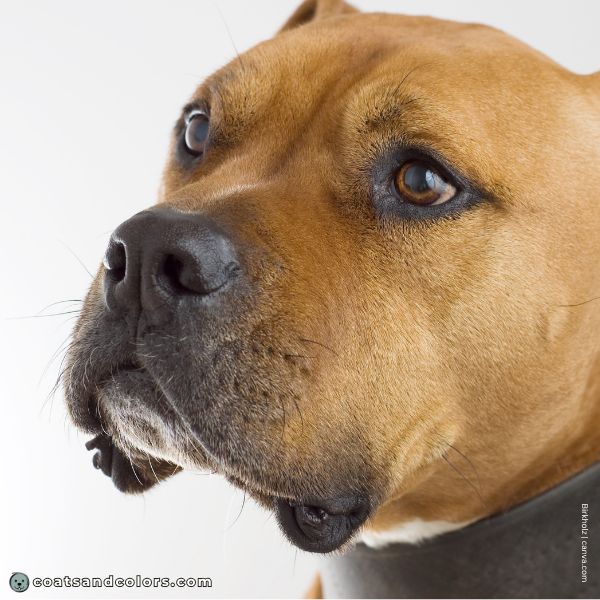
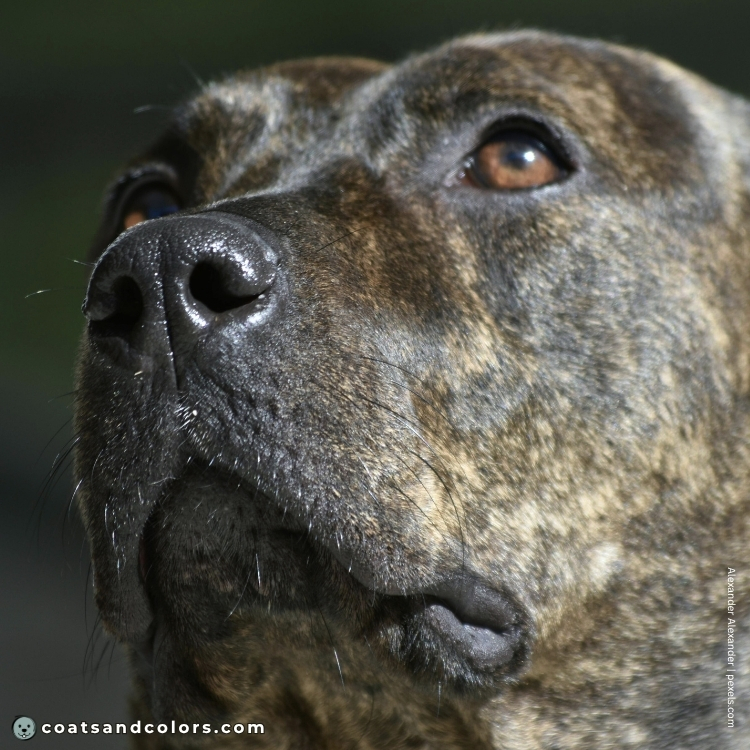
Dogs with liver colors and/or color dilution naturally tend to have lighter eyes, especially as young puppies. They can have green, yellow, amber, or hazel eyes.
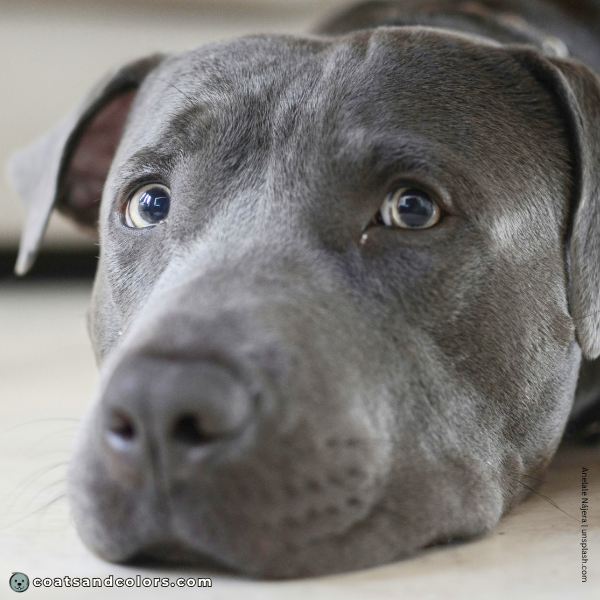
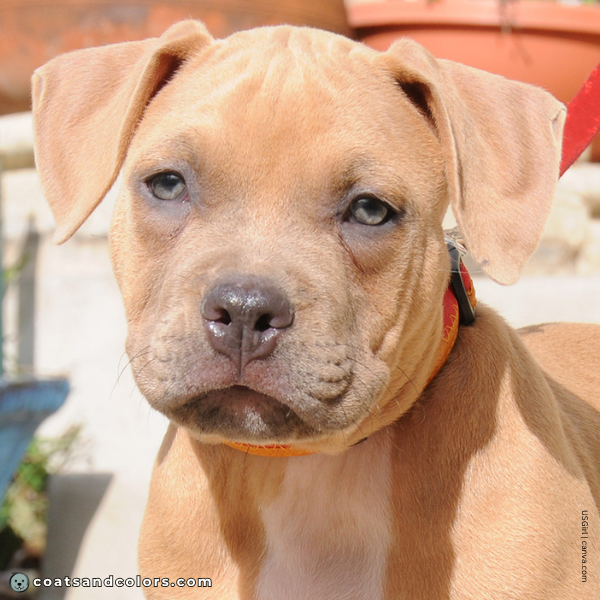
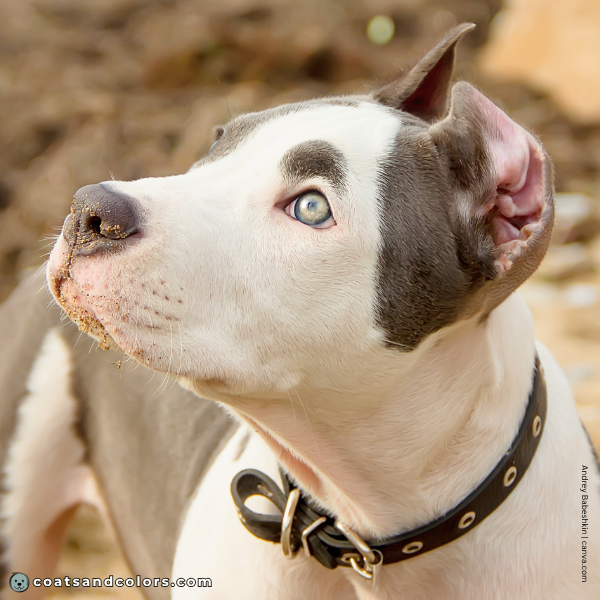
Dogs with lots of white on the face are predisposed to having missing skin pigment or blue eyes. You can breed away from this as much as you like… it still happens sometimes.
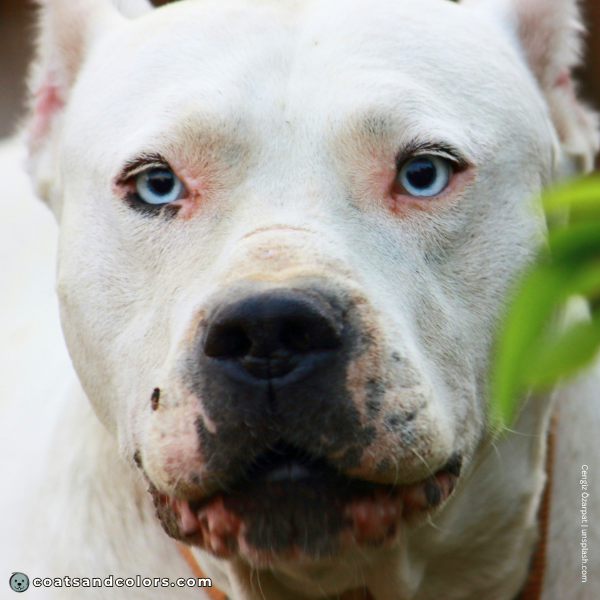
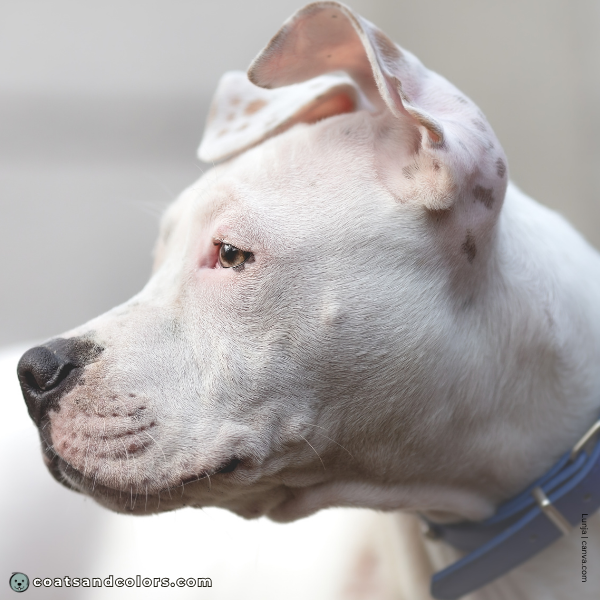
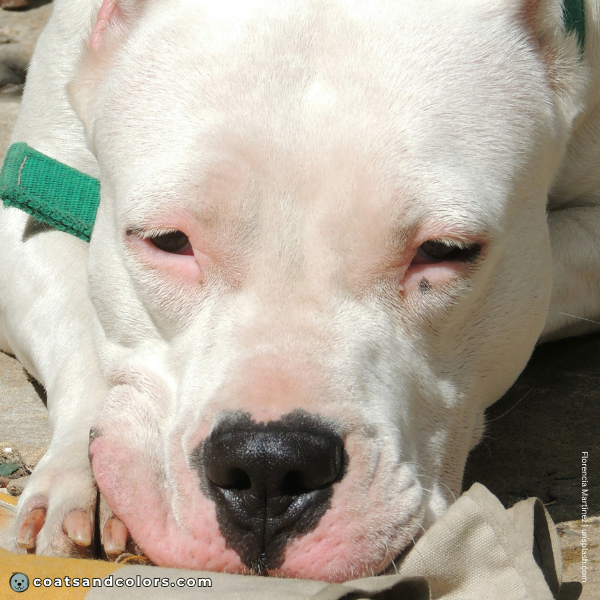
“Dark and round, low down in skull and set far apart. “
“Faults to be penalized are: […] light or pink eyes“
AKC Breed Standard[1]
AmStaff Nose Colors
Only a dog with black eumelanin has a black nose. The AKC standard says that all AmStaffs have a black nose. Huh, but dogs with diluted black will always have a blue nose.
So what they actually mean is “please breed blue noses to look as dark as possible“.

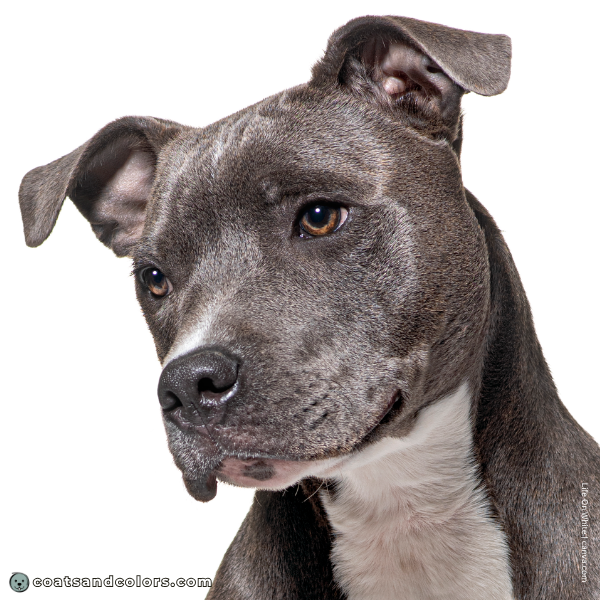
The “rednose” dogs have brown eumelanin. Add color dilution, and you get a slightly lighter lilac nose. The AKC breed standard says that a flesh-colored “Dudley nose” is faulty, and noses need to be black. This excludes both all liver noses as well as snow noses in recessive red (e/e) dogs.
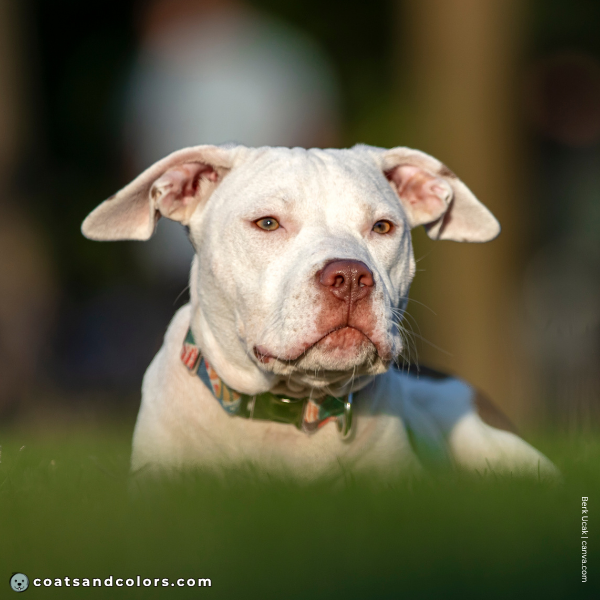
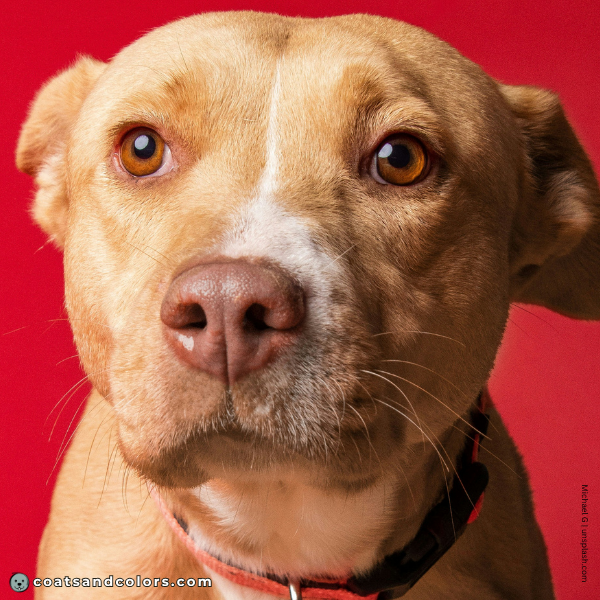

Pink puppy noses often fill in over time. However, some adult dogs with extreme white may keep a butterfly nose with pink spots where pigment is missing.
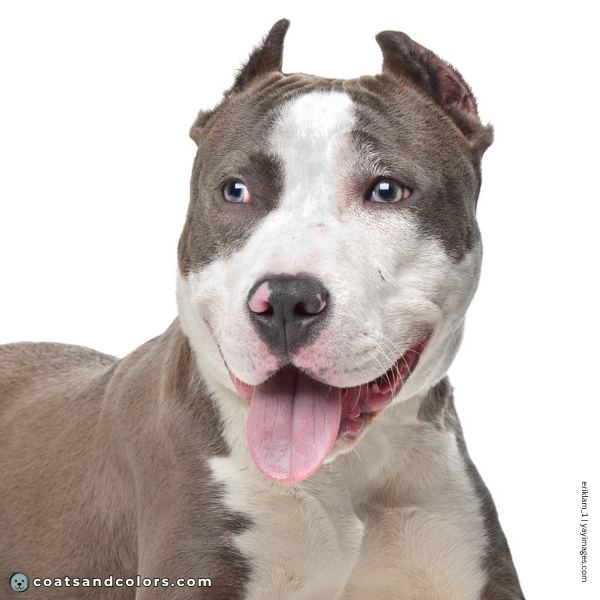
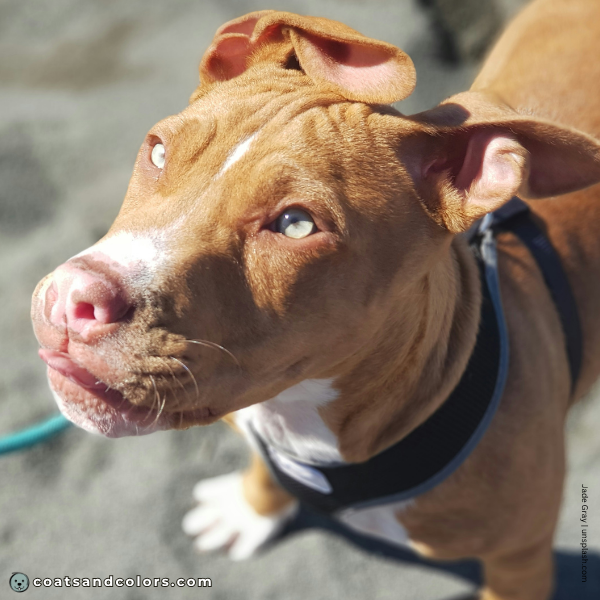
“Nose definitely black.”
“Faults to be penalized are […] Dudley nose”
AKC Breed Standard[1]
AmStaff Coat Type
AmStaffs have a short glossy coat without too much undercoat.
“Short, close, stiff to the touch, and glossy.”
AKC Breed Standard[1]
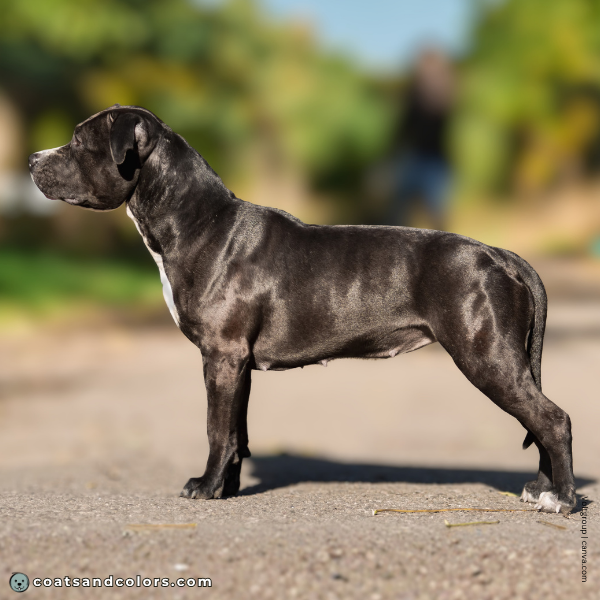
The allele for long hairs is also present.
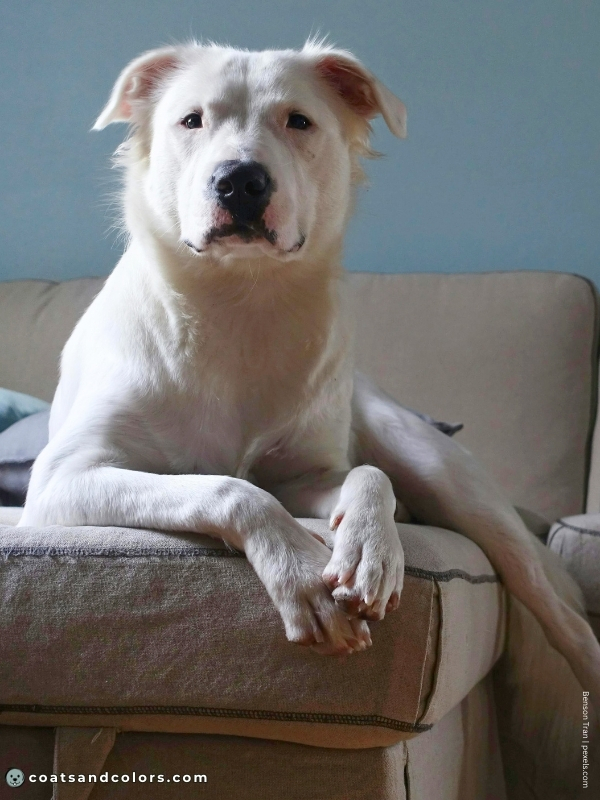
Here, I know you want to see a fluffy AmStaff:
Related Breeds
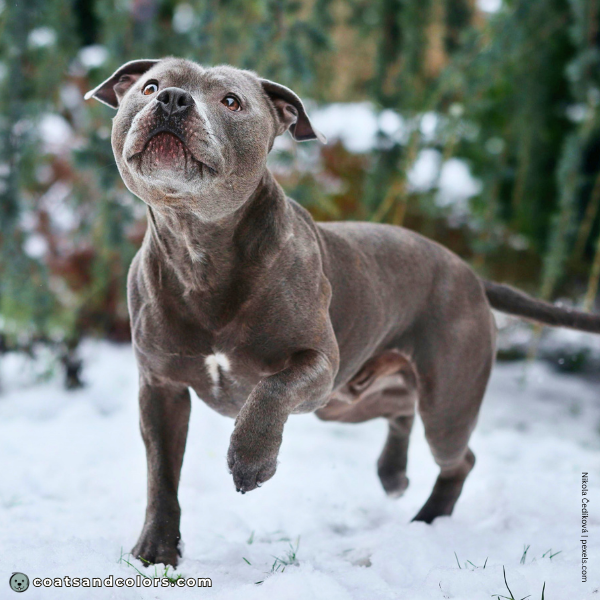
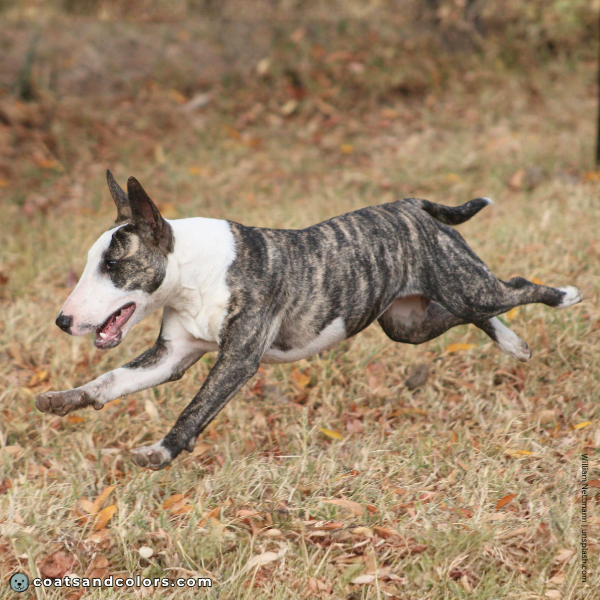
The AmStaff goes back to extinct bull-and-terrier crosses.

Learn More
Links
[1] AKC Breed Standard: American Staffordshire Terrier
[2] FCI Breed Standard: American Staffordshire Terrier
[3] CKC Breed Standard: American Staffordshire Terrier
[4] Dreger et al. (2019). True Colors: Commercially-acquired morphological genotypes reveal hidden allele variation among dog breeds, informing both trait ancestry and breed potential. PLoS ONE 14(10): e0223995. https://doi.org/10.1371/journal.pone.0223995
Image Credits
Alex Khoury/pexels.com
Andrey Babeshkin/anva.com
Andrey Babeshkin/canva.com
Anelale Nájera/unsplash.com
Benson Tran/pexels.com
Berk Ucak/canva.com
Bigandt_Photography/canva.com
Bill_Anastasiou/canva.com
Birkholz/canva.com
CaptureLight/canva.com
Cengiz Özarpat/unsplash.com
Clement Peiffer/canva.com
DevidDO/canva.com
Edmilson Reis/canva.com
Ekaterina Gorokhova/canva.com
eriklam_1/yayimages.com
eriklam/canva.com
eriklam/yayimages.com
Eva Klimentová/pixabay.com
Florencia Martinez/unsplash.com
fotojagodka/anva.com
Gerald Robert Fischer/canva.com
Greg Lippert/unsplash.com
Haley’s Images/canva.com
infinityyy/yayimages.com
Jade Gray/unsplash.com
Jolra’s Images/canva.com
JTGrafix/canva.com
Kirill Ikonnikov/canva.com
Kyle Reynolds/anva.com
Leonardo Merlo/pexels.com
Life On White/canva.com
Lunja/canva.com
MarijaRadovic/canva.com
Mary Swift/canva.com
Michael G/unsplash.com
milinz/yayimages.com
Nikola Čedíková/pexels.com
nynkevanholten/canva.com
Olga Kholiavina/canva.com
olharomaniuk/canva.com
PhotosignPhotography/canva.com
pixelshot/canva.com
RaeAnnaFrame/canva.com
Robledo Rafael Andrade/pexels.com
Sean Miller/unsplash.com
Sergo2/canva.com
sssss1gmel/canva.com
studiohoto/canva.com
Susanne/pixabay.com
Svetlanistaya/canva.com
Thorsten Stollberger/pixabay.com
Timothy Dachraoui/unsplash.com
USGirl/canva.com
vencavolrab/canva.com
volofin/canva.com
Voltgroup/canva.com
Wijs/pexels.com
William Nettmann/unsplash.com
Wirestock/canva.com
Zuzule/canva.com
Hi! I’m Steffi. I am a biologist and a big time dog nerd. You are curious about coat color genetics? You’ve come to the right place! Read more.