
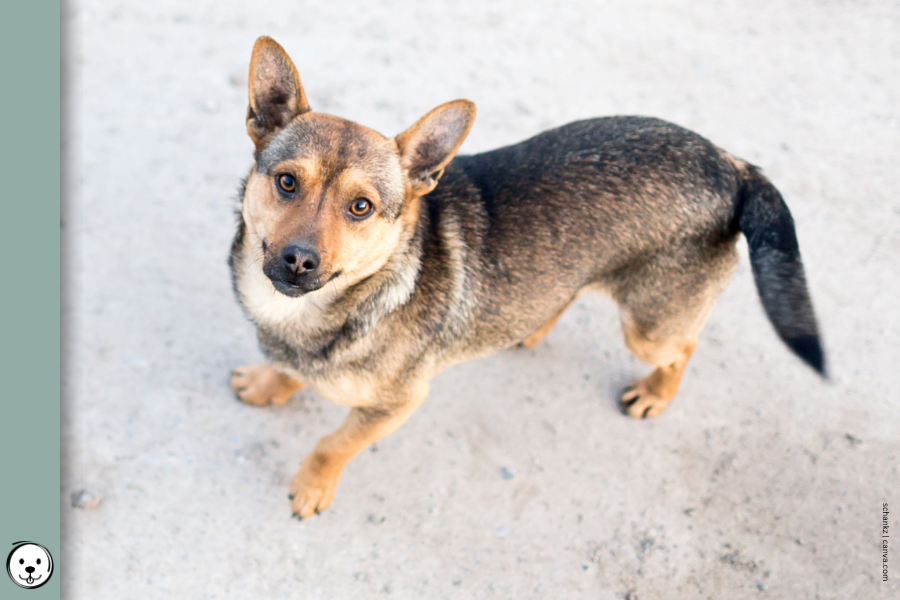
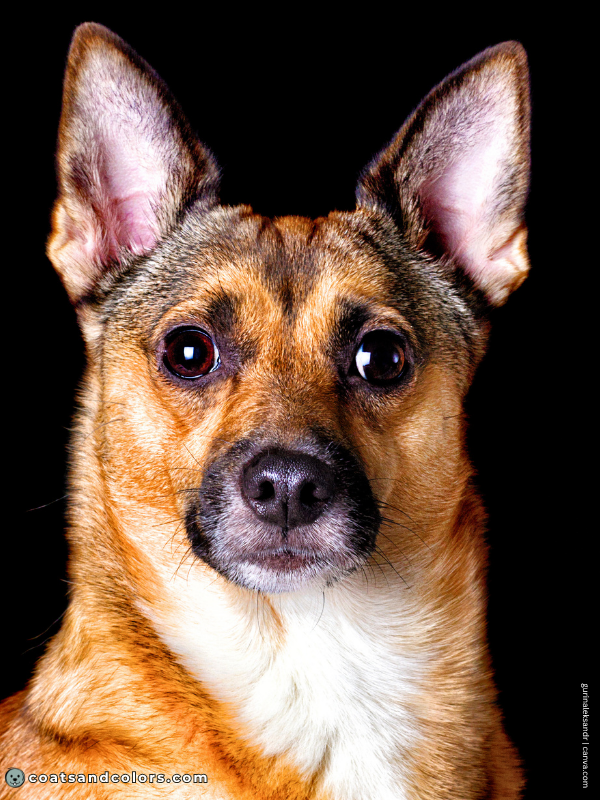
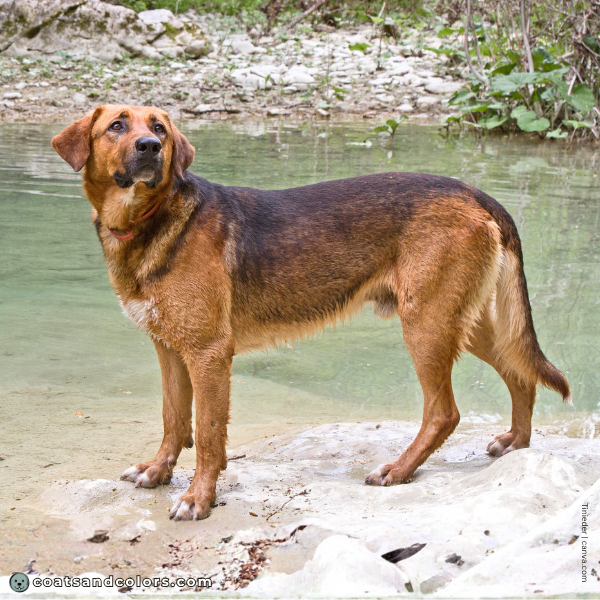
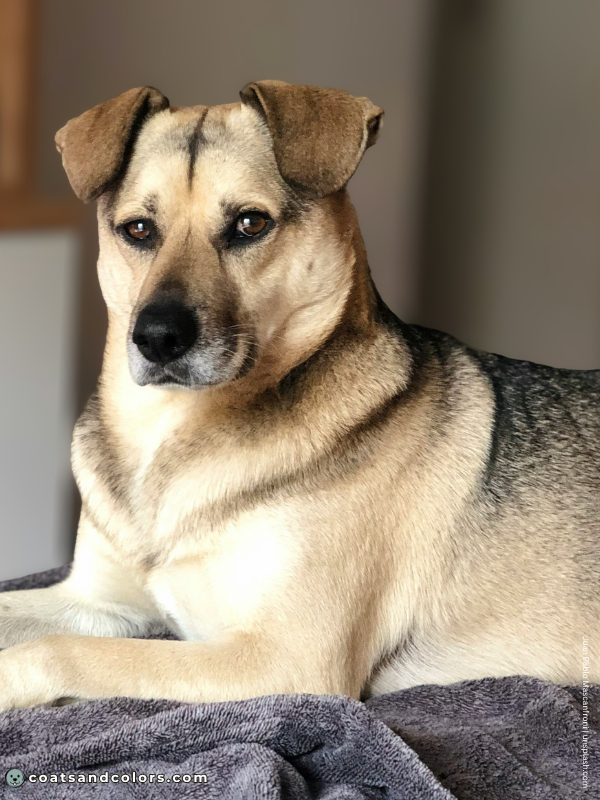
Some agouti dogs don’t show the usual wolf-gray banding all over their upper body. Instead, they have extended tan markings that only leave room for a smaller banded saddle on the back.
This is what we call saddle agouti. A mainly yellow dog with a saddle of banded hairs.
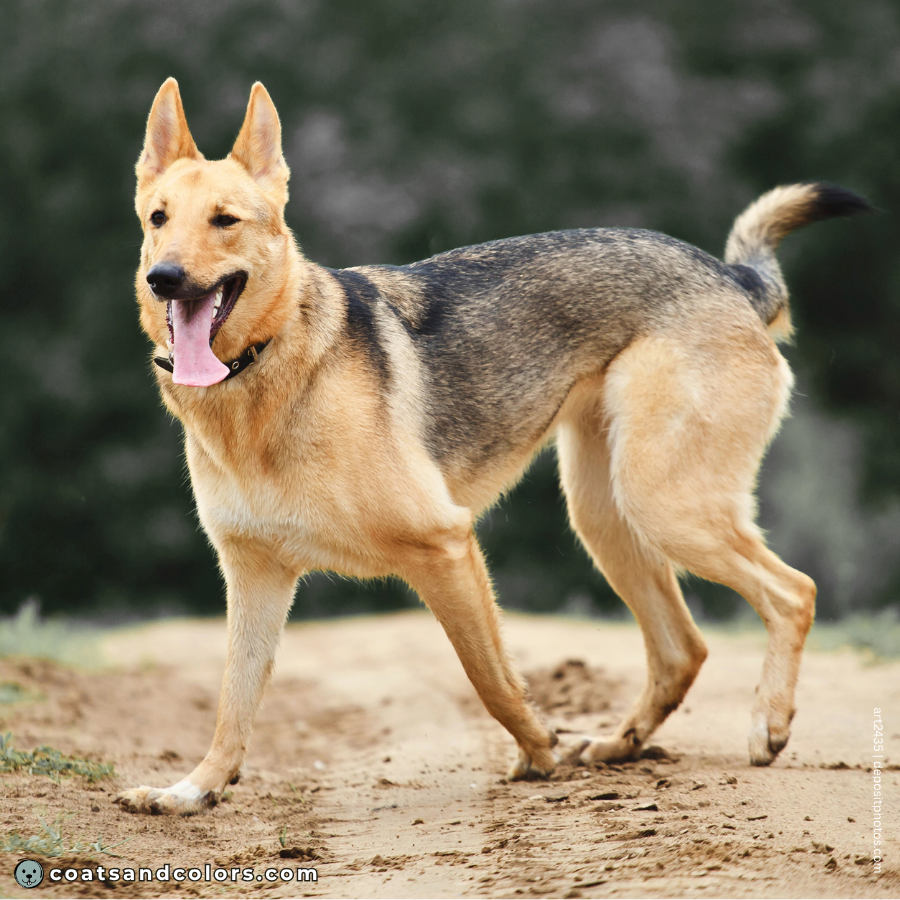
This phenotype is common in German Shepherds , where it is called “pattern sable” (because GSD fanciers decided a long time ago to use “sable” as a breed term for the agouti pattern).
What Agouti Saddle Looks Like
A normal agouti dog has normal tan points.
It also has an overlay of banded hairs on its upper body, always with distinct face markings.

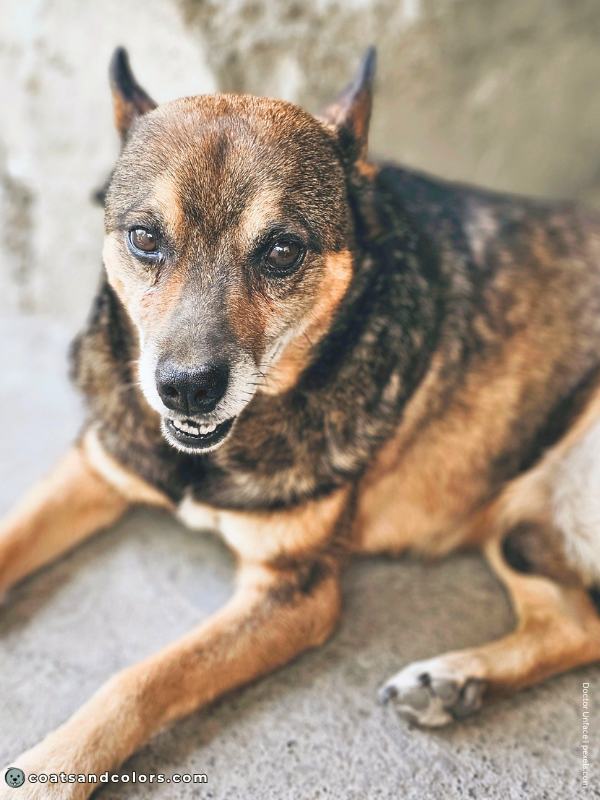
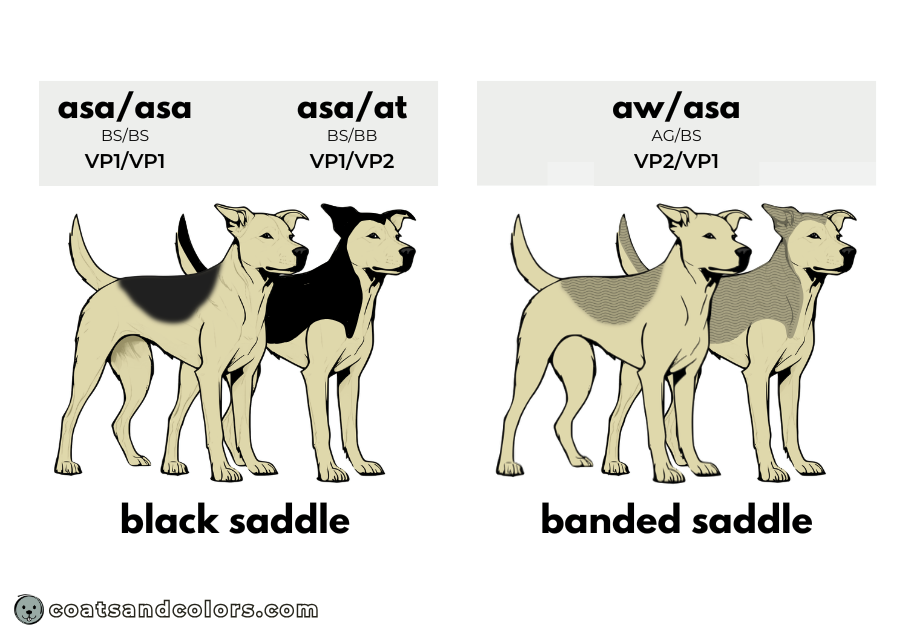
But with saddle agouti, the ventral tan markings creep further up the body. The banded hair is concentrated into a saddle-shaped patch instead of spreading across the whole upper body.
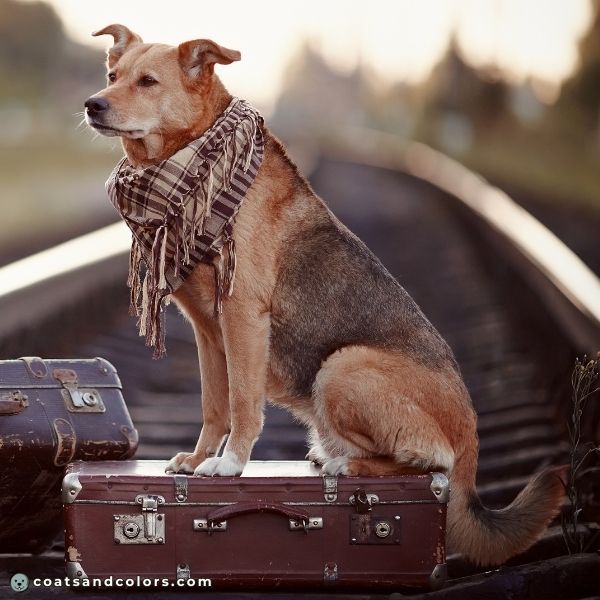
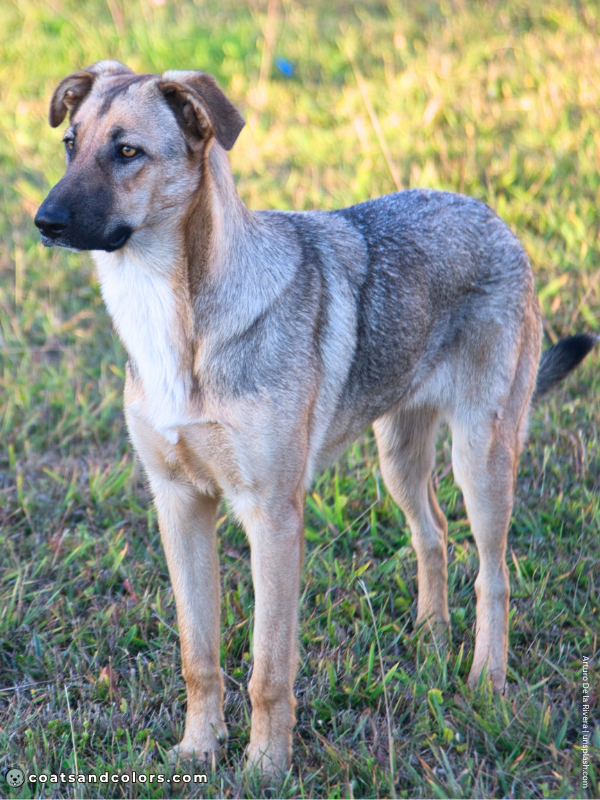
The extension of ventral tan is similar to creeping tan or saddleback. Just that these other patterns have black dorsal hairs, whereas an agouti saddle dog has banded dorsal hairs.
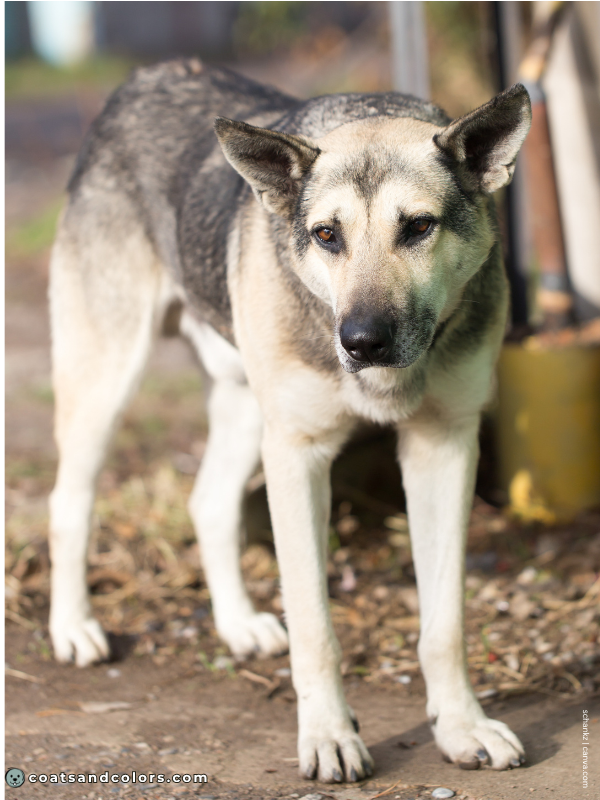
Agouti puppies are often born very dark. The same happens in saddle agouti puppies. They can be born very light but then turn almost yellow, before their darker shading eventually returns.
The Genetics Of Saddle Agouti
Like every agouti-based pattern, this comes down to ASIP output from the A locus.
ASIP tells pigment cells to switch from eumelanin (black) to pheomelanin (tan).
These two promoters of the ASIP gene control where and how much ASIP gets made.
And each promoter has different versions.
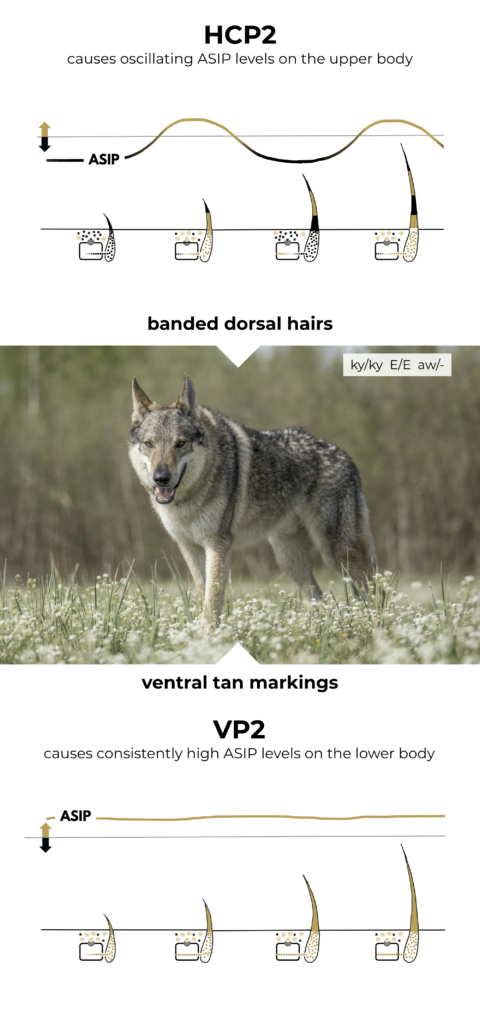
The VP (ventral promoter) controls ventral tan.
- VP1 overproduces ASIP and floods a larger area on the lower body.
- VP2 gives normal tan markings.

The HCP (hair cycle promoter) controls dorsal banding.
- HCP1 overproduces ASIP and causes mainly yellow dorsal hairs.
- HCP2 produces normal levels of ASIP and causes banded dorsal hairs.
- HCP3-5 are broken versions that barely contribute to ASIP levels, which causes dorsal hairs to stay black.
Each A locus allele represents a unique combination of these promoters.
Agouti saddle dogs are aw/asa. This represents a VP2-HCP2 / VP1-HCP4 combination.
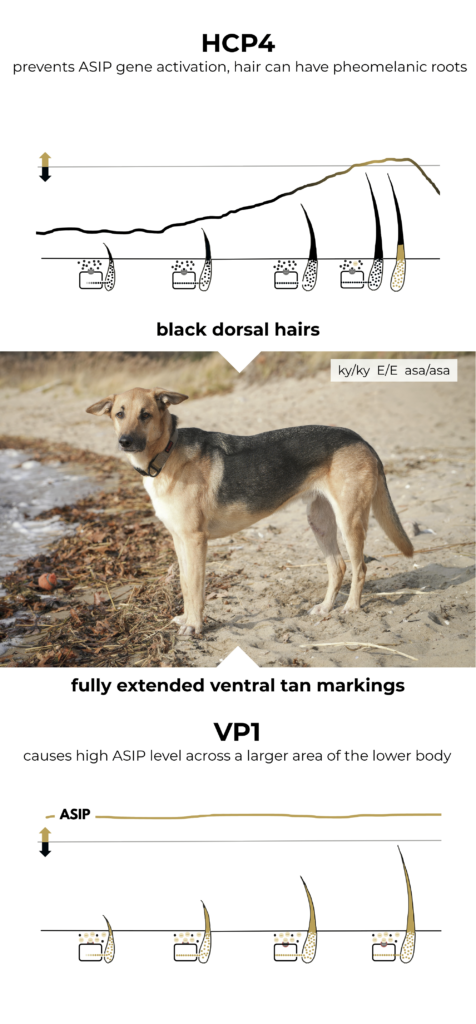
What happens if a dog has both alleles?
HCP2 and HCP4 control dorsal hair banding.
The mismatched hair cycle promoters (HCP2 + HCP4) mean only the one copy of HCP2 is actually producing ASIP. This can cause darker hair banding compared to aw/aw with HCP2 + HCP2.
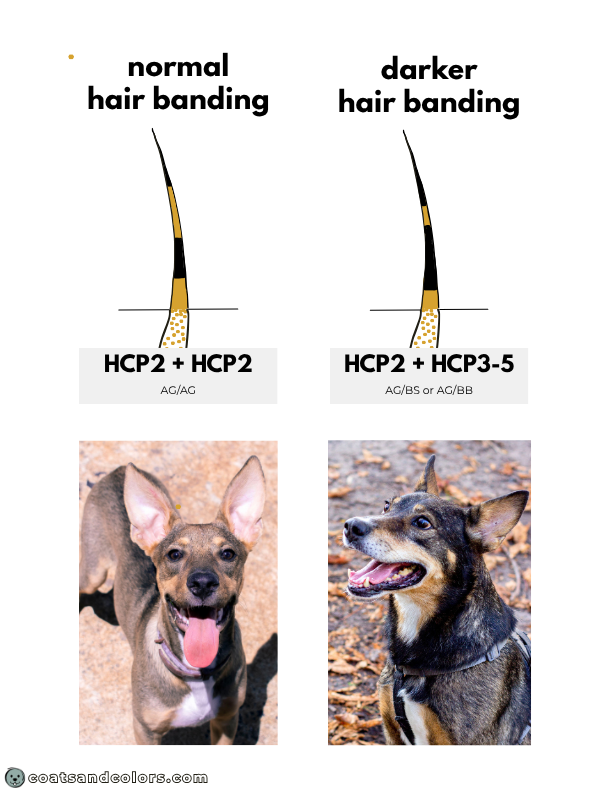
VP2 and VP1 control the spread of the ventral tan markings.
Dogs with VP1 + VP2 can have fully or partially extended tan. The one copy of VP1 from the asa allele increases ventral ASIP levels. This causes tan markings to cover a larger area.
So the banded hairs can only appear on the back of the dog.
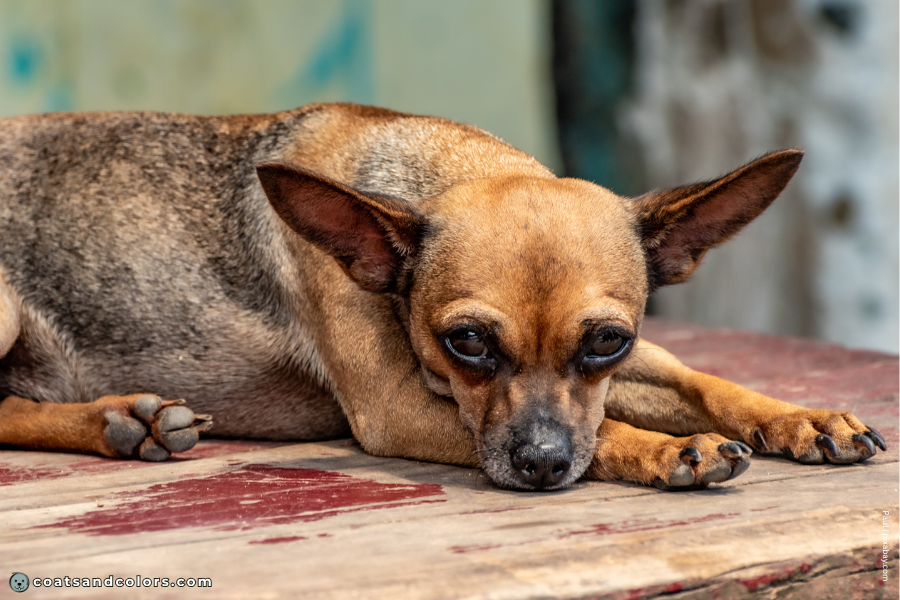
Dogs with even just partially extended tan lack the typical darker face markings.
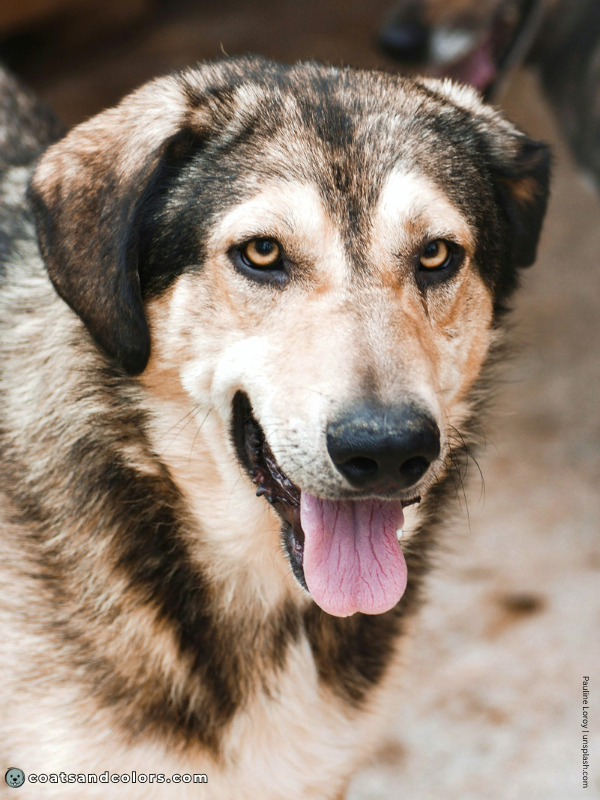
The aws Allele
Each A locus allele represents a unique combination of a VP and a HCP.
But there is one combination that hasn’t been confirmed to exist so far.
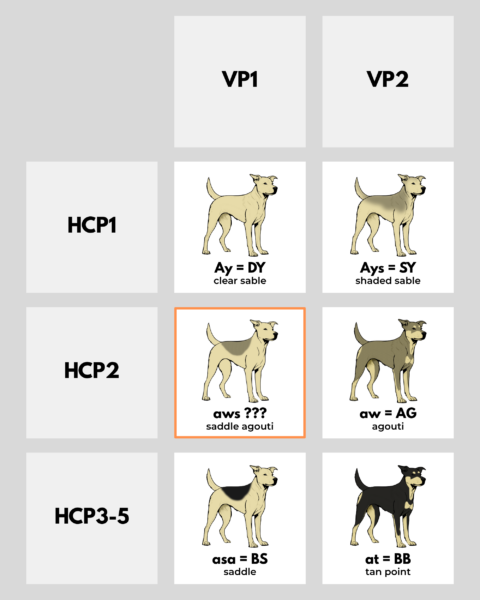
There might be a separate aws allele, representing a unique VP1-HCP2 haplotype.
This would cause a similar phenotype as the aw/asa combination.
But this hypothetical allele hasn’t been confirmed in the study that initially discovered the two ASIP promoters. A person on Reddit told me they knew about a tested aws/- dog, but couldn’t provide proof.
Telling Look-Alikes Apart
The agouti saddle pattern is just one of many base patterns that control where a dog has eumelanin and where it has pheomelanin. Many different traits can then control pigment colors or general pigmentation ability. This can affect how this pattern might actually look on an individual dog.
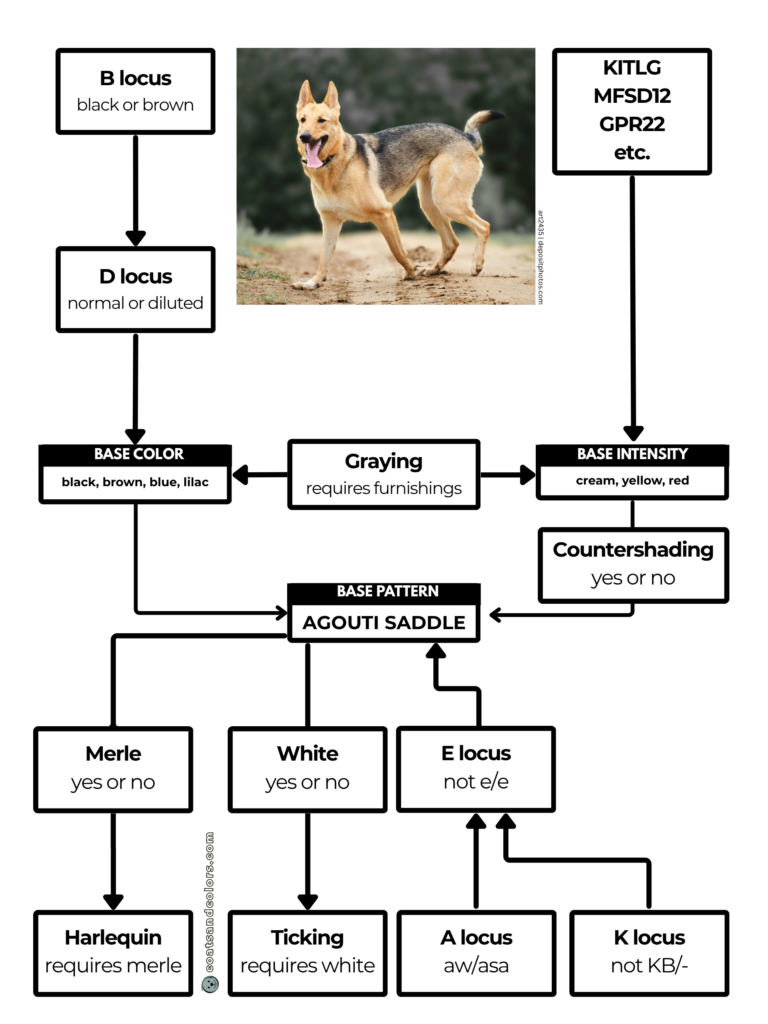
Normal agouti “wolf-sable” can be aw/aw, aw/asa, aw/at, or aw/a, running progressively darker toward aw/a. The patterned sables are aw/asa or could fall into the aws group, if that allele turns out to be real.
A few other phenotypes can produce a similar look without being a true agouti saddle:
- A normal faded saddle (asa/-) can have lots of tan hairs mixed with the black hairs.
- Furnished dogs often have “grizzly” looking saddles.
- A domino saddle (e.g. eA/- asa/-) looks smallish and washed-out.
- Strong dorsal sable shading (e.g. Ays/at) can mimic a saddle pattern.
Learn More
Image Credits
art2435/depositphotos.com
Arturo De la Rivera/unsplash.com
Azaliya/canva.com
Doctor Unface/pexels.com
gurinaleksandr/canva.com
Lurin/canva.com
Paul/pixabay.com
Pauline Loroy/unsplash.com
salofoto/pixabay.com
schankz/canva.com
Tinieder/canva.com
Hi! I’m Steffi. I am a biologist and a big time dog nerd. You are curious about coat color genetics? You’ve come to the right place! Read more.