

The Cane Corso is a working mastiff from Italy. Its short coat can be black, gray, fawn, red, or brindle. Read on, and I’ll show you examples of Cane Corso standard colors.
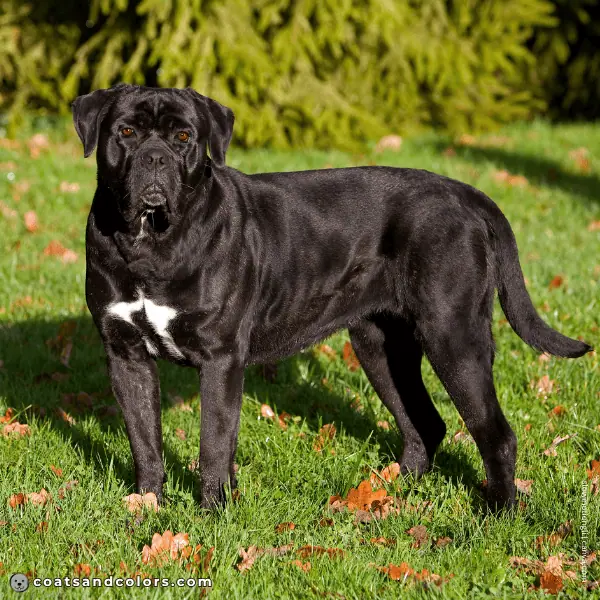
Black

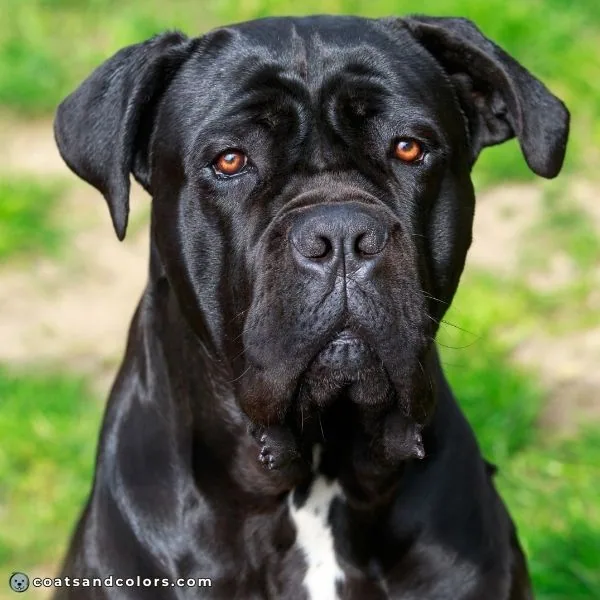
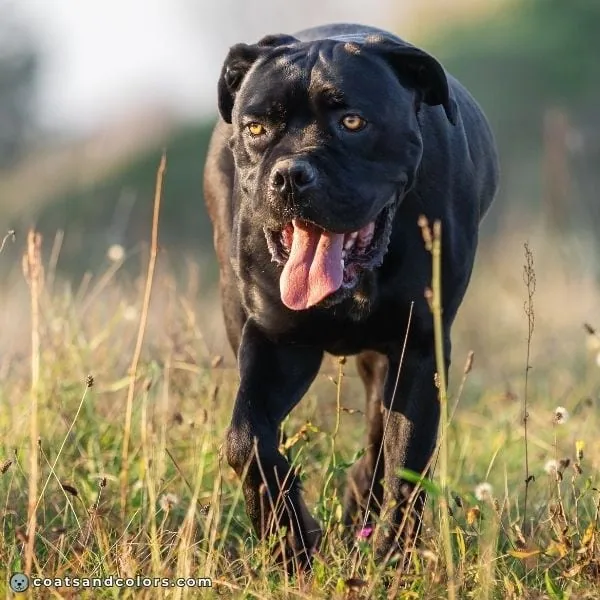
Cane Corso should be fixed for sable (Ay/Ay) at their A locus.
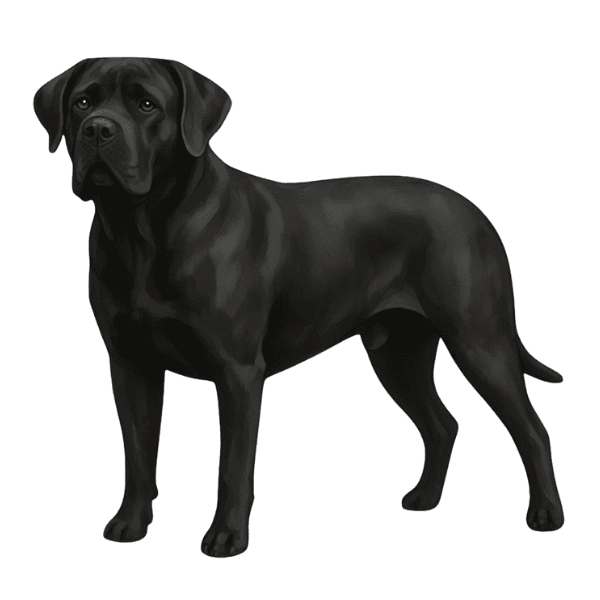
But it doesn’t really matter since the dominant black pattern (KB/-) hides the A locus pattern and replaces it with a solid black coat. All Cane Corso are supposed to have a mask (Em/Em). But a black mask will not be visible on an already black dog.
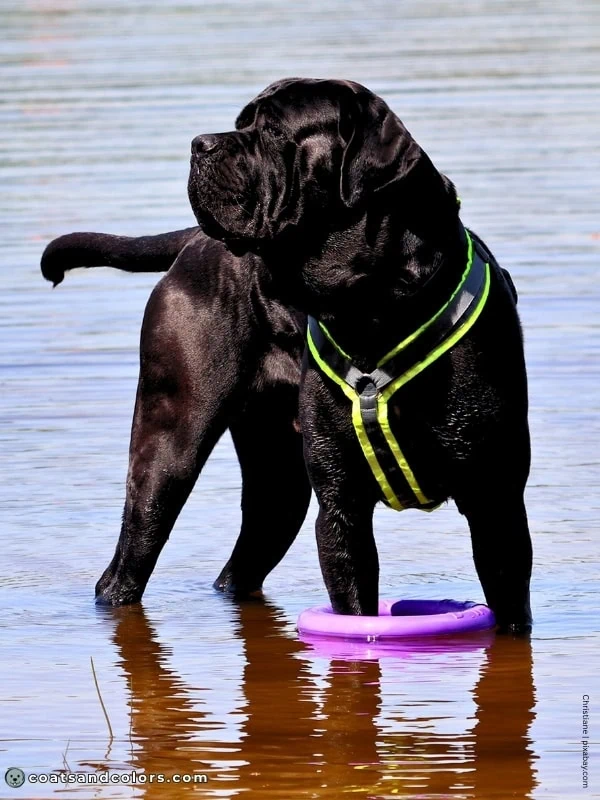
Some black dogs might be seal. This causes the red pigment from the hidden sable pattern to show through. Another term for a seal phenotype could be ghost sable. Some seal dogs can even show the faintest hint of ghost brindle if they are seal and Ay/Ay KB/kbr.
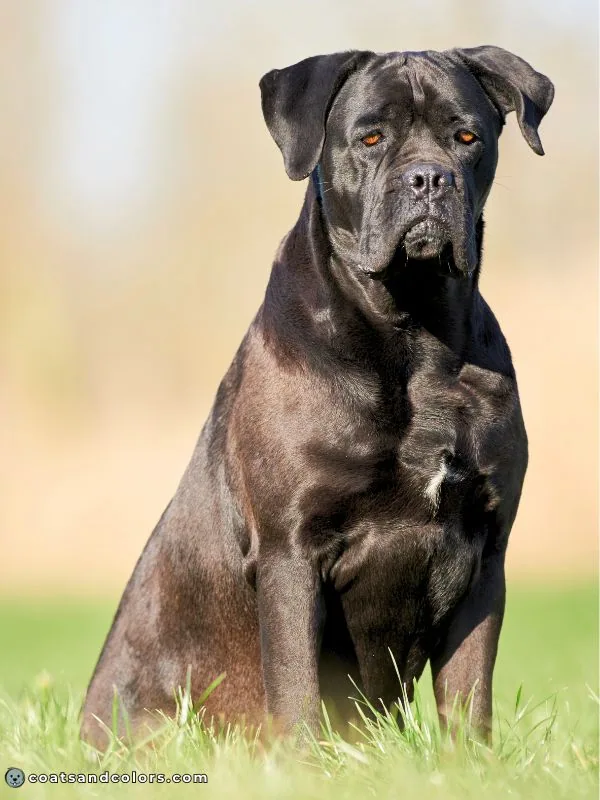
A black Cane Corso can, in theory, also be recessive black (ky/ky a/a or kbr/- a/a). This has been confirmed for the breed, but it is incredibly rare. It will likely go unnoticed unless a solid black puppy is born from two fawn and/or brindle parents that both carried a.
BASE PATTERN
dominant black
recessive black
MERLE
–
OTHER
seal
EUMELANIN
black
INTENSITY
–
WHITE
solid
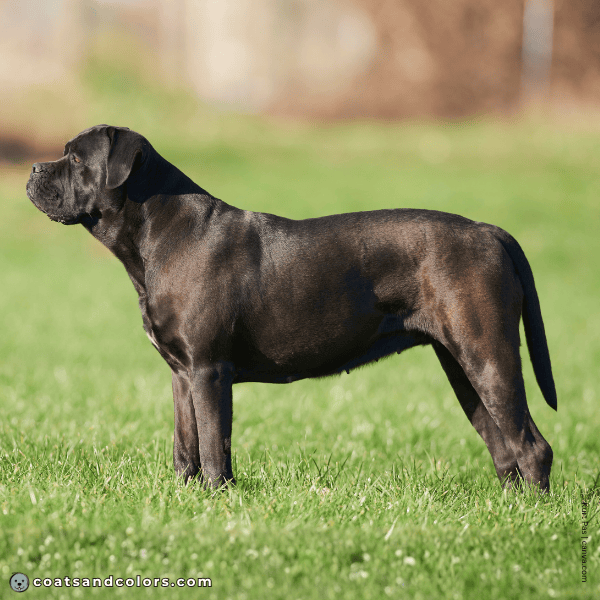
Gray
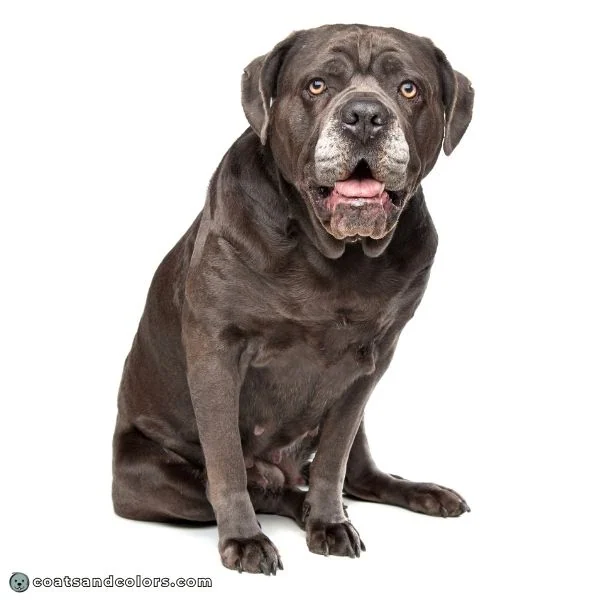
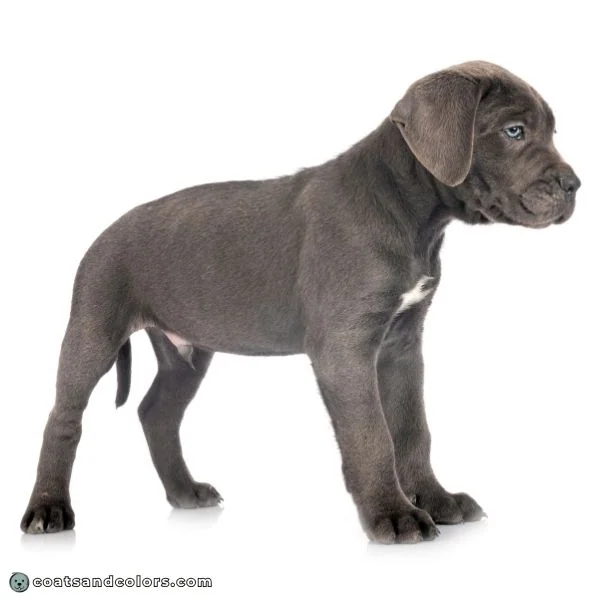

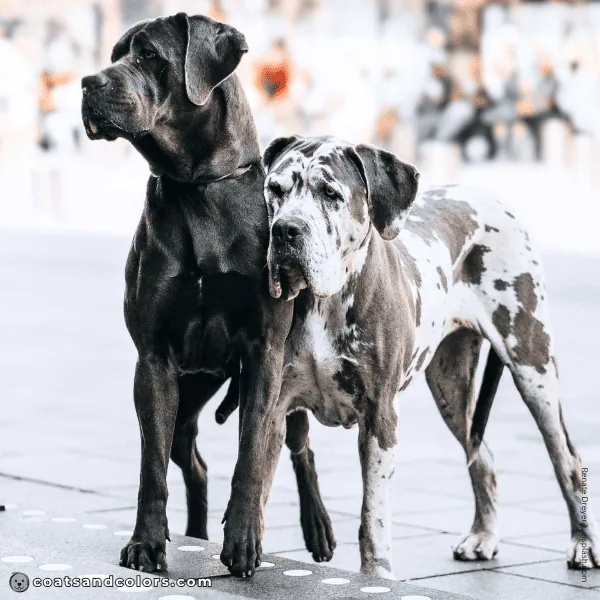
These are black dogs, just with diluted black pigment (d/d).
The Cane Corso breed term for diluted black is “gray,“ other breeds call it “blue“. This color ranges from dark charcoal to to lead to slate and lighter shades of gray. The FCI standard calls these variations of solid blue lead-grey, slate-grey, and light grey.
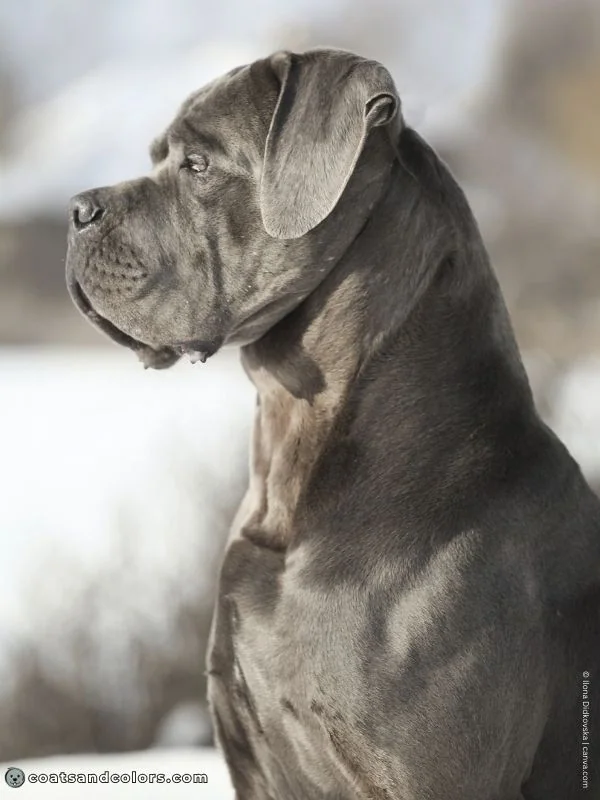
Some KB/- dogs might be “blue seal” and show yellow or reddish undertones.
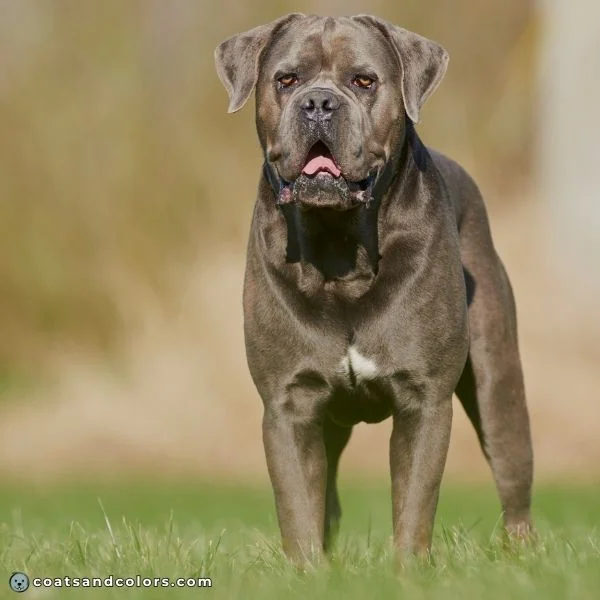
Some dogs can also have faint ghost brindle if they are seal and KB/kbr. Ghost brindling can be very subtle, with no real tan anywhere on the dog, just reddish ghost tan between the gray stripes. Otherwise, this is still a seal pattern with darker legs and a dark coat along the topline.
It can be hard to see if a dog is just a normal dark brindle or solid dark with ghost brindle.

A gray Cane Corso can be recessive black (ky/ky a/a or kbr/- a/a). Again, this is rare, but makes it possible for a solid gray puppy to be born from fawn and/or brindle parents.
BASE PATTERN
dominant black
recessive black
MERLE
–
OTHER
seal
EUMELANIN
diluted black
INTENSITY
–
WHITE
solid
Fawn
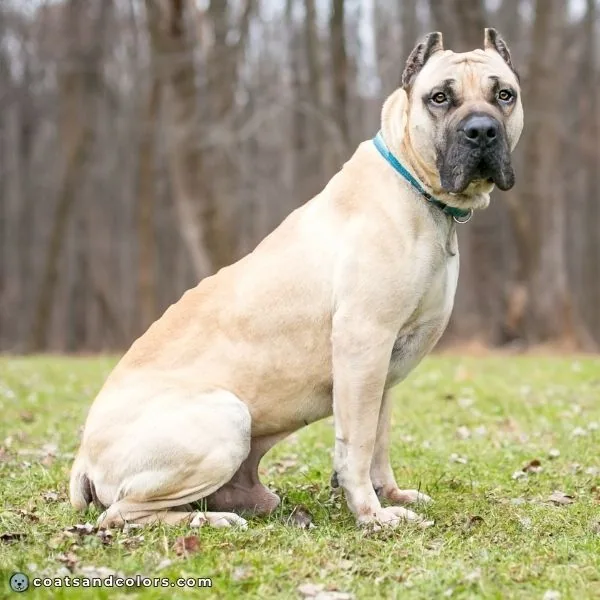
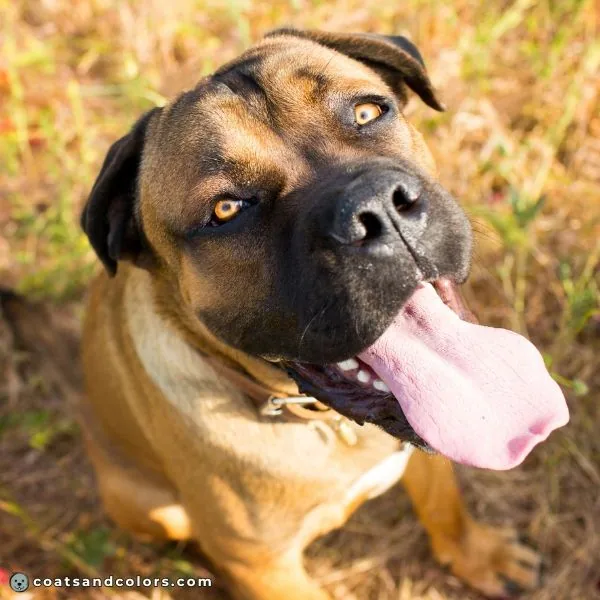
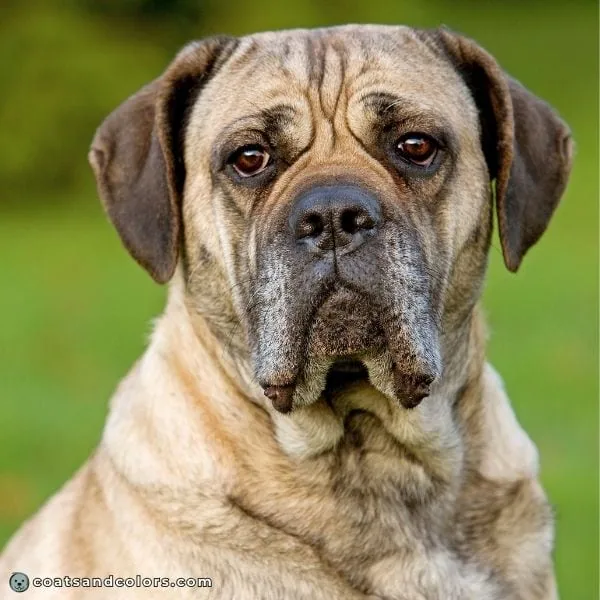
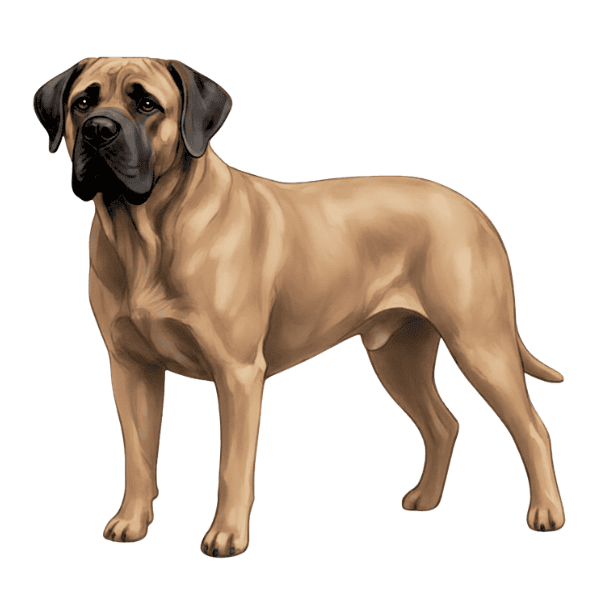
The Cane Corso breed term for sable with low red intensity is “fawn“. The color of their phaeomelanin can vary from light fawn to dark fawn, the color can be golden, wheaten, or buff, some call it a blonde Cane Corso.
Any black-based sable (fawn or red) is sometimes called “fulvo” in this breed. All fawn Cane Corso is also meant to have a black mask (Em/Em). The mask should not go beyond the eyes.
Most fawn Cane Corso express a clear sable pattern (Ay/Ay).
Some dogs are shaded sable with an overlay of black-tipped hairs on their top. The Cane Corso breed term for the black overlay or sabling is “carbon“.
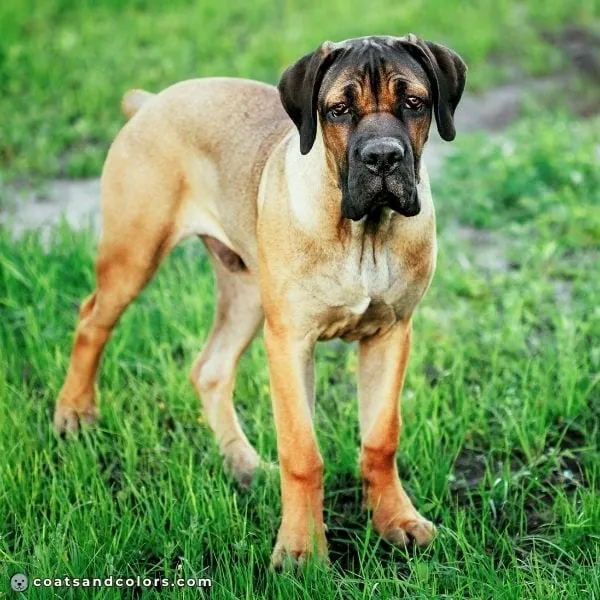
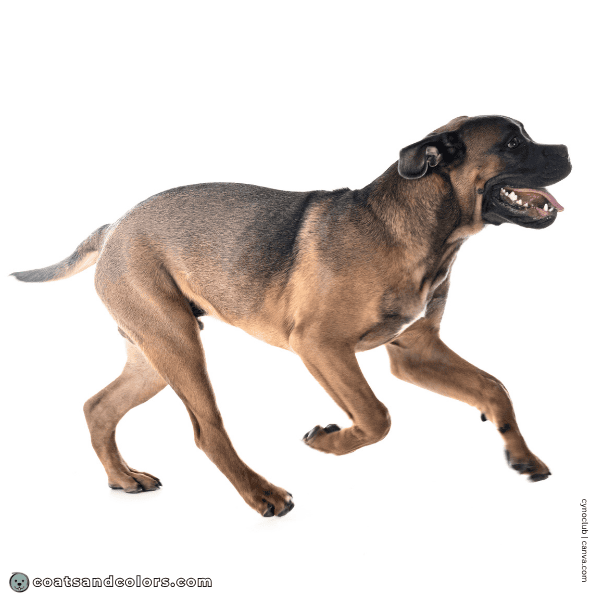
Heavy dark overlay can create the illusion of “false tan points“, especially in puppies. Denise Flaim from Modern Molosser has a great article with images that illustrate this phenotype.
BASE PATTERN
sable, black mask
MERLE
–
OTHER
–
EUMELANIN
black
INTENSITY
fawn
WHITE
solid
Red

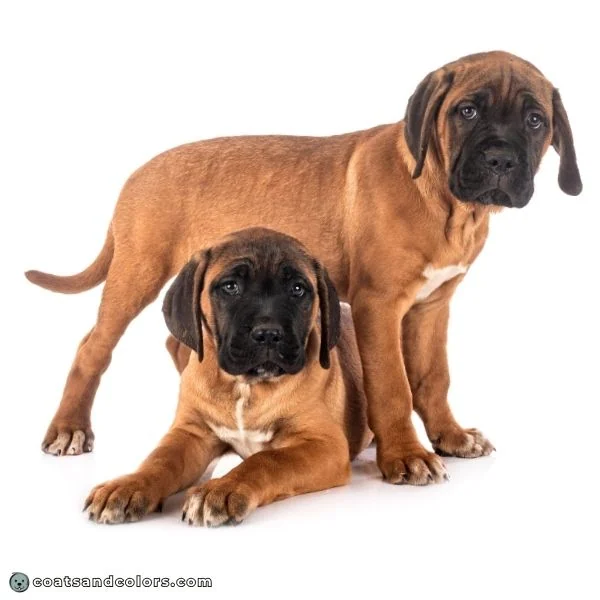
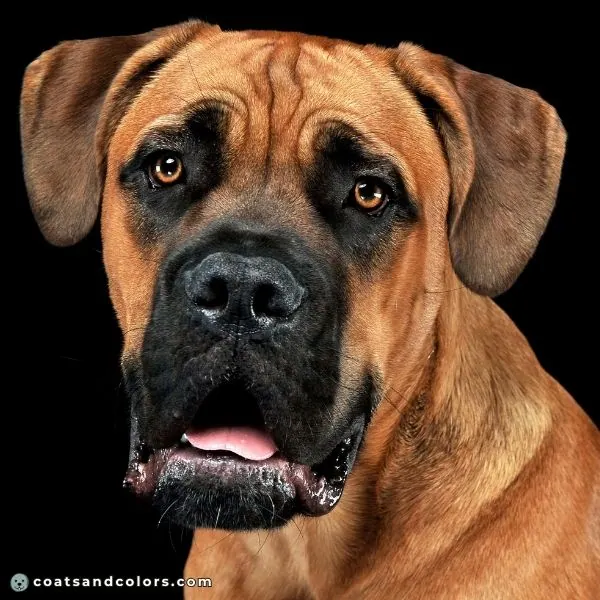
A red Cane Corso has a sable pattern (Ay/Ay) with a black mask (Em/Em).
The only difference to a fawn dog is the more intense “stag red” base color.
But this rich rusty red color is somewhat rare in Cani Corso. And it is a matter of opinion where exactly an intense reddish fawn turns into “red“.
BASE PATTERN
sable, black mask
MERLE
–
OTHER
–
EUMELANIN
black
INTENSITY
red
WHITE
solid
Formentino
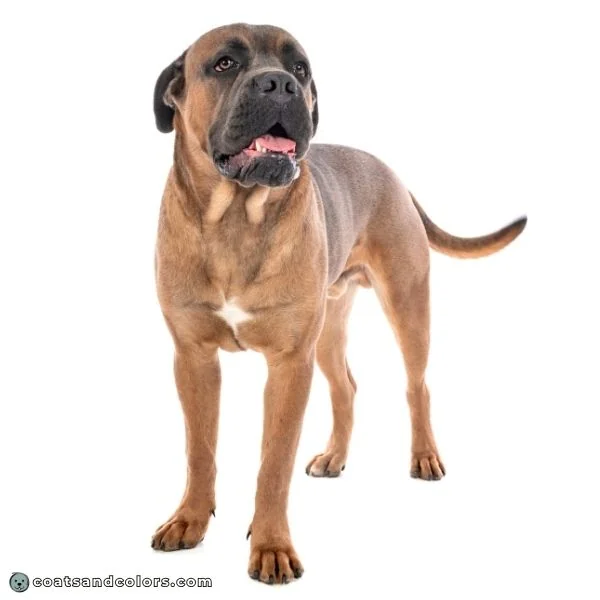


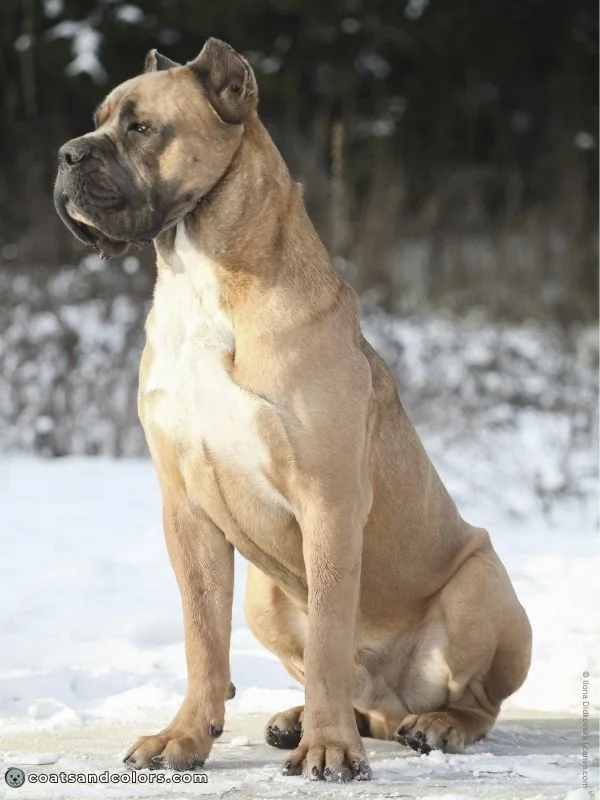
The breed term for a blue fawn Cane Corso is “formentino“.
A formentino Cane Corso has a sable pattern (Ay/Ay) with diluted black eumelanin.
Any visible sabling or “carbon” will be light or dark gray. A blue fawn Cane Corso has a gray mask (Em/Em). The mask should not go beyond the eyes.
BASE PATTERN
sable, gray mask
MERLE
–
OTHER
–
EUMELANIN
diluted black
INTENSITY
fawn, red
WHITE
solid
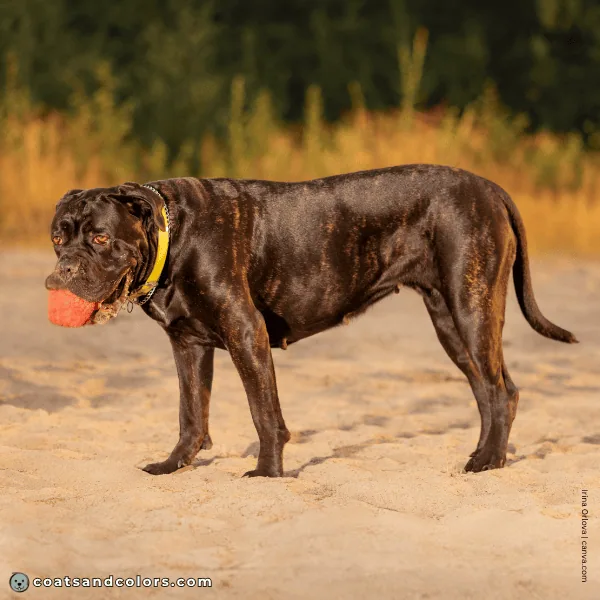
Black Brindle
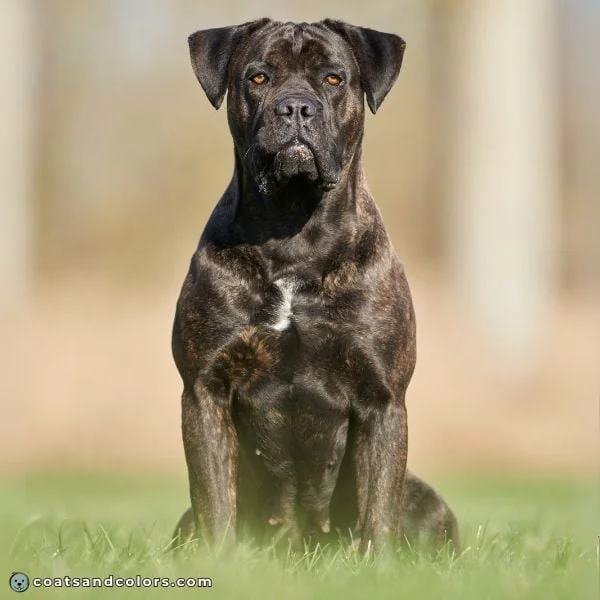
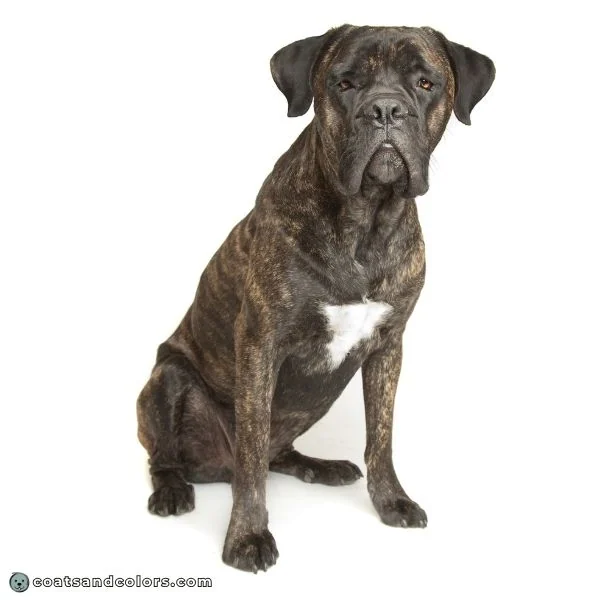
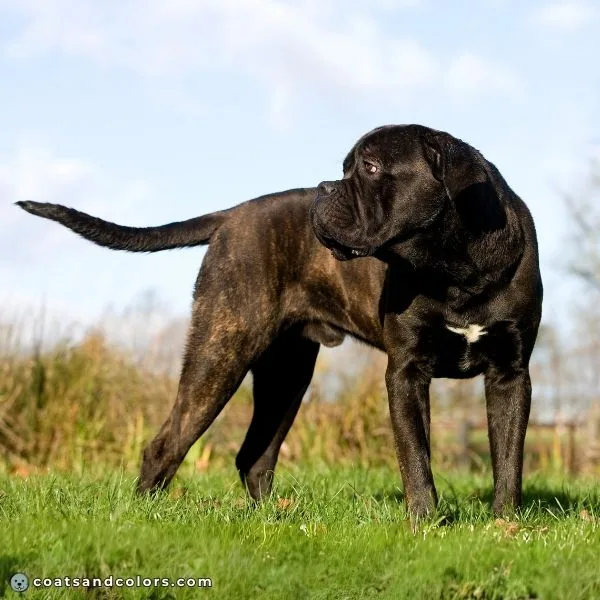
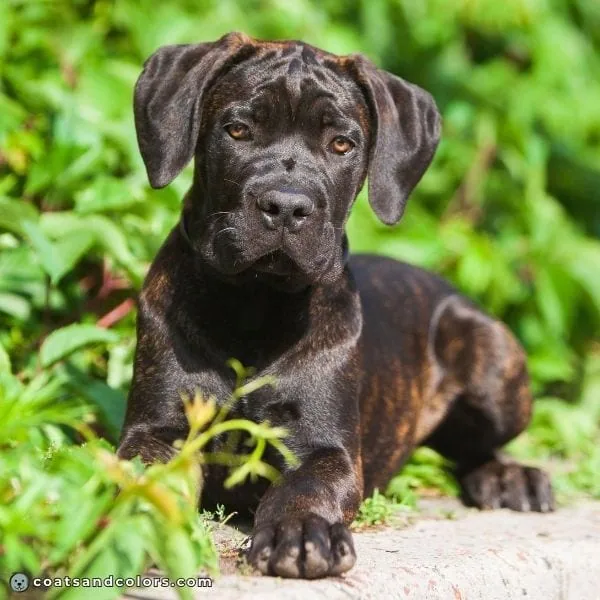
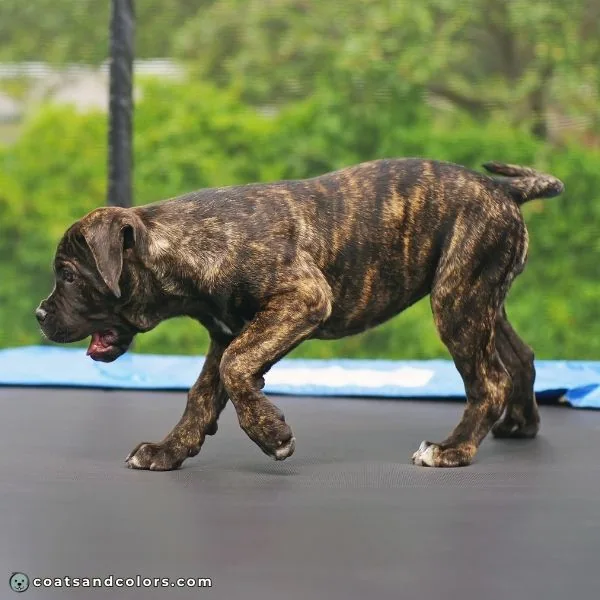
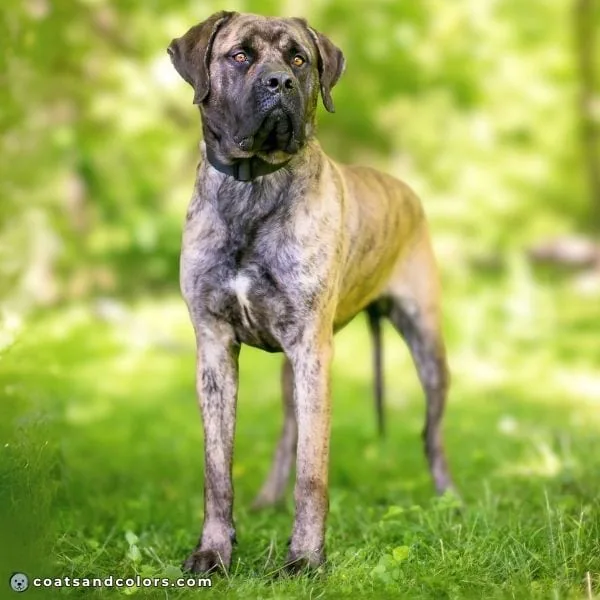
A black brindle Cane Corso has a sable pattern (Ay/Ay) with or without carbon. A black brindle Cane Corso also has a black mask (Em/Em).
The density of black brindling can be rather sparse or very heavy. The Cane Corso breed tends to be heavily brindled, making some dogs look almost solid black.
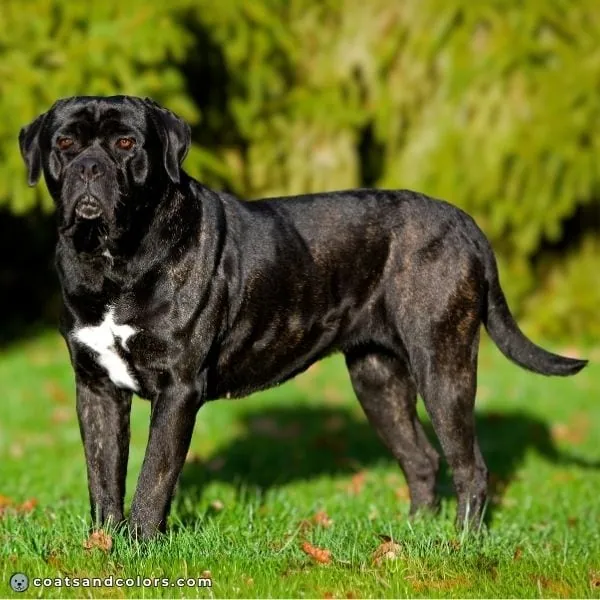
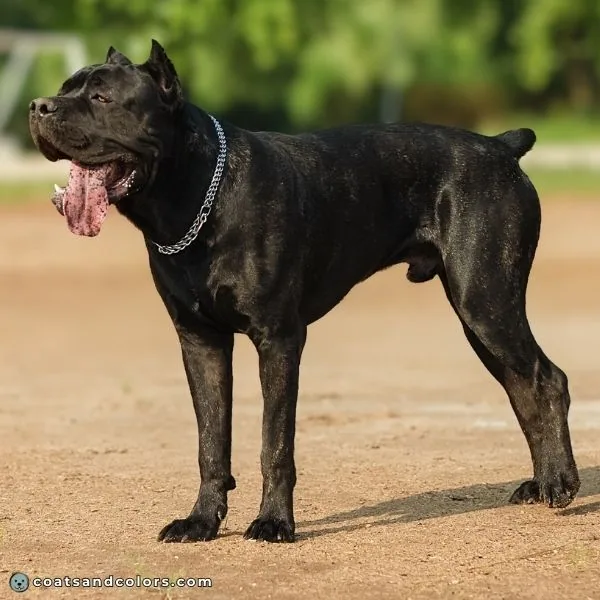
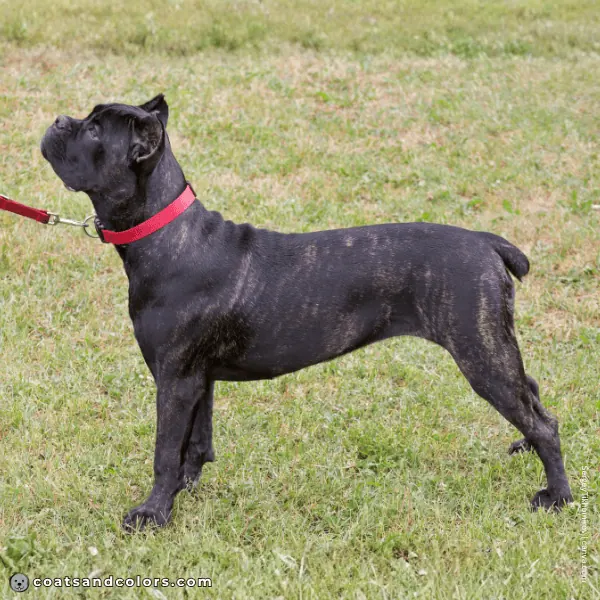
A lightly brindled dog is sometimes called a “reverse brindle”. But no matter how sparse or dense the brindle is, it is always black stripes on top of the fawn or red base!
BASE PATTERN
sable brindle, black mask
MERLE
–
OTHER
–
EUMELANIN
black
INTENSITY
fawn, red
WHITE
solid
Chestnut Brindle
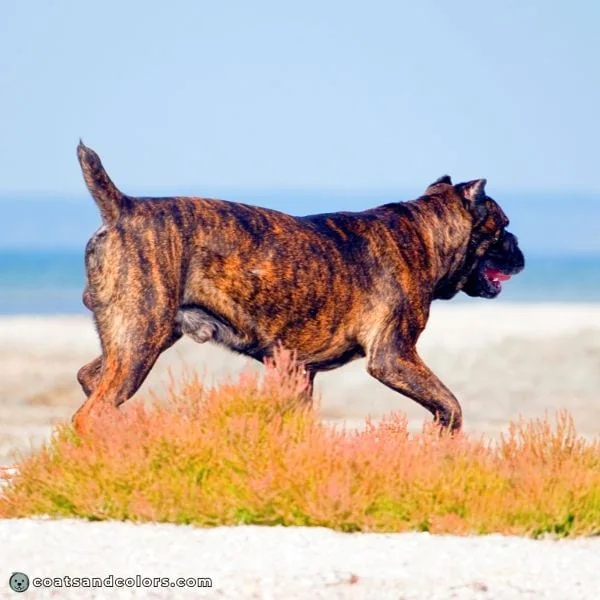
This is one of those breed terms without a clear definition.
A chestnut brindle Cane Corso has a sable pattern (Ay/Ay) with a black mask (Em/Em). What makes it different from a normal black brindle is less than average (“reverse“) striping against a red base color, so the dog appears to have a more reddish than black brindle pattern.
Ever since I first heard about this breed term, I have been convinced that at least some dogs with this pattern could actually be seal brindle. The unknown modifier that causes seal in solid dogs can also affect the stripes in brindled dogs and make them look reddish or coppery.
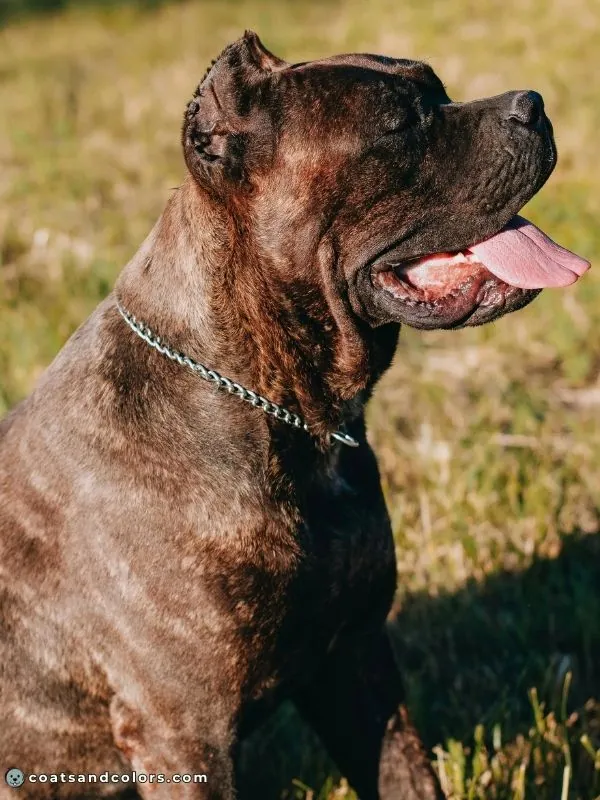
This way, even a more heavily brindled dog may look a little reddish or “chestnut-colored” when viewed in direct sunlight. The Modern Molosser blog has some more images for you.
BASE PATTERN
sable brindle, black mask
MERLE
–
OTHER
seal brindle
EUMELANIN
black
INTENSITY
red
WHITE
solid
Gray Brindle
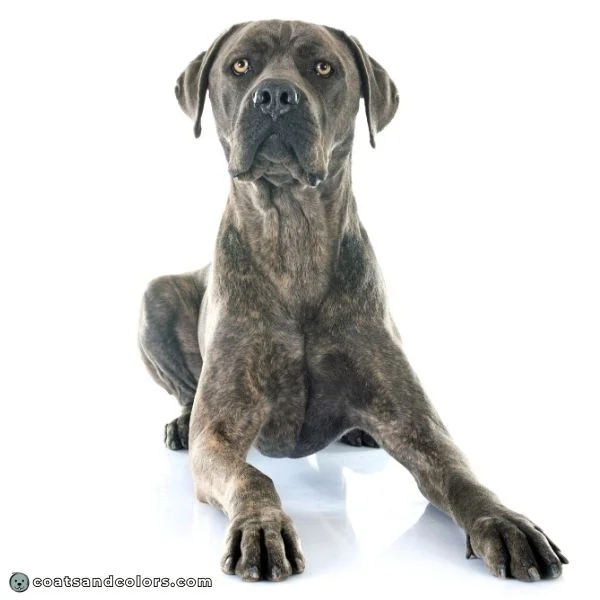
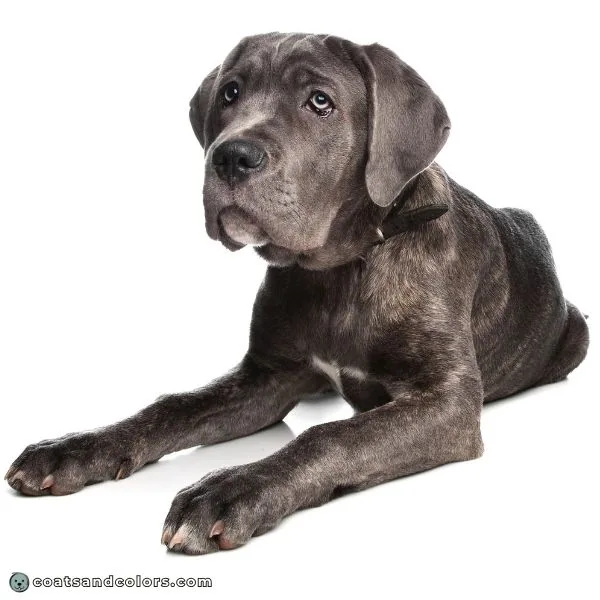
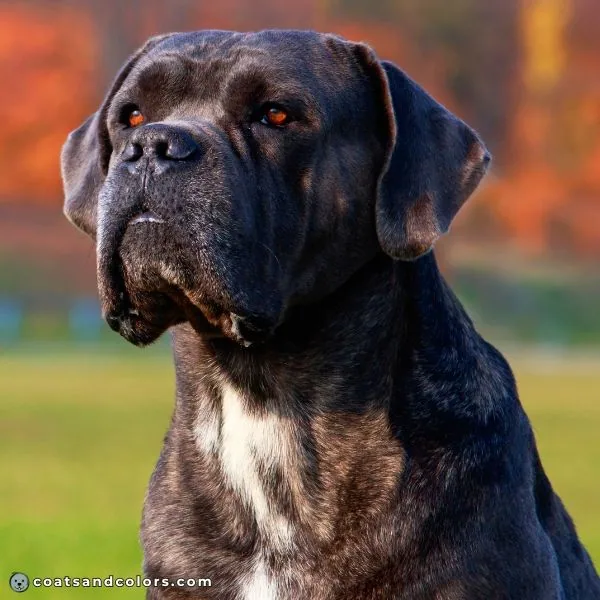
The breed term for a formentino brindle Cane Corso is “gray brindle“.
A gray brindle Cane Corso also has a gray mask (Em/Em).
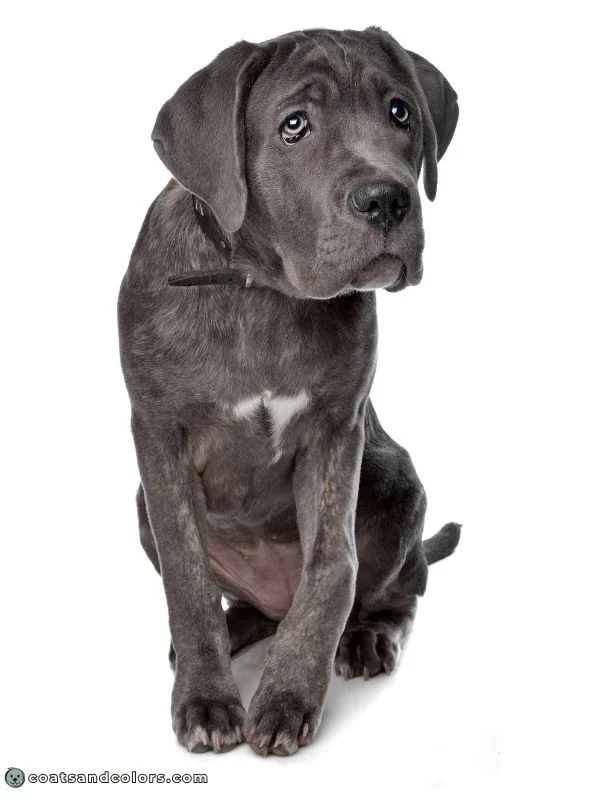
These dogs can have dense brindling and look almost solid gray. A dog with only moderate brindling and lots of visible tan is sometimes called a “reverse gray brindle“.
BASE PATTERN
sable brindle, gray mask
MERLE
–
OTHER
–
EUMELANIN
diluted black
INTENSITY
fawn, red
WHITE
solid
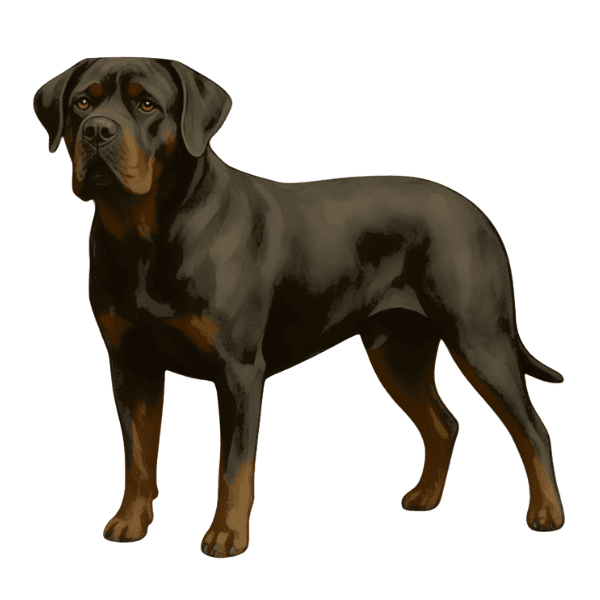
Faulty Colors
“Disqualification:
Any color with tan pattern markings as seen in black-and-tan breeds.“
AKC Breed Standard[1]
“Disqualifying Faults:
All colours not indicated in the standard […]”
FCI Breed Standard[2]
The most common mismarks are tan points (ky/ky at/-) and recessive red “straw” (e/e).

(ky/ky at/at)
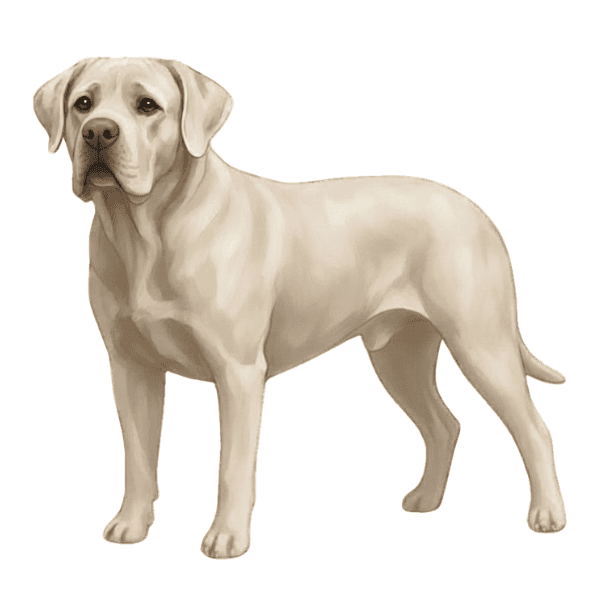
(e/e)
Base Patterns
The base pattern describes the placement of phaeomelanin and eumelanin in the coat. There is an epistatic hierarchy between the A locus < K locus < E locus.
- The A locus controls the basic distribution of both pigment types.
- Next, the K locus can add black to the A locus pattern.
- Finally, the E locus regulates the general ability to produce black pigment.
A Locus
| Ay | sable |
| at | tan point |
| a | recessive black |
A purebred Cane Corso is meant to be fixed for Ay/Ay. But rather many dogs carry a tan point allele (Ay/at). And recessive black (a) is also present, but at a much lower frequency.
Em/Em Ay/Ay ky/ky
Em/Em at/- ky/ky
Em/Em a/a ky/ky
Some fawn dogs show sabling (called “carbon“) in their dorsal coat. A shaded sable pattern can theoretically happen via the shaded sable allele (Ays/-). But sabling can also happen in some heterozygous dogs (Ay/at or Ay/a). Dark sabling can give fake tan points, especially in puppies.
K Locus
| KB | dominant black |
| kbr | brindle |
| ky | wild-type |
All three variants occur in this breed. Dogs with two copies for normal pattern expression (ky/ky) should be fawn or red (Ay/-). Alternatively, they can be black and tan (at/-) or solid black (a/a).
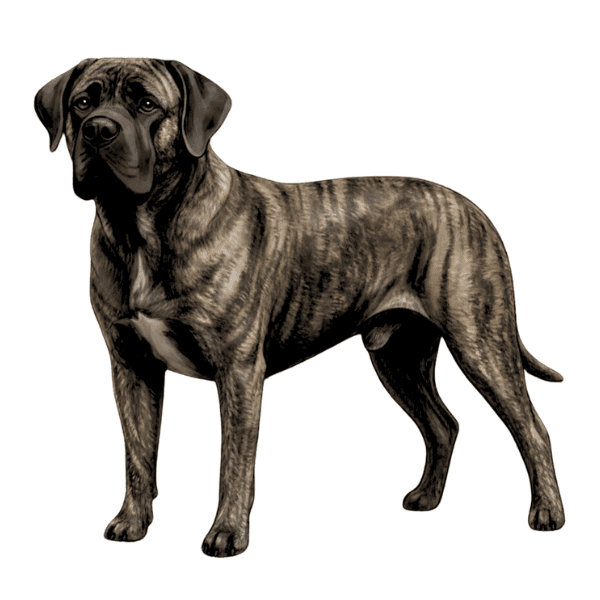
Dogs with brindle (kbr/-) will have dark stripes (black or gray) on top of their fawn pattern. And dogs with dominant black (KB/-) will be solid dark (black or gray), which fully hides their pattern.
Em/Em Ay/Ay ky/ky
Em/Em Ay/Ay kbr/-
Em/Em Ay/Ay KB/-
Brindle density can vary a lot. But most Cane Corso have very heavy brindling.
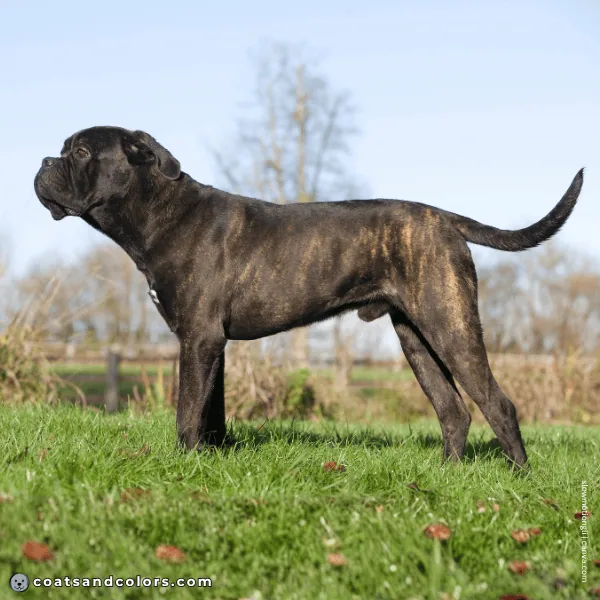
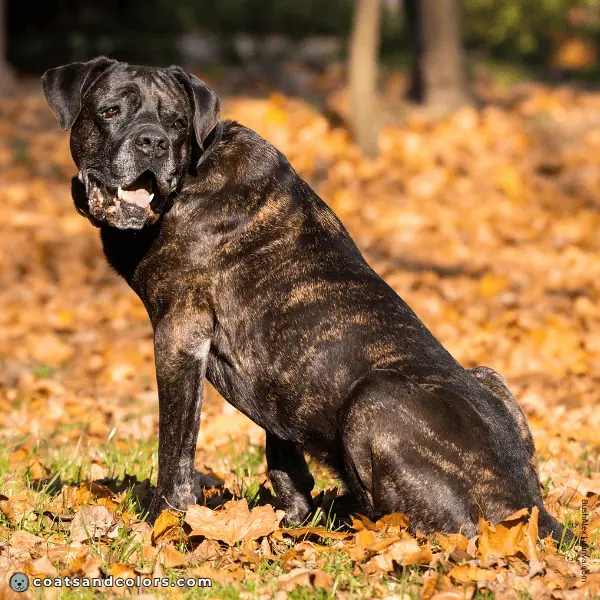
In some dogs, the still untestable seal modifier causes some of the hidden tan underneath the black to show through. This can turn brindle into reddish seal brindle. Or it can turn a solid dark pattern into reddish seal (ghost fawn). Brindle carriers (KB/kbr Ay/-) can show ghost brindle in their seal phenotype.
Em/Em Ay/Ay KB/- + ?
Em/Em Ay/Ay kbr/- + ?
Alternatively, dogs that carry tan point (KB/- at/at) might show reddish ghost tan points in bright sunlight. A genetic test is, of course, the much more reliable option to see if a dog has at or not.
Oh, and some dogs can be brindle point.
Em/Em at/- KB/- + ?
E Locus
| Em | black mask |
| E | wild-type |
| e | recessive red |
A Cane Corso is supposed to have a mask (Em/Em). But the wild-type allele (E) is also present in purebred dogs. Having two recessive red (e/e) alleles causes the faulty straw color.
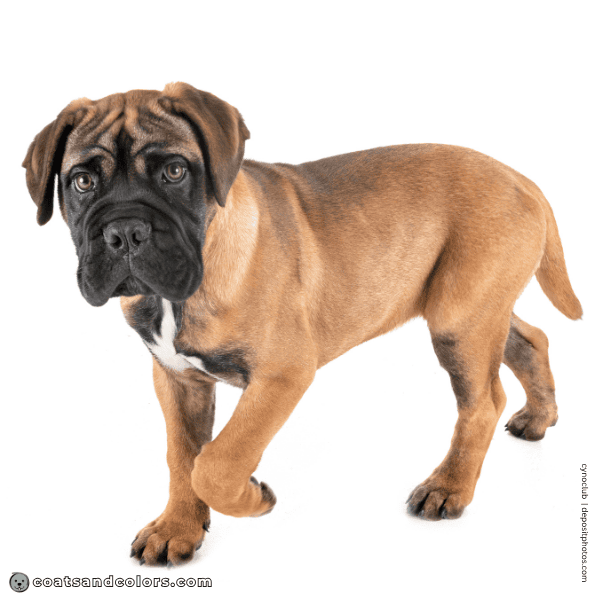
Cane Corso Base Patterns
| A LOCUS | K LOCUS | E LOCUS | PATTERN |
|---|---|---|---|
| Ay/Ay | ky/ky | Em/Em | sable, mask “fawn, red” –> “formentino” |
| Ay/Ay | kbr/- | Em/Em | sable brindle, mask “black brindle” –> “gray brindle” |
| KB/- | Em/Em- | dominant black “black” — > “gray” |
Here is a Cane Corso color chart for the standard coat colors:
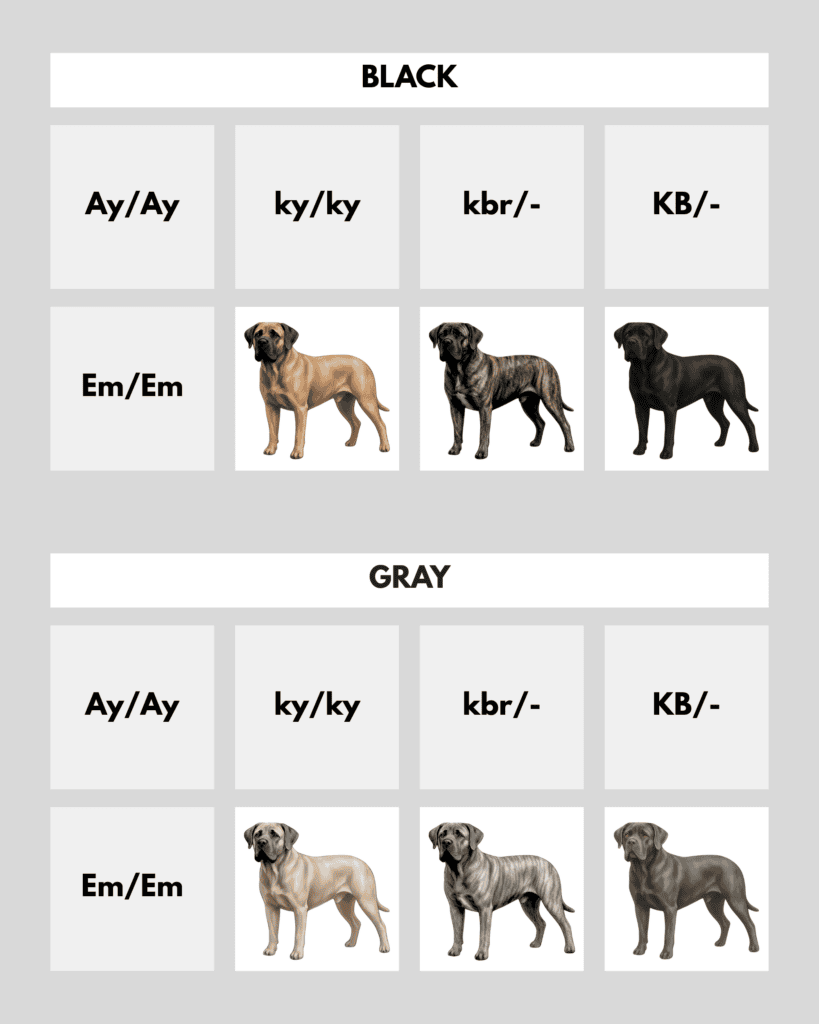
Base Colors
The base color (black vs gray) is determined by the B locus and D locus.
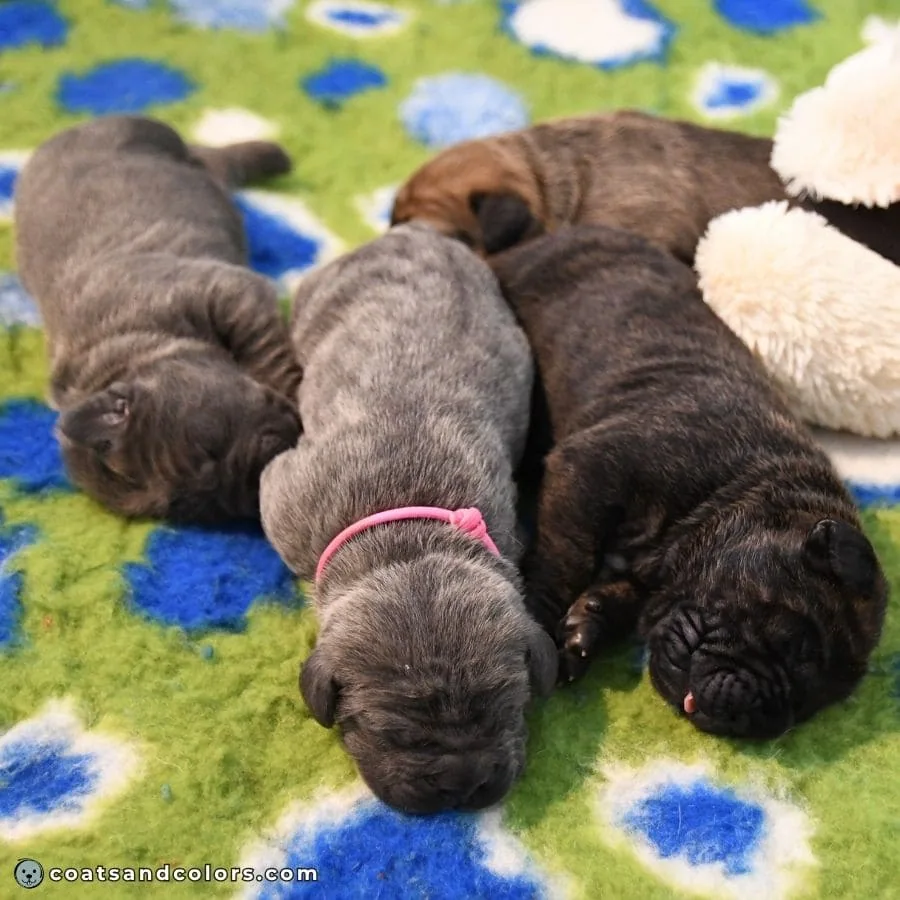
B Locus
| B | black |
| b | brown |
Cane Corsi are almost fixed for black pigment (B/B) at the B locus.
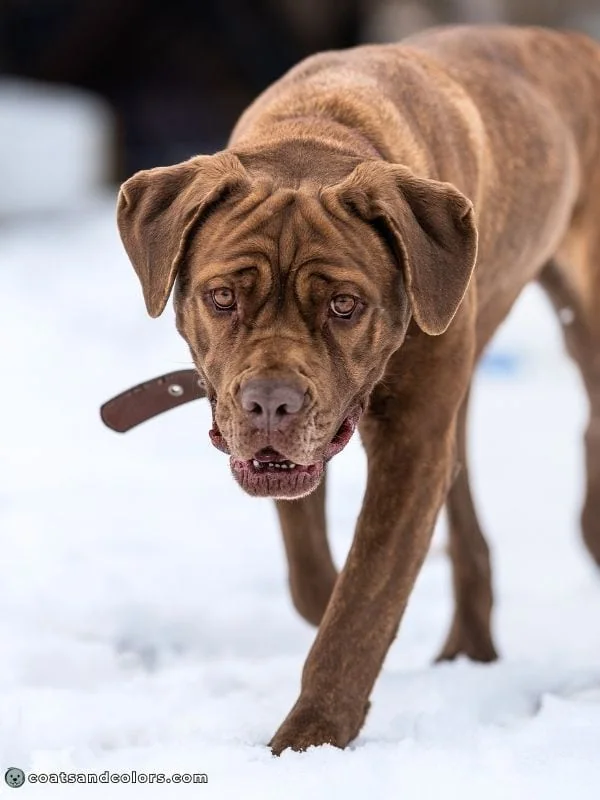
But some dogs have a recessive variant (b) for chocolate-colored brown pigment.
D Locus
| D | normal |
| d | dilution |
A Cane Corso can have normal (D/-) or diluted (d/d) pigment. The dilution of black causes gray. The dilution of a faulty chocolate color causes the dog to appear lilac.
Red Intensity
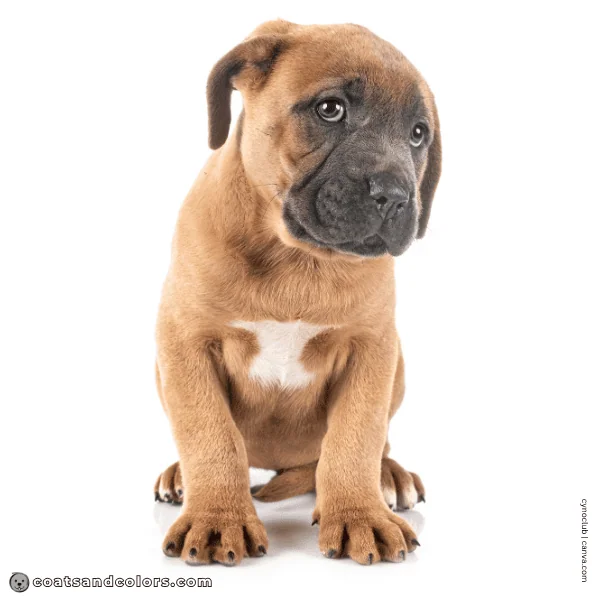
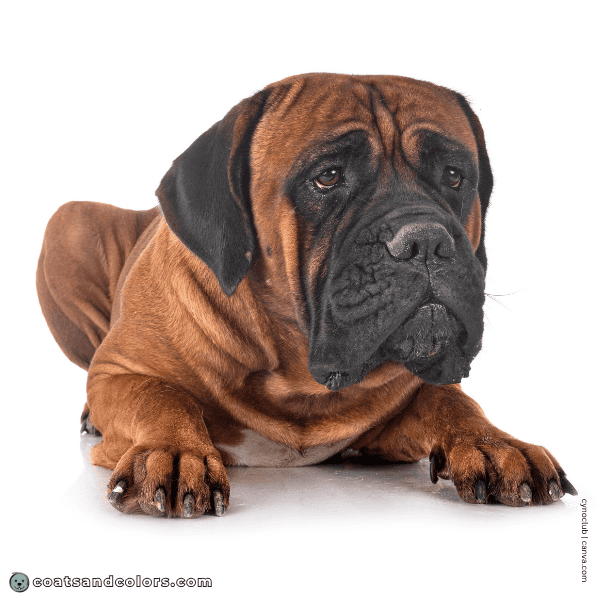
The Cane Corso breed terms for red colors are fawn (light fawn, dark fawn, dark wheaten) and red (stag red). Many faulty straw puppies have an unusually light cream color. And color dilution can sometimes cause lighter red colors in formntino dogs. But often… it doesn’t. There’s still much to discover.
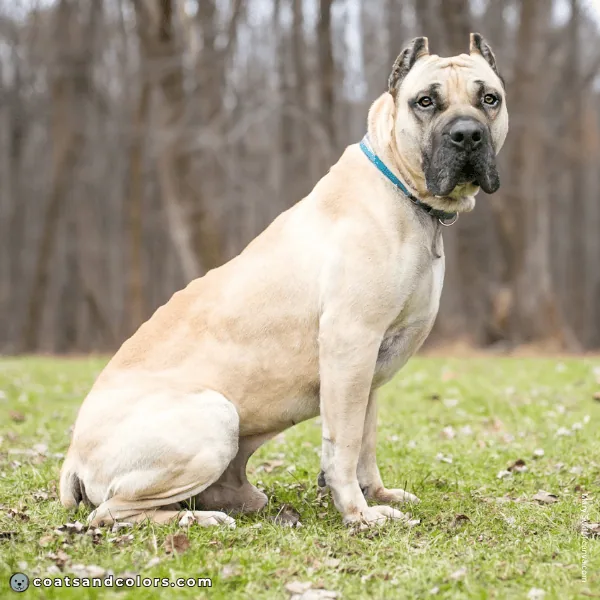
White Markings
Cane Corsi most often have a solid pattern without white markings (S/S). However, some dogs can have a small white patch or a thin white line on the chest from residual white.
Having white patterns like a white chest spot is quite common in the Cane Corso breed.

The allele frequency for sP is super low (about 1%)[5]. The actual amount of white in piebald carriers (S/sP) is controlled by untestable modifiers and can be very minimal.
Some dogs have more noticeable white markings, such as white paws or a larger white chest patch. Even some white on the chin, neck, chest, pasterns, belly, or bridge of the muzzle is common.
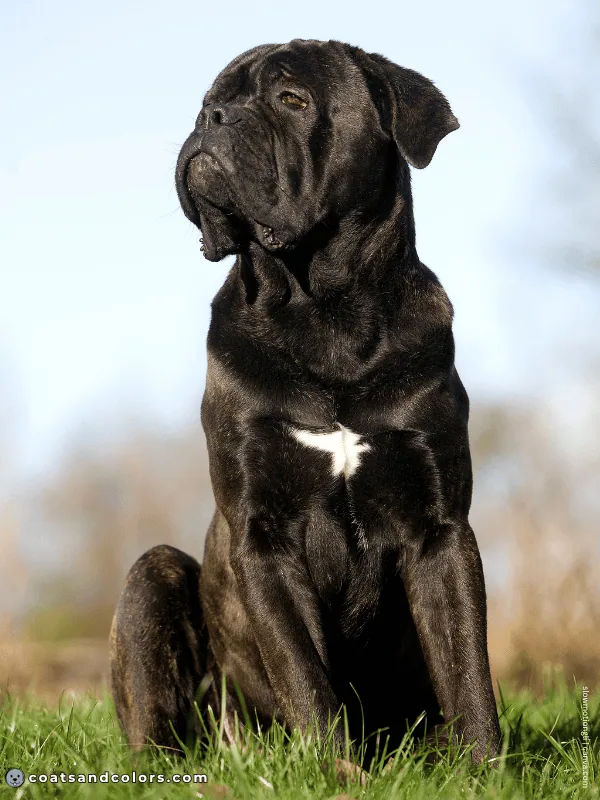

Any puppy white might fill in over the course of time. Sometimes, small white markings (e.g., white toes) disappear completely. However, breeding two dogs that had large white markings as puppies can increase the extent of residual white from generation to generation.
Many breeds without white have ticking without knowing it. Ticking only appears inside of white markings, so there is no need to select against it in solid breeds. And having ticking might actually help make very small white markings less obvious, e.g. by covering a white toe with some mottles.
“There may be a white patch on the chest, throat, chin, backs of the pasterns, and on the toes.“
AKC Breed Standard[1]
“A small white patch on the chest, on the tip of the toes and on the bridge of the nose is acceptable.
Disqualifying Faults:
[…] large white patches.“
FCI Breed Standard[2]
Cane Corso Eye Colors
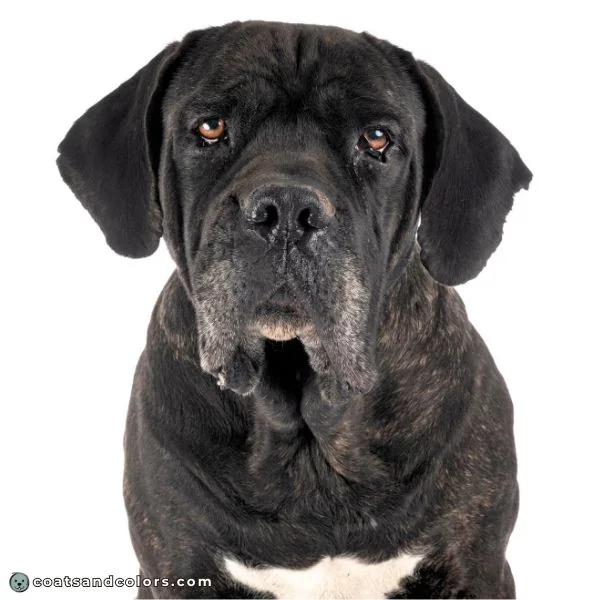
The official breed standards encourage breeders to select for dark eye colors.
Dogs with black pigment tend to have brown eyes, but even a black Cane Corso can have yellow eyes.
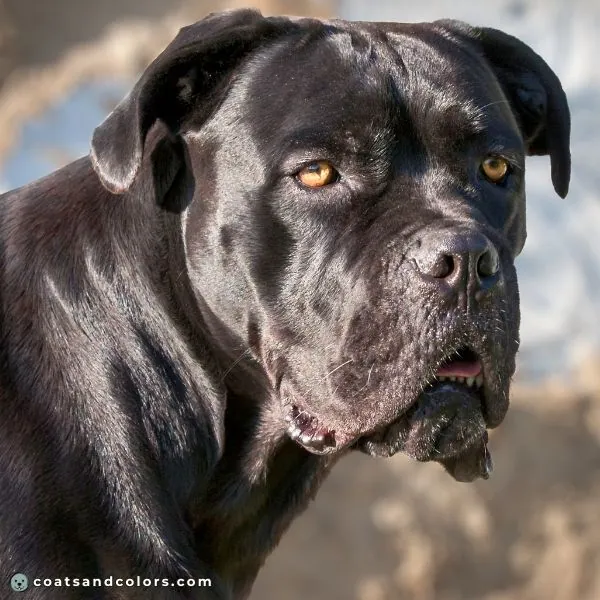
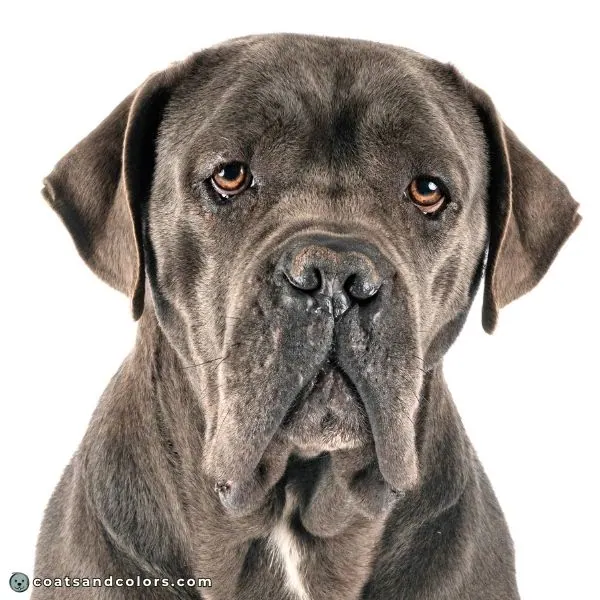
Dogs with color dilution tend to have lighter amber or hazel eyes, but can also produce dark eyes.
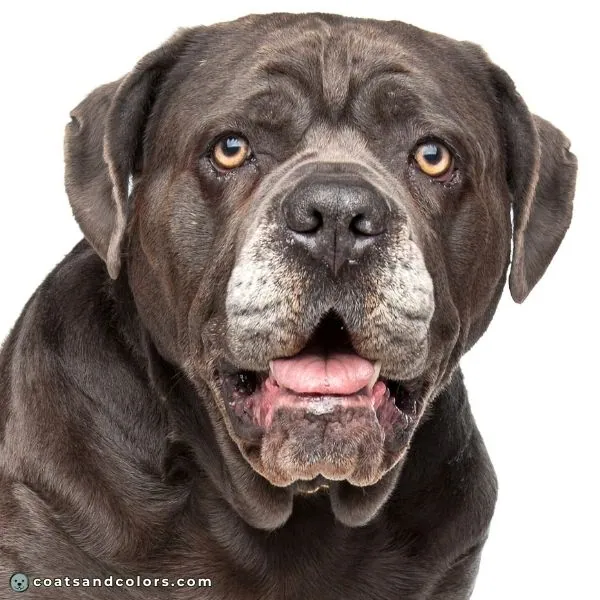
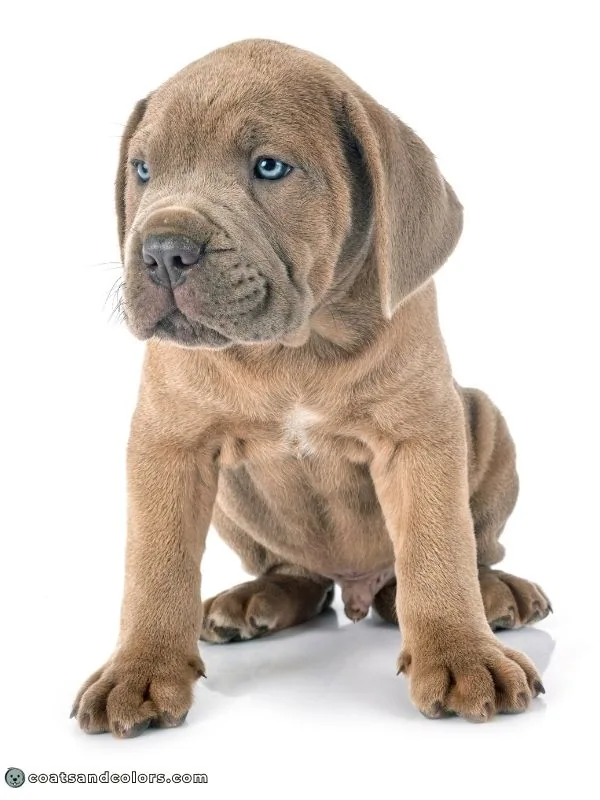
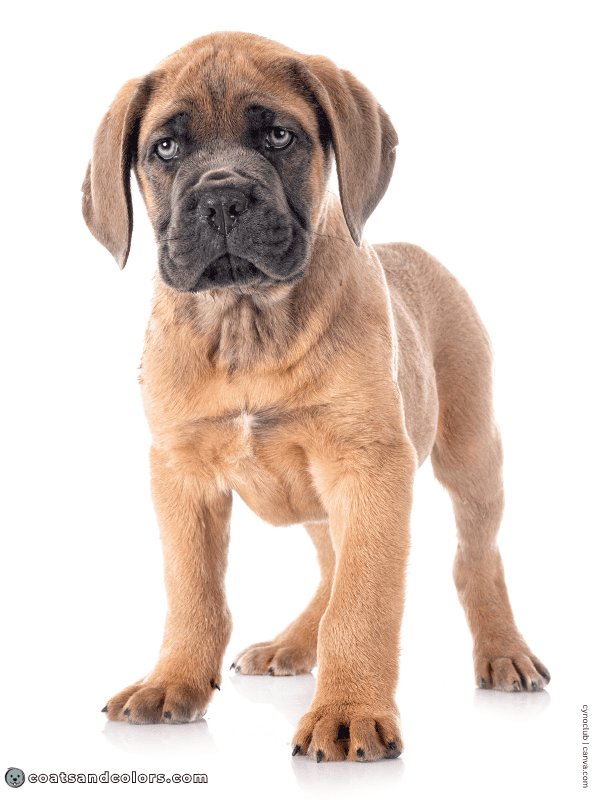
A purebred adult Cane Corso can not have blue eyes since it doesn’t have any of the traits associated with blue eyes in dogs: They neither have enough white on the face nor do they have ALX4 or Merle!
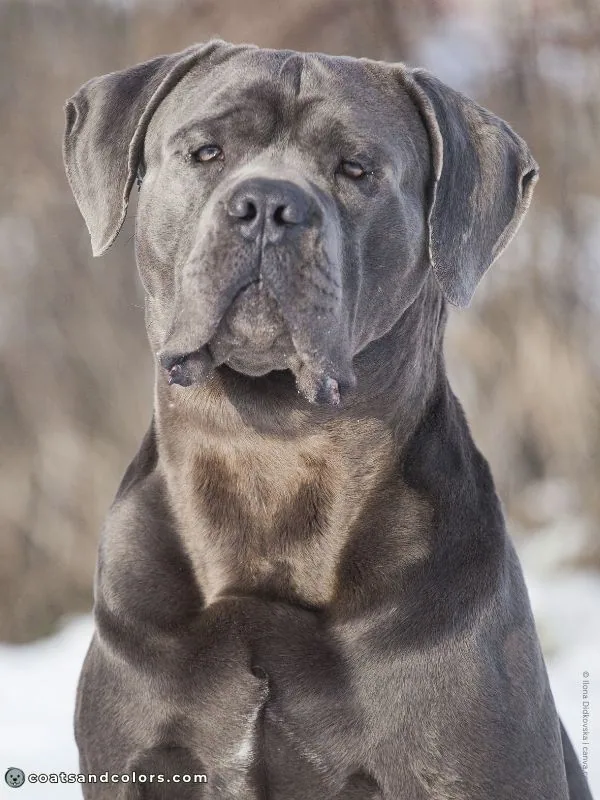
Some young puppies (especially those with gray pigment) might still have very pale greenish or bluish eyes. This is very normal for young dogs, and their eye color will darken over time.
“Dogs with black muzzles […]
dark brown eyes are preferred.
Gray muzzles […]
lighter shades are approved.
Disqualifications:
Yellow bird of prey; blue eyes.“
AKC Breed Standard[1]
“The colour of the iris is as dark as possible but according to the coat colour.
Disqualifying Faults:
Wall eye (blue flecked).”
FCI Breed Standard[2]
Cane Corso Nose Colors
Cane Corso either have a black or a diluted gray nose. Their color of eumelanin will also affect the color of their eye rims, lips, paw pads, nails, or whiskers, etc.
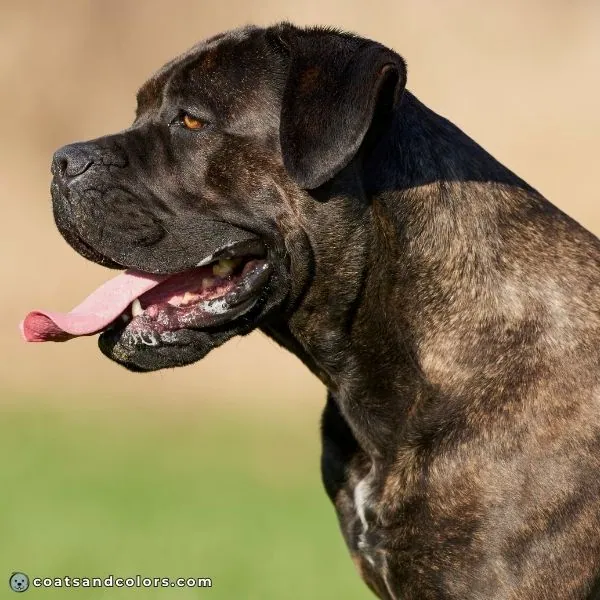
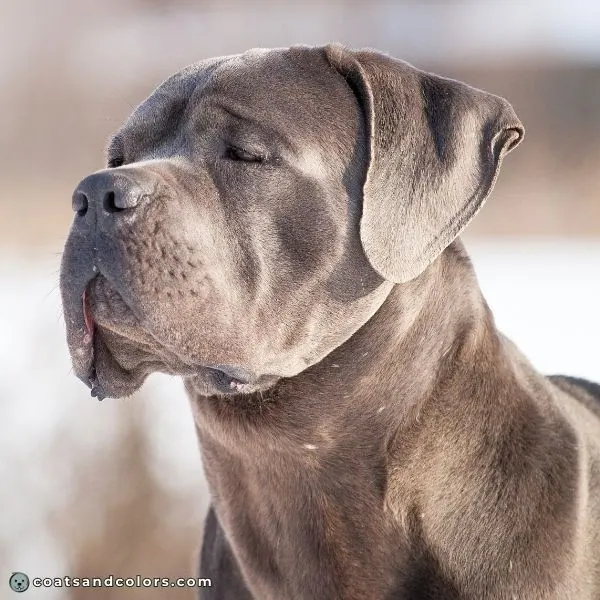
Many dogs with gray pigment have very dark gray noses that can look almost black at first glance.
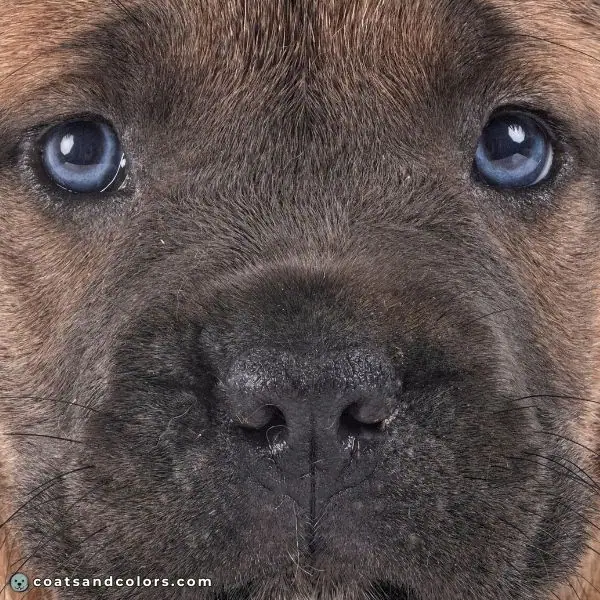
However, the nose color on some puppies might look brownish as pigment is still filling in. This can be very pronounced in dogs with gray pigment.

“Dogs with black pigment have black noses; gray pigmented dogs have gray noses.”
AKC Breed Standard[1]
“Black. A grey mask may have a nose colour of the same nuance.”
FCI Breed Standard[2]
Cane Corso Coat Type
The Cane Corso is a short-haired dog breed.
“The coat is short, stiff, shiny, adherent and dense with a light undercoat that becomes thicker in cold weather.”
AKC Breed Standard[1]
“Short, shiny, very dense with a slight undercoat of vitreous texture.”
FCI Breed Standard[2]
However, the long coat (l) variant also occurs at very low frequencies. Breeding two carriers (L/l) is unlikely but may produce a fluffy Corso puppy (l/l)[3].
Some Cane Corso dogs may test positive for having a curly allele. However, curls can only be expressed in long-haired dogs, so there is no reason to select against them in short-haired breeds.

Related Breeds
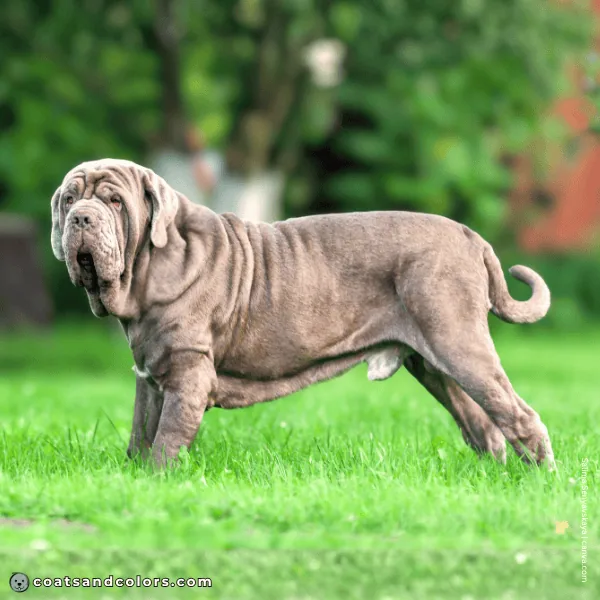
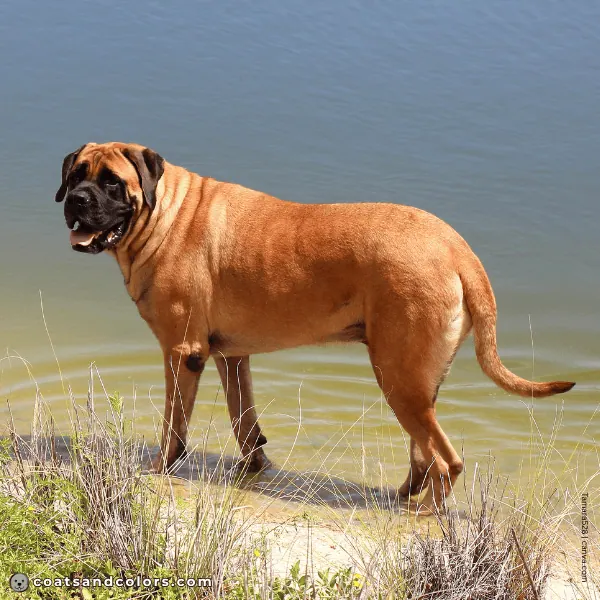
The Cane Corso is related to other European Mastiff breeds.

Learn More


Links
[1] American Kennel Club (AKC): Cane Corso
[2] Fédération Cynologique Internationale (FCI): Cane Corso
[3] British Cane Corso Society
[4] Canadian Kennel Club (CKC): Cane Corso
[5] Dreger et al. (2019). True Colors: Commercially-acquired morphological genotypes reveal hidden allele variation among dog breeds, informing both trait ancestry and breed potential. PLoS ONE 14(10): e0223995. https://doi.org/10.1371/journal.pone.0223995
[6] Modern Molosser
[7] Cane Corso Association of America (CCAA): “Rare” Colors In The Cane Corso
Image Credits
BushAlex/canva.com
Christiane/pixabay.com
cynoclub/canva.com
cynoclub/depositphotos.com
cynoclub/yayimages.com
Dané Spamers/pixabay.com
DevidDO/canva.com
dpcrestock/yayimages.com
Eleonora Maltempi/unsplash.com
eriklam/canva.com
eriklam/yayimages.com
Eudyptula/canva.com
Grekov/canva.com
Grisha Bruev/canva.com
Ilona Didkovska/canva.com
Irina Orlova/canva.com
janpla01/canva.com
Jim/pixabay.com
Kurt Pas/canva.com
Lincikas/yayimages.com
Mary Swift/canva.com
Olha Ivanchenko/canva.com
Renate Dreyer/unsplash.com
Rocco Stoppoloni/pexels.com
Salima Senyavskaya/canva.com
sbolotova/depositphotos.com
SergeyTikhomirov/canva.com
slowmotiongli/canva.com
Tamara528/canva.com
vauvau/canva.com
YuriyGreen/canva.com
Hi! I’m Steffi. I am a biologist and a big time dog nerd. You are curious about coat color genetics? You’ve come to the right place! Read more.