

The Miniature Pinscher is a small companion dog from Germany. Toy Pinschers can be black-and-tan or solid red. Some registries also recognize chocolate-and tan-or blue-and-tan.
Go have a look at some MinPin color examples.
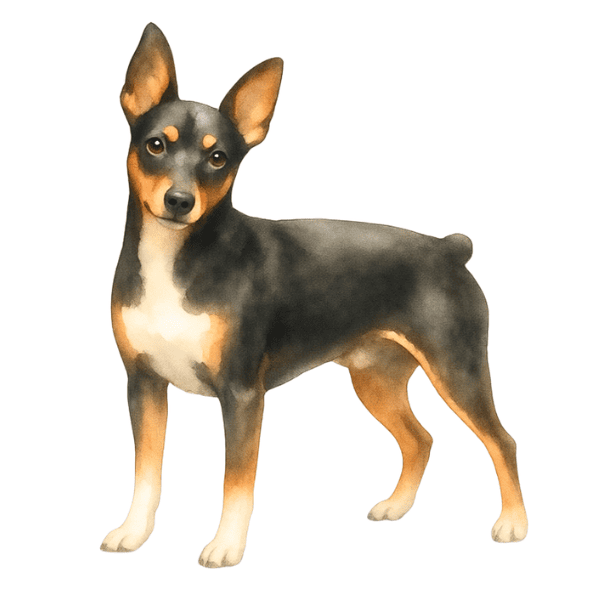
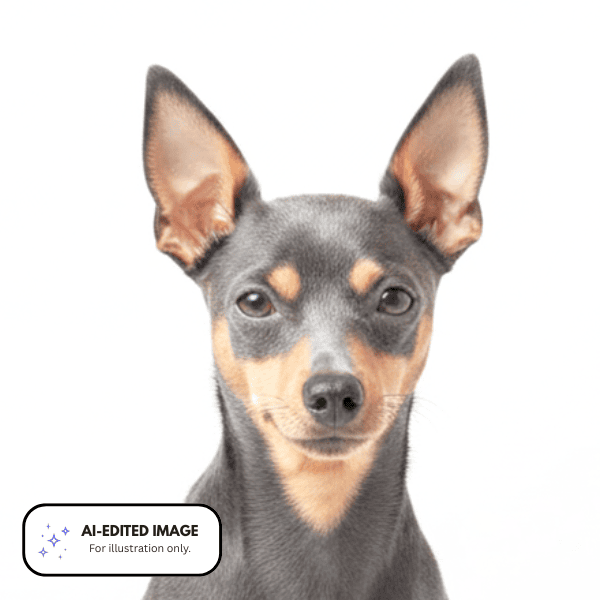
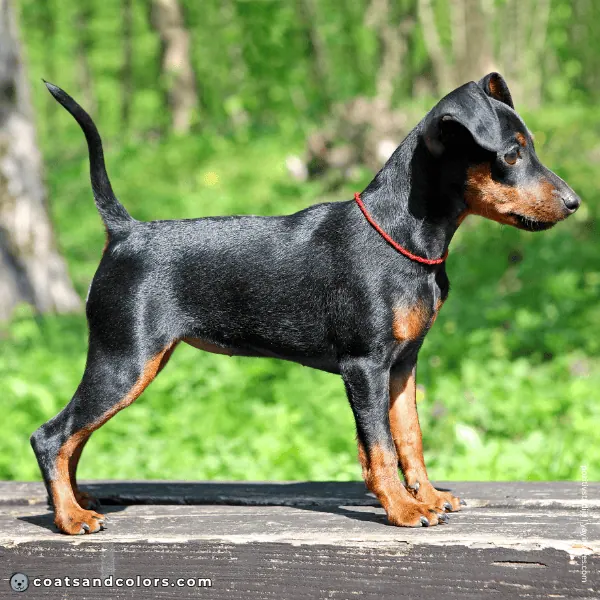
Black & Tan
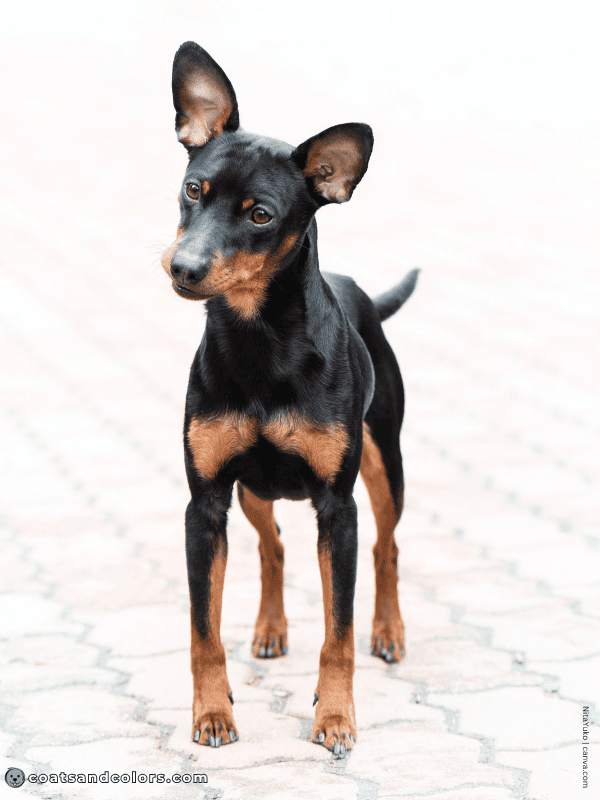
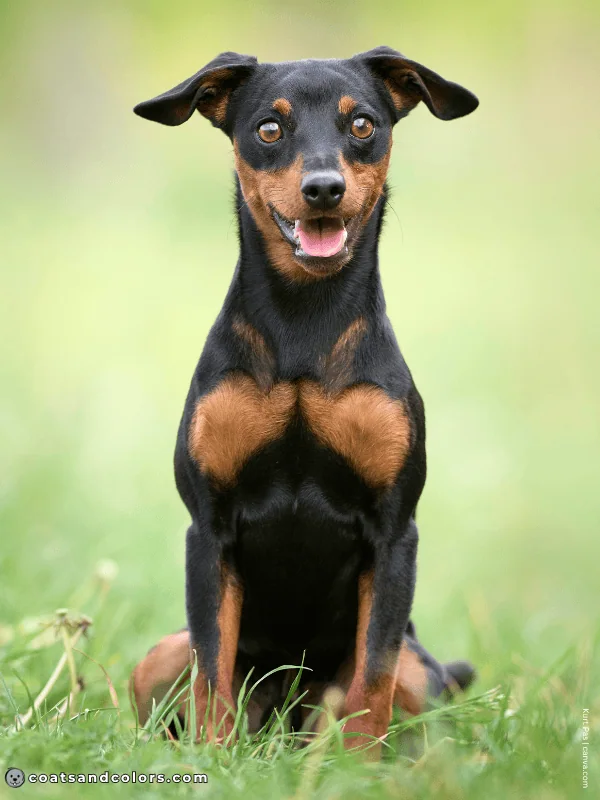
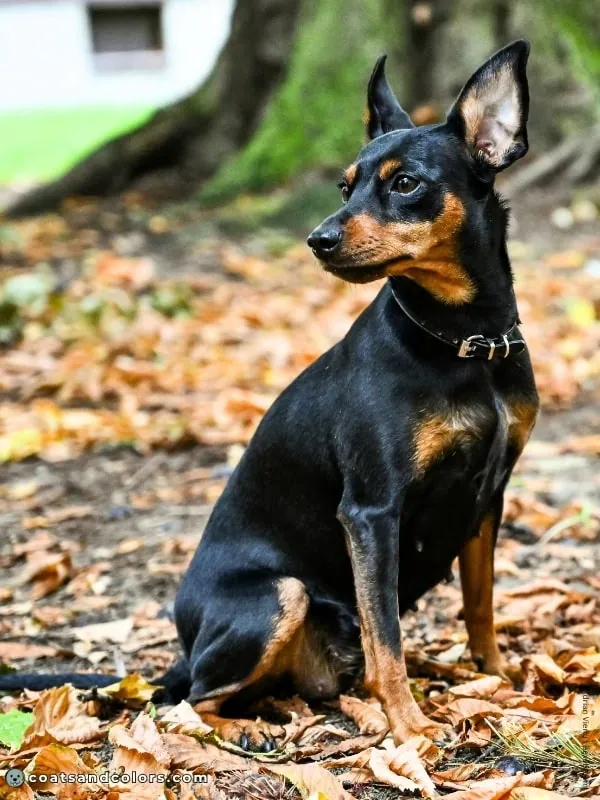
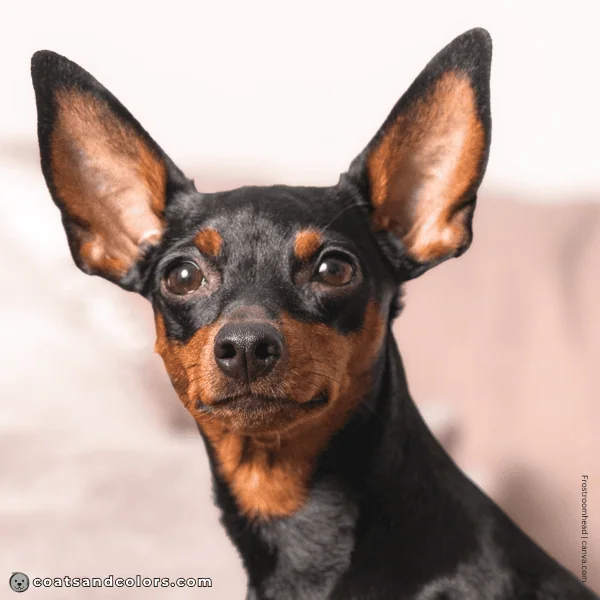
A black & tan MinPin has a tan point pattern. The FCI describes this pattern as “lacquer black with red markings” with very defined areas of the black and red colors.
BASE PATTERN
tan point
MERLE
–
OTHER
–
EUMELANIN
black
INTENSITY
tan, rust
WHITE
solid
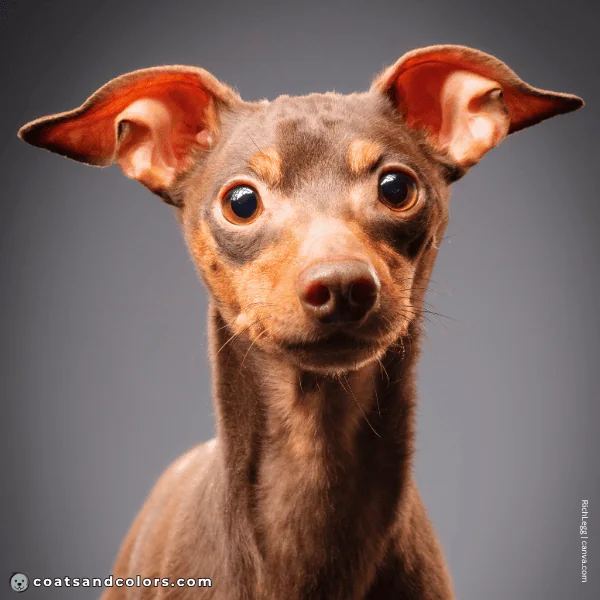
Chocolate & Tan
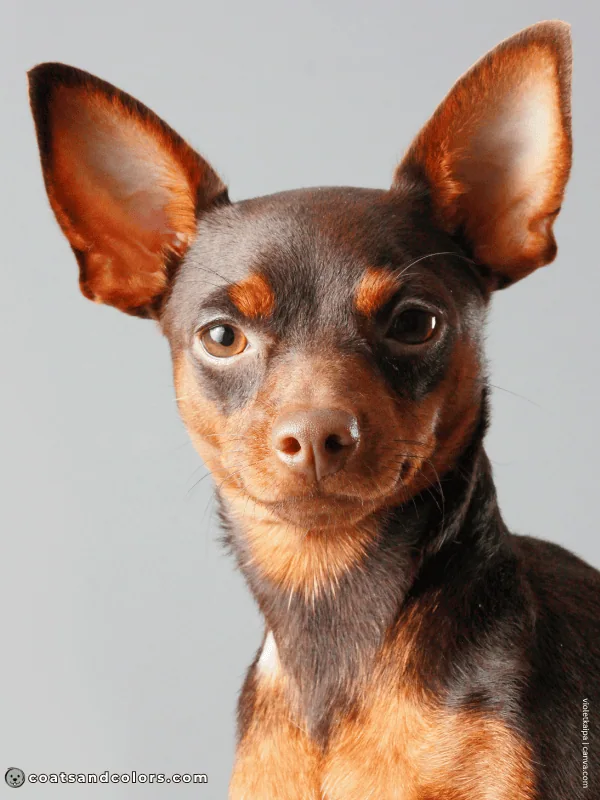
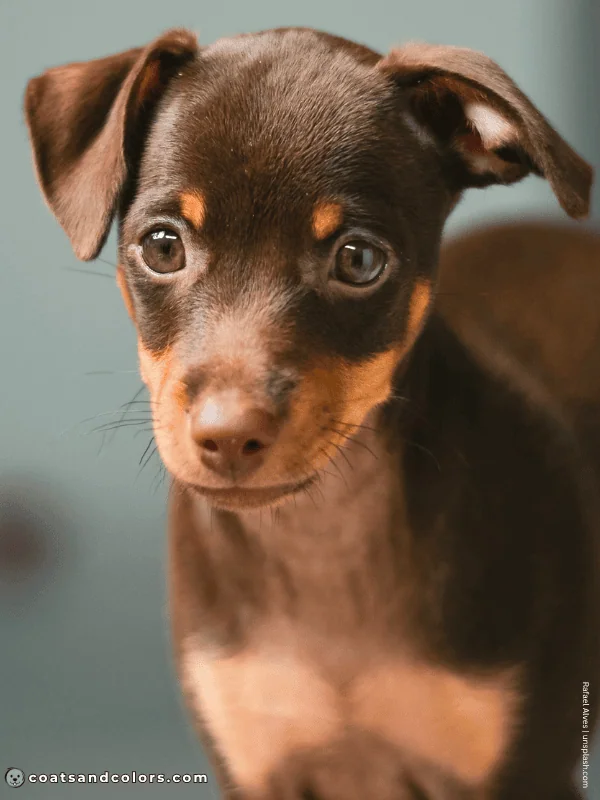
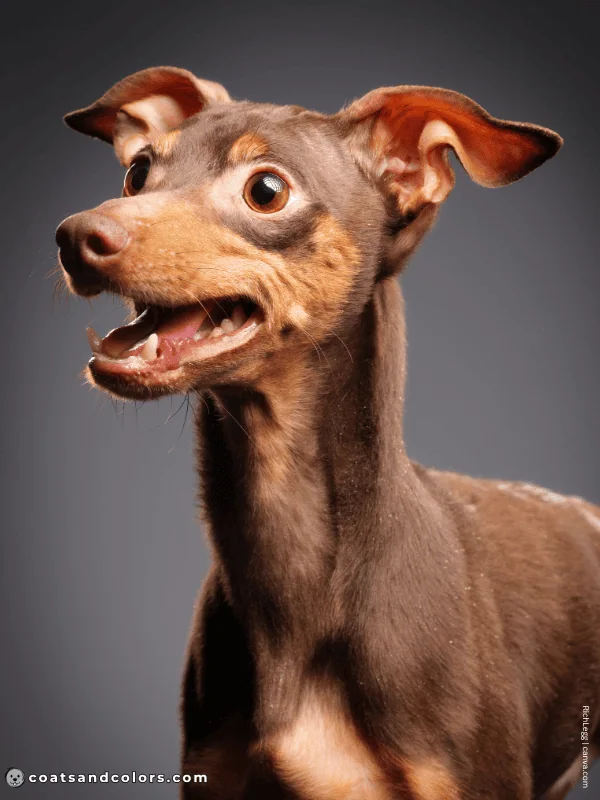
A chocolate & tan MinPin has a brown-based tan point pattern. They have a brown nose.
The FCI does not accept chocolate colors in this breed.
BASE PATTERN
tan point
MERLE
–
OTHER
–
EUMELANIN
brown
INTENSITY
tan, rust
WHITE
solid
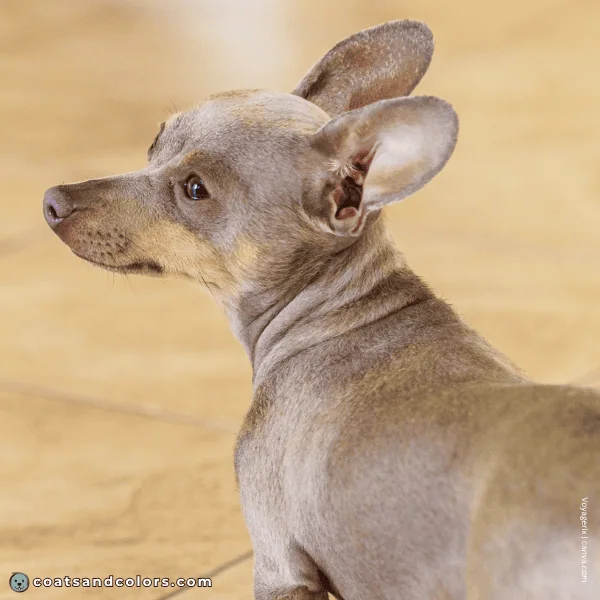
Blue & Tan
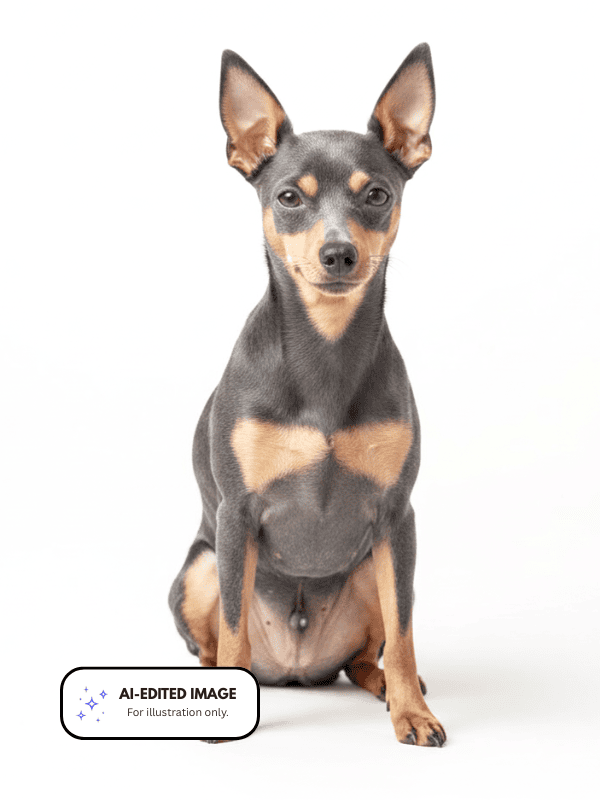
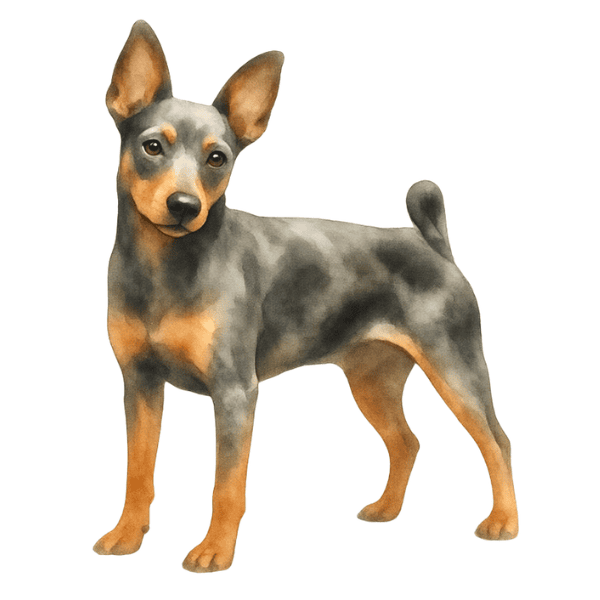
A blue & tan MinPin has a diluted black-based tan point pattern. They have a gray nose.
This color is only recognized by the Royal Kennel Club.
BASE PATTERN
tan point
MERLE
–
OTHER
–
EUMELANIN
diluted black
INTENSITY
tan, rust
WHITE
solid
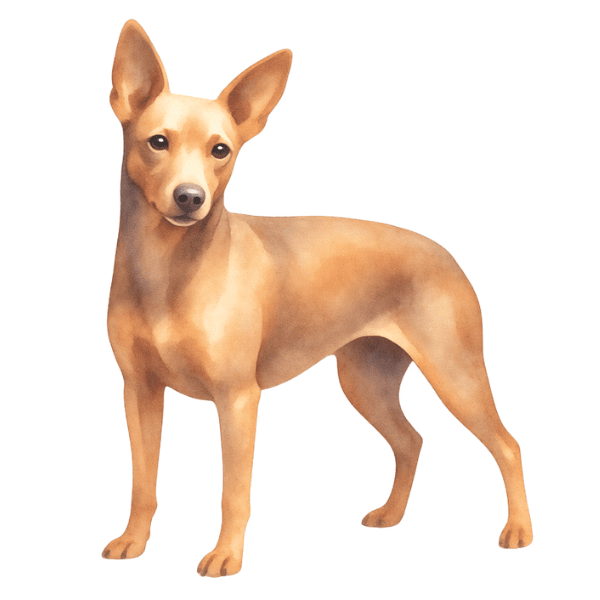
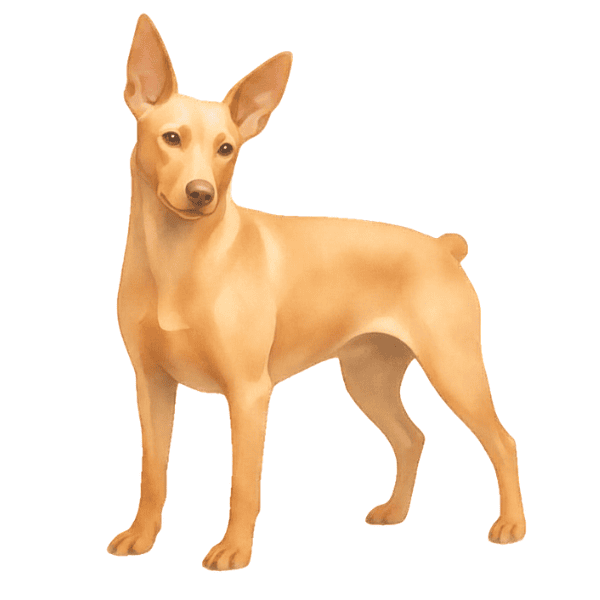
Red
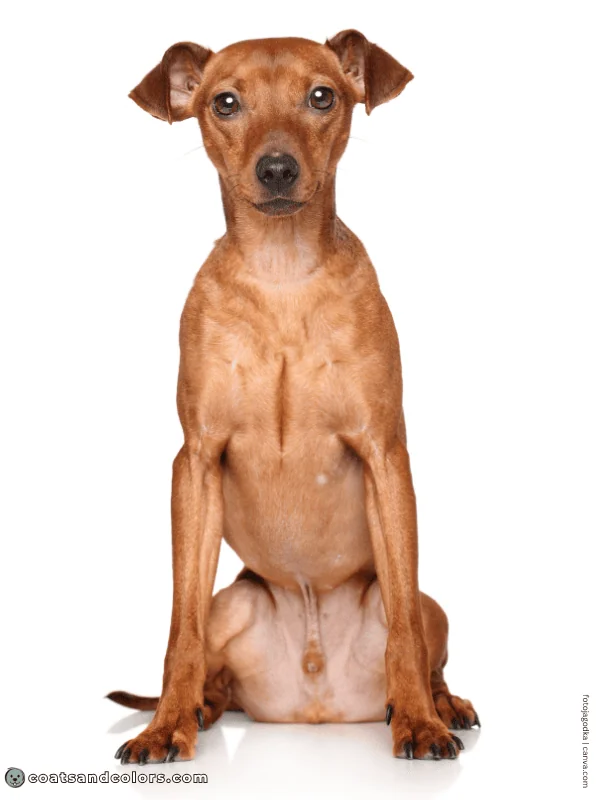
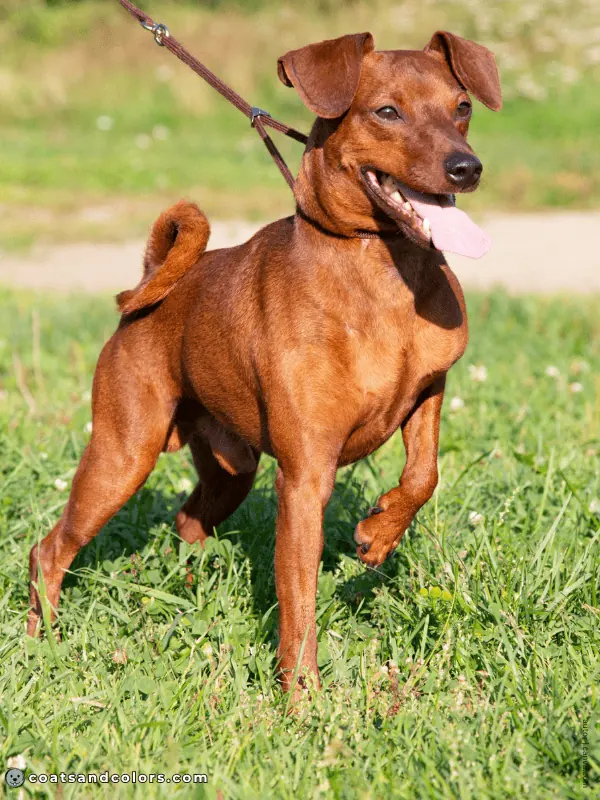
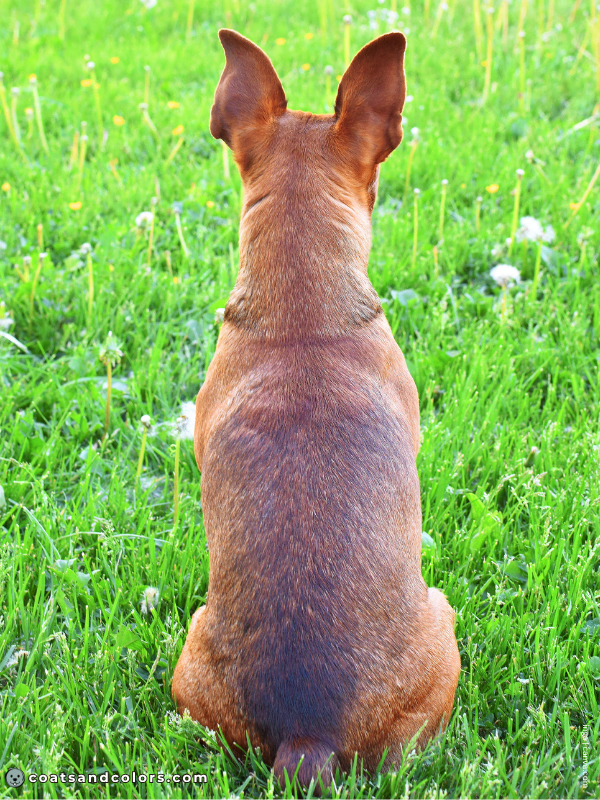
The AKC describes the pattern of a red MinPin as either clear red (clear sable) or stag red (shaded sable, “red with intermingling of black hair“).
In Germany, we call this a Rehpinscher, because they are deer red (Reh = deer).
They should all be sable. But the recessive red allele (e) also seems to be present in the breed.
Sables can have some dark puppy overlay, recessive reds never have dark puppy overlay. Sables have black whiskers. Recessive reds have pale whiskers (and can have faded nose colors).
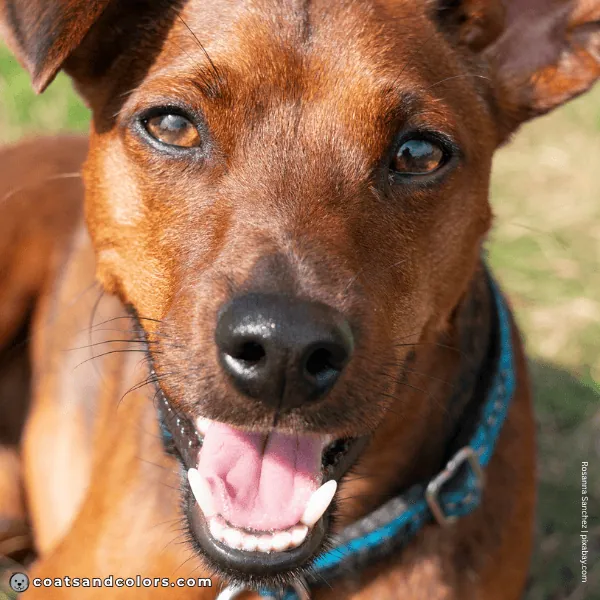
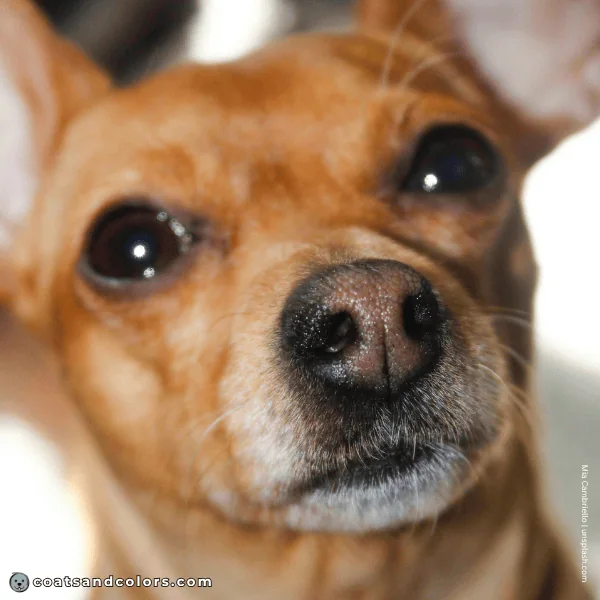
And all red Toy Pinschers are supposed to have a black nose.
Red with another base color than black (chocolate sable, blue sable, isabella sable) is not recognized. These other colors also affect nose color (e.g. chocolate sables have a liver nose).
BASE PATTERN
sable
MERLE
–
OTHER
–
EUMELANIN
black
INTENSITY
red, stag red
WHITE
solid
Faulty Colors
The FCI only accepts red and black & tan. And all breed registries other than the RKC do not recognize blue & tan. Neither registry accepts lilac & tan (what the AKC calls “fawn” or “isabella”). They also agree that sable with any base color other than black and either pattern with white markings are off-colors.
So, different base color are accepted or not, depending on where you are.
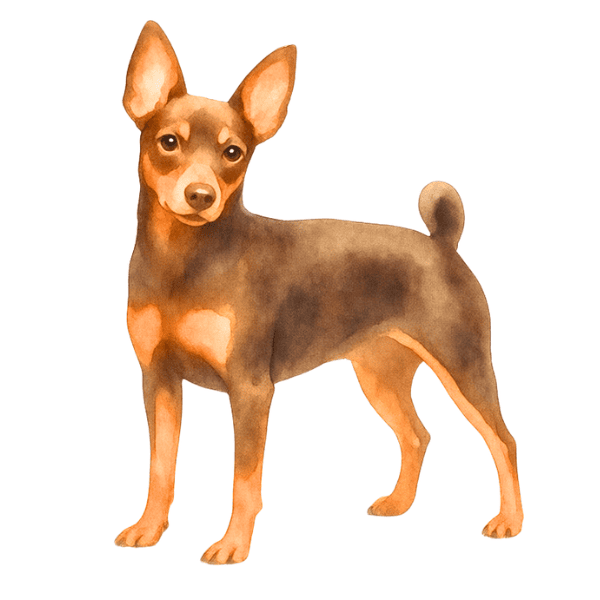
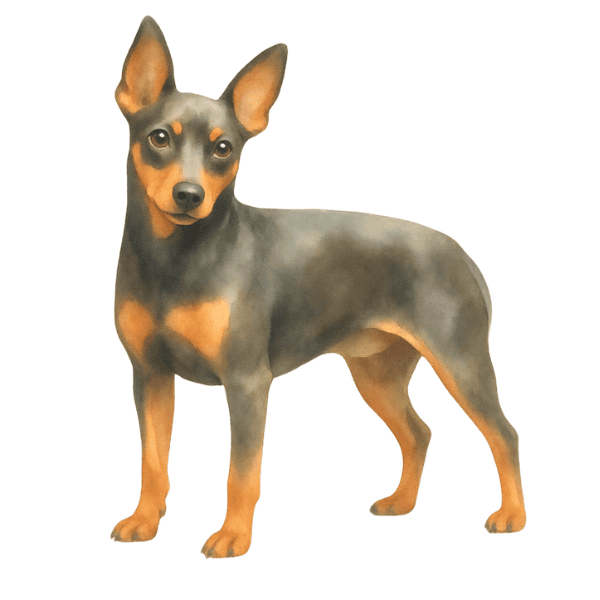
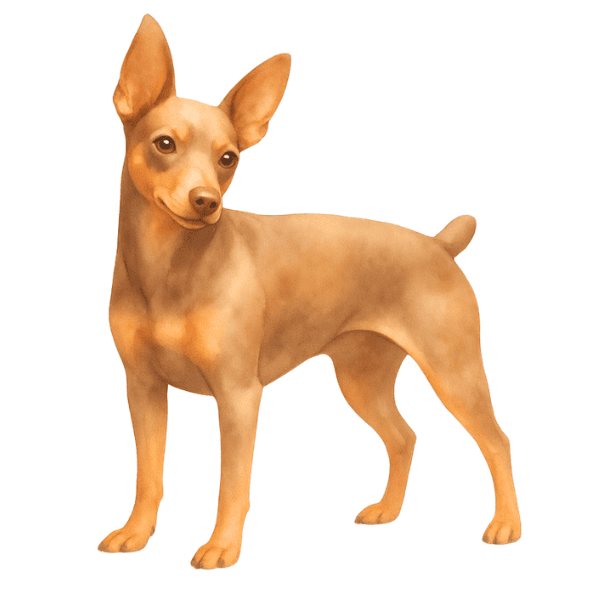
| AKC/CKC | FCI | RKC | |
|---|---|---|---|
| black & tan | ✔ | ✔ | ✔ |
| chocolate & tan | ✔ | – | ✔ |
| blue & tan | – | – | ✔ |
| lilac & tan | – | – | – |
Sables can only have a black nose. No chocolate or dilute noses in red MinPins.
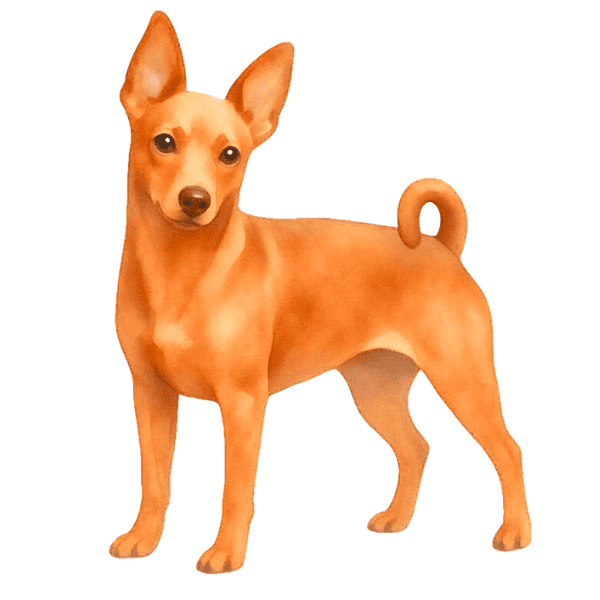
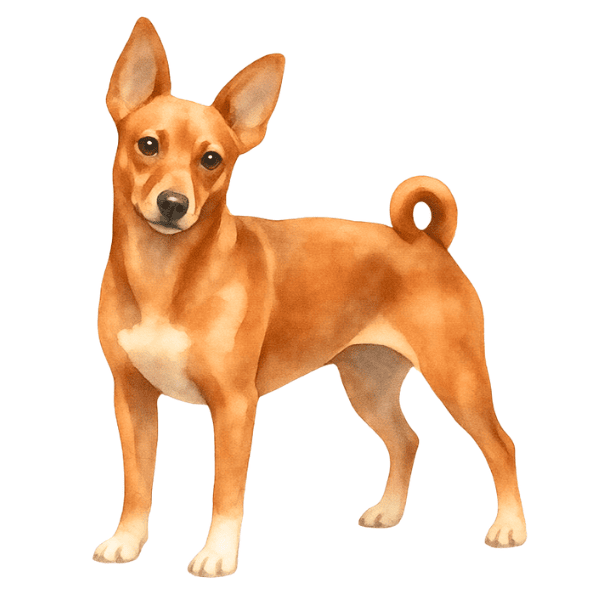
And white markings or brindle or merle are a no-go.
Base Patterns
The base pattern describes the placement of phaeomelanin and eumelanin in the coat. There is an epistatic hierarchy between these genes: A locus < K locus < E locus.
- The A locus controls the basic distribution of both pigment types.
- Next, the K locus can add black to the A locus pattern.
- Finally, the E locus regulates the general ability to produce black pigment.
A Locus
| Ay | sable |
| at | tan point |
MinPins are either sable (Ay/-) or tan point (at/at).
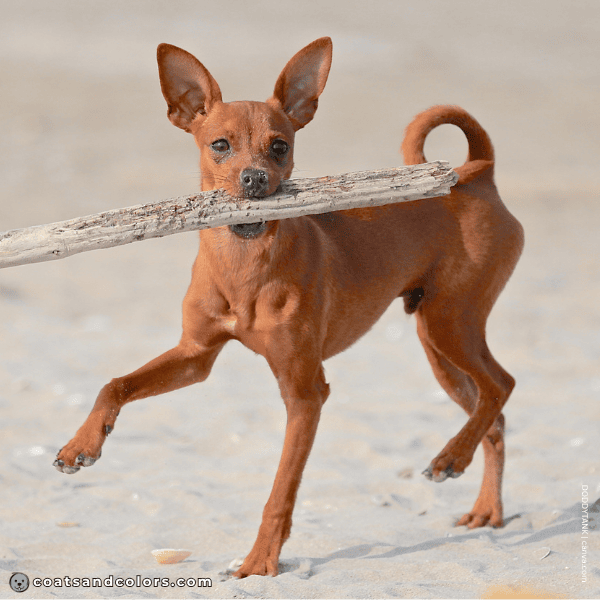
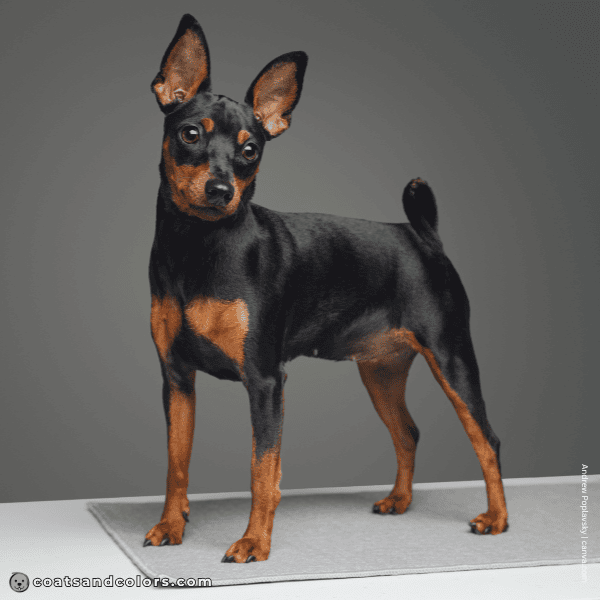
The sable MinPin can have a solid red or a sabled stag red coat. Sabling often indicates that a dog is a tan point carrier (Ay/at). Alternatively, sabling may be the result of the shaded sable allele being present in the breed (Ays), but someone has to confirm this via genetic testing.
“The amount of black hairs varies from very few to covering almost the entire dog. The amount and placement of these black hairs is not important.”
Miniature Pinscher Club of America[6]
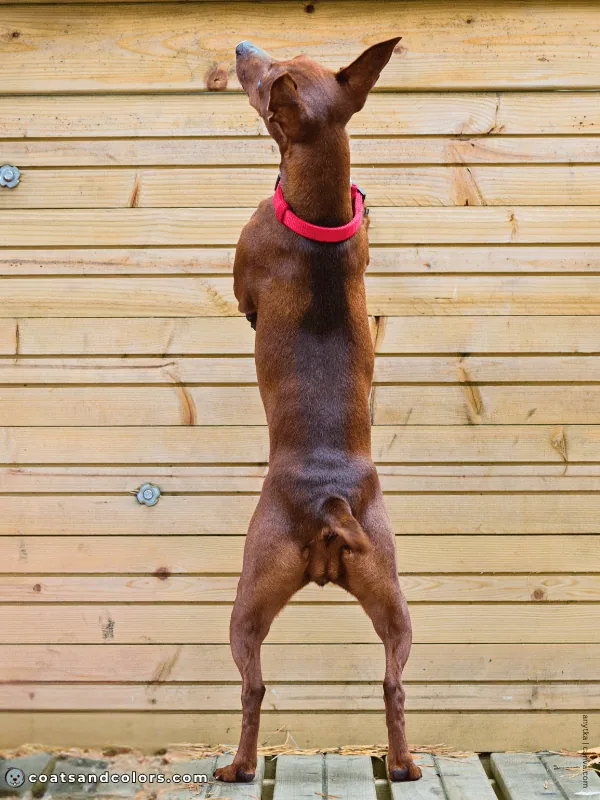
And it’s normal for red puppies to have some dark overlay. Some of the darker stag reds can have “false tan points” as puppies. That is because the ventral tan always clears a little bit faster than the dorsal tan.
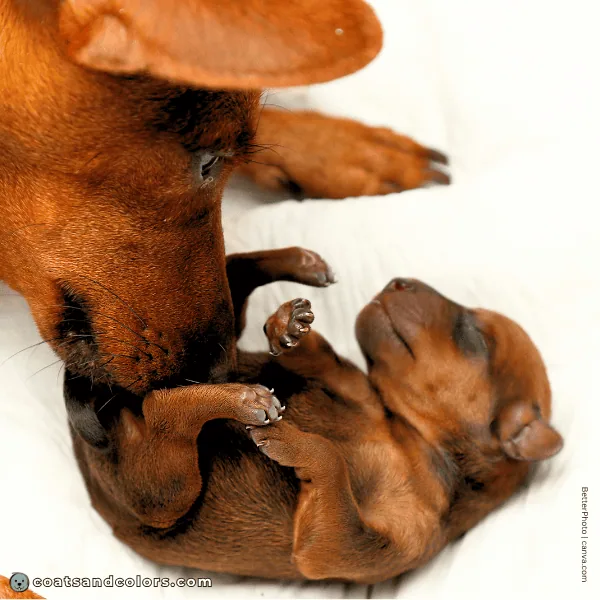

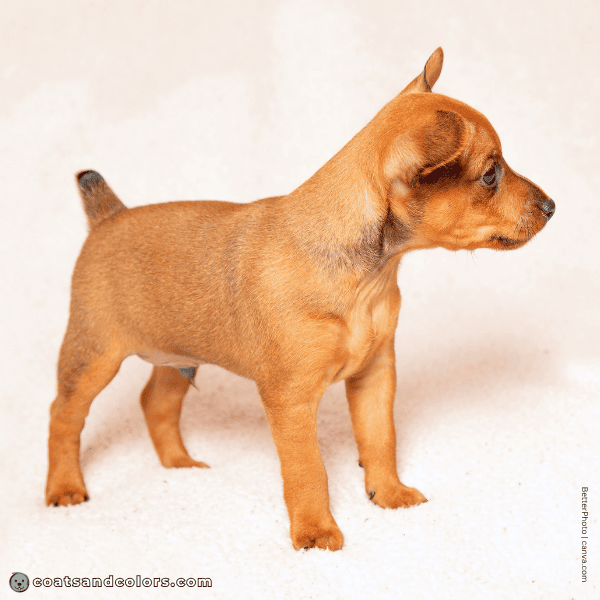
The FCI lists “black trace on the back” (do they mean a dorsal stripe?) and “dark saddle” as faulty phenotypes. It’s not clear if they mean a real saddle that may have been present in the past.
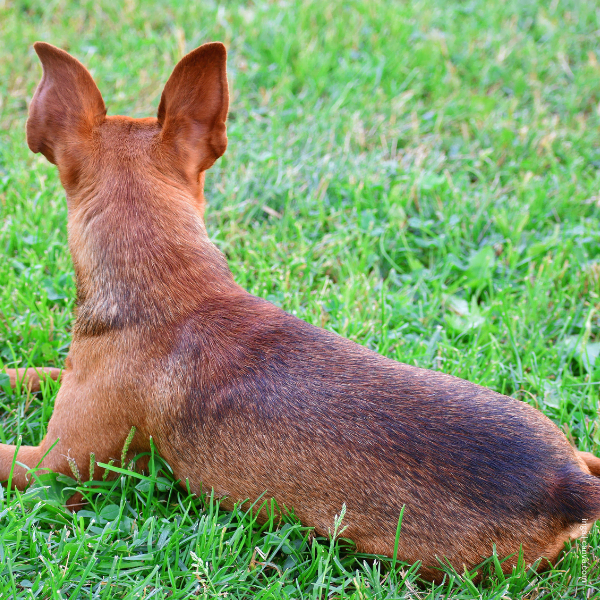
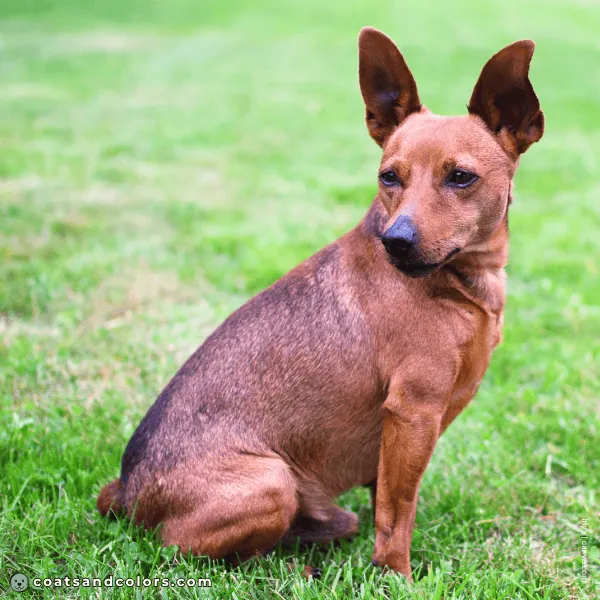
The tan point pattern always produces roughly the same distribution of tan markings. The dorsal coat is solid black (it may show some gray undercoat). And the ventral coat is solid tan (the red points). But breeds with this pattern often still feel it necessary to specify where their dogs should have tan.
“The markings are distributed as follows: Above the eyes, at the underside of the throat, on the pasterns, on the feet, at the inside of the hind legs and under the root of the tail. Two even, clearly separated triangles on the chest.”
“The aim is for markings as dark, as rich, and as clearly defined as possible.”
FCI Breed Standard[2]
“Sharply defined tan markings on cheeks, lips, lower jaw, throat, twin spots above eyes and chest, lower half of forelegs, inside of hindlegs and vent region, lower portion of hocks and feet.”
RKC Breed Standard[3]
There are still some minor differences from dog to dog, e.g. dogs can have bright or sooty chest triangles. And the black on the front legs can sometimes run down the leg all the way to the toes.
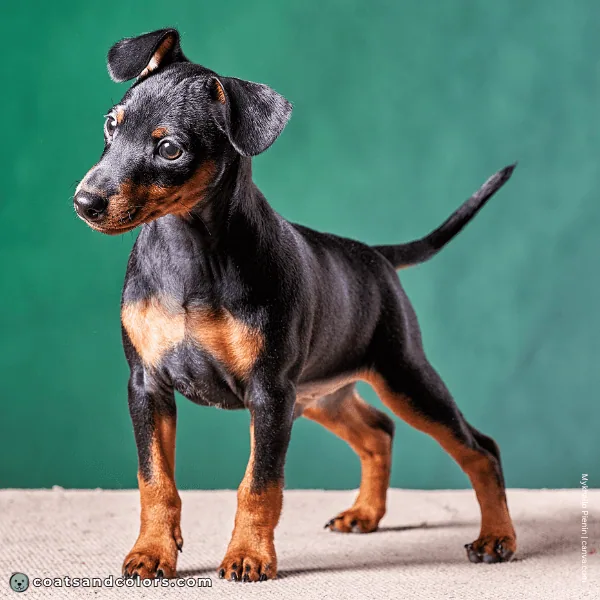
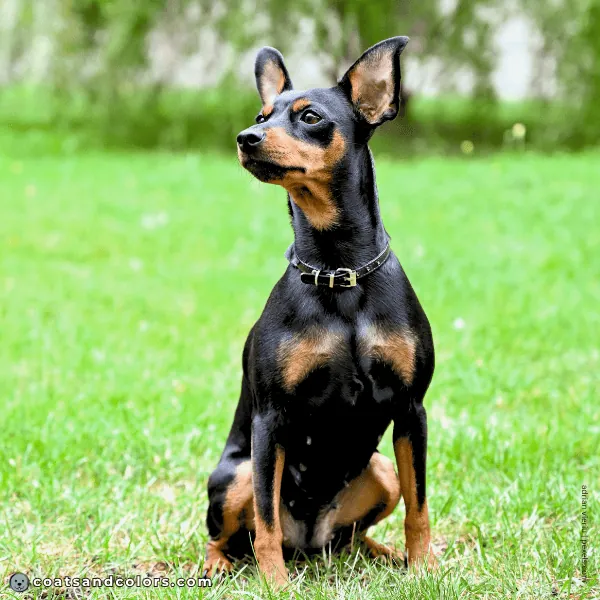
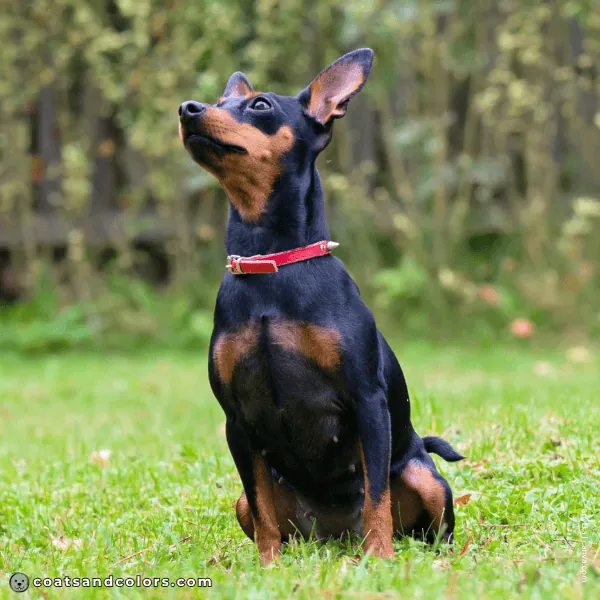
And it’s actually pretty normal for dogs with tan points to have tan hair roots in their black hairs. Only selective breeding for a super crisp pattern made the black areas solid lacquer black.
What confuses me is that the AKC breed standard wants toe pencilling (lines of black running down the top of each toe), but lists a thumb mark (their definition is extremely nitpicky) as a reason for disqualification. Maybe this is because the thumb mark is a trademark of the Manchester Terrier and they want to distance themselves, so no one sees the similarity between Toy Manchesters and MinPins?
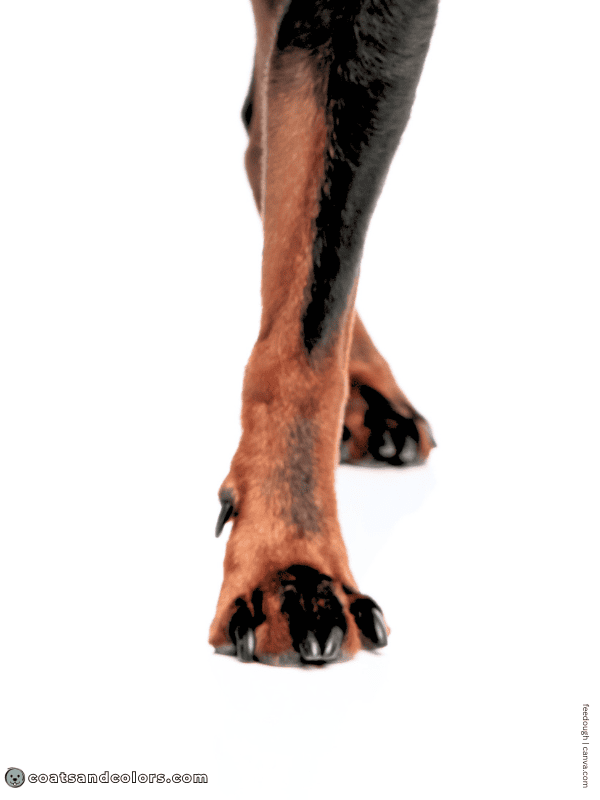
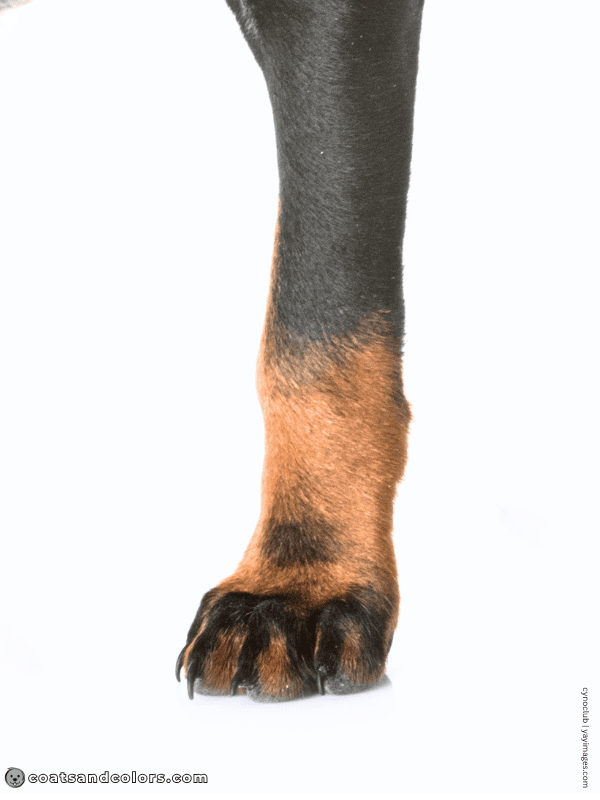
“Disqualification: Thumb mark (patch of black hair surrounded by rust on the front of the foreleg between the foot and the wrist; on chocolates, the patch is chocolate hair).”
AKC Breed Standard[1]
“Quite simply, a thumb mark is a patch, or island, of black hair on the front of the foreleg between the foot and the wrist that is TOTALLY surrounded by rust-red. If the black hair on the leg is in any way connected to the black on the upper part of the leg, it is an extension as described above and is NOT a disqualification, but a deviation from correct markings.”
Miniature Pinscher Club of America[6]
K Locus
| ky | wild-type |
This breed is fixed for normal pattern expression (ky/ky).
E Locus
| Em | mask |
| E | wild-type |
| e | recessive red |
Most MinPins have normal pattern expression (E/-).
MinPins can test positive for a mask (Em/-), which some breeds do without ever having masks.
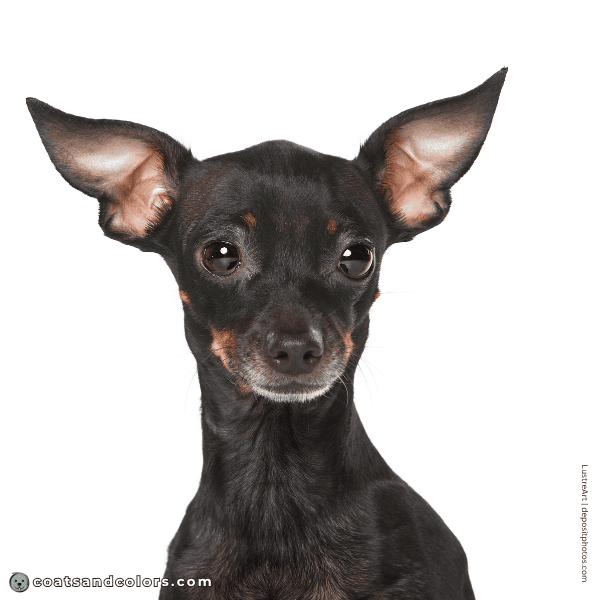
Some very clear red dogs might be recessive red (e/e). It is also a well-known phenomenon among dogs in general that e carriers (E/e) often have larger tan markings than non-carriers (E/E).
MinPin Base Patterns
| A LOCUS | K LOCUS | E LOCUS | PATTERN |
|---|---|---|---|
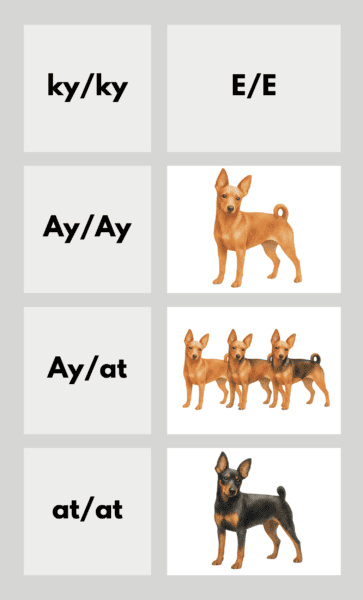
| Ay/- | ky/ky | E/E | sable “red, stag red” |
| at/at | ky/ky | E/E | tan point “[black] & tan” |
Here is a Miniature Pinscher color chart for the standard colors. I am ignoring the possibility of Ays being present in the breed until confirmed (in theory, Ay/Ays should be clear red, Ays/Ays is shaded red, Ays/at can give dark stag red). Keep in mind that most testing companies will report Ays as Ay.
Base Colors
The base color is determined by the B locus and D locus.
B Locus
| B | black |
| b | chocolate |
MinPins can have black (B/-) or brown (b/b) pigment.
D Locus
| D | normal |
| d | diluted |
MinPins mostly have normal pigment colors (D/-).
The British RKC also accepts blue (diluted black d/d B/-). However, they do not recognize lilac (diluted chocolate d/d b/b). Breed standards don’t always make sense…
Red Intensity
The breed aims for rusty reddish to chestnut red colors, they don’t accept lighter yellow or cream colors. The FCI describes colors as “deer red, reddish-brown to dark red brown“.
Similarly, tan markings gave a vibrant orange to red color.
The AKC identifies darker tan markings as “rust markings“. The CKC website also uses the terms “rich tan markings” for black dogs and “rust or yellow markings” for the chocolate dogs.
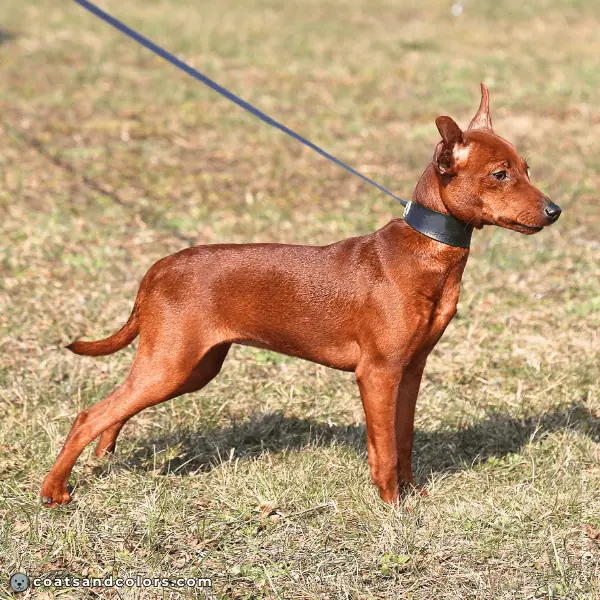
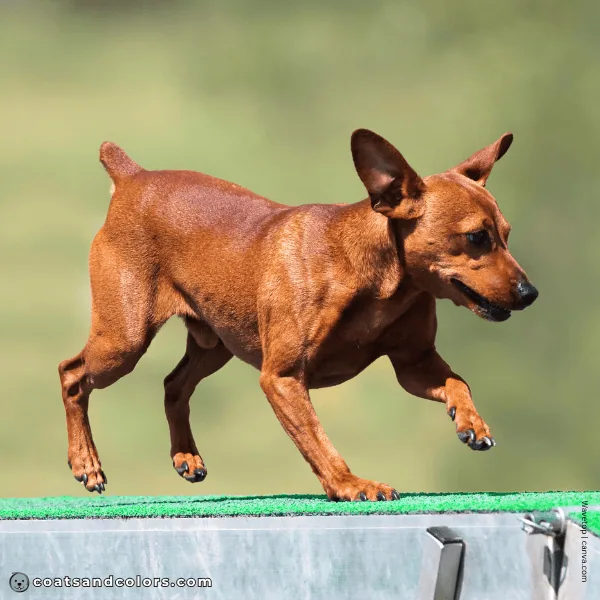
“In the solid red and stag red a rich vibrant medium to dark shade is
preferred.”
AKC Breed Standard[1]
“Lighter shading or “brisking” is often seen on the side of the neck, below the base of the ears, over the shoulder blades and near the vent region. This is completely acceptable, and should not be penalized.”
Miniature Pinscher Club of America[6]
White Markings
The Min Pin has a solid coat color (S/S). Some dogs have a small patch of residual white.
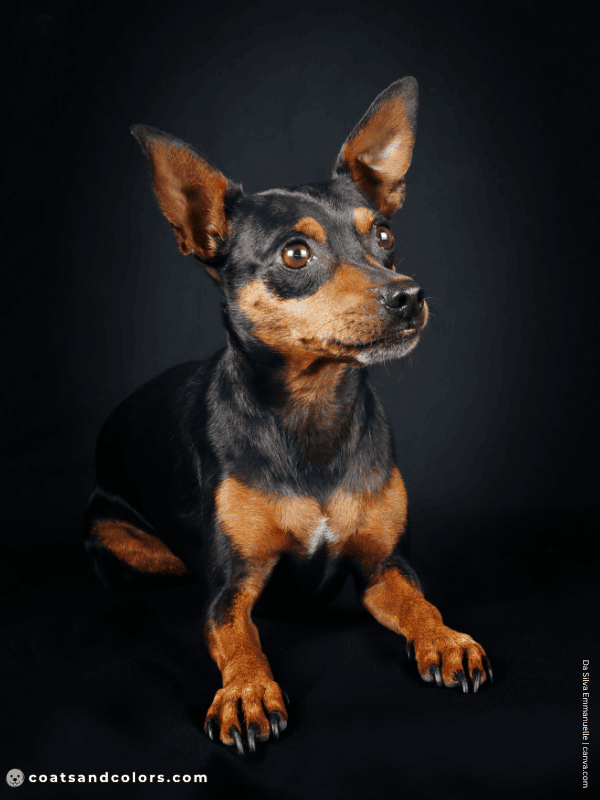
“Disqualification: White on any part of dog which exceeds ½ inch in its longest dimension.”
AKC Breed Standard[1]
“A scattering of white hair or “frost” seen on the chest is a deviation, not a disqualification.”
Miniature Pinscher Club of America[6]
MinPin Eye Colors
The black-and-tan and red Miniature Pinschers all have a black nose.
Dogs with other base colors (choco + blue) tend to have lighter eye colors.
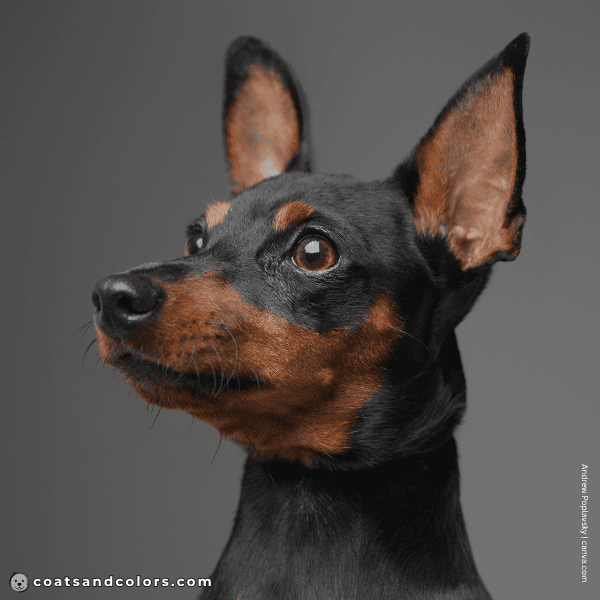
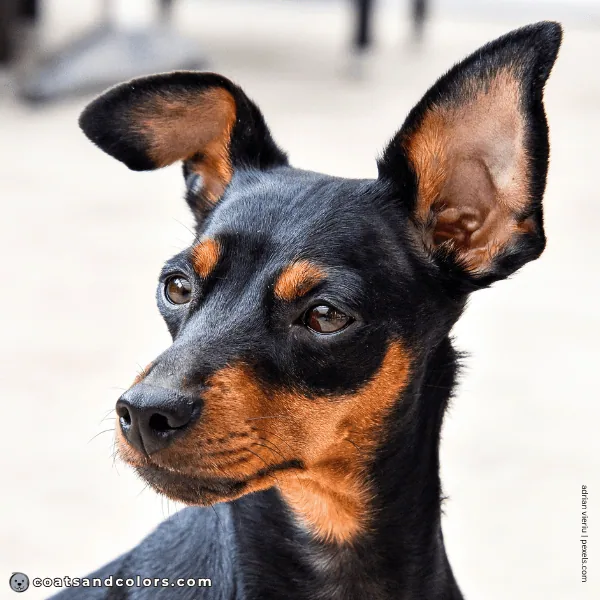
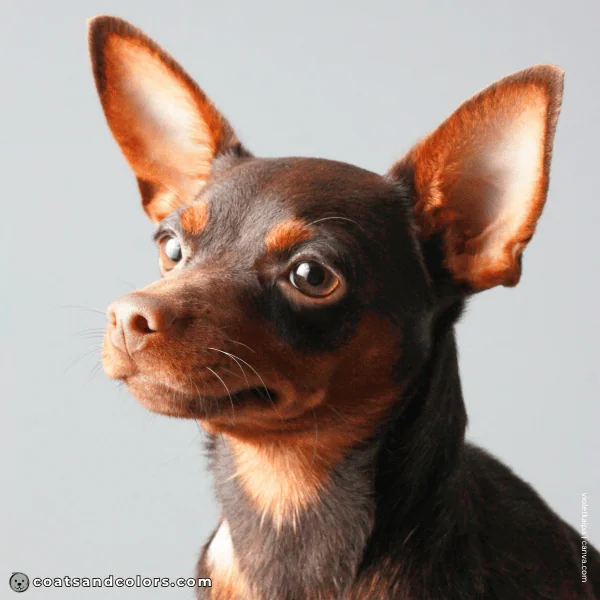
“Eyes […] bright and dark even to a true black, including eye rims, with the exception of chocolates,
whose eye rims should be self-colored.”
AKC Breed Standard[1]
“Dark, oval, with black pigmented close fitting eyelids.”
FCI Breed Standard[2]
“Black to dark brown according to coat colour. Eye rims black in black or red dogs and correspondingly lighter in chocolate or blue dogs.”
RKC Breed Standard[3]
MinPin Nose Colors
The black and tan and red dogs have a black nose.
The chocolate and tan dogs have a brown nose. The blue and tan dogs have a gray nose.
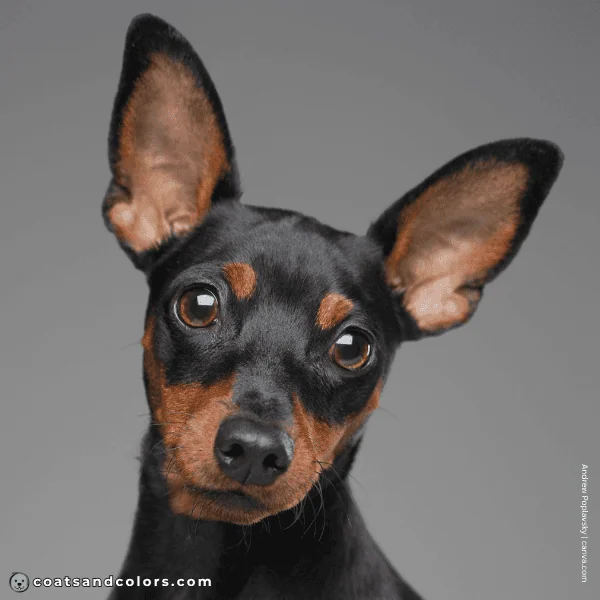

“Nose black only, with the exception of chocolates which should have a self-colored nose.”
AKC Breed Standard[1]
“Noseleather well developed and black.”
FCI Breed Standard[2]
“Nose black with the exception of chocolate and blue in which it may be self-coloured.”
RKC Breed Standard[3]
MinPin Coat Type
The Miniature Pinscher is a short-haired dog with a short glossy coat.
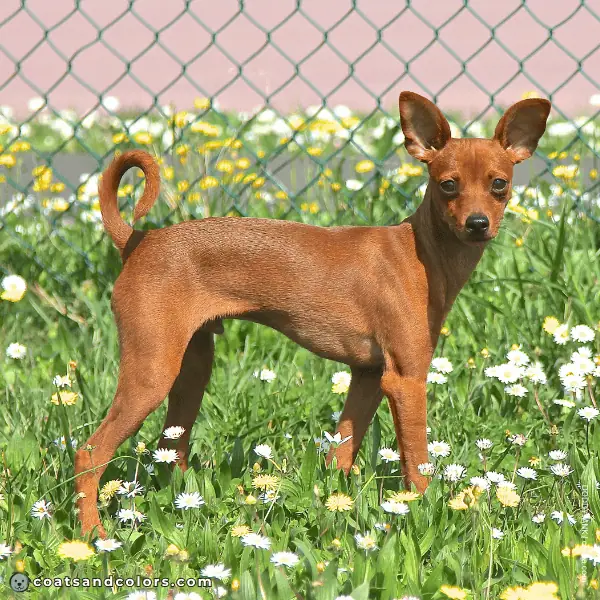
“Smooth, hard and short, straight and lustrous, closely adhering to and uniformly covering
the body.”
AKC Breed Standard[1]
“Short and dense, smooth, close and shiny without bald patches.”
FCI Breed Standard[2]
“Hair forming ridge on any part of head, neck or body undesirable.”
RKC Breed Standard[3]
This is also one of the breeds that sometimes have chest balding. The FCI standard rates a thin coat and bald spots as faulty. The AKC breed club says this is so common that it should be excused.
“Some Min Pins naturally have very thin hair covering the throat and/or underbelly, even though the coat is thicker on other areas. This is very common and should not be penalized.”
Miniature Pinscher Club of America[6]

The dogs with diluted pigment are predisposed to maybe develop color dilution alopecia. However, this is more common in some breeds than others. And there aren’t many purebred dilute MinPins.
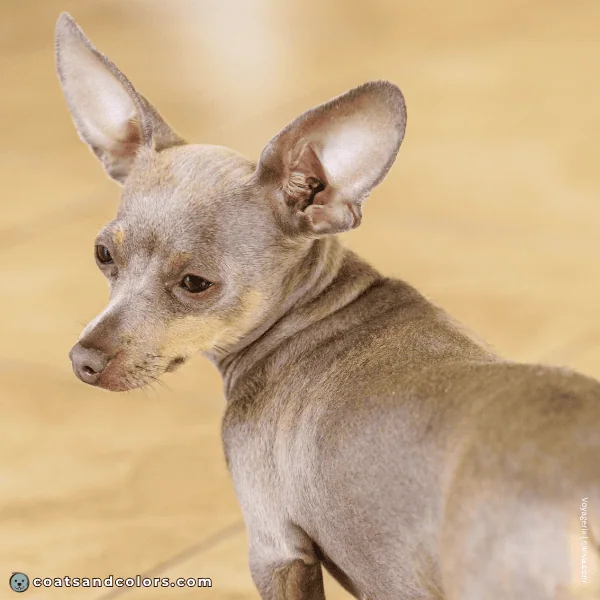
Related Breeds
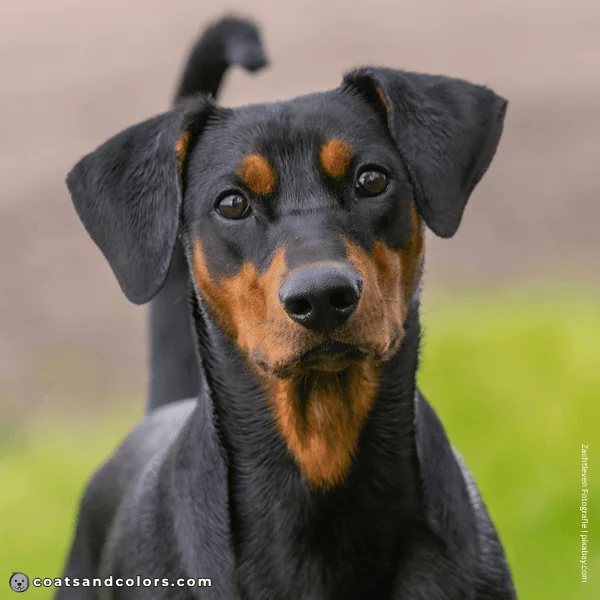
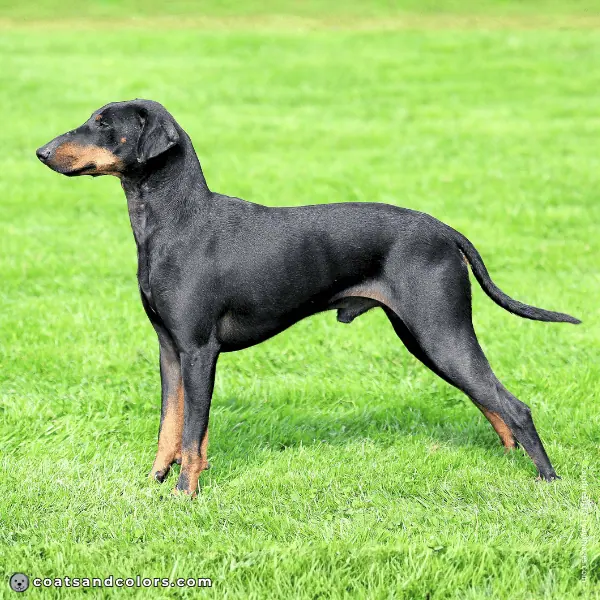
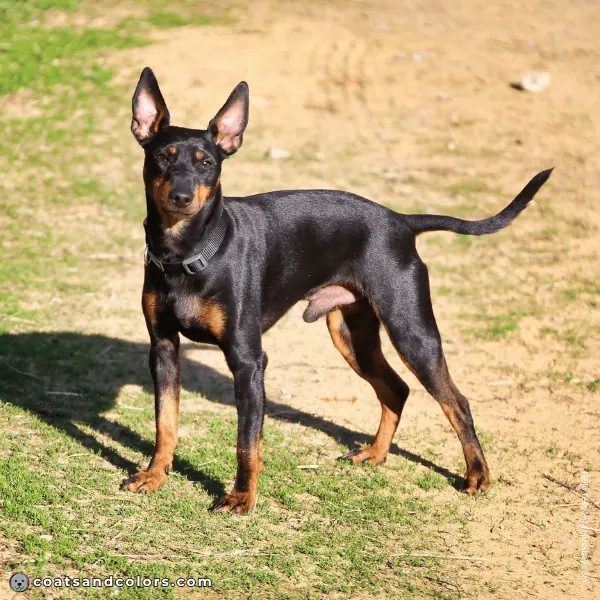
The Miniature Pinscher was developed as a small variety of the German Pinscher and should, in theory, be the smooth cousin breed to the Miniature Schnauzer. But genetic research indicates that MinPins are closer to the Manchester Terrier (link), likely because breeders in the past used British Toy Terriers.
And the AKC breed club admits that there might even have been an influx of Italian Greyhound and Smooth Dachshunds in the early days of the breed in the US[6].
Learn More


Links
[1] American Kennel Club (AKC): Miniature Pinscher
[2] Fédération Cynologique Internationale (FCI): Miniature Pinscher
[3] Royal Kennel Club (RKC): Miniature Pinscher
[4] Canadian Kennel Club (CKC): Miniature Pinscher
[5] Dreger et al. (2019). True Colors: Commercially-acquired morphological genotypes reveal hidden allele variation among dog breeds, informing both trait ancestry and breed potential. PLoS ONE 14(10): e0223995. https://doi.org/10.1371/journal.pone.0223995
[6] Miniature Pinscher Club of America. minpin.org
Image Credits
Adrian Vieriu/pexels.com
Andrew Poplavsky/canva.com
anytka/canva.com
BetterPhoto/canva.com
BetterPhoto/yayimages.com
CaptureLight/yayimages.com
cynoclub/yayimages.com
Da Silva Emmanuelle/canva.com
DODDYTANK/canva.com
feedough/anva.com
fotojagodka/canva.com
Frostroomhead/canva.com
inga/canva.com
Inna Postnikova/canva.com
Kurt Pas/canva.com
LustreArt/depositphotos.com
Mia Cambriello/unsplash.com
Mykhailo Pienin/canva.com
NitaYuko/canva.com
pozitivstudija/canva.com
pozitivstudija/yayimages.com
Rafael Alves/unsplash.com
Reijo Telaranta/pixabay.com
RichLegg/canva.com
Rosanna Sanchez/pixabay.com
tsik/canva.com
violetkaipa/canva.com
Vivienstock/canva.com
Voyagerix/canva.com
Wavetop/canva.com
Zachtleven Fotografie/pixabay.com
Hi! I’m Steffi. I am a biologist and a big time dog nerd. You are curious about coat color genetics? You’ve come to the right place! Read more.