

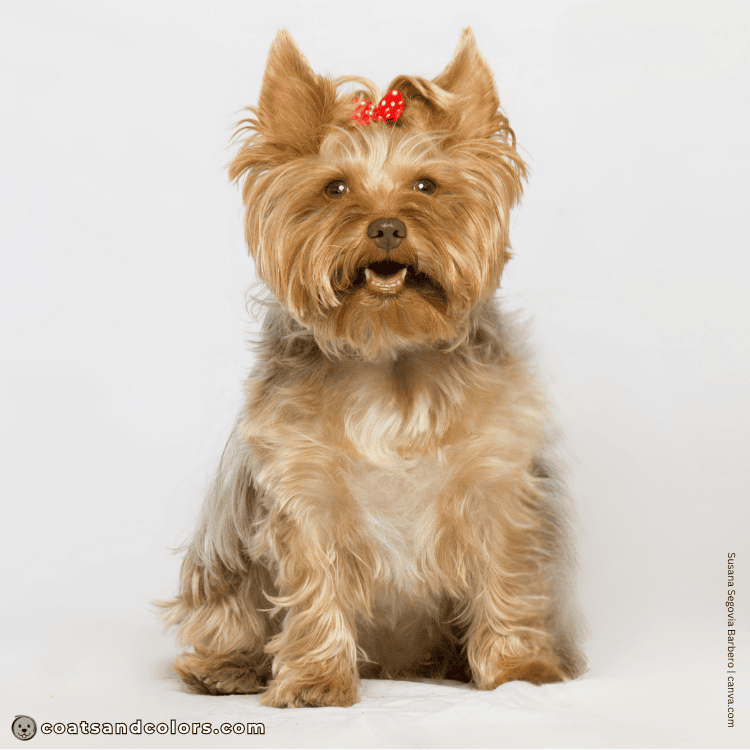
The Yorkshire Terrier is a toy breed from England. Their fine silky coat shows a saddle pattern with progressive graying. Yorkies typically have a golden or tan color with a gray or steel blue saddle.
Black & Gold
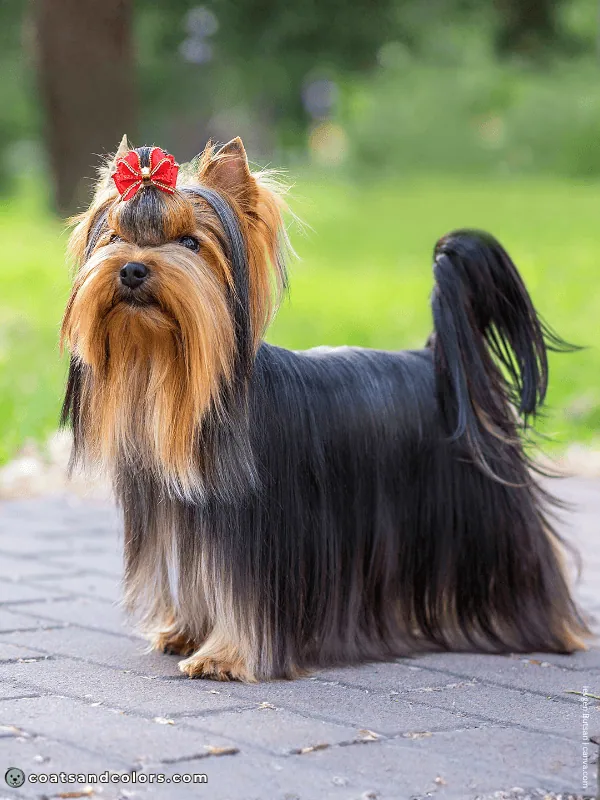
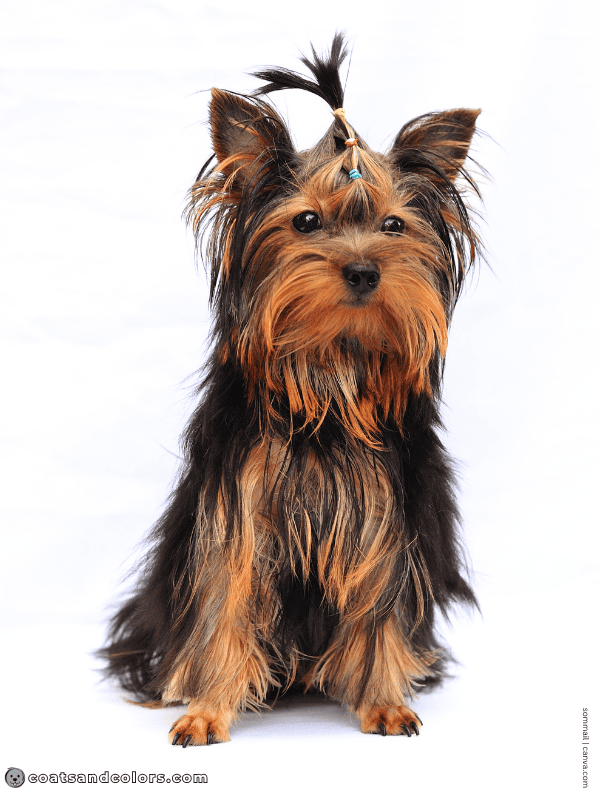
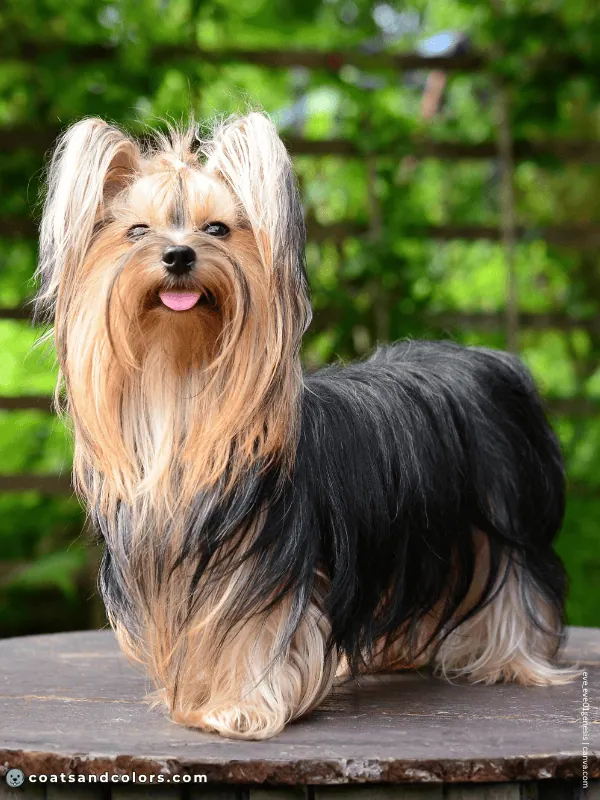
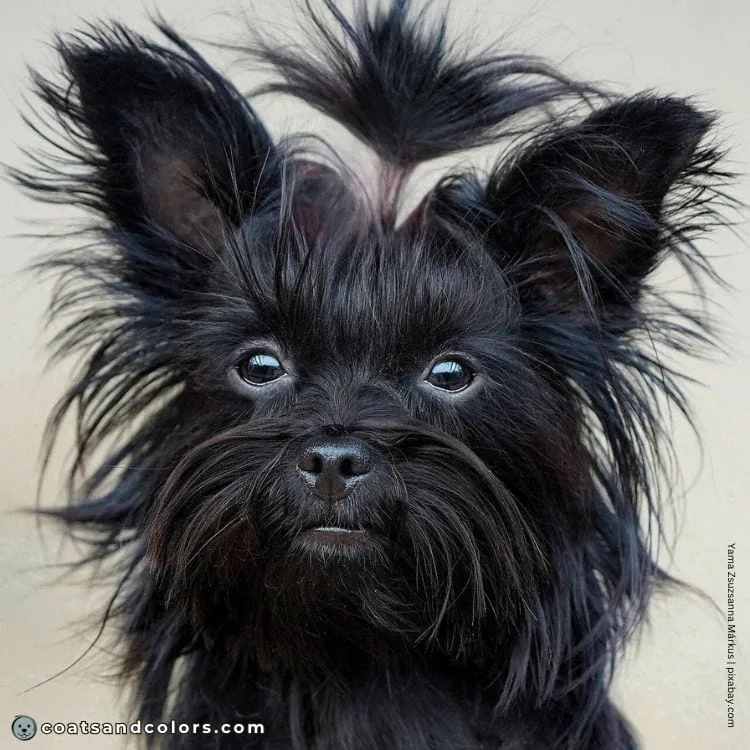
A black and gold Yorkshire Terrier has a rich tan color and a black saddle. The saddle can be black or very dark gray with not enough saddle fading to make it appear “steel blue”.
BASE PATTERN
saddle
MERLE
–
OTHER
no or weak graying
EUMELANIN
black
INTENSITY
gold
WHITE
solid
Blue & Gold
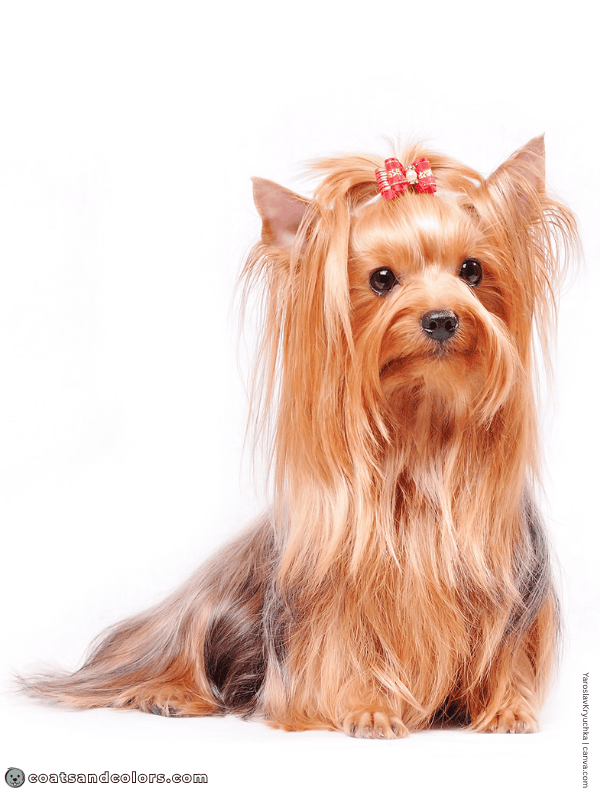
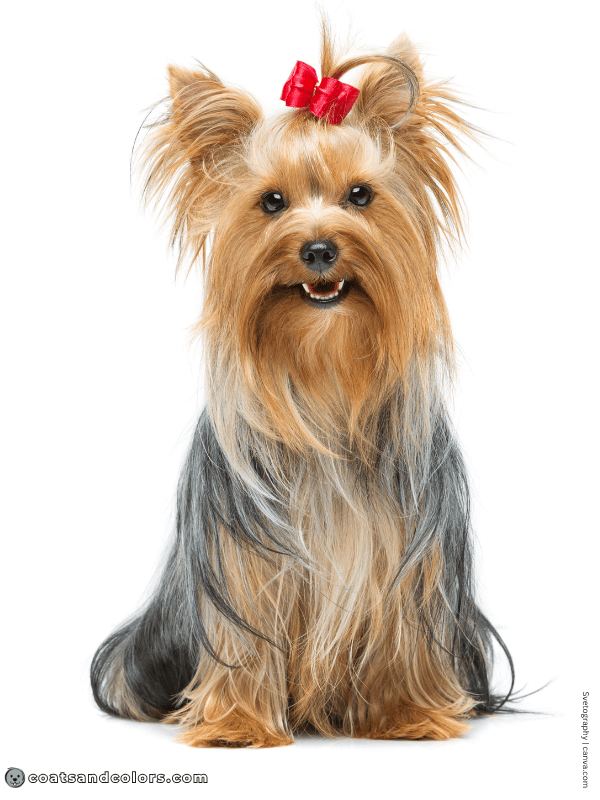
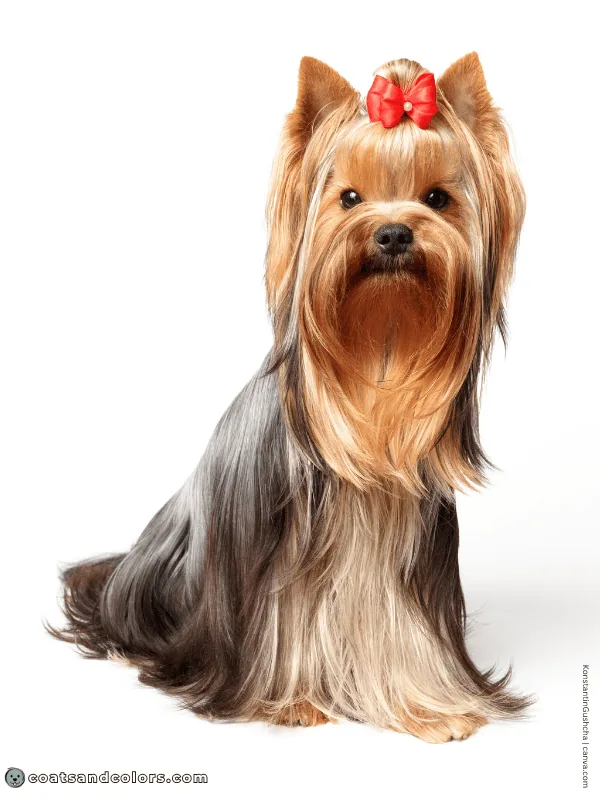
This is thought to be the ideal coat color for a Yorkie. The tan pigment has a rich shiny orange color. And the black saddle shows strong fading, so it appears gray. Yorkie breeders don’t want very light silver colors. They prefer darker shiny gray colors which they call blue or steel blue.
BASE PATTERN
saddle
MERLE
–
OTHER
strong graying
EUMELANIN
black
INTENSITY
gold
WHITE
solid
Black & Tan
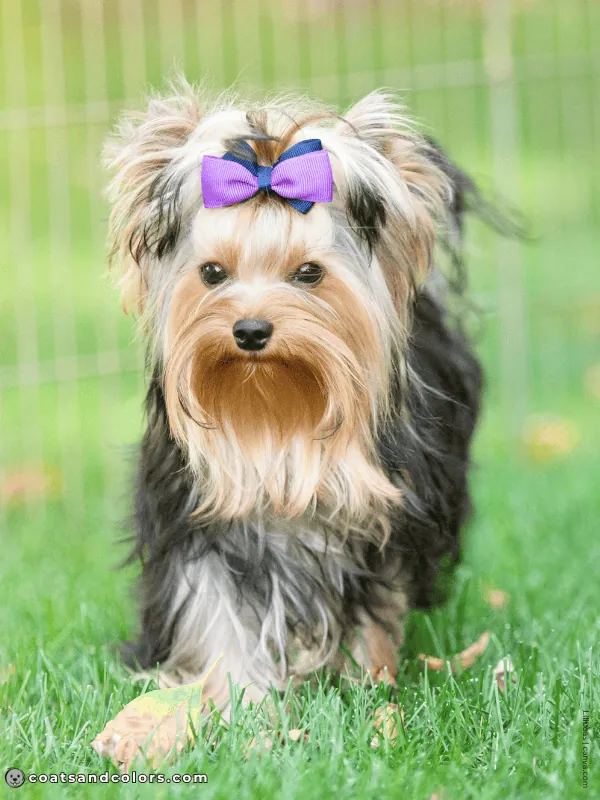
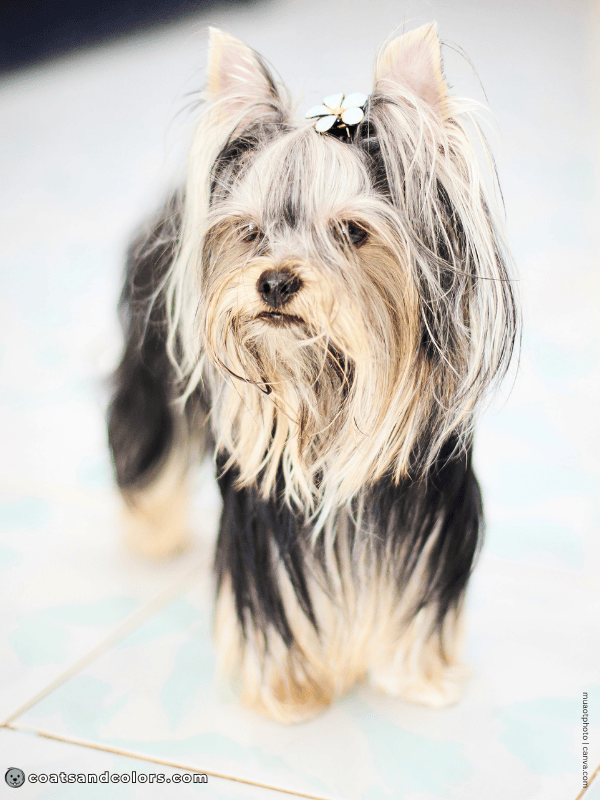
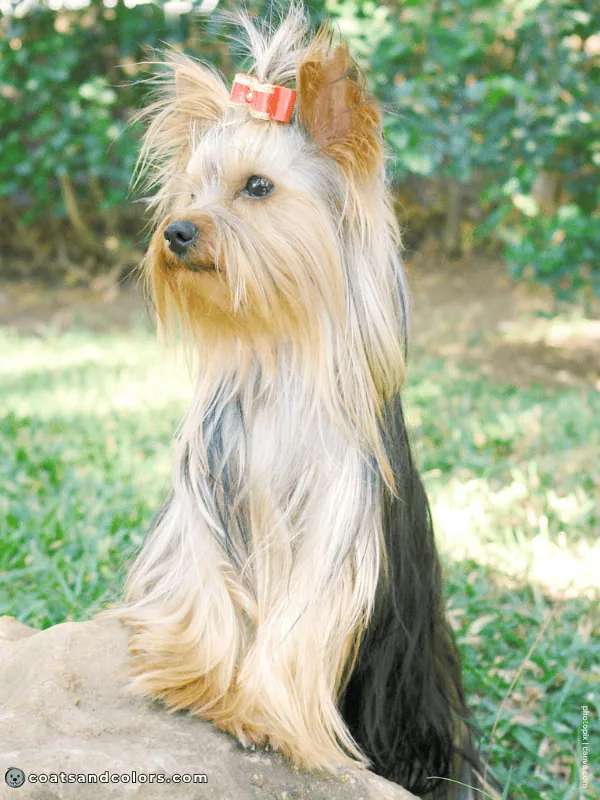
A black and tan Yorkshire Terrier has a light tan color and a black or very dark gray saddle.
BASE PATTERN
saddle
MERLE
–
OTHER
no or weak graying
EUMELANIN
black
INTENSITY
tan
WHITE
solid
Blue & Tan
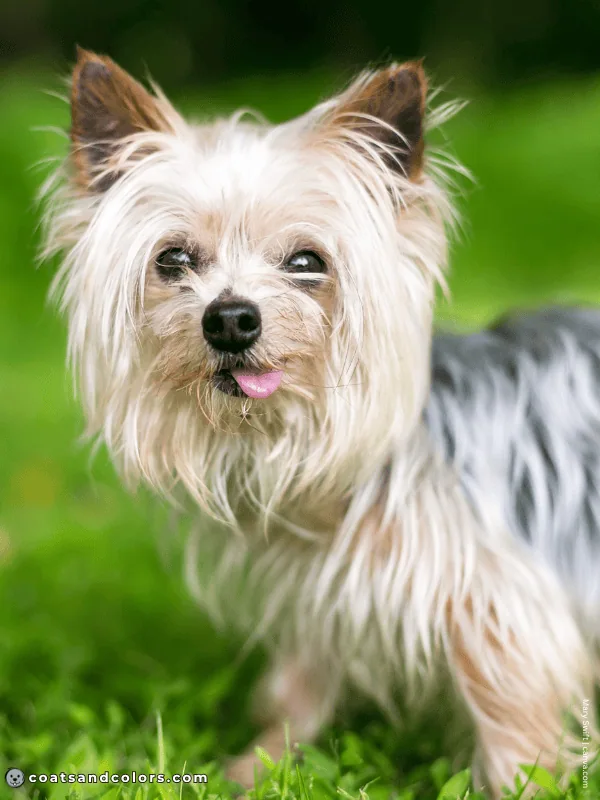
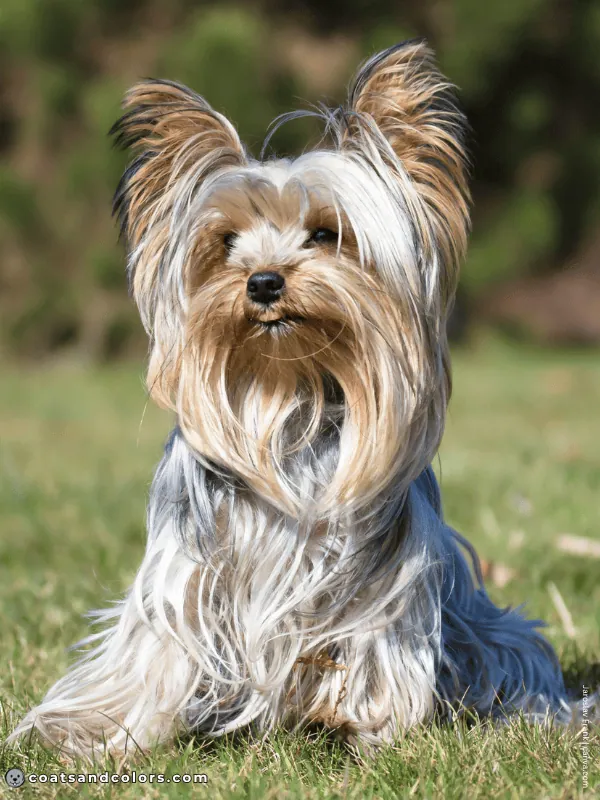
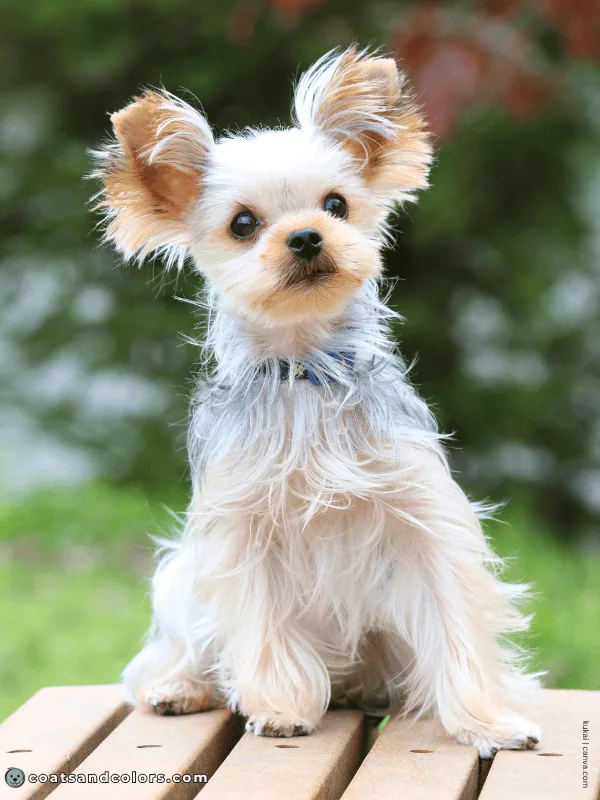
A blue and tan Yorkshire Terrier has a light tan color and a very faded gray-bluish saddle.
BASE PATTERN
saddle
MERLE
–
OTHER
strong graying
EUMELANIN
black
INTENSITY
tan
WHITE
solid
Faulty Colors
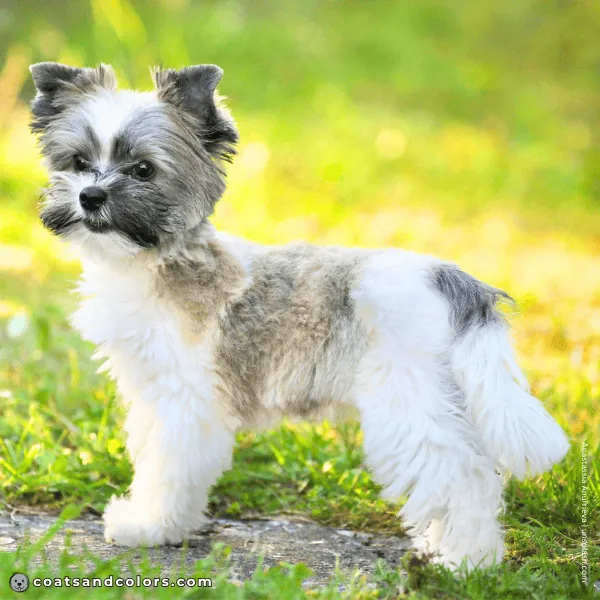
Yorkies are among the breeds that are frequently bred for color. They have been merlified and come in chocolate and dilute colors. Crossbreeding has also introduced other patterns, such as clear red, sable, and brindle. Oh, and piebald is also a thing. Unfortunately, some people produce white albino Yorkies.
“Disqualifications: Any solid color or combination of colors other than blue and tan…”
AKC Breed Standard[1]
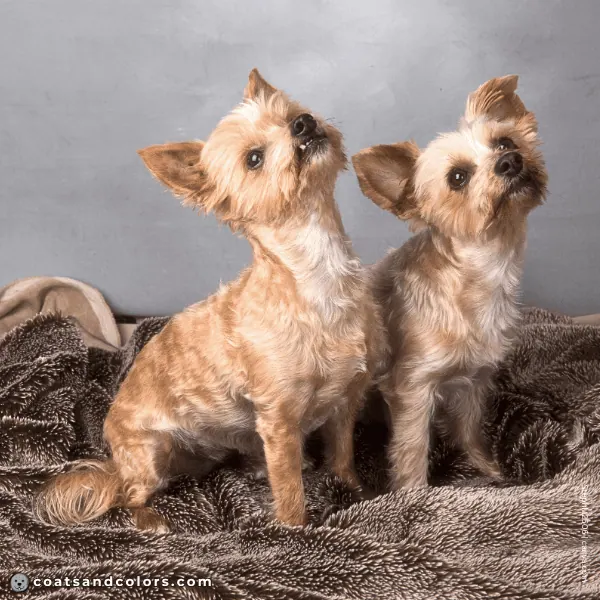
Puppy Colors
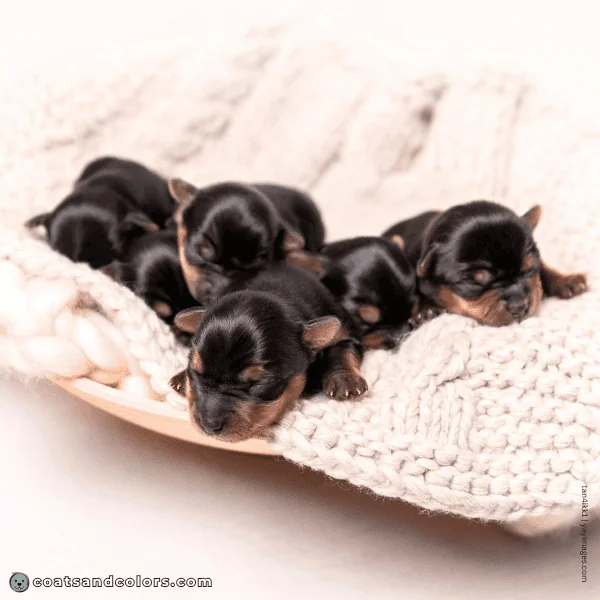
Yorkies have a black saddle pattern. The Yorkie puppy coat appears mainly black with still smaller tan markings. Over time, the tan expands until only the black saddle is left.
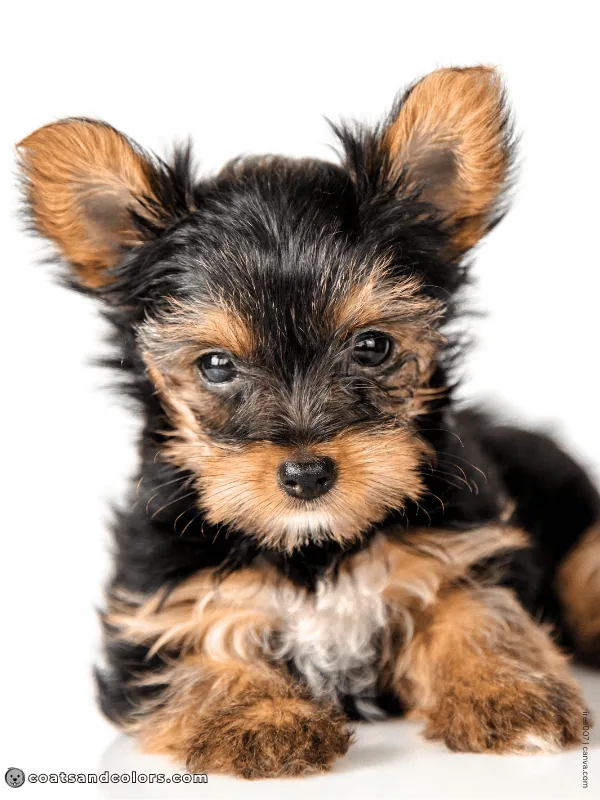
“Puppies are born black and tan and are normally darker in body color, showing an intermingling of black hair in the tan until they are matured.”
AKC Breed Standard[1]
As the tan expands, the graying of black pigment to a blueish silver happens at the same time.
Clipping a puppy with fading pigment removes all the darker hair tips. So expect your Yorkie (especially puppies that still have black in their hair lengths) to look a lot paler after a first visit to the groomer.
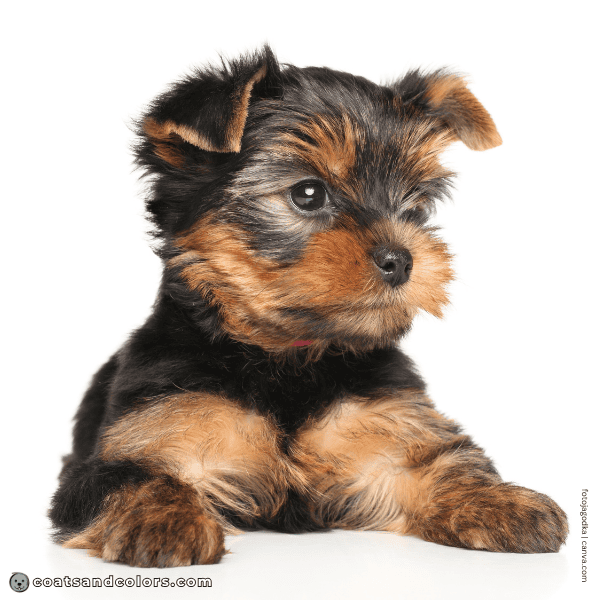
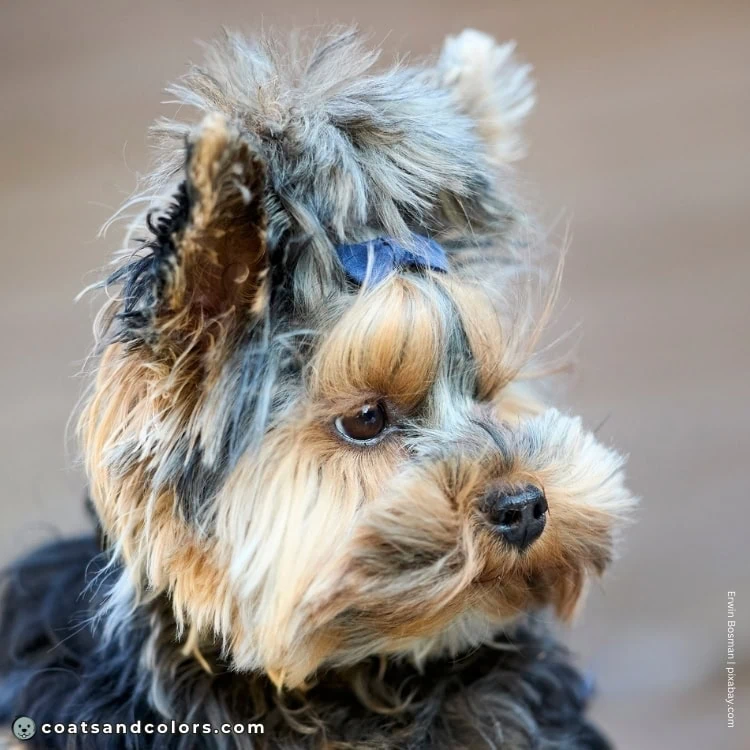
“Almost always, the proper silky textured blue and gold bred dog will be broken blue down the part along the spine from four to six months of age, but this can vary with the darker ones taking longer.“
Illustrated Discussion of the Yorkshire Terrier[6]
Base Patterns
The base pattern describes the placement of phaeomelanin and eumelanin in the coat. There is an epistatic hierarchy between these genes: A locus < K locus < E locus.
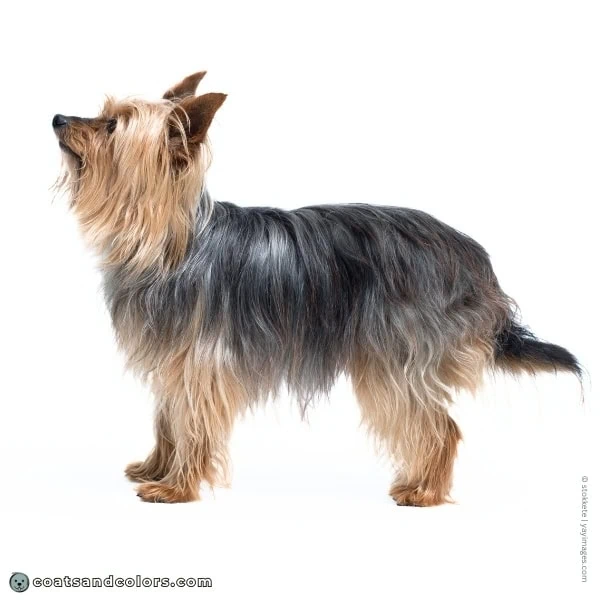
A Locus
| Ay | clear sable |
| asa | saddle |
| at | tan point |
| a | recessive black |
The Yorkie breed should be fixed for a saddle pattern (asa/asa).
The saddle in Yorkies is supposed to cover quite a large area and be as solid as possible in color.
The Yorkie saddle covers the whole back right from the nape of the neck to the tail. It also extends further down to cover the thighs and upper arms to the hocks and elbows.
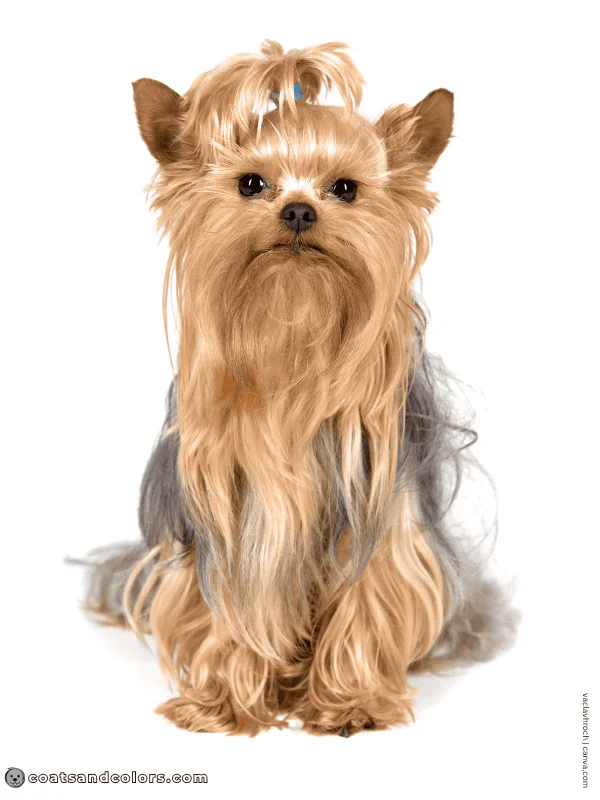
An adult Yorkshire Terrier is supposed to have a solid tan chest with a fully tan head and headfall ( the long hair overhanging the sides of the face) without any black hairs in them.
They are not supposed to have any blue hairs in their golden coat. So for example, no toe pencilling and ideally no stray black hairs on their head or across the chest.
Color on Body: The blue extends over the body from back of neck to root of tail.”
Headfall: A rich golden tan […] with ears a deep rich tan. Tan color should not extend down on back of neck.
Chest and Legs: A bright, rich tan, not extending above the elbow on the forelegs nor above the stifle on the hind legs. The front or the chest of a Yorkshire Terrier is all shaded gold. There are no sooty or visible dark hairs or any small “half circle” break from under chin to the chest.“
AKC Breed Standard[1]
“Colour: Dark steel blue […], extending from occiput to root of tail […]. Hair on chest rich, bright tan […]
Ears: […] colour very deep, rich tan.
Coat: Fall on head long, rich golden tan, […]. Tan on head not to extend on to neck, […]
Forequarters: […] well covered with hair of rich golden tan […] , not extending higher on forelegs than elbows.
Hindquarters: […] Well covered with hair of rich golden tan […], not extending higher on hind legs than stifle […]”
FCI Breed Standard[2]
There’s more: Sable (Ay) has been introduced to produce solid red Yorkies. The tan point allele (at) is uncommon, but some Yorkies show a creeping tan (asa/at) or black & tan (at/at) pattern.
And recessive black (a) is also present in Yorkshire Terriers.
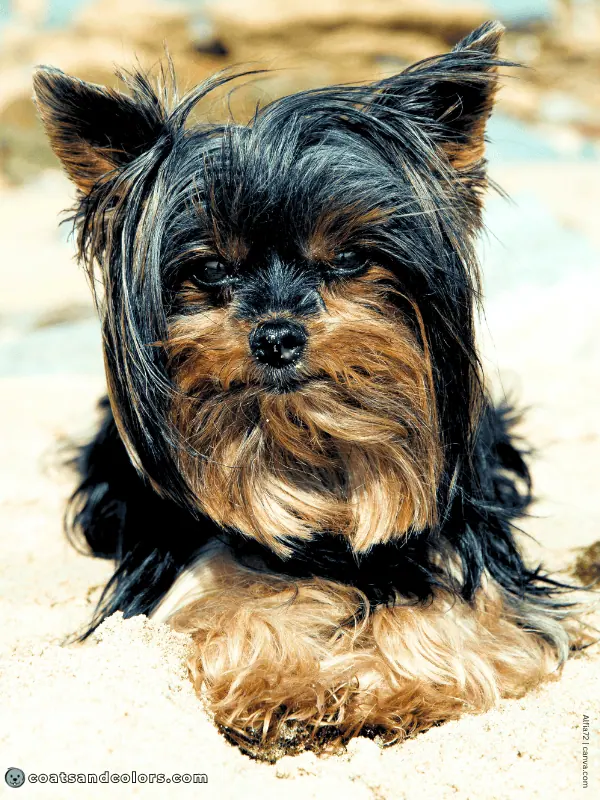
K Locus
| ky | wild-type |
Yorkies are fixed for normal pattern expression (ky/ky).
The KB allele for a solid dark coat color might have been introduced into color lines.
E Locus
| Em | mask |
| E | wild-type |
| eG | grizzle |
| e | recessive red |
A Yorkie should only have normal pattern expression (E/E).
But since dogs have black masks (Em/-). And color breeders also produce recessive red dogs (e/e), which can look solid golden and are sold as “golddust Yorkies“.
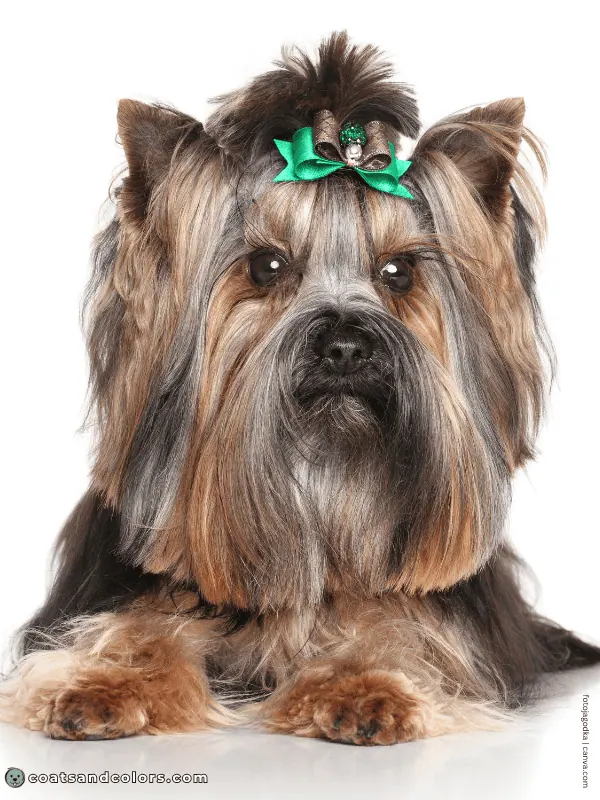
And the rarest variant in this breed is grizzle (eG). This partially inhibits eumelanin production and will, for example, turn a black saddle into a small black patch on the back.
Yorkie Base Patterns
| A LOCUS | K LOCUS | E LOCUS | PATTERN |
|---|---|---|---|
| asa/asa | ky/ky | E/E | saddle |
Base Colors
The base color is determined by the B locus and D locus.
B Locus
| B | black |
| b | brown |
Yorkies should have only black eumelanin (B/B).
But color breeders also produce dogs with chocolate colors (b/b).
D Locus
| D | normal |
| d | diluted |
Yorkshire Terriers have normal pigment (D/D).
Some color breeders also produce diluted colors (d/d). Dogs with diluted black have a gray nose and blue eumelanin. Dogs with diluted chocolate have a taupe nose and lilac eumelanin.
Dilution will be very obvious in newborn puppies, if you compare them to siblings with normal dark pigment. But the diluted colors may go unnoticed in adult Yorkies that also express strong color graying.
Keep in mind, that blue is a breed term in Yorkies that means faded black. It’s NOT the same as diluted black (B/- d/d), which would be called “born blue” in Yokie terms!
Graying
The dark pigment will be affected by intense progressive graying. This trait can only affect dog breeds with furnishings and is what gives all Yorkies their silver saddle.
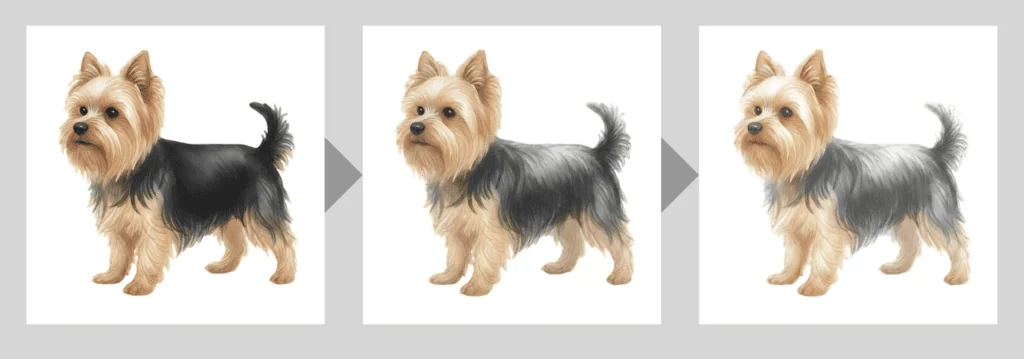
Hairs along the back that still have a black tip will start to grow out lighter and lighter. In Yorkie terms, a puppy that starts to show signs of progressive graying is “breaking blue“.
Graying often starts from the face. The black hairs on the side of the head and the back of the ears are usually the last to clear.
In adults, the hair on the tail often keeps a darker shade of blue compared to a lighter grayish saddle area.
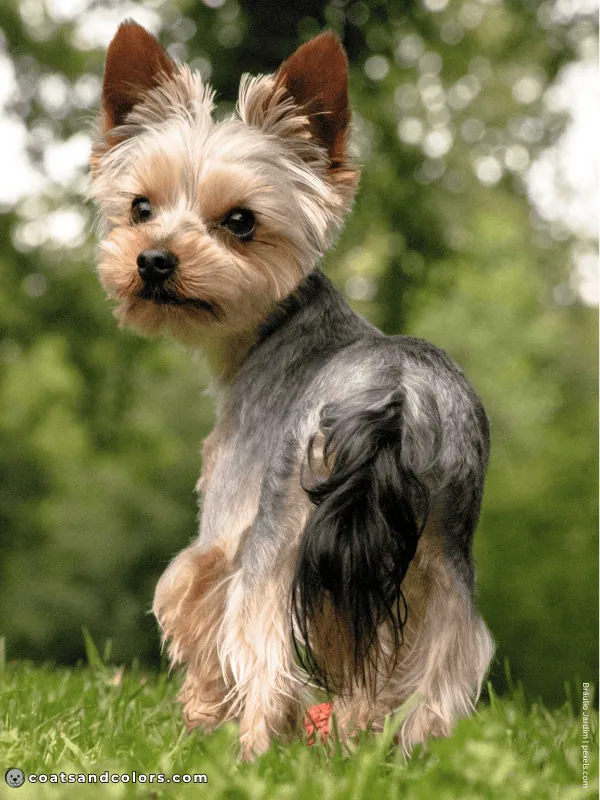
“Hair on tail is a darker blue, especially at end of tail.“
AKC Breed Standard[1]
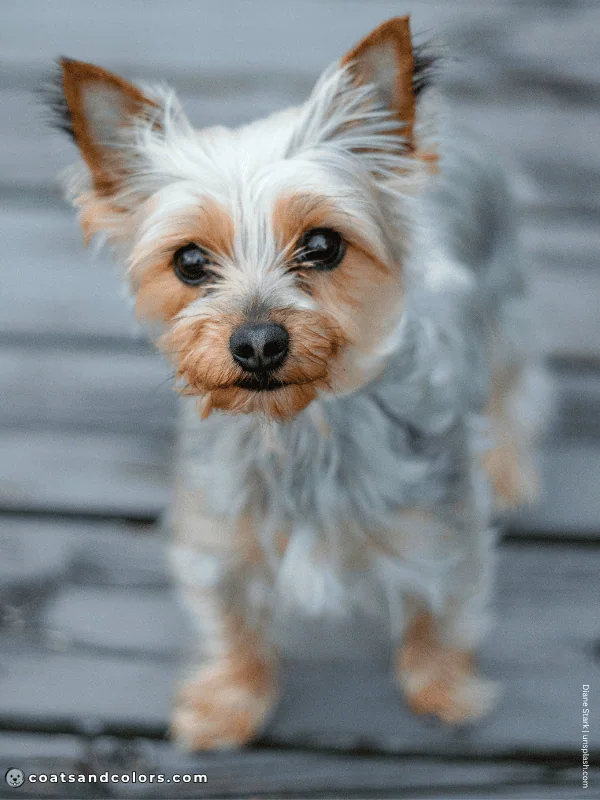
Graying can affect both the black saddle and the tan pigment. The effect on phaeomelanin varies by breed. In Yorkies, for example, black tends to fade more than red.
The G locus has been established as a theoretical tool to explain graying.
Dogs with two copies (G/G) typically show stronger fading than dogs with only one copy (G/N). You would expect a G/G dog to have a light gray color and a G/N dog to have a dark gray color.
Most Yorkies show strong and early graying. The shade of faded black can range from a light silvery gray to a more blackish gray. The breed calls their ideal color steel blue.
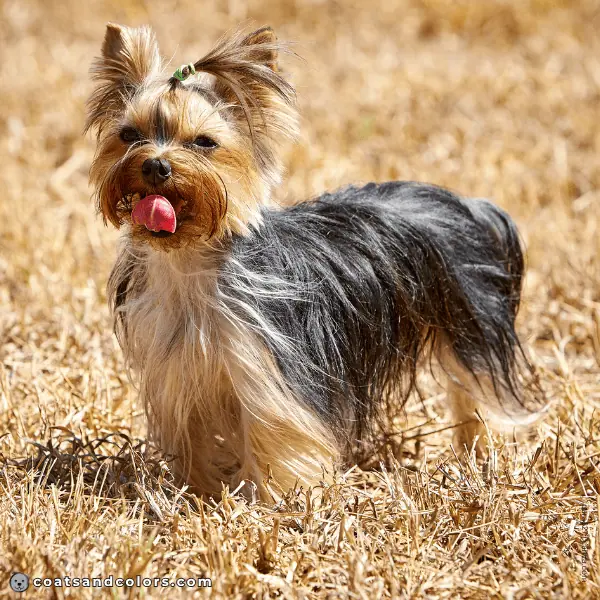
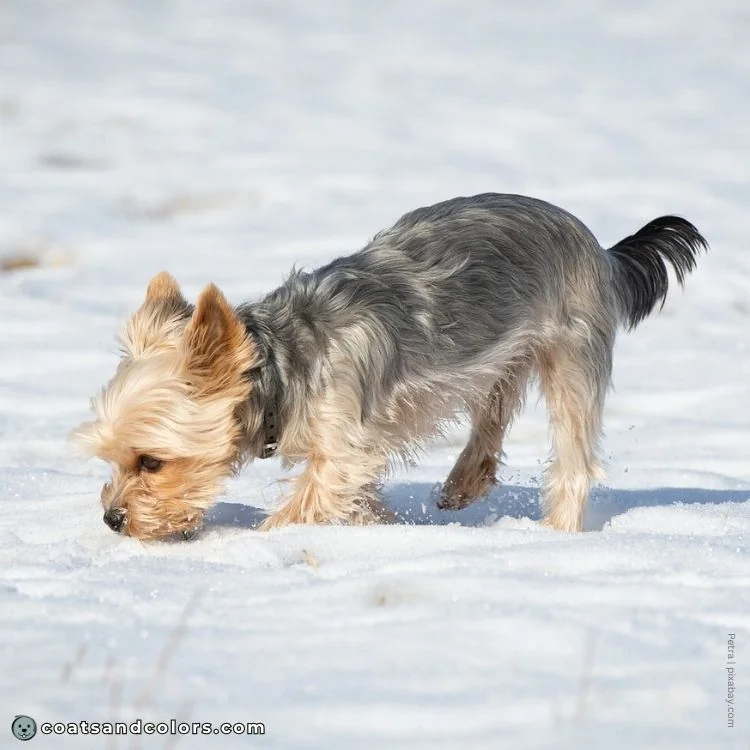
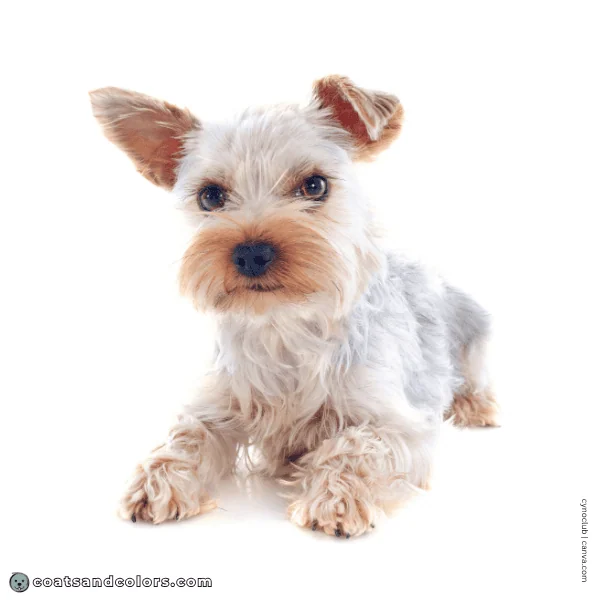
However, by far not all Yorkies end up with the desired medium gray color. Some dogs have a very pale platinum silver saddle, which Yorkie fanciers think is undesirable.
“Dark steel blue (not silver blue)…”
FCI Breed Standard[2]
Dogs with only one copy of graying (G/N) might take forever to fade, and will still look very dark when they are done.
Finally, breeding two heterozygous dogs (G/N x G/N) can produce puppies without any graying (N/N). The breed term for a saddle pattern without strong graying is “black & tan“.

In rare cases, very long hairs can show long bands with slightly varying gray colors, e.g. due to heat cycles. This banding phenomenon can happen in any super-longhaired dog.
Additionally, clipping can sometimes restart the fading process. Meaning that sometimes dogs grow black hairs on their back after grooming, which then have to “break blue” all over again.
In summary: All Yorkies are born with black pigment. Dogs without graying keep their black pigment. Dogs with weak graying may end up with a still very blackish saddle. Dogs with strong graying have a silvery to steel gray saddle color.
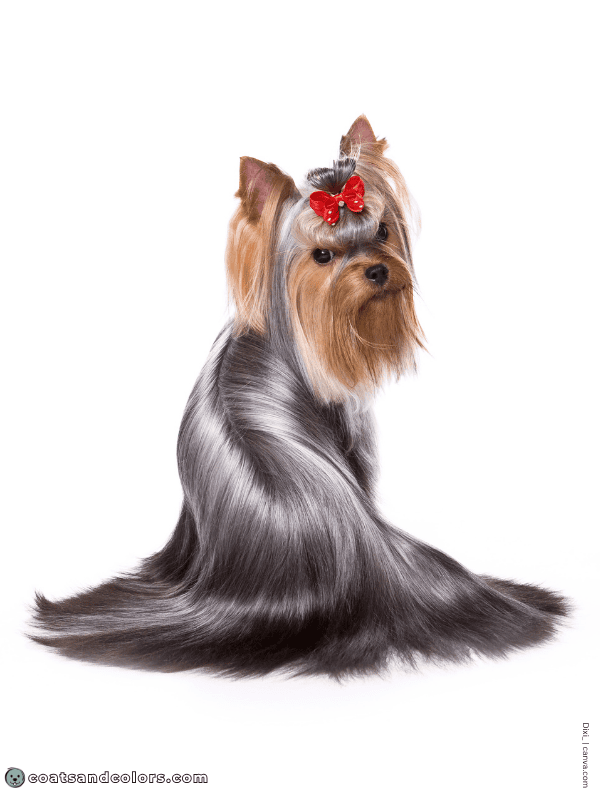
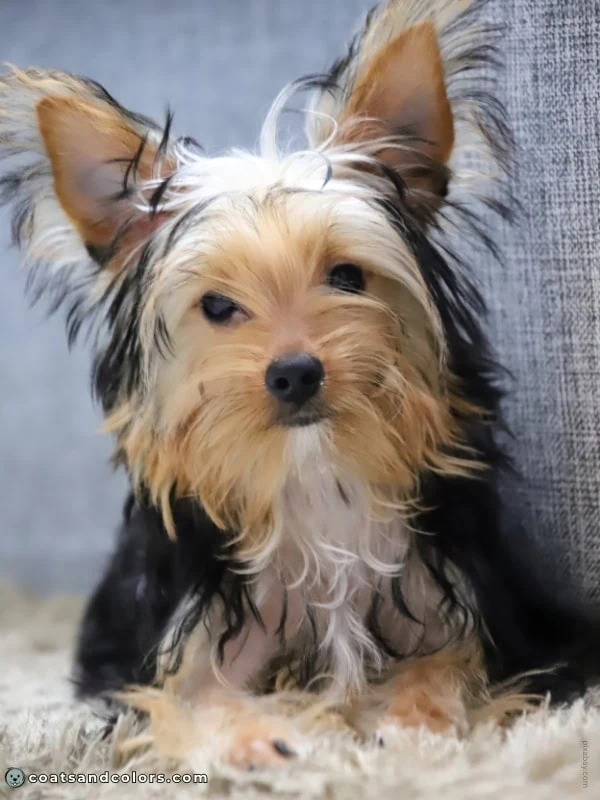
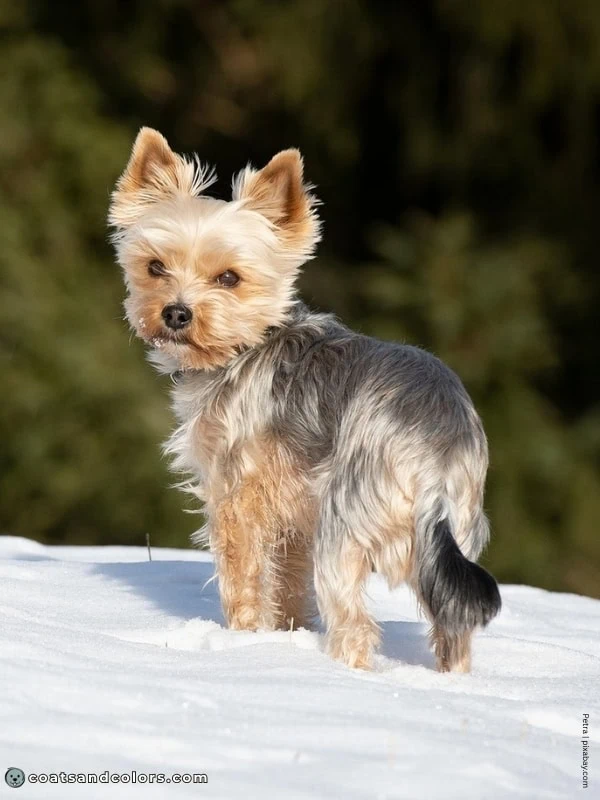
“Blue – Is a dark steel-blue, not a silver-blue and not mingled with fawn, bronzy or black hairs.”
AKC Breed Standard[1]
Red Intensity
The FCI simply calls all of the accepted shades of red pigment in Yorkies a “rich bright tan“.
The AKC breed term for the ideal rich shade of dark tan is gold, a shiny orangey-yellow color. They use the term “tan” only for shades of phaeomelanin that are slightly lighter than gold.

Another term used for phaeomelanin in Yorkies is “shaded tan”.
This refers to bands of different red pigment density throughout the length of the hair.
“Hair on chest rich, bright tan. All tan hair darker at the roots than in middle, shading to still lighter at tips.”
FCI Breed Standard[2]
The tan on the muzzle, sides of head, ears, and paws is often a little darker than the tan on the rest of the dog. And longer tan hairs are often a little darker at the roots lighter at the tips.
The red intensity can be affected by more or less intense red color fading in bearded dogs. This seems to be related to progressive graying and may cause red puppy colors to lighten over time.
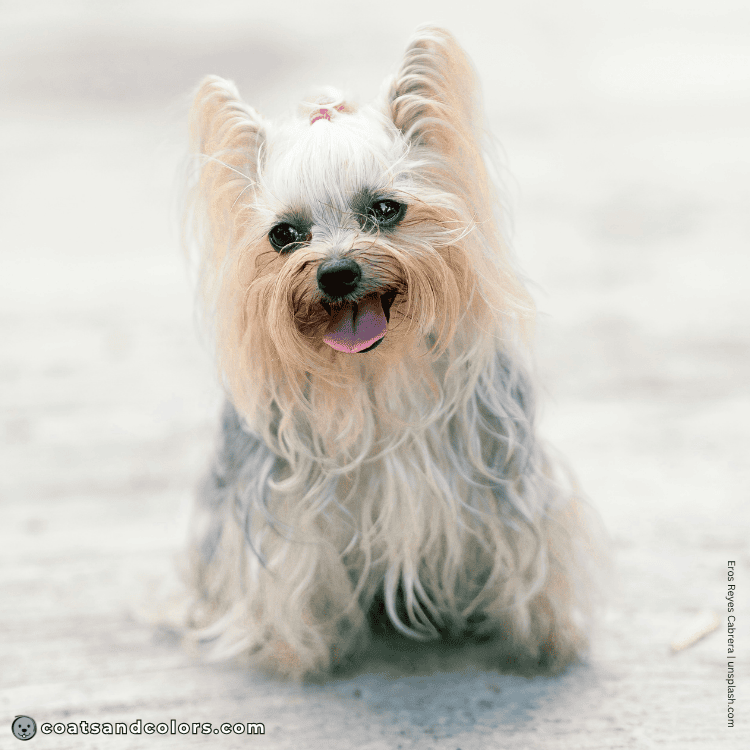
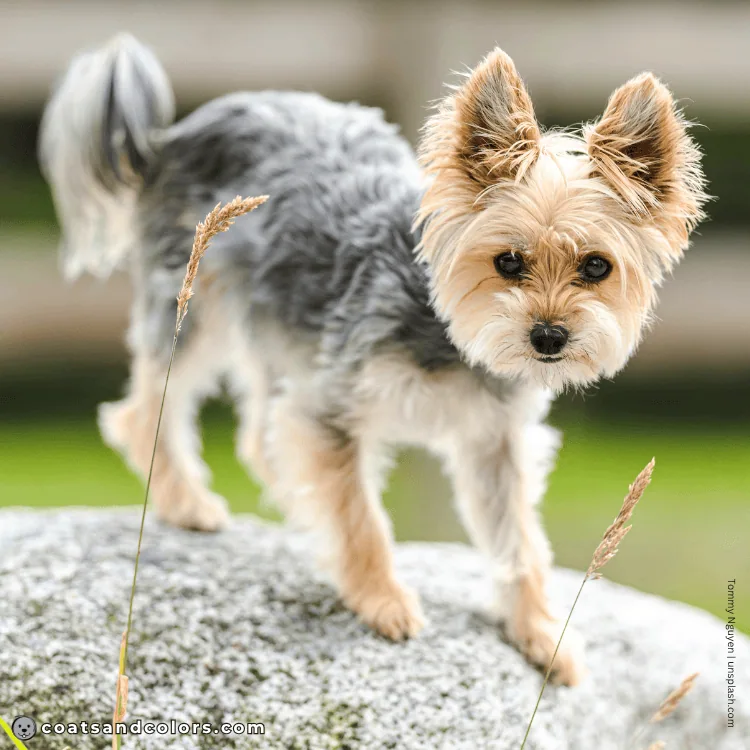
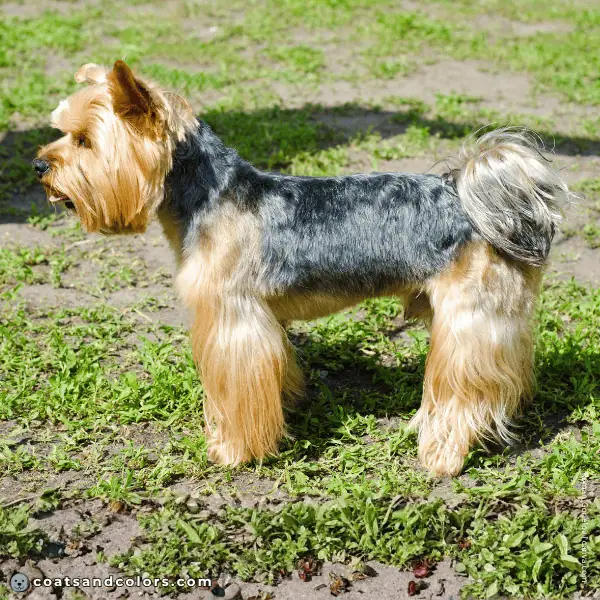
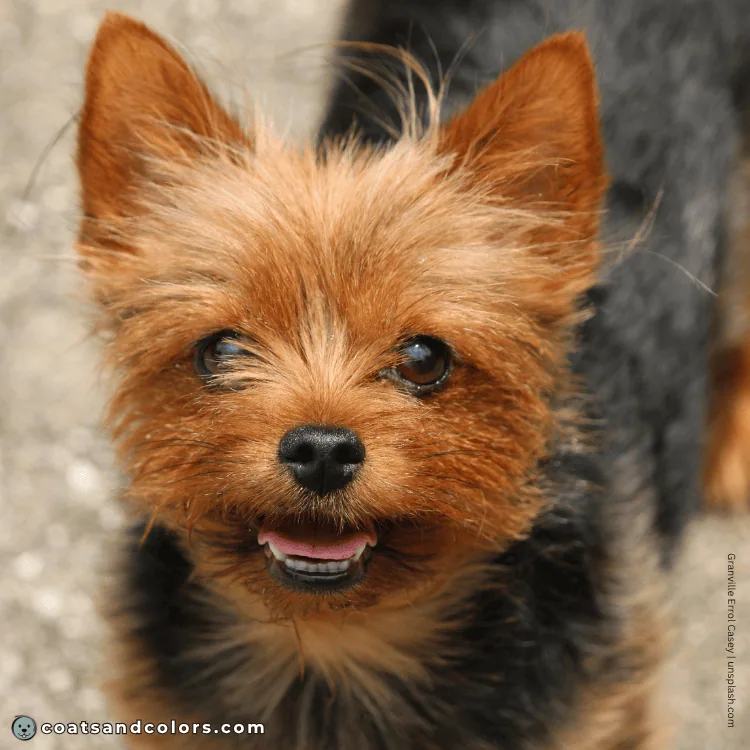
“This much sought after gold is of a fine silky texture. It is a bright, rich, gleaming, brilliant golden hue, and will reflect light.“
“The quality of gold on the ideal Yorkie can be likened to a new gold coin. It bears no semblance to a rust, ginger, or brownish mahogany hue. It does not appear to be a solid unshaded orangey red nor the red of an Irish Setter.”
Illustrated Discussion of the Yorkshire Terrier[6]
To sum this up, some Yorkies are born with more intense red pigment than others. And color fading can lighten red colors to some degree. So you get a spectrum from deep red to very light whitish tan.
Breed fanciers do not like the extremes and prefer a medium golden to tan color.
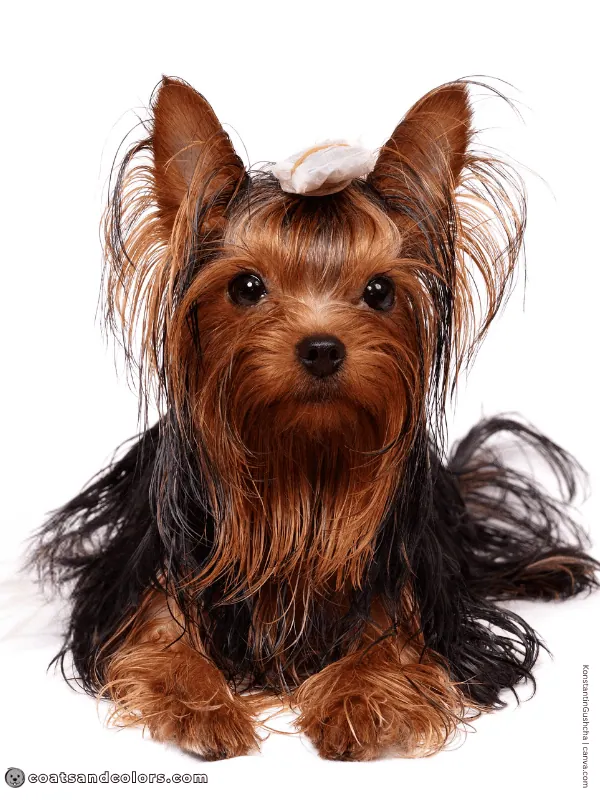
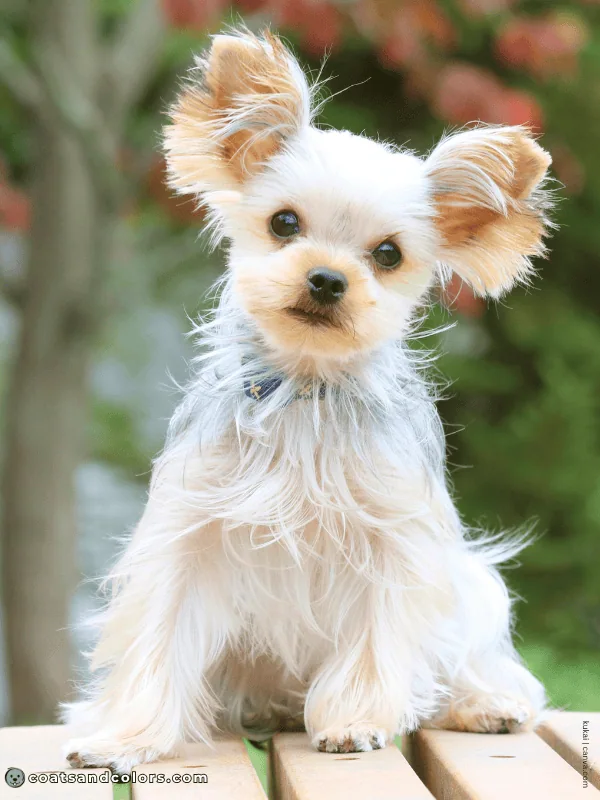
Running Gold
Some Yorkies have golden hues in their dark saddle.
This is what a Yorkie breeder would call “running gold“.
“Running color” means that the tan color markings […] have exceeded their borders, and the tan extension has given a fawn or bronzy appearance into the blue areas of the coat. These “running tan”, fawn or bronzy areas can be observed below the occiput, around the tail set and the shoulder areas.”
Illustrated Discussion of the Yorkshire Terrier[6]
Too much yellow color in the saddle area can be caused by having tan roots in the black hairs. Other dogs have a washed-out saddle or get a tan stripe down the topline as they age.
Some dogs have a slightly grizzled saddle with intermingling tan hairs.
Running gold can make a dog look almost solid yellow.
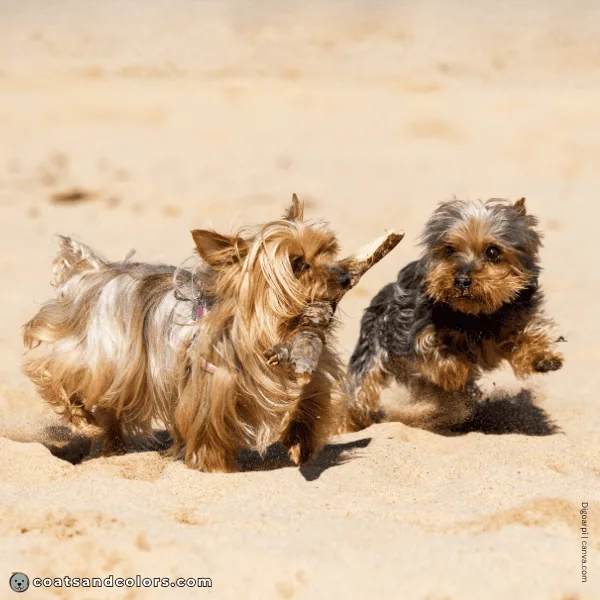
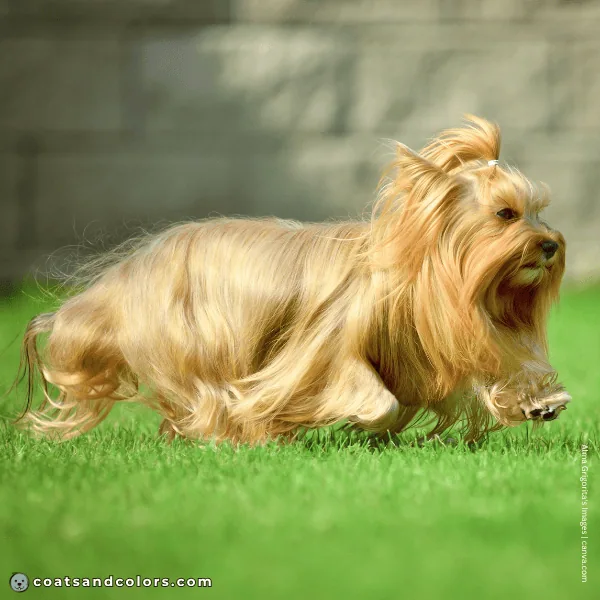
Actually, it’s quite normal for dogs with a saddle pattern to have an intermingling of black and tan hairs in their saddle area. Or the saddle area to fade and shrink over time.
But “running gold” is not a desired coloration in Yorkies.
White Markings
Yorkies have a solid coat color. Puppies can still have some smallish white markings at birth.
These residual markings are usually located at the chest or the lower jaw or toes. These tiny patches of white coat tend to shrink and grow out or get buried under the long coat.

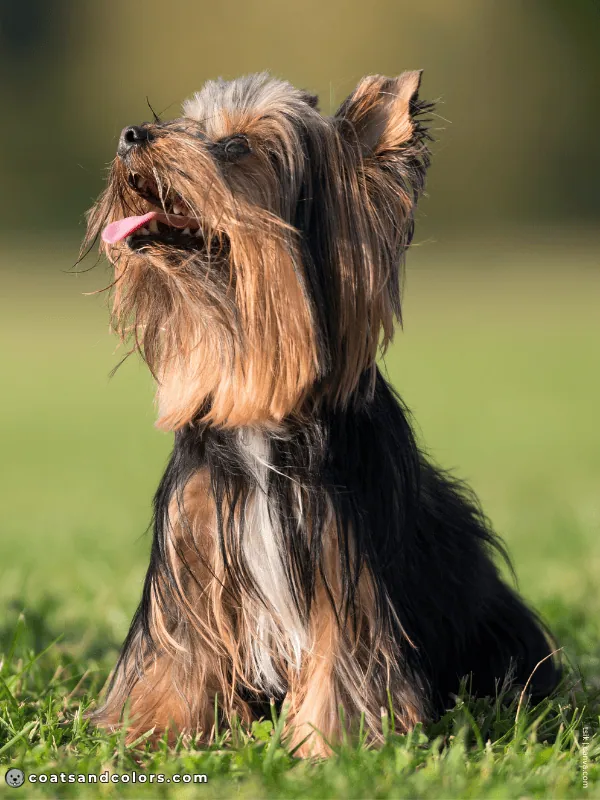
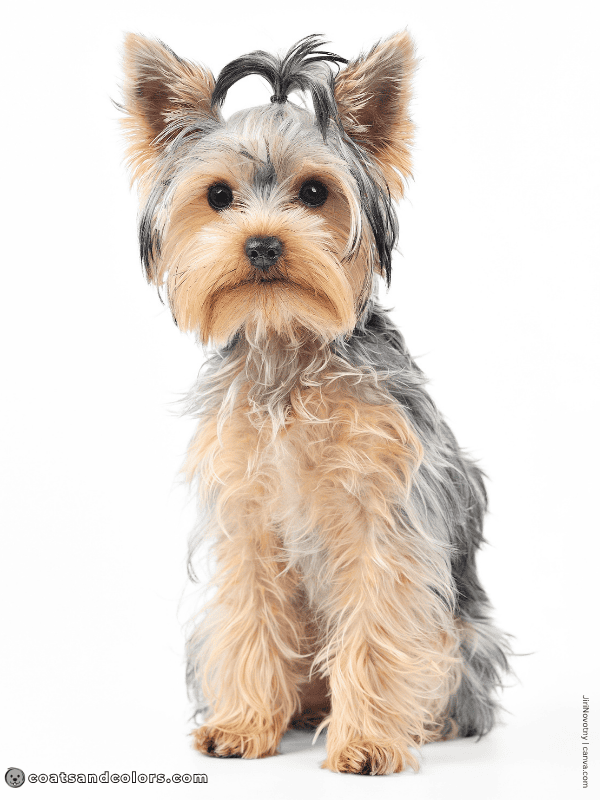
A small ratio of Yorkshire Terriers are piebald carriers.
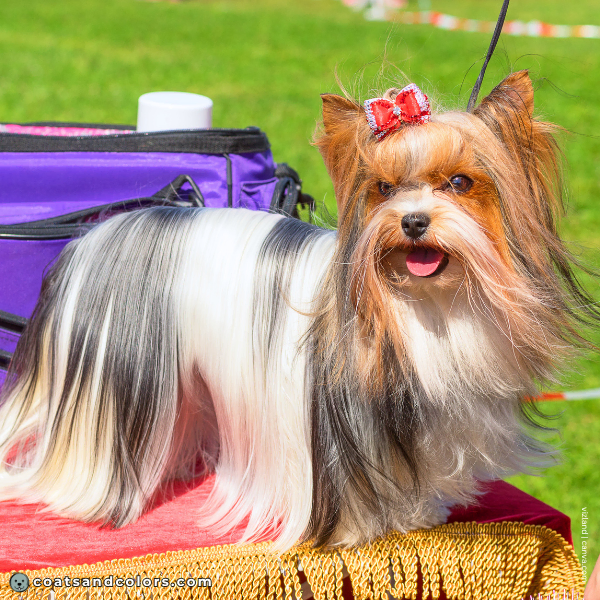
One copy of piebald (S/sP) can produce white markings. And two copies of piebald (sP/sP) can cause a parti-colored coat. This was the foundation of the Biewer Yorkie.
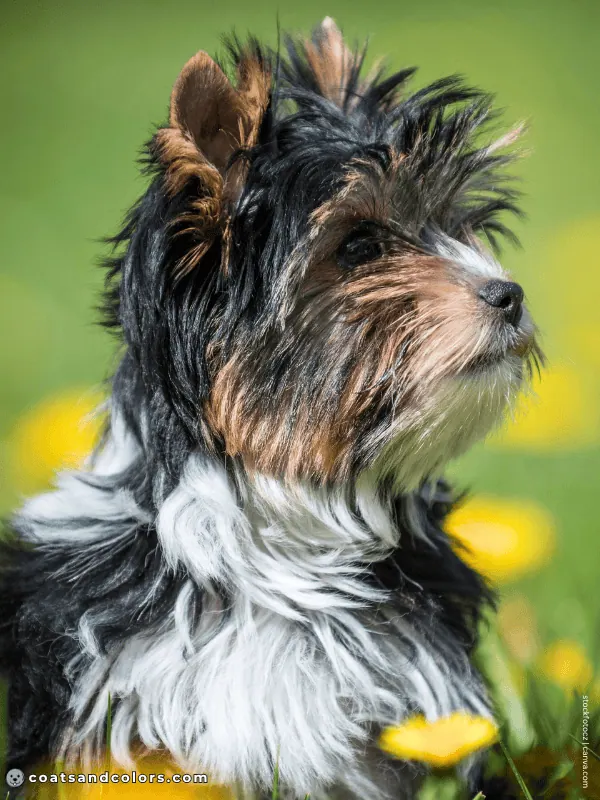
A Yorkie with white markings is still considered a mismarked Yorkie and not the same as a purebred Biewer Terrier!
“Disqualifications: […] Any white markings other than a small white spot on the forechest that does not exceed 1 inch at its longest dimension.”
AKC Breed Standard[1]
Yorkshire Terrier Eye Colors
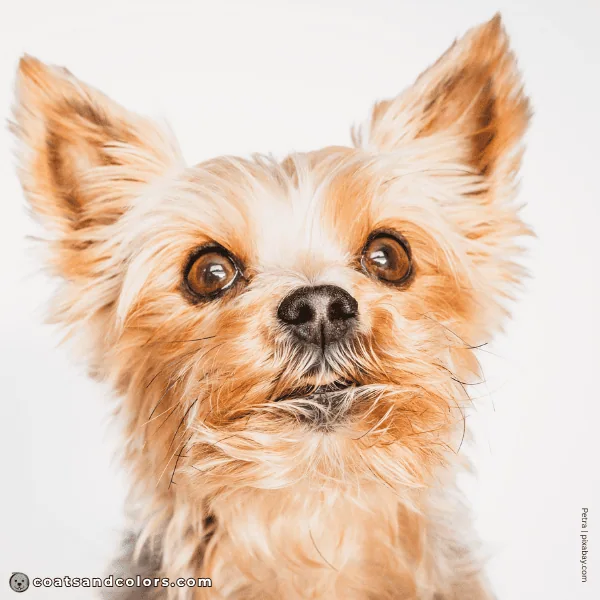
Yorkies have dark brownish eyes and black eye rims.
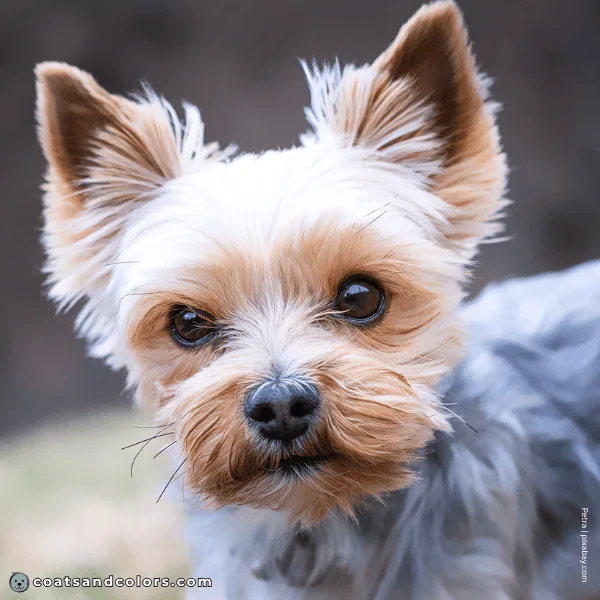
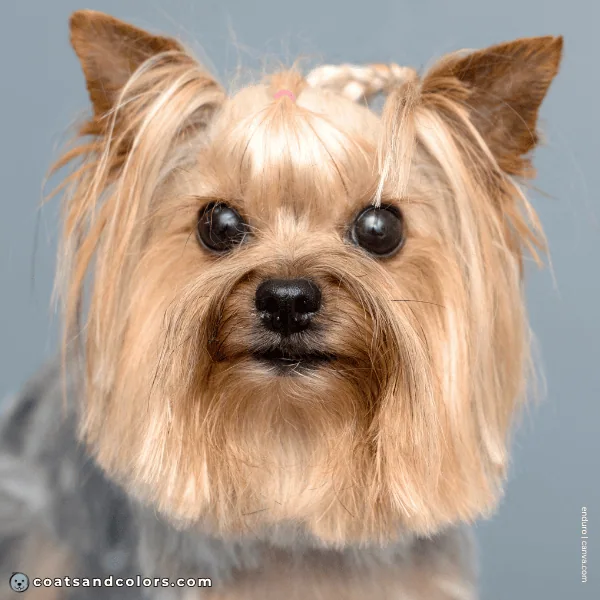
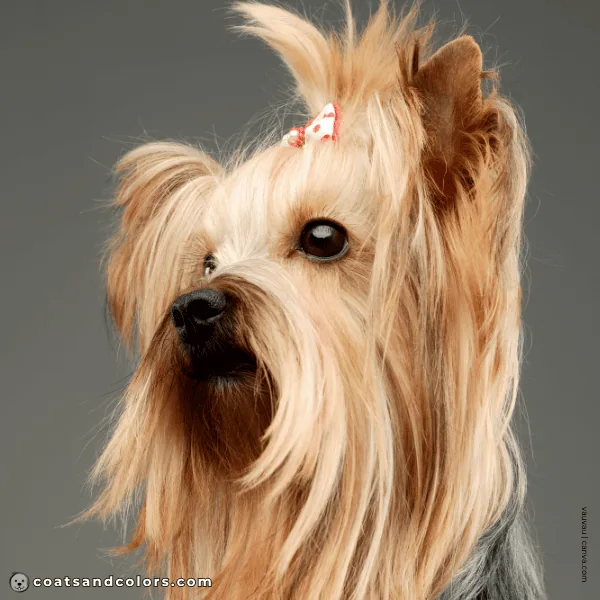
“Dark in color and
sparkling with a sharp, intelligent expression.”
AKC Breed Standard[1]
“Medium, dark, sparkling, with sharp intelligent expression…”
FCI Breed Standard[2]
Yorkshire Terrier Nose Colors
Yorkies have a black nose.
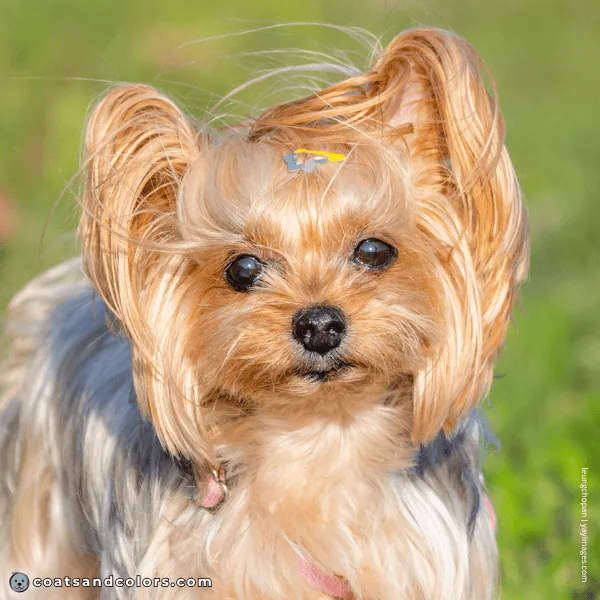
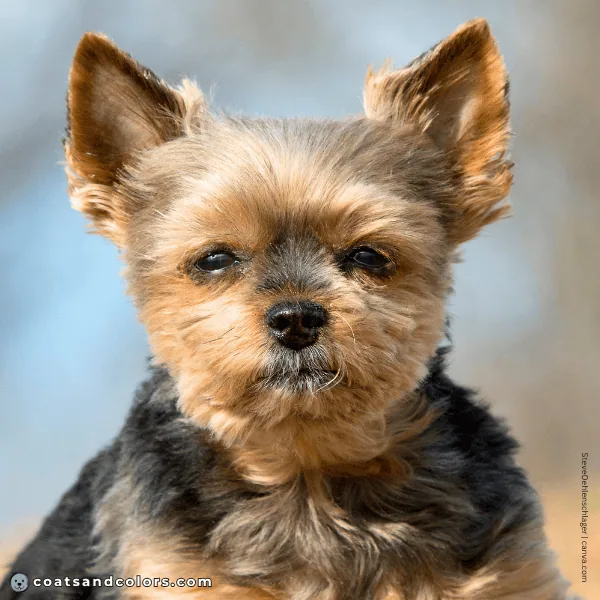
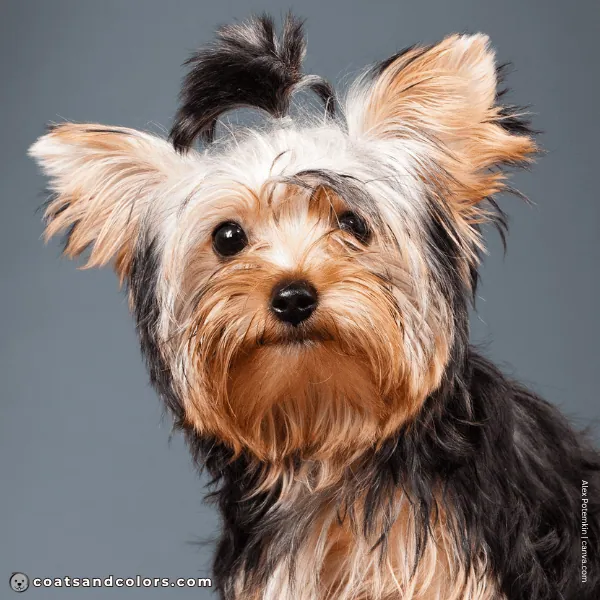
“The nose is black.”
AKC Breed Standard[1]
“Nose black.”
FCI Breed Standard[2]
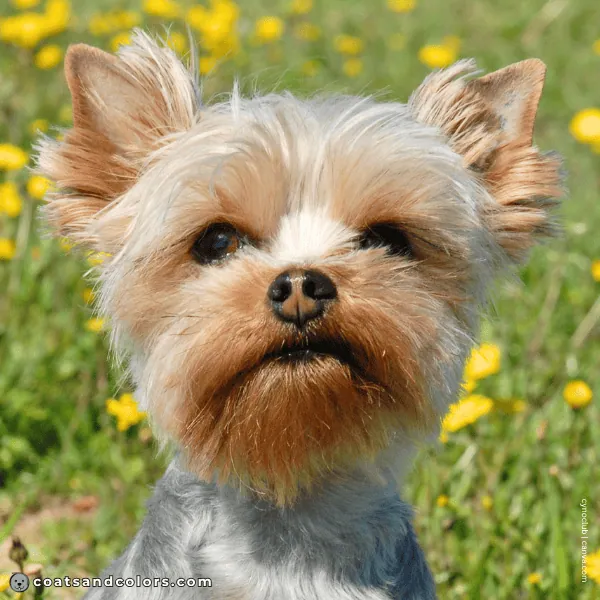
Occasionally, some black & tan or saddle-patterned dogs, including even a well-bred Yorkshire Terrier, may have weak nose pigment or a lighter stripe on the nose.
Yorkshire Terrier Coat Type
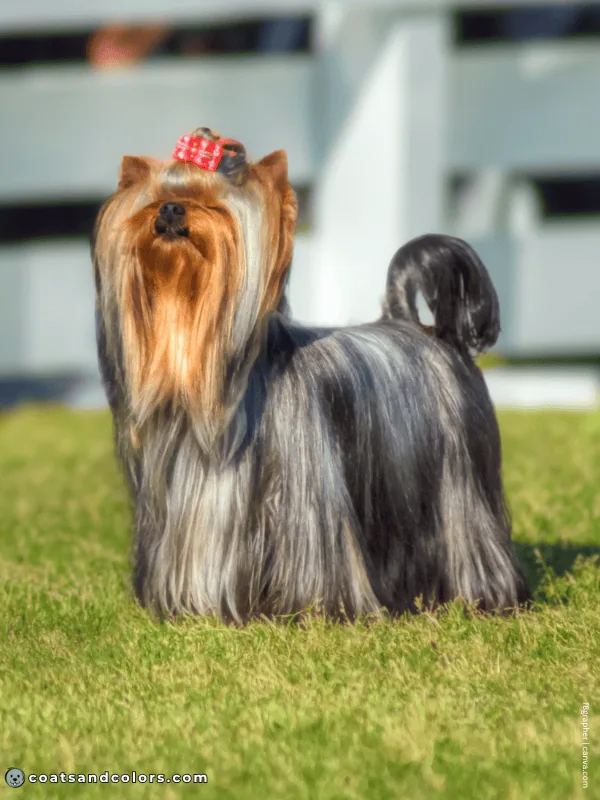
Typical show Yorkies have a very silky drop coat with a very fine texture and very little undercoat.
“Quality, texture and quantity of coat are of prime importance. Hair is glossy, fine and silky in texture. Coat on the body is moderately long and perfectly straight (not wavy). It may be trimmed to floor length to give ease of movement and a neater appearance, if desired.”
AKC Breed Standard[1]
“Long-coated, coat hanging quite straight and evenly down each side, a parting extending from nose to end of tail.”
“On body moderately long, perfectly straight (not wavy), glossy; fine silky texture, not woolly, must never impede movement.”
FCI Breed Standard[2]
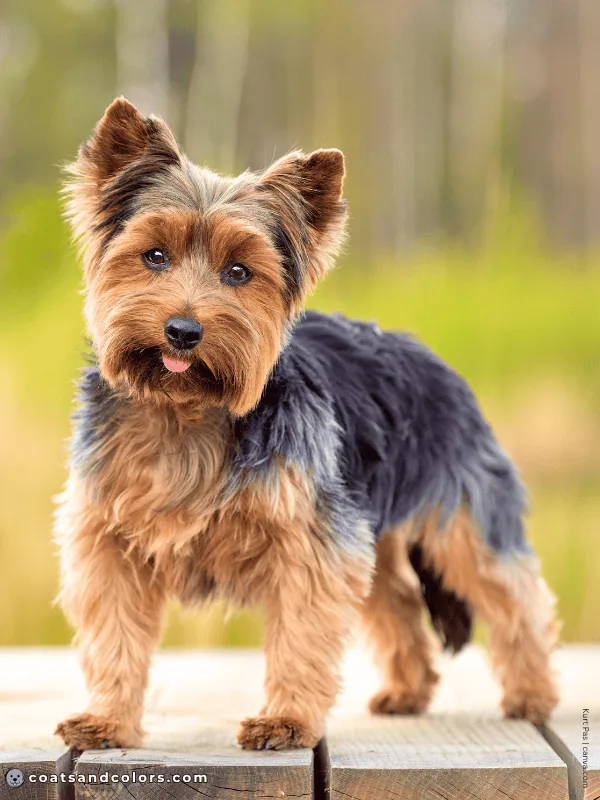
There is quite a difference in coat quality (and grooming) between pet Yorkies and show Yorkies.
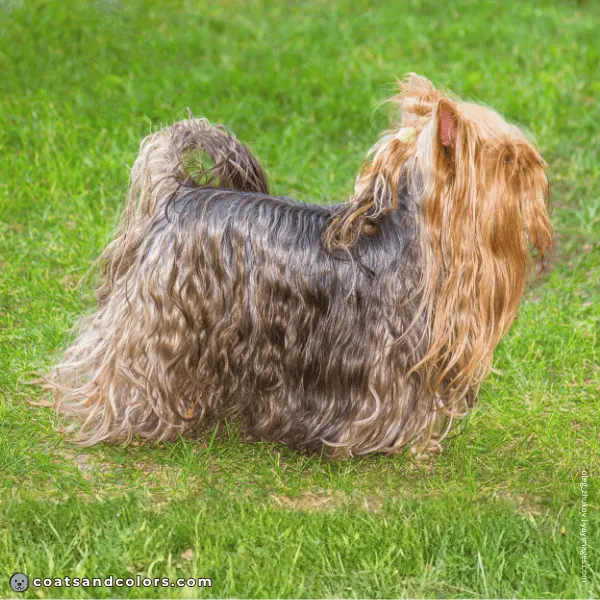
Also, some Yorkies have a faulty wavy or curly coat.
Related Breeds
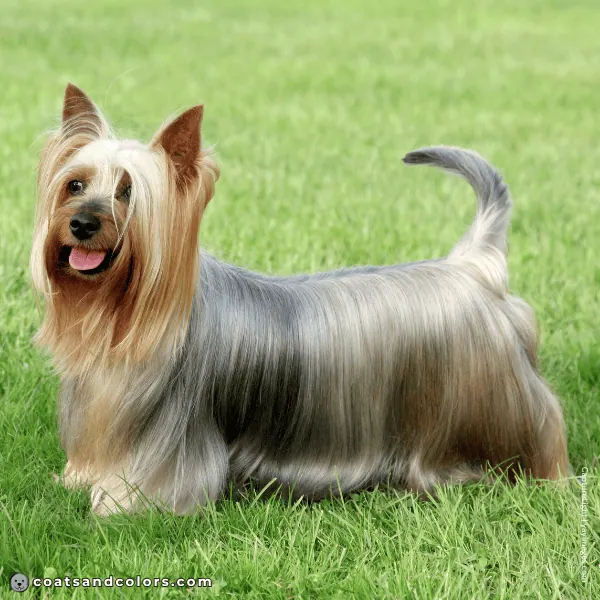
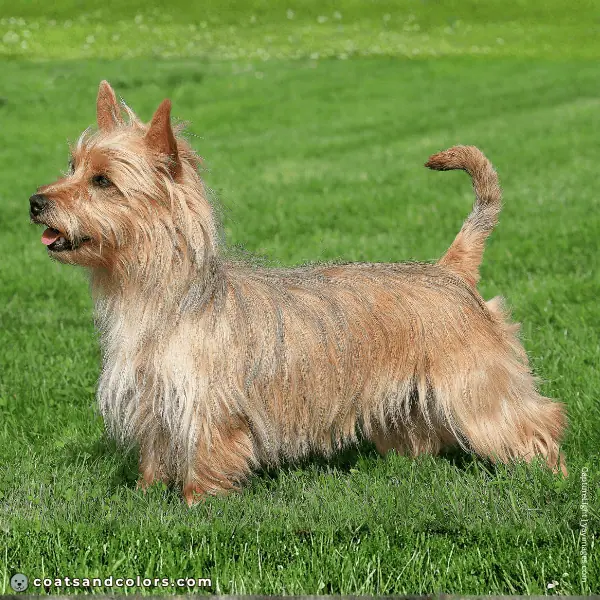
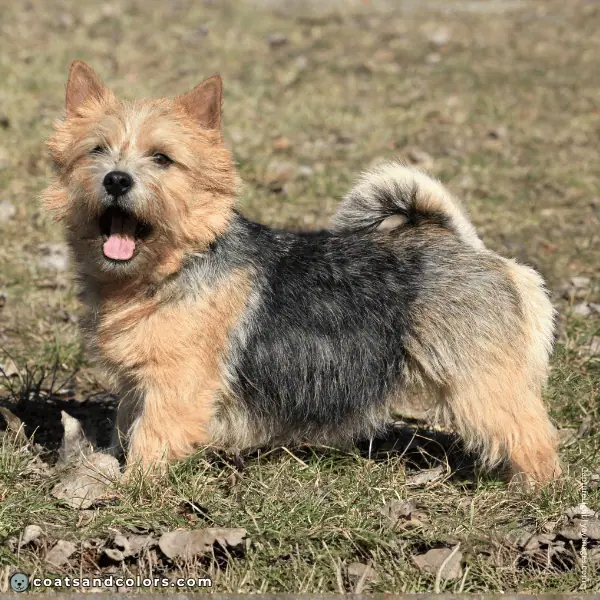
The FCI breed standard says the Yorkie has breeds like the old Black and Tan Terrier, Maltese and Skye Terrier behind it. Both the Silky Terrier and the Australian Terrier are also closely related.
Learn More

Links
[1] American Kennel Club (AKC): Yorkshire Terrier
[2] Fédération Cynologique Internationale (FCI): Yorkshire Terrier
[3] Royal Kennel Club (RKC): Yorkshire Terrier
[4] Canadian Kennel Club (CKC): Yorkshire Terrier
[5] Dreger et al. (2019). True Colors: Commercially-acquired morphological genotypes reveal hidden allele variation among dog breeds, informing both trait ancestry and breed potential. PLoS ONE 14(10): e0223995. https://doi.org/10.1371/journal.pone.0223995
[6] The Yorkshire Terrier Club of America: Judges Education
[7] The Yorkshire Terrier Club of America: An Important Note About Color in Yorkshire Terriers (pdf)
[8] The Yorkshire Terrier Club of America: Parti-Color Yorkshire Terriers?
[9] National Purebred Dog Day: Combinations of Black, Tan, Gold and Blue
Image Credits
Erwin Bosman/pixabay.com
Petra/pixabay.com
Eros Reyes Cabrera/canva.com
Roman_Gorielov/canva.com
vauvau/canva.com
Tommy Nguyen/unsplash.com
vaclavhroch/canva.com
SteveOehlenschlager/canva.com
Alex Potemkin/canva.com
WoodMarkSib/depositphotos.com
CaptureLight/yayimages.com
Alfia72/canva.com
muaotphoto/canva.com
eve_eve01genesis/canva.com
enduro/canva.com
oleg_zhukov/yayimages.com
stockfotocz/canva.com
leungchopan/yayimages.com
Ievgen Butsan/canva.com
vizland/canva.com
StephM2506/canva.com
kukai/canva.com
KonstantinGushcha/canva.com
cynoclub/canva.com
tsik/canva.com
sommail/canva.com
Liliboas/canva.com
JiriNovotny/canva.com
fotojagodka/canva.com
Alma Grigorita’s Images/canva.com
photopix/canva.com
Digoarpi/canva.com
ires007/canva.com
para827/canva.com
Jaroslav Frank/canva.com
KonstantinGushcha/canva.com
Diane Stark/unsplash.com
azshooter/canva.com
Mary Swift/canva.com
Mirko Fabian/pexels.com
stokkete/yayimages.com
Bráulio Jardim/pexels.com
Viktor Smith/pexels.com
Dixi_/canva.com
Yama Zsuzsanna Márkus/pixabay.com
YaroslavKryuchka/canva.com
Anastassia Anufrieva/unsplash.com
Kurt Pas/canva.com
Susana Segovia Barbero/canva.com
Granville Errol Casey/unsplash.com
Svetography/canva.com
tan4ikk1/yayimages.com
f8grapher/canva.com
Hi! I’m Steffi. I am a biologist and a big time dog nerd. You are curious about coat color genetics? You’ve come to the right place! Read more.
1 thought on “Yorkshire Terrier Colors”
Comments are closed.