

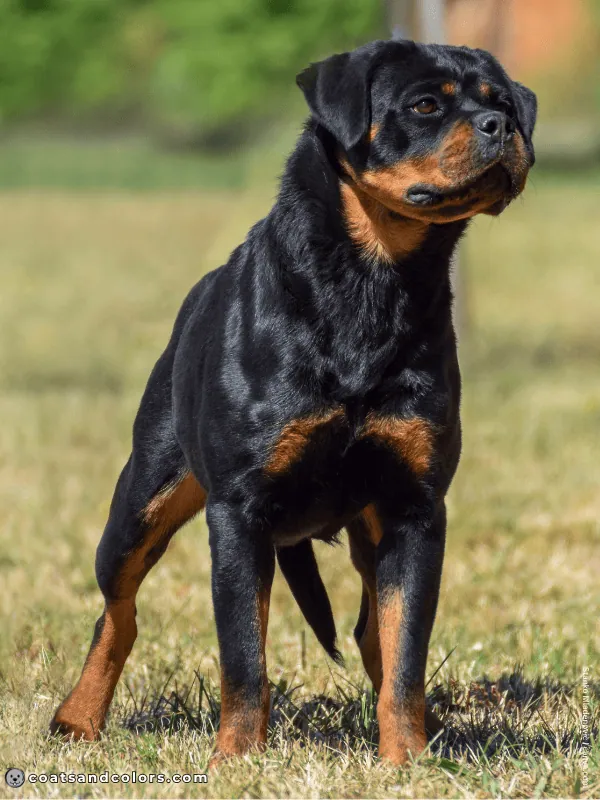
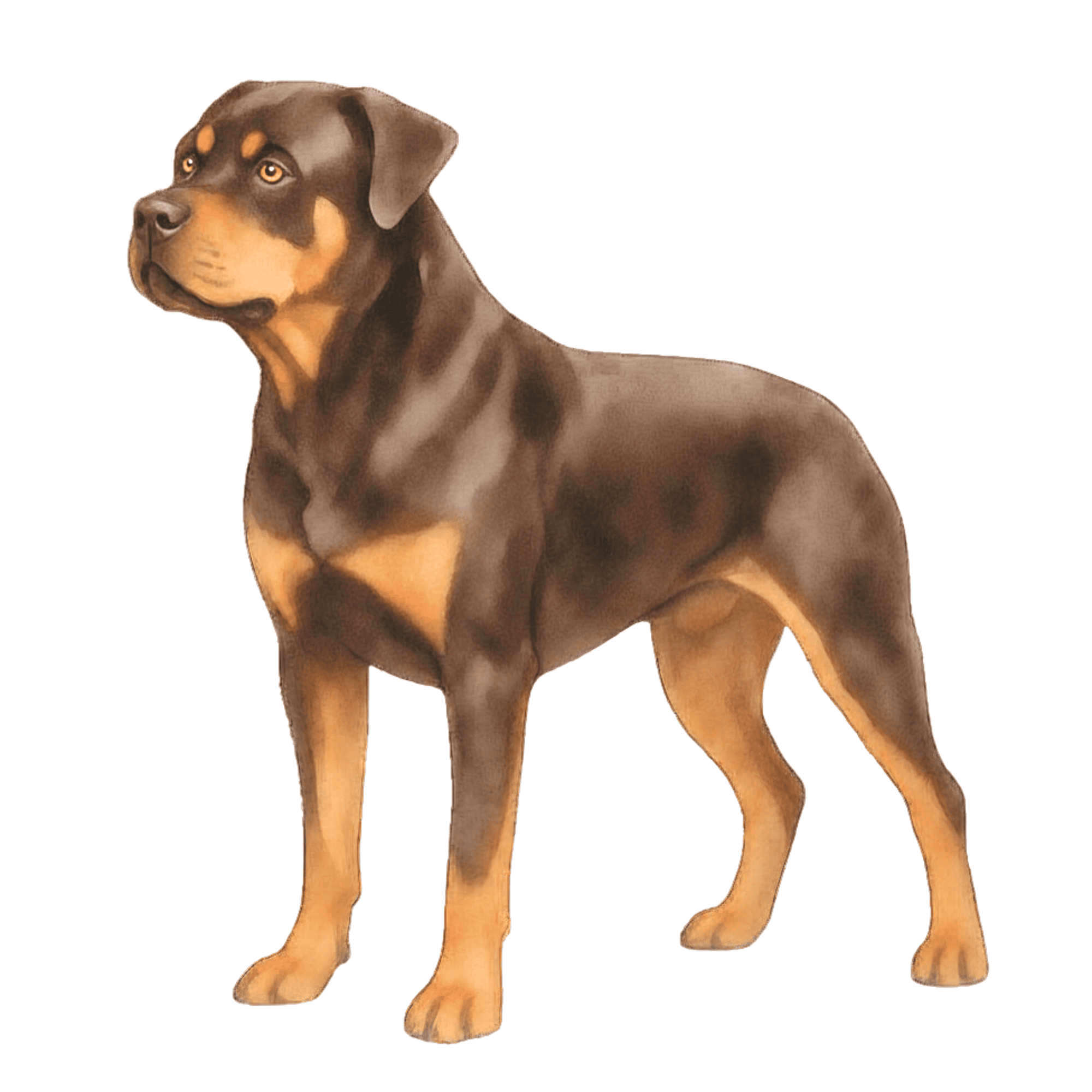
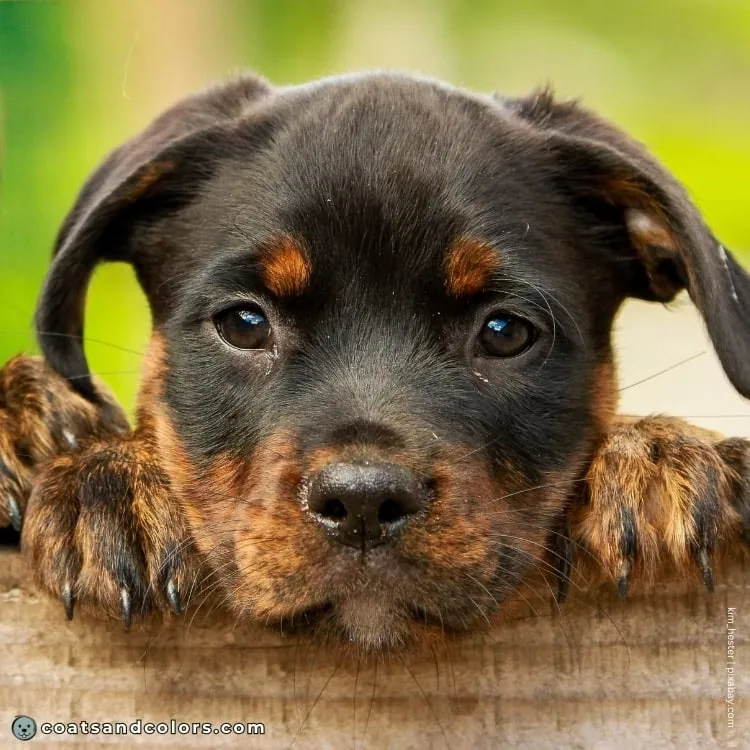
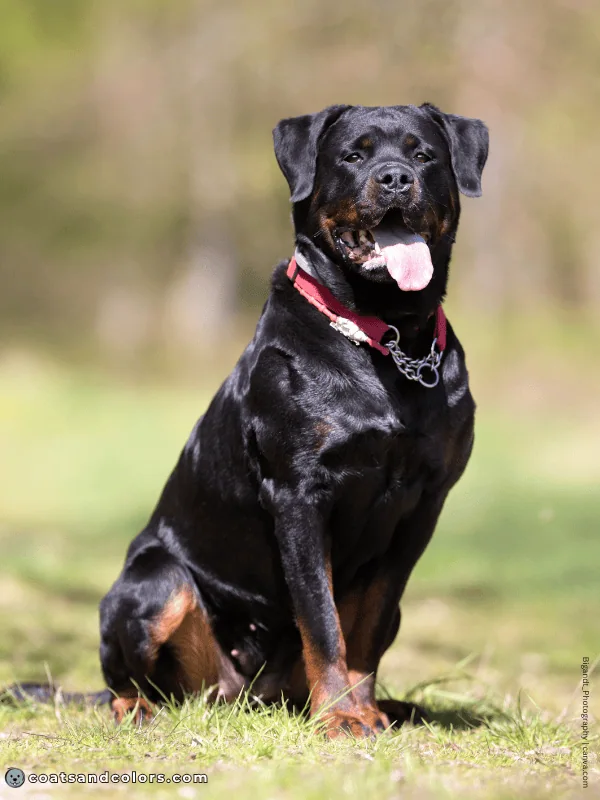
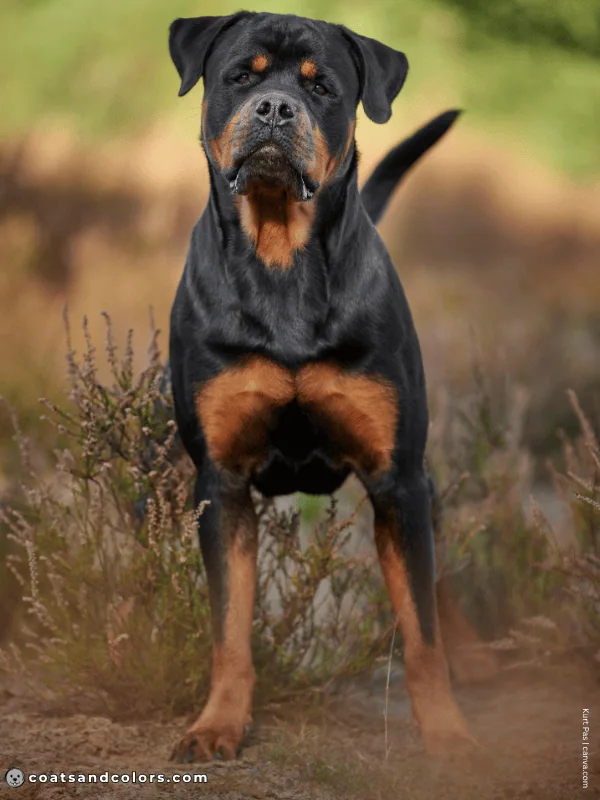
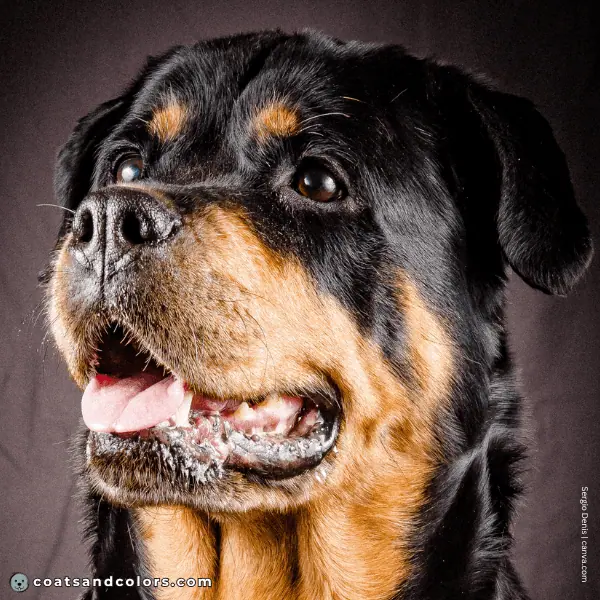
The purebred Rottweiler has a black & tan pattern. They have a black dorsal coat and very defined tan markings with colors between reddish tan and more intense rust or mahogany colors.
Black & Tan
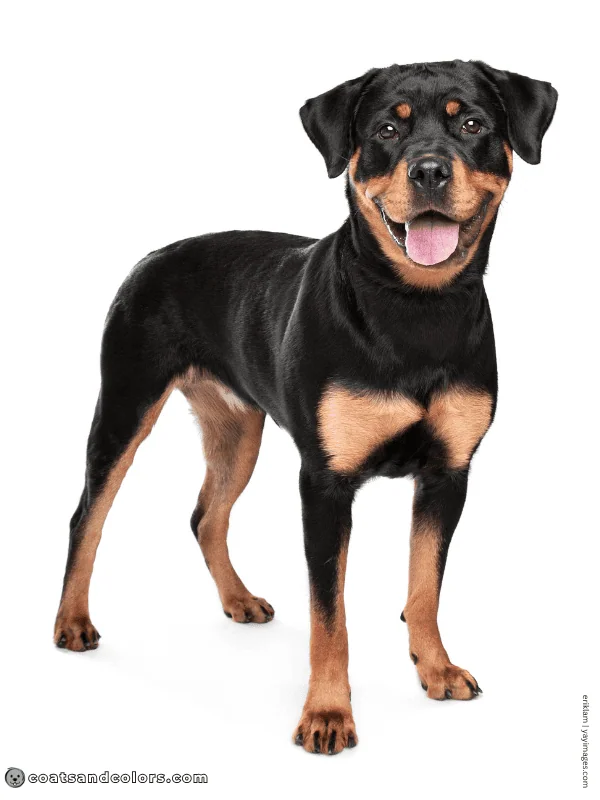
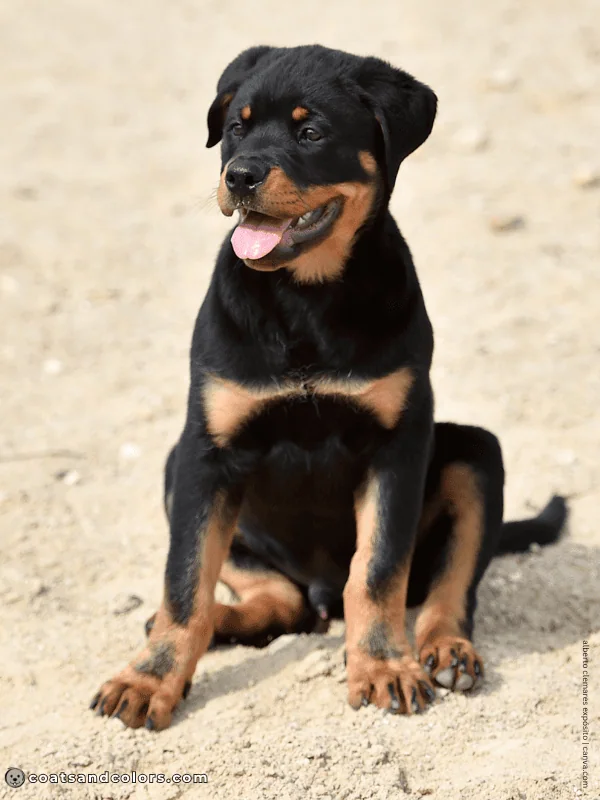
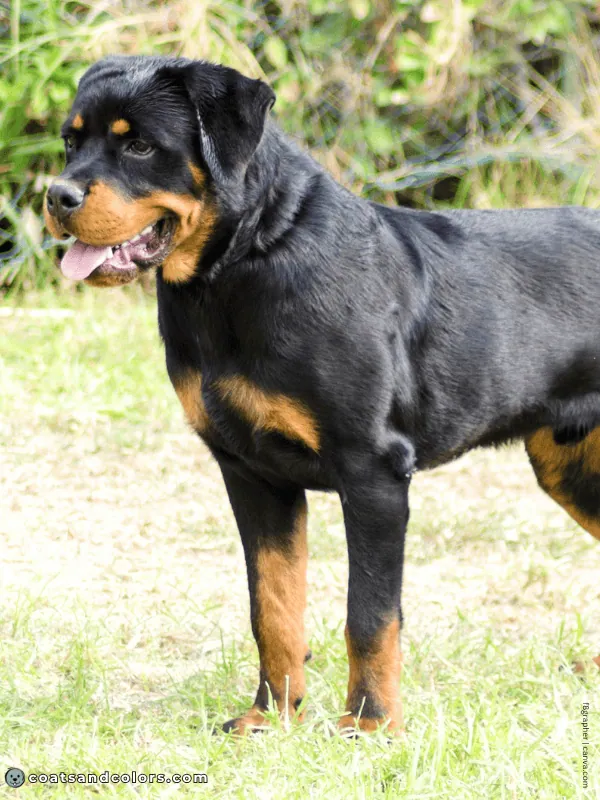
The FCI describes all Rottweilers as “black and tan“.
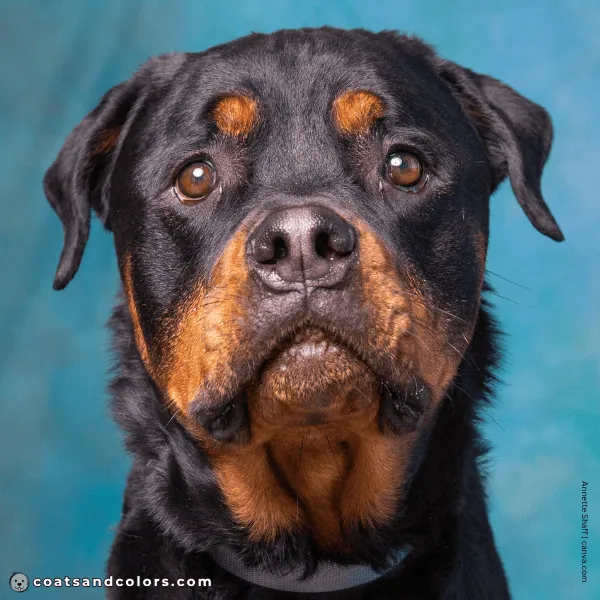
The AKC, however, uses “tan” as a breed term only for dogs with a lighter orange-yellow color of phaeomelanin. The markings should not be light enough to appear pale yellow or cream.
BASE PATTERN
tan point
MERLE
–
OTHER
–
EUMELANIN
black
INTENSITY
tan
WHITE
solid
Black & Rust
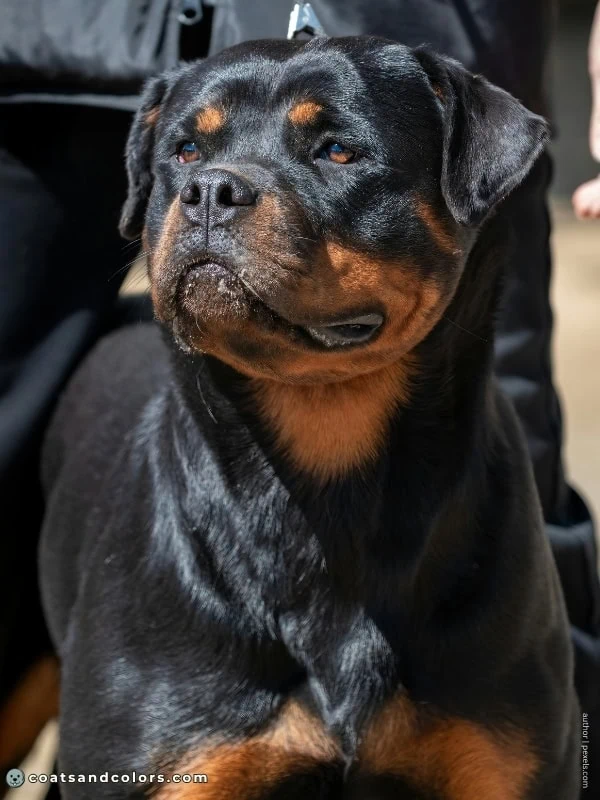
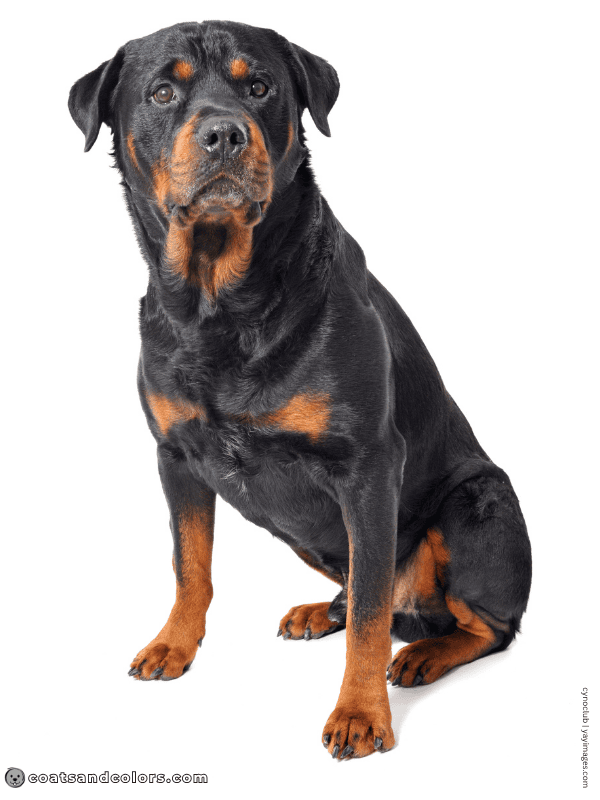
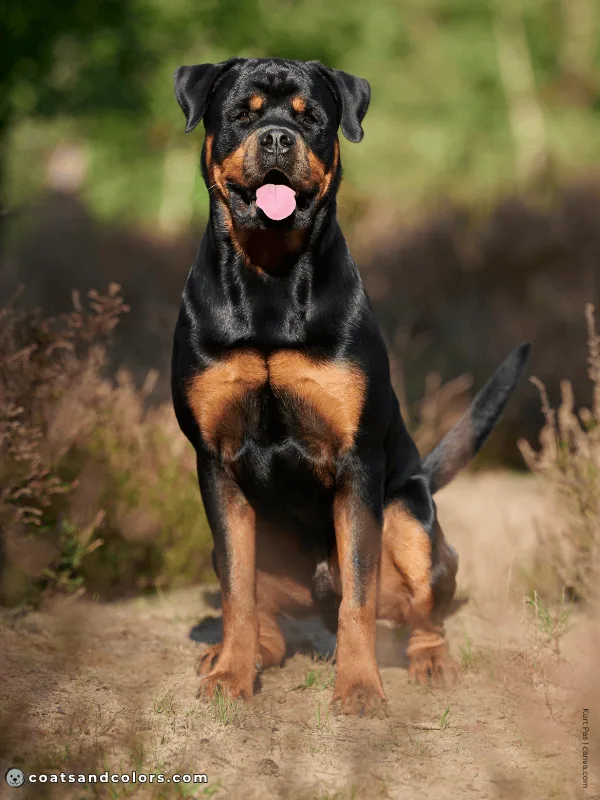
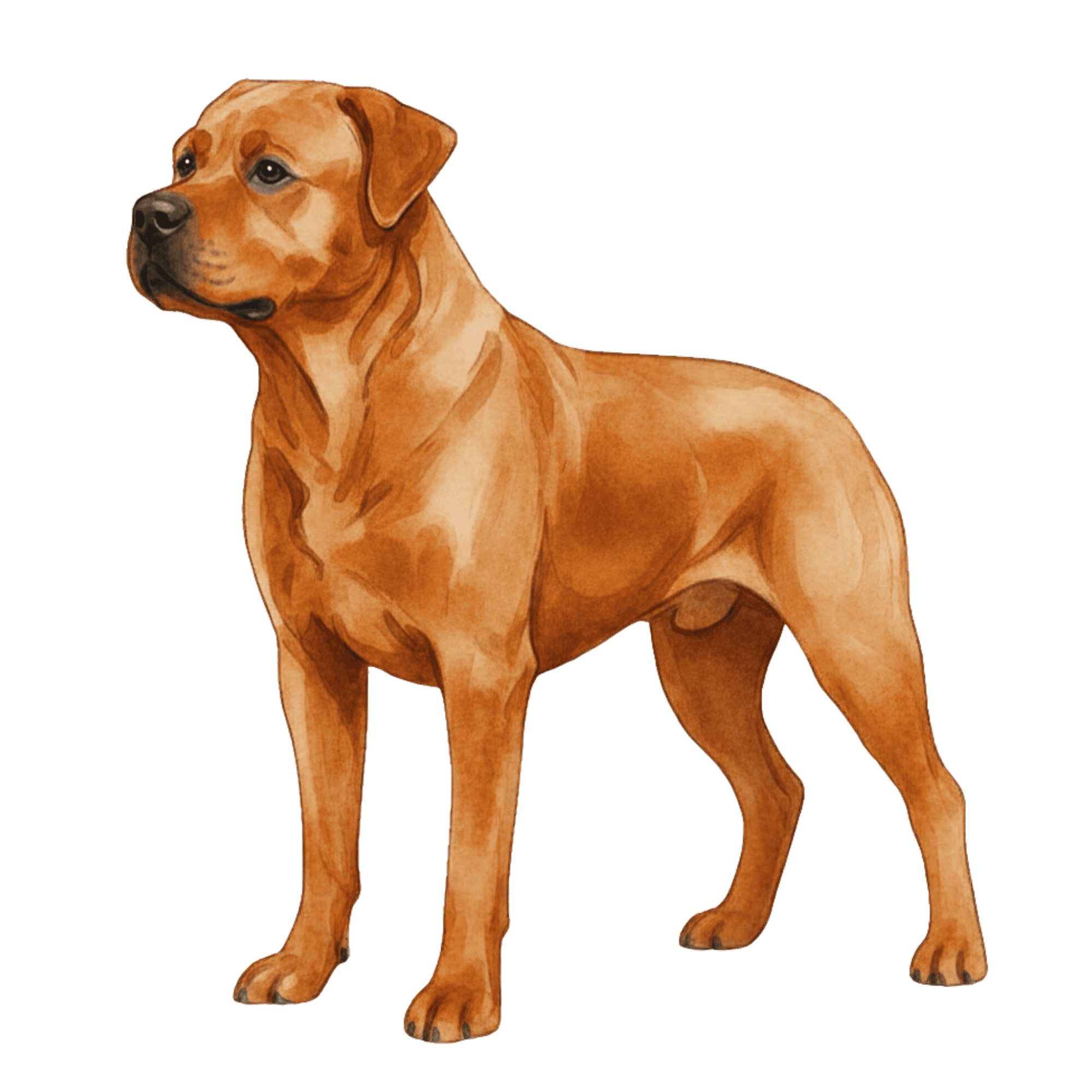
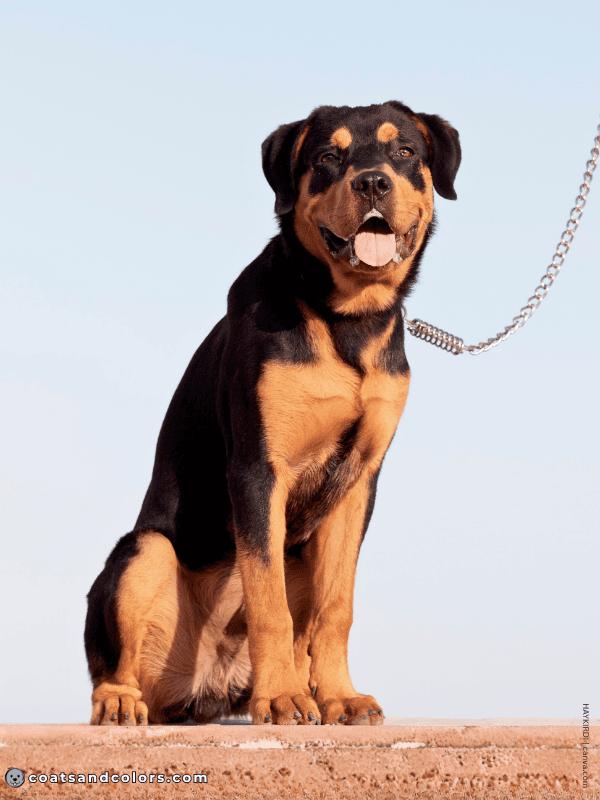
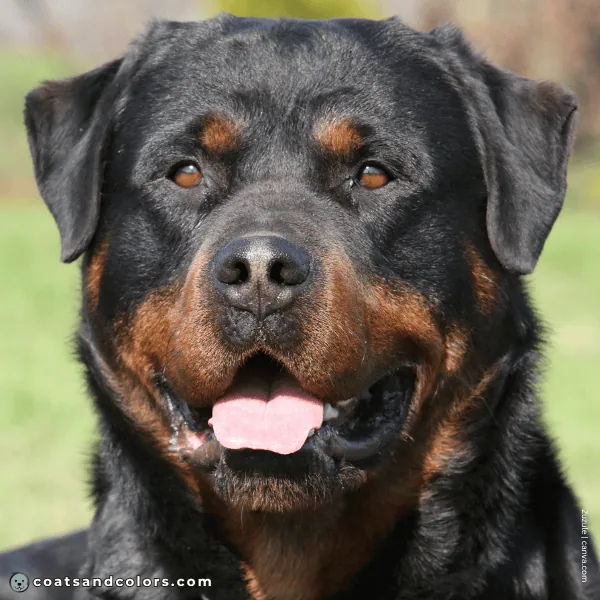
A black & rust Rottweiler has a tan point pattern with orange tan markings. This is an AKC breed term that refers to a red intensity somewhere between tan and mahogany.
BASE PATTERN
tan point
MERLE
–
OTHER
–
EUMELANIN
black
INTENSITY
orange, rust
WHITE
solid
Black & Mahogany
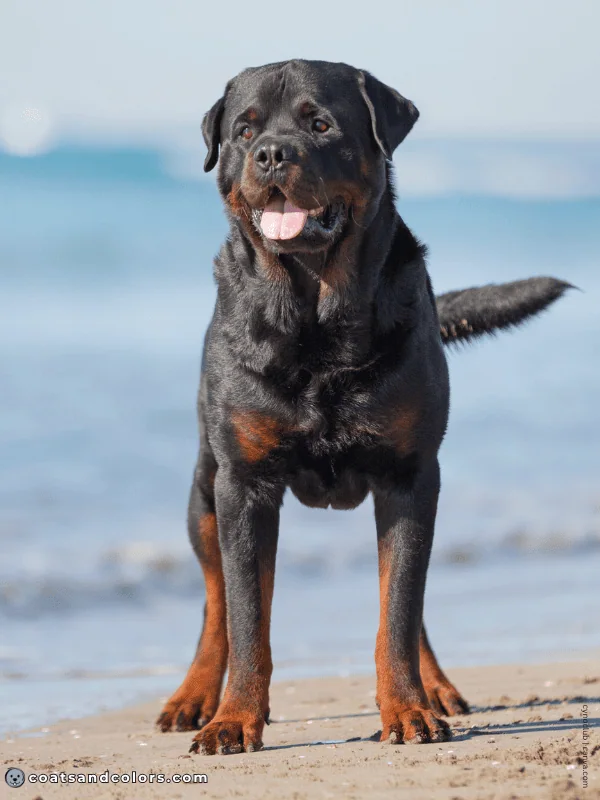
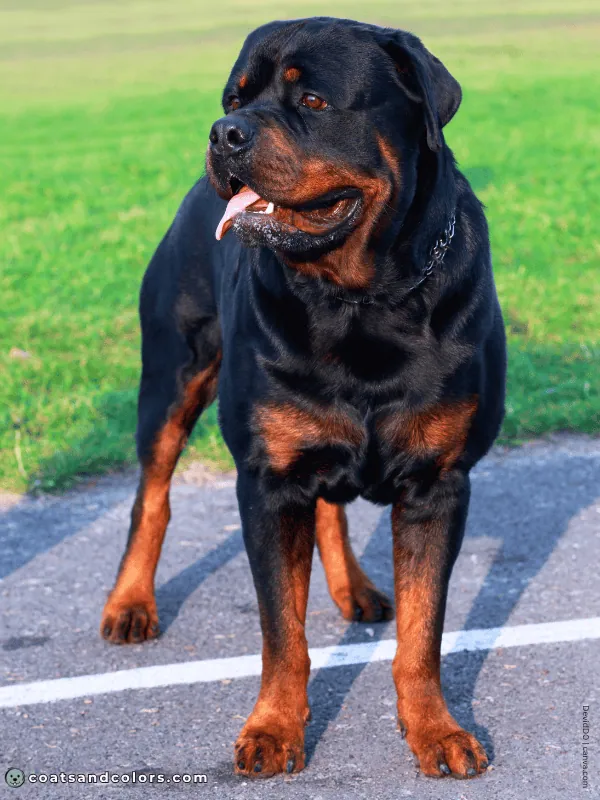

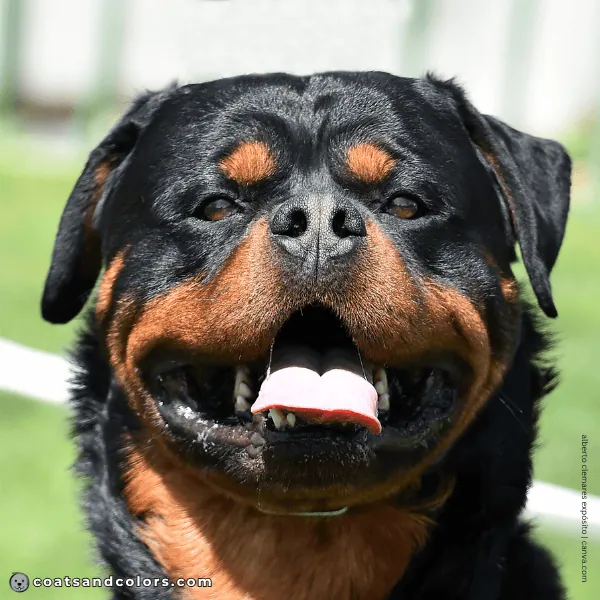
A tan point pattern with an intense red color in the tan markings. This is another AKC breed term for Rotties with a very deep red color in their points.
BASE PATTERN
tan point
MERLE
–
OTHER
–
EUMELANIN
black
INTENSITY
red, mahogany
WHITE
solid
Faulty Colors
In the beginning of the Rottweiler breed, there were more patterns than black and tan. Some Rotties were solid red (fawn or recessive red). Other dogs were agouti. Some dogs even had brindle.
But this was a century ago. Modern Rottweilers have long since been fixed for a black and tan pattern.
There are some mismarks that can happen due to natural variation, e.g. small white markings, very light tan points, or very large tan markings. Or very sooty tan points that are not clearly defined.
But there are, of course, also people who produce off-colors on purpose.
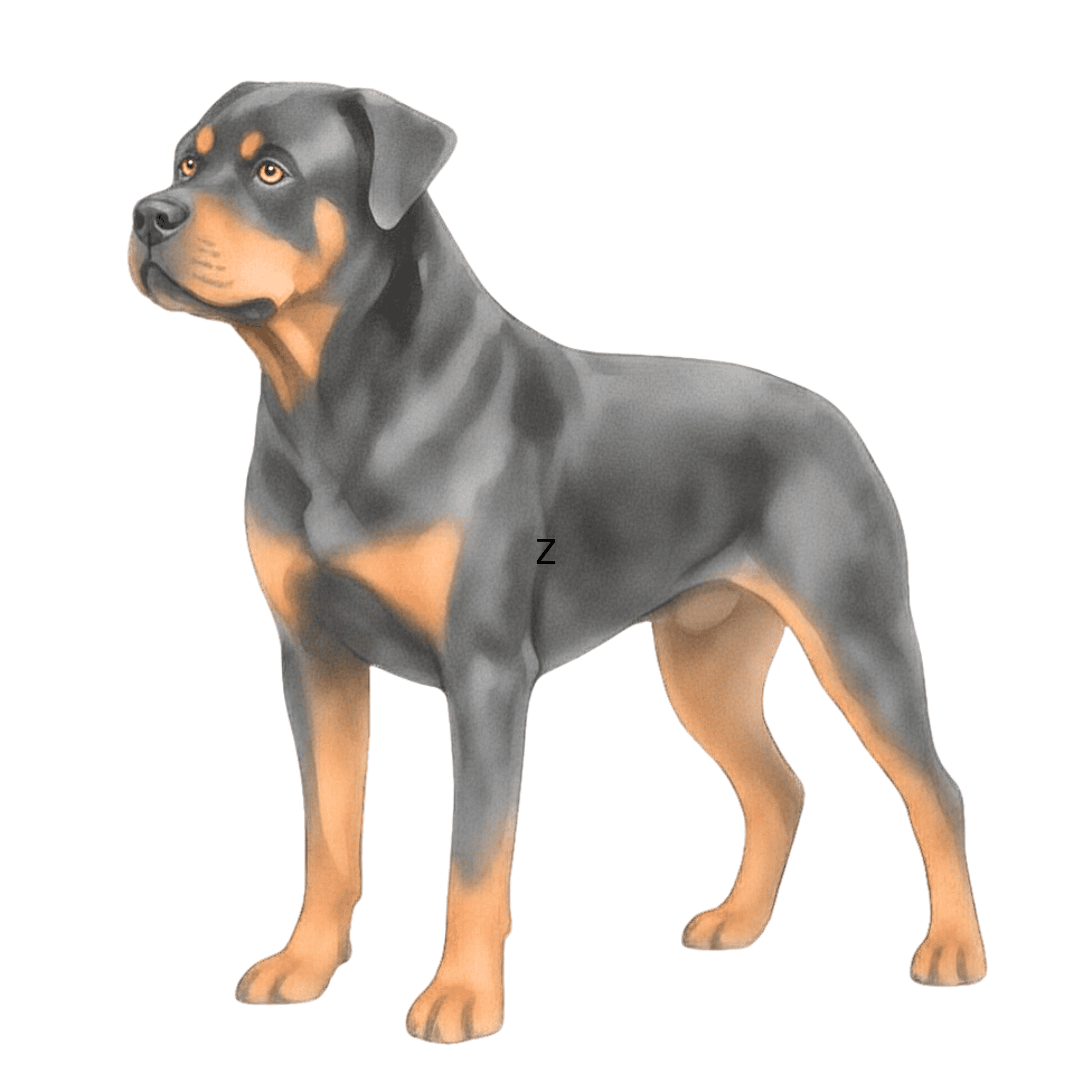
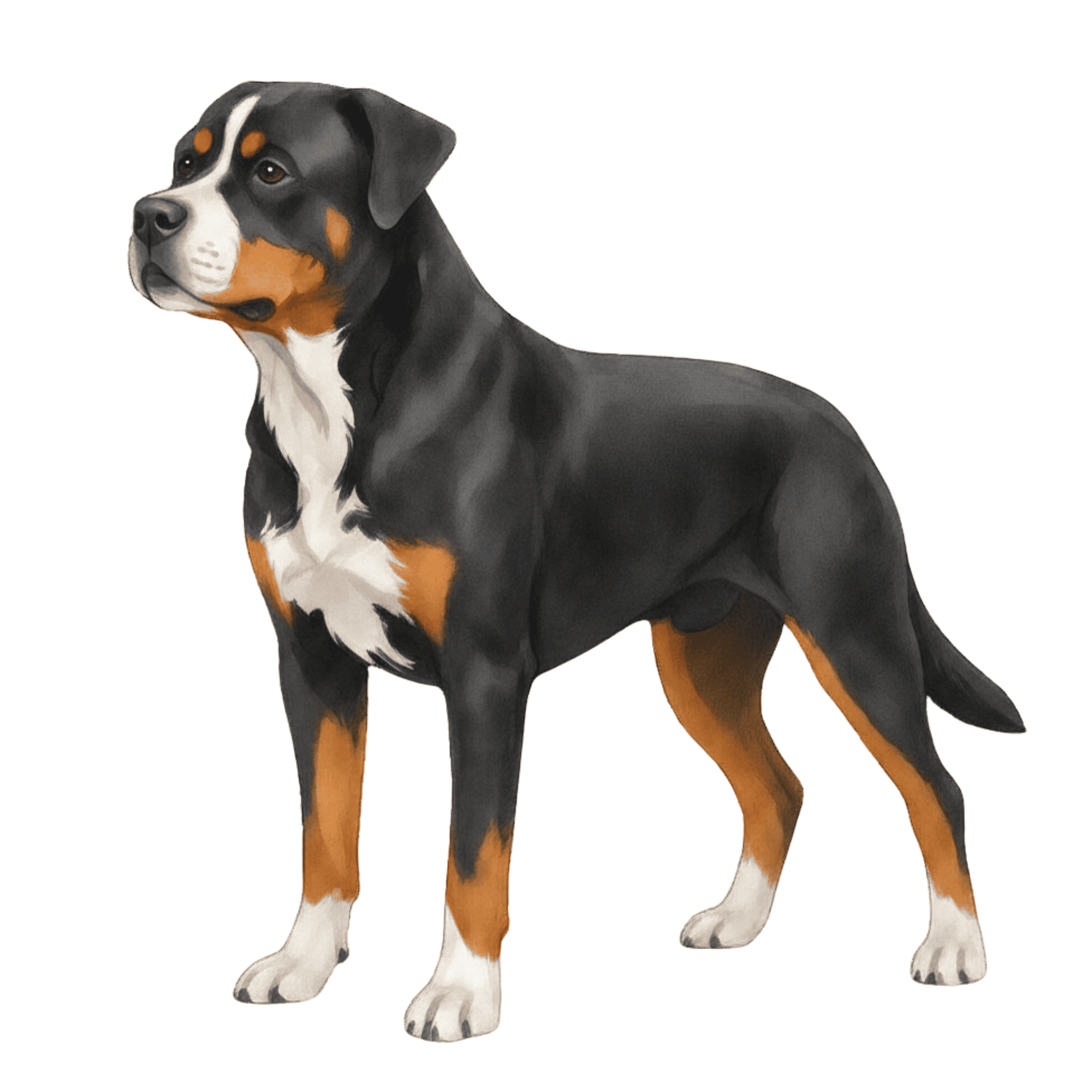
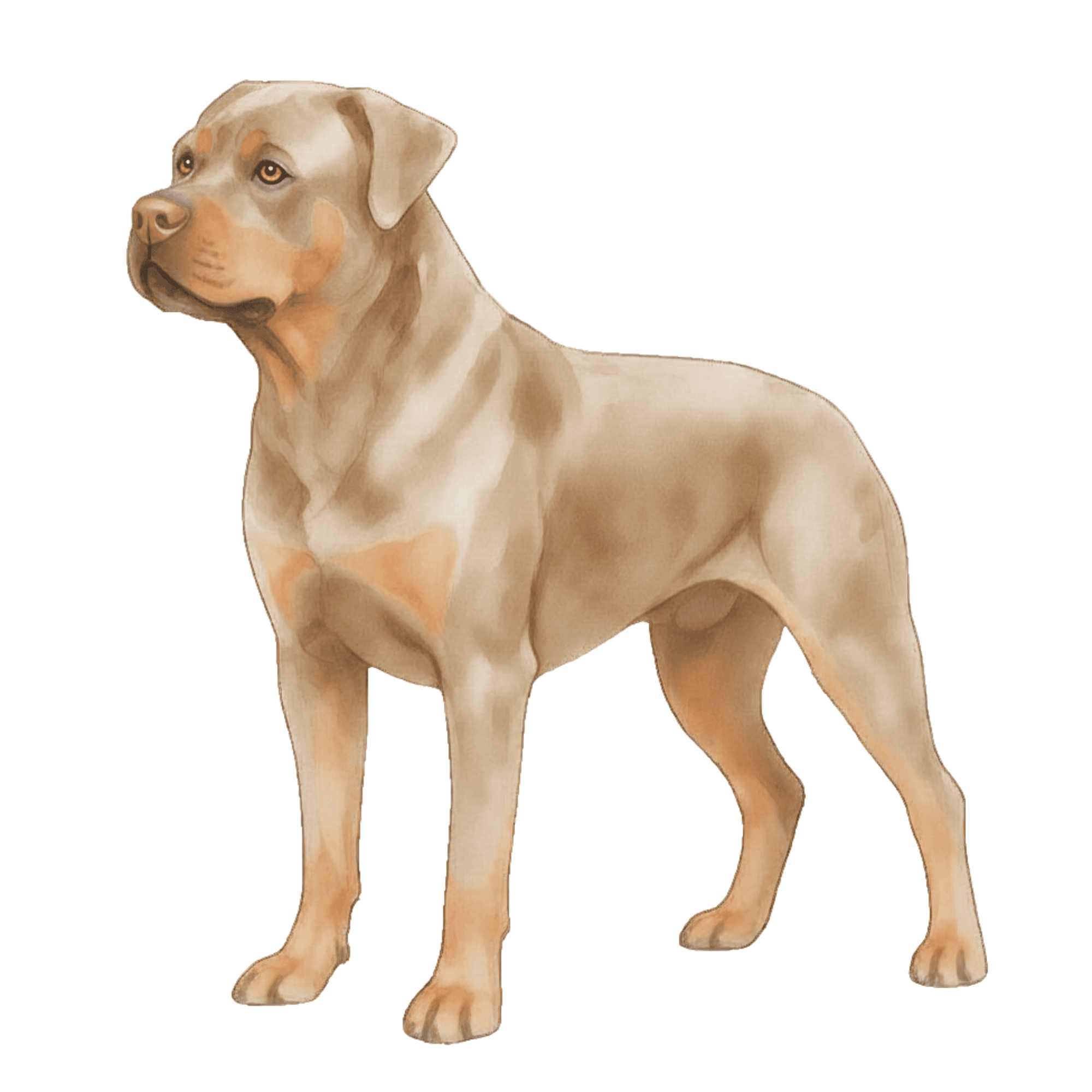
In Rotties, you will find puppies advertised for their chocolate or diluted colors. Or solid dark dogs without tan. There are also albino Rottweilers or merle Rotties or tricolor dogs with white markings.
“DQ: Any base color other than black; absence of all markings.”
AKC Breed Standard[1]
“DQ: Dogs which do not show the typical Rottweiler colouring of black with tan markings. White markings.”
FCI Breed Standard[2]
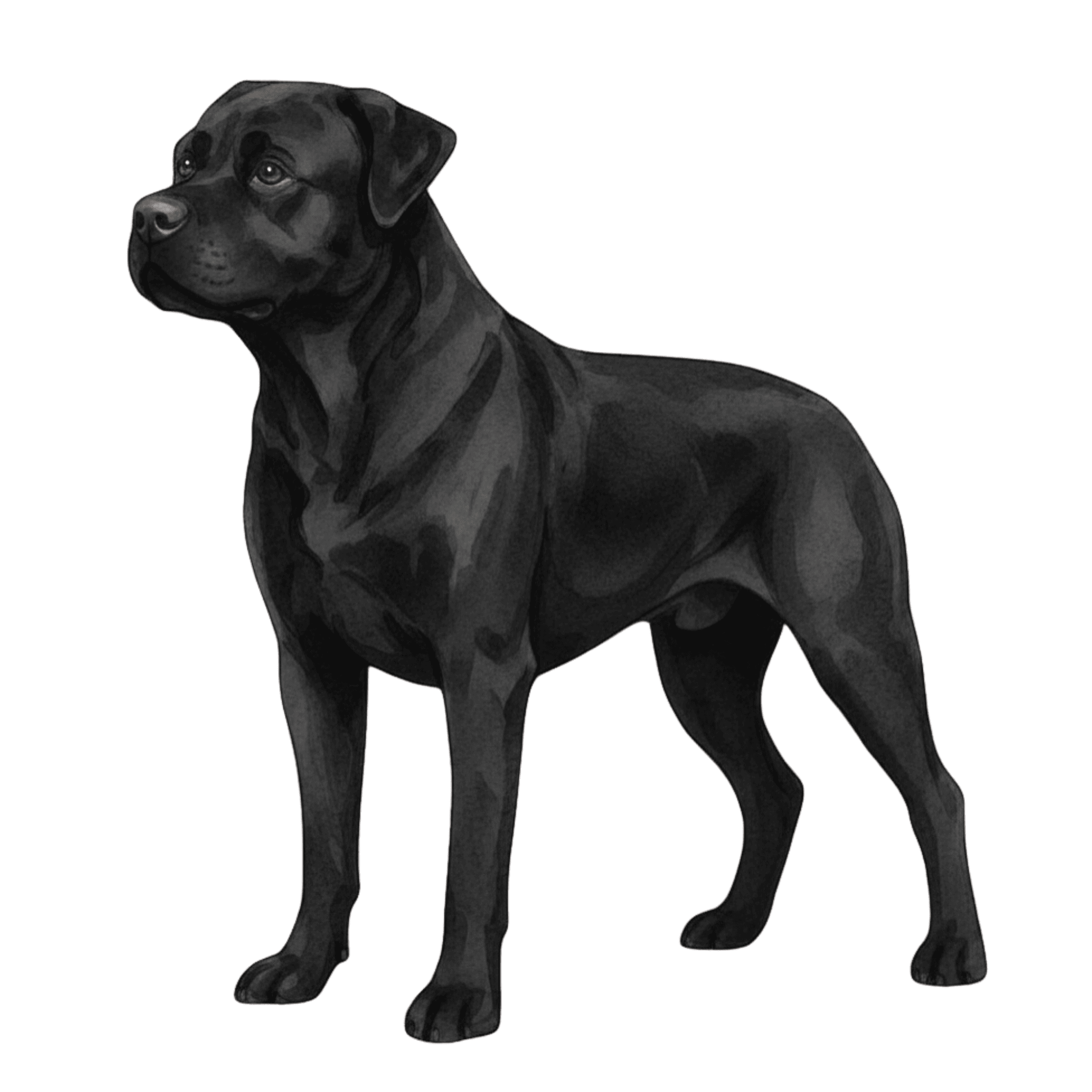

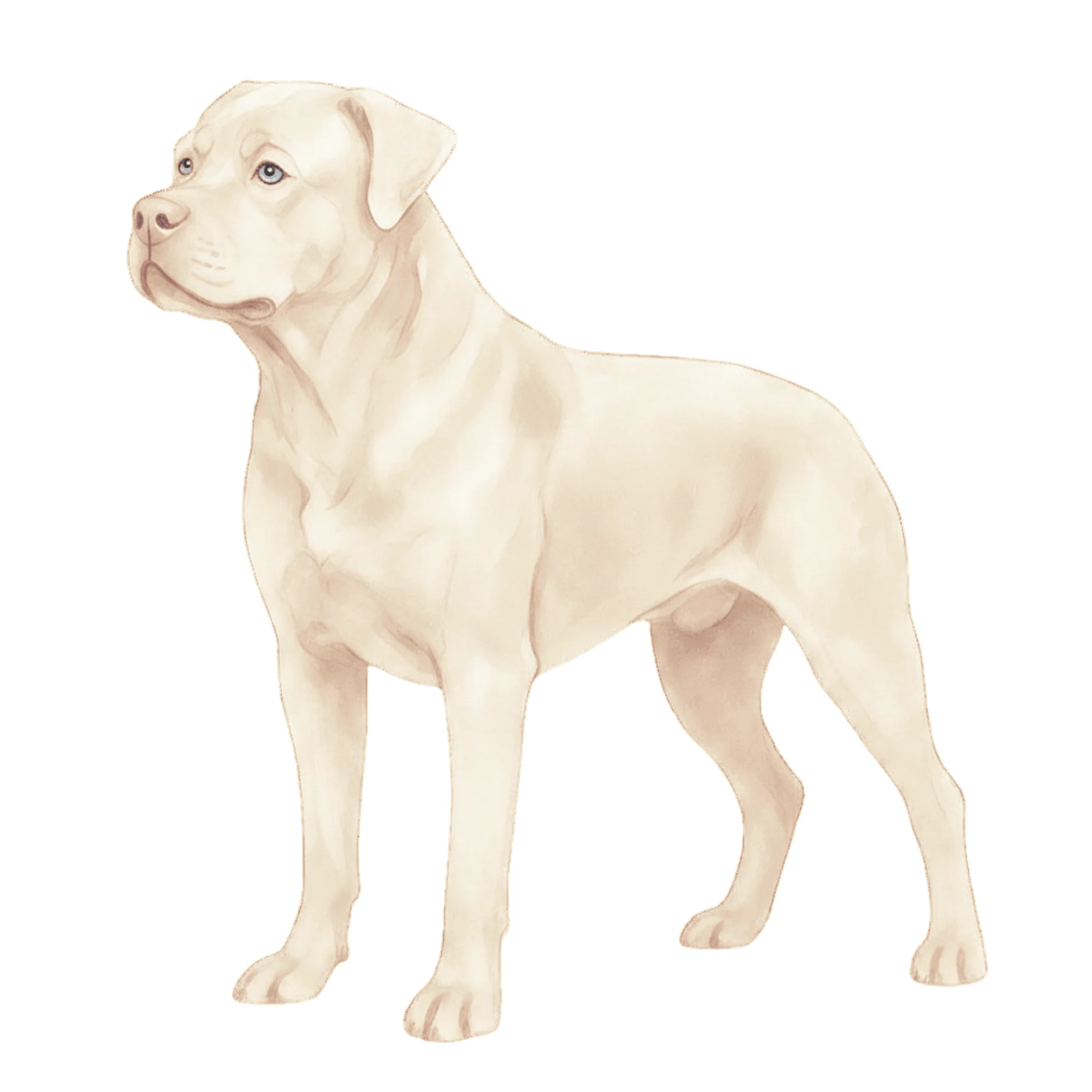
Some Rottweilers have vitiligo. This is thought to be an auto-immune condition that affects pigmentation but is otherwise harmless. Not a whole lot is known about why it happens.
Affected dogs typically start to lose black pigment from the face backward. However, vitiligo can extend to all black areas and can also (but rarely does) affect the tan areas.
Base Patterns
All Rottweilers are black and tan.
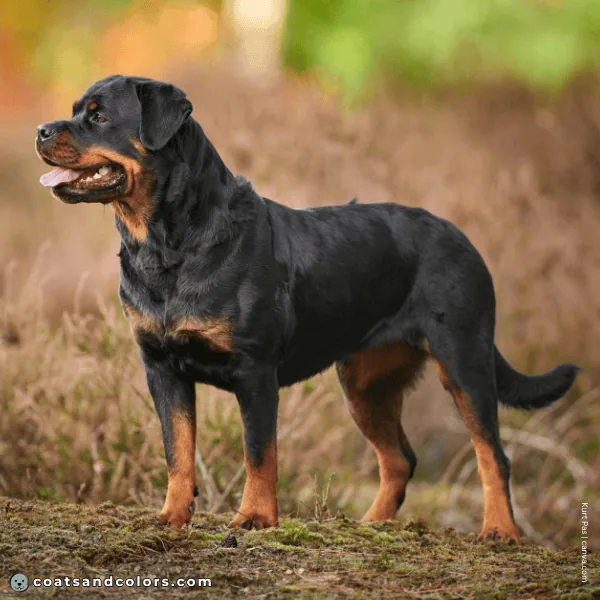
“Always black with rust to mahogany markings.”
AKC Breed Standard[1]
“Black with clearly defined markings of a rich tan on the cheeks, muzzle, throat, chest and legs, as well as over both eyes and under the base of the tail.”
FCI Breed Standard[2]
A Locus
| at | tan point |
Rotties are fixed for tan points (at/at).
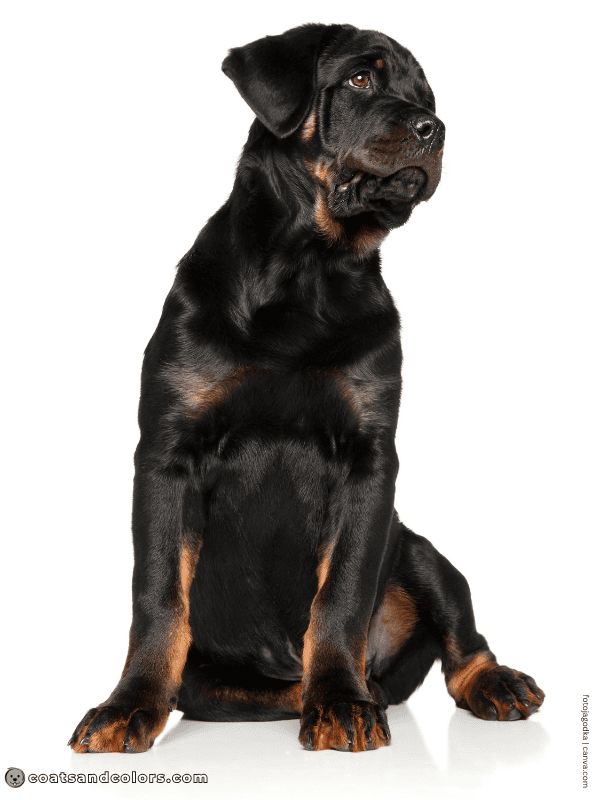
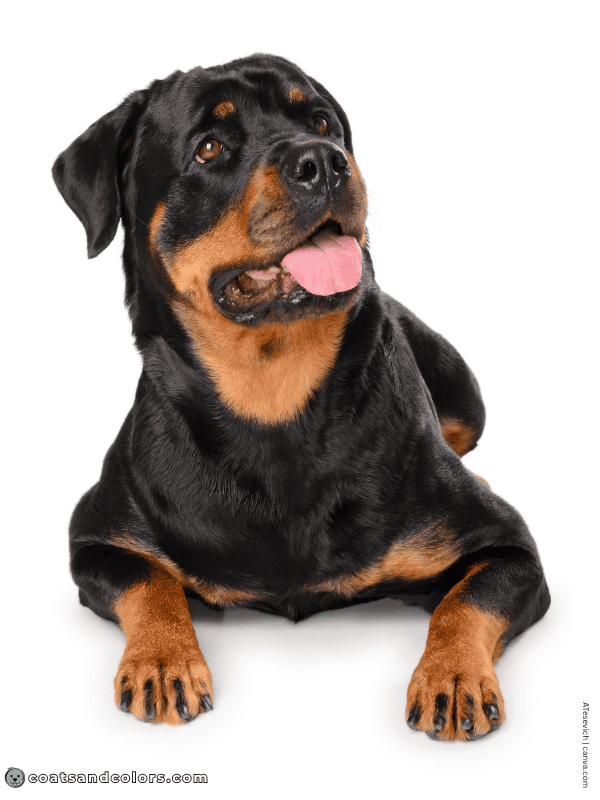
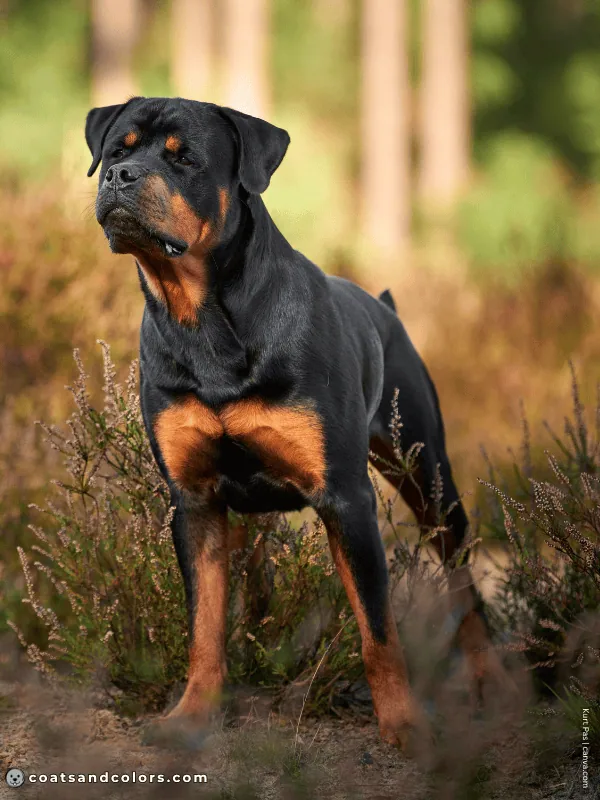
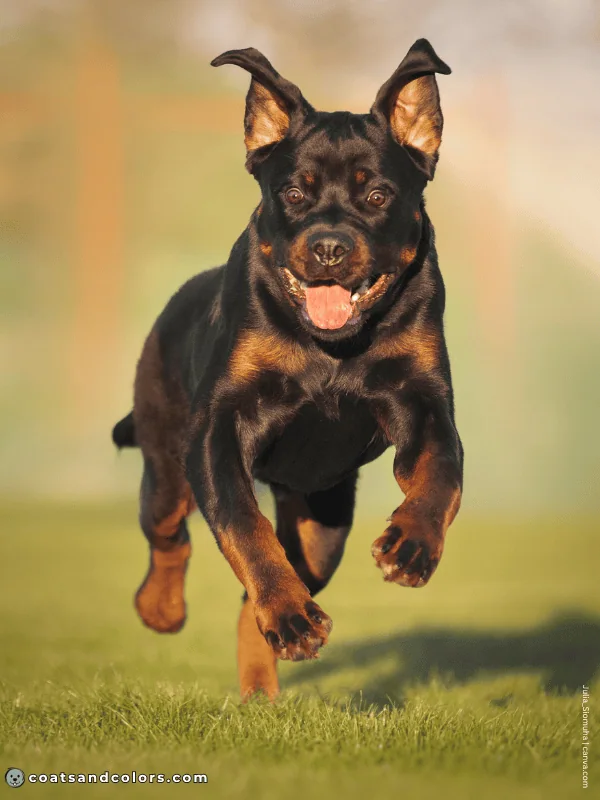
Rottweiler face markings include a tan spot above each eye. The tan covers the sides of the muzzle and the cheeks and reaches downwards from the chin to the throat.
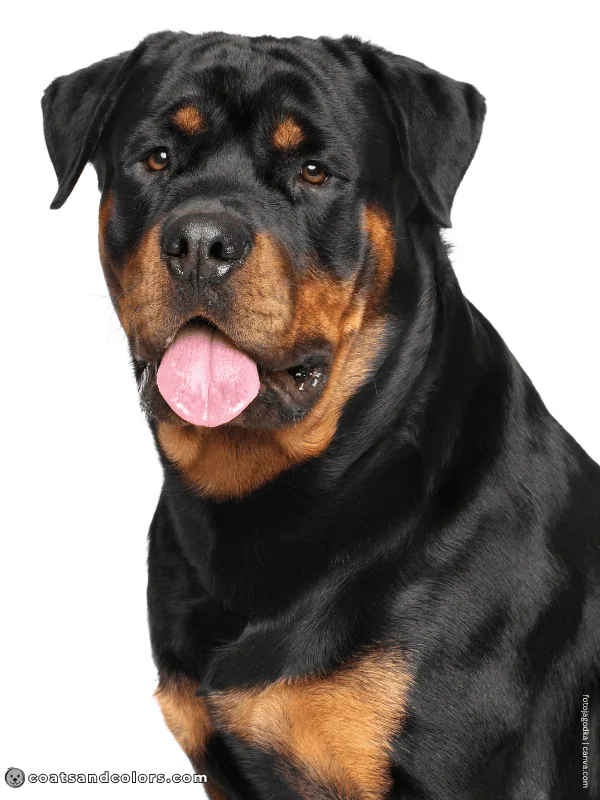
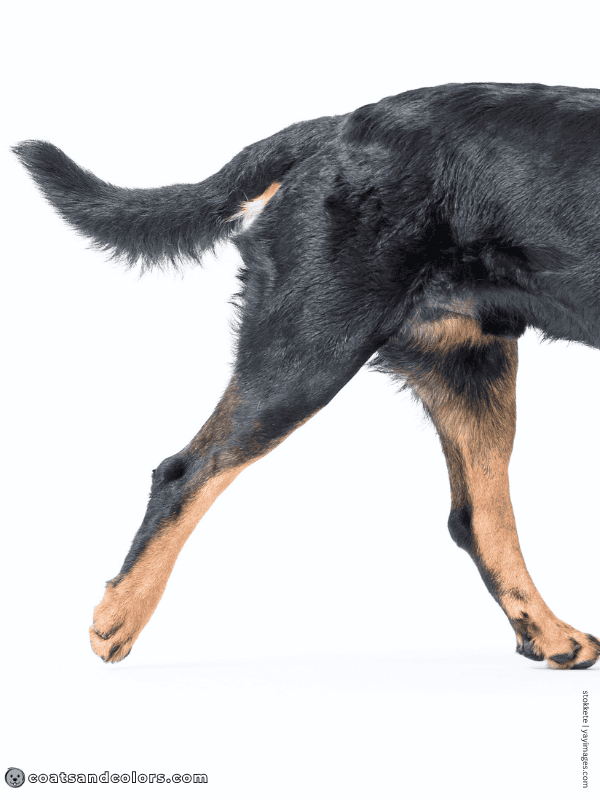
The tan pigment forms two triangular markings on the chest. The paws, lower legs, and the inside of the rear legs are covered in tan. Finally, they have a tan spot under the tail.
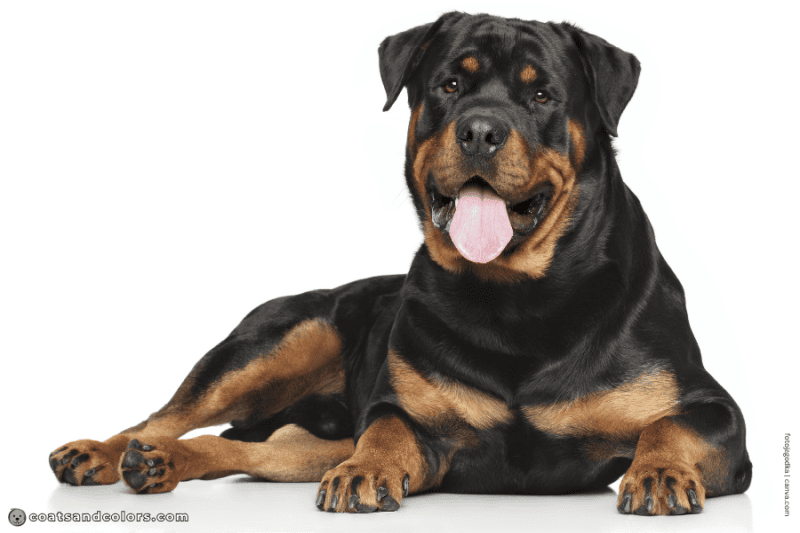
Color faults include “markings which are too spread out” (FCI) or markings that “exceed ten percent of body color“ (AKC). However, the size of the markings can still vary from dog to dog.
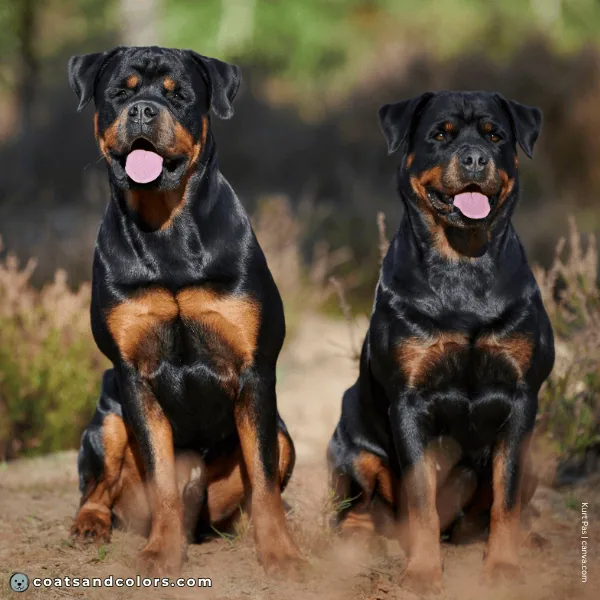
The black and tan pattern often shows tan hair roots or a grayish or reddish undercoat. Or some rust hairs intermingled in the black areas. But Rottweiler breeders prefer the black areas to look jet black. So they select for solid black dorsal hairs with dark undercoat and very defined tan markings.
Some standards specifically mention toe pencilling and black hocks as common breed traits. But some dogs show very sooty markings with too much black “smut” that covers their tan.
K Locus
| ky | wild-type |
Rotties are fixed for normal pattern expression (ky/ky).
E Locus
| Em | black mask |
| E | wild-type |
| e | recessive red |
Rotties should be fixed for normal pattern expression (E/E).
Some dogs have puppy masking while being E/E.
However, real black masks can also happen (Em/-). Masks can cover the tan face markings. But a very small black mask on the front of the muzzle may sometimes go unnoticed on a black and tan dog.
And recessive red (e) is also present in the breed.
Being e/e prevents a dog from having black hair, so you get a clear red dog with pale whiskers. Even dogs that just carry red (E/e) can sometimes have slightly larger tan markings.
Rottweiler Base Pattern
| A LOCUS | K LOCUS | E LOCUS | PATTERN |
|---|---|---|---|
| at/at | ky/ky | E/E | tan point “black & tan” |
Base Colors
The base color is determined by the B locus and D locus.
B Locus
| B | black |
| b | brown |
Rotties should all have black pigment (B/B). The black pigment is visible in their coat and also gives them their black nose, eye rims, lips, whiskers, and toenails.
But recessive brown (b) is also present. And tan point dogs with b/b dogs will be chocolate and tan.
D Locus
| D | normal |
Rotties should all have normal black pigment (B/B).
But color dilution (d) does occur in the breed. And d/d dogs will have a tan point pattern with diluted black “blue” (B/- d/d) or with diluted chocolate “lilac” (b/b d/d) eumelanin.
Red Intensity
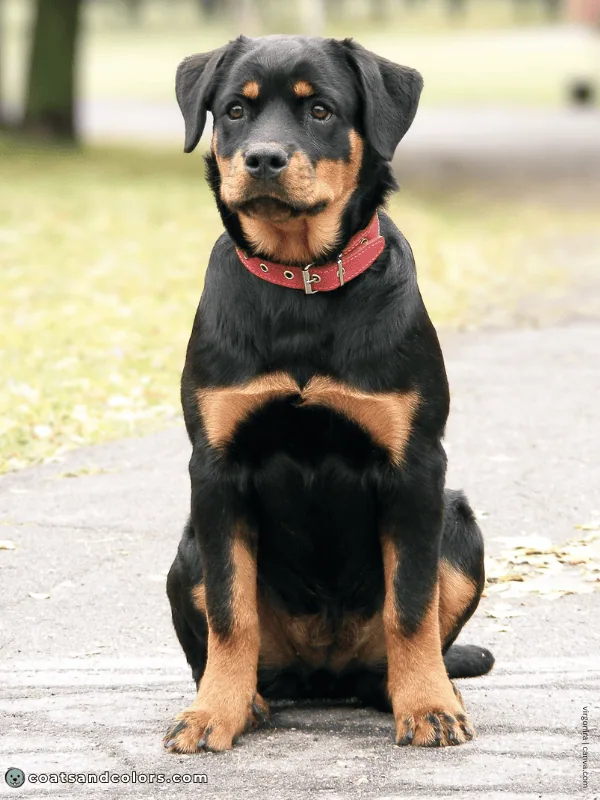
The phaeomelanin intensity varies from a bright yellowish orange (tan) to a more intense reddish orange (rust), which can darken into a deep red color (mahogany).
The FCI describes the Rottweiler coat color simply as “black coated with clearly defined rich tan markings“. Only the AKC splits red intensity further into tan, rust, and mahogany.
This is a phenomenon mostly in breeds that don’t have that much variation. They start to see even the most subtle nuances and try to sort them into more and more categories.
But even the AKC does not provide a color chart for their chosen breed terms to determine at which point they perceive tan as rust. Or how intense rust has to be to turn into mahogany.
The important thing is that Rotties are not supposed to have very yellow or straw-colored markings.
White Markings
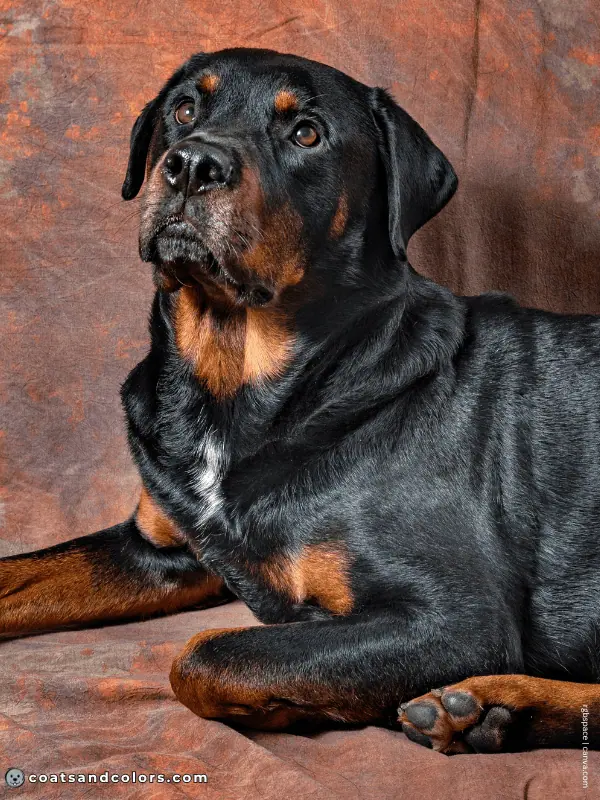
Rottweilers should have a solid coat color.
Some of them might test as S/sP or sP/sP for piebald (black & tan with white would be “tricolor“). But there are many breeds where S locus testing does not reliably predict piebald markings.
The small white patches in some Rotties are likely caused by residual white. This is essentially a hiccup during early development and can affect any dog in any breed. The amount of white can vary, it often causes just a small white patch on the chest or toes that will fill in over time in most puppies.
“Serious Fault: White marking any place on dog.”
AKC Breed Standard[1]
“DQ: White markings.“
FCI Breed Standard[2]
Rottweiler Eye Colors
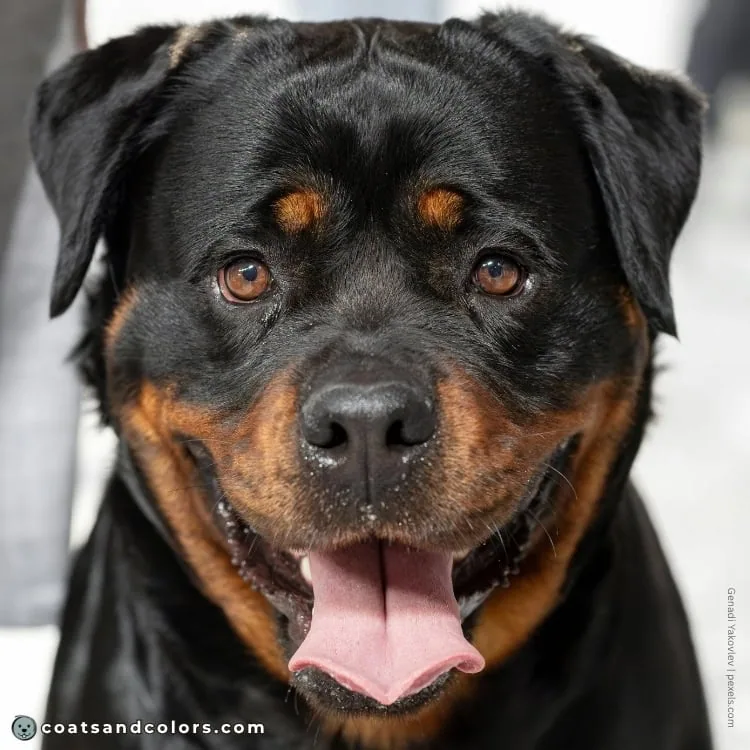
Rottweilers should have brown eyes.
Colors lighter than medium brown are undesirable and thought to take away from the expression of the dog. The FCI considers yellow eyes (“bird of prey eyes”) a disqualifying fault.
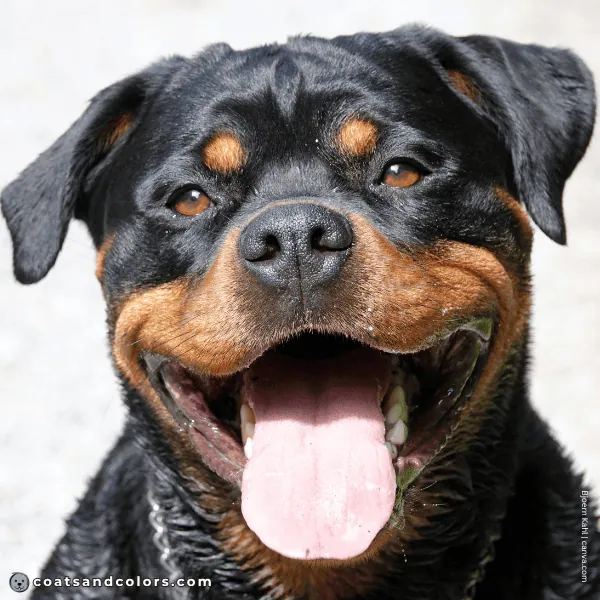
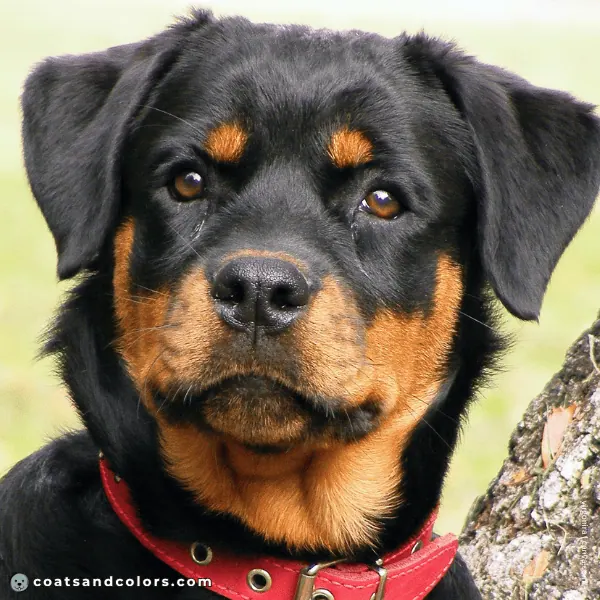
“The desired color is a uniform dark brown.”
AKC Breed Standard[1]
“Of medium size, almond-shaped, dark brown in colour.”
“DQ: yellow eyes, different coloured eyes.”
FCI Breed Standard[2]
Rottweiler Nose Colors
All dogs with a black and tan coat color have a black nose.
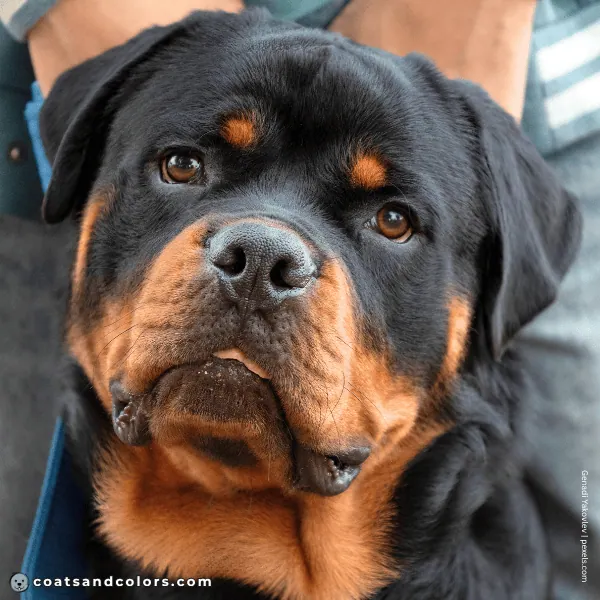
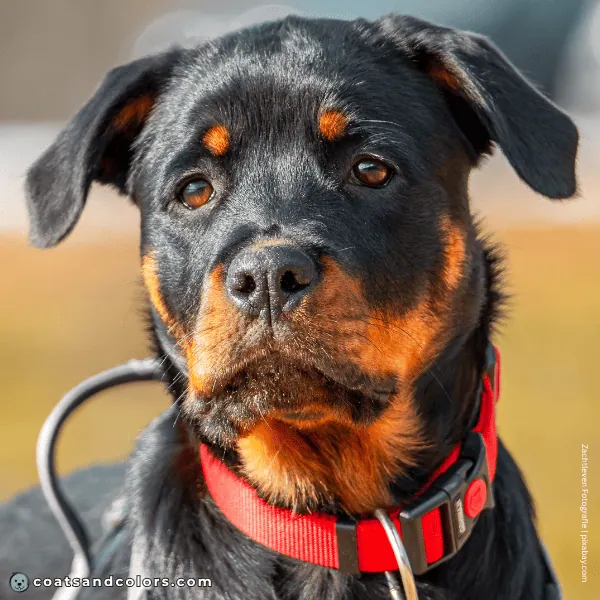
Quite some dogs show weak nose pigment with a lighter stripe in the middle.
“Nose […] always black.“
AKC Breed Standard[1]
“Well developed, broader than round with relatively large nostrils, always black.”
FCI Breed Standard[2]
Rottweiler Coat Type
Rottweilers are double-coated with short body hair and some undercoat. The undercoat can be black, or it can show some gray or tan shades, which is normal for black and tan dogs.
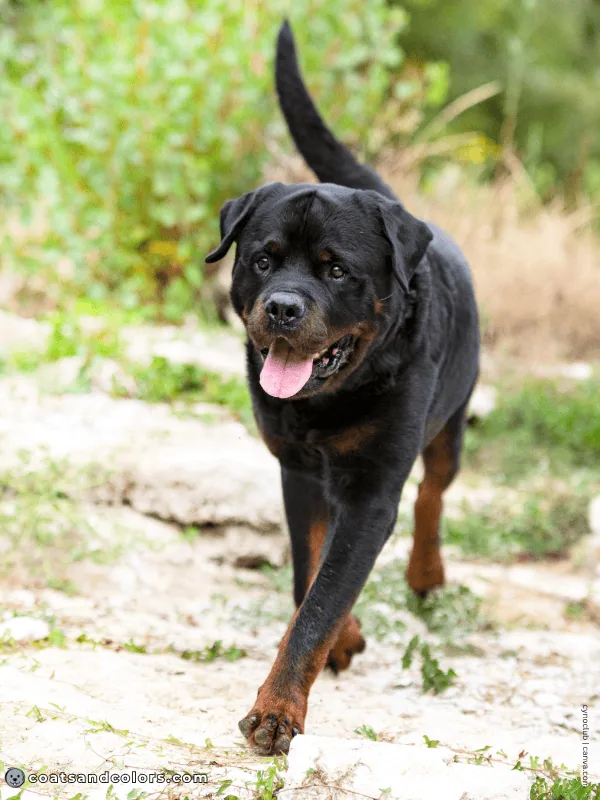
A soft coat texture or a lack of undercoat are faulty.
“Outer coat is straight, coarse, dense, of medium length and lying flat. Undercoat should be present on neck and thighs, but the amount is influenced by climatic conditions.“
AKC Breed Standard[1]
“The coat consists of a top coat and an undercoat. The top coat is of medium length, coarse, dense and flat. The undercoat must not show through the top coat. The hair is a little longer on the hindlegs.”
FCI Breed Standard[2]
Some Rotties are long coat carriers and can produce long-haired puppies when bred to another carrier. A very small number of Rottweilers carry a curly variant which may cause wavy coat in long-haired dogs.
Another faulty coat type is seen in bearded Rotties that express (weak) furnishings.
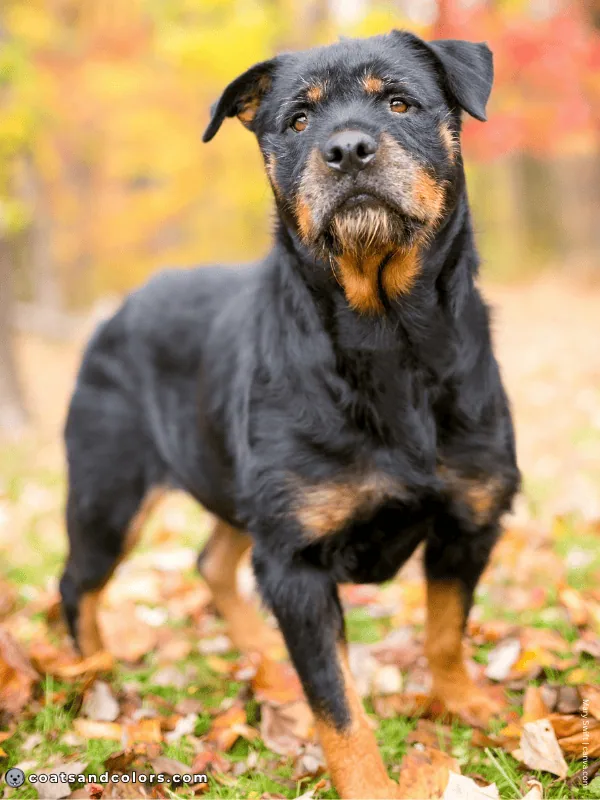
“Serious Faults – Open, excessively short, or curly coat; total lack of undercoat […] Disqualification – Long coat.“
AKC Breed Standard[1]
“DQ: Definitely long or wavy coat.”
FCI Breed Standard[2]
Related Breeds
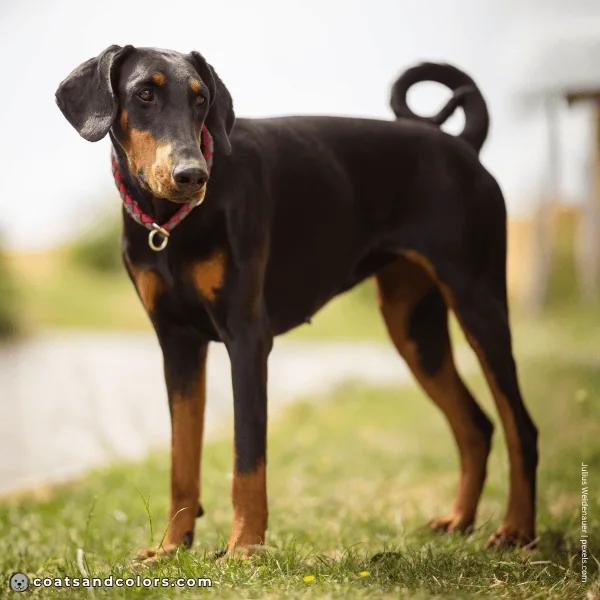
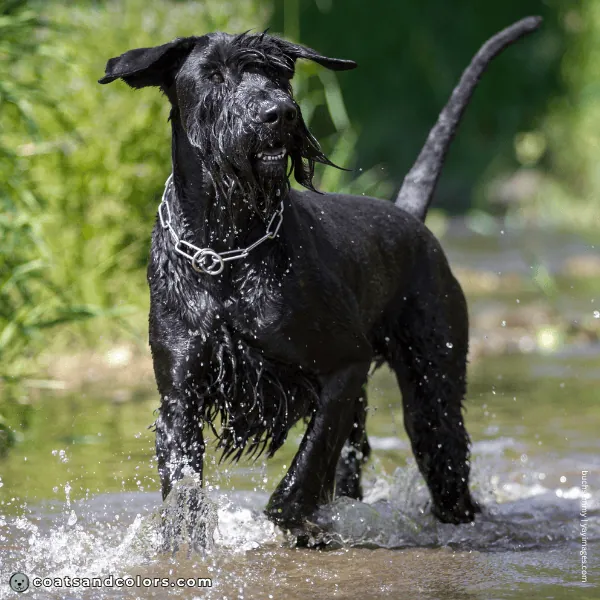
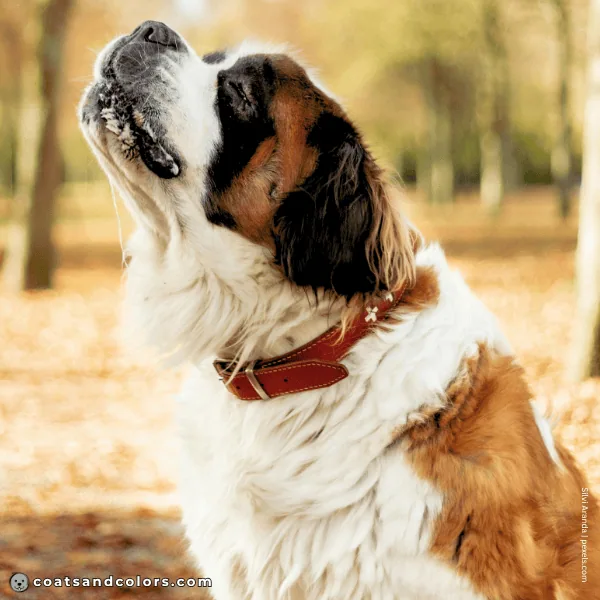
Rottweilers originally started as draught dogs and cattle drivers. They seem to share ancestors with other dogs of mastiff and mountain lineage, like Swiss Sennenhunds or Saint Bernards. Modern Rotties are, of course, also related to other working breeds like the Doberman and Giant Schnauzer.
Learn More


Links
[1] American Kennel Club (AKC): Rottweiler
[2] Fédération Cynologique Internationale (FCI): Rottweiler
[3] Royal Kennel Club (RKC): Rottweiler
[4] Canadian Kennel Club (CKC): Rottweiler
[5] Dreger et al. (2019). True Colors: Commercially-acquired morphological genotypes reveal hidden allele variation among dog breeds, informing both trait ancestry and breed potential. PLoS ONE 14(10): e0223995. https://doi.org/10.1371/journal.pone.0223995
Image Credits
alberto clemares expósito/canva.com
Annette Shaff/canva.com
ATesevich/canva.com
Bjoern Kahl/canva.com
buchsammy/yayimages.com
cynoclub/canva.com
DevidDO/canva.com
eriklam/yayimages.com
f8grapher/canva.com
fotojagodka/canva.com
Genadi Yakovlev/pexels.com
HAYKIRDI/canva.com
Julia_Siomuha/canva.com
Julius Weidenauer/pexels.com
kim_hester/pixabay.com
Kurt Pas/canva.com
Mary Swift/canva.com
rgbspace/canva.com
Sergio Denis/canva.com
Silvi Aranda/pexels.com
Stanko Mladenovic/canva.com
stokkete/yayimages.com
virgonira/canva.com
Zuzule/canva.com
Нина Игнатенко/pixabay.com
Hi! I’m Steffi. I am a biologist and a big time dog nerd. You are curious about coat color genetics? You’ve come to the right place! Read more.