

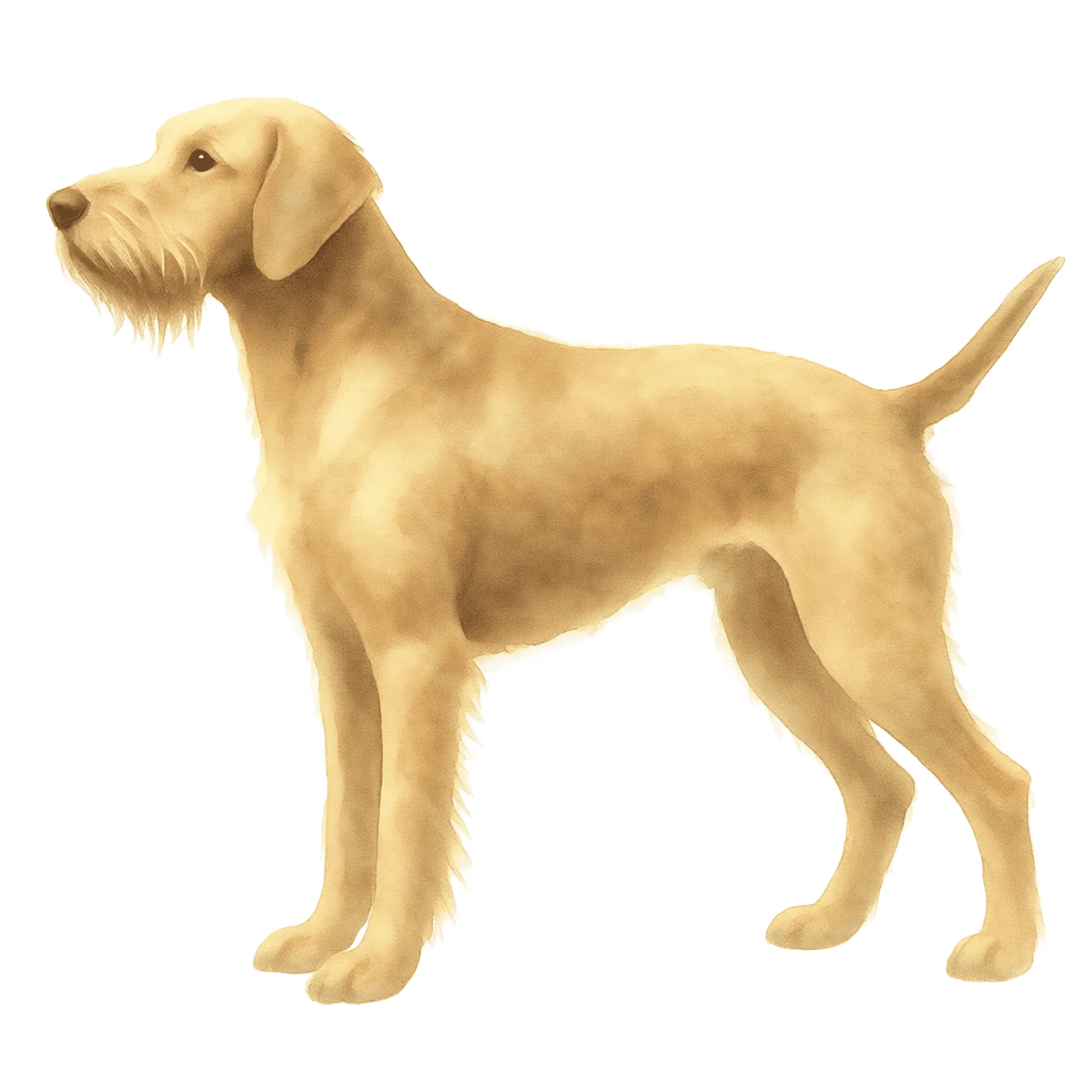
The Wirehaired Vizsla is a versatile gundog from Hungary. The common coat colors in the Hungarian pointer breed include solid golden rust or sandy golden tones.
Golden Rust
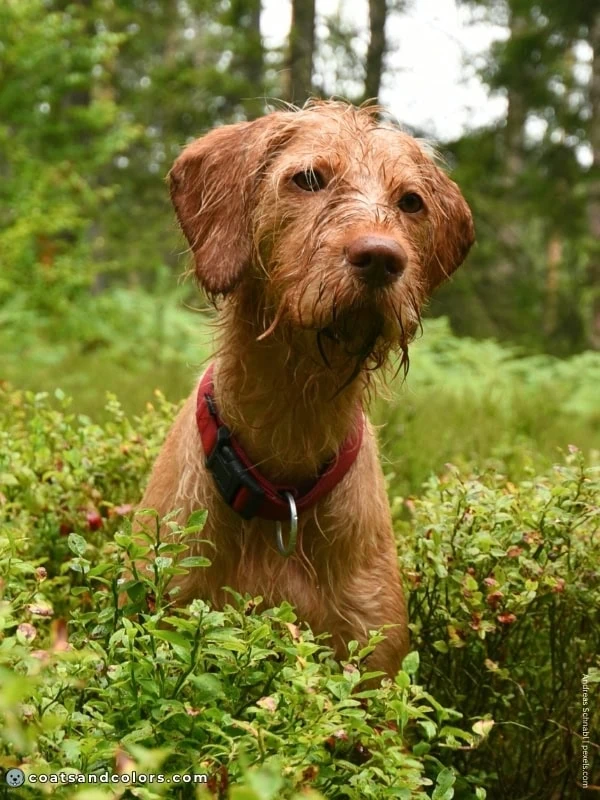
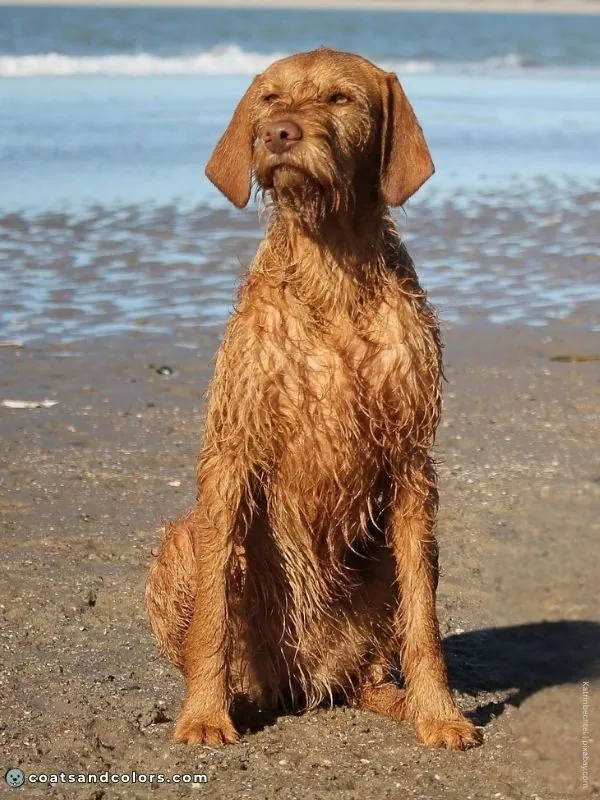
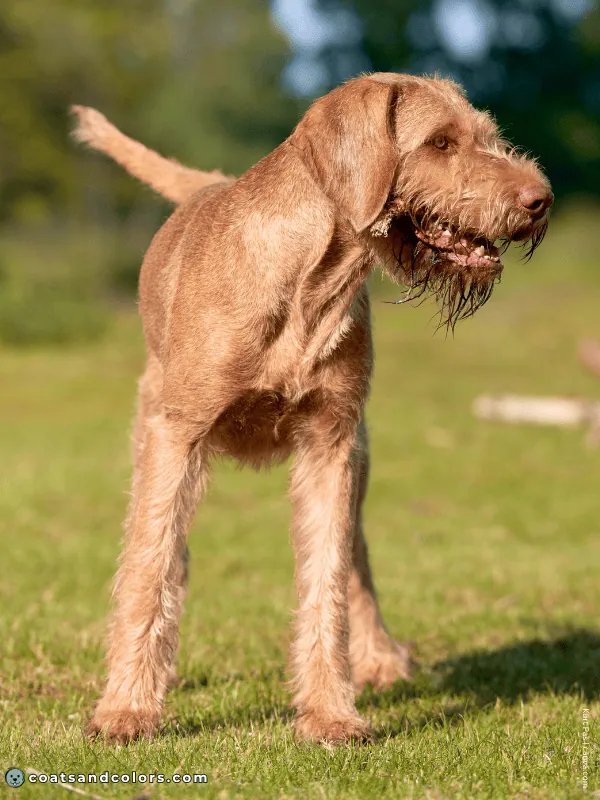
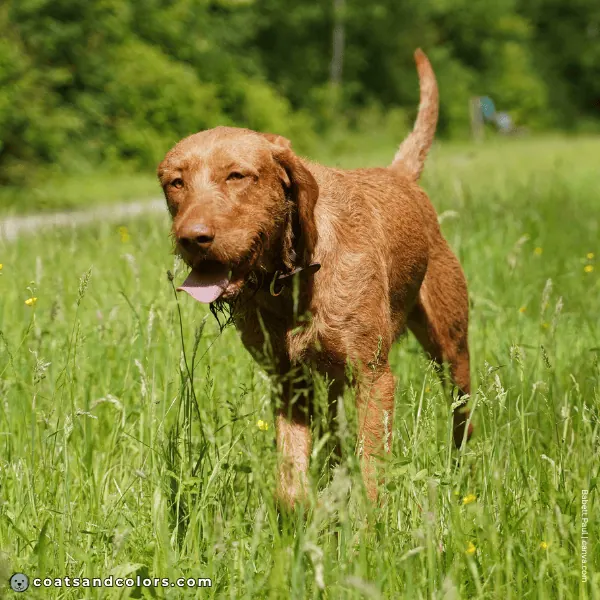
The wire-haired Vizsla has a golden rust color that can have varying shades, all of which fall in the rusty orange range of colors. The RKC calls the same color russet gold.
Darker shades that appear solid rust or red are not desired.
BASE PATTERN
recessive red
MERLE
–
OTHER
–
EUMELANIN
brown
INTENSITY
golden rust
WHITE
solid
Sandy Gold
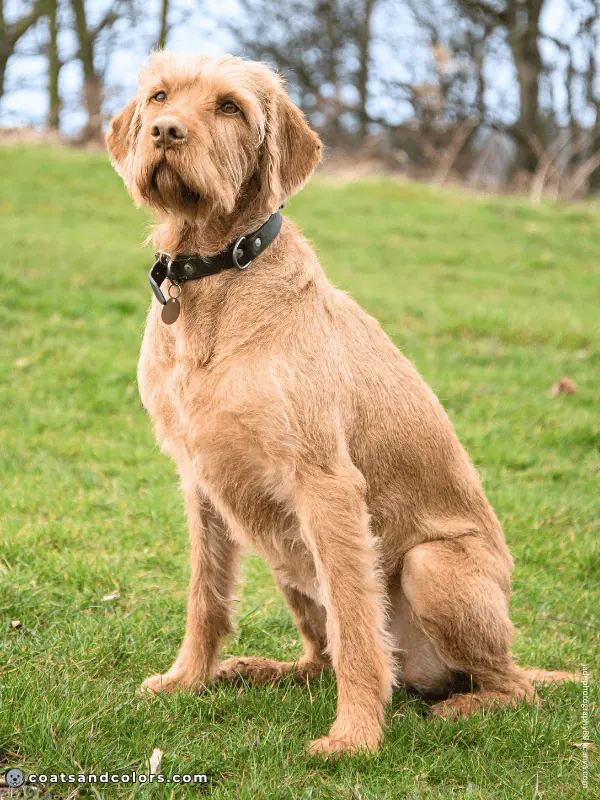
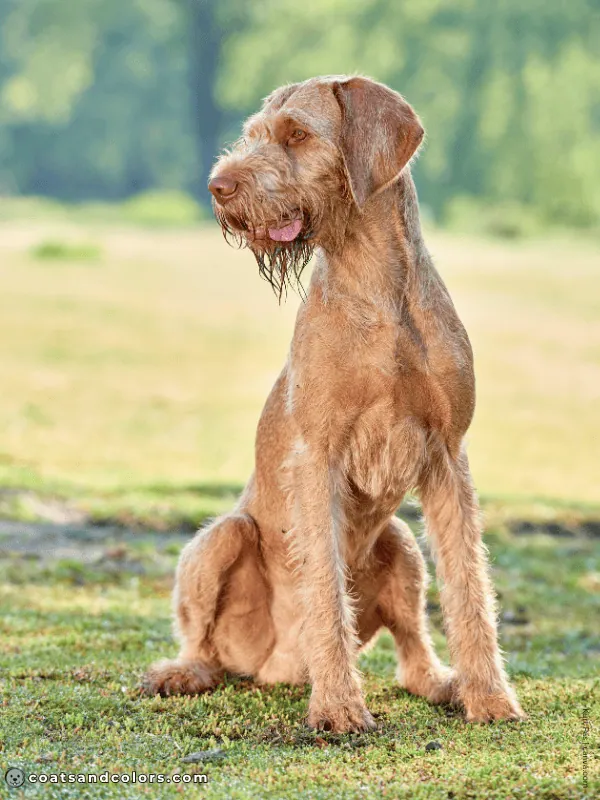
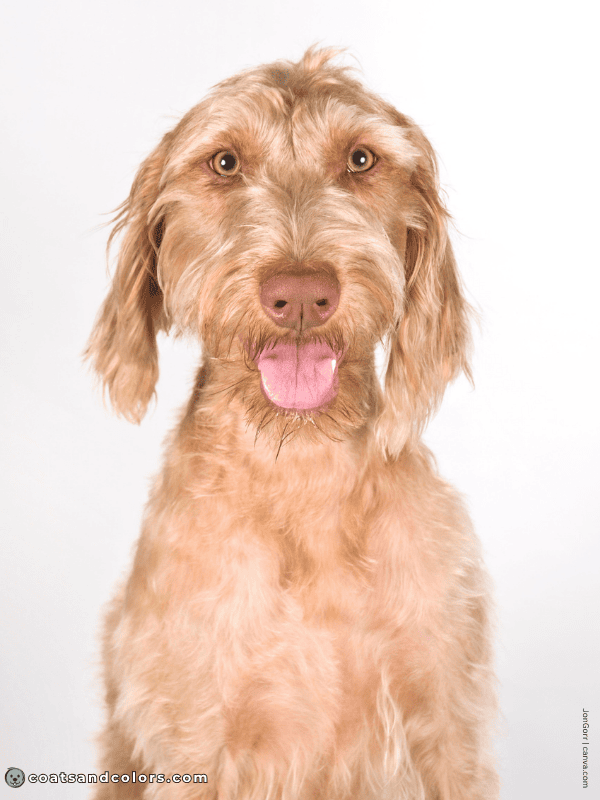
The FCI breed standard recognizes dark sandy gold (semmelgelb, the color of a bread roll) as a Vizsla color. The RKC calls the same color golden sand.
However, the AKC lists various shades that are lighter “golden rust” as alternate colors, namely rust golden, golden, and sandy yellow. And even the FCI does not accept light yellow colors.
BASE PATTERN
recessive red
MERLE
–
OTHER
–
EUMELANIN
brown
INTENSITY
semmelgelb, sandy gold
WHITE
solid
Faulty Colors
“Red, brown or yellow colors are faulty.“
AKC Breed Standard[1]
“DQ: Dark brown or pale yellow colour. Particoloured, not uniformly coloured.”
FCI Breed Standard[2]
Base Patterns
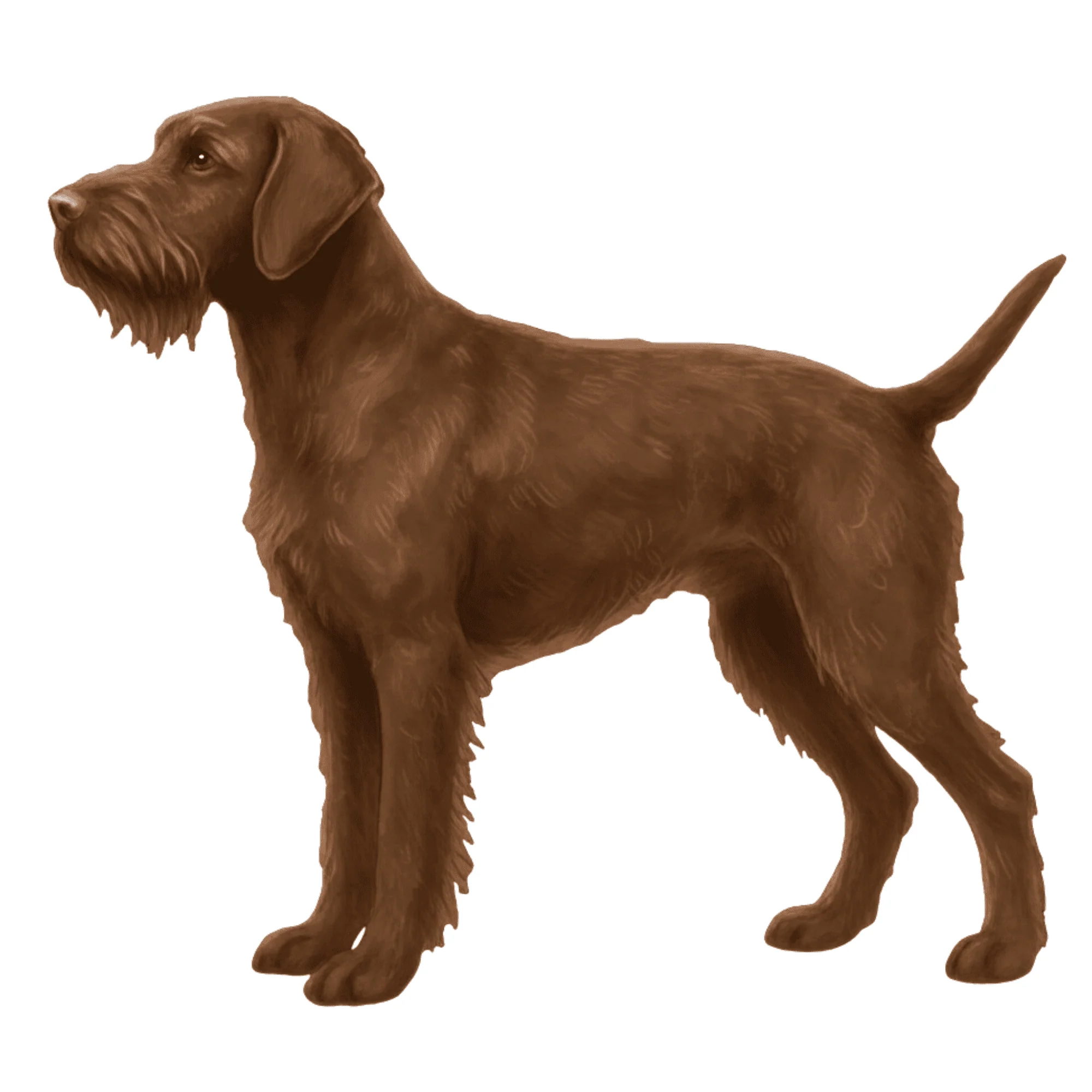
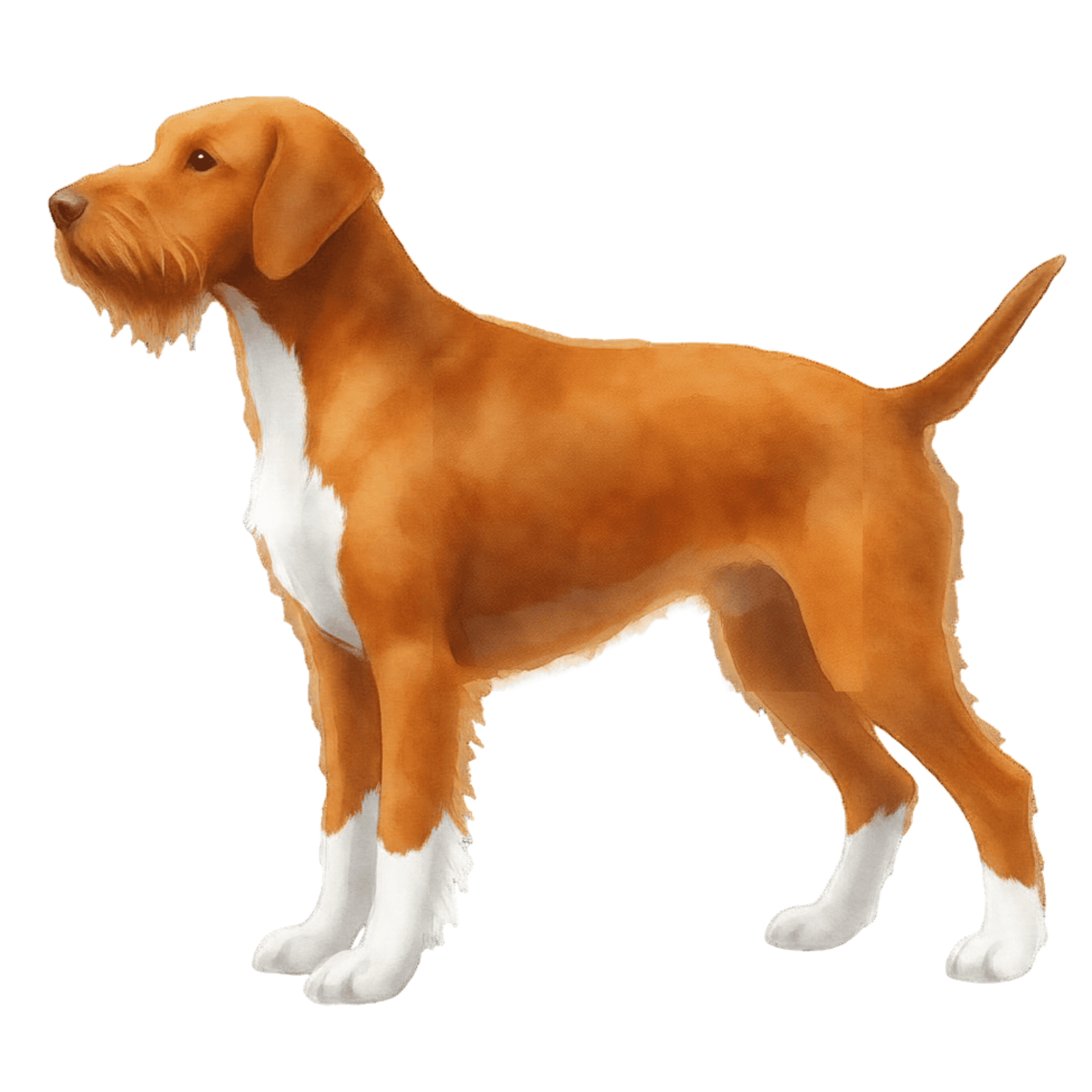
The base pattern describes the placement of phaeomelanin and eumelanin in the coat. There is an epistatic hierarchy between these genes: A locus < K locus < E locus.
A Locus
| Ay | clear sable |
| at | tan point |
| a | recessive black |
Most Vizslas have one or two tan point alleles (at) at their A locus. Some have sable (Ay) or recessive black (a). However, they can not express these patterns due to their e/e genotype.
K Locus
| KB | dominant black |
| ky | wild-type |
Vizslasare mainly dominant black (KB) underneath their red coat. But normal pattern expression (ky) is also present. Because vizslas are e/e, they cannot express any of these patterns.
E Locus
| e | recessive red |
Vizlas are fixed for recessive red (e/e). This means they can not express eumelanin in their coat. All of their hairs only show phaeomelanin. And they will have light whiskers.
If they were E/-, their most likely colors would be solid brown or brown & tan or chocolate fawn.
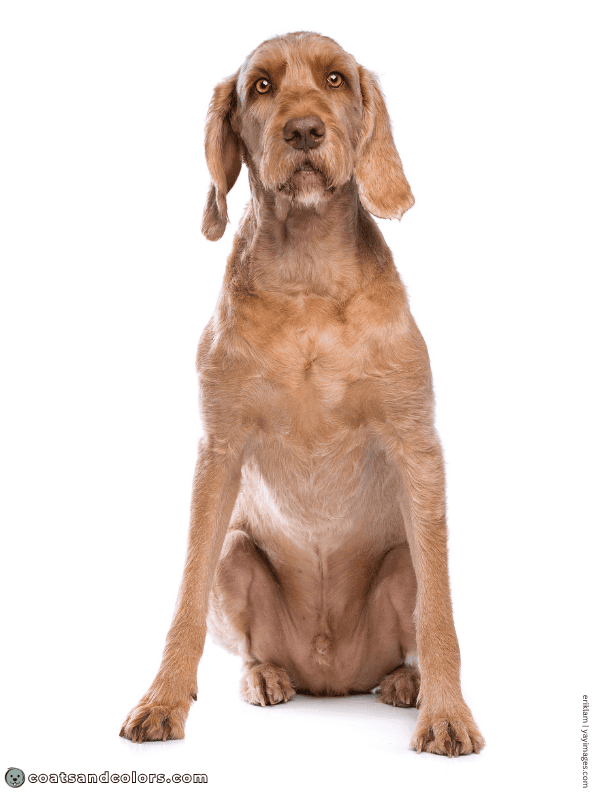
Wire-Haired Vizsla Base Pattern
| A LOCUS | K LOCUS | E LOCUS | PATTERN |
|---|---|---|---|
| *any* | *any* | e/e | recessive red |
Base Colors
The base color is determined by the B locus and D locus.

B Locus
| b | brown |
Vizlas have brown eumelanin (b/b).
A black nose is listed as a disqualifying fault. Meaning the dominant B was also present in the past.
D Locus
| D | normal |
Vizslas have normal pigment (D/D).
Red Intensity
The desired phaeomelanin intensity in this breed is a bright orange “golden rust” color”. The FCI also accepts “sandy gold“. But wire-haired Vizslas should neither look too yellow nor too red.
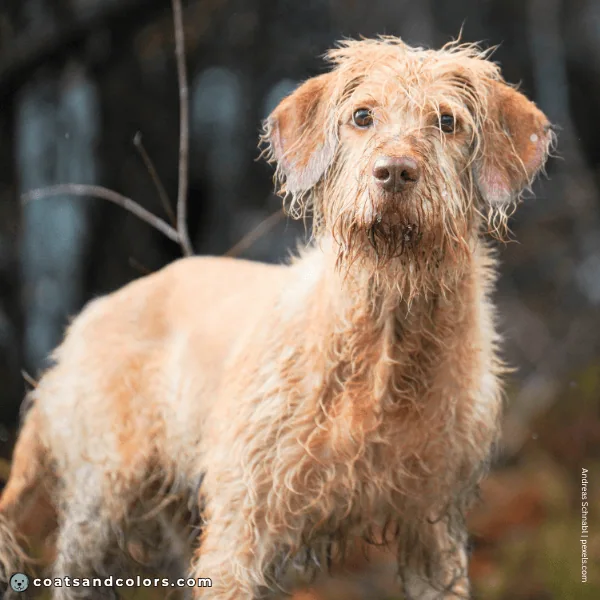
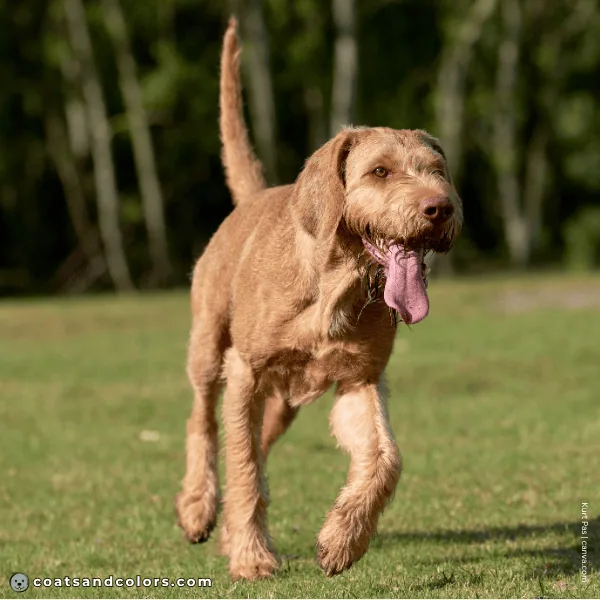

“Golden rust in varying shades. Red, brown or yellow colors are faulty.”
AKC Breed Standard[1]
“Various shades of russet gold and dark sandy gold (semmelgelb). The leathers may be a little darker, otherwise uniform in colour. Red, brownish, light yellow or lightened colour shadings are undesirable.”
FCI Breed Standard[2]
White Markings
The wire-haired Vizsla can have a small white spot on the chest or toes. But they should look solid red and not have any larger white markings.
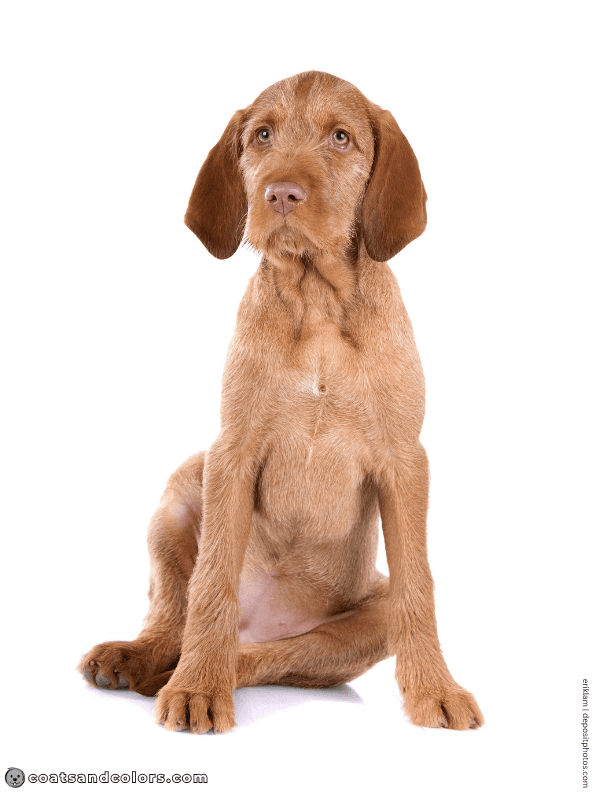
“White on the forechest or throat, not more than 2 inches in diameter, as well as white on the toes is permissible and common. Solid white extending above the toes or white anywhere else on the dog except the forechest and throat is a disqualification.”
AKC Breed Standard[1]
“A little white patch on the chest or at the throat, not more than 5 cm in diameter, as well as white markings on the toes, are not considered faulty.”
“DQ: White chest patch larger than 5 cm. White feet.”
FCI Breed Standard[2]
Wire Vizsla Eye Colors
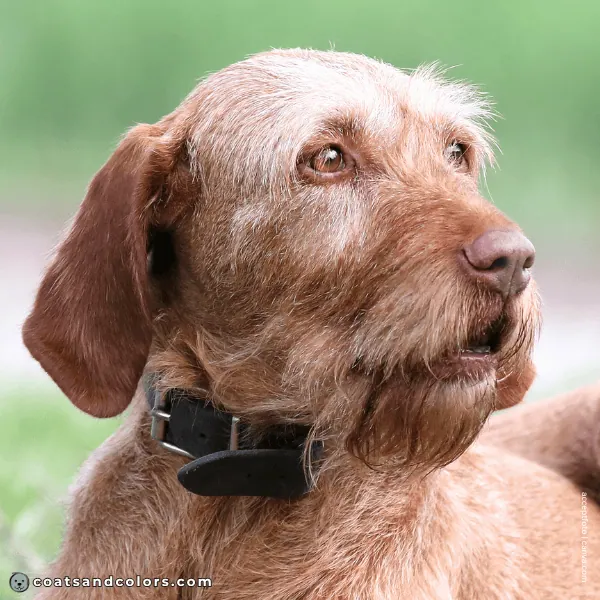
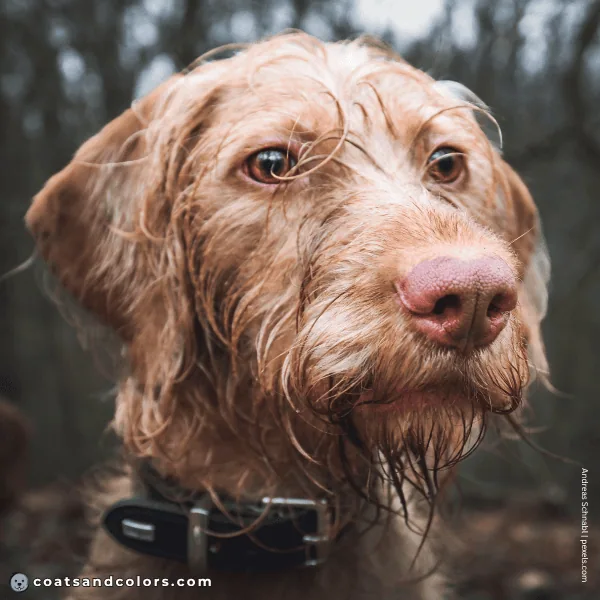
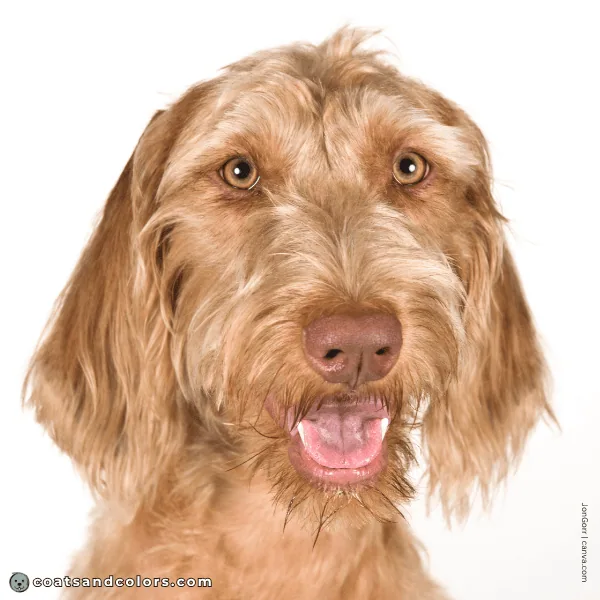
“Iris color is as dark as possible and blends harmoniously with the coat color.”
“Yellow eyes are a serious fault.”
AKC Breed Standard[1]
“The brown eye colour harmonising with the coat colour, as dark as possible preferred.”
“DQ: Light yellow eyes.”
FCI Breed Standard[2]
Wire Vizsla Nose Colors
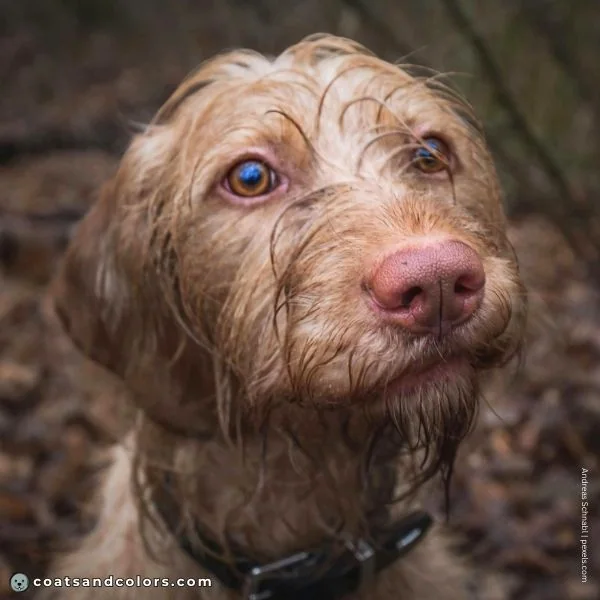
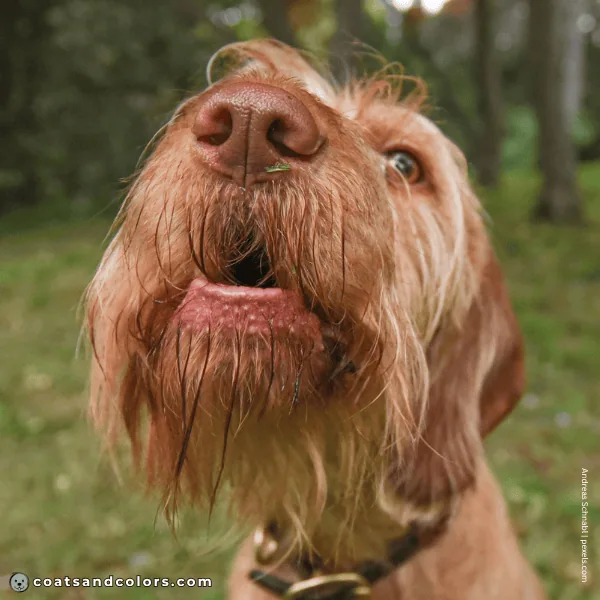
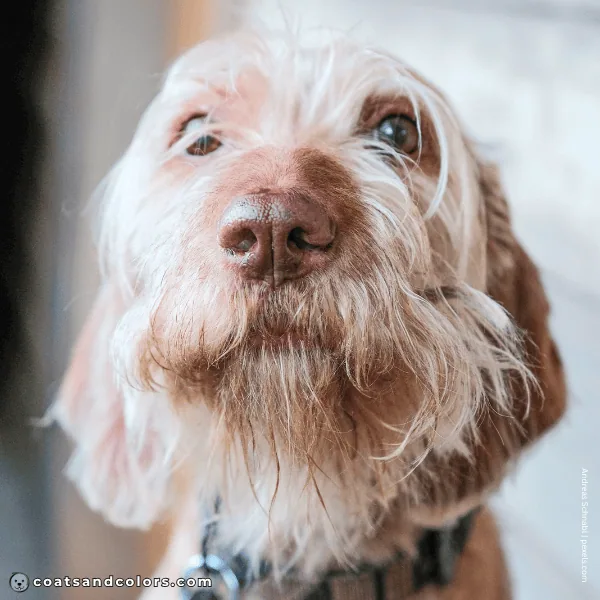
“The nose color should blend with the coat color. Any black on the nose is a disqualification, but brown freckles, due to aging or sun exposure are not to be faulted.”
AKC Breed Standard[1]
“The colour of the nose harmonises in a dark shading with the coat colour.”
FCI Breed Standard[2]
Wire Vizsla Coat Type
This is a wire-haired gundog with some amount of undercoat.
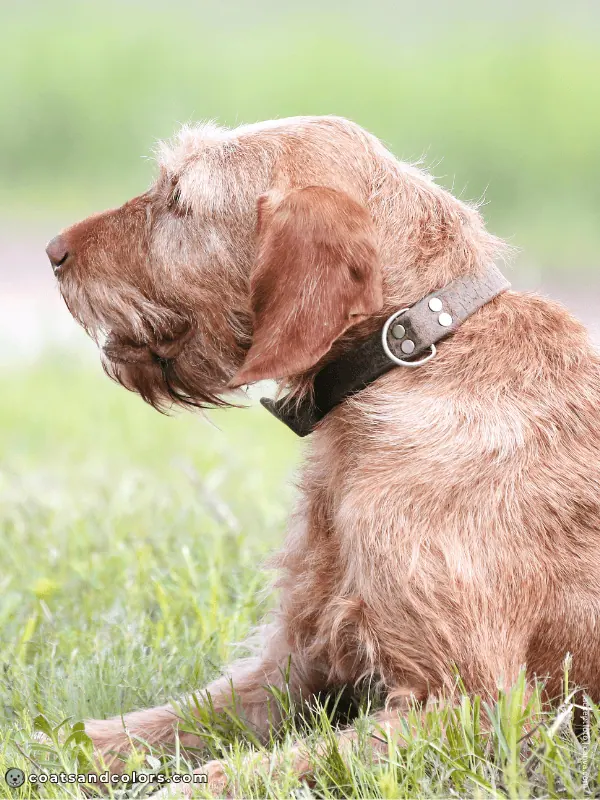
“Close lying, a length of approximately 1 inch, the dense wiry coat should not hide the outline of the body. Pronounced eyebrows highlight the stop. Expression is enhanced not only by eyebrows, but also by a strong, harsh beard, approximately 1 inch in length, formed from both sides of the muzzle.”
AKC Breed Standard[1]
“Wiry, close lying, strong, dense and not glossy.[…] dense, water repellent undercoat. Pronounced eyebrows accentuate the stop. These and a strong, not too long (2-3 cm), as harsh as possible beard, on both sides of the muzzle, underline the determined expression. On both sides of the neck the coat forms V-shaped brushes.”
“DQ. Thin coat, lacking undercoat. Long, soft, silky, shaggy, crinkle or woolly coat. Lacking brushes on the legs.”
FCI Breed Standard[2]
You get a dense wire coat if you combine short hair with furnishings. Some dogs in this breed might have long hair (l/l), which can make the coat look more shaggy and feel less harsh than it should be.
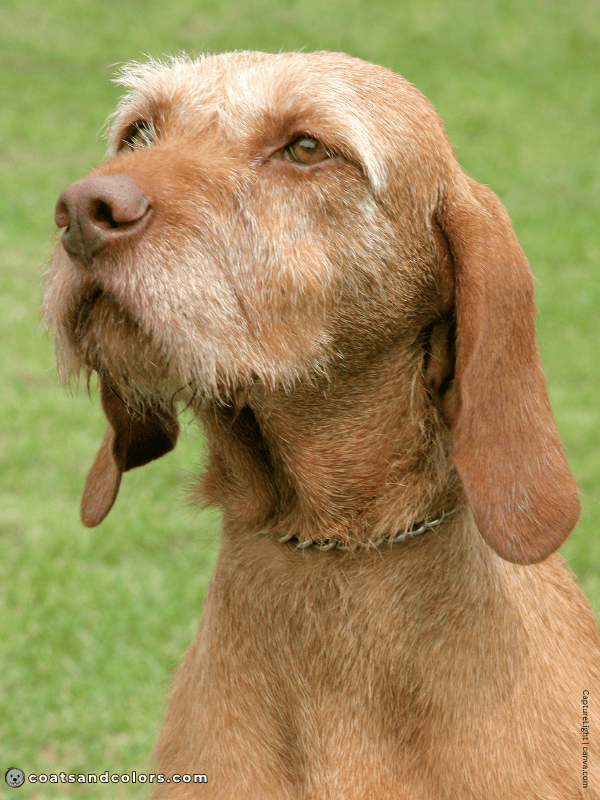

Breed standards mention a lack of brushes on the back of the front legs as faulty, so some dogs in this breed are either non-furnished or might have very weak furnishings.
Anyway, a proper Wire-Haired Vizsla should be truly wire-haired and furnished.
Related Breeds
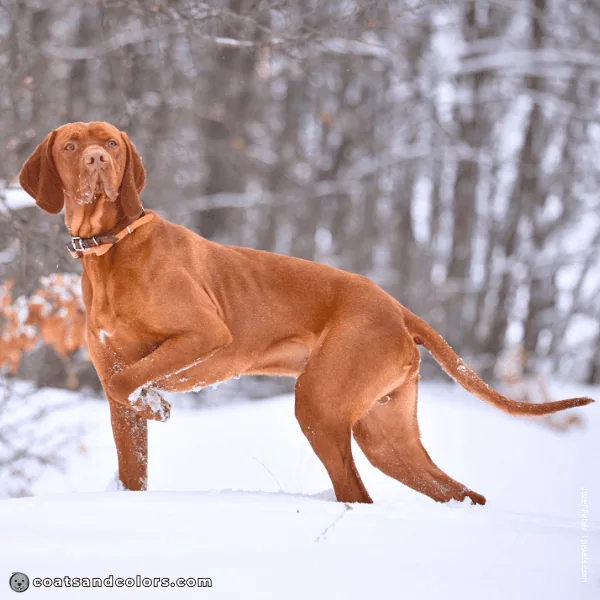
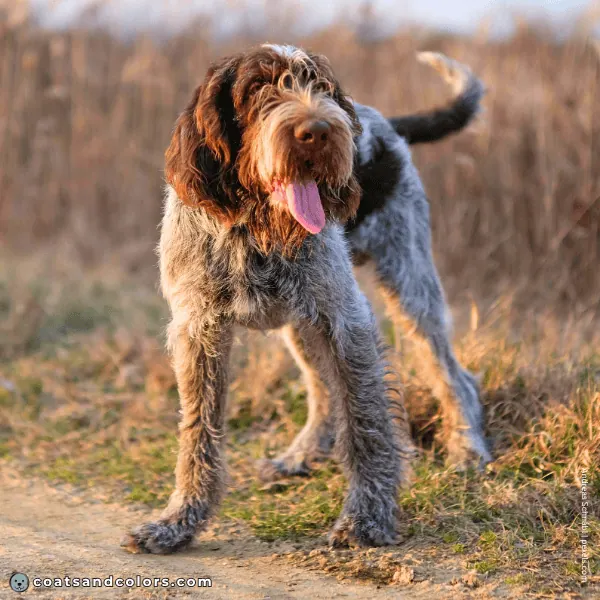
The Wire-Haired Vizsla was created by crossing smooth Vizslas with German Wire-Haired Pointers.
Learn More

Links
[1] American Kennel Club (AKC): Wirehaired Vizsla
[2] Fédération Cynologique Internationale (FCI): Wirehaired Vizsla
[3] Royal Kennel Club (RKC): Wirehaired Vizsla
[4] Canadian Kennel Club (CKC): Wirehaired Vizsla
[5] Dreger et al. (2019). True Colors: Commercially-acquired morphological genotypes reveal hidden allele variation among dog breeds, informing both trait ancestry and breed potential. PLoS ONE 14(10): e0223995. https://doi.org/10.1371/journal.pone.0223995
Image Credits
acceptfoto/canva.com
Andreas Schnabl/pexels.com
Babett Paul/canva.com
CaptureLight/canva.com
eriklam/depositphotos.com
eriklam/yayimages.com
gabesdotphotos/pexels.com
jadephotography89/canva.com
JonGorr/canva.com
Jozef Fehér/pexels.com
Katrinbechtel/pixabay.com
Kurt Pas/canva.com
Hi! I’m Steffi. I am a biologist and a big time dog nerd. You are curious about coat color genetics? You’ve come to the right place! Read more.