

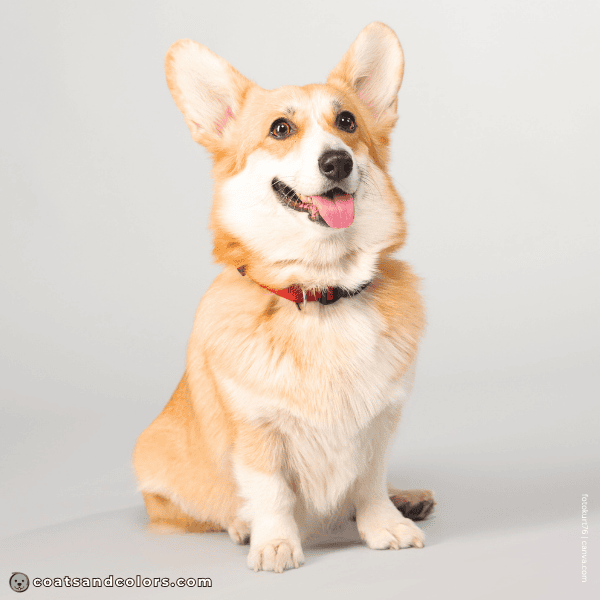
The Pembroke Welsh Corgi is a short-legged dog with a fawn, red, sable, saddle, or black and tan coat. They typically have white markings and can express countershading.
Fawn & White
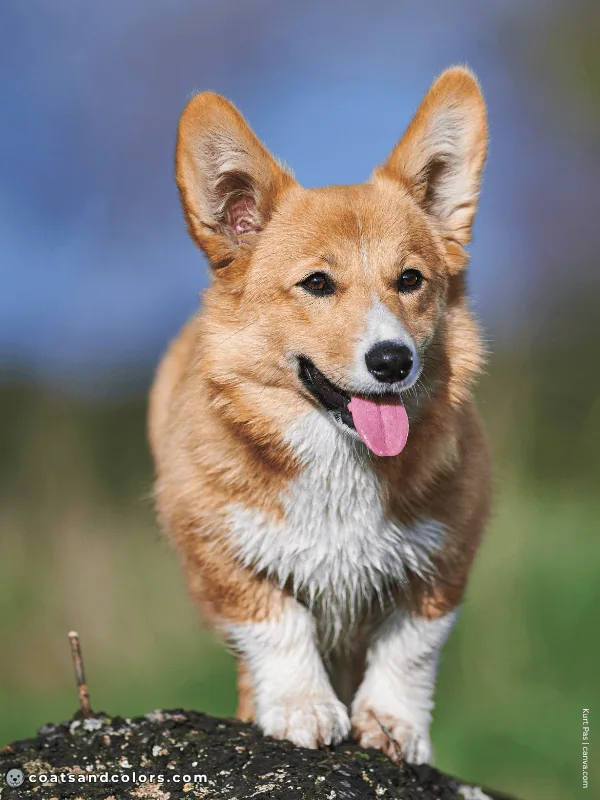
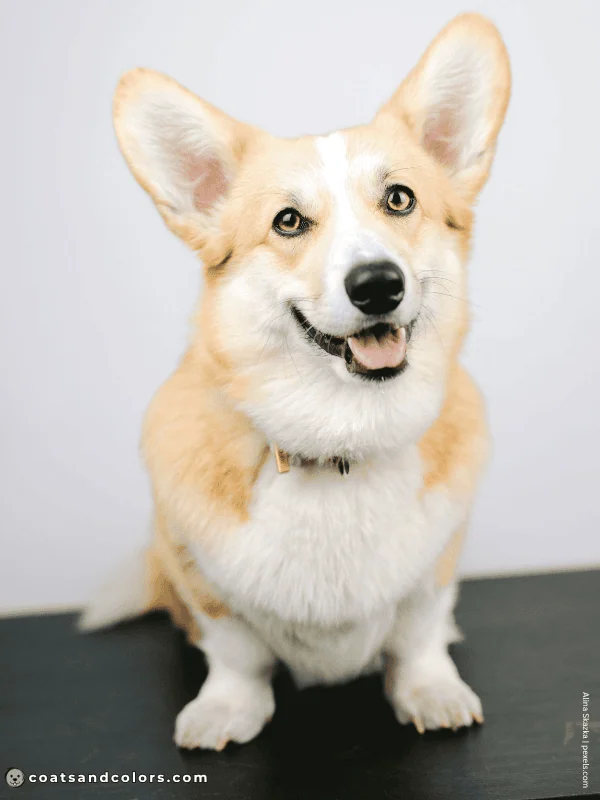
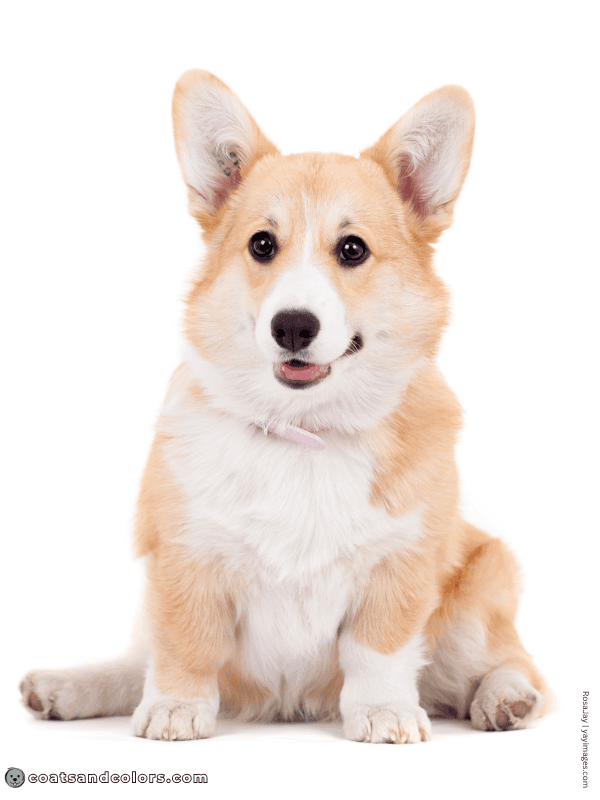
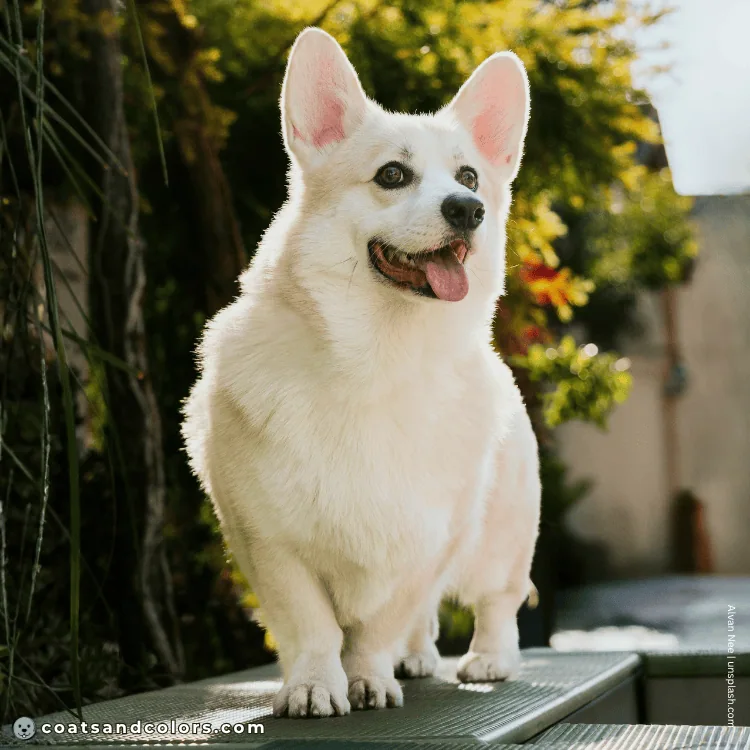
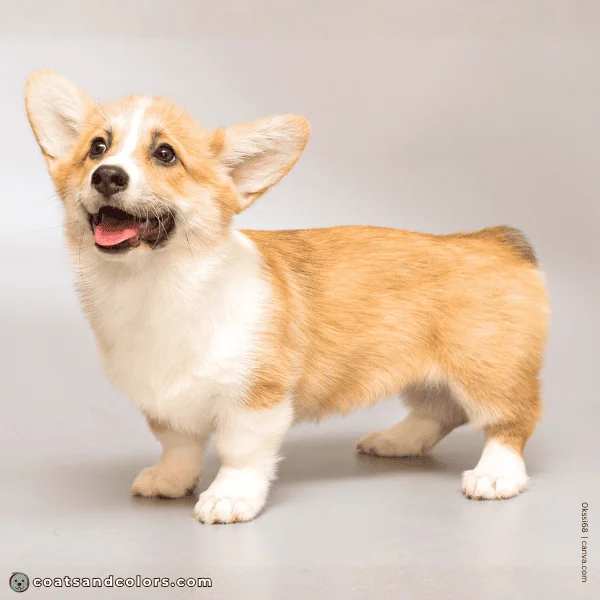
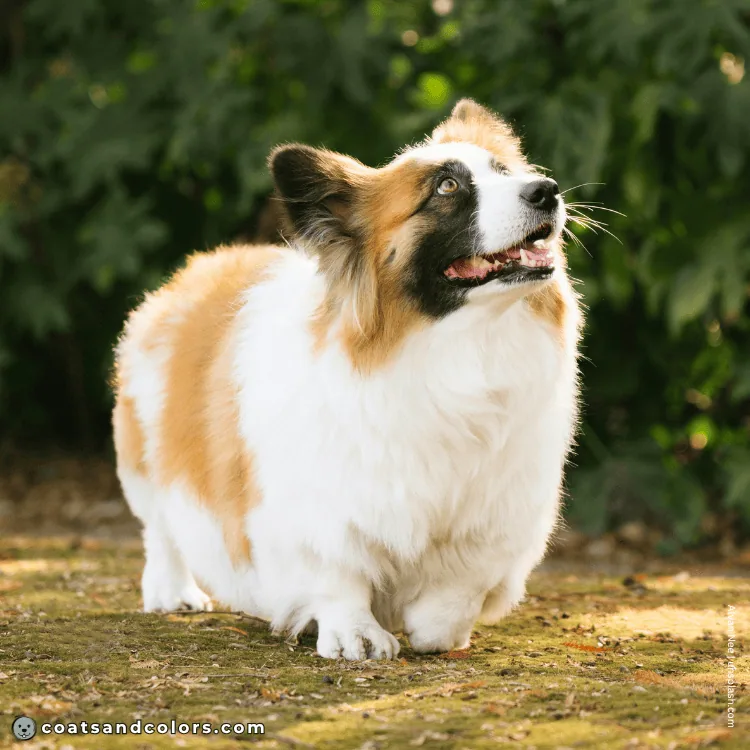
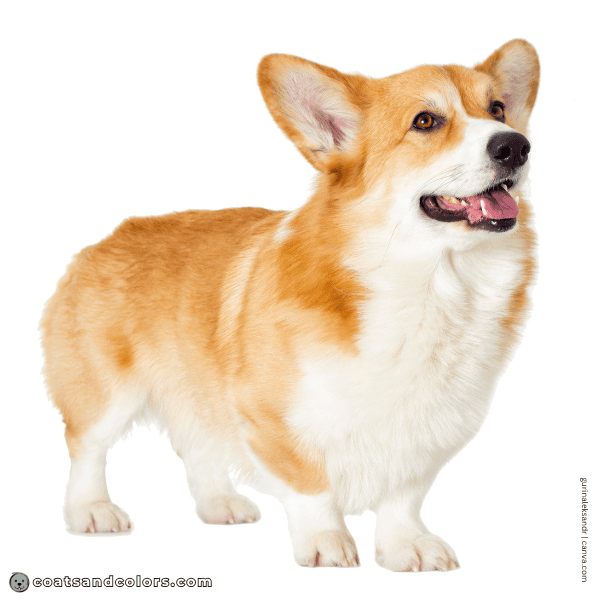
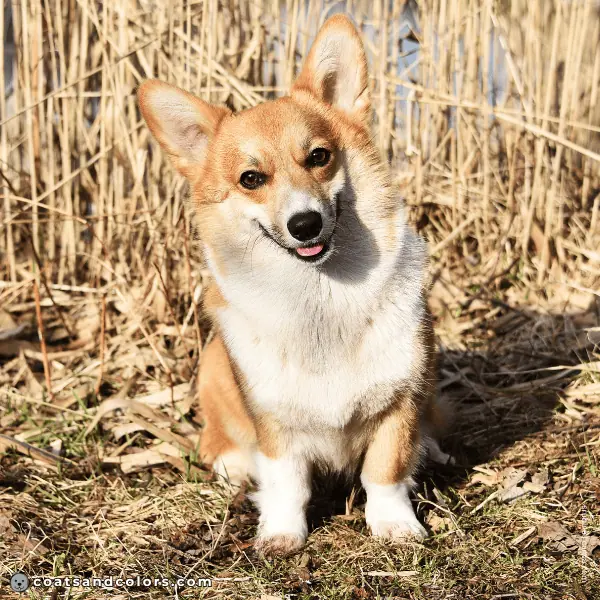
A fawn Welsh Corgi Pembroke has a clear sable pattern with medium to low red intensity. They are yellow to strawberry blonde and too light to be called “red”.
A red or fawn puppy can still have some dark overlay in its puppy coat, but this will clear.
Corgis typically also have white markings.
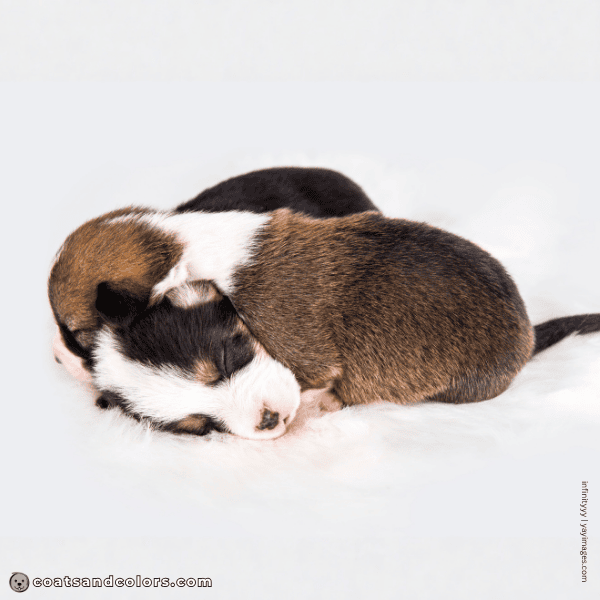
Fawn Corgis can have countershading, but it’s harder to see if the dog is already very light.
Some Corgis can have very low phaeomelanin intensity. This causes a very low contrast between their body coat and their white markings, making them look almost solid silver or cream. This extremely light coat color seems to happen only in some select families of Corgis.
BASE PATTERN
clear sable
MERLE
–
OTHER
can have countershading
EUMELANIN
black
INTENSITY
fawn
WHITE
white markings
Red & White
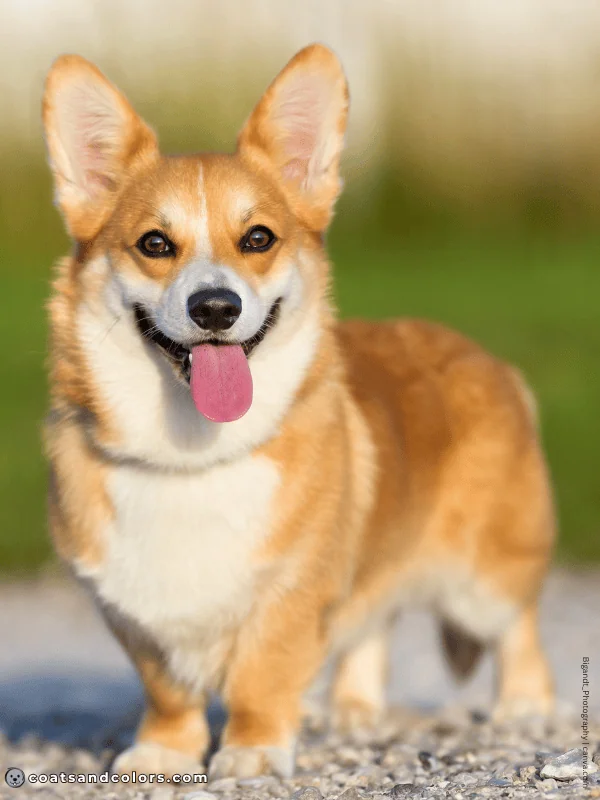
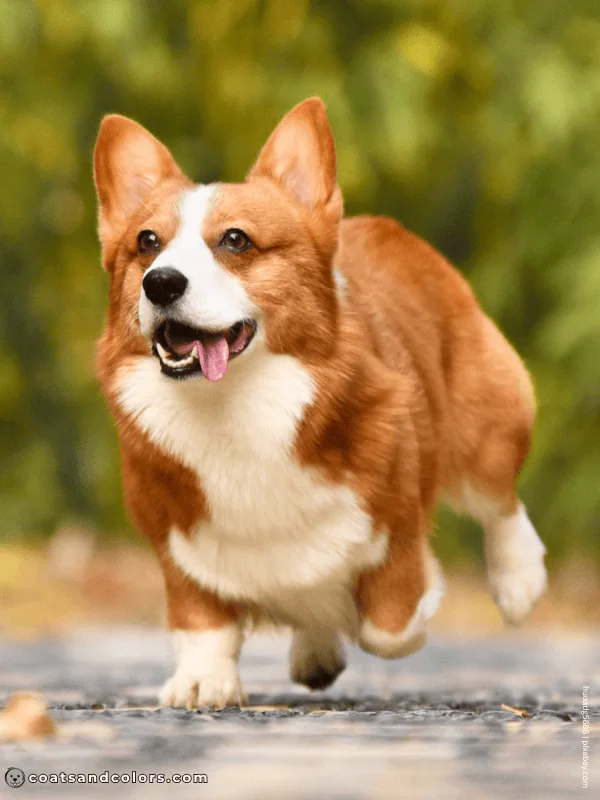
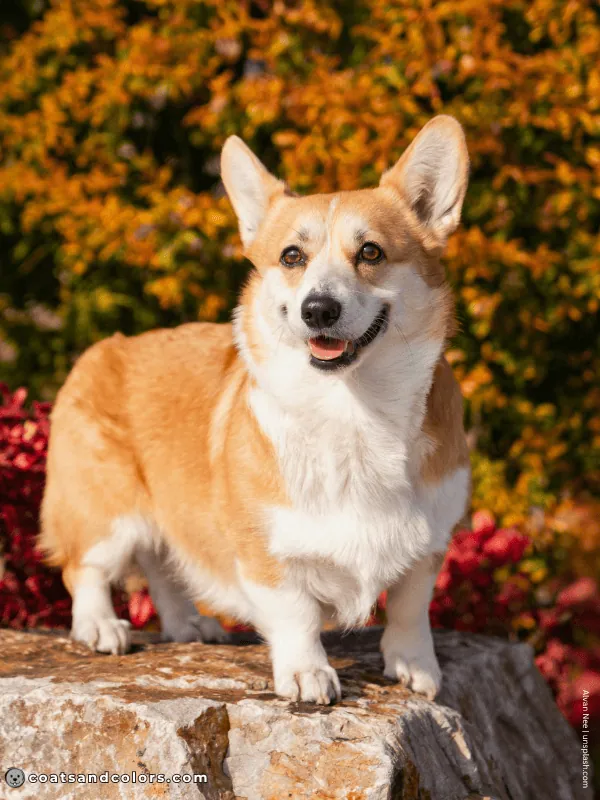
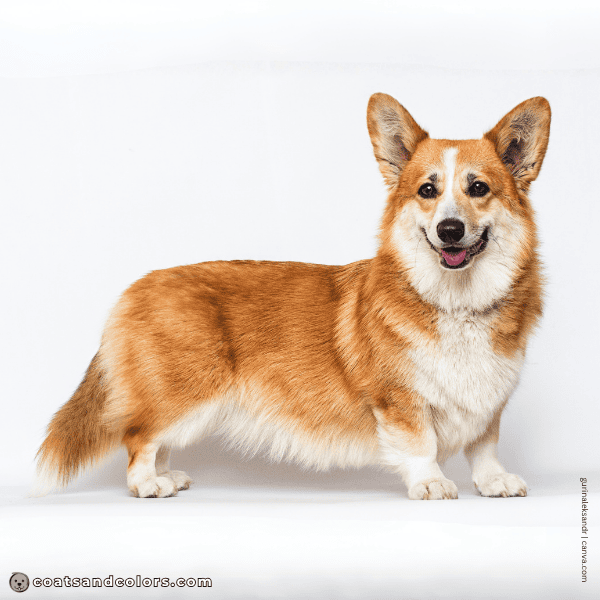
A red Welsh Corgi Pembroke has a clear sable pattern with high red intensity. Their rich reddish golden colors range from a tawny red to the orange red of a fox.
They have little to no sabling in their adult coat, but can be born with noticeable dark puppy shading that will fade over time. Of course, they also normally have white markings.
BASE PATTERN
clear sable
MERLE
–
OTHER
can have countershading
EUMELANIN
black
INTENSITY
red
WHITE
white markings
Sable & White
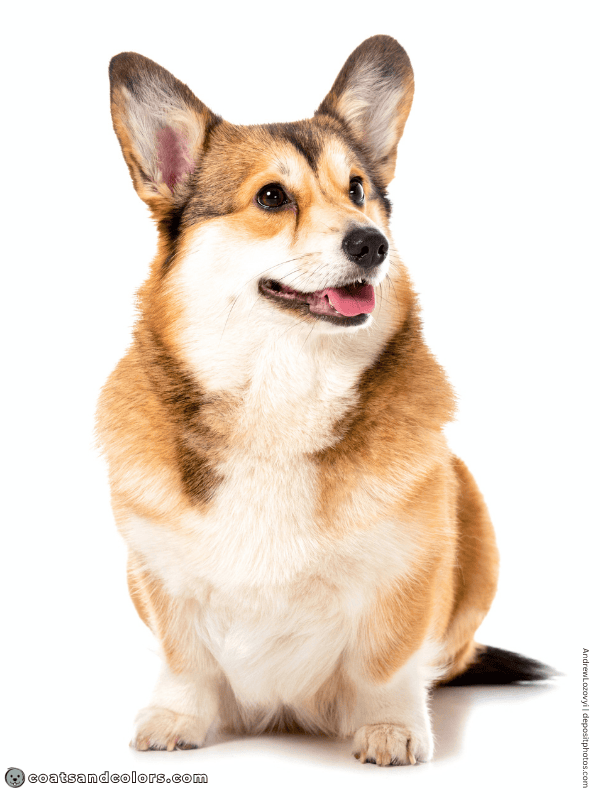
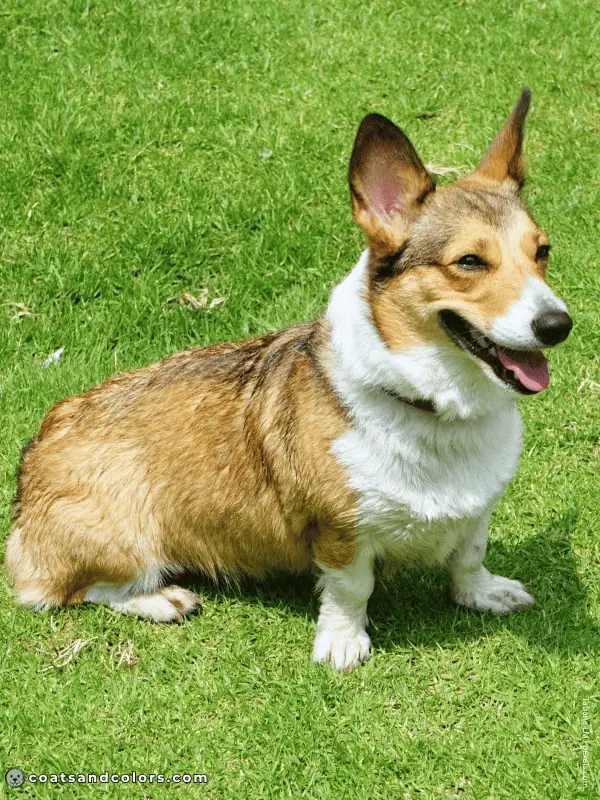
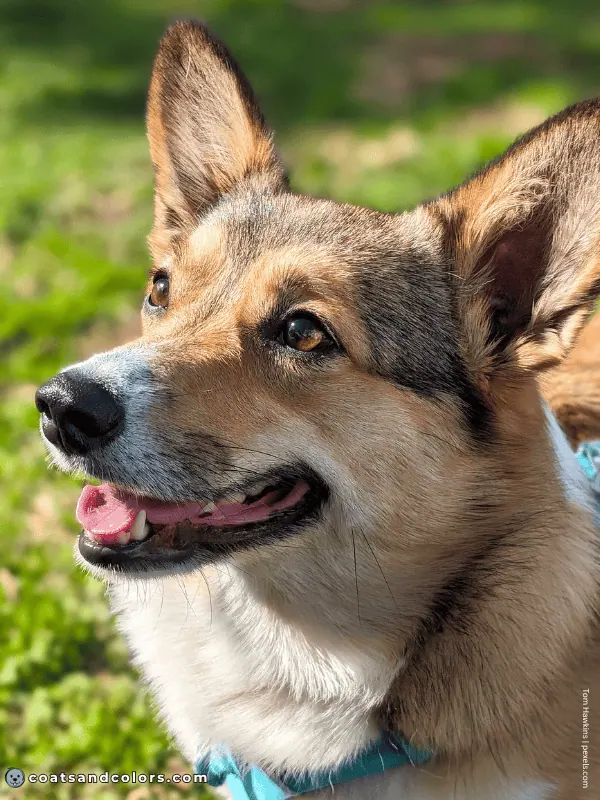
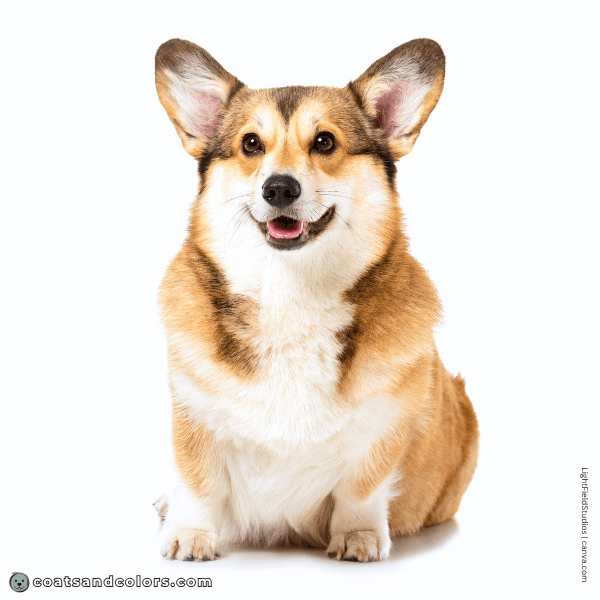
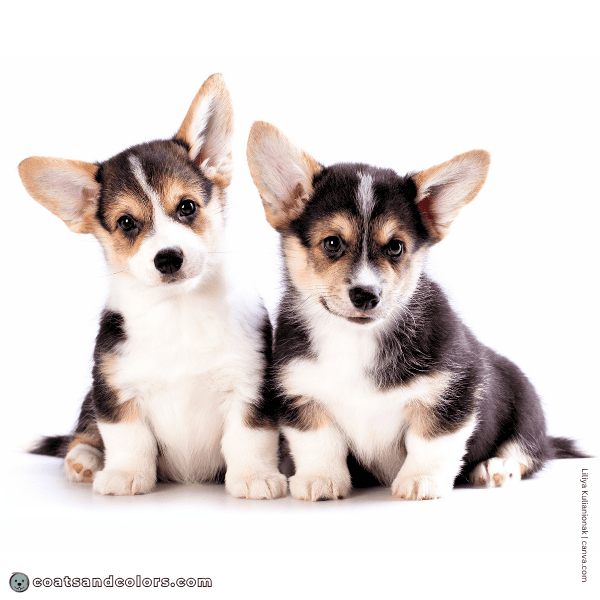
A sable Pembroke Welsh Corgi has a shaded sable pattern. Puppies will be born with varying amounts of dark overlay and can look quite mousy at first. When changing into their adult coats, puppies lose their dark overlay, which can give them false tan points for a while.
Adult Corgis with this pattern have black dorsal sabling.
The distribution of black-tipped hairs can vary a lot. Some dogs have concentrated sabling on their back, looking like a faded saddle. Some dogs only have sabling on their forehead.
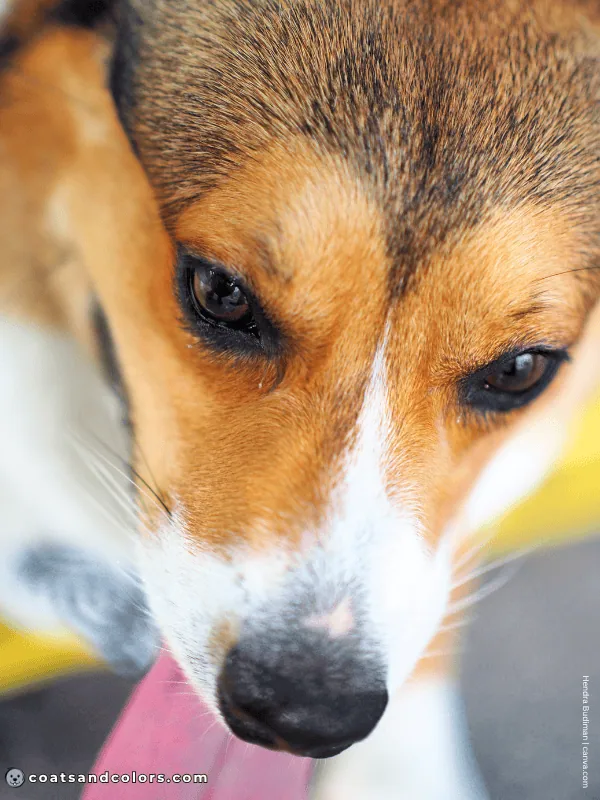
This pattern often happens in tan point carriers (Ay/at). Dogs that carry saddle (Ay/asa ) might have less intense sabling on their forehead and neck. The sabling can also be caused by expressing a shaded sable variant (Ays/asa or Ays/at is typically darker than Ays/Ays).
BASE PATTERN
shaded sable
MERLE
–
OTHER
can have countershading
EUMELANIN
black
INTENSITY
fawn, red
WHITE
white markings
Red-Headed Tri
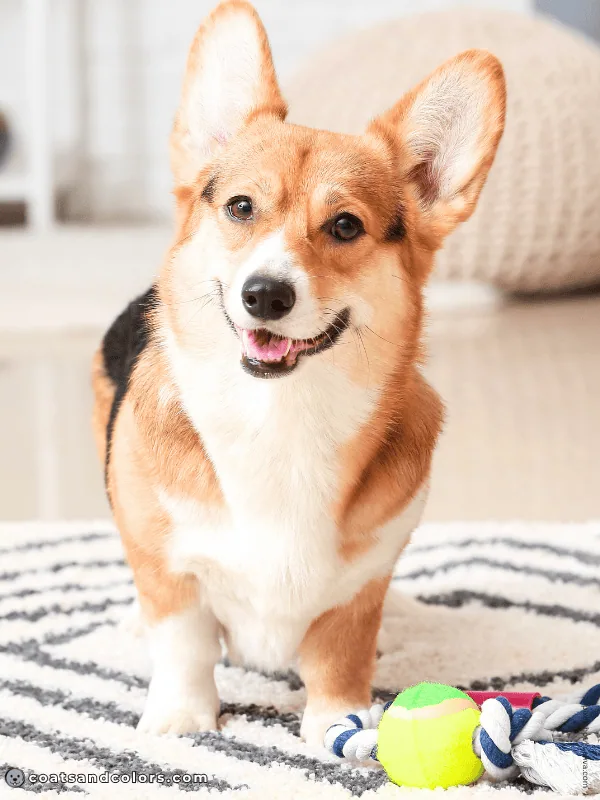
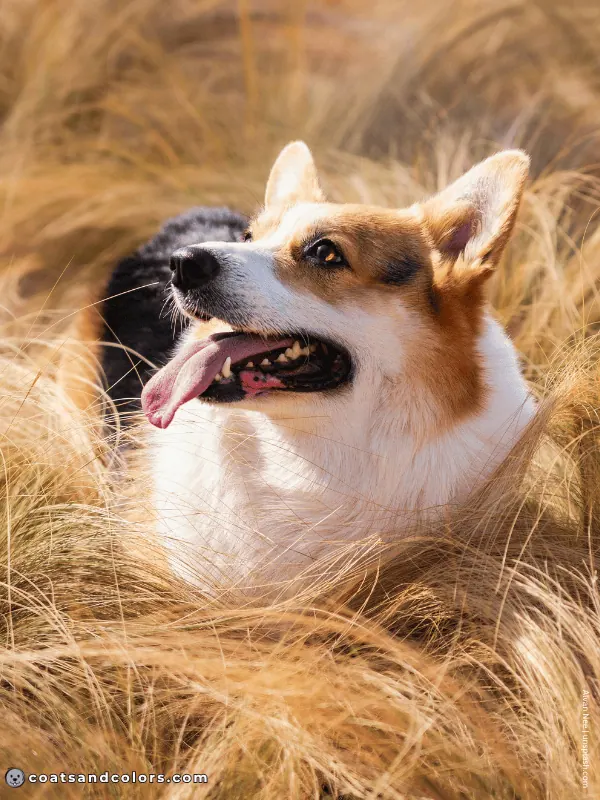

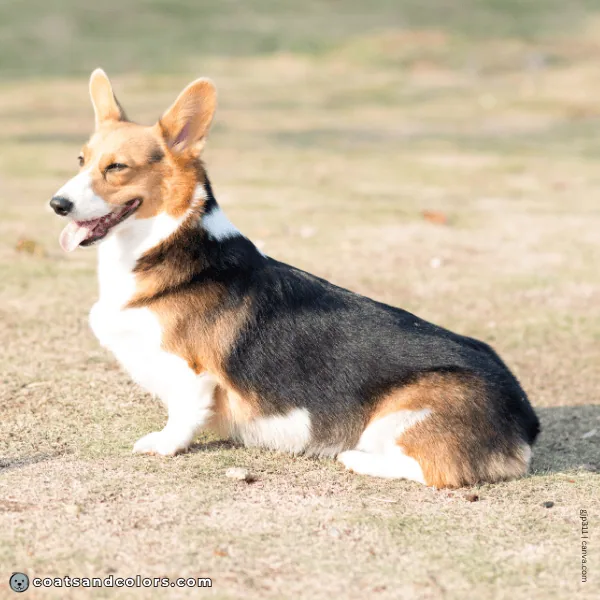
A red-headed tricolor Corgi has a saddle pattern (asa/asa) with white markings.
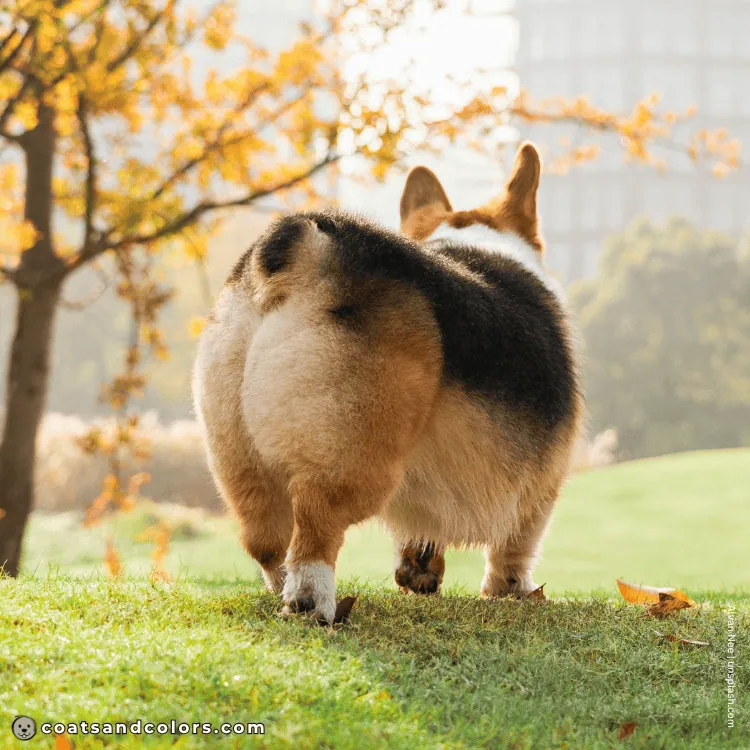
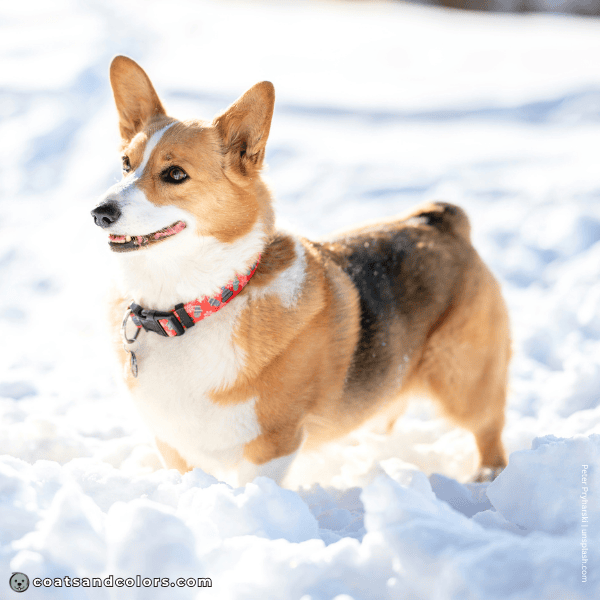
Puppies are born with lots of dark overlay and can look like they had tan points. But over time, the tan areas expand until the dog has a mainly tan coat with a black saddle.
Saddle can be very much just black. Or the hair can have tan roots or some lighter undercoat showing through. It’s also normal for saddles to fade a little over the years.
BASE PATTERN
saddle
MERLE
–
OTHER
can have countershading
EUMELANIN
black
INTENSITY
fawn, red
WHITE
white markings
Red-Headed Tri + Black Cap
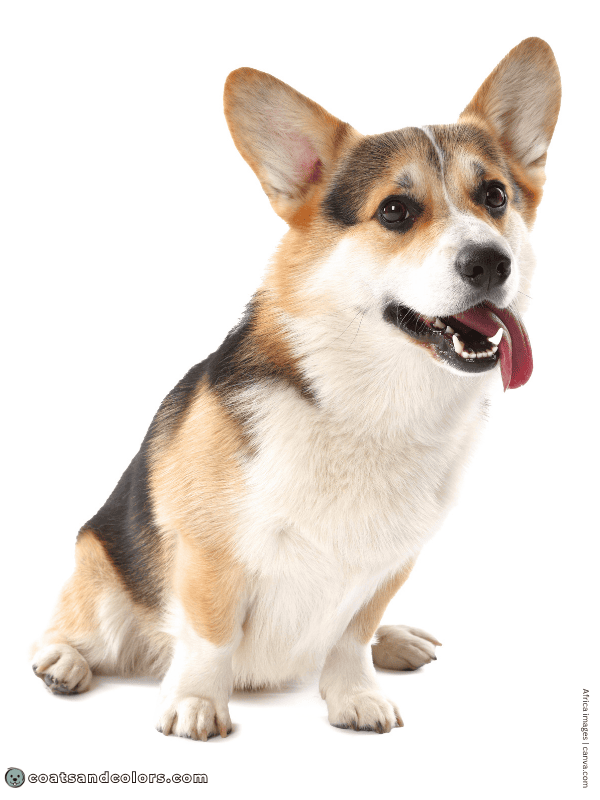

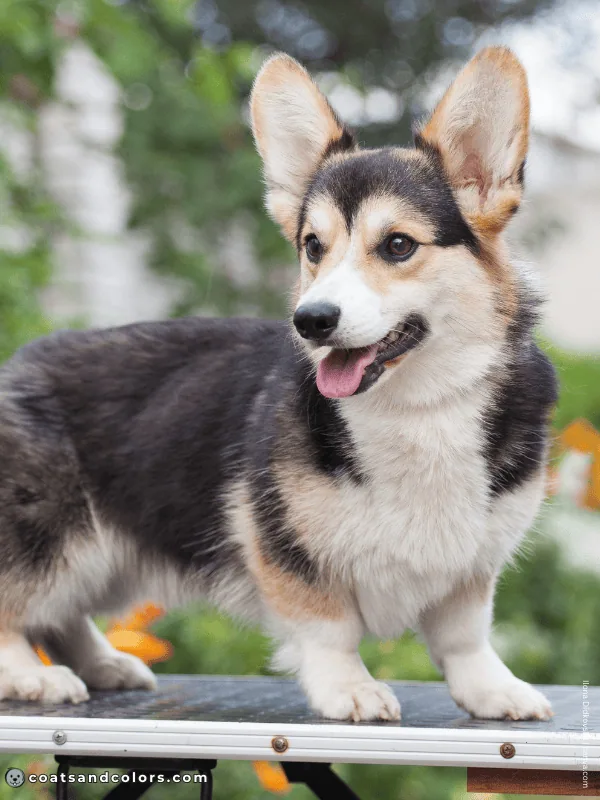
This is a breed term for creeping tan. It’s essentially a version of saddle tricolor that happens in some saddle dogs that carry tan points (asa/at = BS/BB).
Dogs have a predominantly red head with a black “cap” on their forehead. However, the size of the cap can vary a lot, with some dogs looking more red-headed than others.
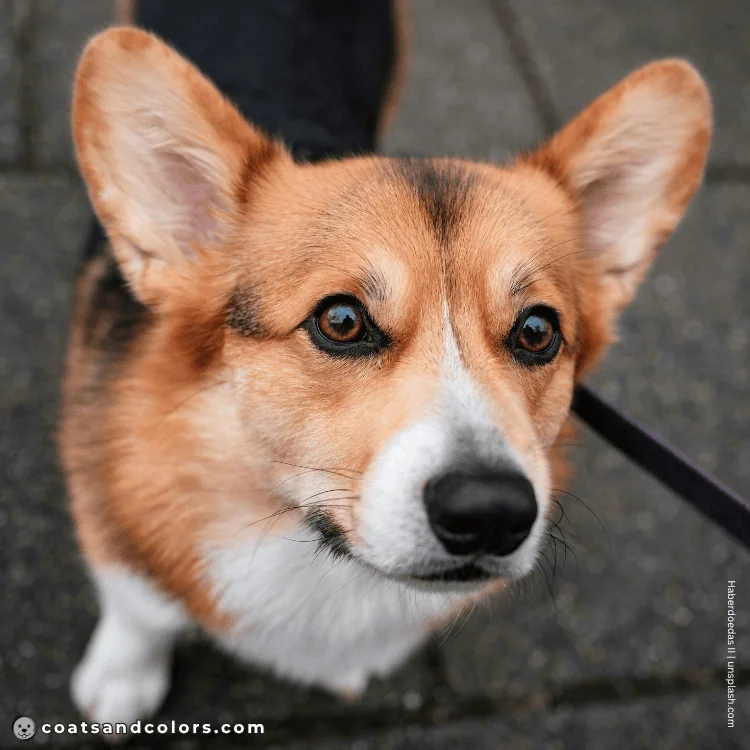
BASE PATTERN
creeping tan
MERLE
–
OTHER
can have countershading
EUMELANIN
black
INTENSITY
fawn, red
WHITE
white markings
Black-Headed Tri
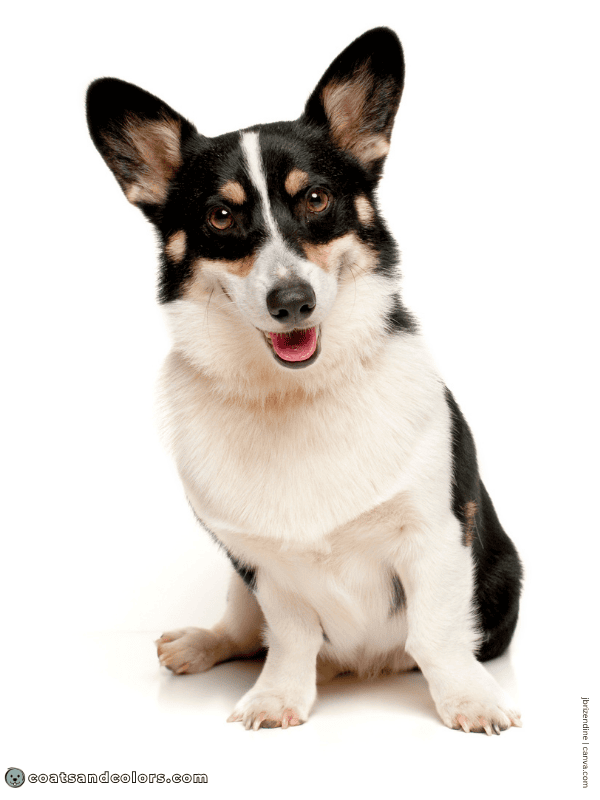
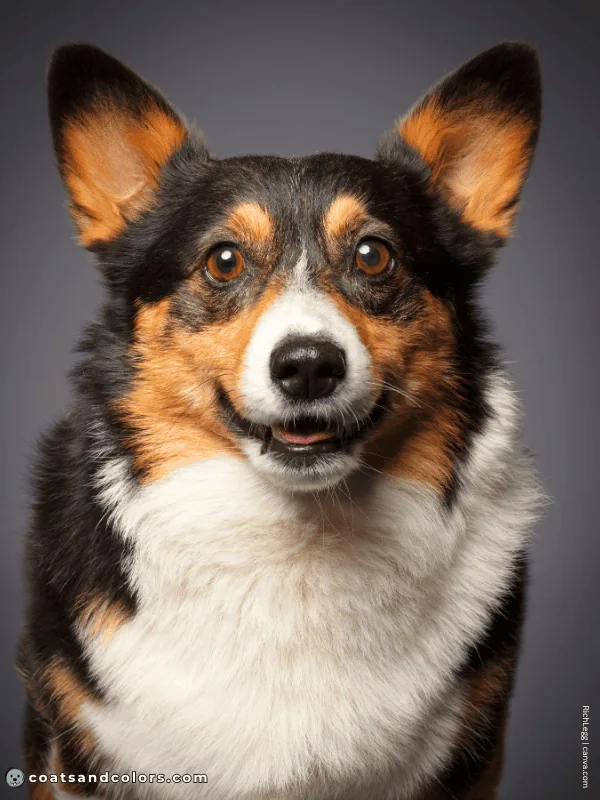
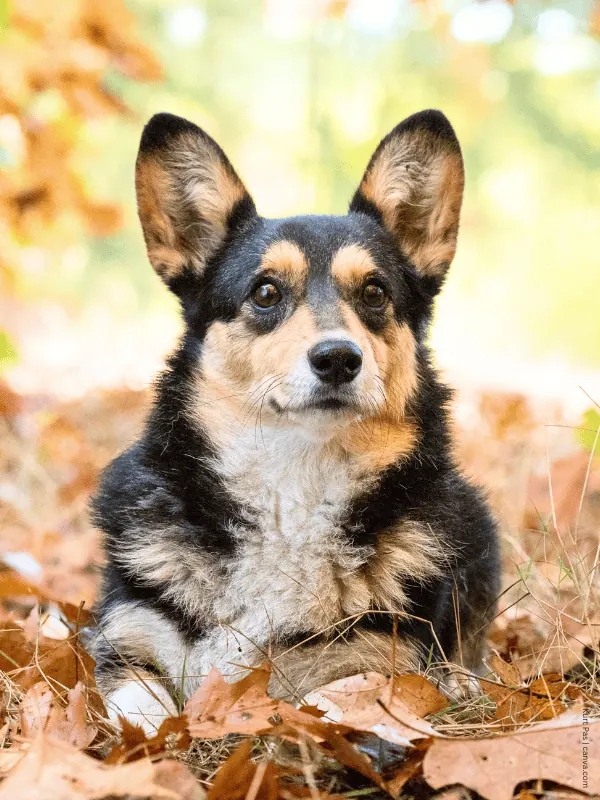
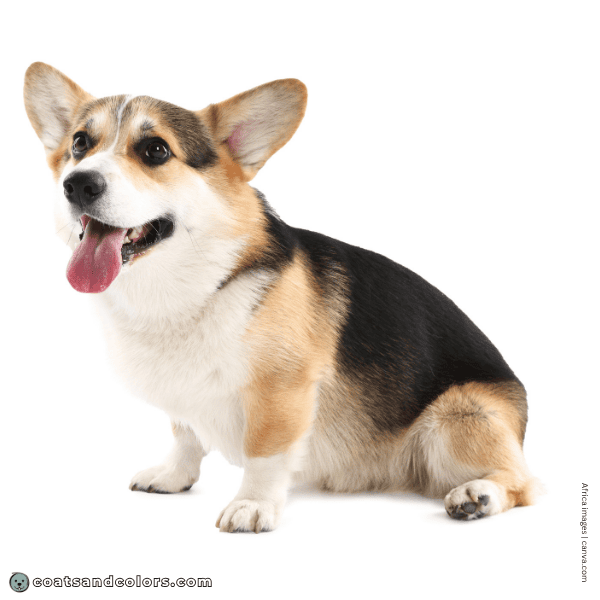
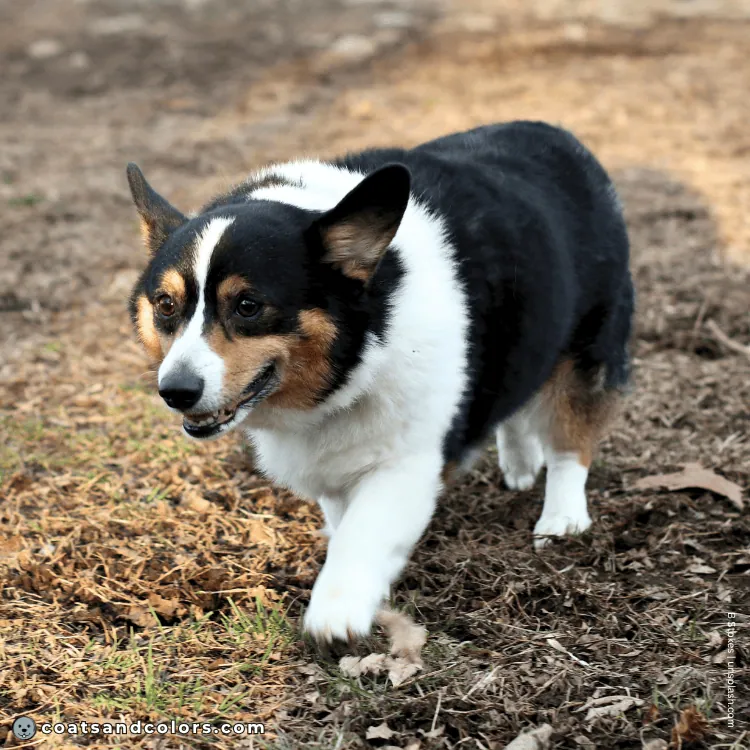
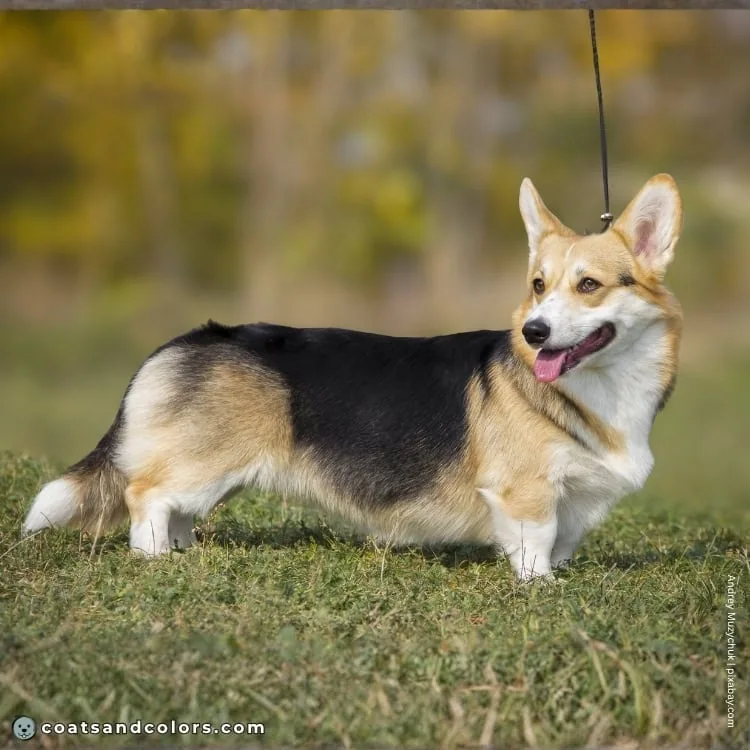
A black-headed tricolor Corgi is black & tan (at/at) with white markings.
A black tricolor Pembroke Welsh Corgi has a mainly black coat with red or fawn markings on the cheeks, above the eyes, on the chest, lower legs, and under the tail.
They have black coat below their eyes and their tan markings will not extend over time. All the separate black, tan, and white areas of the coat should have clearly defined edges.
BASE PATTERN
tan point
MERLE
–
OTHER
can have countershading
EUMELANIN
black
INTENSITY
fawn, red
WHITE
white markings
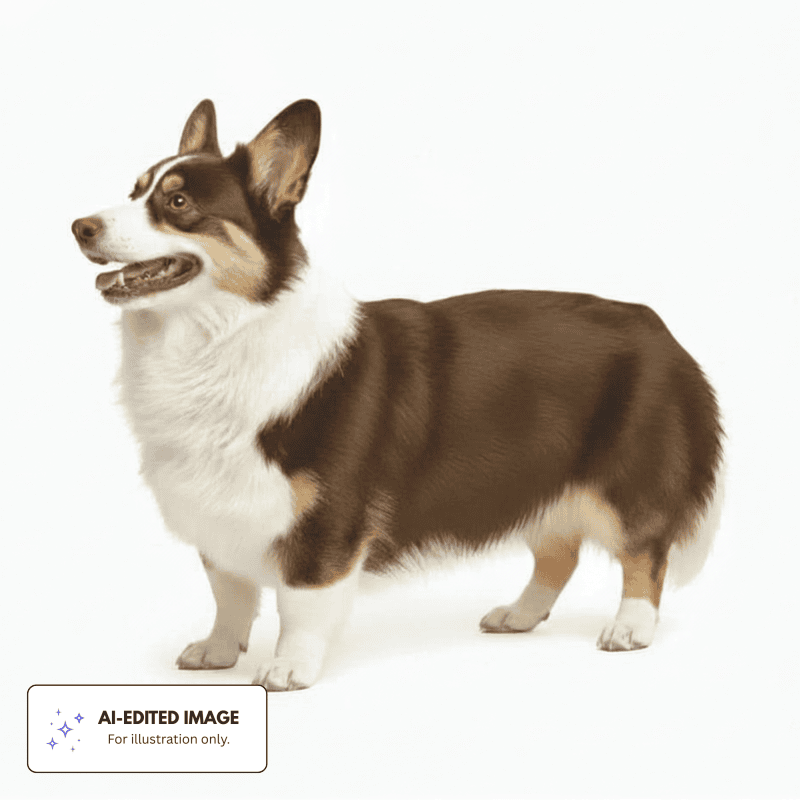
Faulty Colors

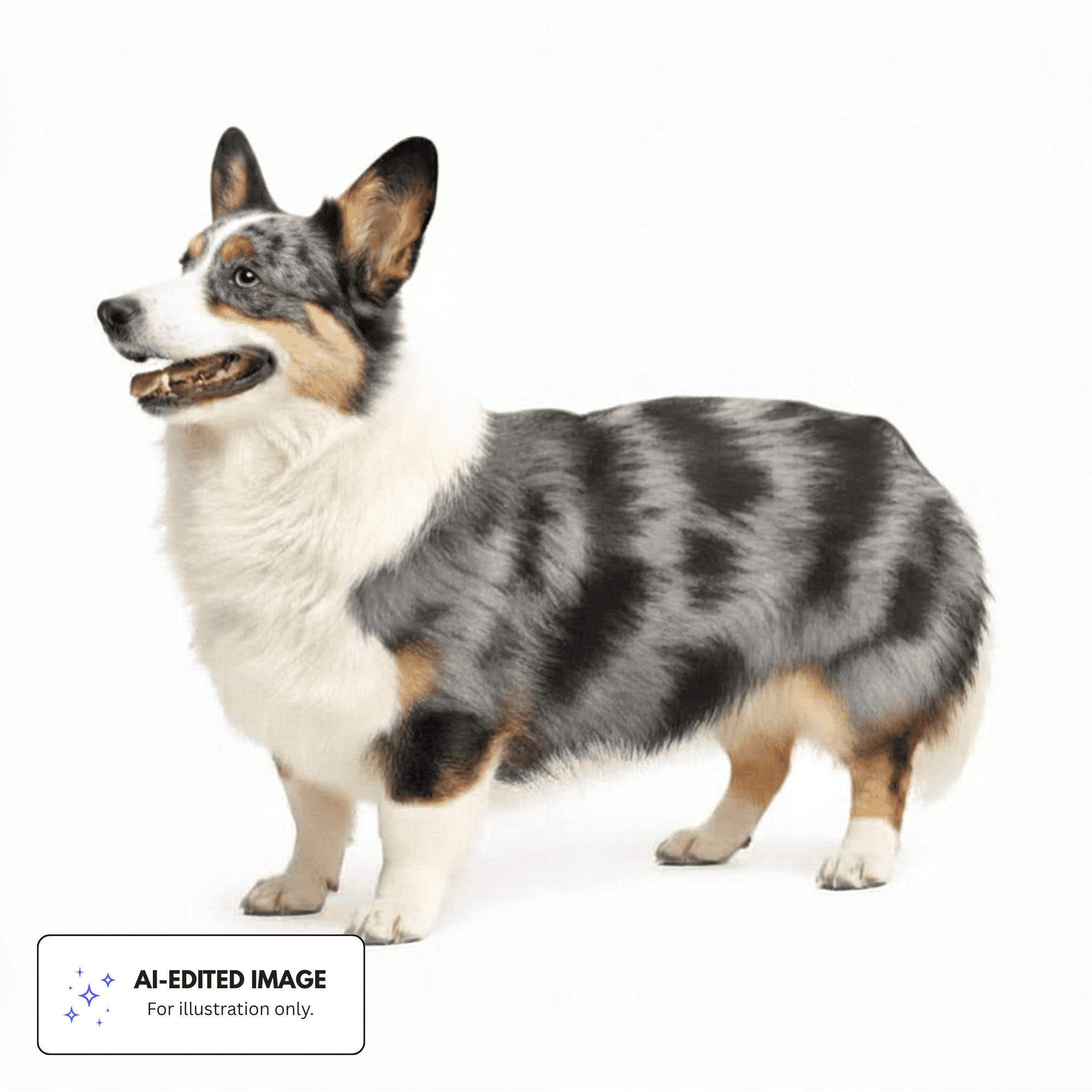
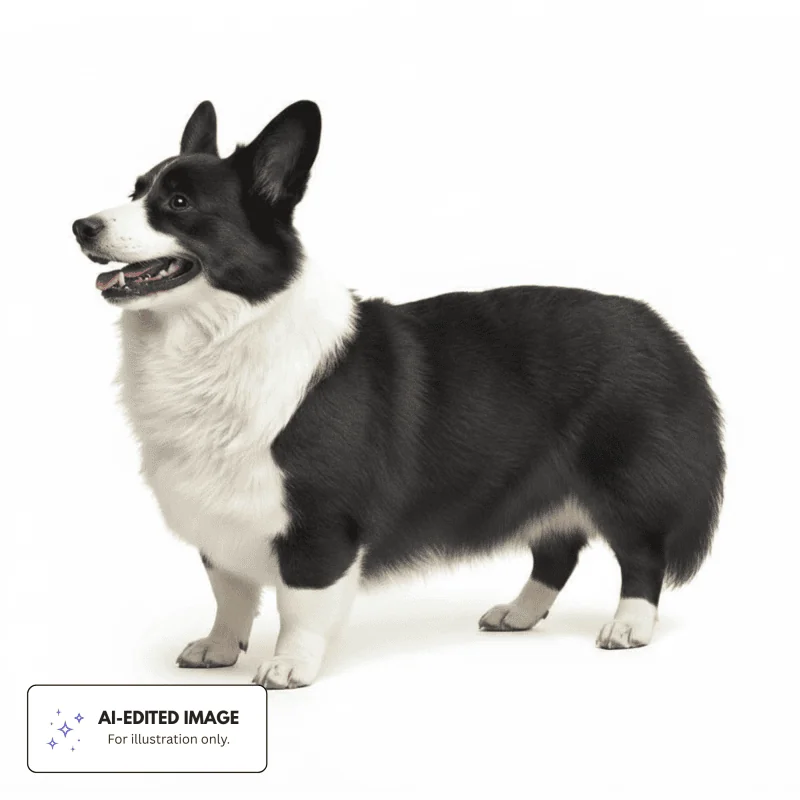
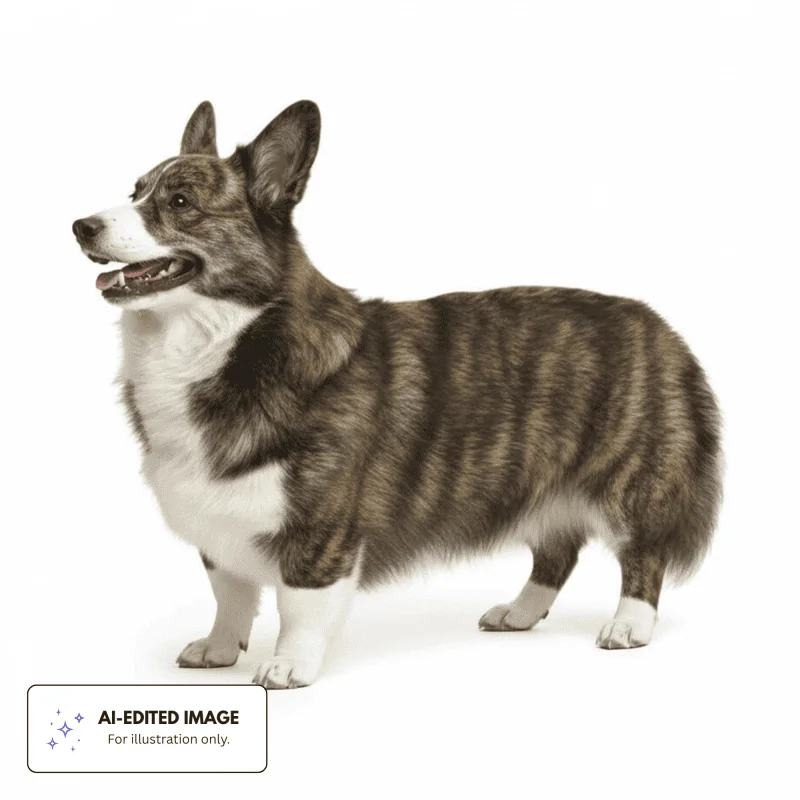
Base Patterns
The base pattern describes the placement of phaeomelanin and eumelanin in the coat. There is an epistatic hierarchy between the A locus < K locus < E locus.
- The A locus controls the basic distribution of both pigment types.
- Next, the K locus can add black to the A locus pattern.
- Finally, the E locus regulates the general ability to produce black pigment.
A Locus
| Ay | clear sable |
| Ays | shaded sable |
| asa | saddle |
| at | tan point |
| a | recessive black (rare) |
Here is a simplified Pembroke Corgi color chart that illustrates the incomplete dominance between A locus alleles. Keep in mind that phenotypes in heterozygous dogs can still vary greatly from dog to dog. And having other variants than E/E at the E locus can also significantly change the phenotype.
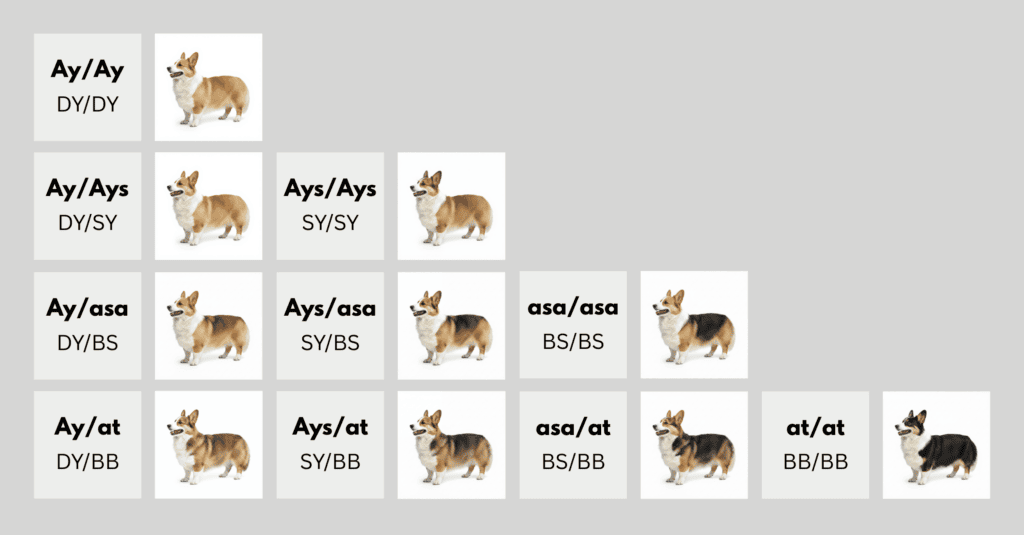
And here are some images of the different patterns:
The recessive black variant (a) is rare in the breed. Dogs with a/a will express a faulty black and white pattern without any visible tan. Being Ay/a or Ays/a typically causes a dark sable coat. Being asa/a can cause a creeping tan phenotype. And being at/a can give small tan points in black-headed tricolors.
K Locus
| ky | wild-type |
Dogs with ky/ky have normal pattern expression.
E Locus
| Em | black mask |
| E | wild-type |
| eG | domino (rare) |
| e | recessive red (rare) |
Corgis aim for normal pattern expression (E/E).
Some Corgis have a black mask (Em/-). Not to be confused with puppy masking, which can also happen in E/- dogs. Masks can be hidden in dogs with a lot of muzzle white.
But they also have domino (eG) and recessive red (e) in the breed.
Dogs need to be eG/eG or eG/e to express domino. This partially inhibits eumelanin. This turns sable into a clear sable domino, saddle into saddle domino with a very smallish saddle, or black tricolor into tan point domino, which can somewhat mimic sable or capped tricolor.
Being e/e fully inhibits eumelanin and produces a clear red coat color. This is often accompanied by fading nose pigment. Many carriers (E/e) have slightly less black than expected, e.g. large tan points.
Pembroke Corgi Base Patterns
The genotypes of Pembroke Corgi breed standard patterns:
| A LOCUS | K LOCUS | E LOCUS | PATTERN |
|---|---|---|---|
| Ay/- | ky/ky | E/E | clear sable “red, fawn, sable” |
| asa/asa | ky/ky | E/E | saddle “red-headed“ |
| asa/at | ky/ky | E/E | creeping tan “red-headed + cap” |
| at/at | ky/ky | E/E | tan point “black-headed” |
Base Colors
The base color is determined by the B locus and D locus.
B Locus
| B | black |
| b | chocolate |
Corgis should be fixed for black pigment (B/B) and have a black nose.
However, recessive brown (b) is also present.
D Locus
| D | normal |
| d | diluted |
Corgis should have normal black pigment (D/D).
A “bluie” has diluted black (d/d) and appears gray.
“Bluies – Colored portions of the coat have a distinct bluish or smoky cast. This coloring is associated with extremely light or blue eyes, liver or gray eye rims, nose and lip pigment.“
AKC Breed Standard[1]
Red Intensity
The named phaeomelanin colors in Pembroke Corgis are called red and fawn. These colors will affect phaeomelanin in any pattern(clear sable, shaded sable, saddle, tan point).
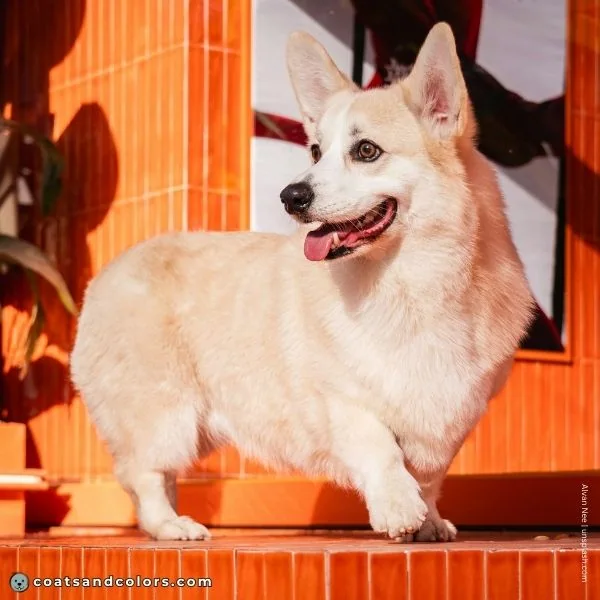
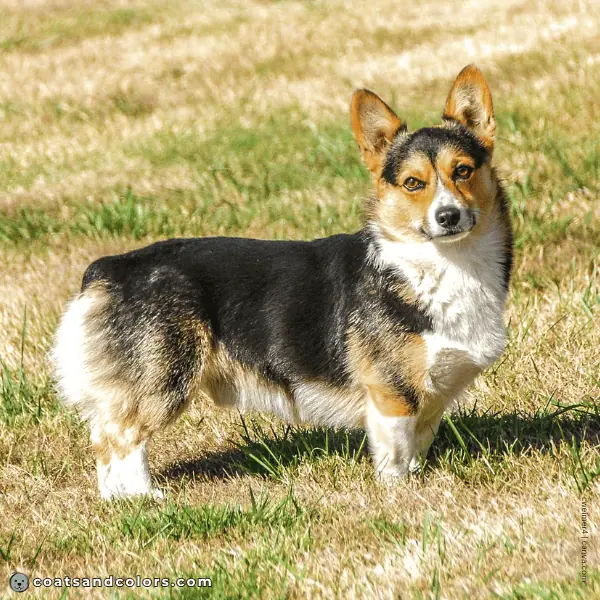
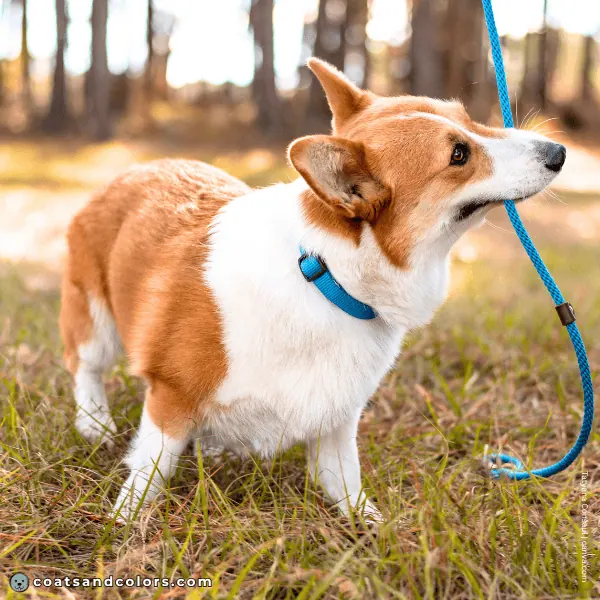
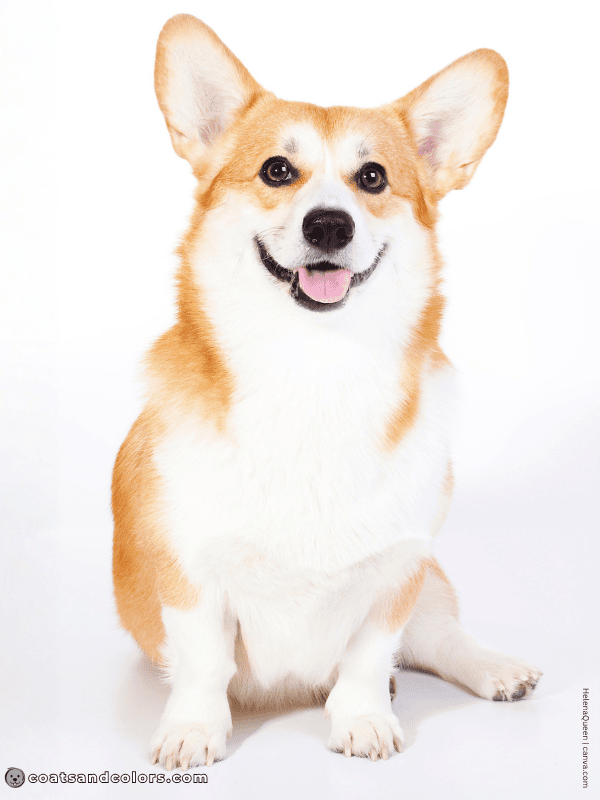
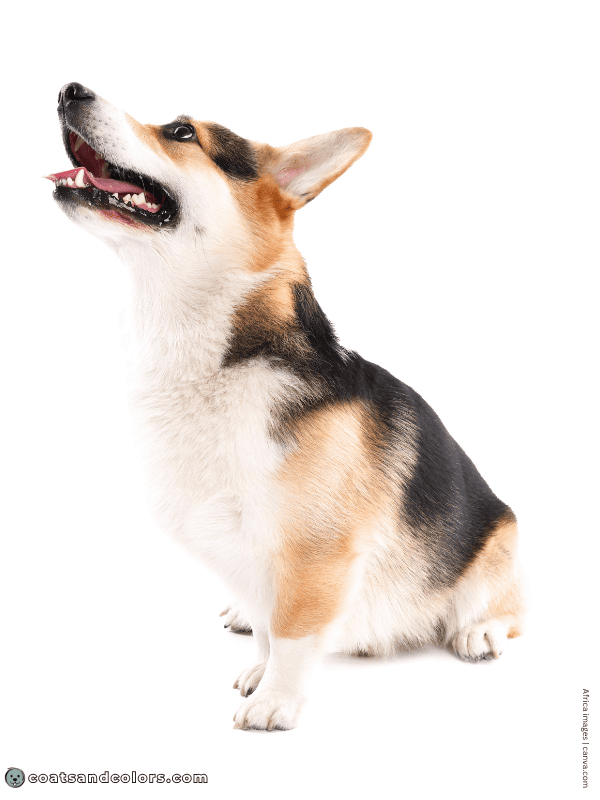
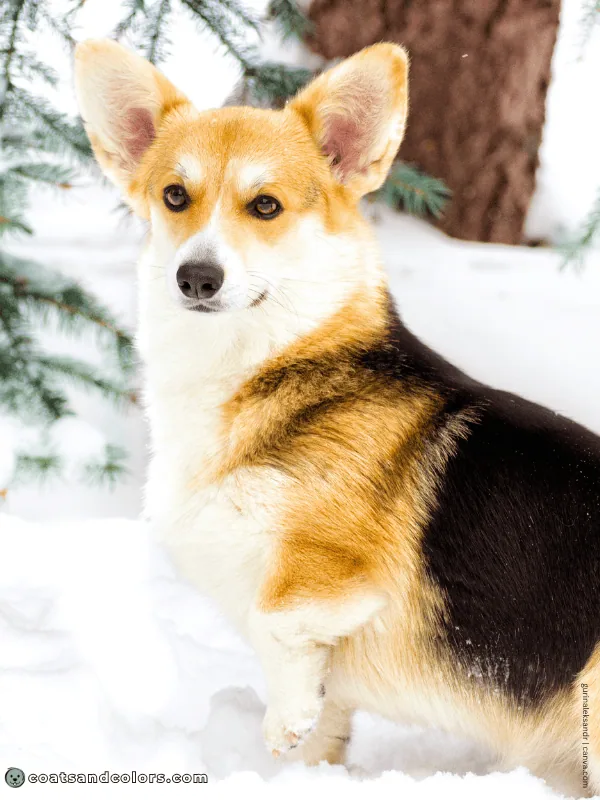
Many Corgis express countershading. This causes the dilution of red intensity towards the ventral body surface. These dogs have less intense red on their underbody, lower legs, front, and face.
White Markings
In the past, Corgis without white were very common. But due to breeding trends in decades long past, the solid coat colors seem to be lost. On paper, Pembroke Welsh Corgis still come “with or without white“. But in reality, almost all modern Corgis express white markings.
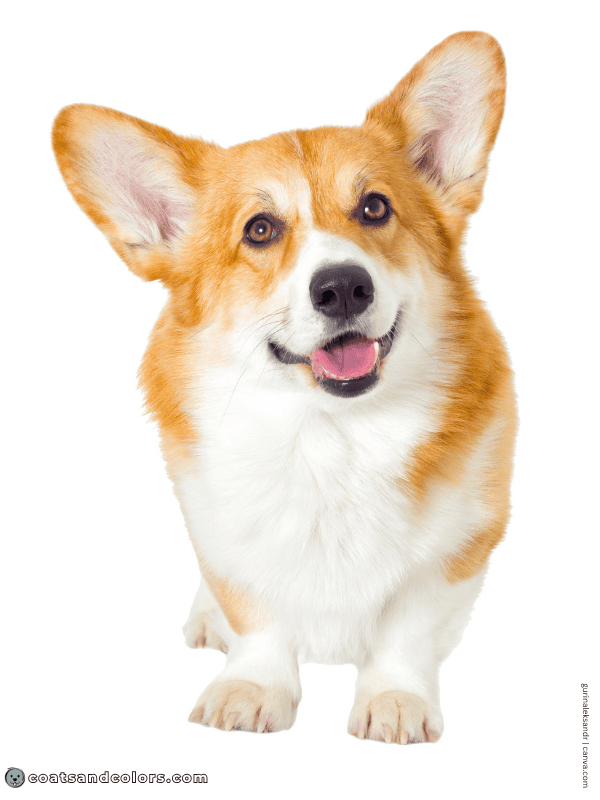
Ideally, these form Irish-type spotting with white on the legs, tip of the tail, chest, and underparts as well as on the muzzle. They can form a narrow blaze and a partial or full collar around the neck.
“The outer coat is to be of self colors in red, sable, fawn, black and tan with or without white markings.
White is acceptable on legs, chest, neck (either in part or as a collar), muzzle, underparts and as a narrow blaze on head.”
AKC Breed Standard[1]
“Self colours in Red, Sable, Fawn, Black and Tan, with or without white markings on legs, brisket and neck. Some white on head and foreface permissible.”
FCI Breed Standard[2]
Pembroke Corgis might be one of the few breeds that have true Irish spotting. But most of the white in this breed is absolutely caused by whitehead (which is super common in herding dogs).
Whitehead often causes a lot of white on the chest and front legs combined with some white on the face, while the underbody and rear legs still keep most of their color.
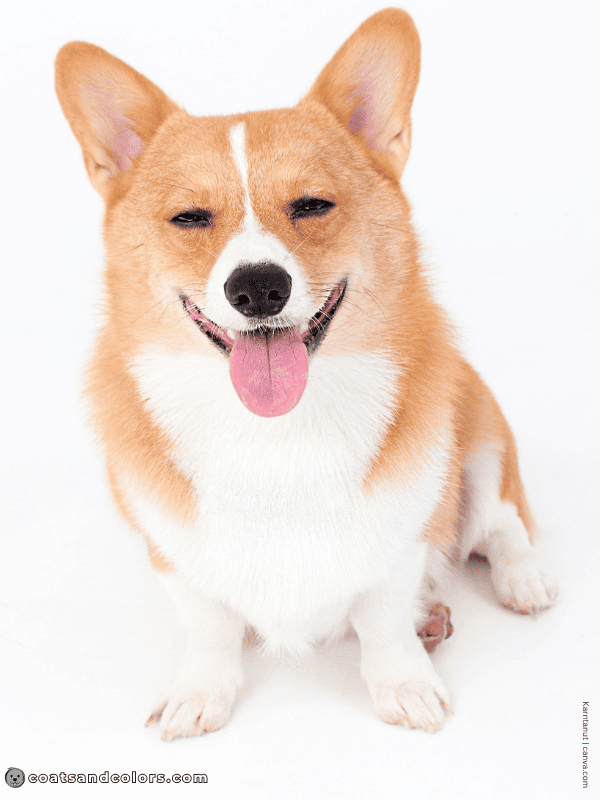
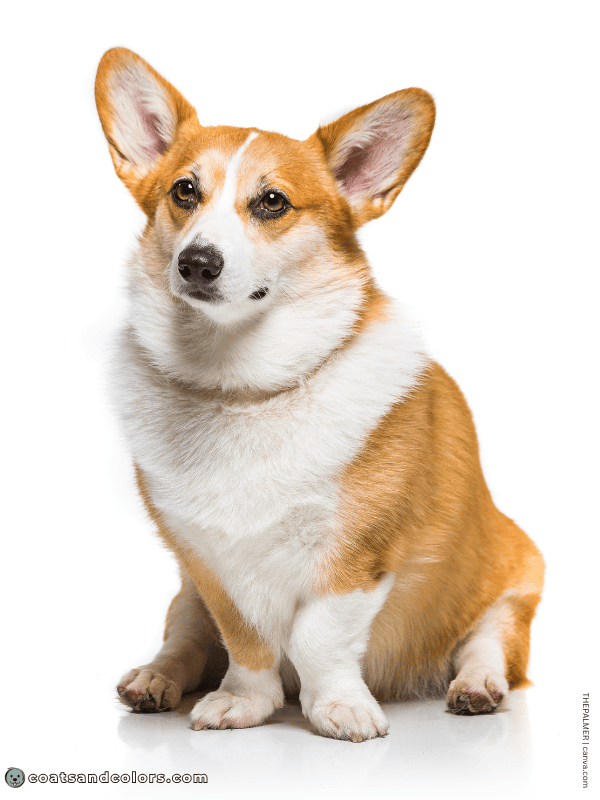
Whitehead is not testable, so breeders have to keep an eye out for signs of extended white markings. Breeding two dogs with a lot of face white can cause puppies to have “too much whitehead“.
And more extreme expressions of whitehead can cause anything from a very wide and crooked blaze to white beyond the corner of the mouth, up to eye patches, split faces or fully white faces. A lot of white on the face can also cause blue eyes and is linked to an increased risk for hearing impairment.
“Mismarks: Self colors with any area of white on the back between withers and tail, on sides between elbows and back of hindquarters, or on ears.”
AKC Breed Standard[1]
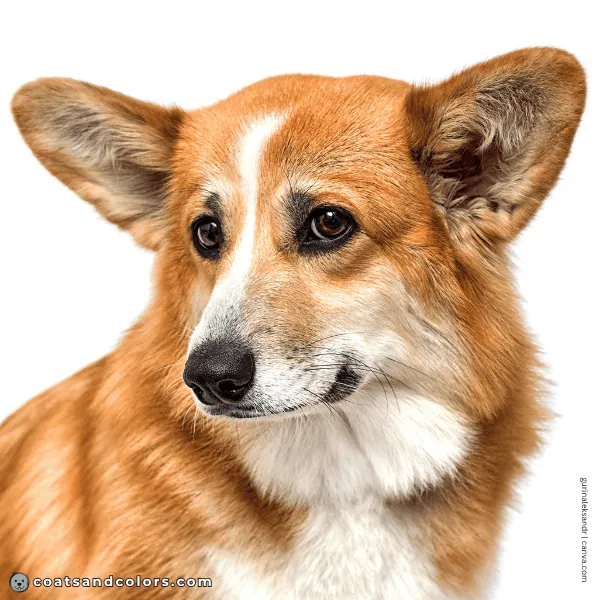
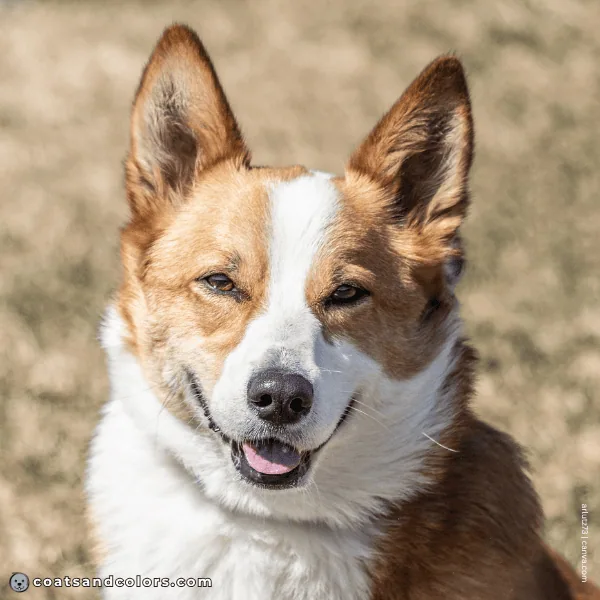
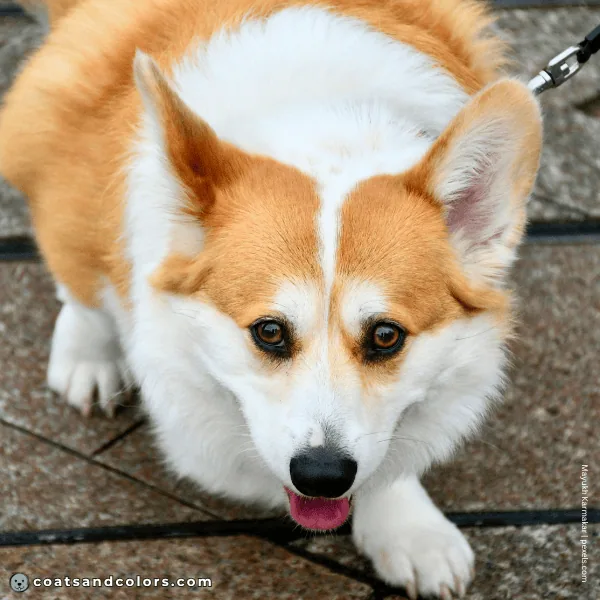
All in all, the amount of white on the face can vary a lot from Pemmie to Pemmie!
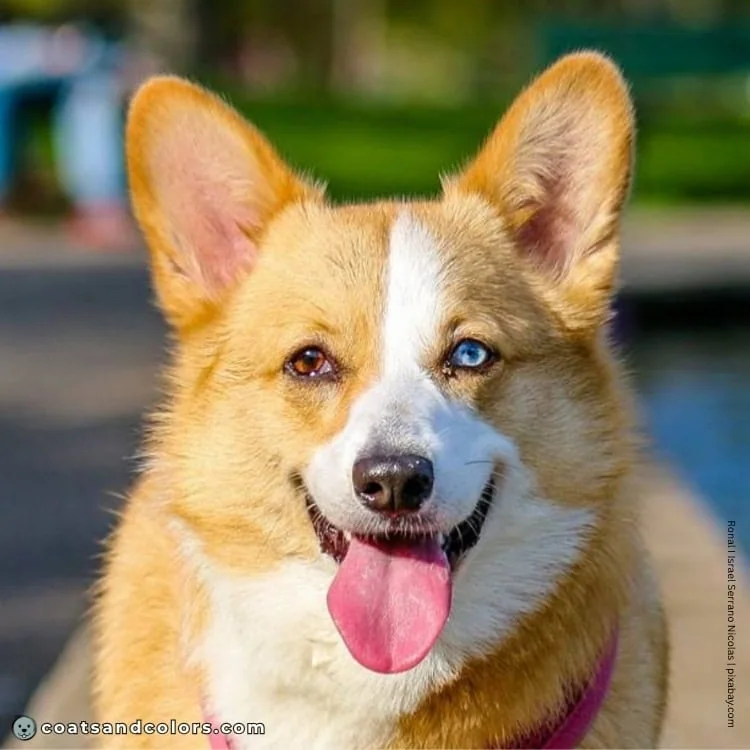
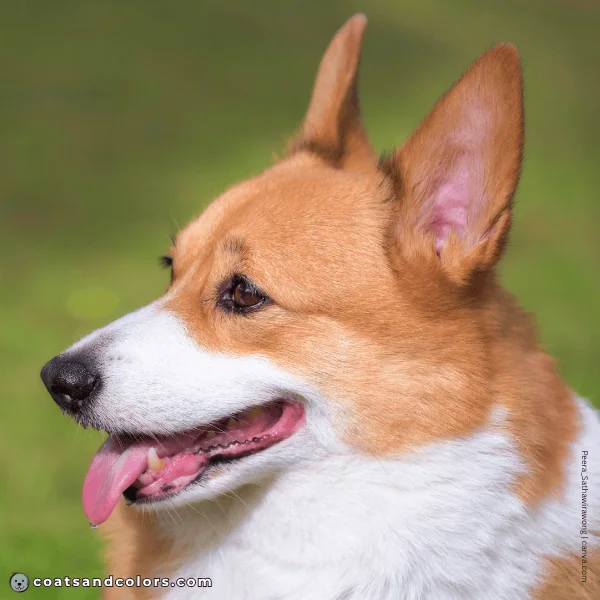
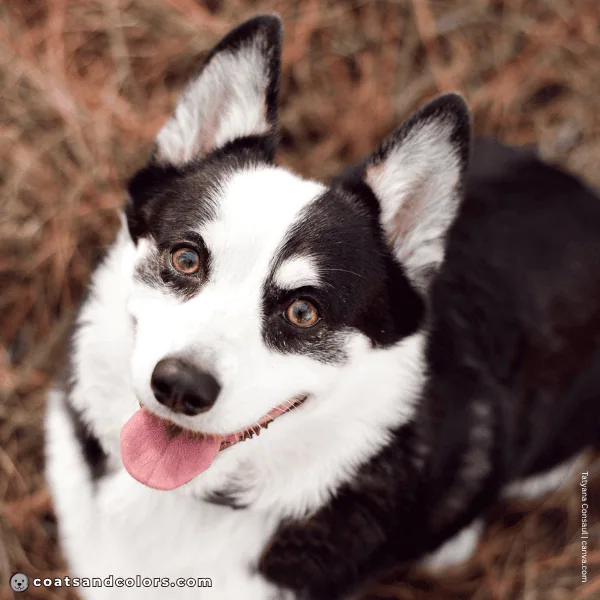
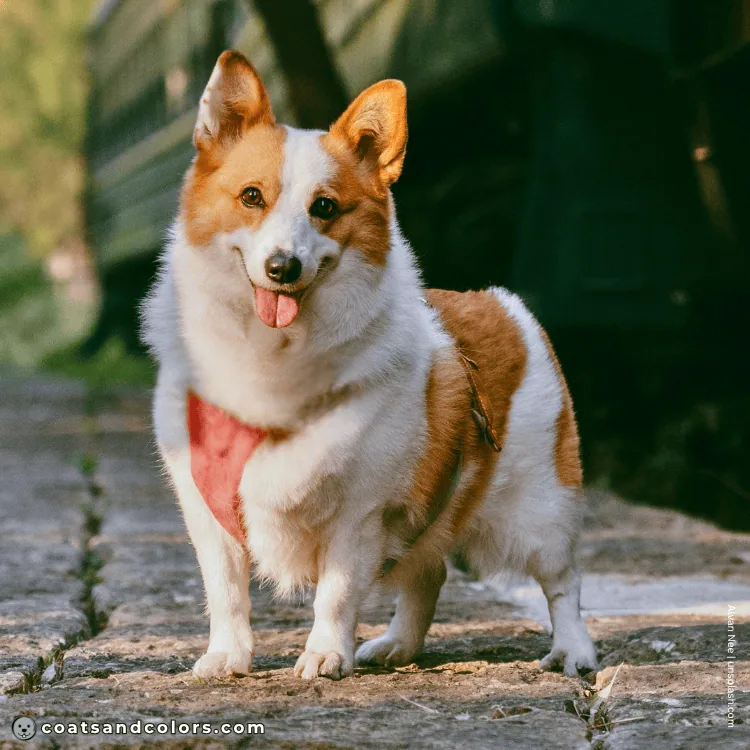
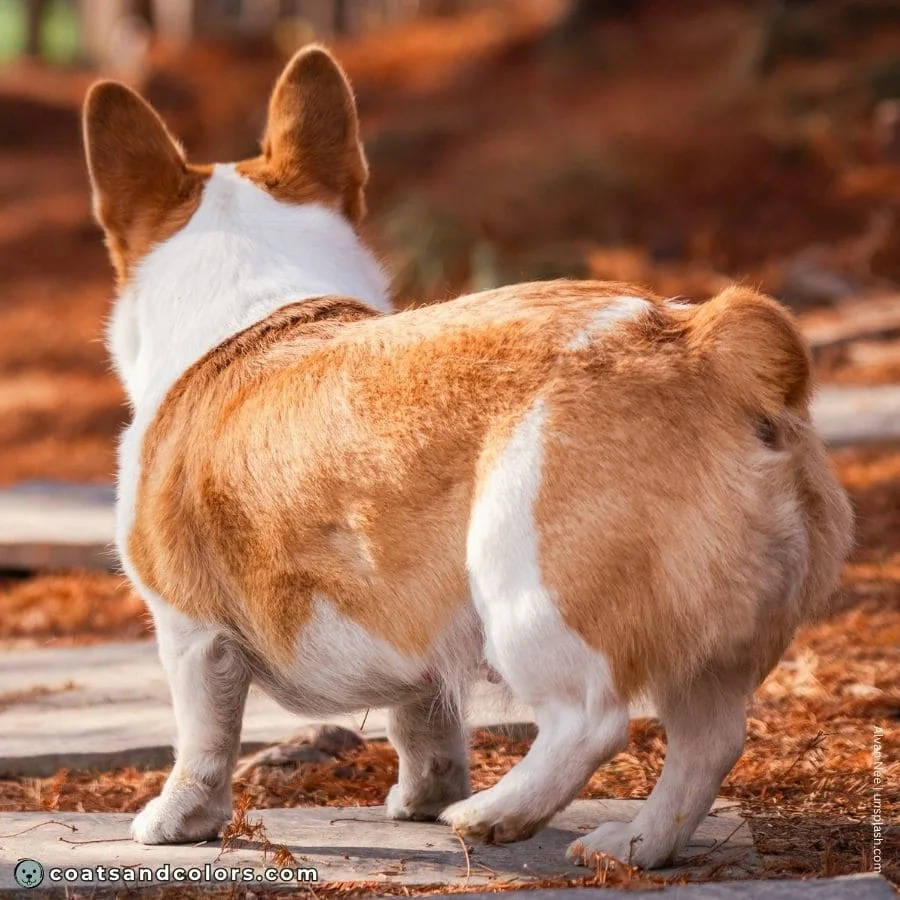
The piebald trait is also present in the breed and can cause faulty “whitelies” markings.
“Whitelies – Body color white, with red or dark markings.”
AKC Breed Standard[1]
It can be harder to see the edge between color and white in dogs that have very pale countershading. Sometimes, you can only see the distribution of white in the darker puppy coat, before the countershading comes in and heavily blends the transition between red and white areas.
Merle
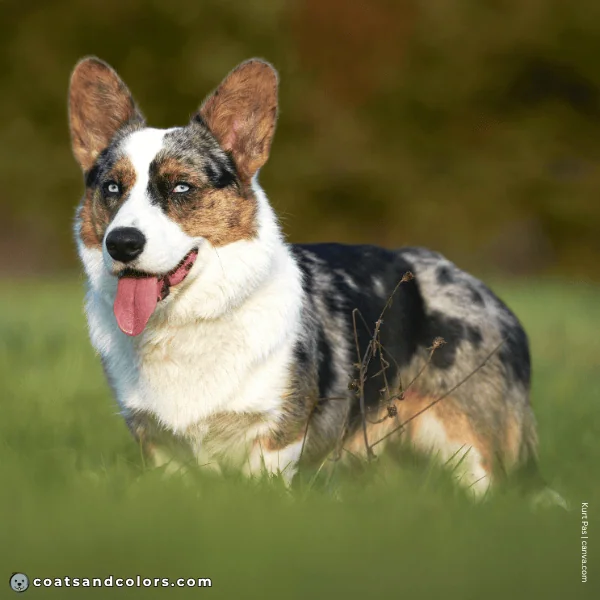
This is NOT a merle breed. Only Cardigan Corgis officially come in merle!
Pembroke Corgi Eye Colors
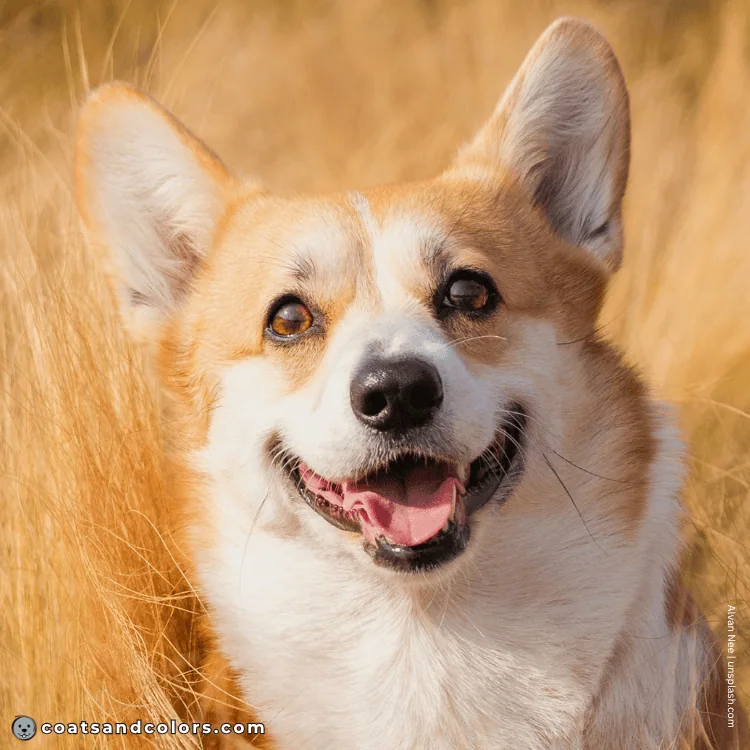
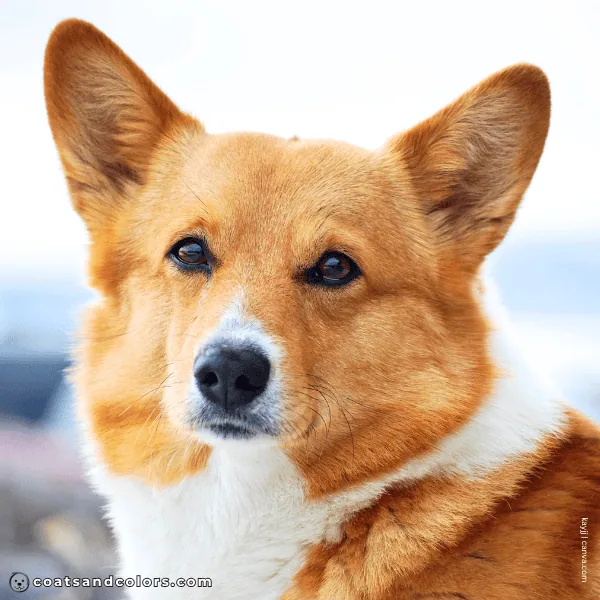
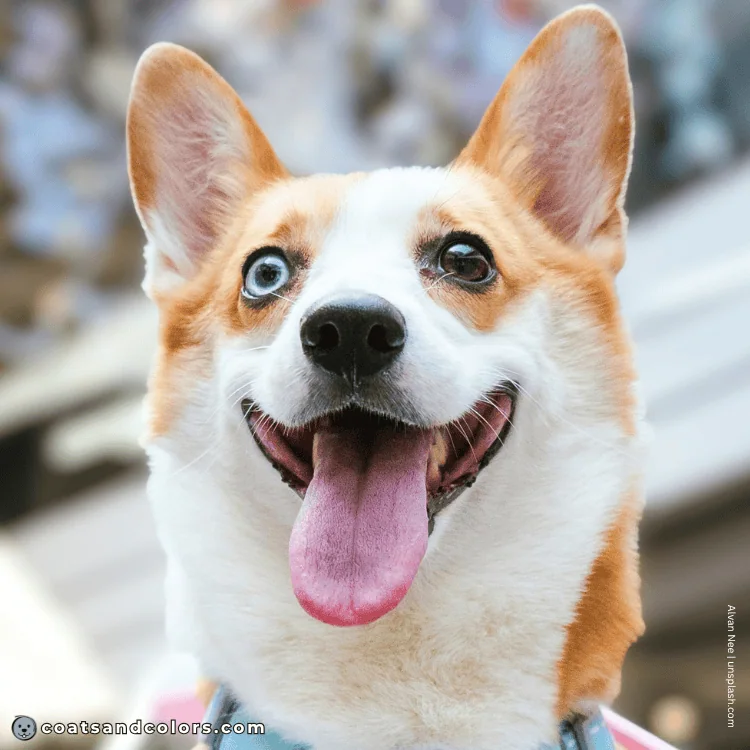
A Pembroke Welsh Corgi should have brown eyes. Lighter eye colors are faulty, but can still happen in some dogs. A lot of white on the face increases the chance to also have blue eyes.
“Variations of brown in harmony with coat color. Eye rims dark, preferably black.
While dark eyes enhance the expression, true black eyes are most undesirable, as are yellow or bluish eyes.”
AKC Breed Standard[1]
“Well set, round, medium size, brown, blending with colour of coat.”
FCI Breed Standard[2]
Pembroke Corgi Nose Colors
A Pembroke Welsh Corgi should always have a black nose.
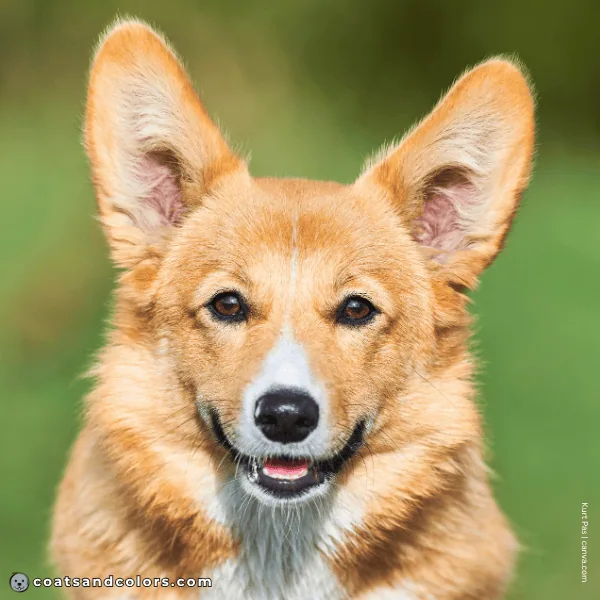
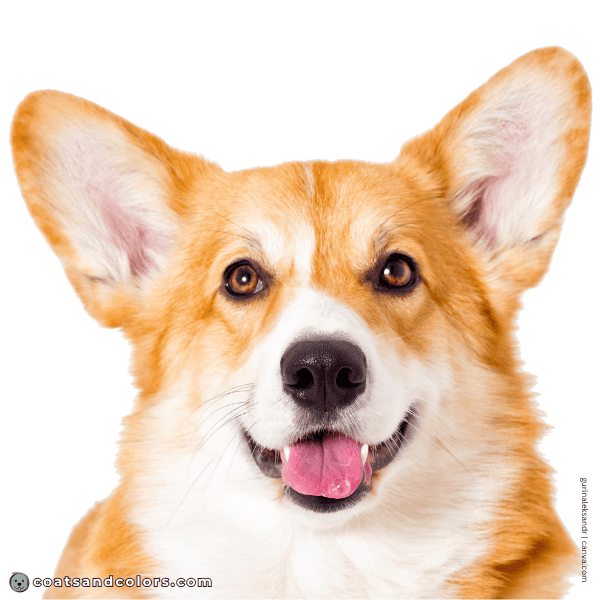
There are some faulty nose colors. Dogs with color dilution have a gray nose. Dogs with recessive red often have a partially faded brownish or pinkish “snow nose“.
And some Pemmies with a lot of white on the face can have a butterfly nose. Many Corgi puppies have pink spots in their nose and skin pigment, which will fill in with time.
“Black and fully pigmented.”
AKC Breed Standard[1]
“Black.”
FCI Breed Standard[2]
Pembroke Corgi Coat Type
Pembroke Welsh Corgis are genetically short-haired with a thick double coat. Some of them have a natural bobtail, but the AKC unfortunately still enforces tail docking (“as short as possible”).
“Medium length; short, thick, weather- resistant undercoat with a coarser, longer outer coat.
Over-all length varies, with slightly thicker and longer ruff around the neck, chest and on the shoulders. The body coat lies flat. Hair is slightly longer on back of forelegs and underparts and somewhat fuller and longer on rear of hindquarters. The coat is preferably straight, but some waviness is permitted. This breed has a shedding coat, and seasonal lack of undercoat should not be too severely penalized, providing the hair is glossy, healthy and well groomed.
AKC Breed Standard[1]
“Medium length, straight with dense undercoat.”
FCI Breed Standard[2]
Many factors that affect coat quality and texture are not testable.
In Corgis that lack a proper undercoat, the hard guard hairs will lie flat to the body (which can feel a little “wiry”). On the other hand, some dogs with very fine and thin hair can lack volume and feel too silky.
And then there are “fluffy Corgis“. These are genetically long-haired (l/l).

“A wiry, tightly marcelled coat is very faulty, as is an overly short, smooth and thin coat.
Very Serious Fault – Fluffies […]”
AKC Breed Standard[1]
“…never soft, wavy or wiry.”
FCI Breed Standard[2]
Related Breeds
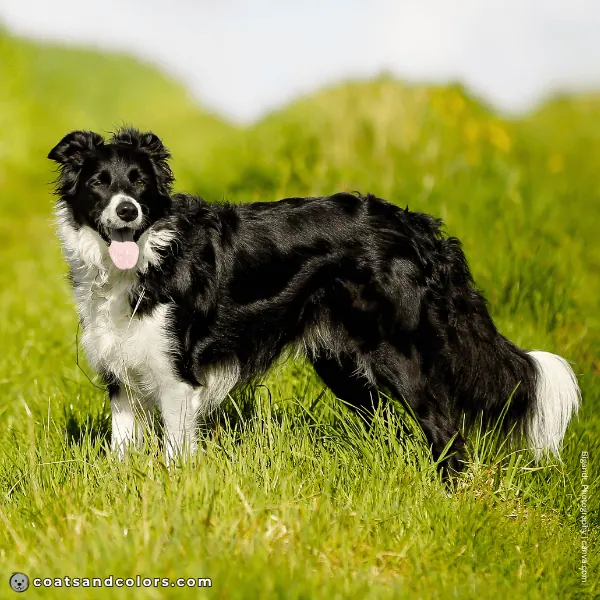
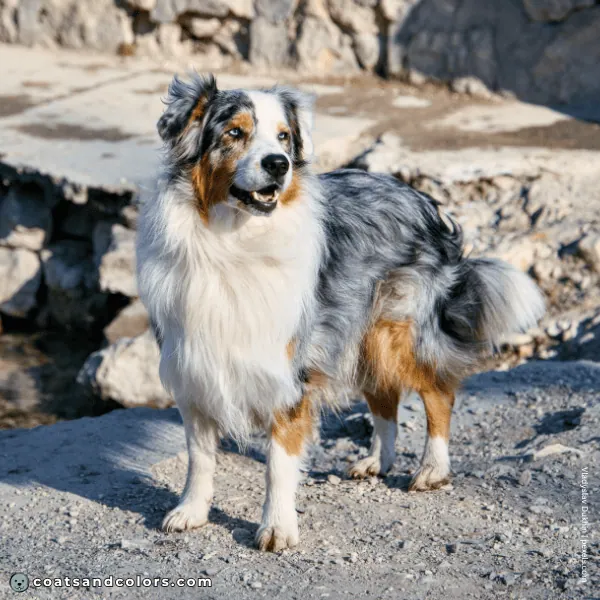
The Pembroke Welsh Corgi shares close genetic roots with the Cardigan Welsh Corgi and the Lancashire Heeler. Pemmies are also related to other herding breeds like Borders or Aussies.
Learn More

Links
[1] American Kennel Club (AKC): Welsh Corgi Pembroke
[2] Fédération Cynologique Internationale (FCI): Welsh Corgi Pembroke
[3] Royal Kennel Club (RKC): Welsh Corgi Pembroke
[4] Canadian Kennel Club (CKC): Welsh Corgi Pembroke
[5] Dreger et al. (2019). True Colors: Commercially-acquired morphological genotypes reveal hidden allele variation among dog breeds, informing both trait ancestry and breed potential. PLoS ONE 14(10): e0223995. https://doi.org/10.1371/journal.pone.0223995
Image Credits
Africa Images/canva.com
Alina Skazka/pexels.com
Alvan Nee/unsplash.com
AndrewLozovyi/depositphotos.com
Andrey Muzychuk/pixabay.com
arlutz73/canva.com
B Stokes/unsplash.com
Bigandt_Photography/canva.com
cweimer4/canva.com
fotokurt76/canva.com
gjp311/canva.com
gurinaleksandr/canva.com
Haberdoedas II/unsplash.com
HelenaQueen/canva.com
Hendra Budiman/canva.com
huoadg5888/pixabay.com
Ilona Didkovska/canva.com
infinityyy/yayimages.com
jbrizendine/canva.com
Karntanut/canva.com
kayjj/canva.com
Kristina Chizmar/canva.com
Kurt Pas/canva.com
LightFieldStudios/canva.com
Liliya Kulianionak/canva.com
Lisa_Nagorskaya/canva.com
Mayukh Karmakar/pexels.com
Okssi68/canva.com
Peera_Sathawirawong/canva.com
Peter Pryharski/unsplash.com
pixelshot/canva.com
RichLegg/canva.com
Ronal I Israel Serrano Nicolas/pixabay.com
RosaJay/yayimages.com
srubina/canva.com
Tatiana LM/pexels.com
Tatyana Consaul/canva.com
THEPALMER/canva.com
Tom Hawkins/pexels.com
Vladyslav Dukhin/pexels.com
Hi! I’m Steffi. I am a biologist and a big time dog nerd. You are curious about coat color genetics? You’ve come to the right place! Read more.