

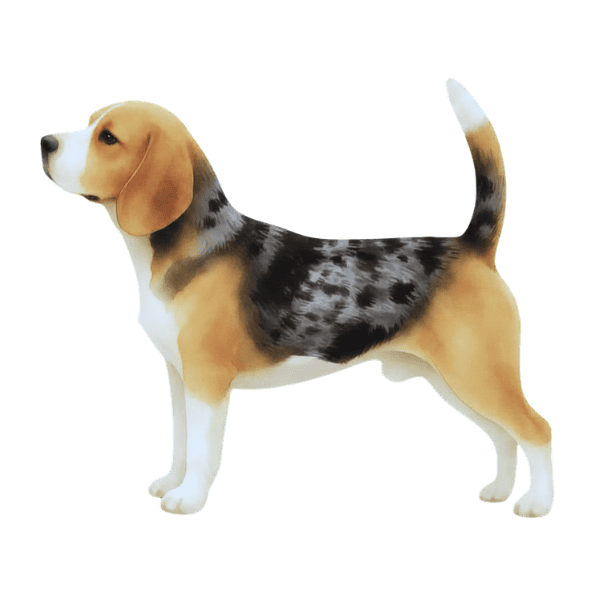
The Beagle has a low-maintenance coat with traditional hound colors. Their most recognizable pattern by far is black saddle tricolor, but other base patterns, base colors, and ticking also frequently occur in this breed. Read on so I can show you all the Beagle colors.
Black Tan & White

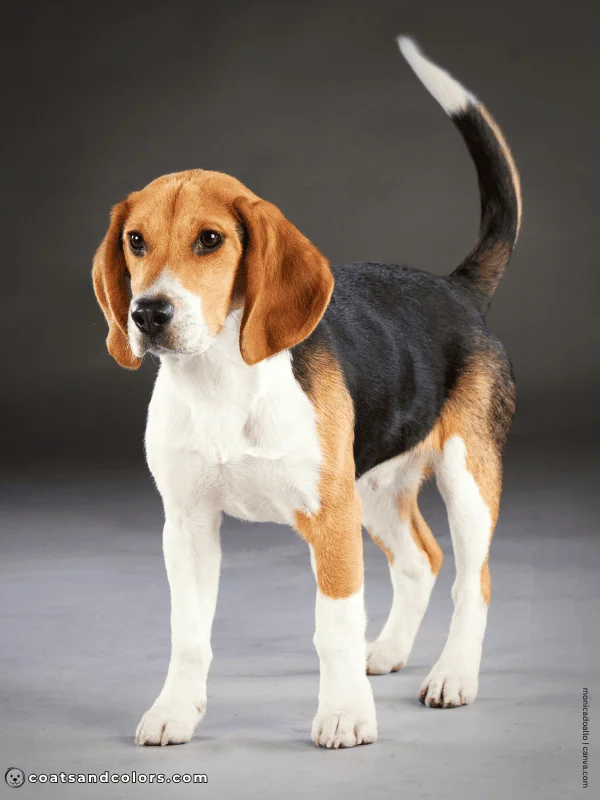
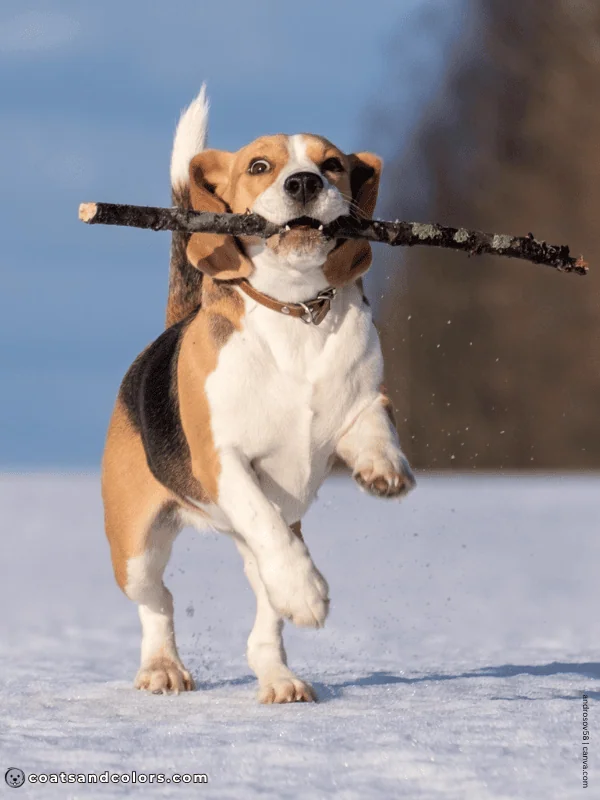
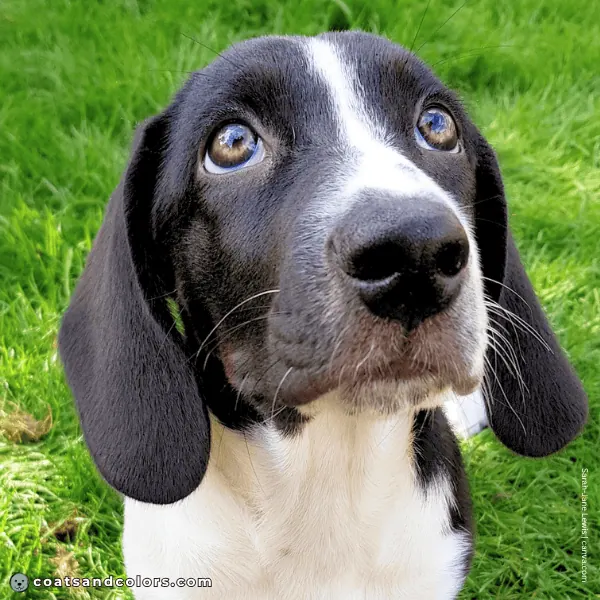
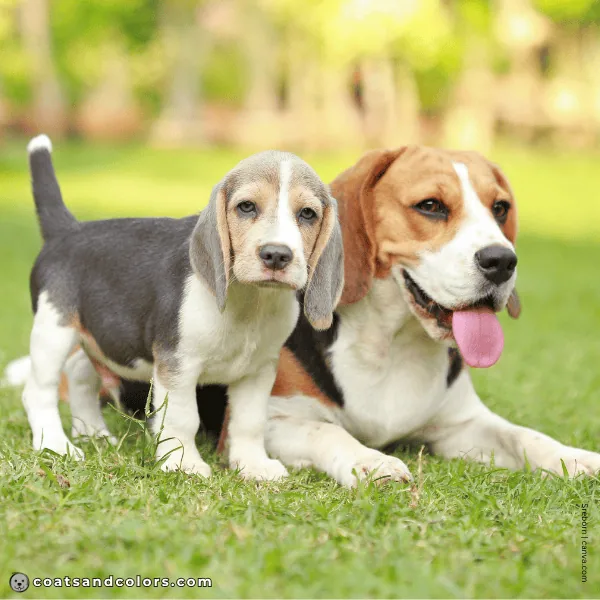
A tricolor piebald Beagle can have a solid mantle, a broken mantle, or an open-marked pattern with a mainly white piebald coat and only some patches of color.
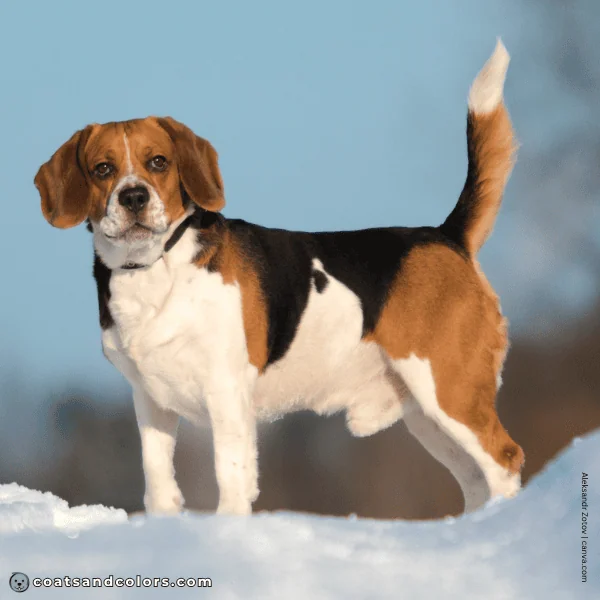
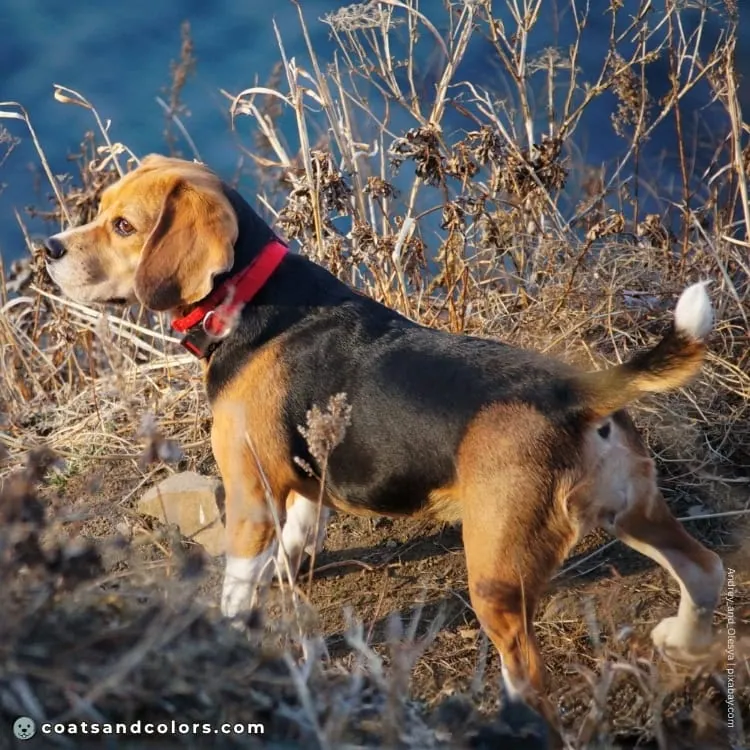
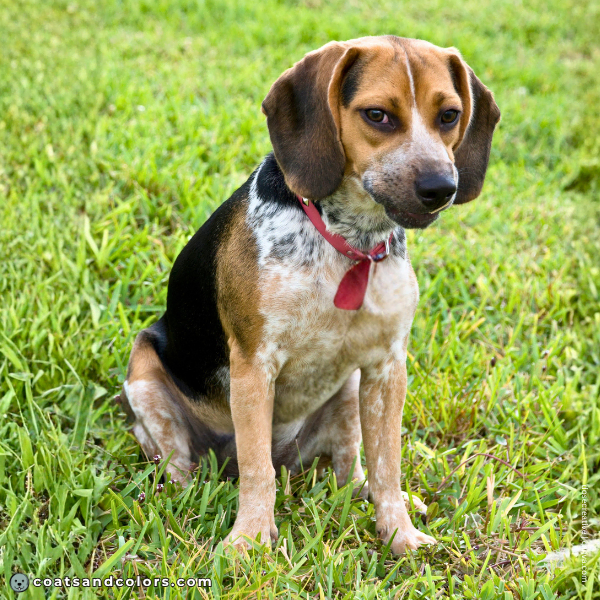
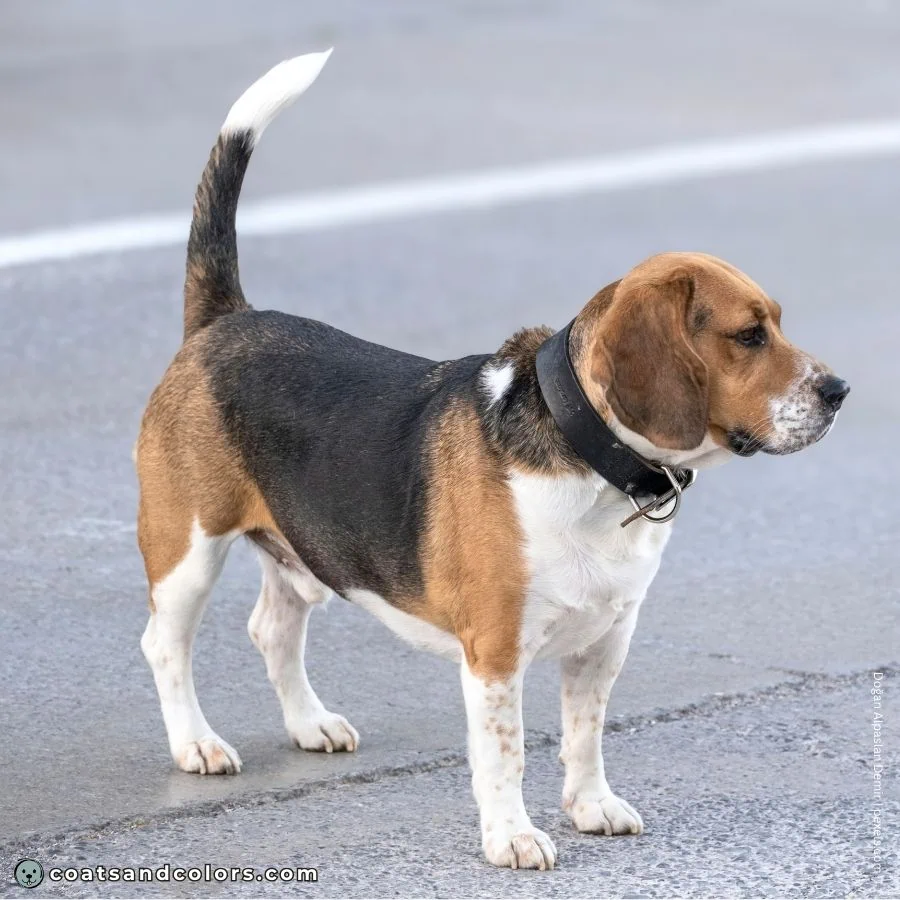
A black tricolor Beagle has a black saddle pattern with white markings. The saddles can be solid black, but many Beagles have a very faded saddle pattern.
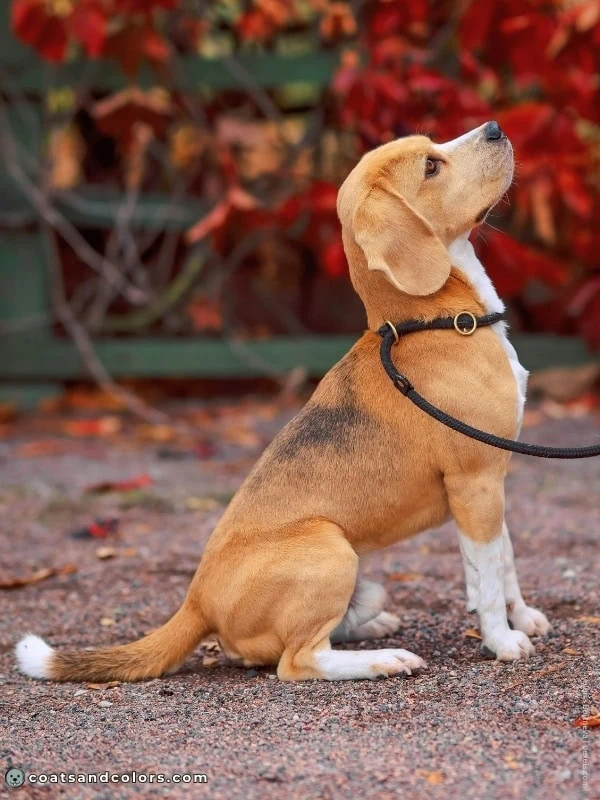
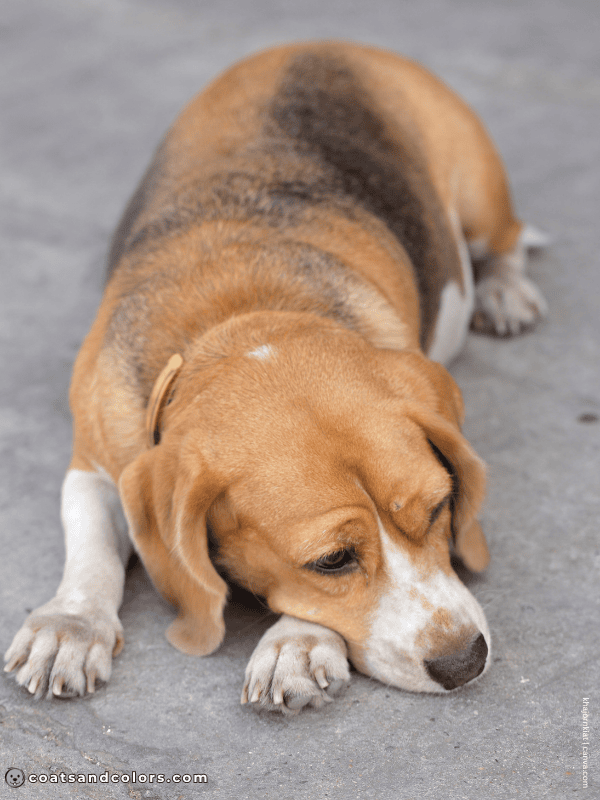
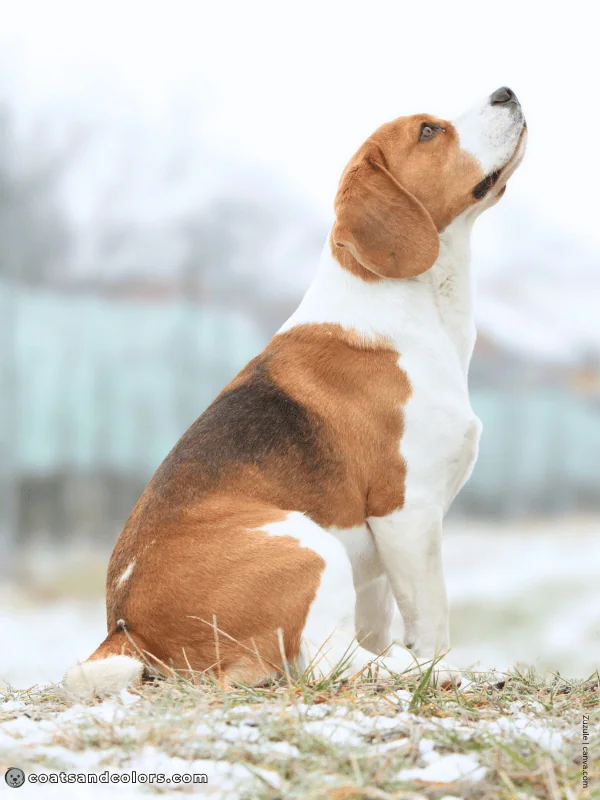
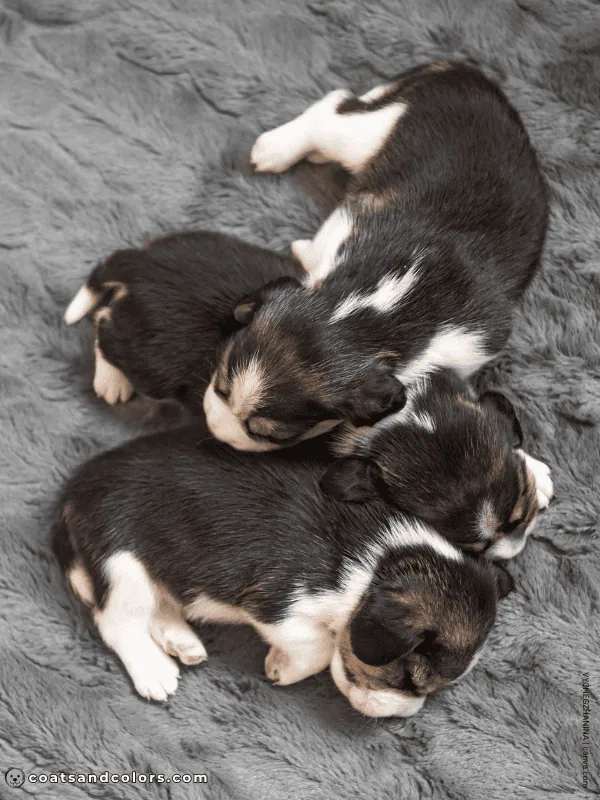
Tricolor puppies are born with a dark overlay. This overlay will clear, which often cause false tan points in young dogs. The tan areas will then expand until the dog is left with a black saddle patch on its back. The black saddle hairs can be solid or have a lighter root.
BASE PATTERN
saddle
MERLE
–
OTHER
–
EUMELANIN
black
INTENSITY
tan, red
WHITE
white markings
Blue Tan & White
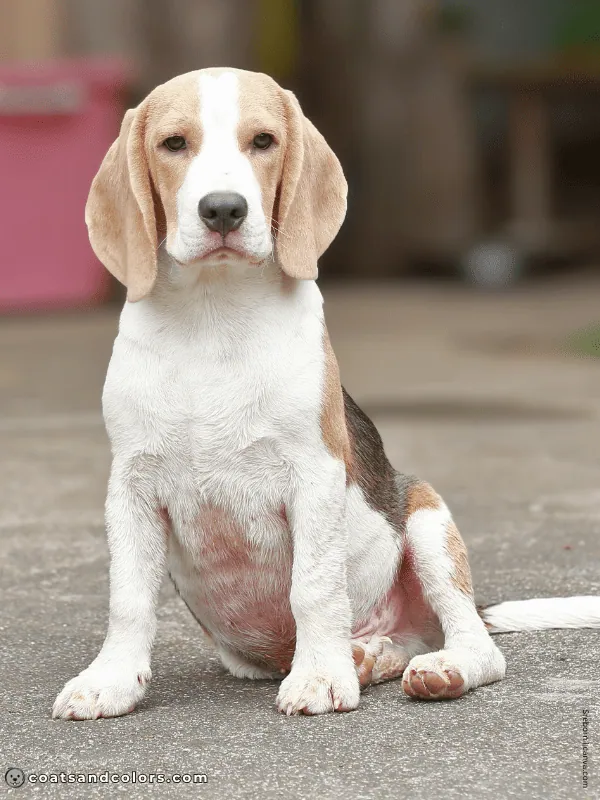
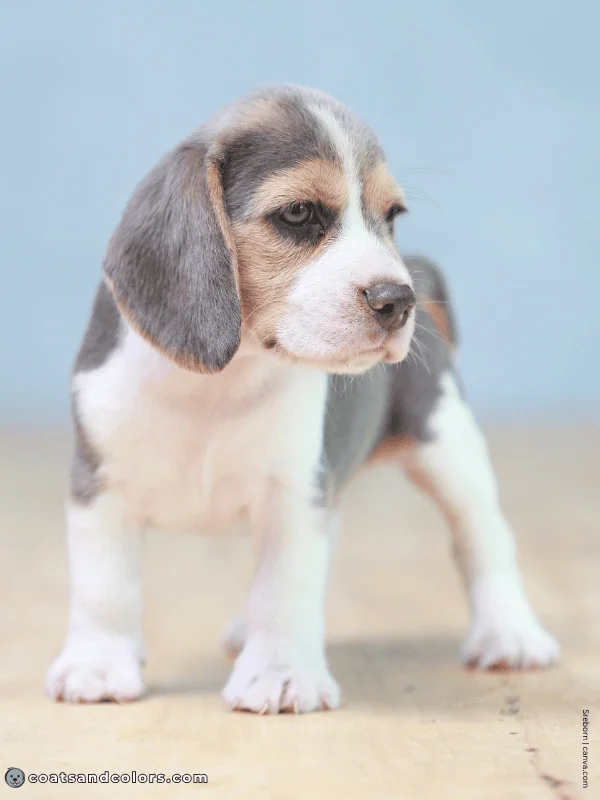
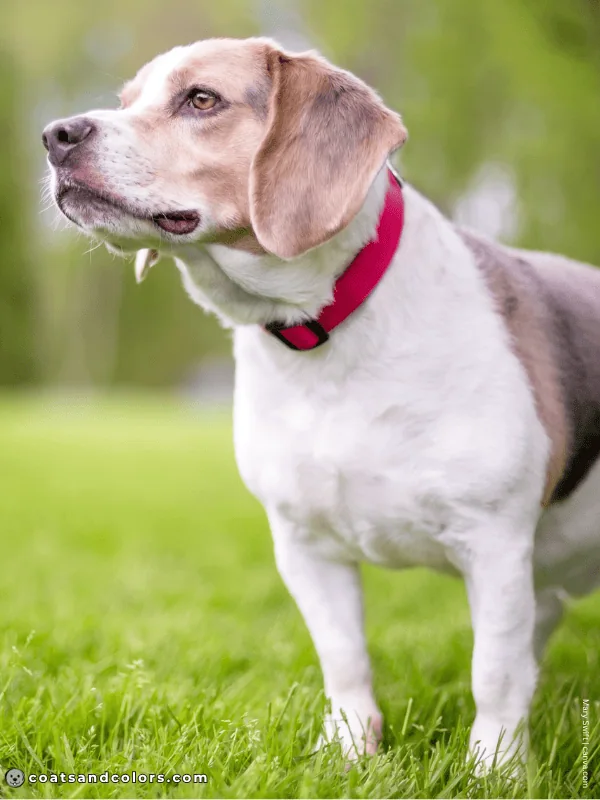
These are normal saddle tricolor Beagles.
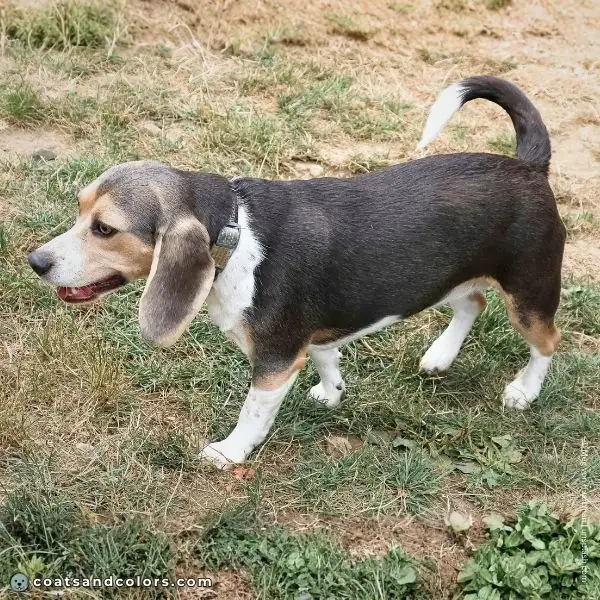
Just that their black saddle has been diluted to blue. This also affects their skin pigmentation and causes a gray nose, gray lips, and gray eye rims.
Blue colors can range from light silver to darker charcoal colors. Some blue Beagles can appear dark enough to almost pass as black tricolor. The tan pigment should not be affected by color dilution. But quite some blue saddle tri Beagles also show pale tan colors in their pattern.
BASE PATTERN
saddle
MERLE
no
OTHER
–
EUMELANIN
diluted black
INTENSITY
tan, red
WHITE
white markings
Chocolate Tan & White
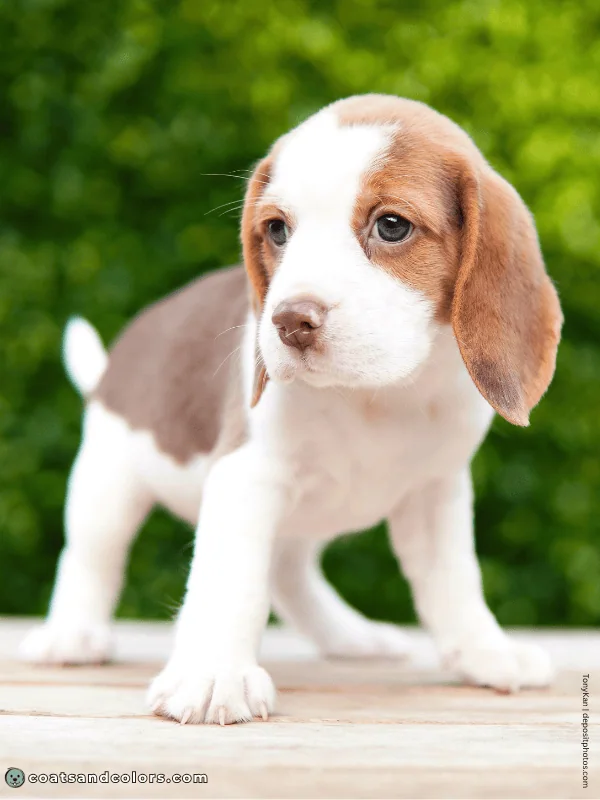
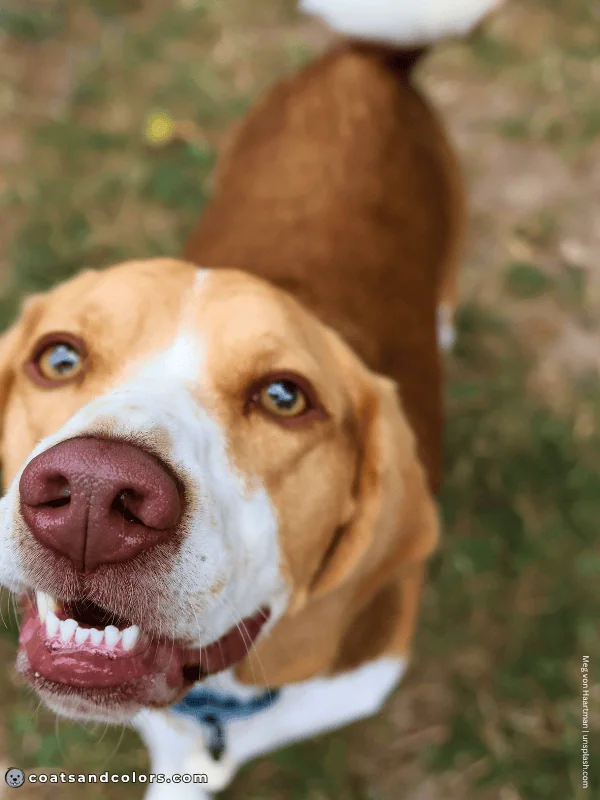
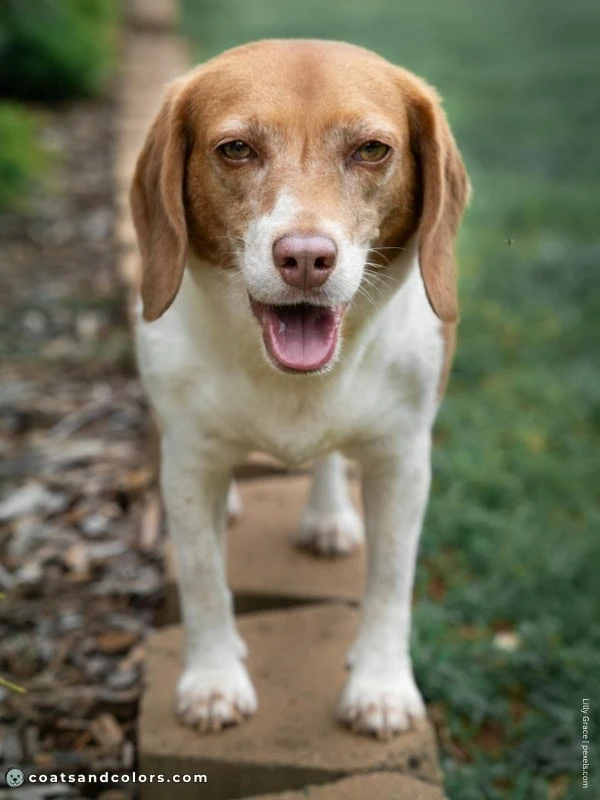
A chocolate tricolor Beagle has a saddle pattern with brown eumelanin. This also causes a liver nose and brown skin pigment, brown lips, brown eye rims, and lighter eye colors.
The FCI does not mention chocolate Beagles in their standard.
BASE PATTERN
saddle
MERLE
–
OTHER
–
EUMELANIN
brown
INTENSITY
tan, red
WHITE
white markings
Lilac Tan & White
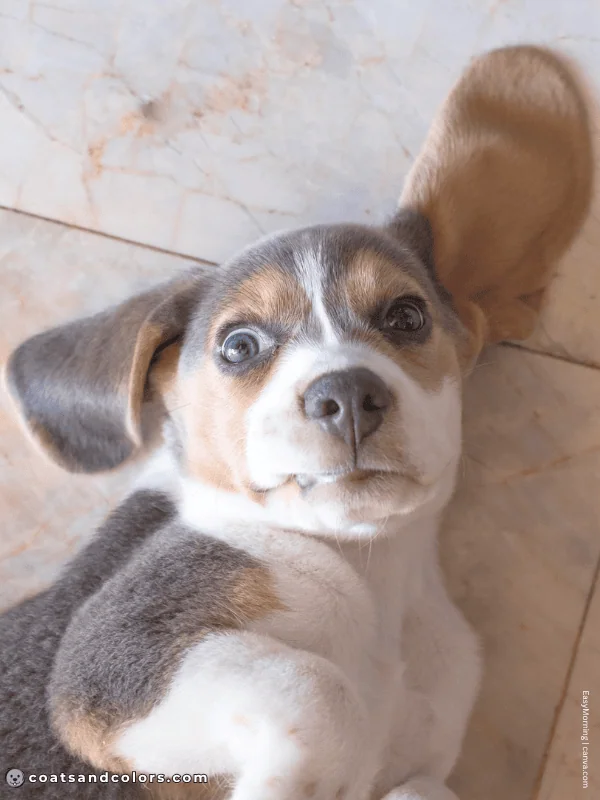
A lilac tricolor Beagle has a saddle pattern with diluted brown eumelanin. This also causes a taupe-colored nose, light brown pigment on the lips and eye rims, and lighter eye colors.
Lilac colors can range from a warm light brown to an intense darkish gray taupe color. Some lilac dogs can look gray or brown. Beagle folks sometimes call this color isabella, mocha, or khaki.
BASE PATTERN
saddle
MERLE
–
OTHER
–
EUMELANIN
diluted brown
INTENSITY
tan, red
WHITE
white markings
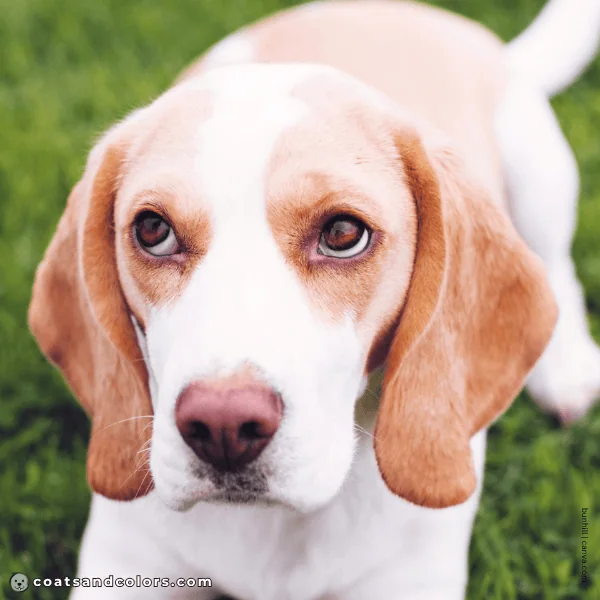
Lemon & White

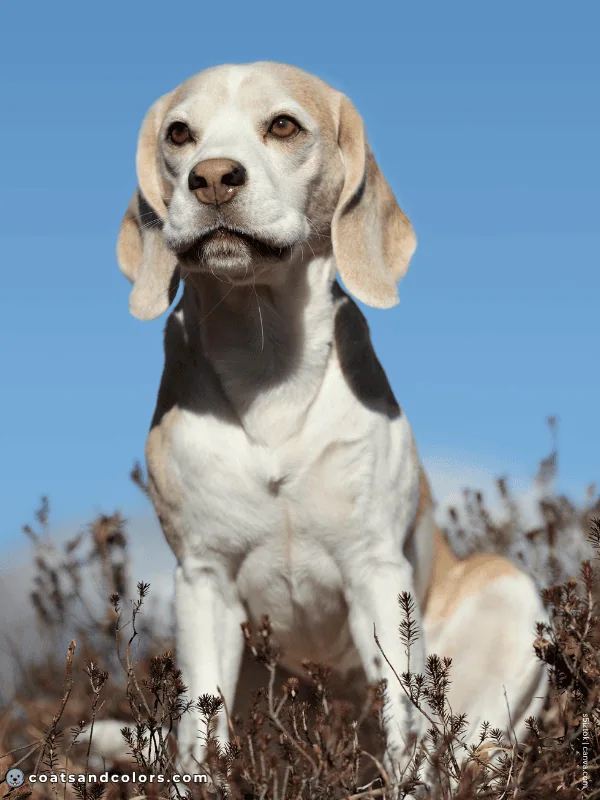
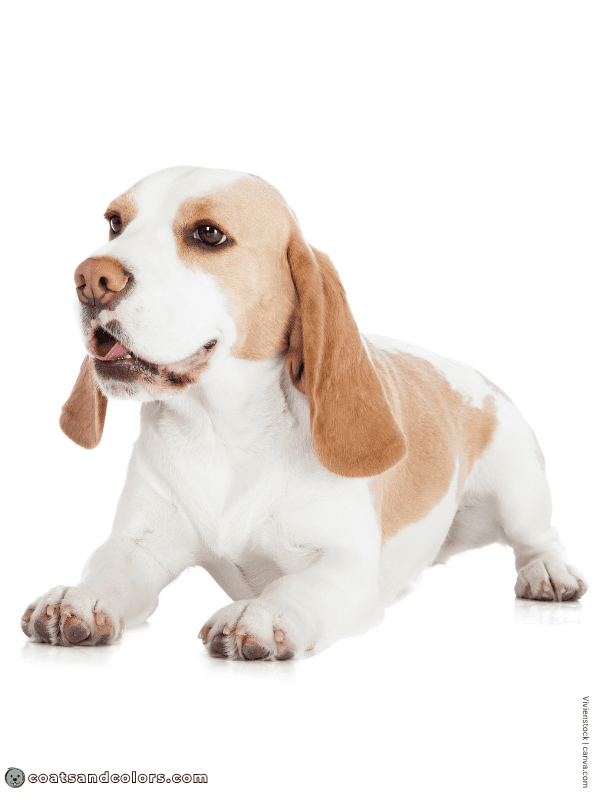
The bicolor Beagles are recessive red (e/e) with white markings. Lemon Beagles have a very pale cream or yellow intensity. Lemon Beagle puppies can have very light cream patches at birth and can look almost white at first. Lemon Beagles often have weak nose pigment.
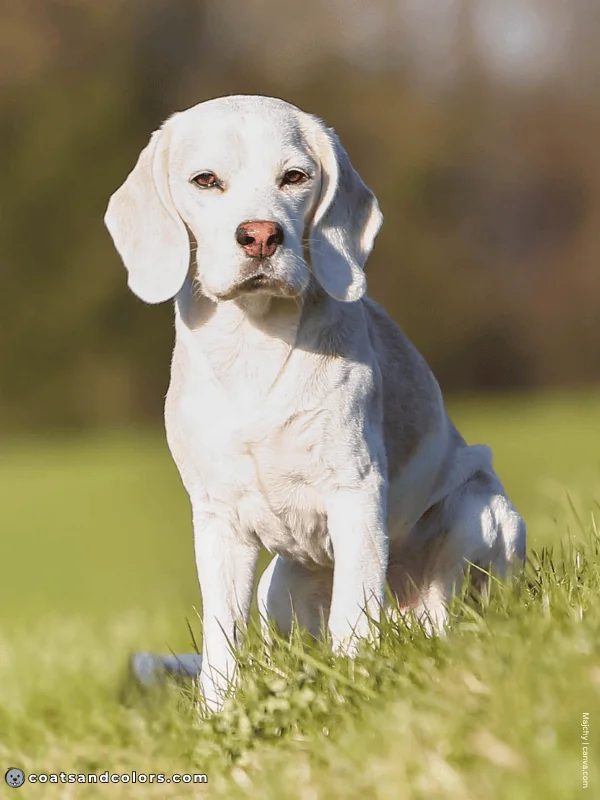
Most red and lemon Beagles have black eumelanin. They often have faded pigment on their nose, lips, and eye rims. This can make it hard to see if the dog is a black-based lemon or if it maybe has a brown or blue pigment color. Look for the darkest color around the rim of the nose.
BASE PATTERN
recessive red
MERLE
–
OTHER
–
EUMELANIN
any
INTENSITY
lemon
WHITE
white markings
Tan & White

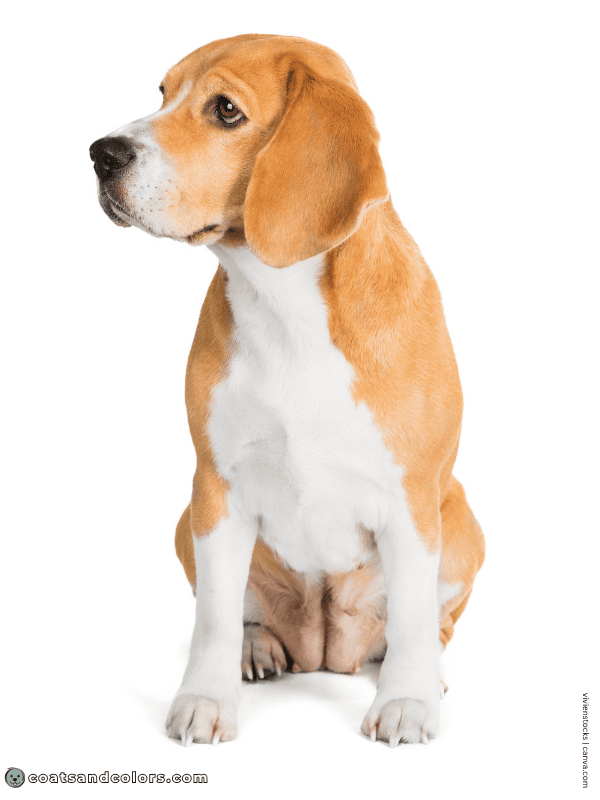
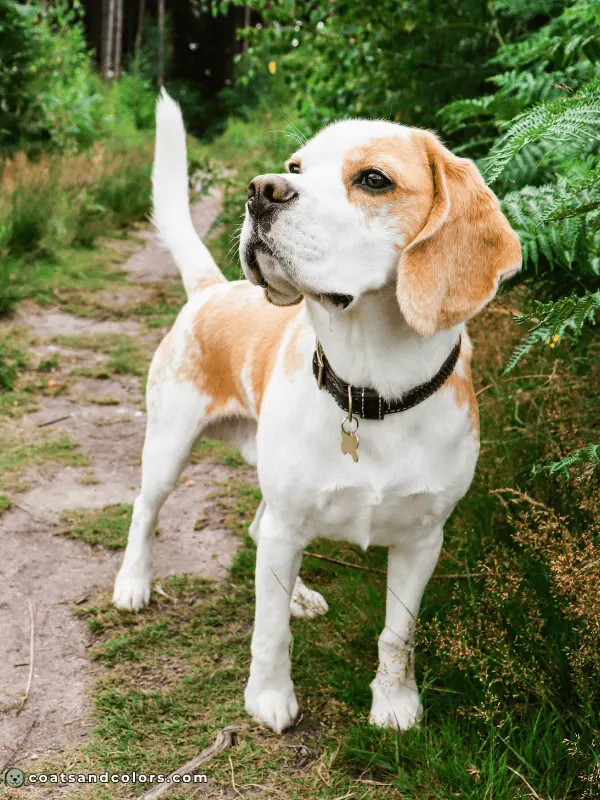
The tan Beagles are recessive red (e/e) with white markings. They have a golden or light orange color that is too intense to be lemon, but too light to be called red.
BASE PATTERN
recessive red
MERLE
–
OTHER
–
EUMELANIN
any
INTENSITY
tan
WHITE
white markings
Red & White
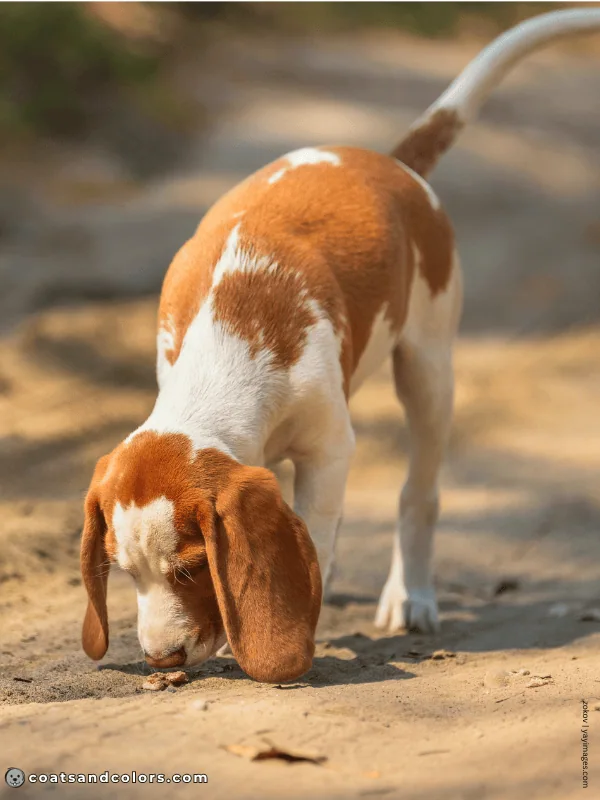
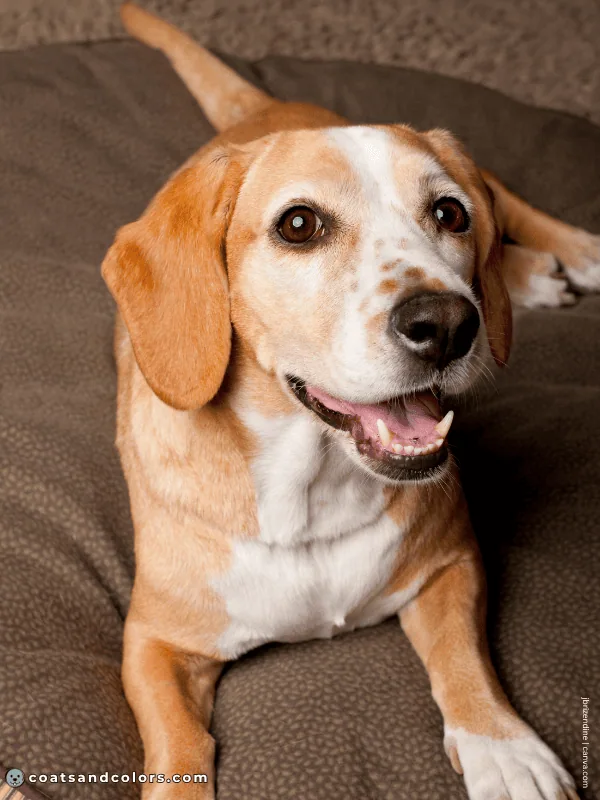
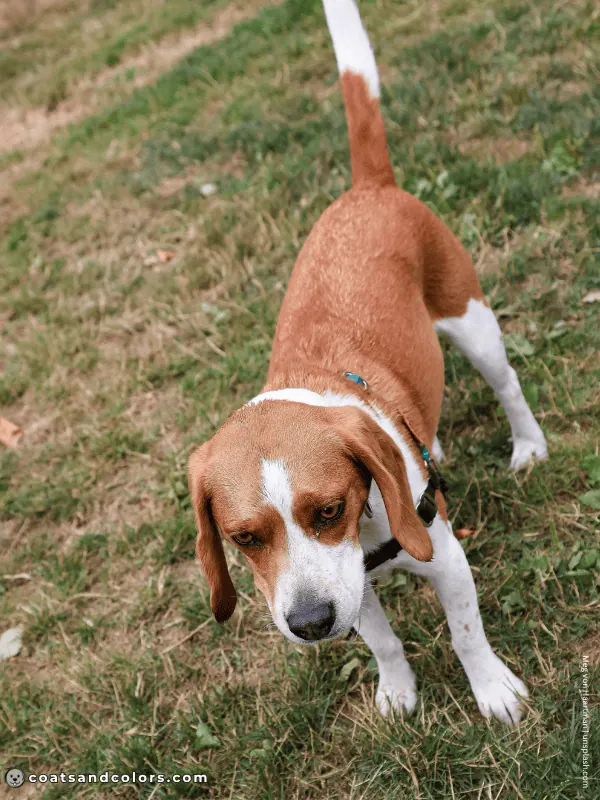
A red Beagles is recessive red (e/e) with white markings and an intense dark orange to red color. A truly bicolor red and white Beagle should not have any black tips in its coat. Keep in mind, that some older tricolor Beagles with a very faded saddle may look solid red from a distance.
BASE PATTERN
recessive red
MERLE
–
OTHER
–
EUMELANIN
any
INTENSITY
red
WHITE
white markings
Pied
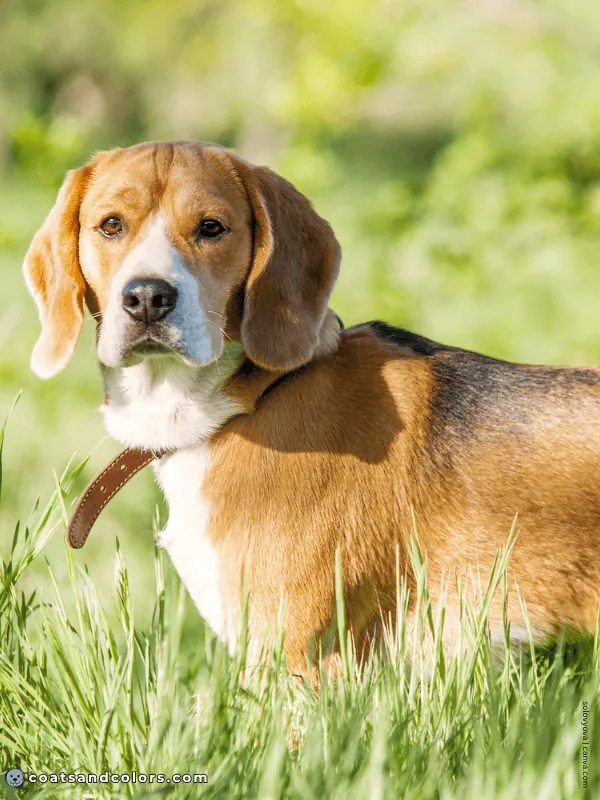
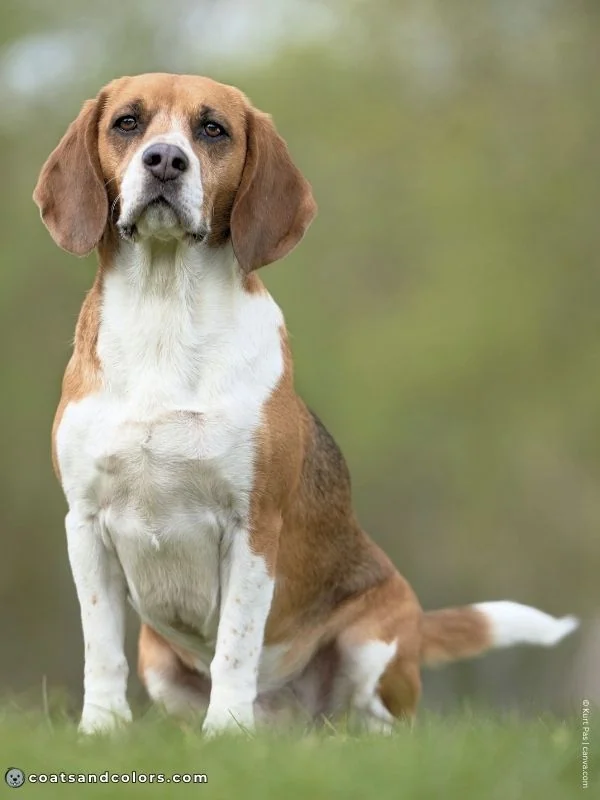
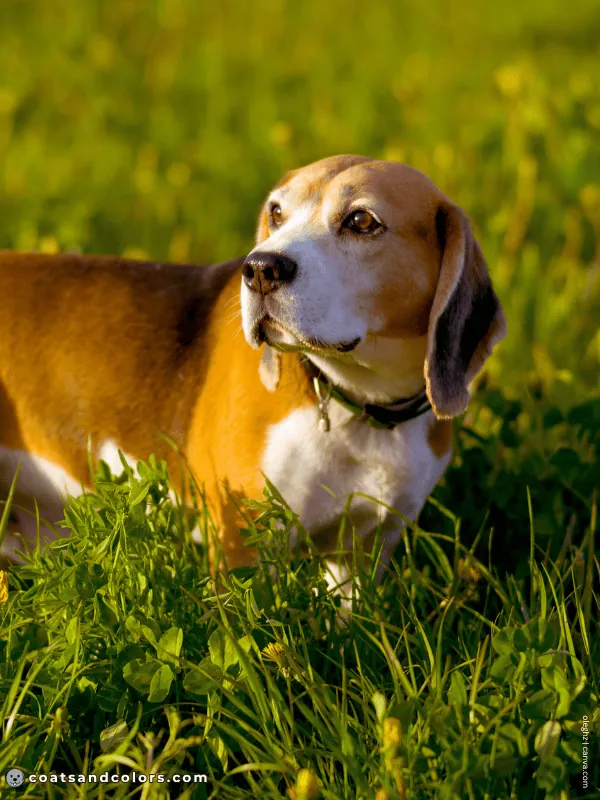
This phenotype happens when a black saddle tricolor Beagle is also domino. The domino trait causes any pattern to express less black than expected.
This causes a very small and washed-out saddle patch. Many pied Beagles show nose hypopigmentation with a pale stripe down the center of the nose.
Pied Beagles have black hair tips. The saddle has been reduced to a stripe of tipped hairs on the back (hare-pied) or patches of tipped hairs on the sides of the body (badger-pied). Some adult pied Beagles may look almost like a bicolor (lemon-pied).
In adult pied Beagles, this can look quite similar to a very faded black saddle. But domino is present from birth, while regular saddles start black, before the tan creeps in.
Pied puppies look like a bicolor puppy, but with dark rings around the eyes and a stripe of darker hairs down the back. Adults are sometimes called hare-pied, badger-pied, or lemon-pied.
Most pied Beagles have black eumelanin (since most Beagles are black tricolor). But dogs can, in theory, be blue pied or chocolate pied or lilac pied, too.
BASE PATTERN
saddle domino
MERLE
no
OTHER
–
EUMELANIN
black
INTENSITY
tan, red
WHITE
white markings
Black Tan
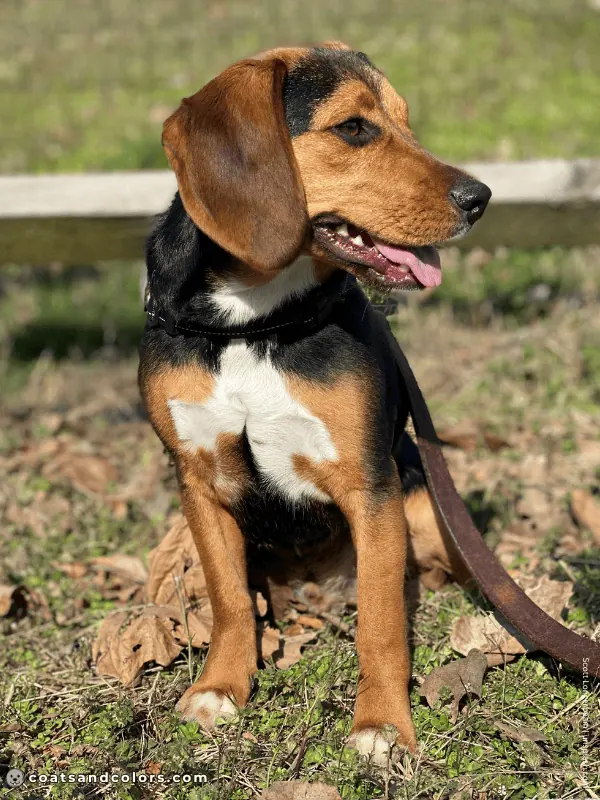
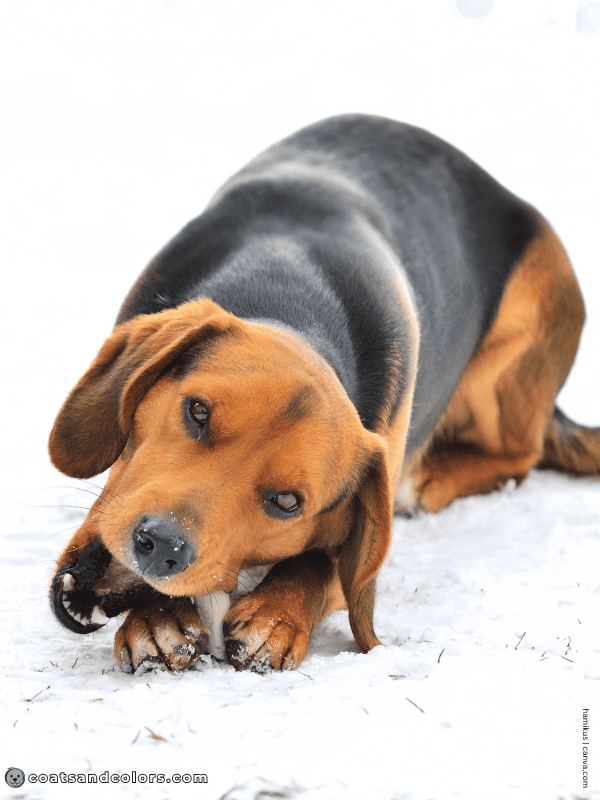

A black and tan Beagle is saddle tricolor or creeping tan dog with minimal white, I guess. This is not a FCI standard color, at least they don’t list it in their color options.
BASE PATTERN
saddle
MERLE
–
OTHER
–
EUMELANIN
black
INTENSITY
tan, red
WHITE
minimal white
Ticked
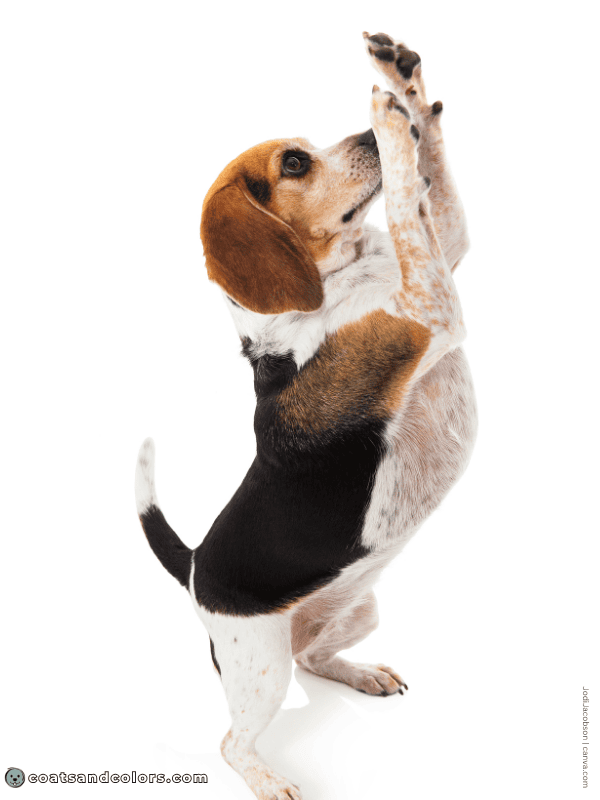
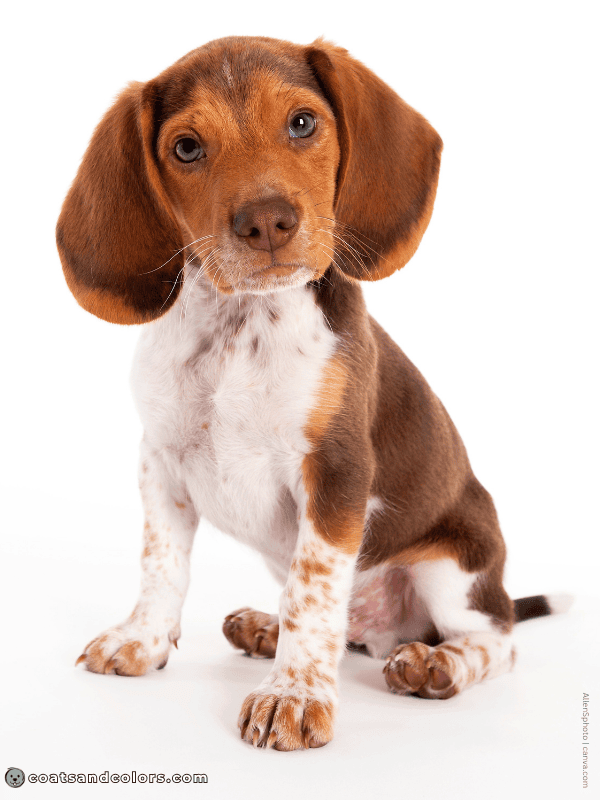
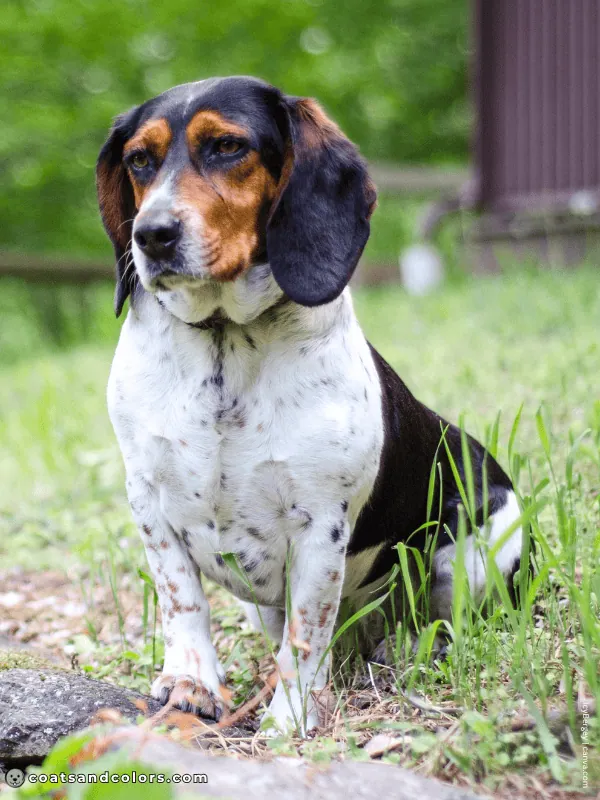
Any Beagle pattern can have ticking in the white markings. Dogs with black ticking on white are called bluetick (not the same as diluted black). Dogs with heavy red ticking are redtick.
BASE PATTERN
any
MERLE
–
OTHER
ticking
EUMELANIN
any
INTENSITY
lemon, tan, red
WHITE
white markings
Faulty Colors
A proper Beagle can have any of the typical hound colors. The National Beagle Club of America specifies that “hound color” refers to traditional Foxhound-type colors:
- tricolor (saddle & white, tan point & white)
- bicolor (lemon & white, red & white)
- pied (saddle domino)
- variations and dilutes of these colors
Any color that is not a typical hound color is not desired.
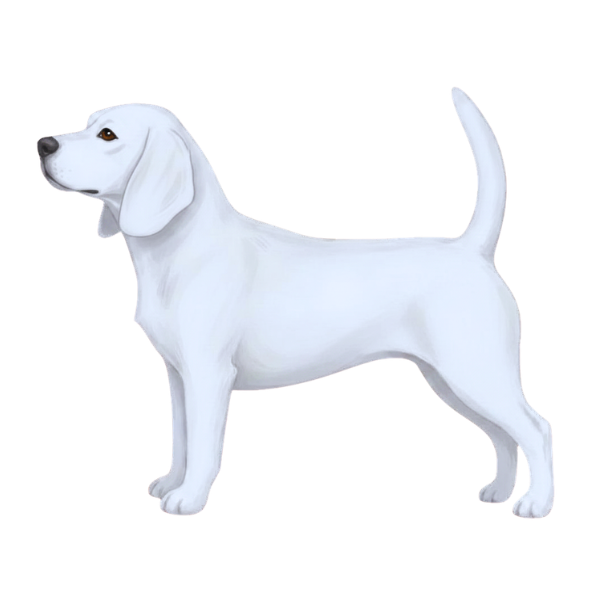
The FCI and RKC accept black & white. However, I think they might refer to “mainly black and white,” e.g tan points or a broken saddle pattern with large black patches. They also accept all white, but state that these can never be mottled. So I think they maybe just mean a very pale lemon color, not real white.
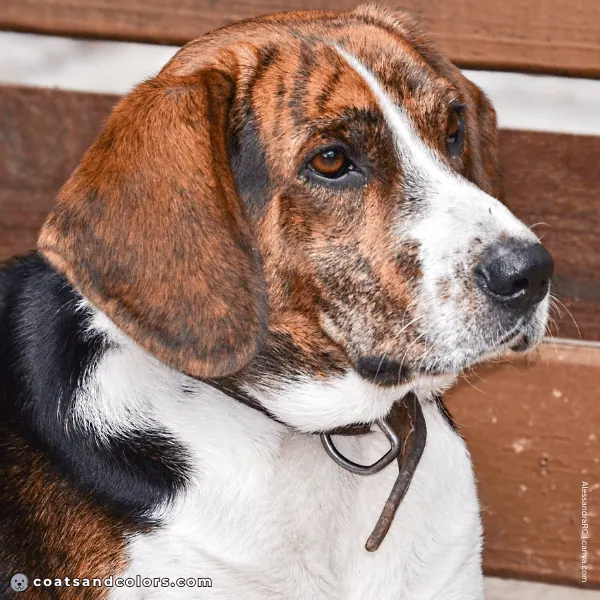
“Merle and brindle color patterns are not acceptable and shall be disqualified.”
AKC Breed Standard[1]
“black, tan and white; blue, white and tan;
badger pied; hare pied; lemon pied; lemon and white; red and white; tan and white; black and white; all white. […] No other colours are permissible.”
FCI Breed Standard[2]
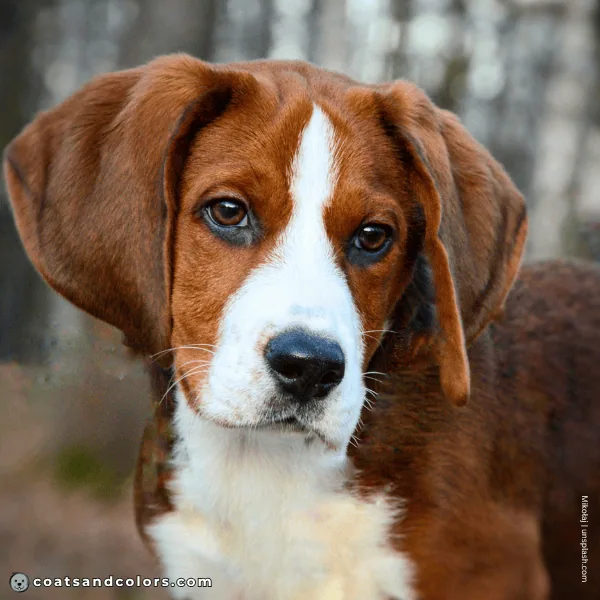
Base Patterns
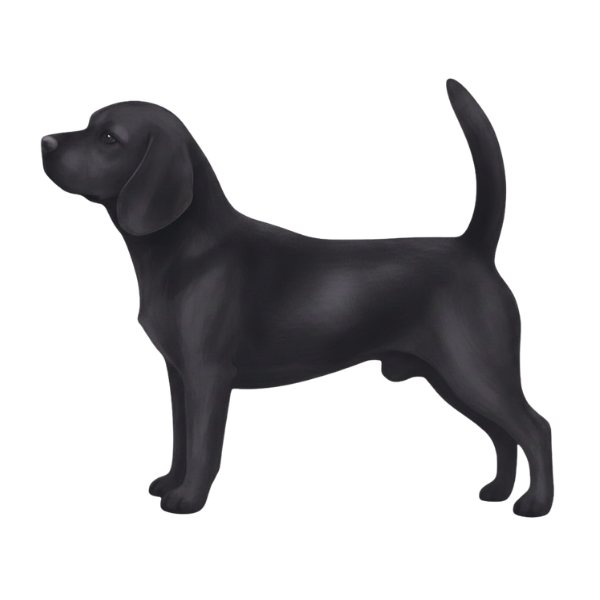
The base pattern describes the placement of phaeomelanin and eumelanin in the coat. There is an epistatic hierarchy between the A locus < K locus < E locus.
- The A locus controls the basic distribution of both pigment types.
- Next, the K locus can add black to the A locus pattern.
- Finally, the E locus regulates the general ability to produce black pigment.
A Locus
| Ay | sable |
| asa | saddle |
| at | tan point |
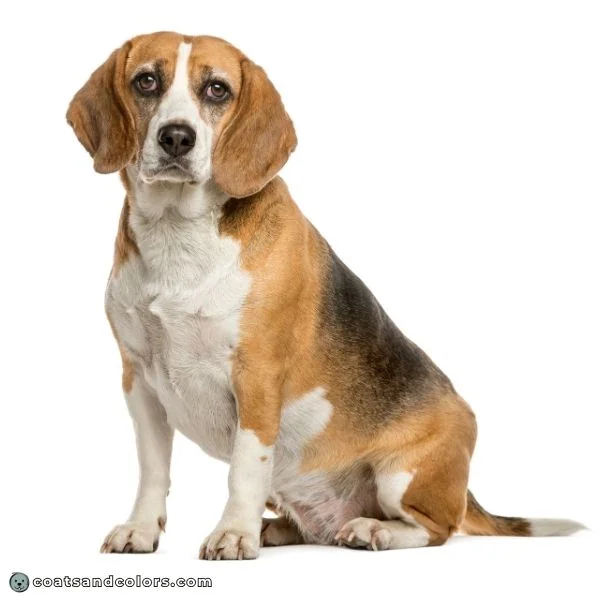
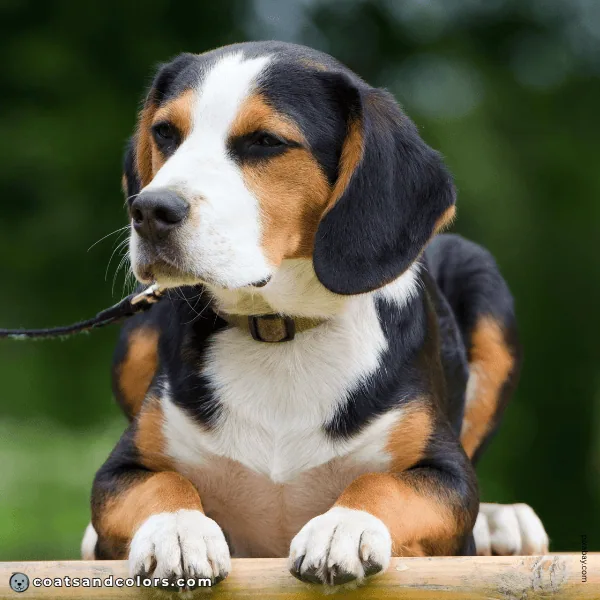
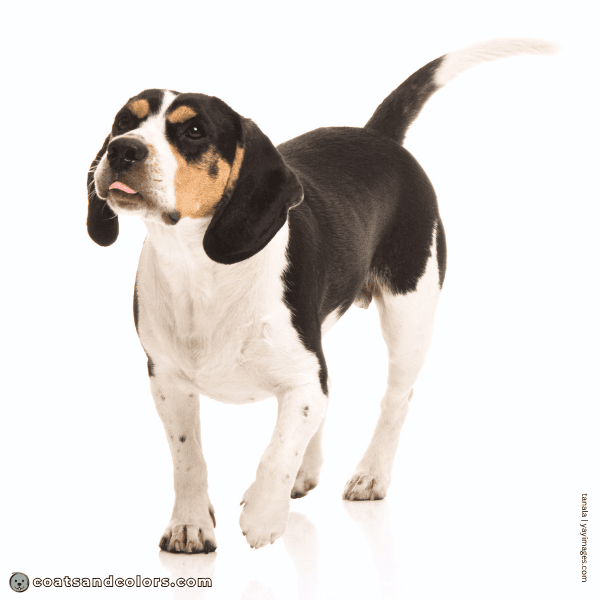
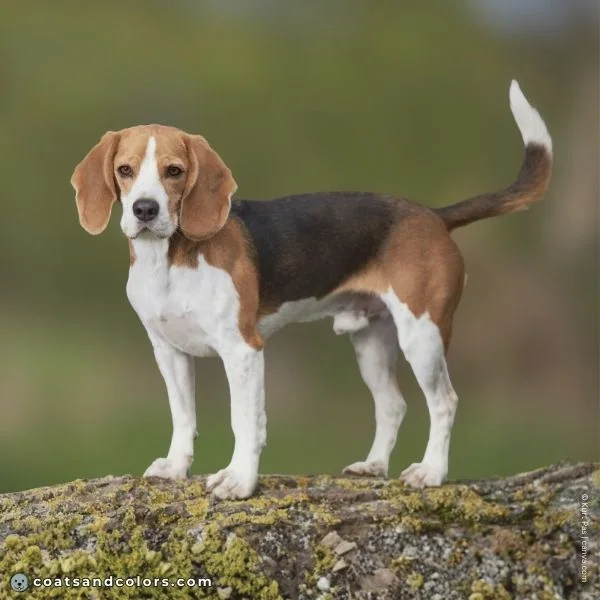
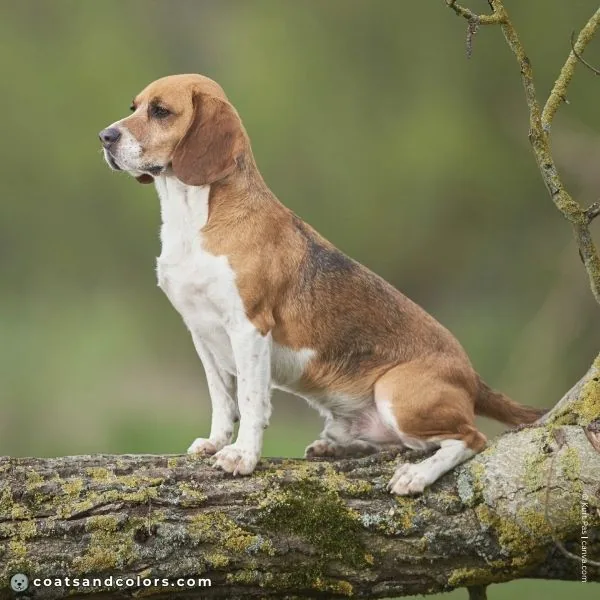
The Beagle breed is almost fixed for the saddle pattern (asa/asa). But sable (Ay) is present in hunting Beagles. And a very small number of Beagles have a creeping tan (asa/at) or tan point (at/at) pattern.
K Locus
| ky | wild-type |
Beagles are fixed for normal pattern expression (ky/ky). This means they can have both types of pigment in their coat and are neither solid black nor brindle.
E Locus
| Em | black mask |
| E | wild-type |
| eA | domino |
| e | recessive red |
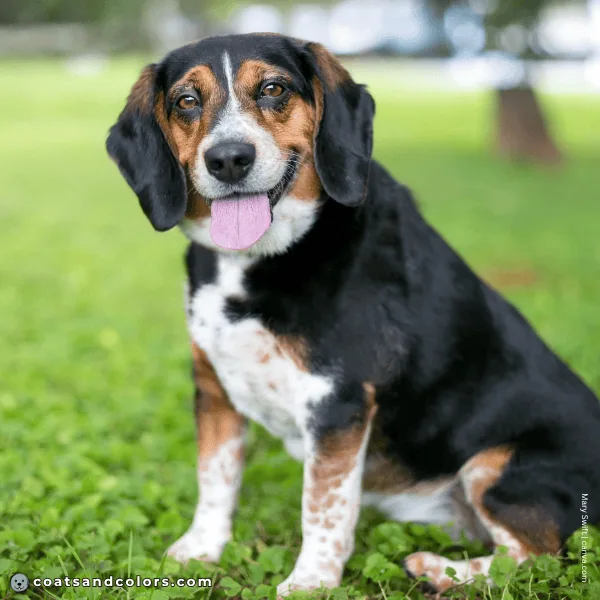
Some Beagles have a mask (Em), this seems to mainly concern hunting lines. The more common alleles are normal pattern expression (tricolors are E/-) and recessive red (bicolors are e/e).
And domino (eA/-) causes the “pied” phenotypes.
Beagle Base Patterns
| A LOCUS | K LOCUS | E LOCUS | PATTERN |
|---|---|---|---|
| asa/asa | ky/ky | E/- | saddle “tricolor” |
| asa/asa | ky/ky | eA/- | saddle domino “pied” |
| e/e | recessive red “bicolor” |
Base Colors
The base color is determined by the B locus and D locus.
B Locus
| B | black |
| b | brown |
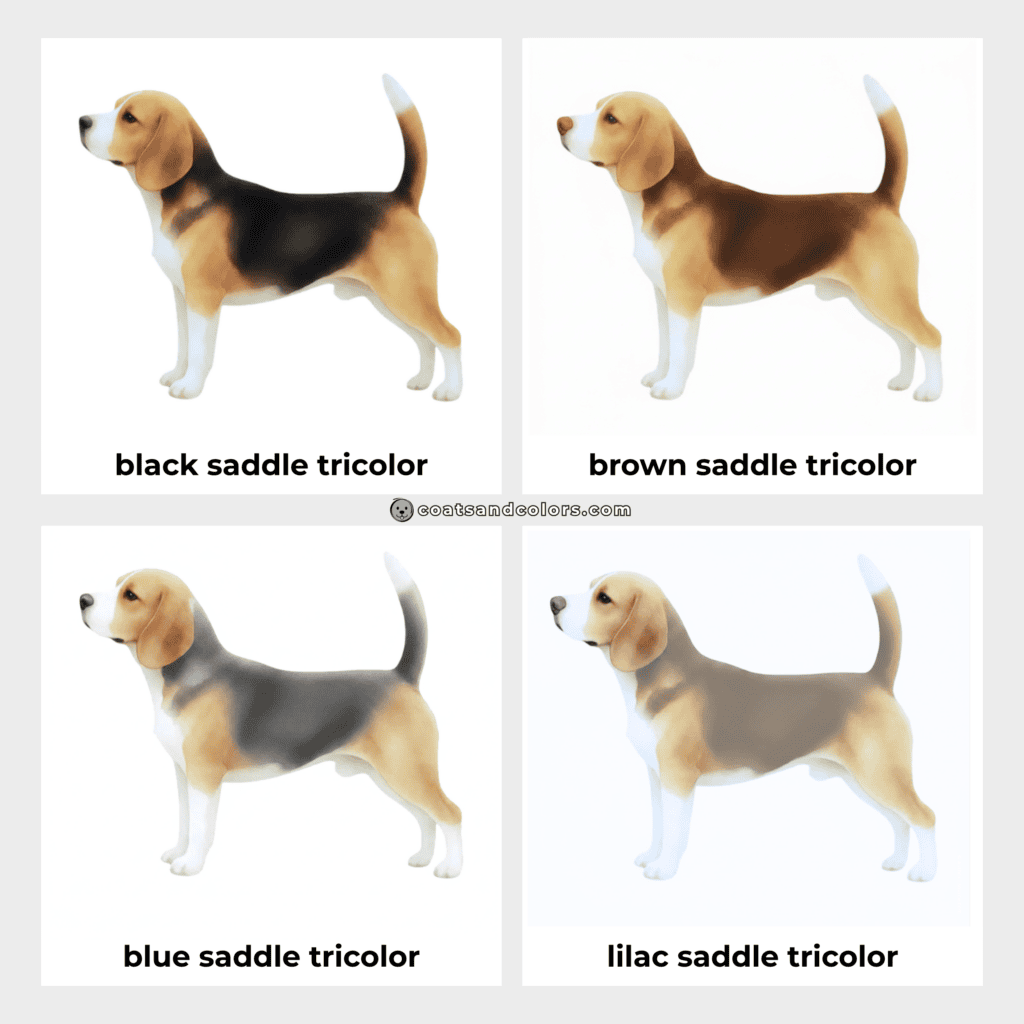
Beagles can have black (B/-) or brown (b/b) eumelanin.
D Locus
| D | normal |
| d | color dilution |
Beagles can have normal (D/-) or diluted (d/d) eumelanin.
Beagle Base Colors
Beagles can have all the base colors:
| B LOCUS | D LOCUS | COLORS |
|---|---|---|
| B/- | D/- | black |
| b/b | D/- | brown |
| B/- | d/d | diluted black “blue” |
| b/b | d/d | diluted brown “isabella, lilac” |
Red Intensity
The red intensity in tricolor Beagles tends to have a rich reddish golden color, but lighter tan colors can also happen. The phaeomelanin colors in bicolor Beagles range from lemon to tan to red.
Color dilution (d/d) can sometimes cause lighter phaeomelanin.
White Markings
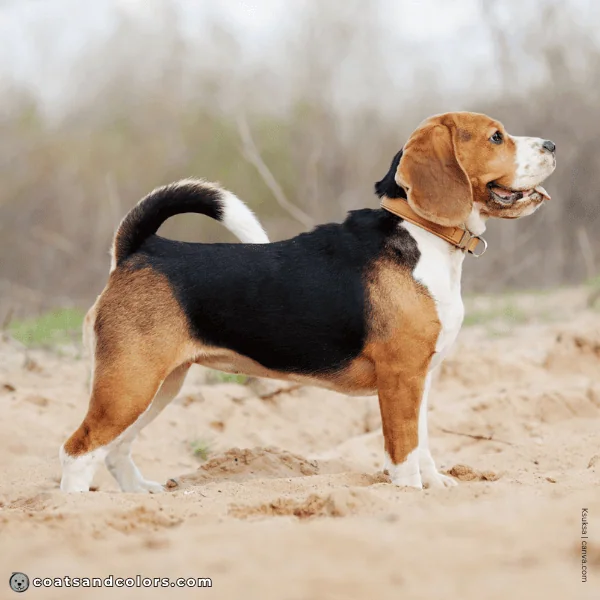
It is not a requirement for a Beagle to have white paws or white on the tip of the tail. But they need some white, as the standards do not favor Beagles that are solid black, red, or lemon. And most Beagles obviously do have a good amount of white and show a proper tricolor or a bicolor pattern.
The white in Beagles is typically caused by piebald.
Most Beagles are sP/sP at the S locus. But they are one of the breeds that select for the “low end” of piebald expression. Meaning, most piebald Beagles still have a lot of color.
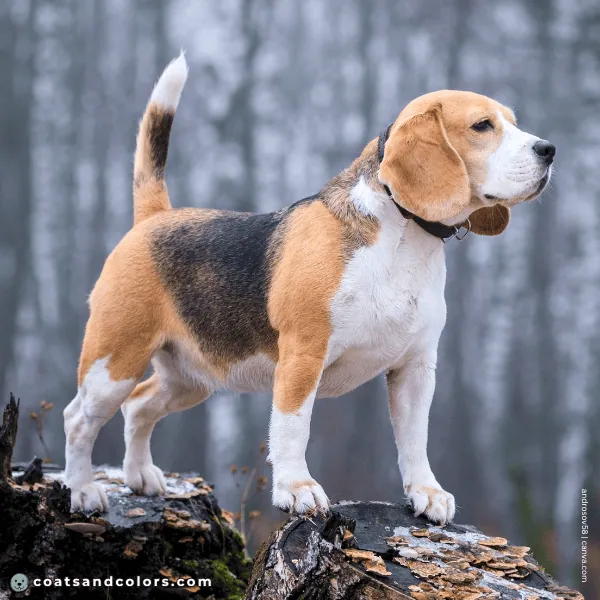
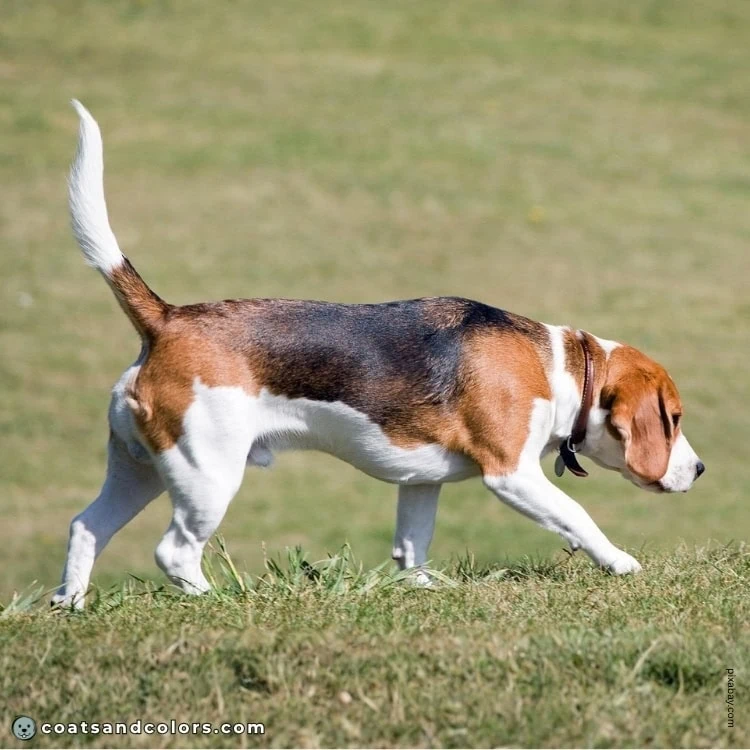
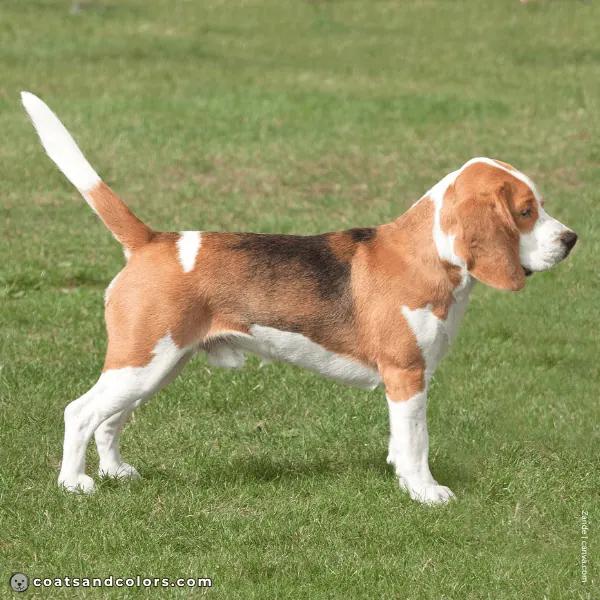
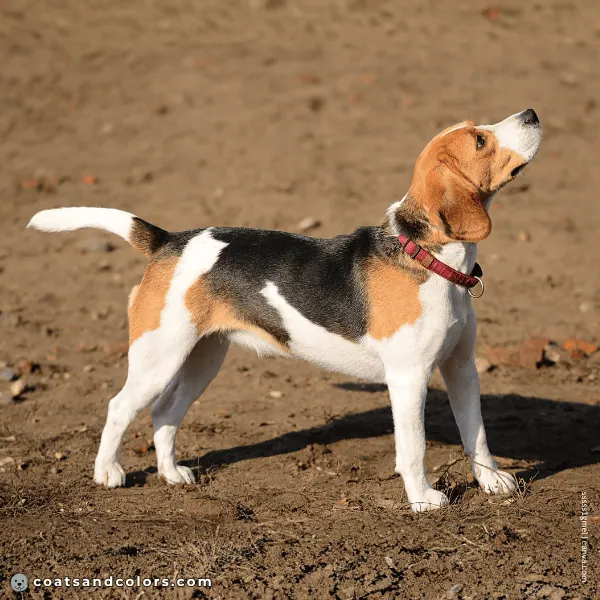
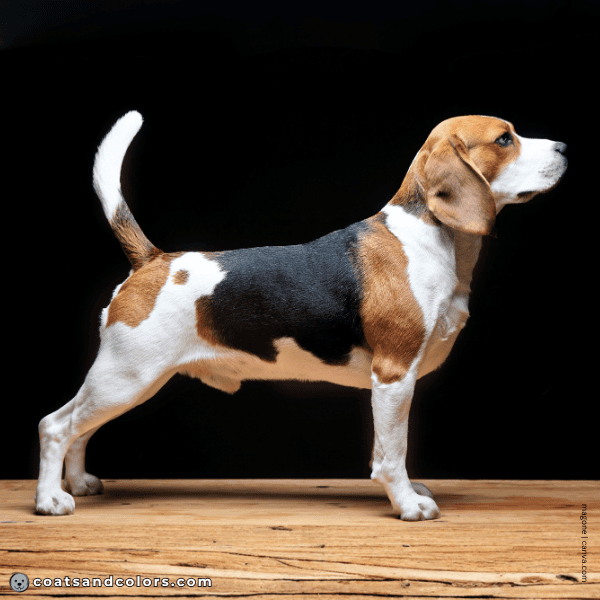
Terms like open-marked or broken tricolor refer to dogs with enough white to break up the mantle pattern. This causes the dogs to look white with large patches of color.
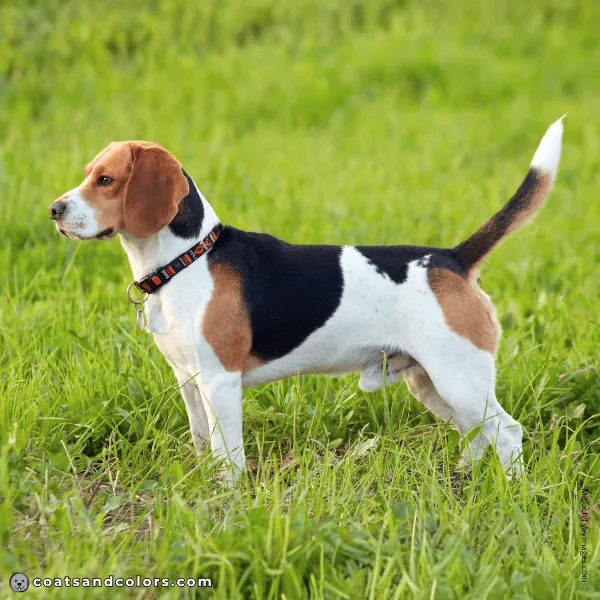
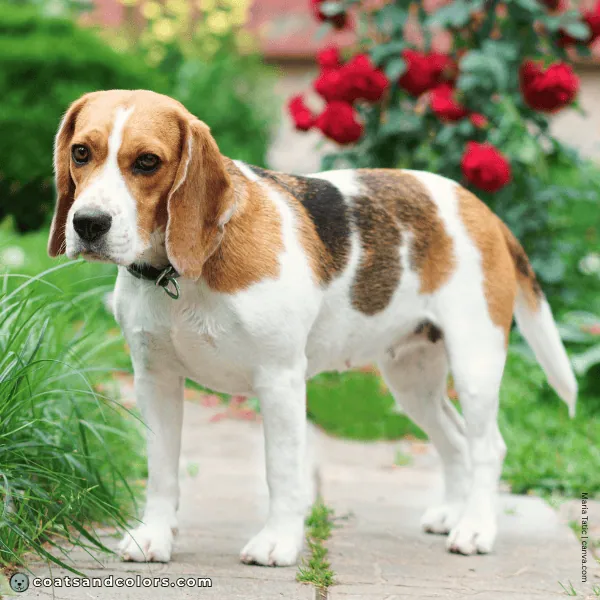
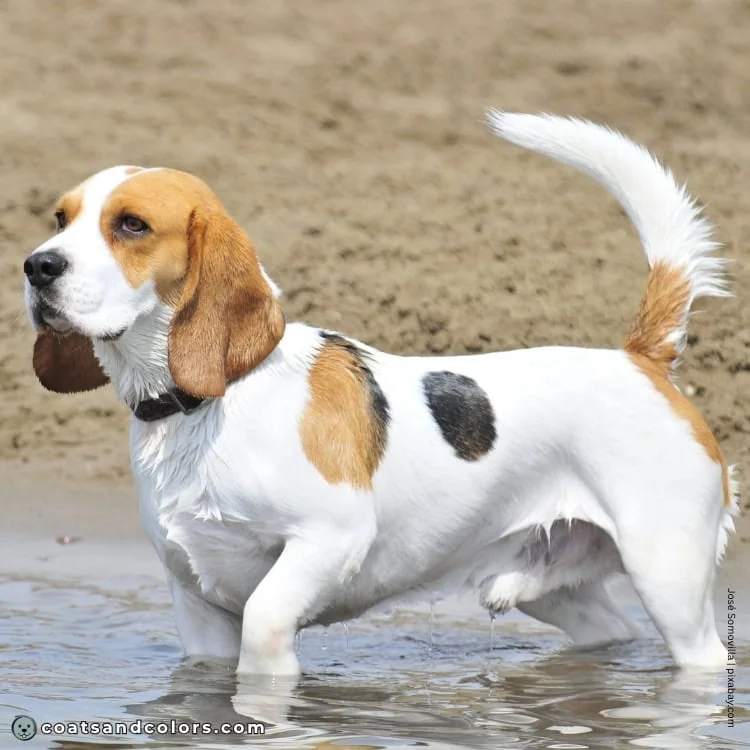
Some dogs have very wide blazes, or have white over the eyes and ears. A high amount of face white is known to predict slightly increased odds for blue eyes and hearing impairment.
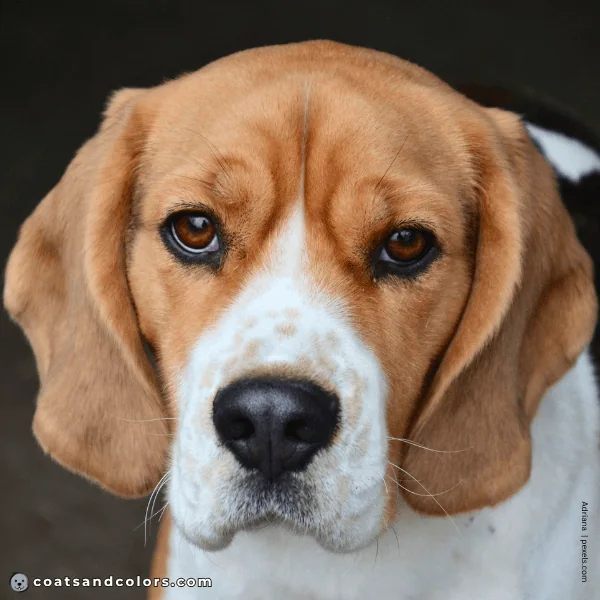
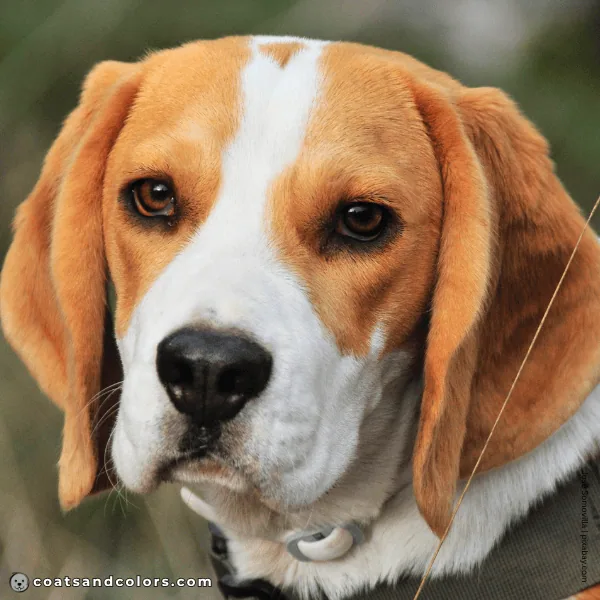
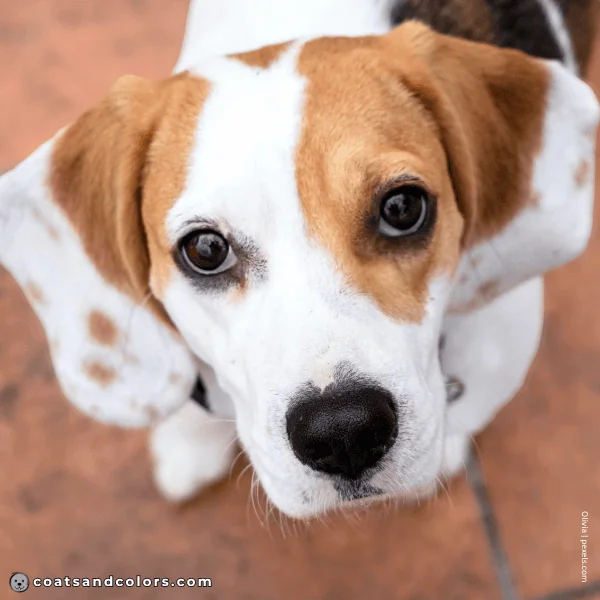
A solid white coat is considered a mismark.
The whitehead trait may also occur in this breed. Dogs with extreme piebald normally express a “color-headed white” phenotype. But some hounds lose all head pigment before they lose body pigment.
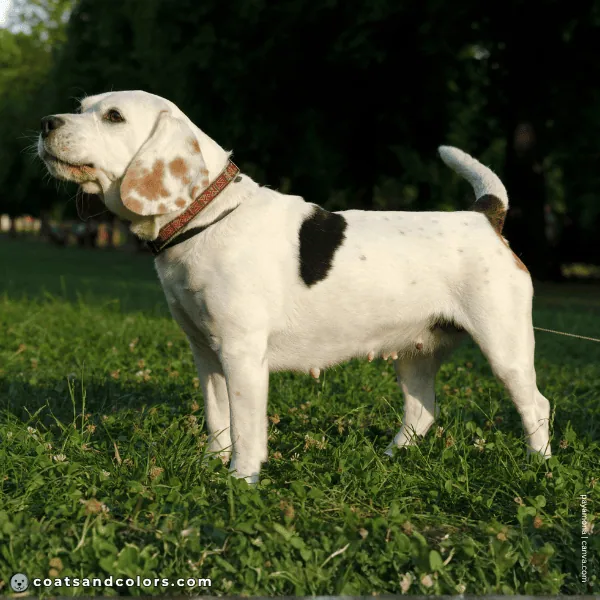
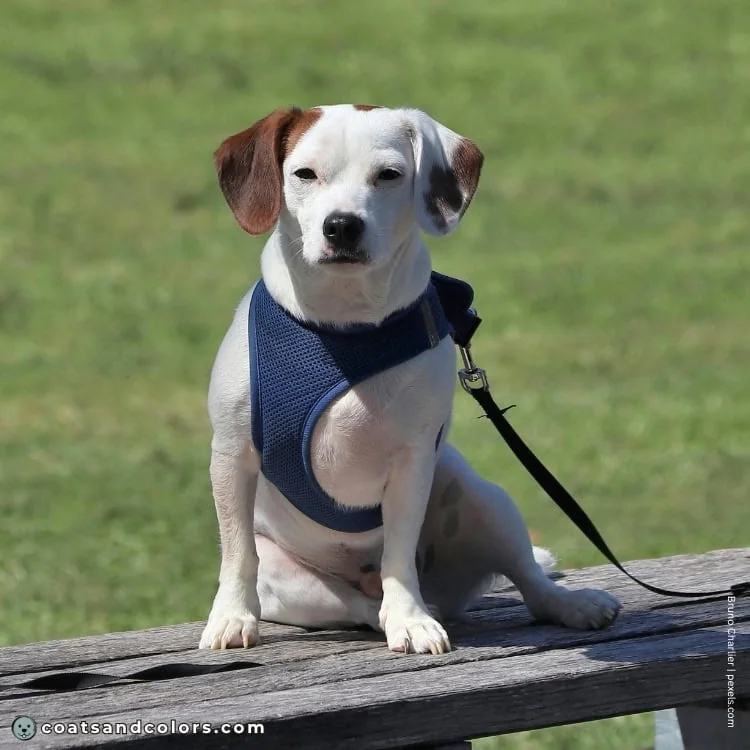
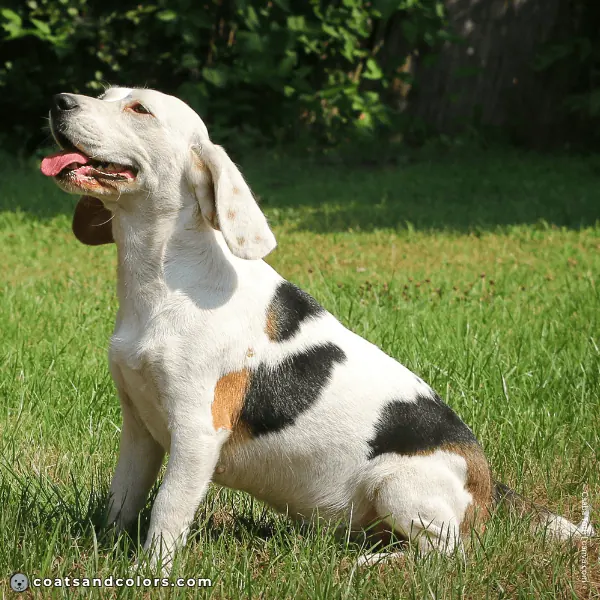
Dogs with recessive red (e/e) are known to produce, on average, more white than their tricolor siblings. Also, they often have very jagged lacing around the lemon or red patches on these dogs.
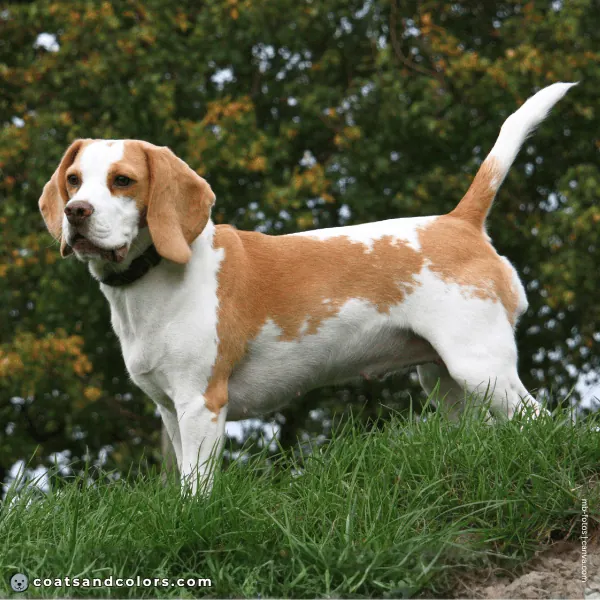
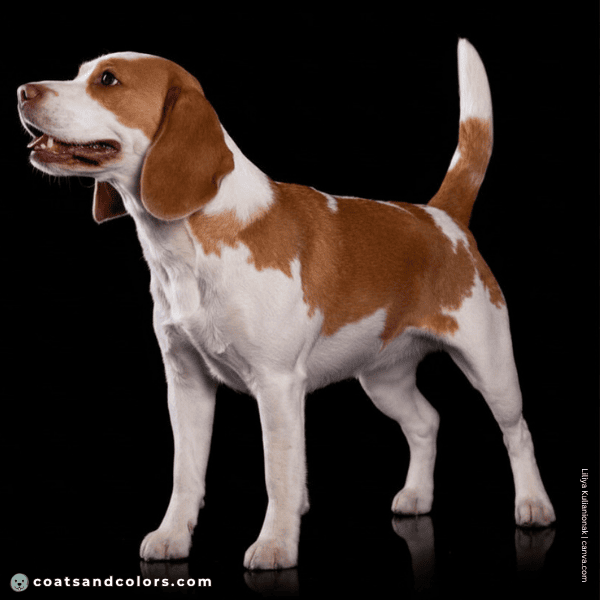
“Tip of stern white.”
FCI Breed Standard[2]
Ticking
Some Beagles have ticking.
They can have anything from some freckles on the muzzle and paws to very dense mottling all over their white markings. Dogs with black ticking are called bluetick, dogs with red mottles are called redtick.
Beagle Eye Colors
Most black tricolor Beagles have brown eyes.
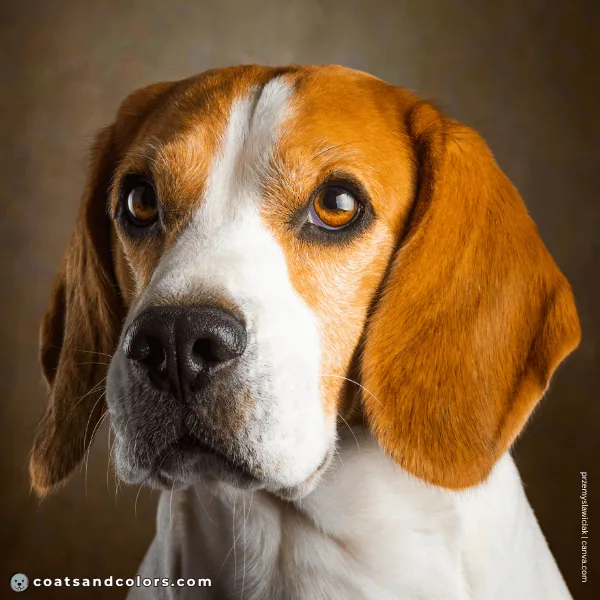
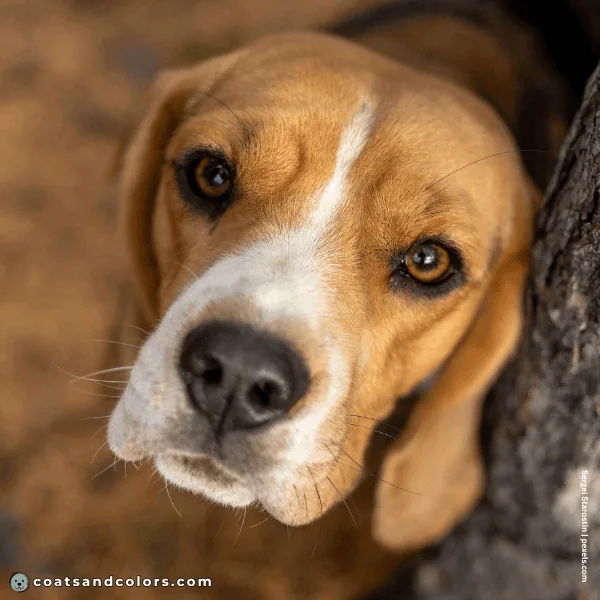
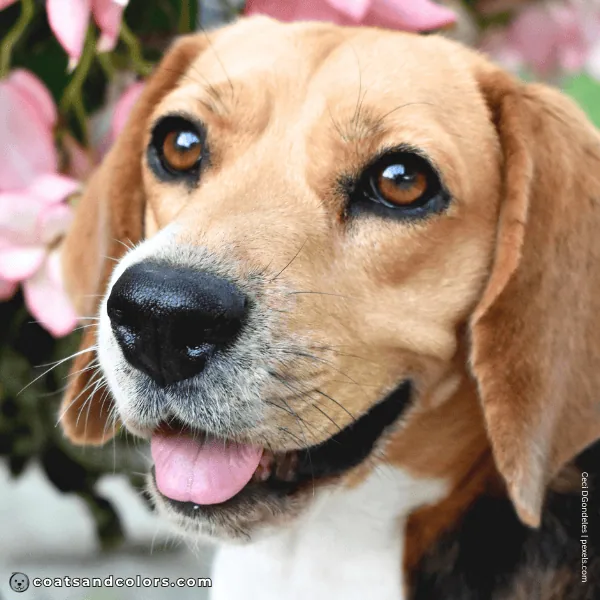
Dogs with a base color other than black can have lighter eyes. The puppy eye colors tend to be very pale in young brown, blue, and lilac Beagles, but will often darken a little over time.
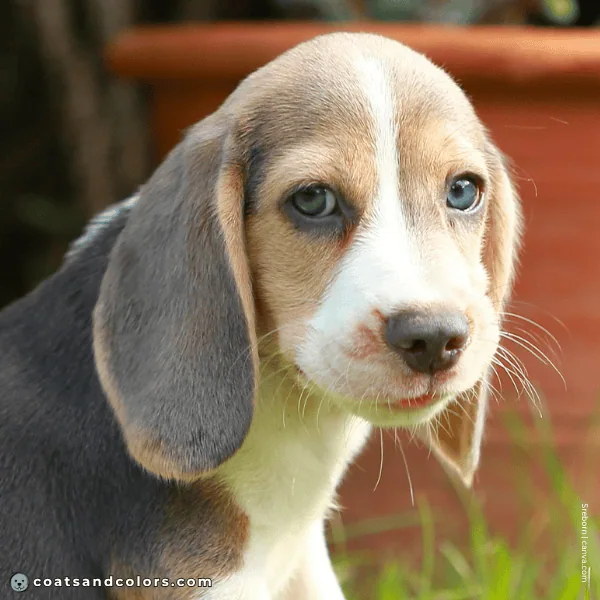
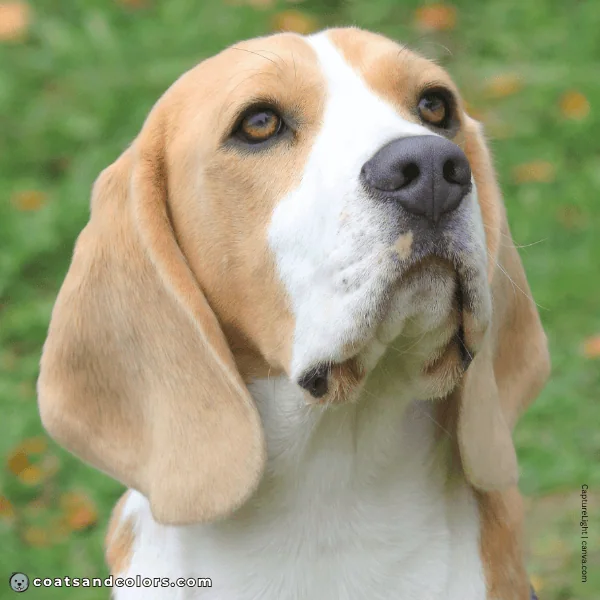
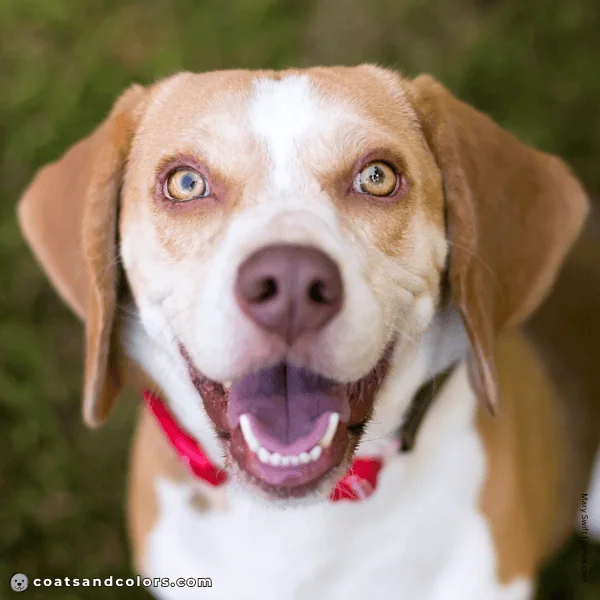
Dogs with a lot of white on the face can sometimes have blue eyes.
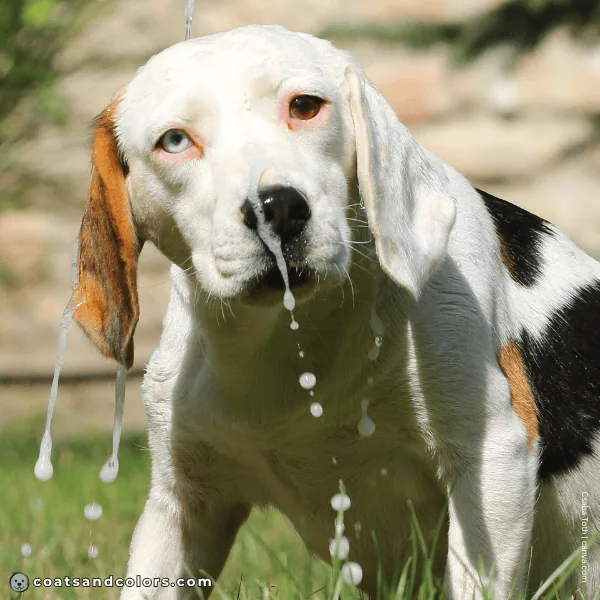
“Eyes of a brown or hazel color.”
AKC Breed Standard[1]
“Dark brown or hazel…“
FCI Breed Standard[2]
Beagle Nose Colors
A traditional black tricolor Beagle has a black nose. Dogs with other base colors will also have different nose colors. A chocolate tri has a liver nose, a blue tri has a gray nose, and a lilac tri has a taupe nose.
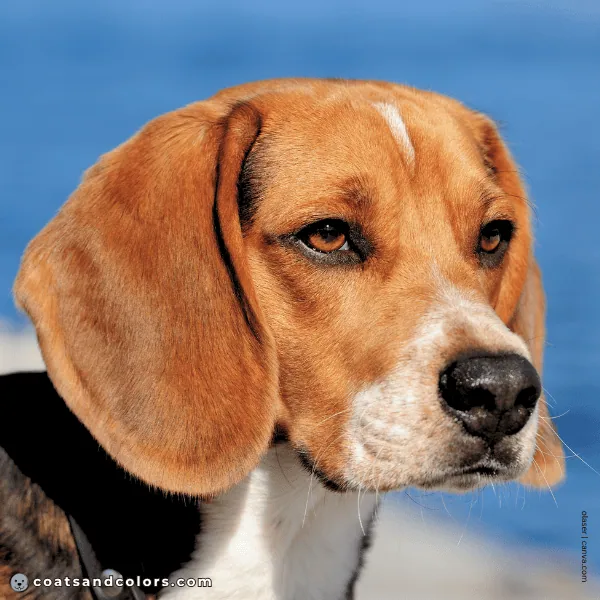
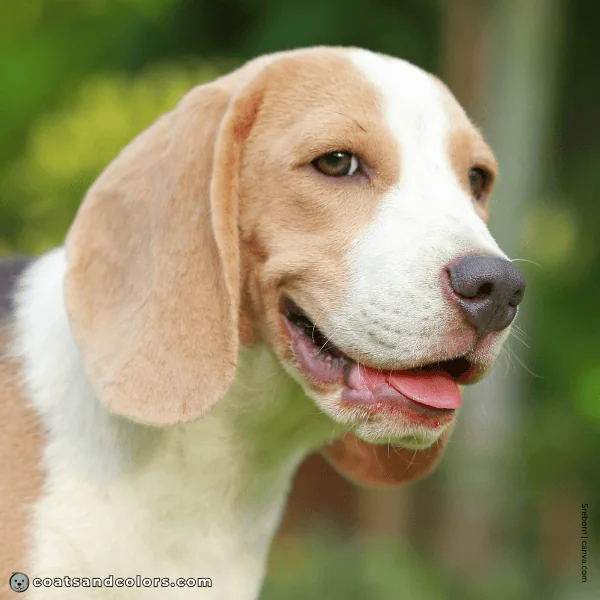
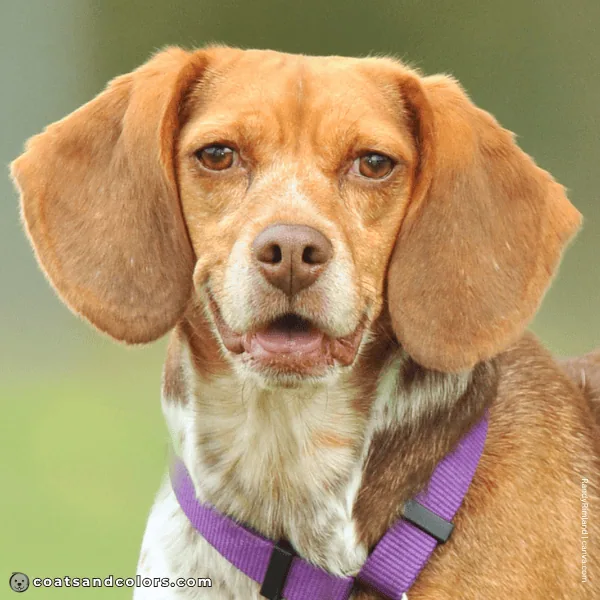
Many bicolor Beagles have a faded pinkish nose color.
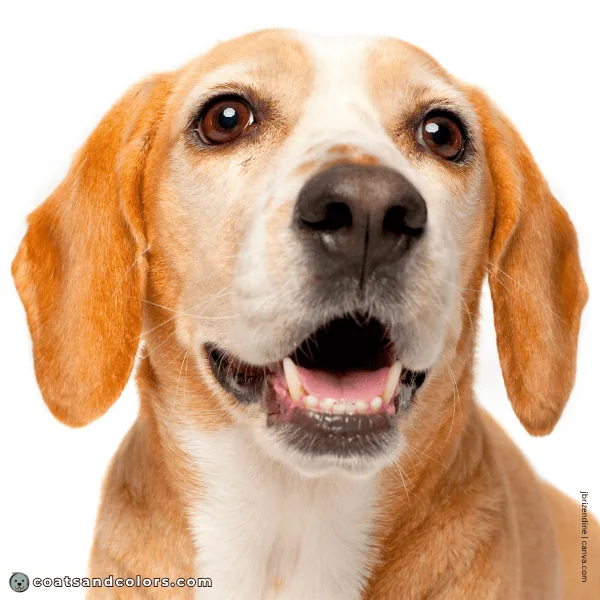
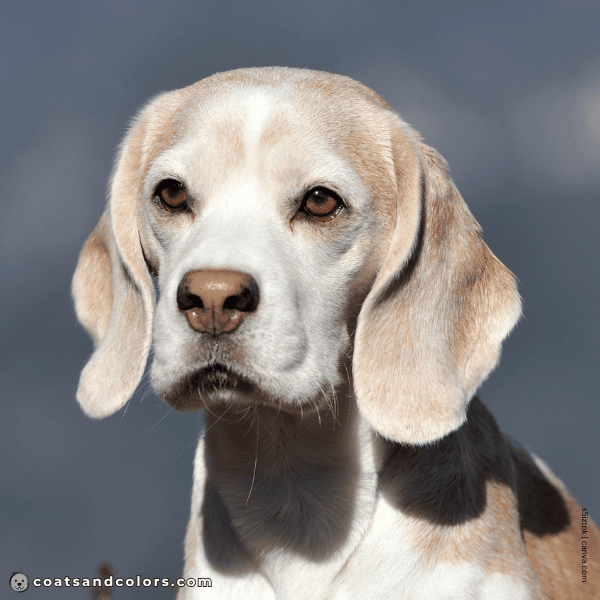
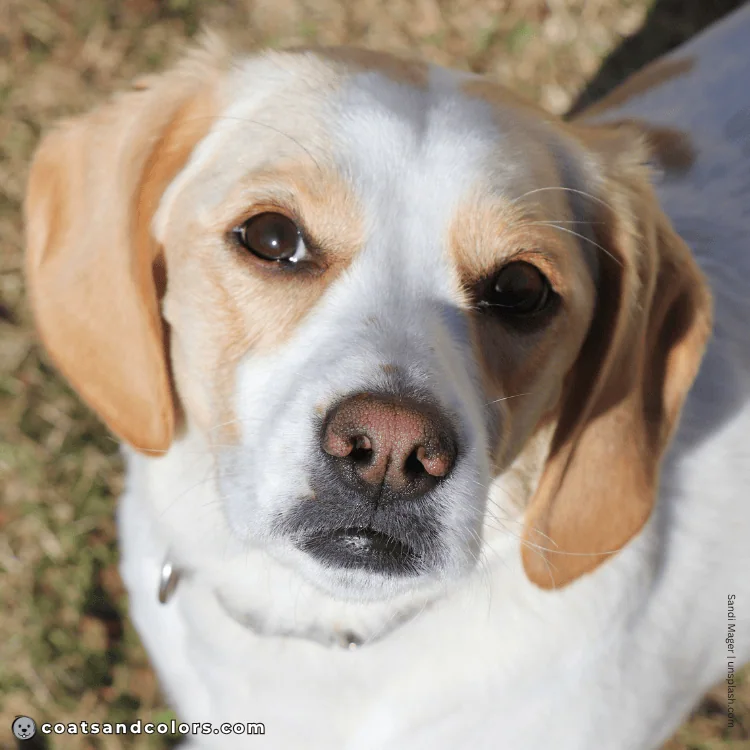
Many of the pied Beagles (“pied” is the breed term for saddle domino) have a typical domino nose with darker rims and a pale center. Some have a hypopigmented pink nose stripe.
However, a grayish or pinkish nose isn’t always a definitive indicator of a pied dog. There are plenty of normal tricolor Beagles out there that just happen to have weak nose pigment.
Dogs with a lot of white on the face can occasionally produce a butterfly nose with pink spots of missing pigment. This is common for puppies with a lot of white on the muzzle but will fill in over time.
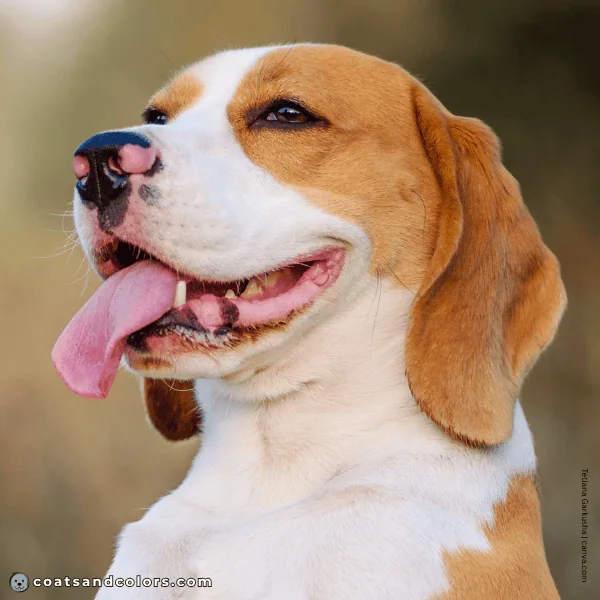
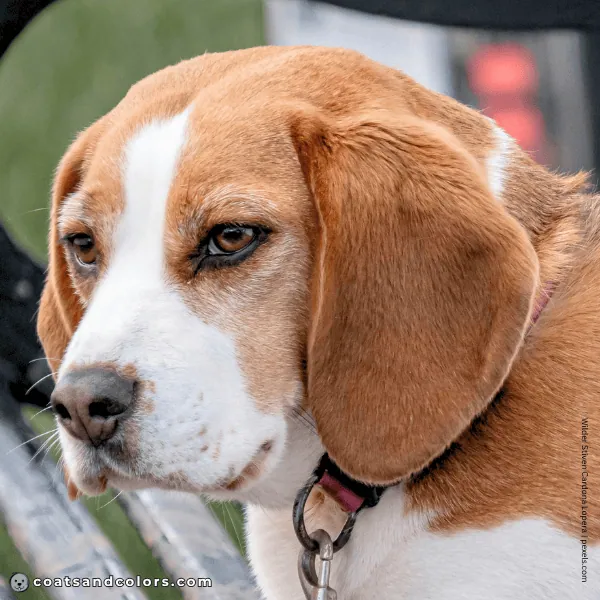
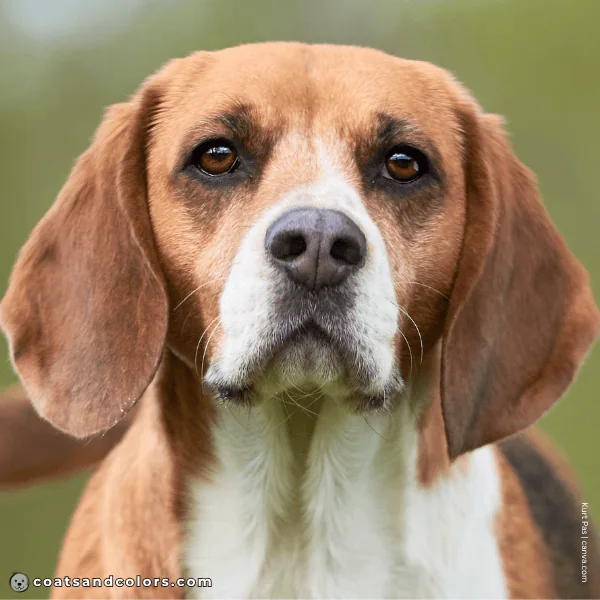
“Broad, preferably black, but less pigmentation permissible in lighter coloured hounds.”
FCI Breed Standard[2]
Beagle Coat Type
Beagles are short-haired.
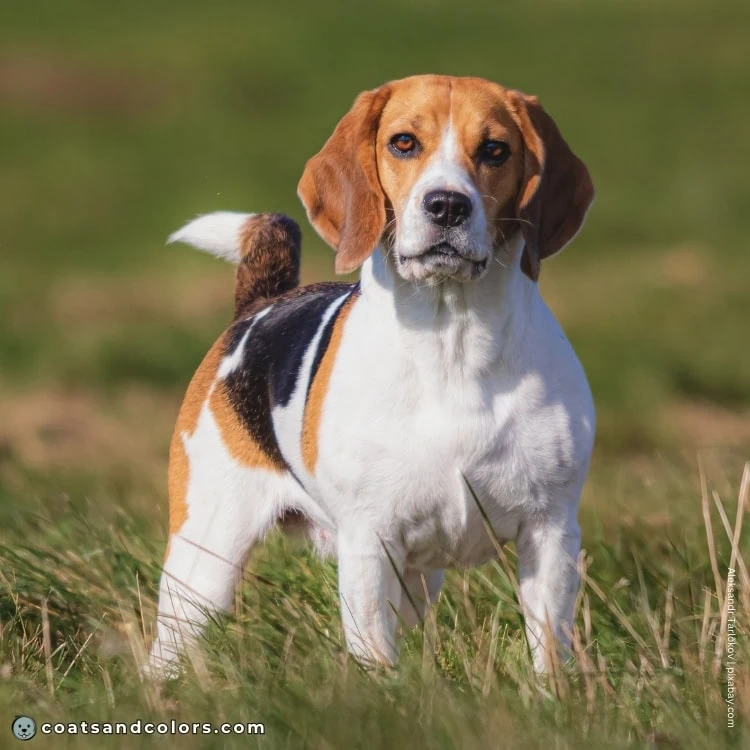
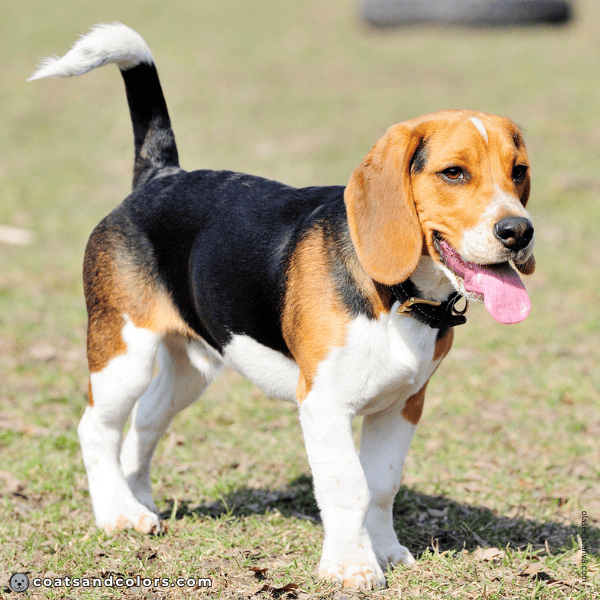
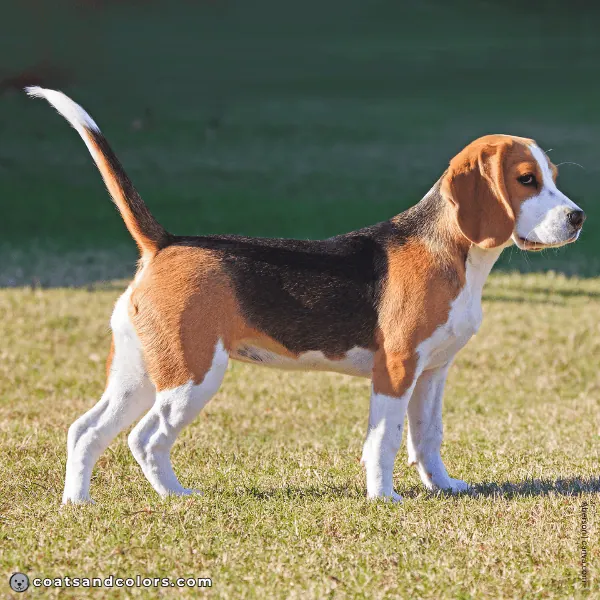
“A close, hard, hound coat of medium length.”
“Defects – A short, thin coat, or of a soft quality.“
AKC Breed Standard[1]
“Short, dense and weatherproof.”
FCI Breed Standard[2]
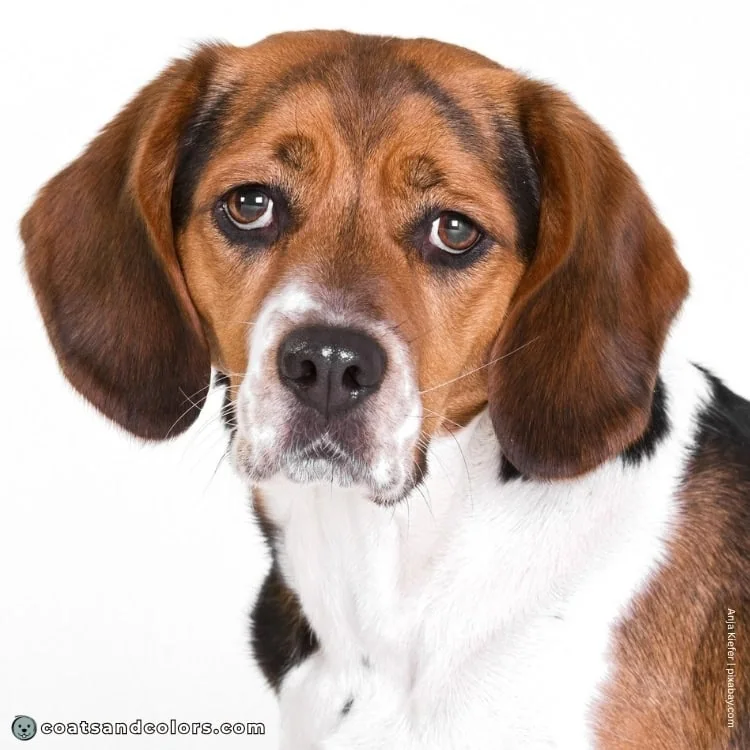
A small number of Beagles carry the long coat variant. But this is so rare that the chances of breeding two carriers and getting a long-haired Beagle puppy are almost impossible.
Related Breeds
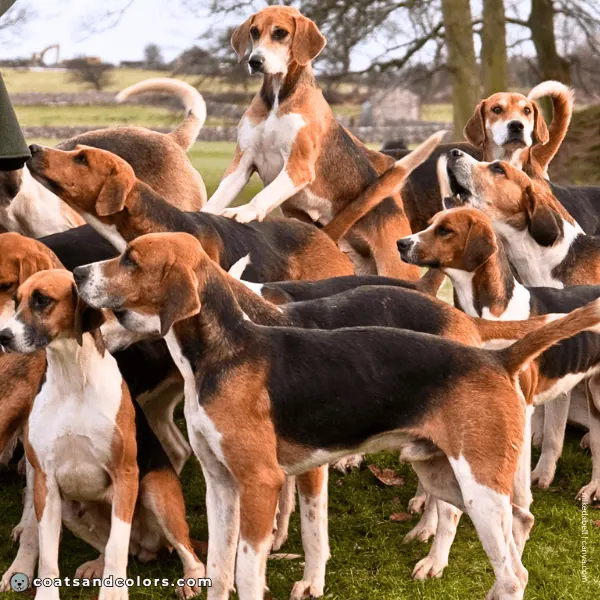
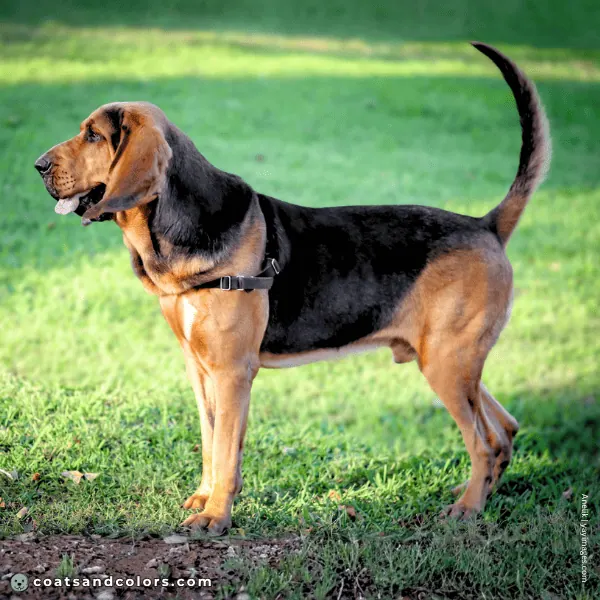
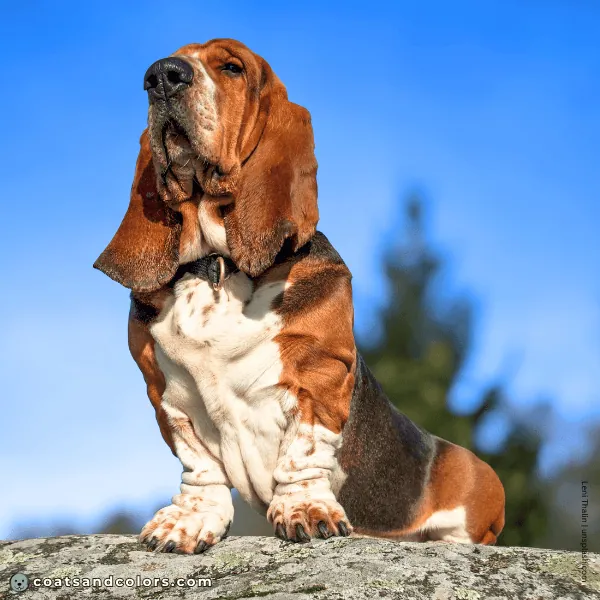
Most of the hounds that use their keen sense of smell to follow scent trails are distantly related.
Learn More

Links
[1] American Kennel Club (AKC): Beagle
[2] Fédération Cynologique Internationale (FCI): Beagle
[3] Royal Kennel Club (RKC): Beagle
[4] Canadian Kennel Club (CKC): Beagle
[5] Dreger et al. (2019). True Colors: Commercially-acquired morphological genotypes reveal hidden allele variation among dog breeds, informing both trait ancestry and breed potential. PLoS ONE 14(10): e0223995. https://doi.org/10.1371/journal.pone.0223995
[6] The National Beagle Club of America: Coat Colors
[7] Beagle Club Deutschland e.V.: Fellfarben
[8] The National Beagle Club of America: Power Point Presentation
[9] Beagle Brief 4/2020: A Newly Discovered “Old” Color: Domino aka Pied In The Beagle.
[10] Nord, Jensen (2021). Genomic Regions Associated with Variation in Pigmentation Loss in Saddle Tan Beagles. Genes. https://doi.org/10.3390/genes12020316
Image Credits
Aberson/canva.com
Adriana/pexels.com
Aleksandr Tarlõkov/pixabay.com
Aleksandr Zotov/canva.com
AlessandraRC/canva.com
AllenSphoto/canva.com
andresr/canva.com
Andrey_and_Olesya/pixabay.com
androsov58/canva.com
Anelik/yayimages.com
Anja Kiefer/pixabay.com
Bruno Charlier/pexels.com
bunhill/canva.com
CaptureLight/canva.com
Ceci DGondeles/pexels.com
Christian Lambert/unsplash.com
Csaba Toth/canva.com
Doğan Alpaslan Demir/pexels.com
dosecreative/canva.com
dpcrestock/yayimages.com
EasyMorning/canva.com
Emmanuel Najera/pexels.com
Evy Prentice/unsplash.com
Goldfinch4ever/canva.com
hamikus/canva.com
IcyBergey/canva.com
jbrizendine/canva.com
JodiJacobson/canva.com
José Somovilla/pixabay.com
khajornkiat/canva.com
Ksuksa/canva.com
Kurt Pas/canva.com
Leni Thalin/unsplash.com
Liliya Kulianionak/canva.com
Lilly Grace/pexels.com
Majchy/canva.com
magone/canva.com
Maria Tatic/canva.com
Mary Swift/canva.com
Max Itin/unsplash.com
mb-fotos/canva.com
Meg von Haartman/unsplash.com
Mibuch/yayimages.com
mikedabell/canva.com
Mikolaj/unsplash.com
monicadoallo/canva.com
olaser/canva.com
oleghz/canva.com
Olivia/pexels.com
payamona/canva.com
przemyslawiciak/canva.com
RandyRimland/canva.com
Roger Starnes Sr/unsplash.com
s5iztok/canva.com
Sadeugra/canva.com
Sandi Mager/unsplash.com
Sarah-Jane Lewis/canva.com
Scott Longerbeam/unsplash.com
Sergei Starostin/pexels.com
Sreborn/canva.com
sssss1gmel/canva.com
tanala/yayimages.com
Tetiana Garkusha/canva.com
TonyKan/depositphotos.com
Valeria Boltneva/pexels.com
Villamilk/canva.com
Vivienstock/canva.com
vivienstocks/canva.com
Vychegzhanina/canva.com
Wilder Stiven Cardona Lopera/pexels.com
Zande/canva.com
zokov/yayimages.com
Zuzule/canva.com
Hi! I’m Steffi. I am a biologist and a big time dog nerd. You are curious about coat color genetics? You’ve come to the right place! Read more.
3 thoughts on “Beagle Colors”
Comments are closed.